
Review · ROME
Secrets of Rome: Historical True Crime Small Group Tour
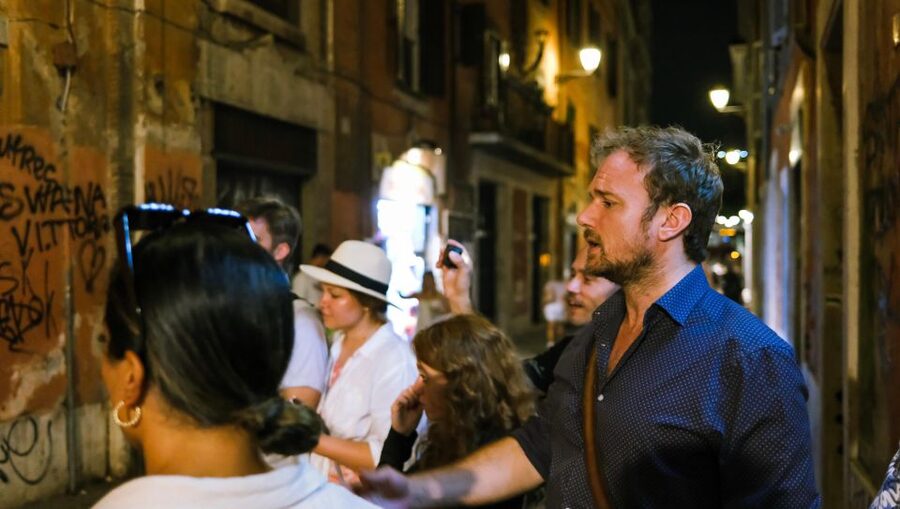
Rome’s grand monuments are only half the story. This two-hour walk follows the darker threads: executions, poisonings, political plots, family treachery, and haunted-sounding tales tied to Rome’s backstreets. Guides such as Ben, Ivana, Ivanka, and Ariel bring the material to life with humor and theatrical skill.
I like the small group of no more than 15, which makes it easier to hear and ask questions. I also like the route, from Campo de’ Fiori through Piazza Farnese, Ponte Sisto, and Via Giulia to Castel Sant’Angelo. The main caution is that this is historical true crime, not a modern crime investigation or a dedicated ghost tour.
Key points to know before you book
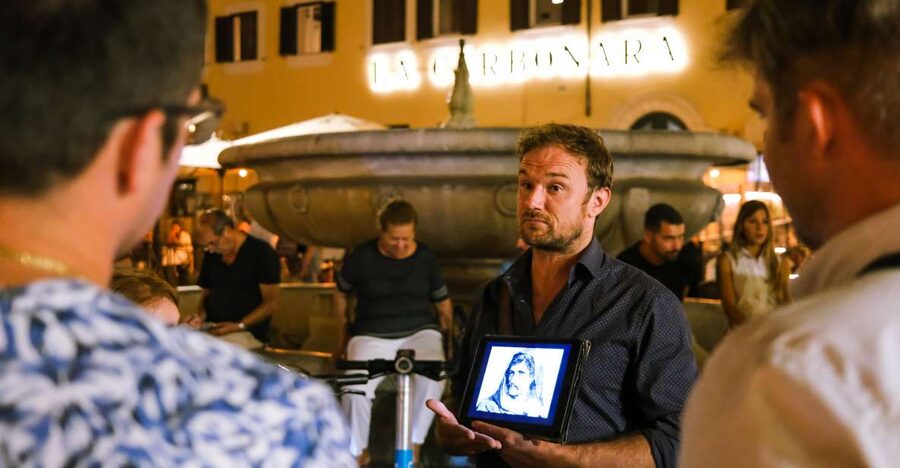
- Giordano Bruno begins the story: Campo de’ Fiori sets the tone with the philosopher’s fiery execution.
- The route uses Rome’s streets as a stage: Piazza Farnese, Ponte Sisto, Via Giulia, and Castel Sant’Angelo add place to the stories.
- Guides carry the experience: Ben, Ivana, Ivanka, and Ariel are praised for humor, passion, and strong storytelling.
- The tone is dark but not grim: Expect murder and scandal balanced with jokes and general facts about Rome.
- There is a short practical break: You stop at a local bar for about 10 minutes for drinks or a restroom visit.
- The $29 price is strong value: You get two hours with an English-speaking guide and a maximum group size of 15.
Rome’s darker side begins at Campo de’ Fiori
The meeting point is the statue in the middle of Campo de’ Fiori. Look for a guide holding a sign that says Rome’s Dark Side. This is a useful landmark in a busy square, and starting here gives the tour an immediate sense of place.
Campo de’ Fiori is linked to the story of Giordano Bruno, the heretic philosopher who was burned here. His death is not treated as a stray fact. It gives the walk its opening question: what happened when religious authority, politics, and independent thought collided in Rome?
From there, the guide sets the tone for the next two hours. You are not simply listening to dates and names while passing monuments. You are hearing about people who made choices, caused scandals, gained power, or met violent ends in the same city you are walking through.
That approach suits Rome well. The city is full of famous buildings, but the smaller streets often make the strongest setting for personal stories. You may find yourself paying closer attention to a doorway, corner, or narrow lane because the guide has attached a human drama to it.
More Dark History and Haunted Tours in Rome:
- Rome: Guided Bar Crawl with Drinks & Dark History
★ 4.9 · 444 reviews - Rome Secrets: Dark History & Tasty Bites Tour
★ 5.0 · 37 reviews - Normandy D-Day Sites & Cemetery Day Trip from Paris with Lunch
★ 5.0 · 6,877 reviews
Piazza Farnese adds power, family, and intrigue
The next stop is Piazza Farnese, where the guide continues the story with a closer look at Rome’s elite and its political world. The square provides a grand setting for tales of influence, status, and maneuvering.
One important figure here is Donna Olimpia Maidalchini, a powerful woman in 17th-century Rome. Her story gives the tour a welcome change from a simple parade of male rulers, killers, and church figures. She is presented as a force in the city’s power struggles, showing how influence could operate through family ties, money, and access.
The tour also brings in the Borgias, whose name has become shorthand for treachery, scandal, and ruthless ambition. Their stories are a good fit for this walk because they connect private behavior with public power. You hear about plots and affairs, but also about how Rome’s ruling families shaped the city around them.
I would not come expecting a full political history of Renaissance Rome. The guide selects the most dramatic episodes and uses them to make the period understandable. That makes the material easy to follow, though anyone seeking a careful academic treatment of every disputed detail may want a museum or history lecture instead.
Ponte Sisto and Via Giulia reveal Rome’s personal dramas
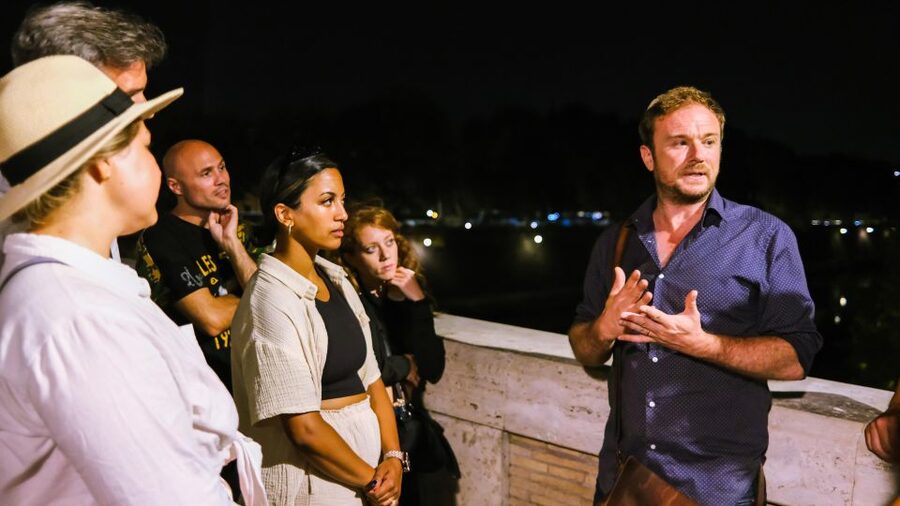
The walk continues to Ponte Sisto and then along Via Giulia. These stops help break up the stories with movement through central Rome. You are not parked in one square for the entire tour, and the changing streets keep the evening feeling active.
Via Giulia is tied to the story of Beatrice Cenci, one of Rome’s most tragic historical figures. Her life and death bring a different mood to the tour. The story is not only about crime. It also involves betrayal, family suffering, and the question of how much sympathy to give someone caught inside a cruel situation.
This is one of the tour’s strengths. The people are not presented as flat heroes or villains. Even when the subject is a notorious criminal or a powerful schemer, the guide adds enough context to show how personal ambition, fear, reputation, and social rules shaped the outcome.
At Ponte Sisto and along Via Giulia, you also get occasional facts about the surrounding city. Ben, in particular, is praised for adding useful information about places passed along the way, even when those details sit outside the main crime theme. That helps the walk work for people who like Rome itself, not only crime stories.
The route is outdoors from start to finish. Wear shoes that can handle uneven cobbles, and remember that Rome’s weather does not cancel the activity. An umbrella or raincoat is a sensible addition, especially because there is no indoor lecture room to retreat to.
Giulia Tofana and the art of the poisonous tale
Giulia Tofana is one of the tour’s more notorious characters. Her story concerns poison and the fear it created in Rome. It is the sort of episode that explains why this experience feels different from a standard city walk.
The appeal is not simply the gruesome subject. The guide uses the story to show how crime could hide inside domestic life and how difficult it was to separate rumor, fear, confession, and fact. That uncertainty gives the tale its edge.
This section will please you if you enjoy historical mysteries and morally murky characters. It may feel too theatrical if you prefer only verified modern case files. The experience draws its material from older history, church power, noble families, public punishment, and famous scandals rather than from recent investigations.
That distinction matters. One person hoping for more recent true crime, ghosts, or overt horror found the tour lighter on those elements than expected. The guide does cover dark and sometimes gruesome material, but the overall style remains entertaining and informative instead of frightening.
More Small-Group History Tours in Rome:
- Rome: Colosseum and Ancient Rome Small Group Guided Tour
★ 4.5 · 70 reviews - Rome: Trastevere street food and history tour – small group
★ 5.0 · 58 reviews - Pompeii: Small Group Tour with an Archaeologist
★ 4.8 · 12,264 reviews - London Small Group Tour of Historical Pubs
★ 5.0 · 10,422 reviews
A 10-minute bar stop keeps the pace comfortable
About halfway through, the group stops at a local bar for roughly 10 minutes. You can use the break for the restroom or buy a drink. Food and drinks are not included, so plan to pay for anything you order.
I like this pause because two hours of standing and walking can feel longer than expected, especially in summer or after a full day of sightseeing. It also gives you a moment to reset before the final stories.
Do not read too much into the bar stop. It is a practical break, not a seated tasting or a long social visit. If you want a full aperitivo experience, you will need to arrange that separately.
The break also helps the guide manage the rhythm. The most successful guides on this route, including Ben, Ivana, Ivanka, and Ariel, are praised for keeping the group engaged from beginning to end. A short pause lets the stories remain sharp rather than becoming one long stream of names and misdeeds.
Castel Sant’Angelo provides a fitting final scene
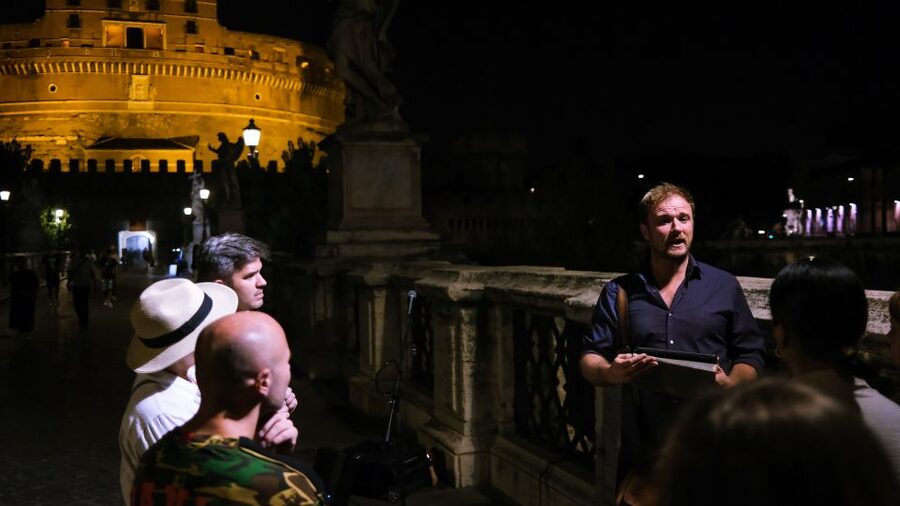
The final stop is Castel Sant’Angelo. The tour ends here, so you can continue your evening in the area rather than doubling back to Campo de’ Fiori.
Castel Sant’Angelo is a strong place to finish a story about Rome’s dangerous side. It carries associations with power, imprisonment, religion, and the city’s long political past. The guide uses the final stretch to connect the people and plots you have heard with the broader city around you.
Be clear about what is included. This is an outdoor guided walk ending at the castle. You are not given an interior visit or an admission ticket. If you want to explore Castel Sant’Angelo inside, plan that as a separate activity.
Ending here is also practical. You finish near one of Rome’s major sights, with the rest of the evening open. The route covers enough ground to feel like a real city walk, but it does not demand an entire day or force you to sacrifice a major museum visit.
The guides make or break this experience
The subject matter is strong, but the delivery matters even more. A list of old crimes can become dull quickly. This tour depends on a guide who can explain the setting, handle grim material with care, and keep the group listening while standing on a street corner.
Ben is repeatedly described as funny, charismatic, and able to hold attention from start to finish. His relaxed style also helps people feel comfortable asking questions. Ivana is praised for her passion, humor, and command of the material, while Ivanka brings warmth and energy to the stories. Ariel is noted for clear, engaging storytelling and helpful suggestions about other things to do in Rome.
Guide assignments can change, so you should not book on the assumption that one particular person will lead your departure. Still, the range of strong guide feedback suggests that storytelling is central to the company’s approach.
I especially like that the guides can answer questions beyond the narrow subject. One guide even offered restaurant and sightseeing suggestions after the walk. That can be useful early in a Rome visit, when you are still working out how to spend your remaining days.
What the $29 price really gets you
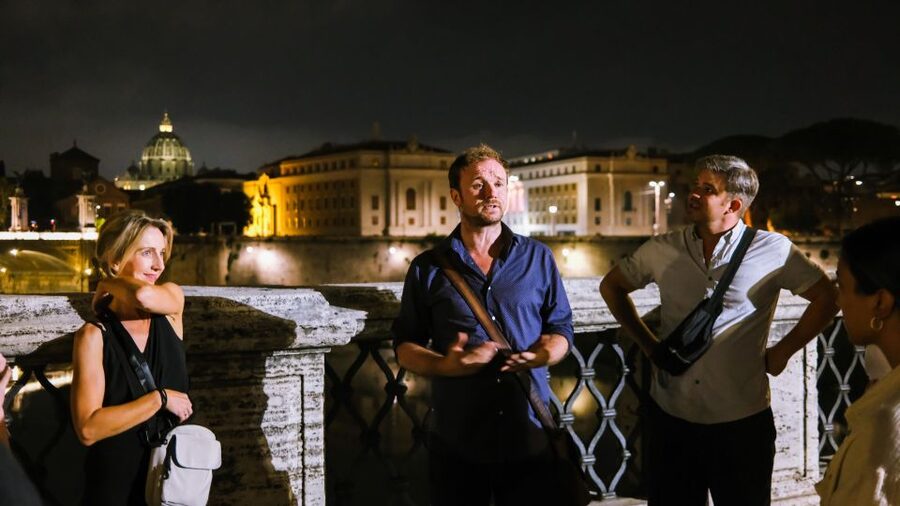
At $29 per person, this is a good-value evening activity. You receive two hours with an English-speaking storytelling guide, a small group capped at 15, a carefully chosen route, and a short break. There are no attraction tickets or refreshments included, but that keeps the price easy to understand.
The group limit matters more than it may first appear. A large city walk can turn into a performance for the people at the front, with everyone else trying to hear over traffic. Fifteen people is still enough for group energy, but small enough for the guide to address questions and keep the pace together.
The value is strongest if you have already seen the classic Rome sights and want a different angle. It also works well on a first evening because it introduces streets and landmarks without asking you to spend hours inside a museum.
At the same time, this is not a substitute for the Colosseum, Roman Forum, Vatican Museums, or Castel Sant’Angelo interior. If your priority is art, architecture, or archaeological detail, spend your money on a standard site visit first. Choose this walk for character, atmosphere, and stories.
Practical details that affect your evening
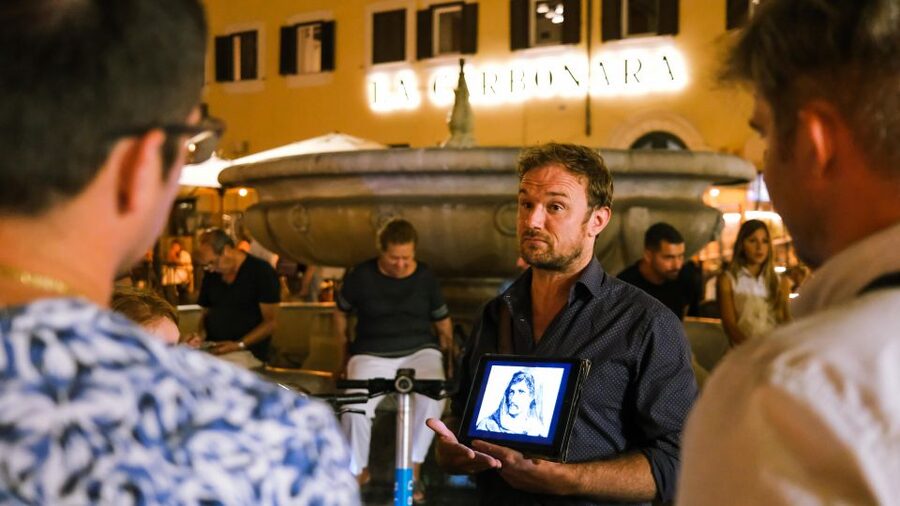
The tour lasts two hours and is conducted in English. It takes place entirely outdoors, rain or shine, so bring weather protection when needed. Comfortable footwear is more important than dressing up, even if you join in the evening.
The activity is listed as wheelchair accessible. Because the route uses public streets and historic areas, you may still want to confirm the exact conditions for your chosen departure if you have specific mobility needs.
The guide waits in front of the statue at the center of Campo de’ Fiori with the Rome’s Dark Side sign. Arriving with enough time to find the statue is wise, since the square can be active and crowded.
Cancellation is free up to 24 hours before the start time, and you can reserve now and pay later. Those policies are useful if your Rome plans are still shifting, though they do not change the basic need to arrive prepared for an outdoor walk.
Who should book this Rome crime walk?
You should book it if you enjoy historical crime, scandal, political intrigue, and stories about unusual figures. It is also a good match if you have already covered Rome’s major sights and want two hours of walking through less obvious material.
You do not need to be a serious true crime fan. The route includes general facts about Rome, local recommendations, and stories about the streets themselves. The humor keeps the tone from becoming relentlessly bleak.
I would think twice if you want recent criminal cases, a dedicated supernatural tour, or a heavily researched lecture with long discussions of historical sources. The experience uses the past as entertainment and context. It is dark, but it is also lively and often funny.
Should you book Secrets of Rome?
For $29, this is an easy tour to recommend to the right person. The small group, central route, short duration, and capable storytellers make it a smart addition to a Rome itinerary, especially for an evening when you want something more active than dinner.
Book it for Giordano Bruno, the Borgias, Donna Olimpia Maidalchini, Giulia Tofana, and Beatrice Cenci, not for modern police cases or nonstop ghost stories. If you like your history with a little poison, betrayal, and black humor, this walk gives you a memorable look at Rome’s less polished past.
FAQ
Where does the tour start?
The tour starts in Campo de’ Fiori. Your guide waits in front of the statue in the middle of the square and holds a sign saying Rome’s Dark Side.
Where does the tour finish?
The walk finishes at Castel Sant’Angelo.
How long does the tour last?
The tour lasts two hours.
What places does the route include?
The route includes Campo de’ Fiori, Piazza Farnese, Ponte Sisto, Via Giulia, a local bar for a short break, another historic stop, and Castel Sant’Angelo.
Is the tour conducted in English?
Yes. The tour has a live English-speaking guide.
How large is the group?
The group has a maximum of 15 people.
Are food and drinks included?
No. Food and drinks are not included, though the tour includes a stop at a local bar where you can take a restroom break or buy a drink.
Does the tour operate in bad weather?
Yes. The tour runs rain or shine and takes place outdoors, so bring an umbrella or raincoat if needed.
Is the tour wheelchair accessible?
Yes. The activity is listed as wheelchair accessible.
How much does the tour cost?
The price is $29 per person.
Just added around Rome
- Rome: Colosseum and Ancient Rome Guided Walking Tour★ 4.5 · 95 reviews
- Rome: Rome at Night Evening Historical Walking Tour★ 4.9 · 24 reviews
- Rome Secrets: Dark History & Tasty Bites Tour★ 5.0 · 37 reviews
- Rome: Introduction to the Colosseum and Ancient City Tour★ 4.8 · 75 reviews
- Rome Pantheon Semi-Private Guided Tour with an Archaeologist★ 5.0 · 60 reviews
- Rome: Ostia Antica Archaeological Park Ticket & Audio App★ 4.6 · 146 reviews
- Rome: Food Tour of the Historic Center with Rooftop Spritz★ 4.7 · 43 reviews
- Rome: Guided Tour of Colosseum and Ancient Rome★ 4.9 · 74 reviews
Rome History Tours, compared.
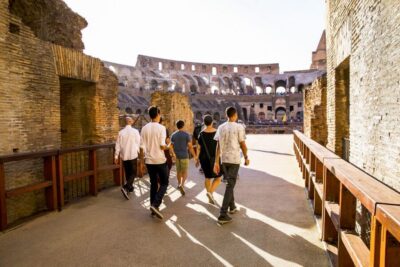
Colosseum: Underground and Ancient Rome Tour
Read our review →
Rome: Colosseum with Arena, Roman Forum and Palatine Guided Tour
Read our review →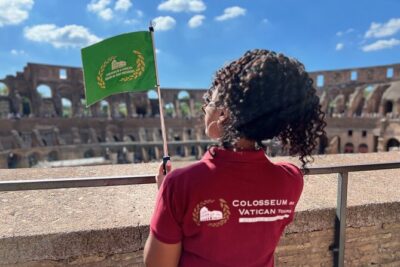
Colosseum with Arena, Roman Forum and Palatine Hill Guided Tour
Read our review →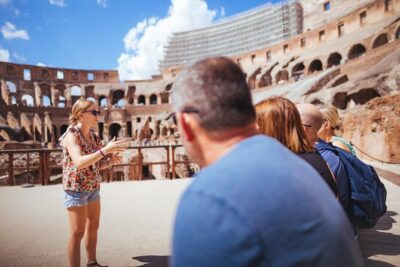
Colosseum & Ancient Rome with Arena Floor Option I Max 6 People
Read our review →
Rome: Colosseum, Ancient Rome Tour or AudioGuided Tour
Read our review →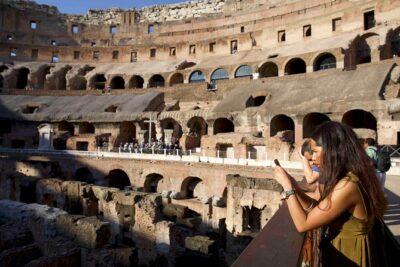
Colosseum Underground & Ancient Rome Guided Tour
Read our review →
Rome: Colosseum Arena, Roman Forum & Palatine Hill Tour
Read our review →
Colosseum, Roman Forum & Palatine Hill Guided Tour
Read our review →Browse the lists this tour appears in