
Review · USA
Salt Lake City: History & Culture Guided Walking Day Tour
Salt Lake City’s story comes into focus on foot, from the LDS pioneer settlement around Temple Square to modern shopping, sports, art, and immigrant communities. This three-hour walk gives you a useful first look at a city that can seem spread out when you view it from a car.
I like the small-group format and the guides’ personal touch. Jack, Michelle, Ashley, Rachel, and other guides are praised for clear storytelling, humor, local food tips, and thoughtful answers. The one drawback is simple: three miles in up to three hours can feel long in summer heat or rain, so comfortable shoes, water, and weather protection matter.
Key points to know before booking
- A 3-mile loop covers the downtown core: You get a broad introduction rather than a single-site visit.
- Temple Square anchors the story: Learn how LDS pioneers shaped the city and how the area continues to influence Salt Lake City.
- The route mixes old and new: City Creek Center, Pioneer Park, Vivint Arena, arts, sports, and changing neighborhoods share the same walk.
- Guides make the difference: Jack, Michelle, Ashley, Rachel, Blake, and others have been praised for warmth, humor, local advice, and strong storytelling.
- The pace includes breaks: Guides have added restroom stops and adjusted the walk for heat and rain.
- It suits first-time visitors: You leave with a city overview, practical orientation, and ideas for what to explore next.
Why a three-mile walk is a smart first look
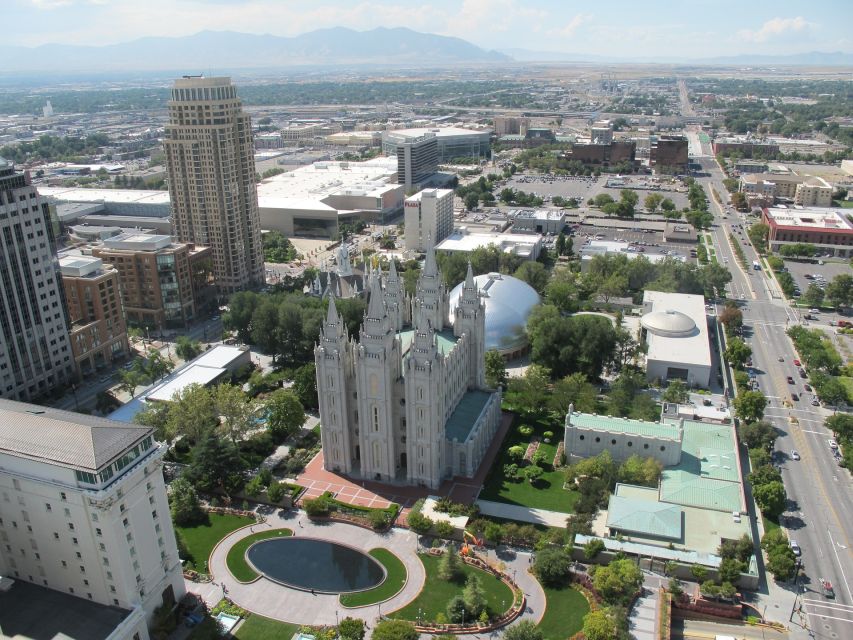
Salt Lake City is easier to understand when you connect its landmarks on foot. The tour traces a downtown loop of about three miles, taking two and a half to three hours. That gives you enough time to hear the city’s founding story, notice changes in architecture, and ask questions as you go.
I like this format because it avoids the usual sightseeing problem: seeing several buildings without understanding how they fit together. Here, the LDS pioneer story is linked to present-day culture, the arts, the 2002 Olympics, sports, shopping, and the arrival of people from around the world.
This is not a museum tour with long indoor stops. It is an outdoor city walk, so you experience street scale and the changing feel of downtown. You will need to keep moving, though. If you prefer long visits inside individual attractions, this may feel too broad.
The minimum group size is two people, and the small-group setup should make conversation easier than on a large coach tour. Guides can answer questions as they arise, and the experience can feel more like walking around town with an informed local than following a crowd.
More History Walking Tours in the USA
- History and Hauntings of Salem Guided Walking Tour
★ 5.0 · 14,564 reviews - Boston: Freedom Trail History Small Group Walking Tour
★ 5.0 · 6,450 reviews - Historic Charleston Guided Sightseeing Walking Tour
★ 5.0 · 6,216 reviews
Temple Square and the city shaped by LDS pioneers
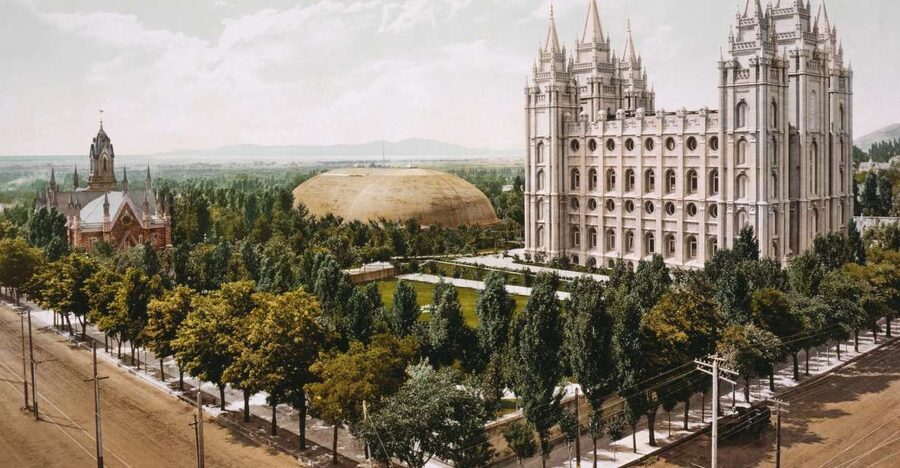
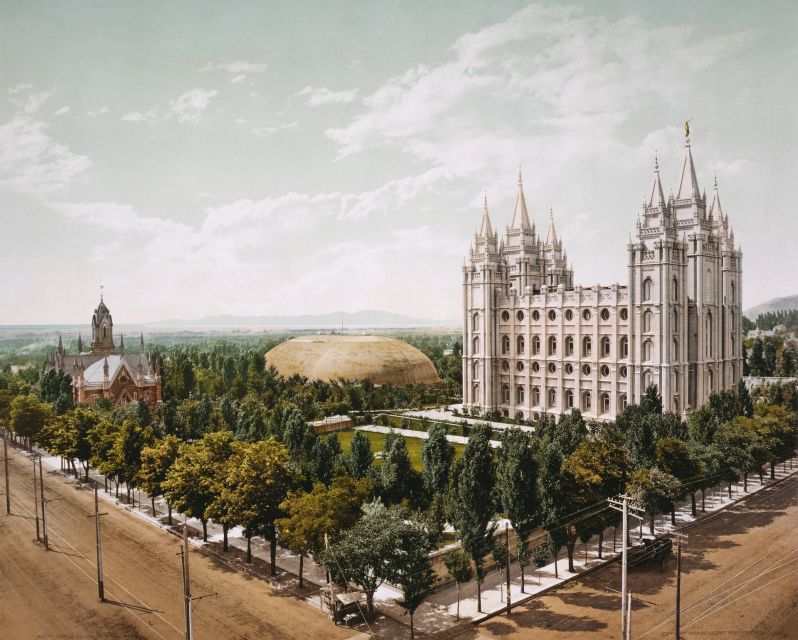
Temple Square is the natural place to begin Salt Lake City’s civic story. The 10-acre complex is owned by the Church of Jesus Christ of Latter-day Saints, commonly called the Church of LDS in tour information, and its presence helps explain the city’s identity.
Your guide puts the site into a wider story about the Mormon pioneers who settled the area. That context matters because Salt Lake City is not simply a Western city with an important religious building at its center. The founding community shaped the street plan, institutions, public image, and ongoing culture of the downtown area.
Expect the guide to focus on stories and visible architecture rather than a lengthy interior visit. The route is designed to help you understand the setting, the people who founded the city, and the forces still shaping it.
This part of the walk is especially useful if you know little about LDS history or want a respectful introduction without having to sort through a large amount of information alone. Jack has been praised for explaining the Mormon community clearly and answering questions with patience. Other guides, including Michelle and Rachel, have earned similar praise for making the history lively and easy to follow.
Keep your expectations in check. Temple Square is a major stop, but the tour is not presented as a full religious-site tour. You are seeing it as one part of Salt Lake City’s wider story.
City Creek Center shows a newer Salt Lake City
City Creek Center offers a sharp change in tone. The mixed-use development brings upscale shopping into the downtown core and shows how Salt Lake City has invested in a modern central district.
I find this contrast useful. After hearing about pioneers and early settlement, you see a contemporary commercial center where shopping, architecture, and city life work in a very different way. The point is not simply to list stores. It is to notice how the city has tried to keep downtown active and attractive.
You should think of City Creek Center as a passing stop and an orientation point rather than a shopping excursion. The tour price does not include shopping, and the three-hour schedule does not leave much time for browsing. If you see something you want to return to, make a note of it and come back later.
This is also a good place to ask your guide for suggestions about food, nightlife, and other parts of downtown. Michelle was specifically praised for advice about restaurants and nightlife, which can be useful if you have only a short stay.
Pioneer Park and the Rio Grande neighborhood
Pioneer Park sits in Salt Lake City’s Rio Grande neighborhood, giving the walk a different urban setting from the polished blocks around Temple Square and City Creek Center. Including it helps you see that downtown is not one uniform district.
The value here is the change in atmosphere and the chance to hear how different parts of the city fit together. A city walk becomes more honest when it moves beyond its postcard center. You get a sense of the neighborhoods, public spaces, and social changes that form modern Salt Lake City.
The available details do not promise a long park visit or a particular activity there. Treat it as part of the walking route and city discussion, not as a separate park tour. Your guide may add local detail depending on the group’s questions and the conditions that day.
Pioneer Park also gives the route a practical rhythm. A public park can provide a more open setting after denser downtown streets, though shade and comfort will depend on the day. One guide added restroom breaks, which is helpful on a walk of this length.
More Local Culture and Traditions Tours in the USA
- Portland Explorer | Maine History, Culture, & 3 Lighthouses Tour
★ 5.0 · 948 reviews - Charleston’s Best Highlights: History, Culture & Architecture
★ 5.0 · 422 reviews - Carmel Small Group Walking Food & Cultural Tour
★ 5.0 · 392 reviews - The Original Greenwich Village Food & Cultural Tour Since 1999
★ 5.0 · 254 reviews
Vivint Arena and the Olympic-era city
Vivint Arena brings sports and large-scale events into the story. The indoor arena is part of Salt Lake City’s modern public life, and the tour also discusses the 2002 Olympics.
This part helps explain a city that is more than its religious beginnings. Sports, international events, and new arrivals have helped shape how Salt Lake City presents itself today. The tour connects those subjects to the city’s built environment and changing culture.
Do not book this expecting a behind-the-scenes arena visit or access to Olympic venues. The information describes a walking tour of downtown, not an arena admission experience. You will hear about these influences and see how they fit into the city’s identity.
For many people, this is where the tour becomes especially useful. You can hold several versions of Salt Lake City in your mind at once: pioneer settlement, religious center, Olympic host, sports city, arts community, and growing metropolitan area.
Architecture, arts, and a city in transition
One of the tour’s strongest features is its attention to architecture. The route takes you through different parts of downtown, where older civic and religious influences meet newer commercial and cultural spaces.
You will not receive a specialist architectural lecture, but the guide points out the distinctive buildings and explains how they contribute to the city’s feel. This is much more useful than simply taking photographs without knowing why a street or façade matters.
The discussion also includes the arts and the influence of people from many parts of the world. That subject keeps the tour from presenting Salt Lake City as a frozen pioneer town. The city’s current identity is still being shaped by modern culture, creative work, migration, and urban change.
I would pay attention to transitions between stops. Notice how the city’s character shifts as you move from Temple Square to commercial streets, public parks, sports facilities, and neighborhood spaces. Those changes are one of the best reasons to walk instead of taking a vehicle.
Conservation and the wider ecological setting
The experience also addresses conservation efforts and the ecological importance of the area. The supplied details do not specify individual conservation projects or natural sites, so you should not expect a separate nature excursion.
Still, this topic adds useful balance. Salt Lake City is often introduced through its urban landmarks, but the city exists within an important natural setting. A guide who explains ongoing conservation work can help you see that development, public space, and environmental care are connected.
The amount of time devoted to conservation may depend on the group and the guide. If this is your main reason for booking, ask at the beginning how much the walk will cover. If you want a broad downtown introduction, the subject works well as part of the larger story.
What the guides add to the walk
The guides are a major part of the value. Jack has been praised for strong historical explanations, good humor, and careful attention to heat. Michelle has been described as enthusiastic, friendly, and helpful with restaurant and nightlife suggestions.
Ashley has led walks through rain with an upbeat manner and has included local delicacies along the way. Rachel has been praised for lively storytelling, while Dimitrov used an iPad to show maps and documentaries that made the city’s past easier to picture.
Other named guides include Blake, Isabell, and Odem. Isabell was described as engaging and well prepared for visitors with only one day in the city. Odem was praised for taking care to make the walk both informative and enjoyable.
You cannot choose a specific guide from the information provided, so book for the tour format rather than one individual. The repeated pattern is encouraging: guides explain the history, answer questions, adjust to conditions, and add practical local advice.
A good guide matters here because the tour covers many subjects in a short time. Without clear storytelling, the route could become a string of unrelated stops. With a strong guide, the same walk gives you a connected picture of the city.
Heat, rain, distance, and accessibility
Three miles is manageable for most people who are comfortable walking, but it is not a tiny orientation stroll. Wear shoes you can use on pavement for several hours, and bring water, especially in summer.
Heat has affected the experience before, and at least one guide built in several breaks. Rain has also occurred, with the walk continuing after a wet start. Bring sun protection or rain gear based on the forecast rather than assuming conditions will be mild.
The tour is listed as wheelchair accessible. Because the route covers public downtown areas, you should still confirm current meeting and route details if you have specific mobility needs. The provider may be able to explain how stops and breaks are handled on your date.
The walk is conducted in English with a live guide. If you want a private tour in another language, this experience does not appear to offer that option.
Is $43 a fair price?
At $43 per person, the tour is reasonably priced for a three-hour guided introduction, especially if you are new to Salt Lake City. The fee includes a professional local guide and applicable taxes and fees, so you are paying mainly for interpretation, orientation, and conversation.
The value is strongest when you have limited time. Isabell’s tour worked well for someone with only one day in the city, and the route covers several major themes without requiring separate bookings for each stop.
The price is less compelling if you only want entrance tickets or a quick list of landmarks. This is a walking and storytelling experience. You are paying to understand the city, not to enter every attraction along the route.
Free cancellation up to 24 hours before the start and the reserve-now, pay-later option make it easier to fit the tour into a changing schedule. Those terms are useful, but the bigger value is the time saved in planning your own downtown route.
Who should book this Salt Lake City walk?
I would recommend it to first-time visitors, people with one day in Salt Lake City, and anyone who wants context before exploring alone. It also suits curious visitors who want to ask questions about LDS pioneers, modern culture, sports, architecture, conservation, and local food.
It is a good choice for solo visitors because the small-group setup creates an easy way to connect with a guide. The minimum group size is two, but the experience may still operate with a small number of people, allowing more room for questions.
Families with older children may appreciate the mix of parks, sports, shopping, and visual landmarks. Very young children may find three miles and several history-focused discussions tiring.
You should skip it if you dislike walking, need a highly specialized religious or architectural tour, or want extended indoor time at each attraction. It is broad by design, and its job is to give you a working map of downtown.
Final decision
Book this tour if you want Salt Lake City to make sense quickly. For $43, you get a three-hour, three-mile introduction that connects Temple Square, Pioneer Park, City Creek Center, Vivint Arena, Olympic influence, arts, conservation, and the city’s changing population.
The strongest reason to go is the guides. Jack, Michelle, Ashley, Rachel, Dimitrov, and the other local leaders bring different personalities, but the experience consistently depends on clear explanations and friendly conversation. Bring water, wear good shoes, and allow for changing weather.
If your schedule is tight, take this walk early in your visit. You will finish with a better sense of where to return, what questions to ask, and how Salt Lake City grew from a pioneer settlement into a modern city.
FAQ
How long is the Salt Lake City walking tour?
The tour lasts about three hours, with the walking portion described as a 2.5 to 3-hour experience.
How far do you walk?
The route covers about three miles through downtown Salt Lake City.
What places are included on the route?
The experience includes Temple Square, City Creek Center, Pioneer Park in the Rio Grande neighborhood, and Vivint Arena. It also covers the city’s pioneer history, modern culture, arts, 2002 Olympics, conservation, and ecological importance.
Is the tour conducted in English?
Yes. The tour has a live English-speaking guide, and English is the listed language.
Is the walking tour wheelchair accessible?
Yes, the activity is listed as wheelchair accessible.
What is included in the price?
The $43 price includes a professional local tour guide, applicable taxes, and fees. It does not list shopping, attraction admission, or food as included, though one guide has provided local delicacy samples during a tour.
Just added around the USA
- Red Rocks Amphitheatre Historical Walking Tour★ 5.0 · 74 reviews
- 1-Hour Segway Tour of Cheyenne Cañon Art, History and Nature★ 5.0 · 36 reviews
- Colorado Springs – Guided Walking Ghost / History Tour★ 5.0 · 168 reviews
- Ancient Landscapes Private Geology Hike at Garden of the Gods★ 5.0 · 31 reviews
- Village Food Tours Lunch & History Tour★ 5.0 · 80 reviews
- 2.5 Hour Kayaking with Manatee and History Tour in Tarpon Springs★ 5.0 · 24 reviews
- Safety Harbor Ghost Tour★ 5.0 · 60 reviews
- Historical Bicycle Tour of Dunedin★ 5.0 · 44 reviews
USA History Tours, compared.

History and Hauntings of Salem Guided Walking Tour
Read our review →
Charleston’s Old South Carriage Historic Horse & Carriage Tour
Read our review →
Boston: Freedom Trail History Small Group Walking Tour
Read our review →
Historic Charleston Guided Sightseeing Walking Tour
Read our review →
Savannah History and Haunts Candlelit Ghost Walking Tour
Read our review →
Tour of Historic Fenway Park, America’s Most Beloved Ballpark
Read our review →
Oahu: Mauka Warriors Luau Honoring Polynesia’s Forgotten History
Read our review →Browse the lists this tour appears in