
Review · HISTORY TOURS
Santo Domingo: Historical City Tour
Santo Domingo’s Colonial Zone packs the early history of European America into streets you can cross on foot. You’ll enter the first cathedral, climb through Ozama Fortress, walk Calle Las Damas, and see the places linked with the first hospital, university, shipyard, and viceregal palace in the Americas.
I like the private format, which gives your guide room to answer questions and adjust the pace. I also like that the $105 price includes several entry tickets, museums, a local guide, and nonalcoholic drinks. The main drawback is the walking: four hours in the sun, over old streets, is not a good fit for anyone with limited mobility.
I’d especially look for José, Luis, Samuel Solomon, or Miguel Angeles if your booking allows guide selection. Their clear explanations, humor, and ability to lead tours in both English and Spanish have been singled out by past customers. Just bring proper shoes, sun protection, and enough energy for a full morning on foot.
Key points to know before you book
- Calle Las Damas gives the tour its most memorable walk: This is presented as the first cobblestone street in the Americas, lined with some of the city’s earliest colonial buildings.
- The cathedral and Ozama Fortress are the main paid stops: Plan about 30 minutes at each, with the fortress offering views toward the Ozama River.
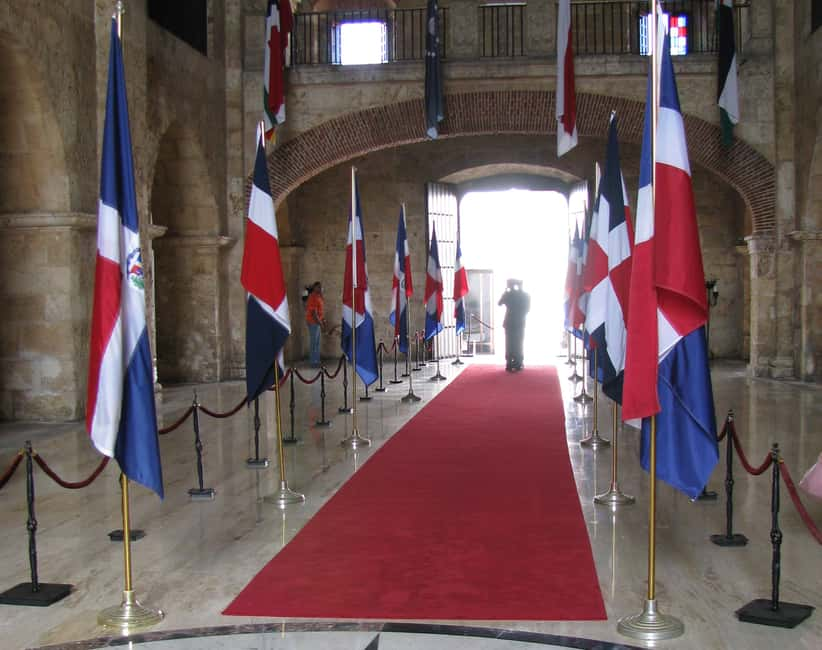
- You get more than a photo walk: Entry is included for the cathedral, fortress, National Pantheon, Museo de las Atarazanas Reales, and Centro Cultural Taino Casa del Cordon.
- The private guide is a real advantage: You can ask questions about architecture, religion, government, and daily Dominican life instead of following a fixed large-group script.
- This is a serious walking tour: Comfortable shoes, a hat, sunglasses, and sunscreen are essential. Children under five, wheelchair users, and people with mobility impairments should choose another activity.
- The schedule is simple: Pickup in the Zona Colonial begins at 10:00 AM, and the tour returns around 2:00 PM.
Why Santo Domingo’s Colonial Zone matters
Santo Domingo is not simply a pretty old quarter. It is the place where Spanish colonial power first took physical shape in the Americas. The tour uses that compact setting well, moving between churches, military walls, government buildings, museums, and narrow streets.
You’ll hear about the first cathedral, the first university, the first hospital, the first shipyard, and the first viceregal palace on the American continent. Those claims can sound like a checklist, but they become easier to understand when you see how close these sites are to one another.
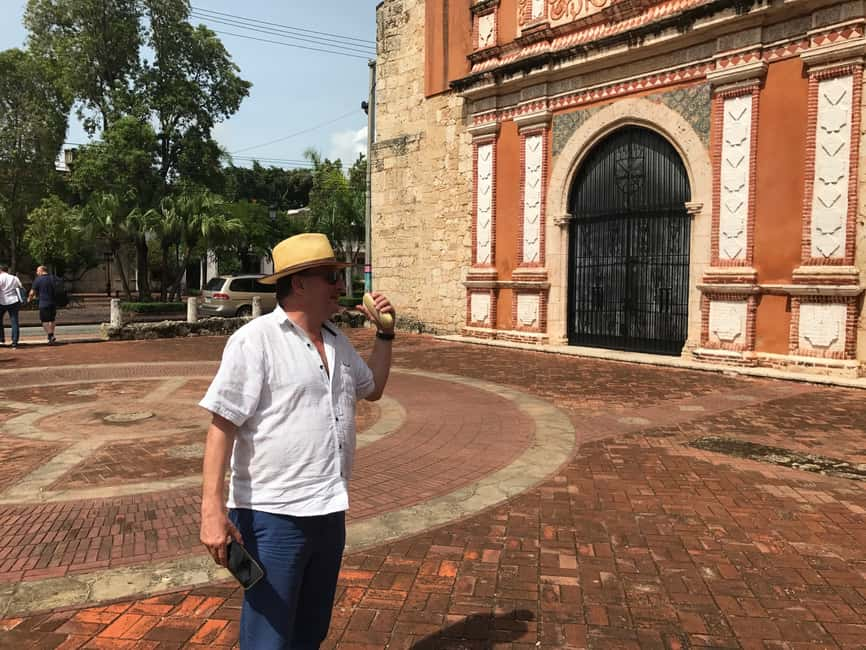
I like this kind of tour because the city’s past is not sealed away in one museum. It is built into the pavement and façades around you. You also get a glimpse of present-day Dominican life as the guide leads you through the active streets of the Old City.
The Colonial Zone is a UNESCO World Heritage Site, and this experience gives you a useful introduction without requiring a full day. Four hours is long enough to cover the major landmarks, yet short enough to fit into a morning before lunch or another Santo Domingo activity.
More History Tours in the world:
- Prague: Medieval Dinner with Unlimited Drinks
★ 4.4 · 19,847 reviews - Pompeii: Entry Ticket and Guided Tour with an Archaeologist
★ 4.8 · 19,459 reviews - History and Hauntings of Salem Guided Walking Tour
★ 5.0 · 14,564 reviews
Starting among the alleys of the Zona Colonial
Pickup is available from accommodations in the Old City District, with exceptions possible. If you stay elsewhere in Santo Domingo, pickup can be arranged for an extra charge. You should wait in your lobby at least five minutes before the scheduled time.
Once the walk begins, expect a mix of guided sightseeing, short transfers on foot, and stops inside historic buildings. The Colonial Zone is compact, but the old streets are not designed for fast, smooth walking. Your guide’s pacing matters, especially in the heat.
The route is suited to people who want context rather than only photographs. You’ll hear about the city’s early religious, military, and political roles while passing museums, squares, and important colonial structures.
The private group setup helps here. You can stop to ask why a building mattered, how a colonial institution worked, or what a particular architectural detail means. Guides such as José have been praised for being warm and attentive, while Luis and Samuel Solomon have been noted for keeping the tour clear and on schedule.
Santa María la Menor, the first cathedral
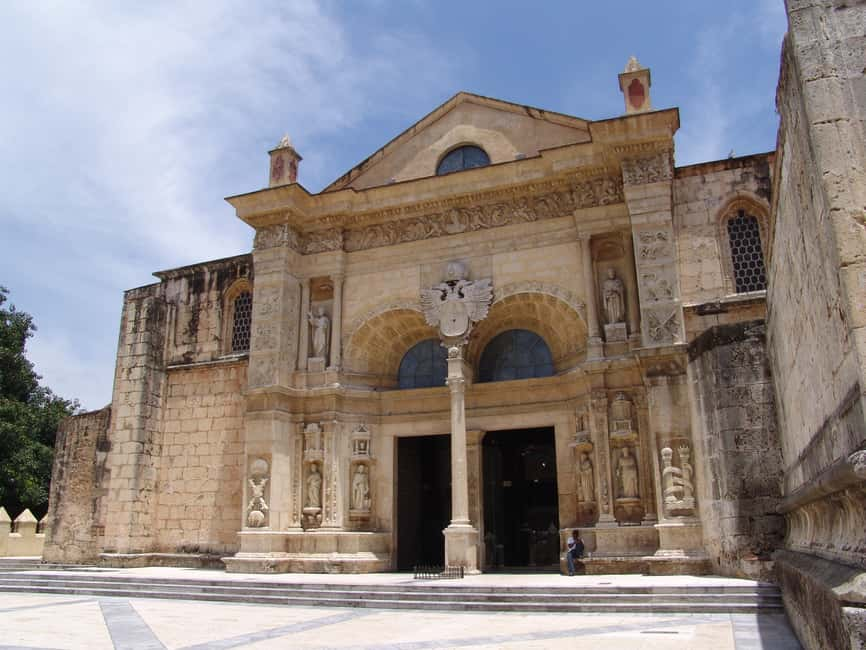
The Basilica Cathedral of Santa María la Menor receives about 30 minutes. This is one of the tour’s central stops, not a quick exterior photograph.
The cathedral is tied to Santo Domingo’s place as the first European city in the Americas and to the early establishment of Christianity in the region. The tour description also connects the city with the first bishop and the first major religious institutions of the New World.
Your guide can help turn the visit into more than a look at an old church. Pay attention to the building’s role in the city, its position within the Colonial Zone, and the way religious authority shaped early Santo Domingo.
Thirty minutes is enough for a focused visit, though not for a long museum-style study of every detail. If churches are a major interest for you, you may want to return independently after the tour. For most people, this stop provides the right amount of time without slowing the whole morning.
Ozama Fortress and the river views
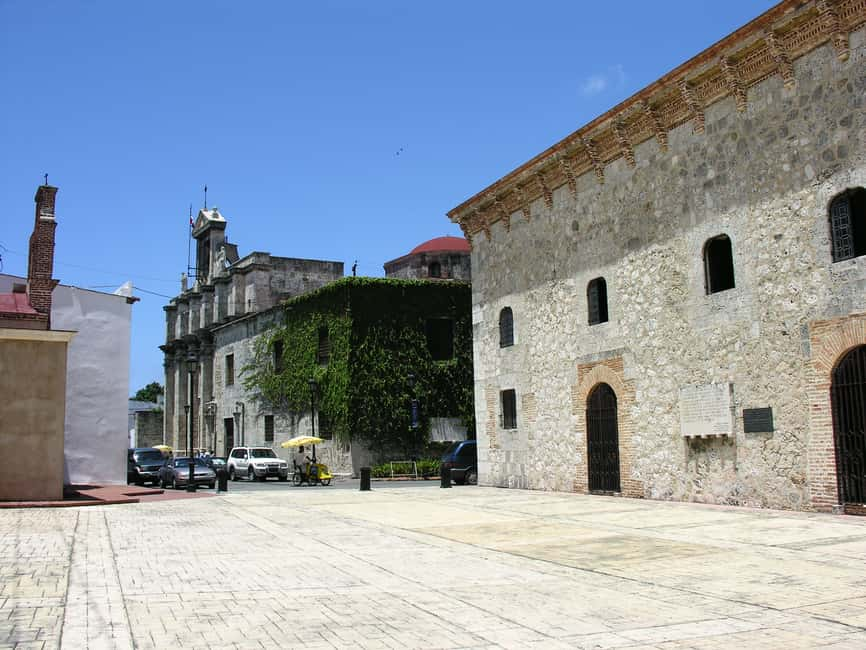
Fortaleza Ozama also receives about 30 minutes. Built as a defensive stronghold, it represents another side of early Santo Domingo: control, protection, and access to the river.
The fortress is one of the more physical parts of the tour. You’ll walk through a military site rather than simply stand outside it, and the elevated position provides views over the Ozama River. Bring your camera, but keep your attention on the structure itself. The setting helps explain why this spot mattered to the city’s early rulers.
The walking surface and fortress layout are important considerations. This is not an accessible visit for wheelchair users, and the full route is not recommended for people with mobility impairments. High heels are specifically not allowed, which is practical advice for any visitor considering the old streets and fortress ground.
If you enjoy forts, this stop may be the tour’s highlight. If you prefer art and interiors, the cathedral and museums may hold more interest.
Same city, a different century:
- Athens: Acropolis & up to 5 Archaeological Sites Combo Pass
★ 4.2 · 13,904 reviews - Colosseum: Underground and Ancient Rome Tour
★ 4.7 · 12,691 reviews - Pompeii: Small Group Tour with an Archaeologist
★ 4.8 · 12,264 reviews - Lisbon: History, Stories and Lifestyle Walking Tour
★ 4.8 · 10,902 reviews
Calle Las Damas and the earliest colonial streets
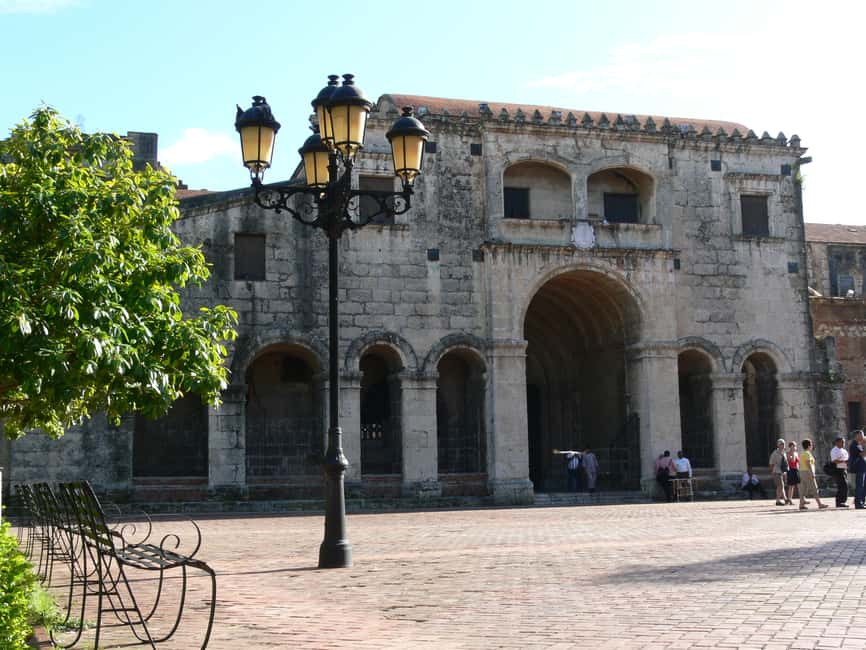
One of the most distinctive sections is the walk along Calle Las Damas. It is described as the first cobblestone street in the Americas, and the street gives you a strong sense of the city’s early design.
The value here is scale. Instead of viewing colonial history as a series of isolated attractions, you walk through the network that connected homes, religious buildings, official offices, and defensive sites. The narrow lanes make the area feel tangible in a way a bus tour cannot.
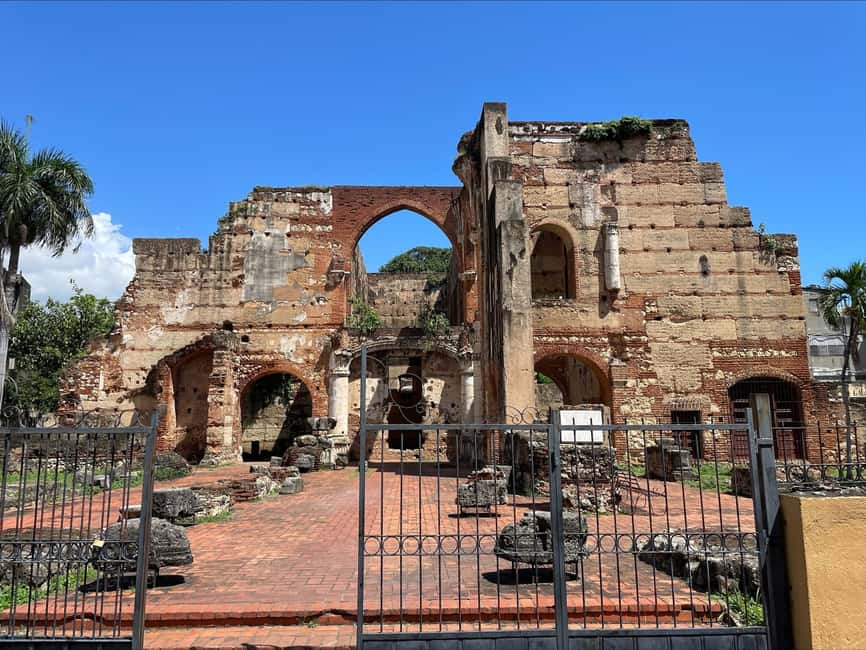
You’ll also see the first hospital, the first shipyard, and the first viceregal palace associated with the American continent. Not every building receives a long interior visit, so listen closely as your guide points out what you are seeing and explains its role.
This part of the tour lasts within the longer 80-minute Colonial Zone segment. That extended time allows for photos, museum visits, and short stops at squares and landmarks. It is also where you get the clearest look at daily life in the historic center, rather than only the official monuments.
The National Pantheon and Alcázar de Colón
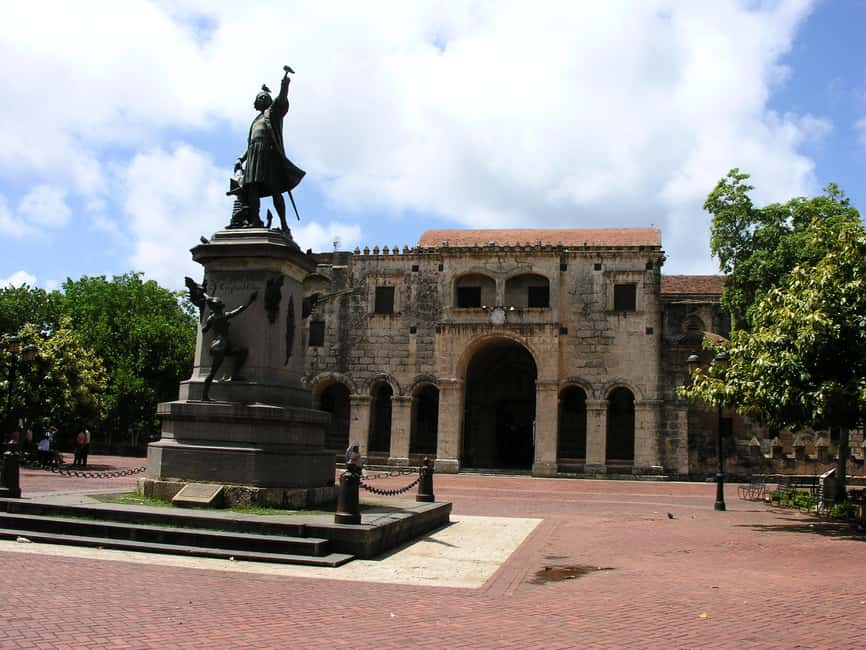
The National Pantheon is listed as a brief photo stop of about one minute, although entry is included. That timing tells you what to expect: it is an important landmark within the route, but not a long standalone visit.
The building adds a later national dimension to the morning. Your guide can place it alongside the city’s colonial churches and military sites, helping you see how Santo Domingo’s story continued beyond the earliest Spanish period.
The Alcázar de Colón receives about five minutes for photographs. It is another major Colonial Zone landmark and gives the route an impressive exterior stop, even though this schedule does not present it as a full interior tour.
These short stops are useful for orientation and pictures, but they are not substitutes for extended museum visits. If you want to spend an hour inside the Alcázar, you would need separate time and possibly a separate ticket. The strength of this tour is its broad introduction to the district, not a detailed study of every individual monument.
Museums that add detail to the walk
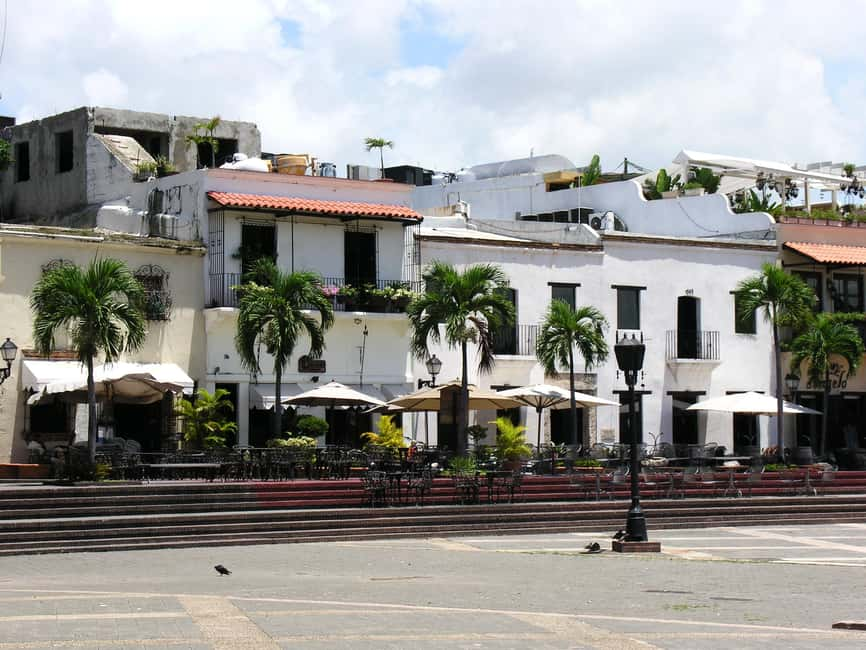
Entry is also included to the Museo de las Atarazanas Reales and the Centro Cultural Taino Casa del Cordon. These visits help break up the outdoor walking and add material culture to the architectural story.
Museo de las Atarazanas Reales is connected with the city’s historic shipyard district. That matters because Santo Domingo was not only a place of churches and government offices. Its port and maritime work helped connect the island with the wider colonial world.
Centro Cultural Taino Casa del Cordon brings attention to the Indigenous Taíno presence. This is an important balance in a tour centered on European foundations. Santo Domingo’s story did not begin with Spanish arrival, and a cultural center focused on Taíno heritage gives you a chance to consider that earlier history.
The exact time spent in each museum is not fixed in the schedule. Your guide may shape the visit around your interests and the pace of the private group. One past customer also praised a visit to a private Dominican art collection, so an extra cultural stop may sometimes be possible, but you should not assume it is part of every departure.
What the guide adds to the experience
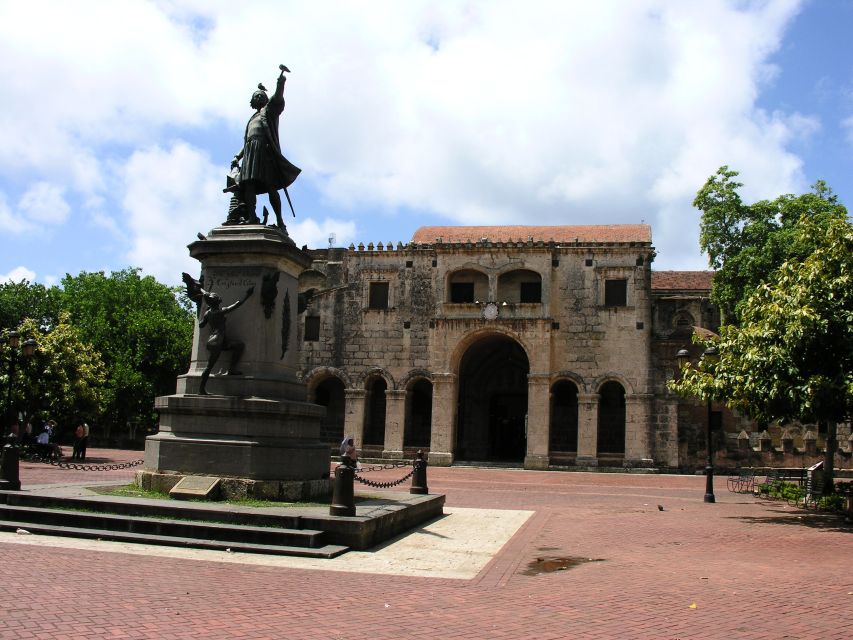
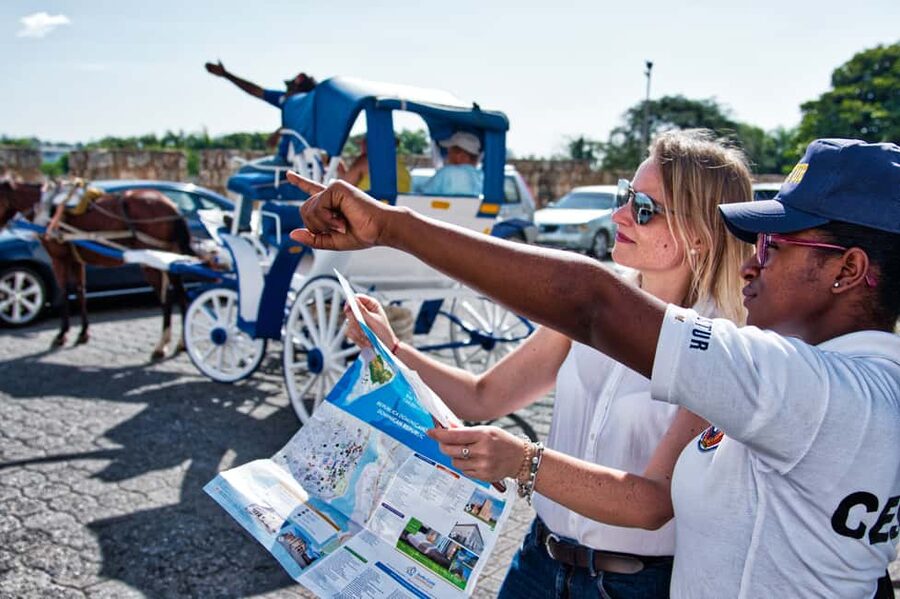
The guide is the part of this tour most likely to shape your impression. You are not only being walked from one address to another. You are relying on the guide to connect the cathedral, fortress, street plan, museums, and national landmarks.
José has been praised for his friendly, professional manner and for leading a tour in both English and Spanish for a mixed-language group. Luis was noted for explaining clearly, while Samuel Solomon was praised for his command of the schedule. Miguel Angeles was described as personable and entertaining.
The activity offers guides in Spanish, English, and German. If your group includes Spanish and English speakers, ask in advance about a bilingual guide. The experience can work well for families or couples with different language preferences, though children under five are not accepted.
The private format also means you can ask for more detail when something catches your attention. That is especially useful in a city where the same street may connect religious, military, commercial, and political stories.
Is $105 a fair price?
At $105 per person, this is not the cheapest way to see the Colonial Zone. The value depends on what you want from the morning.
The price includes a private local guide, pickup in the Zona Colonial, cathedral entry, Ozama Fortress entry, National Pantheon entry, Museo de las Atarazanas Reales entry, Centro Cultural Taino Casa del Cordon entry, and local nonalcoholic beverages. You are paying for interpretation and convenience as much as for admission tickets.
If you only want to walk the streets and photograph the façades, the cost may feel high. You can see plenty of the Colonial Zone without booking a private tour. But if you want the history explained in clear English, Spanish, or German, and you prefer not to organize each museum and landmark yourself, the price becomes easier to defend.
The private group matters most for couples, families, and small parties who would rather set their own rhythm. Solo visitors should think carefully about the per-person cost, since a private tour can be less economical for one person than a shared group excursion.
Heat, walking, and what to bring
The tour runs from about 10:00 AM to 2:00 PM, the warmest part of the day can matter. You will be outdoors for much of the four hours, with old streets and fortress areas underfoot.
Wear comfortable walking shoes. Avoid high heels, and do not count on the route being suitable for bare feet. Pack sunglasses, a sun hat, sunscreen, and a camera. Local nonalcoholic beverages are included, but bringing your own water is a sensible precaution for a long morning in the sun.
The activity is not suitable for wheelchair users, people with mobility impairments, children under five, or people over 80. Unaccompanied minors are not accepted. Pets, drones, alcohol, and drugs are also not allowed, and the experience is not designed for party groups.
You can cancel up to 24 hours before the start for a full refund, and the reserve-now, pay-later option keeps your plans flexible. These terms are useful if your Santo Domingo schedule may change.
Who should book this Santo Domingo tour?
I would choose this experience if you are visiting Santo Domingo for the first time and want the main historical sights explained in one morning. It is also a good fit if you are staying in the Colonial Zone and want pickup without arranging transport across the city.
You’ll get the most from it if you enjoy walking, churches, forts, museums, photography, and stories about how institutions developed in the early Americas. The mix of major landmarks and ordinary streets gives you more than a monument-to-monument route.
I would choose another plan if you want a relaxed, shaded outing, a fully accessible route, or long interior visits at each museum. The schedule covers a lot, but several landmarks are brief photo stops rather than full tours.
With a 4.9 rating from 42 reviews, the strongest pattern is clear: guide quality matters. José, Luis, Samuel Solomon, and Miguel Angeles are names worth noting, especially if you can request a particular guide or confirm language needs ahead of time.
Should you book it?
Book this tour if you want a focused introduction to Santo Domingo’s Colonial Zone and value a private guide who can explain what you are seeing. The included admissions and museums add real value, while Ozama Fortress, Calle Las Damas, and the cathedral give the morning a strong shape.
Skip it if four hours of walking in the sun sounds tiring or if you need step-free access. For everyone else, this is a practical first look at the city, with enough historical detail to help you understand the streets you pass through afterward.
FAQ
How long does the Santo Domingo Historical City Tour last?
The tour lasts approximately four hours. The scheduled start is 10:00 AM, and the planned end is 2:00 PM.
Where does pickup take place?
Pickup is available from accommodations in Santo Domingo’s Old City District, also called the Zona Colonial. Pickup from another part of Santo Domingo is available for an extra charge, with possible exceptions.
Is the tour private?
Yes. The activity is operated as a private group tour with a local guide.
Which languages are available?
The tour is offered in Spanish, English, and German.
What admission fees are included?
Entry is included for the Basilica Cathedral of Santa María la Menor, Fortaleza Ozama, the National Pantheon, Museo de las Atarazanas Reales, and Centro Cultural Taino Casa del Cordon.
Is the tour suitable for wheelchair users?
No. The tour is not suitable for wheelchair users or people with mobility impairments.
What should I bring?
Bring comfortable shoes, sunglasses, a sun hat, sunscreen, and a camera. You should wait in your accommodation lobby at least five minutes before pickup.
Can I cancel the booking?
Yes. You can cancel up to 24 hours in advance for a full refund. You can also reserve now and pay later.
Just added around the world
- 3 Hour Whiskey and History Tour★ 5.0 · 152 reviews
- Downtown Denver History & Highlights – Small Group Walking Tour★ 5.0 · 285 reviews
- Denver – Capitol Hill Guided Walking Ghost / History Tour★ 4.5 · 75 reviews
- Private Nightlife Tour in Denver: Culture, History, and Cocktails★ 5.0 · 48 reviews
- Delphi: Archaeological Site & Museum Ticket with Audio★ 3.5 · 24 reviews
- Tip Based: Capitol Hill History & Ghost Tour★ 5.0 · 34 reviews
- 1-Hour Thunderball WWII Adventure Jet Skiing in Darwin★ 5.0 · 70 reviews
- Bombing of Darwin World War II Tour with Harbour Cruise★ 4.5 · 219 reviews