
Review · CHARLESTON
Semi-private SMALL group Historic Walking Tours w/certified guide
Charleston’s story comes alive best on foot, and this tour gets you into the old city quickly. In about two hours, you walk past homes, churches, and public buildings, some dating to before the American Revolution, while your guide explains how Charleston grew and changed.
I like the small-group format, capped at 10 people, because you can ask questions without shouting across a crowd. I also like the local flavor: guides such as Steve Bailey, Kay, Kate, and Russ bring personal knowledge, point out less obvious alleys, and can adjust the conversation to your interests. The main drawback is that Charleston’s heat and humidity can make two hours on pavement tiring, especially in summer.
Key points to know before booking
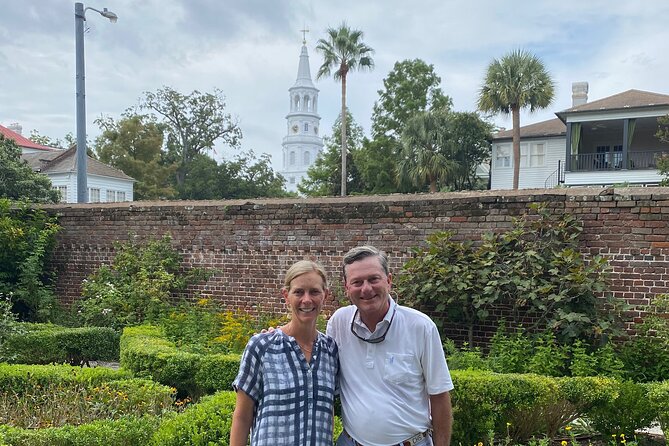
- A compact two-hour introduction: You see major historic sights without giving up an entire morning or afternoon.
- A maximum of 10 people: The small format makes it easier to hear the guide and ask questions.
- Charleston’s Four Corners of Law: City Hall provides a useful starting point for understanding the city’s early government and public life.
- Old architecture up close: The walk passes historic homes, churches, and public buildings, including structures that predate the American Revolution.
- The Charleston Battery is included: You get one of the city’s essential waterfront views as part of the walking route.
- A flexible, personal feel: Guides have adjusted the pace, answered individual questions, and made room for returning visitors who had already seen part of the planned route.
Why this two-hour Charleston walk works

This is a good first look at Charleston because it combines several subjects instead of treating the city as a collection of pretty façades. You hear about war, food, art, local customs, architecture, and folklore while moving through the historic center.
That mix matters. A house is more interesting when you know who lived there and why it looks the way it does. A church means more when you understand its place in Charleston’s civic life. Even an intersection can become memorable when your guide explains why City Hall and the surrounding buildings form the Four Corners of Law.
The pace is described as leisurely, and that is the right approach here. You are not racing from one landmark to another. You have time to look upward, notice details, and ask about something that catches your eye.
At roughly two hours, the tour also fits neatly into a larger Charleston day. You can take it early in your stay, use the guide’s orientation to plan the rest of your sightseeing, and then return later to places that deserve more time.
More History Walking Tours in Charleston
- Historic Charleston Guided Sightseeing Walking Tour
★ 5.0 · 6,216 reviews - Hidden Alleyways and Historic Sites Small-Group Walking Tour
★ 5.0 · 2,335 reviews - Charleston historical walking tour with a Professor of History at The Citadel
★ 5.0 · 1,284 reviews
Meeting at Broad Street and City Hall
The listed starting point is 80 Broad Street, in the heart of central Charleston. The walk also uses City Hall as an important early point, where the guide discusses Charleston’s beginnings and the Four Corners of Law.
This is a smart place to begin. You are not starting with a long transfer or a distant attraction. You begin in the historic core, where the streets themselves form part of the lesson.
The Four Corners of Law is especially useful for getting your bearings. The intersection brings together the city’s religious, legal, governmental, and commercial worlds, making it a natural place to discuss how Charleston was organized. You do not need to memorize every detail to benefit from it. The point is to understand how the city’s major institutions shaped its streets and buildings.
Steve Bailey has been praised for making this opening clear and engaging, while Kay has been described as willing to tailor the discussion to individual interests. If you have a particular curiosity, such as architecture, military history, food, or local customs, ask early. A small group gives you a better chance of steering part of the conversation.
Historic homes, churches, and public buildings
The central stretch of the walk focuses on Charleston’s built environment. You pass historic homes, churches, and public buildings, with some structures dating from before the American Revolution.
I like this part because it turns a simple stroll into a lesson in how Charleston changed over time. The guide does not just point at an old building and give you a date. The wider discussion covers the people, customs, conflicts, and choices that shaped the city.
The architecture is one of the tour’s strongest features, but you should know what this experience is not. It is not a house museum tour, and the information provided does not promise interior visits. You should expect to view historic buildings from the street and learn about their importance from your guide.
That limitation is also part of the appeal. You cover more ground than you would inside one museum, and the streets provide a continuous sense of place. The walk lets you compare buildings from different periods and notice how churches, public structures, and private homes sit together.
Several guides have different personalities. Steve is described as easy to engage with and especially strong at explaining the city’s past. Kay is described as energetic and attentive to personal interests. Kate has been praised for her command of Charleston and her ability to make the experience fun. Russ has been credited with strong communication before the walk and with adjusting the timing for a ship departure.
The guide assigned to your date may affect the tone, but the basic experience remains the same: a local-led walk through old Charleston in English.
The Charleston Battery and the waterfront finish
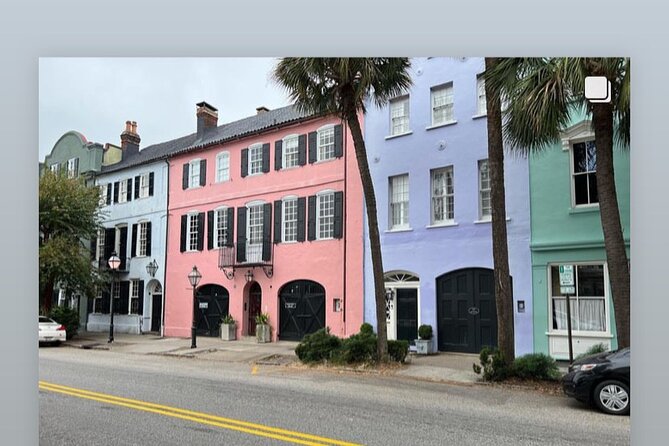
The Charleston Battery is one of the tour’s named highlights, and it gives the walk a change of scenery. After streets lined with historic structures, the waterfront opens the view and gives you a sense of Charleston’s position on the edge of the harbor.
The Battery is valuable not just as a photo stop. It helps connect the city’s buildings and past to its geography. Charleston’s location mattered to its commerce, defense, politics, and daily life. Seeing the water makes those subjects easier to picture.
Do not expect a long waterfront excursion. The tour lasts about two hours and also includes the central city, the Four Corners of Law, historic buildings, and other points along the route. Think of the Battery as an important part of a broader walk rather than the sole focus.
The listed endpoint is Dock Street Theatre at 135 Church Street. That is useful for planning. You finish in a central area, close to more historic streets and other places you may want to explore on your own. The route is not a loop, so consider what you plan to do afterward when arranging your day.
More History Walking Tours in the USA
- Charleston: Old Walled City Historical Walking Tour
★ 4.7 · 705 reviews - Historic Charleston Walking Tour: Rainbow Row, Churches, and More
★ 5.0 · 691 reviews - Charleston: History and Architecture Guided Walking Tour
★ 4.8 · 349 reviews - Charleston History and Hops Tour: Bar and History Walk
★ 5.0 · 316 reviews
Small group size, questions, and a personal pace

The advertised maximum is 10 people. That is a meaningful difference from a large group gathering around a guide on a busy street. You can stand close enough to hear, ask follow-up questions, and spend less time waiting for everyone to catch up.
A small group also helps with customization. One guide adjusted the route discussion when participants had already visited a planned site. Another was patient with elderly parents and kept the walk comfortable for the family. Those details matter if your group includes different ages or walking speeds.
There is one practical wrinkle. One past account described a group of 13, even though the current information lists a maximum of 10. If the size of the group is central to your decision, confirm the expected number when you book.
The tour is still a walking experience, not a vehicle tour. You should be ready to spend about two hours on city streets. The pace is generally described as manageable, but Charleston weather can change the experience. A hot, humid day may make the same route feel much longer than a cool morning.
Wear comfortable shoes, carry water, and consider sun protection. These are simple preparations, but they make a real difference on exposed streets and paved sidewalks.
What the guides add

The strongest part of this experience is the human explanation. Charleston’s old buildings are attractive on their own, but a guide gives you the context you cannot get by wandering with a map.
Steve Bailey appears often in the feedback and is described as a lifelong local with a strong feel for the city. He has been praised for detailed stories, clear explanations, and an easy way with questions. One particularly appealing detail is that he seems to know people throughout the city, which gives the walk a distinctly local feel.
Kay has been praised for her energy and for shaping the tour around personal interests. That flexibility is useful if you have already taken another city tour or want to focus on a subject that matters to you.
Kate has been described as highly informed and fun, while Russ has been noted for clear communication and a willingness to work with a tight departure schedule. The names are worth remembering because the experience may feel different depending on who leads your walk.
The best way to use any of these guides is to participate. Ask about a building, mention what you have already seen, or say what you hope to understand about Charleston. You are not limited to receiving a prepared speech.
Is $35 a fair price?

At $35 per person, this is a reasonable price for a guided two-hour walk in Charleston, especially if you value local interpretation and a group capped at 10.
You are paying for the guide rather than admission tickets. There are no listed interior entries or paid attractions, so the value rests on the quality of the storytelling, the route, and the chance to ask questions. For a first visit, that can be money well spent. A good introduction can save you from wandering past important buildings without understanding them.
The price is less compelling if you prefer to explore entirely on your own or if you want a tour built around museum entry. This experience is about the city’s streets, architecture, public spaces, and local history.
I would also compare the price with your schedule. Two hours is long enough to provide real context but short enough to fit before lunch, after breakfast, or between other plans. If you are arriving by cruise ship, the timing may work well, but leave enough margin for your return to the ship. One guide has adjusted timing for a ship departure, but you should still plan conservatively.
Who should book this walk?
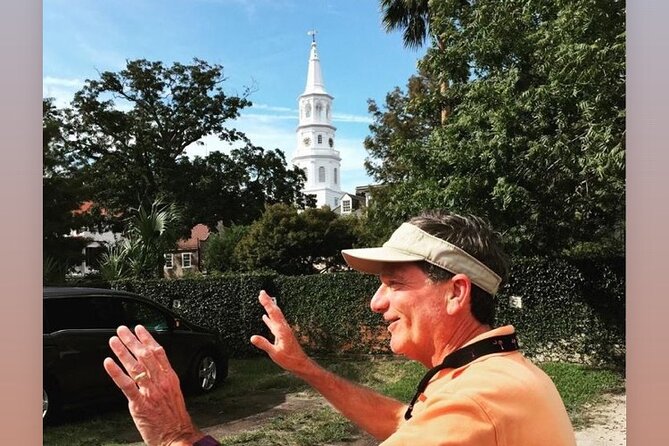
I would choose this tour if you are visiting Charleston for the first time and want a clear introduction before exploring alone. It also suits people who like history explained in plain language rather than delivered as a list of dates.
Families can benefit from the flexible pace and question-friendly format. Couples and solo visitors may particularly enjoy the small group because it is easier to engage with the guide. Older participants can take part, but remember that the experience still involves walking outdoors for about two hours.
This tour is also useful for repeat visitors. A local guide can take you beyond the most obvious streets, and one group was shown hidden alleys that they would likely have missed alone. If you have already seen one part of the route, the guide may be able to shift the discussion toward another subject.
It is less suitable if you need a fully accessible, seated activity, though service animals are allowed and most people can participate. The available information confirms that the tour is near public transportation, but it does not give detailed surface, restroom, or step information. If you have specific mobility needs, ask before booking.
Booking details that matter
Confirmation is provided when you book, and the activity is offered in English with a mobile ticket. The provider is Walk It! Charleston, and the guide is licensed and certified.
Free cancellation is available if you cancel at least 24 hours before the start time. Cancellations made less than 24 hours before the start are not refunded, and late changes are not accepted. The tour also requires a minimum number of people, so if that minimum is not reached, you will be offered another date or experience, or a full refund.
Because the tour is often booked about 22 days ahead, I would reserve early if your Charleston dates are fixed. That is especially sensible if you want a particular time or hope to keep the group as small as possible.
My call: a strong first walk through Charleston
Book this tour if you want a compact, local-led introduction to Charleston’s historic center. The combination of the Four Corners of Law, old homes and churches, the Battery, and a central finish gives you a useful framework for the city.
The best reason to choose it is the small format and the guides’ willingness to answer questions and adjust the conversation. Steve Bailey, Kay, Kate, and Russ each bring a personal approach, and the walk seems designed to feel more like time with a local than a rigid script.
Skip it if you want interior admissions, a seated tour, or a narrow focus on one subject. Otherwise, $35 buys two hours of solid orientation, useful context, and a better understanding of what you are seeing when you continue through Charleston on your own.
FAQ
How long is the Charleston walking tour?
The tour lasts approximately two hours.
How much does the tour cost?
The listed price is $35 per person.
Where does the tour start?
The listed starting point is 80 Broad Street, Charleston, South Carolina 29401. City Hall is also an early meeting point used for discussion of Charleston’s early history and the Four Corners of Law.
Where does the tour end?
The tour ends at Dock Street Theatre, 135 Church Street, Charleston, South Carolina 29401.
What sights are included?
The walk includes Charleston’s historic center, historic homes, churches, public buildings, the Four Corners of Law, and the Charleston Battery.
How many people can join the tour?
The advertised maximum is 10 people.
Can I cancel for a full refund?
Yes. You must cancel at least 24 hours before the experience start time for a full refund. Cancellations or changes made less than 24 hours before the start are not accepted for a refund.
More Private History Tours in the USA
- Private Sunset Sail BYOB Dolphin/History Tours on 43ft Mystique
★ 5.0 · 42 reviews - Private Walking Tour of Historic Charleston
★ 5.0 · 38 reviews - Private Afternoon Sailing/Dolphin & History Tour on 43ft Mystique
★ 5.0 · 32 reviews - Half Day Private Tour throughout Charleston Historic Locations
★ 5.0 · 32 reviews
More Private History Tours in Charleston
- Private Photo Session in Historic Charleston
★ 5.0 · 123 reviews - Private Historic Horse & Carriage Tour of Charleston
★ 5.0 · 103 reviews - Private Morning Sail, Dolphin and History Tour on Mystique
★ 5.0 · 84 reviews - Private Charleston Walking History City Tour
★ 5.0 · 49 reviews
Just added around Charleston
- Charleston’s Historic Pubs, Taverns, and Taprooms Tour★ 4.5 · 33 reviews
- Small-Group Tour: Charleston Old Walled City Historical Walking Tour★ 4.5 · 283 reviews
- Charleston’s Strong Women of the South History Tour★ 4.5 · 27 reviews
- Sip History In a Secret Speakeasy Cocktail Class★ 5.0 · 40 reviews
- Sip History in The Sun Cabana Covered Cocktail Class★ 5.0 · 332 reviews
- Private Sunset Sail BYOB Dolphin/History Tours on 43ft Mystique★ 5.0 · 42 reviews
- Charleston History and Hops Tour: Bar and History Walk★ 5.0 · 316 reviews
- Private Walking Tour of Historic Charleston★ 5.0 · 38 reviews
Charleston History Tours, compared.

Charleston’s Old South Carriage Historic Horse & Carriage Tour
Read our review →
Historic Charleston Guided Sightseeing Walking Tour
Read our review →
Charleston Harbor History Day-Time or Sunset Boat Cruise
Read our review →
Hidden Alleyways and Historic Sites Small-Group Walking Tour
Read our review →
Charleston: Daytime or Sunset Historic Harbor Cruise
Read our review →
Charleston historical walking tour with a Professor of History at The Citadel
Read our review →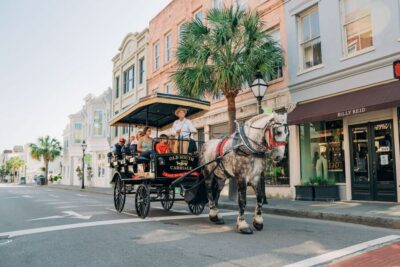
Charleston: Historical Downtown Tour by Horse-drawn Carriage
Read our review →