
Review · HISTORY TOURS
Tallinn: Medieval Walking Tour
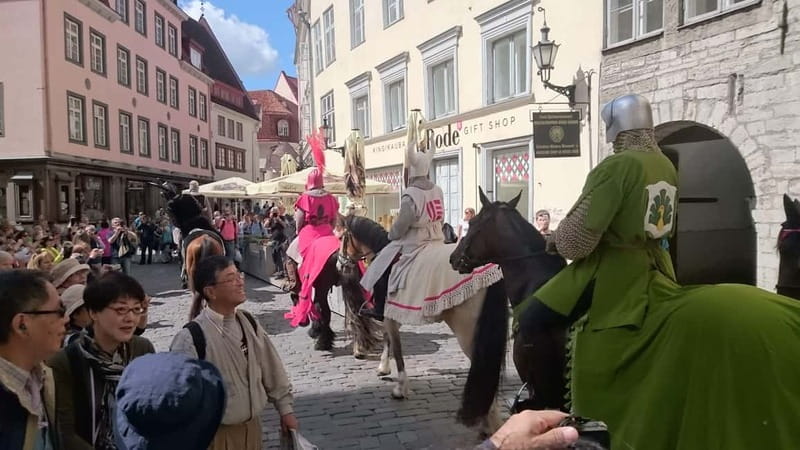
Tallinn’s medieval center packs a surprising amount into a compact walk. This two-hour tour takes you from the merchants and craftsmen of Lower Town up to Toompea, where bishops, noblemen, crusaders, and Estonia’s Parliament shaped the city. Along the way, you’ll hear the stories behind the walls, towers, churches, and the Danish flag.
I like the small groups of no more than 10 and the route’s useful mix of major sights and odd little details, including the old pharmacy and marzipan displays. I also like that guides such as Roman, Karina, Svetlana, and Max are praised for answering questions and giving practical food, museum, and shopping tips. The main drawback is pace: two hours is efficient, but some stops are brief, and cobblestones, stairs, and cold weather can make the walk tiring.
Key points to know
- The route crosses both sides of Old Town: You see Lower Town’s merchant streets and Upper Town’s churches, castle, and viewpoints.
- The best views come near the end: Kohtuotsa and Patkuli give you Tallinn’s most memorable city views.
- The Town Hall Pharmacy and marzipan room add local character: These stops go beyond a standard church-and-square tour.
- Guides shape the experience: Roman, Karina, Svetlana, Max, and other guides are praised for clear explanations, humor, and useful advice.
- The tour stays compact but active: Expect cobblestones, steps, church visits, and roughly two hours on foot.
- At $42, it is best for first-time visitors: The price makes more sense if you want history, orientation, and personal recommendations in one outing.
A smart first walk through Tallinn’s Old Town
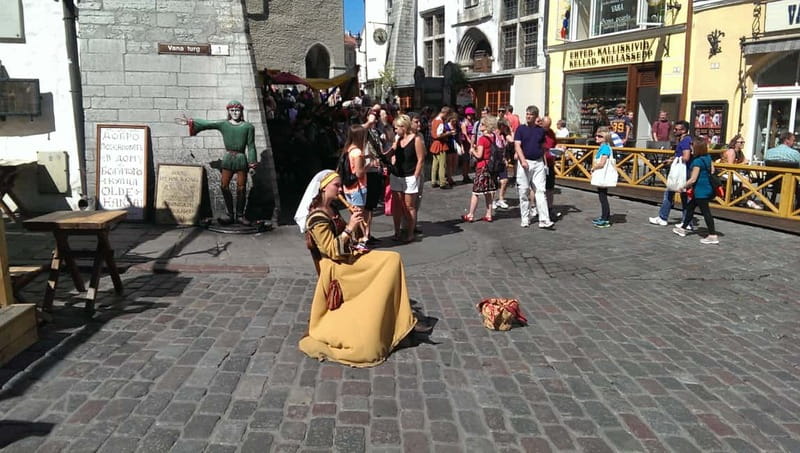
If you have only one day in Tallinn, this tour gives you a strong first look. It begins at Raekoja 1, beside Tallinn Town Hall in the main square, then threads through narrow Gothic lanes before climbing toward Toompea.
Tallinn’s Old Town is easier to understand when you divide it into two parts. Lower Town was home to merchants and artisans, with the Town Hall Square serving as a center of trade and civic life. Upper Town, on the limestone hill, belonged to bishops, rulers, noble families, and other officials.
That split is more than a geography lesson. It explains the changing feel of the walk. Lower Town is close, street-level, and full of commercial history. Upper Town feels more imposing, with large churches, government buildings, viewpoints, and defensive edges.
The guides bring this structure to life with stories about sea trade, local German influence, Catholic monks, and the goods that helped Tallinn prosper. You’ll hear why the city was known as a town of pepper and salt, a memorable phrase that points to its place in medieval trade networks.
More Medieval History Tours in the world:
- Prague: Medieval Dinner with Unlimited Drinks
★ 4.4 · 19,847 reviews - Prague: Oldtown, Medieval Underground & Dungeon History Tour
★ 4.3 · 10,277 reviews - Ghent: 50-Minute Medieval Center Guided Boat Trip
★ 4.5 · 5,637 reviews
Town Hall Square and the old pharmacy
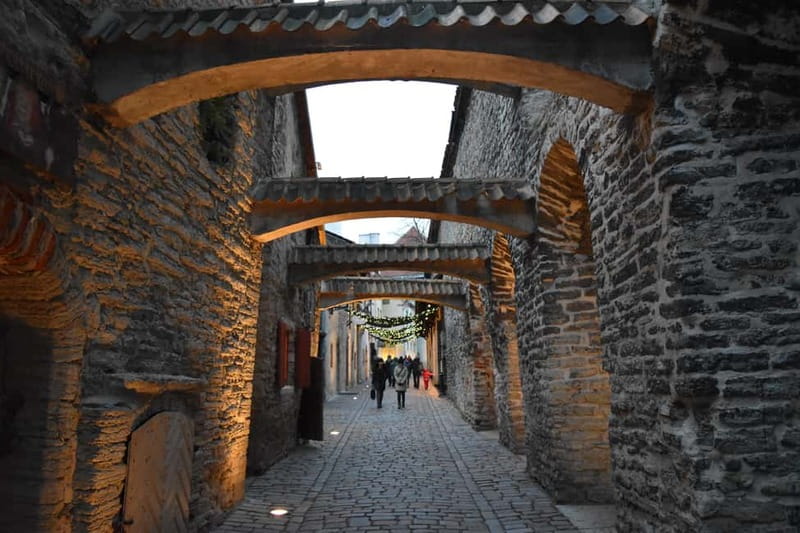
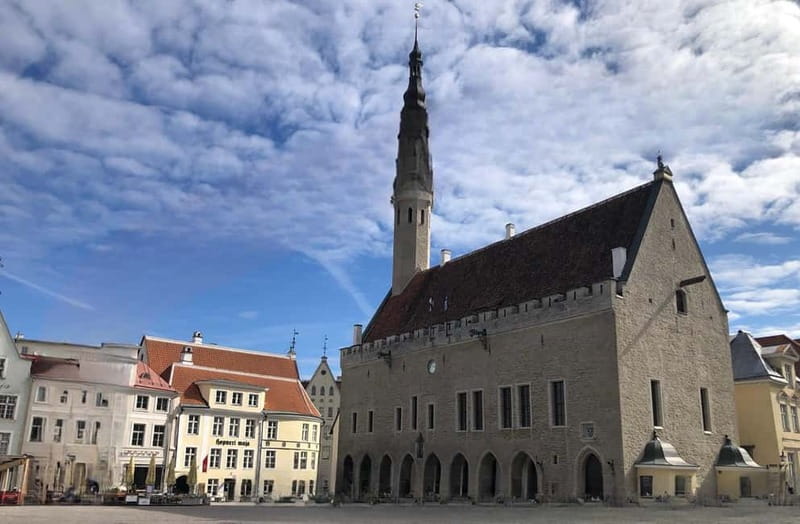
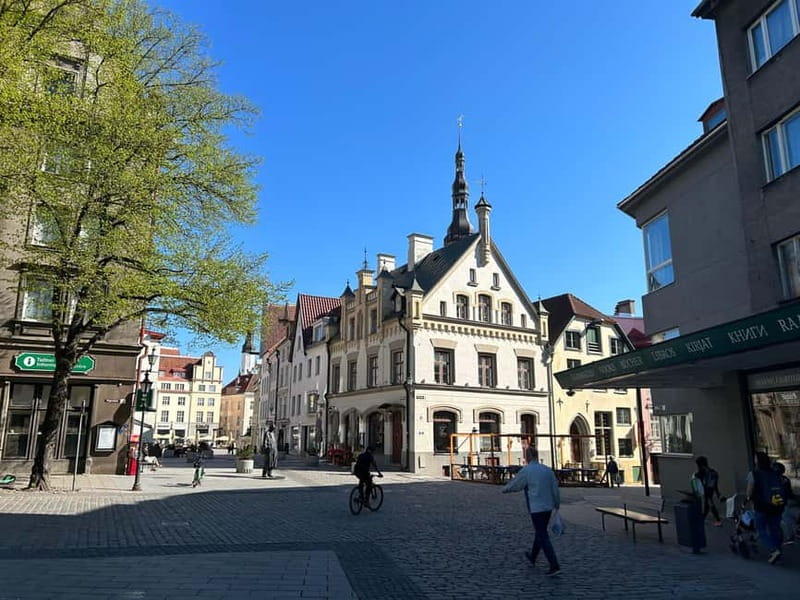
The opening stop is Town Hall Square, where you have about 20 minutes for an introduction and photos. This is a good starting point because the square gives you an immediate sense of Tallinn’s scale. Medieval buildings surround an open civic space, and the Town Hall itself provides the visual anchor.
Your guide will explain how Tallinn grew wealthy by drawing in sea traders. The square was not just a pretty gathering place. It was tied to business, local government, public life, and the movement of goods.
The Town Hall Pharmacy follows, with about 10 minutes inside. It is presented as the oldest pharmacy in Europe, and it gives the tour a welcome change of pace from grand churches and fortifications. You get a glimpse of everyday medieval and early modern life, including the sort of medicines and remedies once sold to townspeople.
The stop is short, so you should not expect a long museum visit. Its value comes from the contrast. After hearing about merchants and rulers, you see a place connected to ordinary health, trade, and household needs.
Marzipan, guilds, and the daily life of Lower Town
At the Kalev Marzipan Museum Room, you have another 10-minute visit. The connection between Tallinn and marzipan adds a lighter note to the history walk. You are not simply looking at old stone. You are also seeing how sweets, craft, and local tradition fit into the city’s identity.
The Great Guild Hall is next, with a short photo stop. The guilds helped regulate commercial life, and the building points back to the merchant class that made Lower Town prosperous. Your guide uses these buildings to explain how different communities lived and worked together.
Tallinn’s past included Estonians, local Germans, Catholic monks, merchants, and officials. Communication across those groups was not always simple. That makes the guide’s explanation of language, religion, and trade especially useful. You begin to see the Old Town not as a single medieval culture, but as a meeting point shaped by several communities.
Holy Ghost Church and a quick cultural detour
The Holy Ghost Church receives about 10 minutes. It is one of the stops where the tour shifts from civic history to religious life. Your guide can place the church within the religious and political story of Tallinn, helping you understand how churches once served more than one purpose in a compact city.
The route then passes the Estonian Theatre for Young Audiences and the Museum of Puppetry Arts. The guided visit lasts about 10 minutes. This is a less obvious stop than the cathedral or castle, and it adds a touch of modern cultural life to the medieval route.
You should see this as a brief introduction rather than a full museum visit. The tour has a lot of ground to cover, so the focus remains on orientation and context. If puppetry interests you, make a note to return later with more time.
More History Walking Tours in the world:
- History and Hauntings of Salem Guided Walking Tour
★ 5.0 · 14,564 reviews - Lisbon: History, Stories and Lifestyle Walking Tour
★ 4.8 · 10,902 reviews - Amsterdam: Life of Anne Frank and World War II Walking Tour
★ 4.8 · 10,467 reviews - Berlin: Third Reich & Cold War Guided Walking Tour
★ 4.9 · 8,378 reviews
Danish King’s Garden and the story of the flag
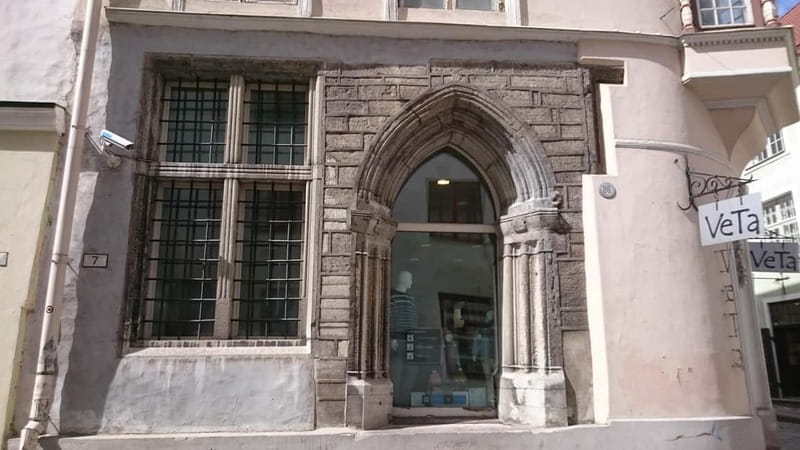
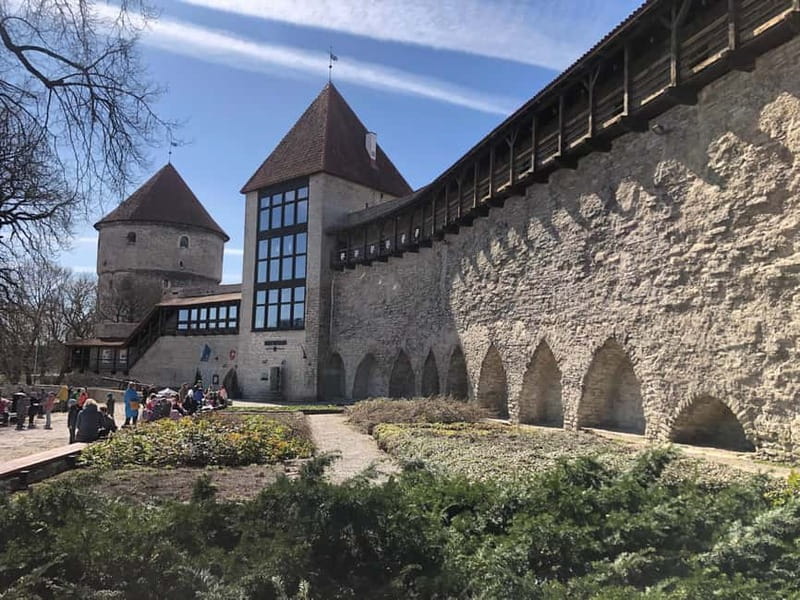
The Danish King’s Garden gets about 20 minutes, making it one of the longer stops. This is where the tour connects Tallinn with Denmark and the traditional story of the Danish flag’s birth.
The location also helps explain the relationship between Upper and Lower Town. From here, the defensive setting and the slope toward the lower streets become easier to read. Your guide will share the legends and history tied to the garden, giving you one of the tour’s most memorable story points.
This is a good place for photographs, but it is also a place where storytelling matters. The value is not just the garden itself. It is the way the guide links a physical corner of Tallinn to a larger European story.
Alexander Nevsky Cathedral and St. Mary’s Cathedral
The Orthodox Alexander Nevsky Cathedral is next, with about 10 minutes of guided touring. Its appearance makes it one of the most instantly recognizable buildings in Upper Town. The tour presents it as one of Estonia’s most striking Orthodox churches, and the visit gives you a chance to consider the religious and political layers of Tallinn.
Because the stop is short, you may have limited time to study every detail. Still, it is enough to understand why the church matters and how different it feels from the medieval merchant buildings below.
St. Mary’s Cathedral follows, with around 15 minutes. This church takes you further into Upper Town’s religious past and the influence of German crusaders, bishops, and noble families. The contrast between the Orthodox cathedral and the Lutheran church makes the city’s changing religious story easier to grasp.
I especially like this section for visitors who want more than a photo checklist. The guide explains who had power in Upper Town and how those institutions shaped Tallinn. You see architecture, but you also learn who controlled the hill.
Kohtuotsa, Patkuli, and Tallinn’s best views
The viewpoints are the high point of the route, both literally and photographically. Kohtuotsa viewing platform receives about 10 minutes, followed by a visit to the Patkuli Stairs.
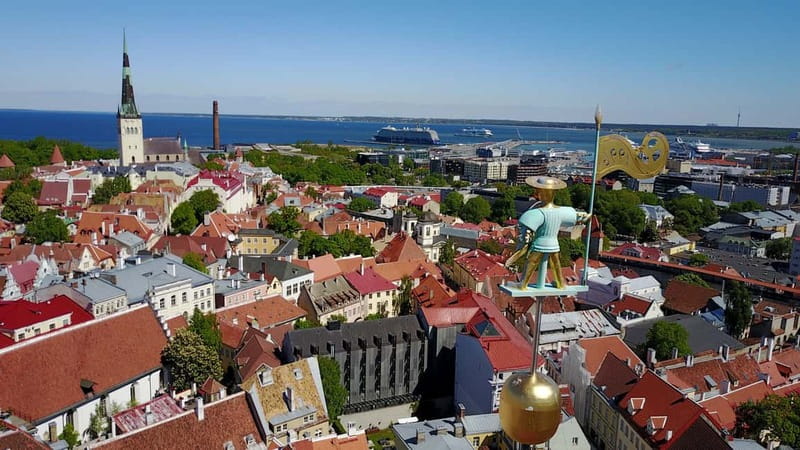
From these viewpoints, you can take broad pictures of Tallinn’s red roofs, church towers, defensive walls, and the city beyond the Old Town. The views are especially useful after the walking explanation because you can now identify the two-part structure of the city from above.
Patkuli is reached by stairs, so this is one of the moments when comfortable shoes matter. The route is not suitable for wheelchair users, and it is not recommended for pregnant women. Even for able walkers, the combination of uneven stones, slopes, and steps deserves attention.
Weather can also affect this part of the tour. In cold or poor conditions, the views may be less clear. One guide, Roman, was noted for showing details in photographs when bad weather made them harder to see in person. That sort of flexibility is useful, but you should still dress for the season and bring a camera if clear views matter to you.
St. Olaf’s Church and Toompea Castle
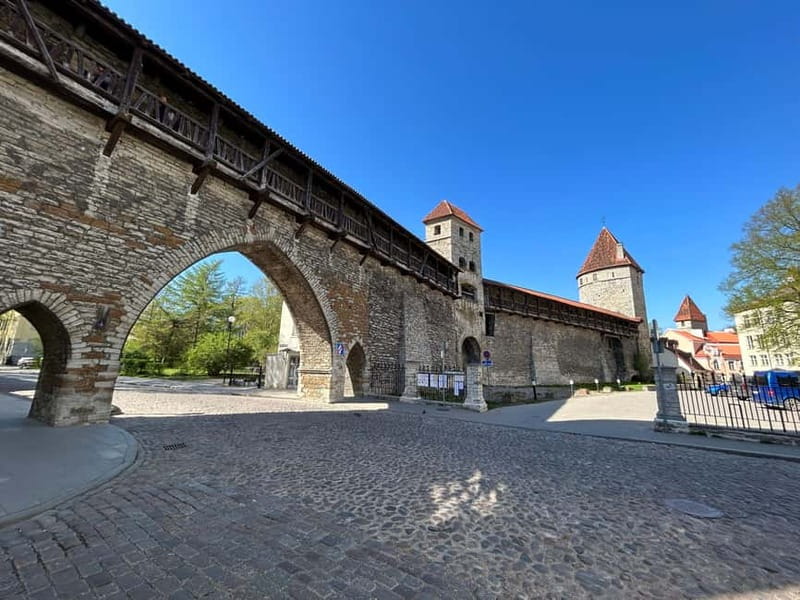
The tour then returns toward St. Olaf’s Church for a five-minute photo stop. The church is presented as the former tallest church in the world, a claim that reflects its dramatic place in Tallinn’s skyline and medieval reputation.
You may not enter for a long visit here. Instead, the guide uses the church as a landmark and a chance to explain how Tallinn’s towers helped define the city. It is a quick stop, but it gives the route a strong architectural finish.
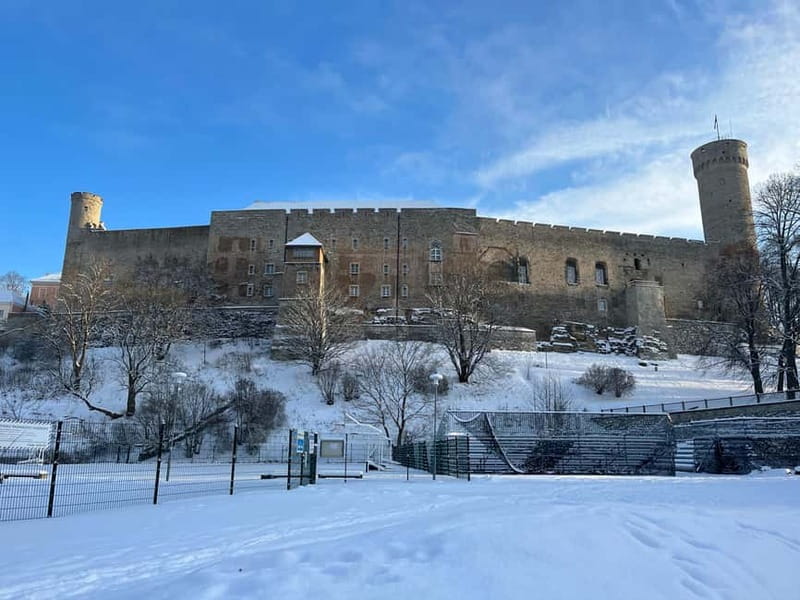
Toompea Castle receives about 10 minutes for photos. The castle is now occupied by Estonia’s Parliament, so it connects the medieval hill with the modern republic. This is one of the tour’s most useful transitions: rulers, viceroys, bishops, noblemen, and elected officials have all used this strategic hill.
The walk ends back at Town Hall Square, although the excursion can finish elsewhere if that is more convenient for you. Ask your guide for advice before the end if you want to continue to a museum, café, gallery, restaurant, or shopping area.
What the guides add
The strongest part of this experience is the guiding. The route itself is excellent, but the Old Town is full of details that are easy to miss without someone pointing them out.
Roman is repeatedly praised for his preparation, patience, humor, and ability to answer questions. Karina is noted for explaining both Tallinn’s past and its current life, along with restaurant and coffee recommendations. Svetlana is described as clear, friendly, and good at covering a large area without losing the thread.
Max brings an energetic and opinionated style, while other guides have been praised for being caring, engaging, and flexible. On some dates, a very small booking group has effectively created a private tour. That is not guaranteed, but the group limit of 10 gives you a better chance to ask questions than a large bus tour would.
In one larger group, a participant found it harder to hear after one guide became ill and the group arrangement changed. That is a useful reminder that small-group size matters. If you have hearing concerns, ask about an earpiece at the start. One winter group was given earpieces, which made it easier to follow the guide in the cold and on busy streets.
Is $42 a fair price?
The cost is $42 per person, and the guide is included. Coffee and museum entry are extra, so budget for those only if you want them.
I see the price as fair for a first visit if you value explanation and orientation. You cover both Lower and Upper Town, visit or view a long list of important sites, and get recommendations for food, drinks, museums, galleries, and shopping. A private guide would normally cost more, while a free walk would not provide the same small-group structure or guaranteed route.
The value is weaker if you prefer slow museum visits or long periods inside churches. Several stops last only 5 to 10 minutes, and the entire route is designed to give you a city framework rather than exhaustive access to each building.
The booking terms are flexible, with cancellation allowed up to 24 hours before the tour for a full refund and a reserve-now, pay-later option. In summer, booking two or three days ahead is advised, especially if you want a particular starting time or language.
Who should book this walking tour?
I would choose this tour for a first day in Tallinn, especially if you want to understand the Old Town before exploring on your own. It suits cruise passengers, couples, solo visitors, and anyone who prefers a small group over a large city tour.
It is also a good match for history fans who enjoy stories about trade, religion, language, flags, and political power. The route has enough visual variety to keep a general sightseeing day interesting, with marzipan, pharmacy history, churches, gardens, castle views, and photo stops.
You should think twice if uneven streets and stairs are difficult for you. Wear shoes with good grip, bring sunglasses and a camera, and carry some cash. In winter, allow for cold conditions and consider choosing a tour time that gives you enough daylight for the viewpoints.
Should you book the Tallinn Medieval Walking Tour?
Book it if you want a clear, lively introduction to Tallinn in two hours. The guides receive especially strong praise for their storytelling, patience, humor, and practical local advice, and the route covers the city’s essential medieval sights without requiring transport.
I would not book it expecting a series of long interior visits. This is a fast-moving orientation walk. Its best moments are the stories, the contrast between Lower and Upper Town, and the views from Kohtuotsa and Patkuli. At $42, it offers solid value for a first-time visitor who wants context as well as photographs.
FAQ
Where does the Tallinn Medieval Walking Tour begin?
The tour begins at Raekoja 1 in Town Hall Square. The guide meets you beneath the Town Hall clock and carries a sign with your name, arriving five minutes before the start.
How long does the tour last?
The scheduled duration is two hours. Some tours may run slightly longer if the guide spends extra time answering questions or covering details.
What languages are available?
The tour is offered in English, German, Italian, Portuguese, Spanish, and Russian.
How large is the group?
The tour is limited to 10 participants, although some departures may have fewer people and can feel almost private.
What places are included on the route?
The route includes Town Hall Square, Town Hall Pharmacy, Kalev Marzipan Museum Room, the Great Guild Hall, Holy Ghost Church, the Museum of Puppetry Arts, Danish King’s Garden, Alexander Nevsky Cathedral, St. Mary’s Cathedral, Kohtuotsa viewing platform, Patkuli Stairs, St. Olaf’s Church, and Toompea Castle.
Are museum admissions included?
No. The guide is included, but coffee and entry to museums are not included.
What should I wear and bring?
Wear comfortable shoes suitable for cobblestones and stairs. Sunglasses, a camera, and cash are also recommended.
Can I cancel the booking?
You can cancel up to 24 hours in advance for a full refund. A reserve-now, pay-later option is also available.
Just added around the world
- Scenic Train ride to historical cities of Morretes and Antonina★ 4.0 · 188 reviews
- 6-Day Cultural Tour to Machu Picchu★ 5.0 · 76 reviews
- Jewish Heritage of Curacao★ 4.5 · 68 reviews
- The Curacao’s Colorful History Walking Tour★ 5.0 · 55 reviews
- Discover Scuba Diving Amathounta’s Ancient Port★ 5.0 · 30 reviews
- Night Walking Tour of Medieval Cuenca★ 5.0 · 64 reviews
- Olous – Guided Snorkelling Excursion to Discover Olous Sunken Ancient City★ 4.5 · 31 reviews
- WWII – The Battle of Crete Day Tour★ 5.0 · 103 reviews