
Review · FOOD
The Original Cebu City Historical and Food Walking Tour
Cebu City’s best introduction may be found away from the beaches, in its old streets, churches, markets, and food stalls. This tour links Magellan’s Cross, Santo Niño Basilica, Carbon Market, and the Yap-Sandiego Ancestral House with local tastings, giving you a useful first look at Cebu’s past and daily life.
I like the way the tour mixes major sights with ordinary city experiences, especially a jeepney ride and food stops that you might not attempt alone. I also like the guides’ friendly, conversational approach. Kyle, Lorelei, Phillip, and Necian are among the guides named by past participants, and each appears to bring a personal interest in Cebu’s food and culture.
The main caution is value. At $69.99, this is not a cheap walking tour, and the experience can feel short if your group moves quickly. Food choices and the exact stops may vary, and you must arrange your own ride back from Freedom Park in Carbon.
Key points to know before you book
- The route begins at 4:00 pm: You start at Ayala Terraces and finish at Freedom Park in Carbon, usually after about four hours.
- Historic Cebu comes first: The route includes the Heritage of Cebu Monument, Yap-Sandiego Ancestral House, Santo Niño Basilica, Magellan’s Cross, and Cebu Metropolitan Cathedral.
- Food is local and sometimes adventurous: Tastings may include street food and unusual Filipino specialties such as balut or tuslob buwa, but the exact selection can change.
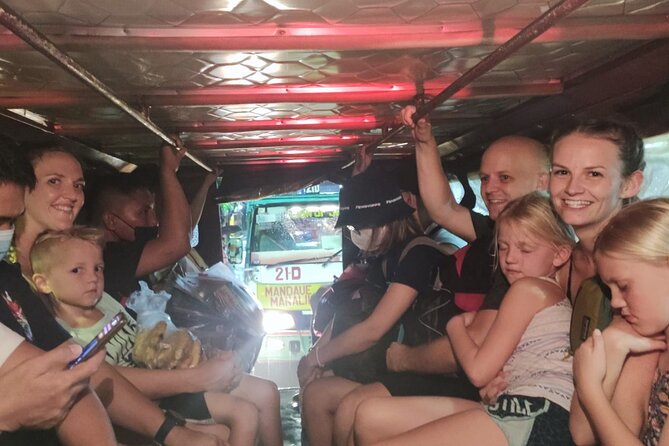
- A jeepney ride may be part of the fun: Public transport helps you see how Cebu residents get around, though it is not a private vehicle tour.
- The strongest guides add real value: Kyle, Lorelei, Phillip, Lor, and Necian are named in the tour feedback, with Kyle and Lorelei receiving especially warm praise.
- Plan your ending: The tour ends at Freedom Park, not at your hotel, and the return trip is not included.
Why this four-hour route works for a first evening in Cebu
If you have only one evening in Cebu City, this tour gives you a sensible first orientation. You move from a modern meeting point toward the older center, where Spanish colonial influence, Catholic devotion, Chinese-Filipino heritage, market life, and street food all sit close together.
The 4:00 pm start is useful. The cooler part of the day is beginning, and the city is shifting into its evening rhythm. You will still need to cope with traffic, warm weather, uneven walking conditions, and the occasional drizzle. Wear shoes you can walk in and bring water, even though food and drinks are part of the experience.
This is a walking tour, but not a pure walking tour. Public transport can appear along the way, including a jeepney. That matters because you are not simply being carried between polished attractions. You get a brief look at a familiar part of local life, though anyone expecting a private air-conditioned vehicle should choose another type of excursion.
The group can contain up to 20 people. That is small enough for a guide to explain things and answer questions, but it is not a private outing. The best experience will depend partly on how quickly the group moves and how well everyone handles the food stops.
More History Walking Tours in the world:
- History and Hauntings of Salem Guided Walking Tour
★ 5.0 · 14,564 reviews - Lisbon: History, Stories and Lifestyle Walking Tour
★ 4.8 · 10,902 reviews - Amsterdam: Life of Anne Frank and World War II Walking Tour
★ 4.8 · 10,467 reviews
The Heritage of Cebu Monument puts the city’s story in one frame
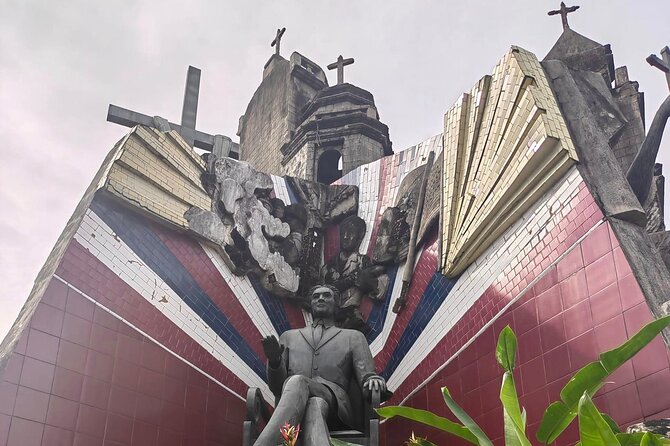
The first listed stop is the Heritage of Cebu Monument, with about 30 minutes set aside. This large tableau presents several moments tied to Cebu and Philippine history, including the Battle of Mactan, the inauguration of Sergio Osmeña as president, and the canonization of Pedro Calungsod.
The attraction works best with a guide. On your own, you may see an impressive collection of figures and scenes without knowing how they fit together. A good explanation helps you read the monument as a visual outline of Cebu’s role in the country’s story.
Thirty minutes is enough for an introduction and photographs. It is not enough for a long historical lecture, so ask questions if a particular scene catches your attention. This early stop also gives you context for the religious sites and Spanish-era buildings that follow.
Admission is included. That helps the price somewhat, although you should still expect the total value to come from the full combination of guidance, food, entrances, and local transport rather than from any single attraction.
Yap-Sandiego Ancestral House shows Cebu’s older domestic side
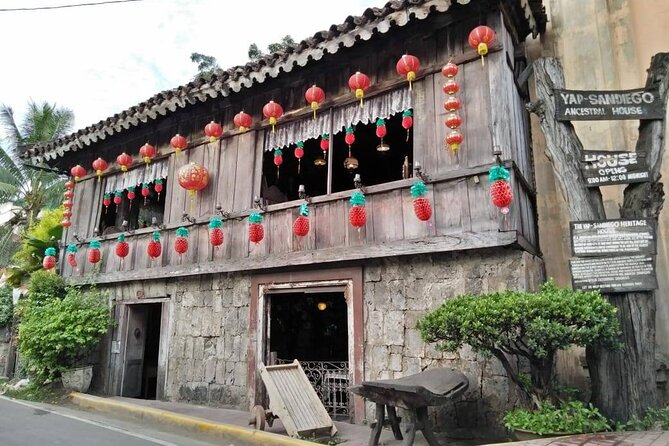
The Yap-Sandiego Ancestral House is one of the more distinctive stops because it is not a grand church or public monument. Built around 1680 from wood and coral stone, it combines Spanish and Chinese design influences and is described as one of the oldest residential homes in the Philippines.
You get about 30 minutes here. That is a good amount of time for a compact historic house, but the visit is brief enough that you should pay attention as you move through it. The value is in seeing how Cebu’s past appears in a home setting, not just in official monuments.
This stop also gives the tour some texture. The churches tell you about public faith and colonial power. The ancestral house points toward family life, trade, materials, and the mix of cultural influences that shaped Cebu.
Past participants have specifically appreciated entering this house. By contrast, the churches may sometimes be viewed from outside or visited only briefly, especially when services are underway or the buildings are crowded. If seeing the interiors matters to you, ask the guide early in the tour what access is possible that day.
Santo Niño Basilica and Magellan’s Cross carry the city’s religious weight
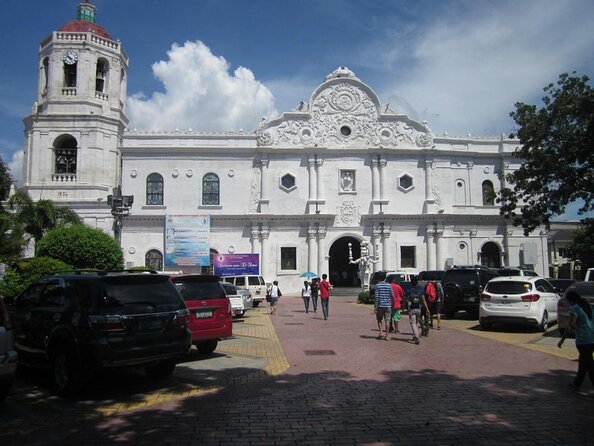
The Basilica Minore del Sto. Niño de Cebu is one of the central religious sites in Cebu City. Founded in 1565 by Fray Andrés de Urdaneta, it is closely tied to the arrival and spread of Christianity in the Philippines.
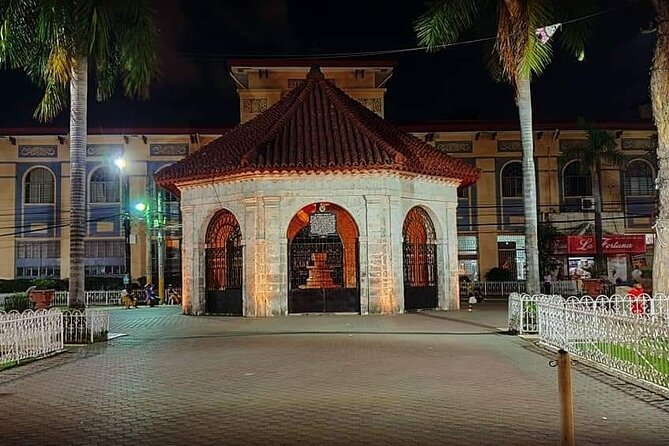
The nearby Magellan’s Cross Pavilion houses the cross traditionally associated with the expedition led by Ferdinand Magellan. The small stone pavilion sits beside Plaza Sugbo and the basilica, making these two stops easy to connect on foot.
Together, they can feel like the historical heart of the route. You are not just checking off landmarks. You are seeing the place where faith, Spanish colonial history, local devotion, and modern city life meet in a small area.
The practical detail is that admission and access are not always the same thing. The tour includes the relevant entrance costs, but that does not guarantee a leisurely interior visit at every church. Services, crowds, or local conditions can change what you see. Some participants have entered the ancestral house but not the basilica or cathedral, so set your expectations accordingly.
The guide’s role is especially useful here. Ask about the religious importance of the Santo Niño, the connection between the basilica and Magellan’s Cross, and how these sites fit into Cebu’s annual traditions. A guide who explains rather than simply points will make this part far more rewarding.
More Food and Drink Trips in the world:
- Amsterdam Food and Cultural Tour with Tastings
★ 5.0 · 4,315 reviews - Barcelona: Tapas Walking Tour with Food, Wine, and History
★ 4.8 · 4,261 reviews - Sevilla Food Tour: Tapas, Wine, History & Traditions
★ 5.0 · 3,468 reviews - Normandy D-Day Small-Group Day Trip with Omaha Beach, Cemetery & Cider Tasting
★ 5.0 · 2,786 reviews
Carbon Market is where the tour feels most local
The walk ends at Freedom Park in Carbon, beside the area known for Cebu Carbon Market. The name comes from carbón, the Spanish word for coal, because the market was linked to a coal depot used by the old Cebu Railway.
This is the part of the route where you are most likely to encounter the everyday city rather than a formal attraction. You may see food stalls, local shoppers, public transport, and the practical business of buying and selling. Conditions can be crowded and rough around the edges. That is part of the point, but it may not suit anyone looking for a polished sightseeing experience.
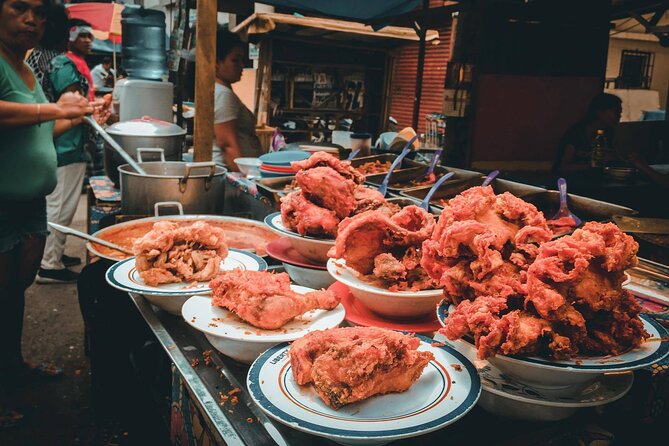
The market is also important for the food side of the tour. Several tastings may be spread through the route, with the market providing a strong setting for local snacks and dishes. The exact food list is not fixed in the information provided, so you should not book expecting one guaranteed menu.
Possible foods mentioned in connection with the experience include balut and tuslob buwa. Lechon has also been singled out as a favorite. You may find other Filipino street foods and drinks, including unfamiliar items presented without much fuss. Guides such as Lorelei have been praised for encouraging people to try a dish before explaining what it is, which can make the experience playful rather than intimidating.
If you are vegetarian, highly selective with food, or uncomfortable with shared street-food settings, ask about the current menu before booking. The tour is designed around local food, not a carefully controlled restaurant tasting.
The food stops are more adventurous than refined
The food portion is best understood as a series of small local tastings, not a formal dinner. You may stop at three or four places, depending on the route and timing, and the group may sample dishes from simple restaurants or street vendors.
I like this format because it lowers the barrier to trying something unfamiliar. You can take a small portion, ask what it is, and watch how people around you eat it. A guide can also explain the role of a dish, how it is prepared, or why it matters locally.
The tradeoff is consistency. Street food is not restaurant food, and personal taste varies. Some people find the dishes delicious and unusual. Others may find parts of the menu ordinary or challenging. One participant felt the food was mediocre apart from the lechon, while others praised the range and authenticity.
The tour does not promise a luxury meal, and it should not be judged by that standard. At $69.99, though, you will reasonably want enough tastings to justify the cost. Ask the guide at the start how many food stops are planned and what is included that evening. This is particularly important around holidays, when a market or stall may be closed.
The food also takes time. If your group eats slowly, asks questions, or lingers at the market, the tour may run close to four hours. If everyone moves quickly, it may finish earlier. One group reported an experience closer to two and a half hours, while another described about three and a half hours. Allow flexibility rather than treating four hours as a guaranteed minimum.
What the guides add to the experience
The strongest part of this tour appears to be the human connection. Kyle is repeatedly described as friendly, helpful, clear in English, and enthusiastic about Cebu. Lorelei is praised for her energy and passion for local food. Phillip is noted for being kind and careful with solo travelers, while Necian is described as conversational and informative.
Those details matter because the route itself is compact. The monument, churches, ancestral house, and market can be visited independently. The guide earns the fee by connecting them, helping you navigate, answering questions, and making the food stops comfortable.
The guides also appear to handle real-world problems with some flexibility. One group was delayed by a traffic accident and was met by the guide. That does not mean late arrival is safe to assume. The tour runs to a schedule, and arriving late can mean missing a major stop or museum visit.
The provider is Lorelie Kalalang Ledesma. Guide assignments can vary, so you may not get the same person highlighted in every account. If a particular guide is important to you, you can ask whether that person is available, but it should not be treated as guaranteed.
Price, timing, and the ride home
At $69.99 per person, this tour sits above the cost of simply walking around Cebu’s historic center on your own. The price makes more sense if you value a guide, several food tastings, included entrance fees, and the chance to use a jeepney without having to work out the route yourself.
It makes less sense if you plan to visit only the free exterior sights or if you expect a private car, a long restaurant meal, and hotel drop-off. Transportation to the meeting point and back from the endpoint is not included. You begin at Ayala Terraces on Biliran Road and finish at Freedom Park in Carbon, so check your onward transport before you start.
The tour is recommended by 90 percent of its current audience and has a 4.6 rating from 81 ratings. Those numbers suggest a strong overall experience, but they do not erase the practical warnings about food preferences, tour length, and value.
Cancellation terms are strict. The booking is non-refundable and cannot be changed for any reason. If poor weather cancels the experience, you are offered another date or a full refund. The same applies if the minimum number of participants is not reached.
Who should book this Cebu City walk?
Book it if you want a quick introduction to Cebu City and prefer to learn through food, conversation, and ordinary streets. It is especially useful for a first visit, a short stay, or an evening when you want someone else to connect the historic center for you.
It also suits solo travelers who want company and a guide for navigating unfamiliar areas. Several guides are praised for being attentive and reassuring, and the group setting can make trying unusual food less daunting.
Think twice if you need a fixed schedule, guaranteed dishes, hotel transport, or a quiet museum-style tour. You should also reconsider if you dislike public transportation, crowded markets, or food chosen for local character rather than broad international appeal.
My advice is to book this for the guide-led context and local access, not simply for the six named sights. Arrive on time, wear comfortable shoes, carry a little cash for anything outside the included items, and ask about the food plan at the beginning. With those expectations, the tour can give you a memorable first taste of Cebu in one compact evening.
FAQ
How long does the Cebu City historical and food tour last?
The advertised duration is approximately four hours. The actual finish can vary because walking speed, food stops, crowds, and time spent at each site affect the schedule.
Where does the tour begin?
The meeting point is Ayala Terraces, 8W94+H97, Biliran Road, Cebu City. The listed start time is 4:00 pm.
Where does the tour end?
The tour ends at Freedom Park in Carbon, Cebu City. Transport back to your hotel is not included.
What historic places are visited?
The route includes the Heritage of Cebu Monument, Yap-Sandiego Ancestral House, Basilica Minore del Sto. Niño de Cebu, Magellan’s Cross, Cebu Metropolitan Cathedral, and the Carbon Market area.
Is food included in the price?
Food tastings and entrance fees are included. The number and type of food stops can vary, and local specialties may include items such as balut, tuslob buwa, lechon, and other street foods.
Is transportation included during the tour?
The experience is primarily a walking tour, but a jeepney or other public transportation may be used along the route. Hotel transfers are not included.
How many people can join the tour?
The maximum group size is 20 people. Most travelers can participate, and the tour is near public transportation.
More Food Trips in the world
- Madrid Tapas & Taverns Small Group Food & History Tour
★ 5.0 · 2,664 reviews - Historic Ybor City Food Walking Tour
★ 5.0 · 2,210 reviews - Victoria Guided Food and History Tour
★ 5.0 · 2,015 reviews - Barcelona Tapas Walking Tour: Food, Wine & History
★ 4.5 · 1,928 reviews
Just added around the world
- Scenic Train ride to historical cities of Morretes and Antonina★ 4.0 · 188 reviews
- 6-Day Cultural Tour to Machu Picchu★ 5.0 · 76 reviews
- Jewish Heritage of Curacao★ 4.5 · 68 reviews
- The Curacao’s Colorful History Walking Tour★ 5.0 · 55 reviews
- Discover Scuba Diving Amathounta’s Ancient Port★ 5.0 · 30 reviews
- Olous – Guided Snorkelling Excursion to Discover Olous Sunken Ancient City★ 4.5 · 31 reviews
- Night Walking Tour of Medieval Cuenca★ 5.0 · 64 reviews
- WWII – The Battle of Crete Day Tour★ 5.0 · 103 reviews
Food, compared.
Sevilla Food Tour: Tapas, Wine, History & Traditions
Read our review →
Madrid Tapas & Taverns Small Group Food & History Tour
Read our review →
Barcelona Tapas Walking Tour: Food, Wine & History
Read our review →
Boston Food & History: Pizza, North End & Freedom Trail
Read our review →
Dublin Historical Centre Food Tour with 8 Food Tastings & Drinks
Read our review →Browse the lists this tour appears in