

Review · WARSAW
Warsaw: Jewish History Guided Walking Tour in English
Warsaw’s Jewish history is easiest to grasp on foot, where an ordinary street corner can mark a lost neighborhood, a ghetto boundary, or a place of resistance. This 150-minute walk connects Nożyk Synagogue, Chłodna Street, and Waliców Street with the people who once lived, worked, wrote, prayed, and fought here.
I like the tour’s wide time span, from centuries of Jewish life and Polish uprisings to the interwar cultural scene and the Holocaust. I also like its human scale: guides such as Andrzej, Jacek, Luke, Anna, and Christopher have been praised for clear English, humor, thoughtful answers, and a careful way of handling painful subjects. The main drawback is simple: you are outside for the full two and a half hours, and some of the historic buildings no longer exist.
Key points to know before you book
- Nożyk Synagogue is Warsaw’s only surviving pre-war synagogue, though entry is not promised as part of the tour.
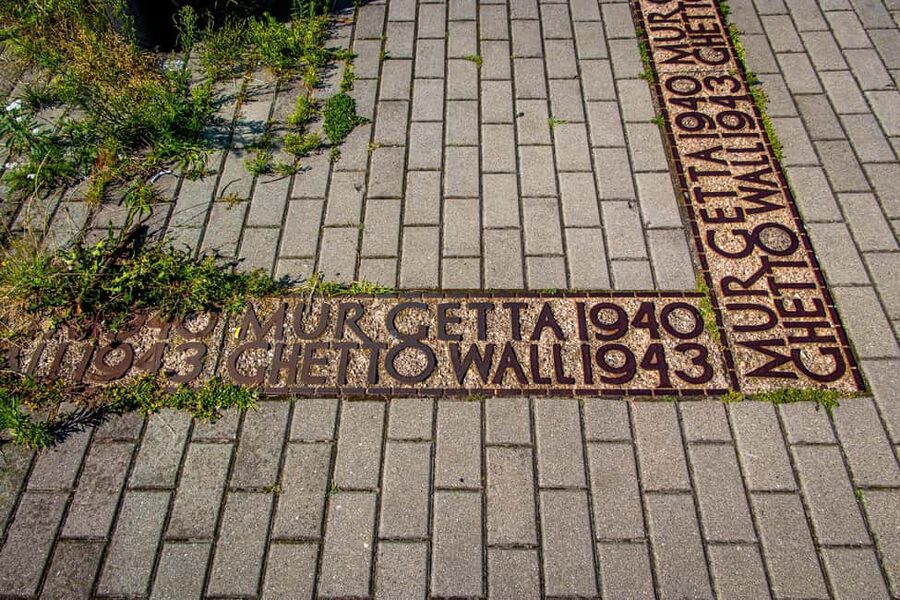
- Chłodna Street marks the former ghetto bridge site, where a wooden footbridge once joined two separated sections.
- Waliców Street reveals both ghetto history and wartime resistance, including links to the Warsaw Uprising.
- The tour explains Jewish Warsaw before 1939, not just persecution and death, so you understand what was destroyed.
- Guides use photographs, maps, stories, and questions to make vanished places easier to picture.
- The tour costs $26 per person, a fair price for a long, guide-led walk, with free cancellation up to 24 hours ahead.
Starting at Grzybowski Square
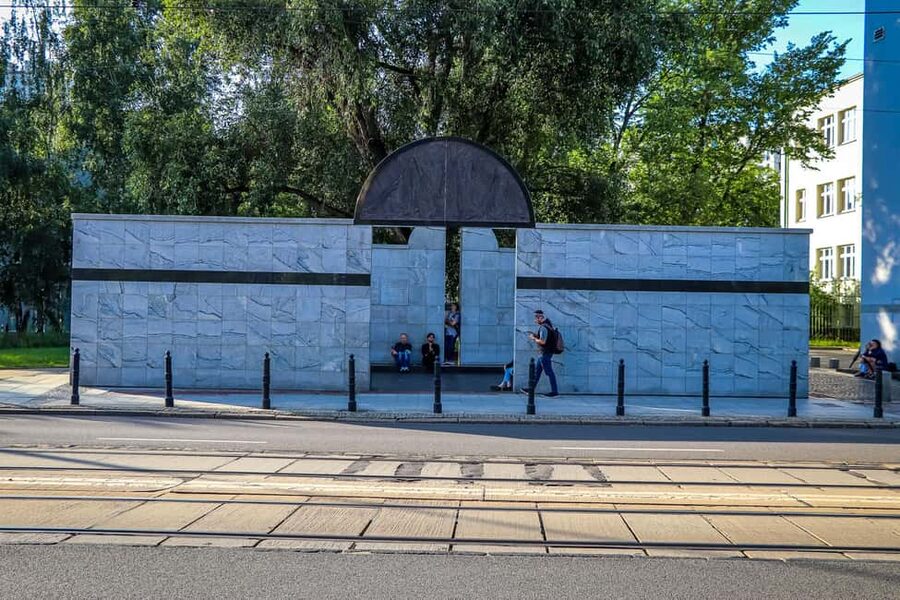
Meet beside All Saints Church at Grzybowski Square, looking for the yellow umbrella. This is a useful starting point because the square sits close to several important sites connected with Warsaw’s Jewish past, while also making a clear meeting place in the modern city.
The tour is run by Walkative Tours and joins the company’s general walking group. That matters when you book. You are not automatically reserving a private guide or a small family group. The group size can vary, and one participant noted that hearing every sentence was harder in a larger group when the guide walked ahead.
At the same time, the general format keeps the price at $26. You can ask Walkative after booking about arranging a smaller private tour if that suits you better. The booking terms are flexible: you can reserve now and pay later, and cancel up to 24 hours before the start for a full refund.
More History Walking Tours in Poland
- Gdańsk City Sights & History Guided Walking Tour in English
★ 4.8 · 876 reviews - Historic Krakow : Old Town & Wawel Castle Walking tour
★ 5.0 · 318 reviews - World War 2 in Warsaw walking tour in English
★ 4.7 · 237 reviews
Jewish Warsaw before the war
The strongest part of the tour is its decision to begin with life, not only destruction. Before the Second World War, Warsaw was the second-largest Jewish city in the world. Jewish residents helped shape the city’s business, politics, education, religion, theater, journalism, and literature.
Your guide explains that Jewish life was not separate from Polish life in a simple way. During the 19th century, Jews joined other Warsaw residents in resistance to occupying powers and took part in Polish uprisings. That wider setting helps you see Jewish residents as active participants in the city, not as a group appearing suddenly in wartime photographs.
The interwar years receive special attention. Hundreds of Jewish artists, actors, writers, and journalists lived in Warsaw, and Yiddish cultural life flourished alongside Polish culture. This is important context. If you visit only former ghetto sites, you may leave with an image of Jewish Warsaw defined entirely by suffering. This walk makes room for creativity, ambition, argument, work, family life, and ordinary routines.
I find that approach especially useful for first-time visitors. The Holocaust becomes harder to comprehend when you understand the scale of the community that was attacked. You are not simply hearing a list of wartime facts. You are learning about a city whose social and cultural world was largely erased.
Nożyk Synagogue and the surviving city
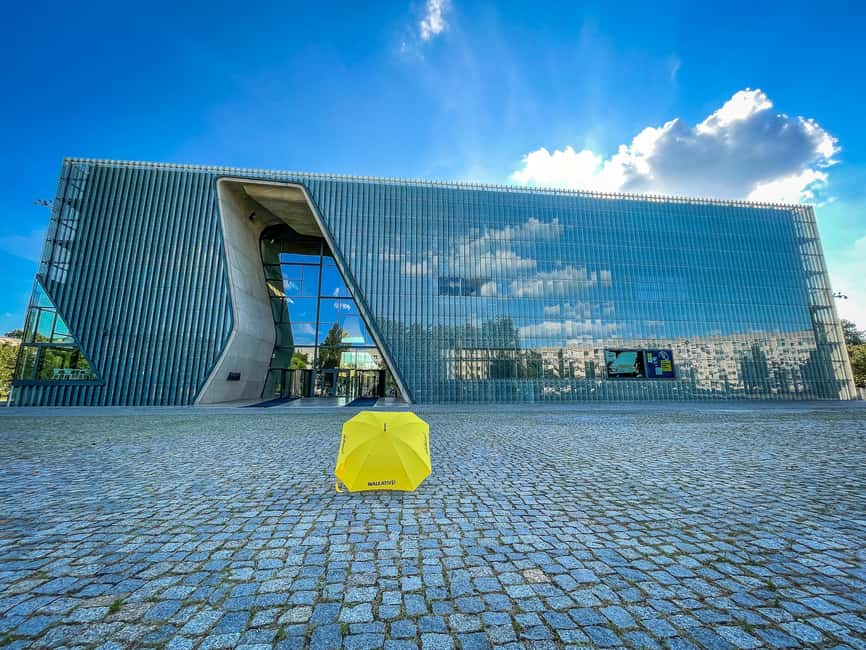
Nożyk Synagogue is the clearest surviving reminder of pre-war Jewish Warsaw. It is the only synagogue from before the war still standing in the city, which gives this stop unusual weight. The building helps turn a large historical subject into something physical and immediate.
The tour includes seeing the synagogue, but you should not assume that admission inside is guaranteed. One participant specifically wished there had been a chance for everyone to enter. If entering the synagogue is important to you, ask Walkative about the arrangements before booking or consider returning separately.
Even from outside, the stop helps explain the religious life of Warsaw’s Jewish community. It also provides a pause from the vanished streets and destroyed buildings that make up much of the route. You can look at a surviving place of worship while your guide sets it beside the institutions, homes, and cultural venues that no longer remain.
Guides have handled this stop in different ways, using photographs and maps to show how much of the surrounding area changed. Anna, Agneska, Luke, and Christopher were singled out for clear explanations and strong command of the subject, but the assigned guide can vary. The common thread is an English-language walking tour led by a local guide.
Chłodna Street and the ghetto bridge
Chłodna Street is one of the tour’s most striking stops because the physical setting looks like a normal city street today. During the German occupation, a wooden bridge here connected two parts of the Warsaw Ghetto while allowing an important road below to remain open.
The bridge separated people even as it connected sections of the ghetto. That contradiction makes the site memorable. Your guide explains how the ghetto was divided and how daily movement was controlled, rather than treating the bridge as a simple monument.
This is also where good visual material matters. Much of the original built environment is gone, so a photograph or map can show what your eyes cannot. One participant specifically wished for more photos and maps, while another praised a guide who brought them along. The quality of the explanation depends partly on your guide’s choice of material and how well the group gathers around it.
You will spend time listening outdoors, then walk on to the next location. Keep your attention on the guide rather than expecting a large museum-style display. This is a street-based history lesson, and the city around you remains part of the experience.
More Jewish Heritage Tours in Poland:
- Private Tour: Warsaw’s Jewish Heritage by Retro Fiat
★ 5.0 · 208 reviews - Budapest Jewish Heritage Memorial Walking Tour & Synagogue Entry
★ 5.0 · 568 reviews - Budapest: Jewish Heritage Guided Tour with Synagogue Ticket
★ 4.8 · 533 reviews - 3-Hour Porto Jewish Heritage Walking Tour with Local Guide
★ 4.5 · 396 reviews
Waliców Street, the ghetto border, and wartime resistance
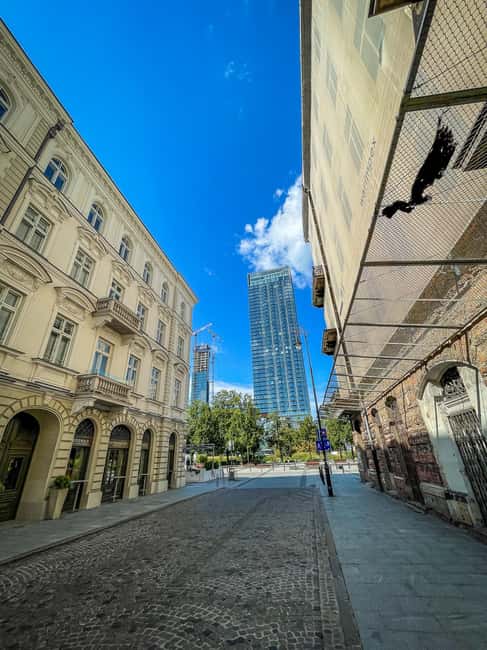
Waliców Street once marked part of the ghetto boundary. Today, its surviving fragments and changed surroundings require explanation. You are looking at a city rebuilt and altered after the war, so the guide’s words, images, and sense of place do much of the work.
This stop also brings in the Warsaw Uprising. That is a useful distinction. The tour does not treat the Holocaust and the 1944 Warsaw Uprising as one event, but places them in the same wartime city and explains how the history of occupation, resistance, and destruction overlapped.
A good guide will help you keep the chronology straight. The subject is difficult, and the tour covers several kinds of resistance, persecution, and loss in a relatively short time. Luke was praised for combining personal warmth, direct language, and humor on a painful subject. Jacek was praised for encouraging questions and keeping a steady pace. Those qualities matter here because the stop can otherwise become a blur of dates and names.
You may also hear about the enduring spirit of the Jewish community. The story does not end in 1945. The final message points toward a young, diverse, energetic Jewish community in Warsaw today, with an eye on the future.
How the guide handles a painful subject
This is not a light sightseeing walk, but it is not presented as a grim recital either. Guides have used humor carefully, invited questions, and asked before sharing especially harsh details. That gives you some control over how much you want to hear while keeping the facts plain.
I value the balance between honesty and accessibility. You will hear about persecution, death, and the destruction of the ghetto, but also about courage, cultural achievement, and survival. Several guides have been praised for answering questions at the end and staying behind for extra discussion.
The English level has generally been strong. One participant who was not a native English speaker found a guide’s speech especially easy to understand. That said, a large group, street noise, or a guide speaking while walking can make some sections harder to catch. Stay near the guide, and politely ask for repetition if needed.
The guide names that appear in connection with this experience include Andrzej, Jacek, Luke, Anna, Christopher, Agneska, Aga, Tomasz, and Olivia. You should not book expecting one particular person unless Walkative confirms it. Still, the range of praised guides suggests that the operator has a broad bench of people able to handle the topic in English.
Two and a half hours on foot
The advertised duration is 150 minutes, and you should plan for the full time outdoors. There is no hotel pickup, no coach transfer, and no scheduled cafe break. One person specifically wished for a chance to warm up during a cold-weather walk.
That makes clothing a real part of the decision. In winter, wear a warm coat, gloves, and shoes suitable for steady city walking. On wet or windy days, protection from the weather will help you concentrate. In summer, bring water and prepare for sun exposure, since the route is outside.
The pace has generally been described as comfortable, with enough time for discussion and questions. One group of four felt the time passed quickly and would have happily continued longer. Another participant wished the tour itself lasted longer. That tells you something useful: the walk covers a lot, but it cannot give every site the time of a museum visit.
If you want a quiet, private reflection at each location, a private booking may suit you better. If you like asking questions, hearing other perspectives, and getting a broad introduction in one morning or afternoon, the general group is a sensible choice.
Is $26 good value?
At $26 per person, this is good value if you want historical interpretation rather than only a route through central Warsaw. You are paying for a local English-speaking guide, two and a half hours of walking, and the ability to ask questions as the story develops.
The price does not include hotel pickup, transport, or guaranteed synagogue entry. It also does not replace a museum visit. The value comes from connecting scattered streets and surviving traces into a coherent story.
I would especially consider it early in your Warsaw stay. The guide can give you a useful framework for later visits to museums, memorials, and the former ghetto area. Some guides also offer general Warsaw advice at the end, including local suggestions such as places to get coffee.
The score of 4.7 from 324 ratings supports the view that this is a dependable introduction, though no group walk is perfect. The few weaker points are practical: cold weather, difficulty hearing in a larger group, and the wish for more time or interior access. None changes the basic value, but each should shape your expectations.
Who should book this walking tour?
Book it if you want to understand Jewish Warsaw as a living society before you study the Holocaust. It suits first-time visitors, history-minded adults, families with older children who can manage a serious subject, and anyone who wants a local guide rather than a self-guided route.
It is also a good fit if you prefer direct discussion. The guides encourage questions, explain difficult subjects without hiding from them, and connect wartime events to the city’s present Jewish community.
You may want another format if you need indoor shelter, have difficulty walking for 150 minutes, or want guaranteed access inside Nożyk Synagogue. A private tour may be a better choice if your group needs a slower pace or a more personal discussion.
Should you book it?
Yes, if you want a thoughtful, fact-based introduction to Warsaw’s Jewish past and you are prepared to spend the entire 150 minutes outside. The route’s best feature is its balance: pre-war culture comes before destruction, and stories of persecution sit beside stories of courage, resistance, and renewal.
Book with warm clothing in winter, arrive at Grzybowski Square in time to find the yellow umbrella, and stay close enough to hear the guide. If you want a smaller group or synagogue entry, ask Walkative before the tour. For $26, this is a strong starting point for understanding the city’s Jewish history and the people who continue to shape Warsaw today.
FAQ
Where does the Warsaw Jewish history tour meet?
The meeting point is beside All Saints Church at Grzybowski Square. Look for the yellow umbrella.
How long does the walking tour last?
The tour lasts 150 minutes, or two and a half hours.
What language is the tour conducted in?
The live tour guide speaks English.
What sites are included?
The route includes Nożyk Synagogue, the site of the former bridge on Chłodna Street, and Waliców Street, which once formed part of the ghetto border.
Is entry to Nożyk Synagogue included?
The tour includes seeing Nożyk Synagogue, but the supplied details do not guarantee entry inside.
Does the tour include hotel pickup?
No. Hotel pickup and drop-off are not included.
Is this a private tour?
No. The tour joins the general walking group. If you want a smaller private tour, contact the supplier after booking to ask about arranging one.
Can I cancel or pay later?
You can reserve now and pay later. Cancellation is free up to 24 hours before the tour for a full refund.
Just added around Poland
- Best of Wroclaw 3-Hour History and Culture Walking Tour★ 4.9 · 49 reviews
- Krakow: Vistula River Cruise with Historical Views★ 3.5 · 357 reviews
- Krakow: Kościuszko Mound Ticket – History & Views!★ 4.4 · 303 reviews
- Krakow Old Town Segway Tour — 2H of History, Fun & Discovery★ 4.8 · 91 reviews
- Warsaw: Historic Private Tour in Retro Fiat★ 4.9 · 41 reviews
- Archaeological Museum of Krakow Entrance Ticket★ 3.8 · 31 reviews
- Private Tour: Warsaw’s Communist History by Retro Fiat★ 5.0 · 115 reviews
- Private Historical Tour of Warsaw by a Retro Fiat with Pickup★ 5.0 · 190 reviews
Warsaw History Tours, compared.
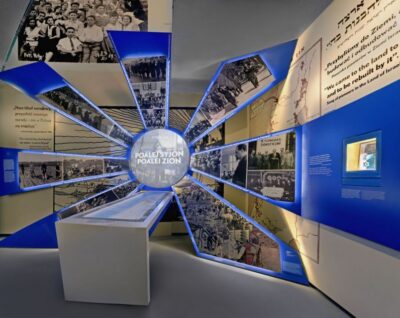
Warsaw: POLIN Museum of the History of Polish Jews Ticket
Read our review →
Warsaw: Chopin Concert at Historical Venue in Old Town
Read our review →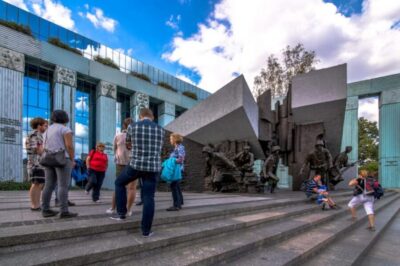
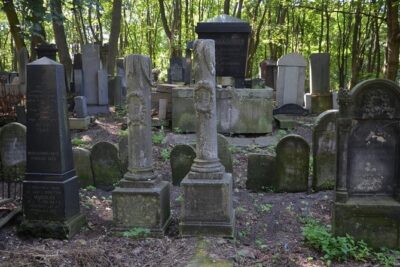
Private Tour: Warsaw’s Jewish Heritage by Retro Fiat
Read our review →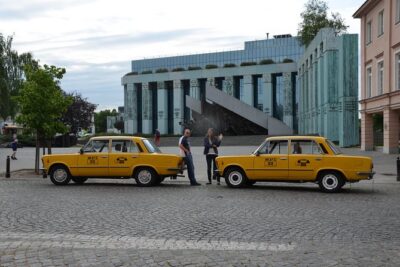
Private Historical Tour of Warsaw by a Retro Fiat with Pickup
Read our review →
Warsaw for WWII Buffs – private tour with hotel pickup
Read our review →
Private Tour: Warsaw’s Communist History by Retro Fiat
Read our review →
Browse the lists this tour appears in