
Review · BOSTON
2 Hour Boston Historical and Heritage Walking Tour
Boston’s past comes at you fast on this $5, one-mile walk from Boston Common to Faneuil Hall. Stephen Uys covers far more than the usual Freedom Trail highlights, linking Puritan disputes, abolition, the Civil War, Irish immigration, Boston literature, and modern city politics.
I like the unusually personal storytelling and the chance to ask questions as you go. I also like the route’s range: you move from the oldest public park in America to the Old State House, the Boston Massacre site, the Irish Famine Memorial, and the old book district. The tradeoff is simple: Stephen has a lot to say, and some people find the pace too fast or the presentation too long.
Key things to know before you go
- Stephen Uys gives the tour a strong point of view: He connects famous events with lesser-known personalities, family stories, architecture, books, and local politics.
- The route is short but information-heavy: The walk covers about one mile, yet the scheduled stops span several centuries of Boston life.
- You get more than a Revolution lesson: Abolition, the 54th Massachusetts Infantry, Irish immigration, Boston’s literary circles, and the Kennedy family all enter the story.
- The $5 price is hard to beat: For a guided introduction to central Boston, this offers strong value, though the gratuity is not stated as included.
- Prepare for city noise and weather: Duck-tour vehicles, traffic, wind, rain, and cold can make it harder to hear.
- This suits history fans best: You will get the most from it if you enjoy a brisk stream of names, dates, connections, and anecdotes.
Why this Boston walk feels different
Many Boston walks follow the Revolution in a straight line. This one takes a wider view. You hear about colonial Boston, but you also learn how the city handled religious conflict, slavery, abolition, immigration, literature, political power, and public memory.
That range is the tour’s main strength. Stephen Uys clearly enjoys connecting one subject to another. A monument is not treated as a photo stop only. It becomes a doorway into the people and arguments behind it.
You should expect a talking tour rather than a quiet stroll. Stephen usually has plenty to explain, and he welcomes questions. The style can be lively and warm, but it is not minimal. If you want a quick orientation with only a few facts at each stop, this may feel crowded with information.
The listed duration is about two hours, with an 11 a.m. start. One past version ran close to three hours, and Stephen has acknowledged that he sometimes gets carried away by the subject. He has also shortened the opening and added a voice amplifier after hearing concerns about timing and volume. Still, leave room in your schedule in case the walk runs over.
More History Walking Tours in Boston
- Boston: Freedom Trail History Small Group Walking Tour
★ 5.0 · 6,450 reviews - Boston: Freedom Trail History Small Group Walking Tour
★ 4.9 · 1,590 reviews - Boston Pizza Lovers Food and History Walking Food Tour
★ 4.5 · 1,082 reviews
Starting at Boston Common
Meet at the Boston Common Tablet on the Freedom Trail side of the park. Boston Common is an excellent opening scene because it lets Stephen explain that this is not simply a pleasant patch of green.
The forty-five-acre common served practical and grim purposes. Townspeople pastured cattle here. Colonial troops drilled here. Public hangings and duels took place here. In later years, the park became a setting for rallies, civil rights gatherings, and everyday city life.
You get about ten minutes in the park, enough for an introduction and several photographs. The setting also helps you understand Boston’s old town pattern. This was shared public ground long before the city developed its present streets and monuments.
Do not expect an extended park visit. The common is a starting point, not a place where you will wander at leisure. If you want photographs of the park’s paths and monuments, use the opening minutes well.
Park Street Church and the 54th Massachusetts
The next brief stop is Park Street Church, a landmark in Boston’s abolitionist story. The church also played a part in missionary work and hosted the first public performance of My Country, ’Tis of Thee, later associated with the tune known as America, on July 4, 1831.
This is one of the tour’s useful habits: it puts music, religion, and reform beside the better-known military and political events. You get a glimpse of how churches served as public stages for ideas that shaped the country.
From there, the walk reaches the Robert Gould Shaw and 54th Regiment Memorial. This monument honors the African American Civil War unit that fought for the Union and its commander, Robert Gould Shaw. The stop gives Stephen room to explain the regiment’s courage and the wider fight over Black military service and citizenship.
The memorial is especially important because it pushes the tour beyond a narrow colonial story. Boston’s identity was also shaped by the struggle over slavery and freedom. Plan on about ten minutes here, although the actual amount of time may depend on questions and the group’s pace.
The State House and Boston’s private elite
The Massachusetts State House is hard to miss, thanks to its golden dome. The building has served as the state legislature’s home since 1798, and it gives the tour a chance to shift from public protest to formal government.
Outside, you hear about General Joseph Hooker and Mary Dyer. Dyer was hanged for her Quaker beliefs, a sharp reminder that early Boston was not a model of religious tolerance. The city’s Puritan leaders valued order and shared belief, but dissent could carry severe consequences.
The route also introduces Boston’s Brahmin elite and their private library. This part of the walk looks at the books, education, and intellectual circles that helped shape the city’s influence. It is a useful counterpoint to the public monuments. Boston was shaped not only in meeting halls and battlefields, but also through reading, publishing, and private institutions.
The State House stop itself is short, about five minutes. You should not expect an interior visit or time to tour the building. The value lies in the explanation around the site.
More History Walking Tours in the USA
- Boston History Tour: Scenic Walk Through Time & Landmarks
★ 5.0 · 627 reviews - Boston’s North End Food and History Walking Tour
★ 5.0 · 459 reviews - Walk the Historic Freedom Trail with Costumed Guide
★ 4.5 · 329 reviews - Boston Seafood Lovers Food and History Walking Tour
★ 5.0 · 208 reviews
Scollay Square, the Old State House, and the Boston Massacre
The West End portion brings in the old Scollay Square area, once known for theaters, vaudeville, and colorful nightlife. The district no longer survives in its former shape, so this is a story of a vanished neighborhood as much as a sightseeing stop.
You also hear about the Kennedy family’s Love Nest, a lighter and more personal piece of Boston history. Details like this keep the walk from becoming a parade of dates and battles. They show the city as a place where public power, entertainment, romance, and reputation overlapped.
The Old State House then brings the focus back to the Revolution. From here, a copy of the Declaration of Independence was read to Boston citizens in 1776. The building later fell into serious disrepair, and Chicago once offered to buy it. Bostonians eventually saved and restored the structure, preserving one of the city’s most important civic landmarks.
Nearby is the Boston Massacre site. Stephen explains the confrontation between British soldiers and colonists that helped stir anti-British anger. The event is central to the Revolution, but the physical site is easy to miss if you walk past without context. The tour makes you stop, look, and consider how a small space became part of a national crisis.
City noise is a real concern here. Duck tours and traffic can overpower a guide, especially on a windy day. Stephen has used an amplifier, but you should still stay close and ask him to repeat anything you miss.
The Tea Party and Boston’s immigrant story
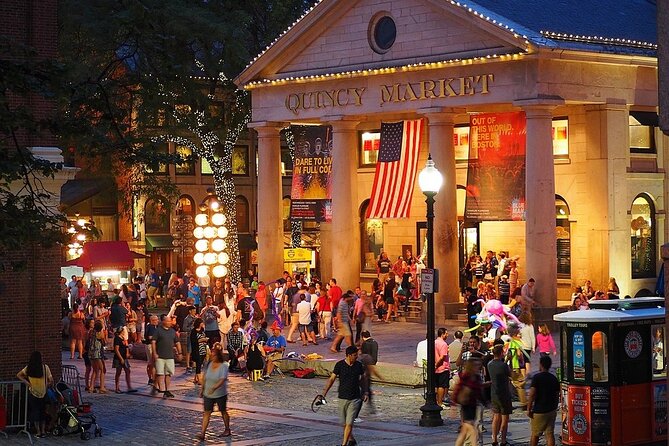
The walk continues to the meeting place associated with the Tea Party crisis. On December 16, 1773, about five thousand people gathered during the dispute over British tea. A group disguised as Mohawk Indians then headed toward Griffin’s Wharf, where the tea was thrown into Boston Harbor.
This section helps explain that the Tea Party did not appear out of nowhere. It grew from public meetings, anger over taxation, and a city willing to turn protest into direct action. The surrounding streets make the story more immediate than reading the event from a page.
The Boston Irish Famine Memorial changes the tone. It remembers Irish immigrants who fled the Great Famine of 1845 to 1852 and came to Boston in large numbers. By 1850, Irish immigrants formed the city’s largest ethnic group.
This is a short stop, but an important one. It reminds you that Boston is not only a colonial capital. It was also a refuge and a new home for people forced from their country. The memorial honors Irish immigrants while recognizing the many other groups that have built their lives in the city.
Books, Boston Latin School, and a patient donkey
The Old Corner Bookstore is a compact but rewarding stop. Built as a residence and apothecary in 1718, it became a bookstore in 1828 and later housed the publisher Ticknor and Fields.
Authors linked to the site include Henry Wadsworth Longfellow, Nathaniel Hawthorne, Oliver Wendell Holmes Sr., and Ralph Waldo Emerson. If you like literary history, this is one of the tour’s best details. It shows Boston as a place where writers met, publishers shaped reputations, and books helped carry local ideas far beyond Massachusetts.
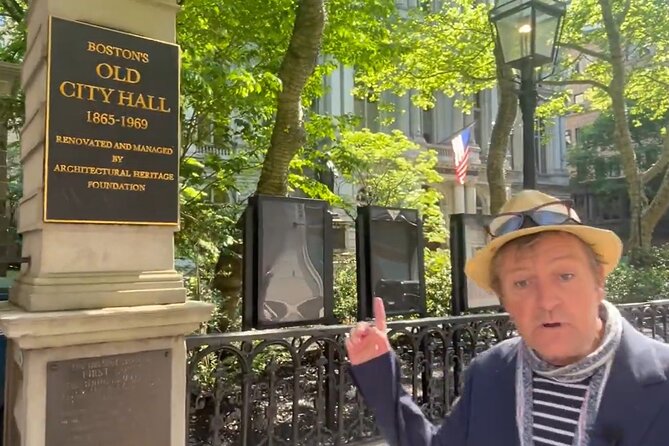
The route then reaches Boston Latin School, founded as the first public school in the United States. School Street also passes King’s Chapel, Old City Hall, and the Parker House. The stops are close together, so you get a concentrated look at the city’s old civic and educational core.
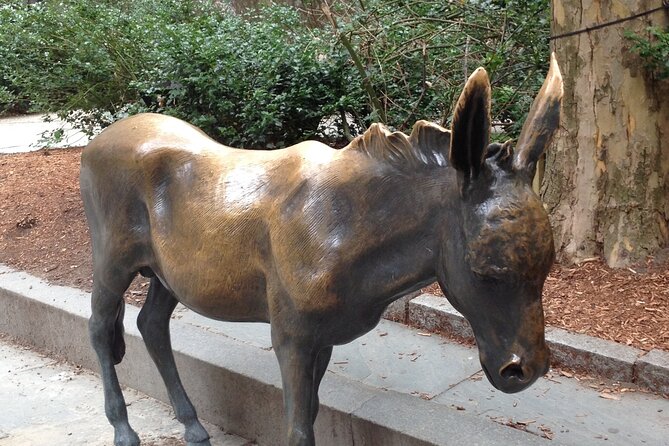
There is also Boston’s beloved donkey on School Street. It is an amusing, unexpected detail after so much politics and tragedy. You may want a photograph, but the schedule gives only about ten minutes for this stretch, so keep the group moving.
Faneuil Hall and the end near North Street
Faneuil Hall is the final major landmark. Its grasshopper weather vane is said to be modeled after one at London’s Royal Exchange, and the building is often called the Cradle of Liberty because of its role as a meeting place for revolutionary leaders.
The hall’s history is complicated. Peter Faneuil, the man who gave it to Boston, made his fortune as a slave trader. That fact gives the building a more honest story than a simple freedom slogan. The site also connects to the Ancient and Honorable Artillery Company of Massachusetts, an old military organization with a charter dating to 1637.
The tour ends at the James Michael Curley statues near Congress Street and North Street, directly across from Faneuil Hall. Curley served as mayor, governor, and congressman, and his long career reflects Boston’s tradition of colorful, hard-edged local politics.
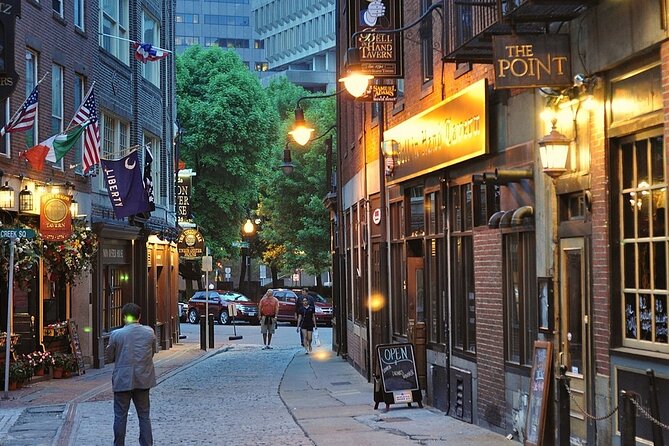
You are then close to the Union Oyster House, Bell in Hand tavern, and Hanover Street, the entrance to the North End. This is a useful finish because you can continue sightseeing, find lunch, or begin exploring the Italian district without retracing your steps.
Price, group size, and practical comfort
At $5 per person, the tour offers excellent value if you want a guide to interpret Boston’s central landmarks. You are paying less for admission than for the guide’s time and storytelling, and all listed stops are viewed from public spaces with no entry fees.
The group can include up to 24 people. That is small enough to feel manageable, but not so small that hearing is guaranteed in every street setting. Stay near Stephen, especially around busy roads and the Old State House.
The route lasts about two hours and covers one mile, but it is not a gentle sightseeing pause. You walk and listen with few built-in breaks. Wear comfortable shoes and dress for the forecast. Cold, wind, and rain have affected the experience before, and the tour requires suitable weather. Service animals are allowed, and the meeting point is near public transportation.
The tour is offered in English only. If English is not your first language, the amount of information and Stephen’s quick delivery may require extra concentration. You can ask him to slow down or repeat a point.
Free cancellation is available up to 24 hours before the 11 a.m. start. If poor weather cancels the walk, you can choose another date or receive a full refund.
Who should book this walk?
I would choose this tour if you want history with personality, especially if you enjoy connecting famous places to lesser-known people and events. It works well early in a Boston visit because the route leaves you near Faneuil Hall and the North End, with plenty of options for the rest of the day.
It is also a good choice for repeat visitors and local residents. The presentation goes beyond the standard colonial script, with material on the 54th Massachusetts, Boston’s literary world, the Brahmins, the Irish Famine, the Kennedys, and Curley’s political career.
I would hesitate if you want a short, quiet walk with long photo stops. The amount of material can feel like too much, and several people have left early when the opening or explanations ran long. Stephen has made changes to address those concerns, but his style remains energetic and information-heavy.
Should you book the Boston Historical and Heritage Walking Tour?
Book it if you want a low-cost, high-content introduction to Boston and you enjoy a guide who tells stories rather than reciting plaques. The strongest parts are Stephen Uys’s personal delivery, the range of subjects, and the way the route connects the Revolution to abolition, immigration, literature, and city politics.
Skip it if you prefer a tightly timed tour with only the essential facts. For everyone else, $5 buys an unusually full orientation to central Boston. Bring good shoes, dress for the weather, stay close enough to hear, and leave your afternoon flexible.
FAQ
Where does the tour begin?
It begins at the Boston Common Tablet at 1634 Freedom Trail, Boston, Massachusetts 02108.
Where does the tour end?
It ends at the James Michael Curley statues near Congress Street and North Street, directly across from Faneuil Hall.
What time does the tour start?
The scheduled start time is 11 a.m.
How long is the tour?
The tour is scheduled for about two hours and covers approximately one mile. It may run longer if the discussion continues.
Is the tour offered in languages other than English?
No. The tour is offered in English.
Can I cancel for a refund?
Yes. You can cancel at least 24 hours before the start time for a full refund. If bad weather cancels the experience, you will be offered another date or a full refund.
More Two-Hour Tours in Boston
- Boston: 2-Hour Historic Walking Tour
★ 4.7 · 88 reviews - 2 Hour Historic Pub Crawl in Boston
★ 5.0 · 45 reviews - Berlin’s Best: 2 Hour Walking Tour Third Reich and the Cold War
★ 5.0 · 5,486 reviews - 2-Hour Gettysburg Battlefield Guided History Bus Tour with a National Park Guide
★ 4.5 · 2,201 reviews
Just added around Boston
- Boston’s North End History + Photo Walking Tour (SMALL Group)★ 5.0 · 27 reviews
- Boston’s Architecture, History + Photo Walking Tour (SMALL Group)★ 5.0 · 91 reviews
- Freedom Trail Guided Walking Tour (SMALL GROUP)★ 4.5 · 98 reviews
- Haunted Boston’s Historic Streets Walking Guided Tour★ 4.5 · 184 reviews
- Boston: Underground Railroad History Tour of Beacon Hill★ 5.0 · 141 reviews
- Beacon Hill Boston History + Photo Walking Tour (SMALL Group)★ 5.0 · 163 reviews
- A Taste of the Freedom Trail: Boston’s Iconic Food & History Tour★ 5.0 · 32 reviews
- Boston: Food and History of The Freedom Trail Private Tour★ 5.0 · 159 reviews
Boston History Tours, compared.
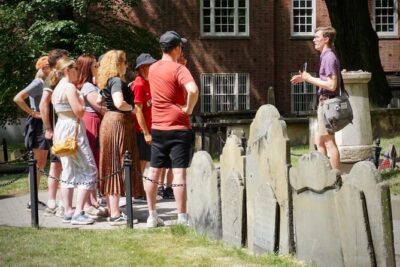
Boston: Freedom Trail History Small Group Walking Tour
Read our review →
Tour of Historic Fenway Park, America’s Most Beloved Ballpark
Read our review →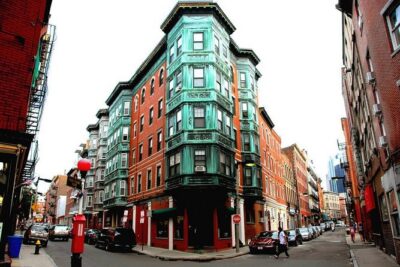
Boston Food & History: Pizza, North End & Freedom Trail
Read our review →Boston: Freedom Trail History Small Group Walking Tour
Read our review →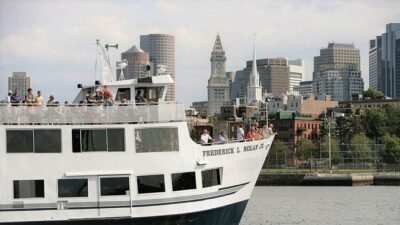
City Cruises Boston Historic Sightseeing Harbor Cruise
Read our review →
Boston Pizza Lovers Food and History Walking Food Tour
Read our review →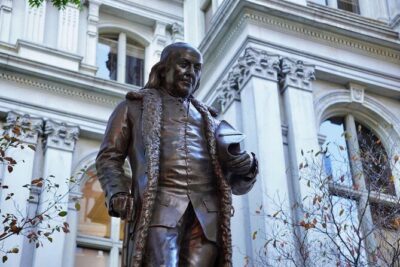
Boston Freedom Trail History Pub Crawl Small-Group Tour
Read our review →
Boston City View Bicycle Tour: History and Landmarks
Read our review →Browse the lists this tour appears in