
Review · HISTORY TOURS
20th Century Tour World War 2 and Communism
Bratislava’s recent past is written across its squares, government buildings, synagogue, and stark communist architecture. This 2-hour-5-minute walking tour follows the city from the creation of the first republic through World War II, the Holocaust in Slovakia, communist rule, the fall of the Berlin Wall, and the breakup of Czechoslovakia.
I like the clear route through several important city landmarks, and I like that local guides such as Matej and Jakub add family stories from life under different regimes. The $6.02 price is remarkably low for a guided history walk, though you should expect a fast-moving outdoor lesson rather than a slow sightseeing tour with museum interiors.
Key points to know
- The route covers 20th-century Bratislava from republic to independence, with stops tied to war, dictatorship, communism, and political change.
- SNP Square and the Slovak Uprising provide the opening chapter and the final discussion of the communist era.
- Heydukova Street Synagogue brings the Holocaust in Slovakia into the story at a meaningful historic site.
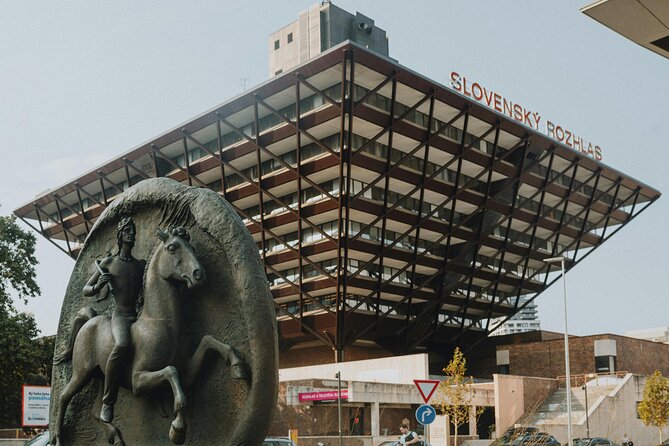
- Slovak Radio offers a close look at communist architecture, including its reputation among the world’s ugliest buildings.
- Local guides may share family memories, making political history easier to understand in human terms.
- The tour costs $6.02, uses a mobile ticket, and accepts up to 30 people, so value is excellent but the group may be fairly large.
Bratislava’s 20th century, told one square at a time
This tour does not treat Bratislava as an old European postcard and leave the difficult parts in the margins. Instead, it asks you to look at the city as a place shaped by war, dictatorship, propaganda, youth organizations, planned government districts, and the collapse of political systems.
That approach gives the walk a clear purpose. You are not simply passing a statue or a government building. You are learning why the place matters and how its meaning changed over time.
The opening and closing stops are both at SNP Square, also called Namestie SNP. This creates a useful frame for the walk. The tour begins with the creation of the first republic and the heroes of the Slovak Uprising, then returns to the square at the end to discuss the end of communist rule, the fall of the Berlin Wall, the breakup of Czechoslovakia, and Bratislava’s role as the capital of Slovakia.
I like this circular structure because it helps connect the separate chapters. You begin with a city finding a new political identity and finish with another major change in the state around it.
More Cold War and Communism Tours in the world:
- Berlin: Third Reich & Cold War Guided Walking Tour
★ 4.9 · 8,378 reviews - Berlin’s Best: 2 Hour Walking Tour Third Reich and the Cold War
★ 5.0 · 5,486 reviews - Prague: Communism History and Nuclear Bunker Guided Tour
★ 4.7 · 2,417 reviews
SNP Square and the Slovak Uprising
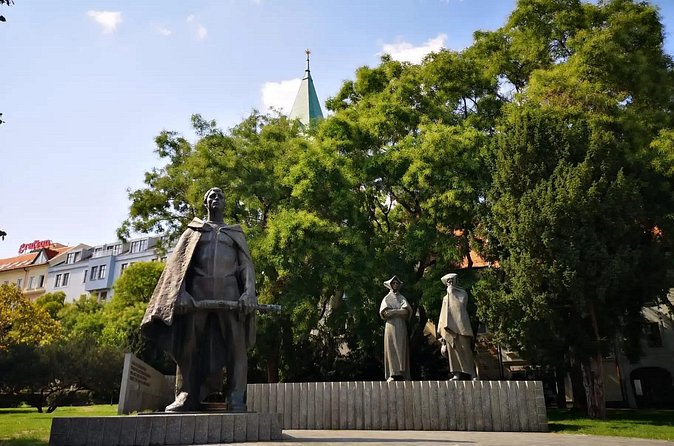
At SNP Square, the guide introduces the first republic and points out statues connected with the heroes of the Uprising. The tour gives this opening section about ten minutes, so expect a focused explanation rather than a long lecture on every political development.
The square matters because it lets the guide establish the basic timeline before the walk turns to wartime persecution and postwar communism. You will hear how the city’s political story moved from the formation of a republic toward conflict and resistance.
This is also where you can ask questions early. The guides are reported to speak excellent English, and the tour is designed as a conversational walk with questions along the way. That suits you if you prefer a guide who can explain a complicated subject in plain language rather than recite dates.
The return to SNP Square later gives the first stop extra weight. Instead of ending at a random point, the route comes back to the starting area to discuss the end of the communist parties’ regime and Slovakia’s emergence as a separate state.
Heydukova Street Synagogue and the Holocaust in Slovakia
The stop at Heydukova Street Synagogue brings World War II into a personal and physical setting. It is identified as the last synagogue in Bratislava, and the guide uses the site to discuss the Holocaust in Slovakia.
You should not expect a long indoor synagogue visit. The scheduled discussion lasts about ten minutes, and the tour information lists no admission tickets for the stops. Still, the location gives the subject more weight than a general explanation delivered in an anonymous square.
This part of the walk is important because it connects large political events with a building that remains in the city. The guide discusses the war and the Holocaust in Slovakia before moving on to the end of the war and the political changes that followed.
The subject matter is serious. The pace also means the treatment will be an overview, not a full study of wartime Slovakia. If you want a detailed Holocaust museum experience, you will need to add another site to your plans. If you want the wartime chapter placed within a wider story of Bratislava’s 20th century, this stop makes sense.
Hurban Barracks and the move toward communism
At the Ministry of Culture building, known as Hurban Barracks, the guide turns to the end of World War II and the shift into the communist period. This is a useful bridge in the route because it shows that the story did not simply move from war to peace.
The political system changed, and the city changed with it. You will hear how the postwar period led toward communist rule, preparing you for the next stops on government power, urban planning, and daily life.
The ten-minute timing keeps the walk moving. That is good if you want to cover several locations in a short afternoon, but it also means you should pay attention and ask questions as they arise. There is little room for a long pause at each site.
I find this middle section especially useful for anyone who knows the basic story of World War II but has a weaker grasp of what followed. The tour does not treat 1945 as a clean endpoint. It explains the transition into a new political period.
More History Tours in the world:
- Prague: Medieval Dinner with Unlimited Drinks
★ 4.4 · 19,847 reviews - Pompeii: Entry Ticket and Guided Tour with an Archaeologist
★ 4.8 · 19,459 reviews - History and Hauntings of Salem Guided Walking Tour
★ 5.0 · 14,564 reviews - Athens: Acropolis & up to 5 Archaeological Sites Combo Pass
★ 4.2 · 13,904 reviews
Freedom Square and the government district
Freedom Square is used to discuss communist terror and the changes made to urban planning in the government district. This stop shifts the focus from major political events to the physical organization of the city.
Government buildings and open civic spaces can tell you a lot about power. A planned district is not only a matter of roads and offices. It can show how a government wanted authority to be seen, approached, and experienced.
The guide spends about ten minutes here, explaining how communist rule affected both public life and the shape of Bratislava. You may find this one of the more useful stops if architecture and city planning interest you.
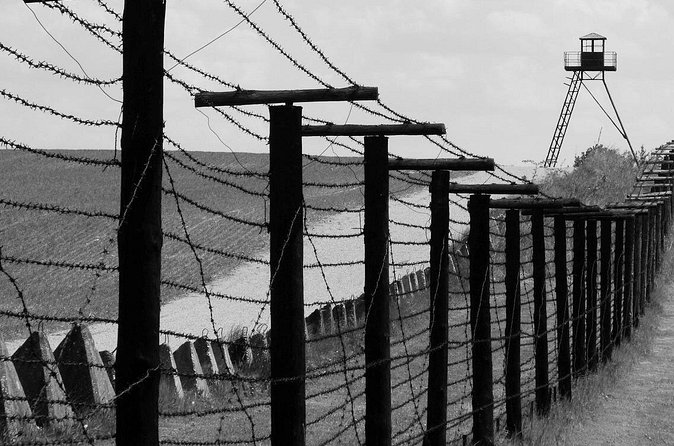
The subject is also a reminder that communist history is not limited to prisons, speeches, or party leaders. It can be read in broad squares, official buildings, and the way government areas were arranged.
Slovak Radio and communist architecture
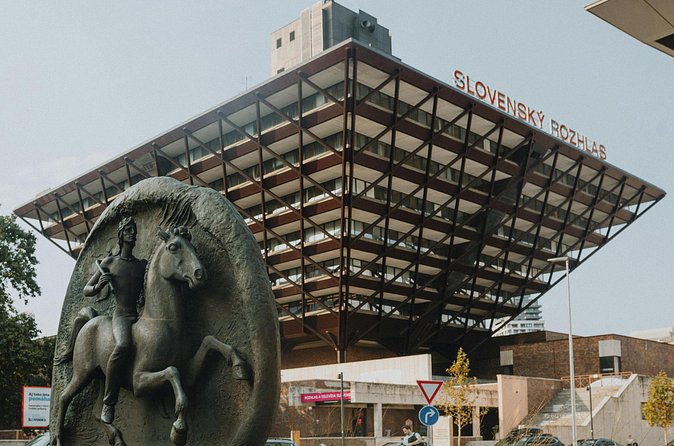
The Slovak Radio building provides one of the tour’s most memorable visual subjects. The guide discusses communist architecture and the building’s place on a list of the 30 ugliest buildings in the world.
That description gives the stop a touch of humor, but the point is more serious. Architecture can reflect the values and limits of a political period. A building that feels severe, strange, or imposing today may have been intended to project modernity, authority, or a break with the past.
You will spend about ten minutes here. Since the stop is outdoors and the route includes several buildings, the walk is a good choice for you if you like connecting history with what you can actually see.
This is also a strong photo stop. The tour includes plenty of opportunities for pictures, though you should keep the historical discussion in view. The building is not included simply as an oddity. It helps explain how communist-era design shaped Bratislava’s public image.
The government palace and the Presidential Palace
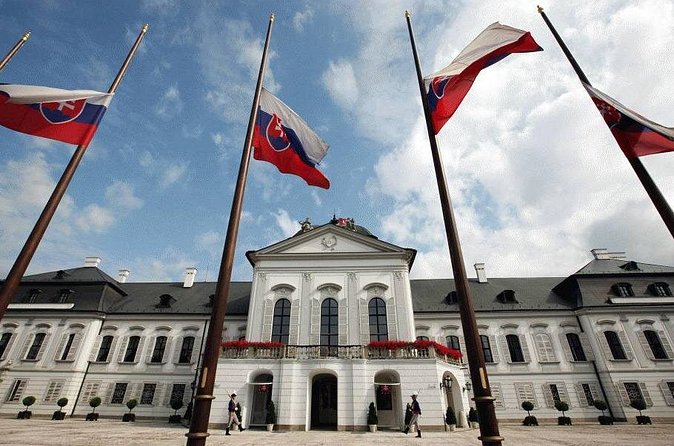
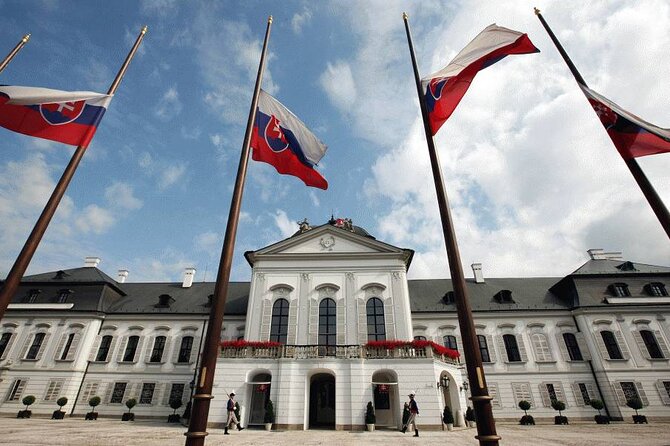
The route also passes the palace of the executive branch, described as the government palace and offices. The supplied schedule does not give this location a separate time, so it appears to function as a brief part of the route rather than a long stop.
That is worth knowing if you want detailed access to government interiors. This is an exterior walking experience, with no included admission tickets listed for the sites.
The tour then reaches the Presidential Palace, called the White House of Slovakia. Here, the guide discusses youth groups and ordinary life during the communist period. This shifts the story from institutions to people.
Youth groups are a useful subject because political systems do not operate only through official buildings. They also shape education, social activities, public behavior, and the way younger people understand their country.
This may be one of the most approachable parts of the tour. Guides such as Matej and Jakub are described as using family stories from parents and grandparents who lived through different regimes. Those personal accounts can help you picture what political change meant beyond headlines and monuments.
Still, the ten-minute stop limits how many personal examples can be explored. You will get selected stories and context, not a full oral history of communist Bratislava.
The final return to SNP Square
The walk returns to SNP Square to discuss the end of communist rule, the fall of the Berlin Wall, and the changes of the 1990s. The guide also covers the breakup of Czechoslovakia and Bratislava’s position as the capital of the new state of Slovakia.
This ending gives the tour a modern endpoint without pretending that history stopped in 1989. It links the city you see today with the political changes that reshaped the country.
I like that the final section includes the 1990s. Many history walks stop at the fall of communism, even though the breakup of Czechoslovakia was another major change for Bratislava. Here, you get at least a short explanation of how the city moved from being part of Czechoslovakia to serving as the capital of Slovakia.
The end location is different from the starting meeting point in the general booking details, but the route information places the final discussion at SNP Square. Check the exact end instructions on your confirmation before setting out, especially if you have a tight appointment afterward.
What the $6.02 price really gives you
At $6.02 per person, this is an unusually inexpensive way to spend just over two hours in central Bratislava. All listed stops have free admission, so you are paying mainly for the guide’s time, organization, English explanations, and historical interpretation.
The value is strongest if you want orientation. In a single walk, you get a timeline that connects the first republic, the Slovak Uprising, World War II, the Holocaust, the transition to communism, communist terror, architecture, daily life, 1989, and Slovak independence.
The price does not mean you should expect a private tour. The maximum group size is 30 people, and one of the available descriptions refers to a large group moving quickly. A group of that size can make it harder to hear at a noisy street corner or ask a long series of questions.
You should also remember that the tour requires good weather. If poor weather cancels it, you are offered another date or a full refund. Free cancellation is available up to 24 hours before the start time, but cancellations or changes inside that 24-hour window are not refunded or accepted.
Timing, meeting point, and who will enjoy it
The tour starts at 2:30 pm and begins at NetSolution s.r.o., Františkánske námestie 412/7, in Bratislava’s Old Town. It is offered in English and uses a mobile ticket, making it easy to carry the booking details on your phone.
The walk lasts approximately two hours and five minutes. Each main stop is listed at about ten minutes, with time between locations for walking and conversation. You should wear comfortable shoes and leave enough space in your afternoon for the full route.
You do not need to be a specialist. Most people can participate, and service animals are allowed. The route is near public transportation, which makes the 2:30 pm start easy to fit around other sightseeing in the city.
I would choose this walk for you if you want modern Slovak history explained at street level. It is especially useful early in a Bratislava visit, since the route can help you understand buildings and public spaces you might otherwise pass without a second thought.
You may want something else if you prefer art museums, long visits inside historic buildings, or a gentle sightseeing walk with little political discussion. The subjects here include war, persecution, communist terror, and authoritarian rule. The tone is educational and conversational, but the material is not light.
The guides make the difference
The tour’s strongest feature is the guide. Names connected with the experience include Matej and Jakub, and the guide may vary according to the date. You can expect strong English and a focus on Bratislava’s 20th-century story.
Personal family accounts are particularly valuable here. A guide whose parents or grandparents lived through different regimes can explain how political change affected ordinary life in ways a textbook cannot. That does not replace historical context, but it gives the discussion a human scale.
The walk also allows questions as you go. Use that chance. Ask for clarification when the timeline becomes crowded, especially around the transition from World War II to communism and the later breakup of Czechoslovakia.
Because the tour covers so much ground, you may feel that the information comes quickly. That is part of the tradeoff. You get a broad account of the century in a little over two hours, but you will not receive a full lecture on every event.
Should you book this Bratislava history walk?
Book it if you want a low-cost, English-language introduction to the forces that shaped modern Bratislava. The route is well chosen, the price is hard to beat, and the combination of public squares, a synagogue, government buildings, communist architecture, and family stories gives the subject real texture.
I would be most likely to recommend it to history-minded adults, first-time visitors who want context, and anyone curious about life behind the Iron Curtain. Just arrive ready to walk, listen closely, and absorb a lot in a short time.
Skip it if you want interiors, a small private group, or a tour focused mainly on medieval Bratislava. For everyone else, this is a practical way to understand the city beyond its old town streets.
FAQ
How long is the tour?
The tour lasts approximately 2 hours and 5 minutes.
What time does the tour start?
The stated start time is 2:30 pm.
Where does the tour begin?
It begins at NetSolution s.r.o., Františkánske námestie 412/7, 811 01 Bratislava-Staré Mesto, Slovakia.
What language is the tour offered in?
The tour is offered in English.
How much does the tour cost?
The listed price is $6.02 per person.
What locations are included?
The route includes SNP Square, Heydukova Street Synagogue, Hurban Barracks at the Ministry of Culture, Freedom Square, Slovak Radio, the government palace area, the Presidential Palace, and a return to SNP Square.
How many people can join?
The maximum group size is 30 people.
Can I cancel for a full refund?
Yes. You can cancel at least 24 hours before the experience starts for a full refund. Changes or cancellations made less than 24 hours before the start time are not accepted or refunded.
Just added around the world
- Scenic Train ride to historical cities of Morretes and Antonina★ 4.0 · 188 reviews
- 6-Day Cultural Tour to Machu Picchu★ 5.0 · 76 reviews
- Jewish Heritage of Curacao★ 4.5 · 68 reviews
- The Curacao’s Colorful History Walking Tour★ 5.0 · 55 reviews
- Discover Scuba Diving Amathounta’s Ancient Port★ 5.0 · 30 reviews
- Olous – Guided Snorkelling Excursion to Discover Olous Sunken Ancient City★ 4.5 · 31 reviews
- Night Walking Tour of Medieval Cuenca★ 5.0 · 64 reviews
- WWII – The Battle of Crete Day Tour★ 5.0 · 103 reviews