
Review · MEXICO
5 Days Mayan Heritage History Tour
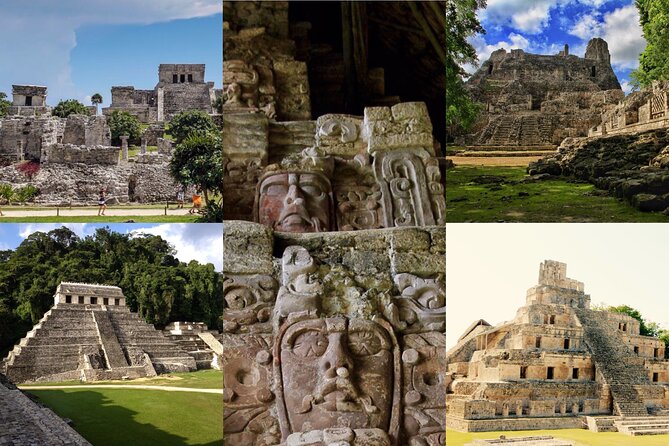
The great strength of this five-day Maya tour is its range. You see famous places such as Tulum, Palenque, Uxmal, and Chichen Itza, but you also reach quieter sites including Kohunlich, Becan, Chicanná, and Edzna. That gives you a much fuller picture than a quick day trip from Cancun.
I like the small group size of no more than 10 and the fact that admissions, transport, four hotel nights, and a driver-guide are included. I also like the local rhythm of the trip: colonial Campeche, Mérida, roadside restaurants, and small towns help connect the ancient sites with modern Mexico.
The tradeoff is simple: this is a road trip, not a leisurely resort break. You will spend long stretches in the vehicle, start at 7:30 a.m., and buy your own meals. Your experience also depends heavily on the guide assigned to your group, so it is worth asking for a clear sightseeing and meal plan before departure.
Key points to know before booking
- Eight major Maya sites and colonial cities: The route includes Tulum, Kohunlich, Becan, Chicanná, Palenque, Edzna, Uxmal, and Chichen Itza, plus Campeche and Mérida.
- A maximum of 10 people: A small group makes questions, photo stops, and schedule adjustments easier.
- Four hotel nights included: Overnight stops are in Xpujil, near Palenque, Campeche, and Mérida.
- A lot of driving for a lot of variety: The distance is the price of reaching sites spread across the Yucatán Peninsula and beyond.
- Food is not included: Guides have recommended local restaurants, but you should budget separately for every meal.
- Guide quality matters: Max, Abraham, and Jose received especially strong praise for historical explanations and practical help, while one poor guiding experience shows why communication is important.
Why this route is different from a standard Cancun day trip
Most Cancun excursions focus on one headline attraction. This one links several regions and periods of Maya and colonial history into a single journey. You begin on the Caribbean coast, cross through the southern Yucatán and Campeche, reach Palenque in Chiapas, then return toward Mérida and Chichen Itza.
That route has real value for anyone who wants context. Tulum shows a coastal Maya city with striking sea views. Kohunlich and Becan offer a quieter setting and a better feel for how large ceremonial centers worked. Palenque brings royal power and sculpture into the story, while Uxmal and Chichen Itza show different architectural traditions.
The price is $1,195 per person, or about $239 per day before meals. That is not cheap, but it covers four hotel nights, all listed archaeological admissions, transport, activities, and a driver-guide. You are paying for an ambitious point-to-point trip rather than a single guided visit.
The value improves if you would otherwise book several transfers, hotel rooms, and entrance tickets on your own. It is less attractive if you prefer to stay in one hotel, sleep late, or spend several hours at each individual site.
More Ancient History Tours in Mexico
- Riviera Maya: Sian Ka’an Reserve Ancient Maya Canals Tour
★ 4.7 · 453 reviews - Private Guide Service in the Archaeological Zone of Chichen Itza
★ 5.0 · 151 reviews - Tour to Teotihuacan with visit to ancient caves and CDMX transportation
★ 5.0 · 130 reviews
Day 1: Tulum and the masks of Kohunlich
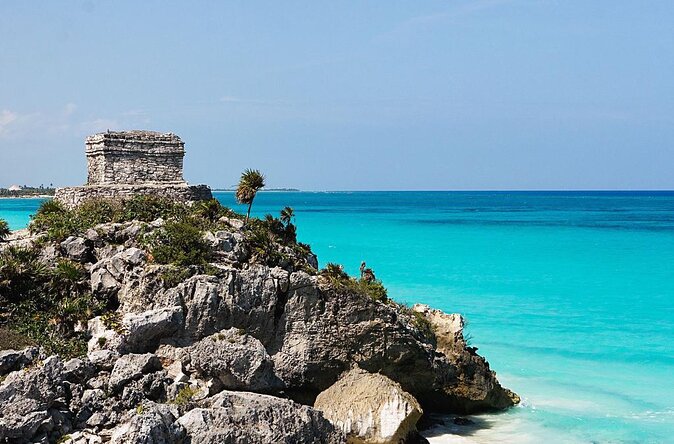
Pickup begins at 7:30 a.m. from hotels in Cancun or Playa del Carmen. The first stop is Tulum, where you have about two hours to see one of the best-known Maya sites in Mexico.
Tulum is a strong opening because it combines ruins with a dramatic coastal setting. The city served as an important walled center, and its position beside the sea makes it immediately memorable. Two hours gives you time to see the principal structures and take photographs, but not to study every corner at a slow pace.
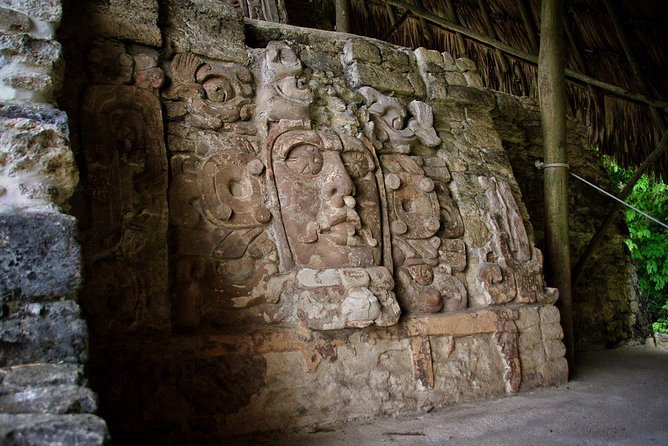
From Tulum, the route continues to Kohunlich. This is one of the trip’s less familiar stops, and the large stucco masks linked with the Maya Sun God are its main attraction. You have about 90 minutes here, enough for an introduction and a walk through the central area.
Kohunlich is valuable because it feels different from Tulum. Instead of the famous coastal setting, you get a more secluded archaeological site surrounded by forest. Bring water, comfortable shoes, and patience for heat. Your first night is at Calakmul Xpujil, giving you a practical base for the southern sites.
Day 2: Becan, Chicanná, and Misol-Ha
Becan is the first stop on Day 2, with about an hour to explore. Its defining feature is a defensive wall and moat around the ancient city. That detail helps you picture Becan as a place with political importance and protection, not merely a collection of isolated temples.
The visit is relatively short, so listen closely to the guide’s explanation of the site plan. A strong guide can make the moat and walls meaningful by showing how the city was organized and why those features mattered.
Next comes Chicanná, where you have 90 minutes. The site is noted for architectural decoration and evidence of Maya writing on its walls. Compared with the headline destinations later in the trip, Chicanná is a quieter stop with a more focused visit.
The day ends at Cascadas de Misol-Ha near Palenque. You have about an hour for photographs and a quick swim. Pack swimwear and a small towel if you want to use the water, and keep a change of clothes handy.
Your second night is at Nutuntun Hotel. The order of sites makes this a useful transition day: ancient cities in the morning, a natural attraction later, and an overnight stop near Palenque.
Day 3: Palenque and eight hours in Campeche
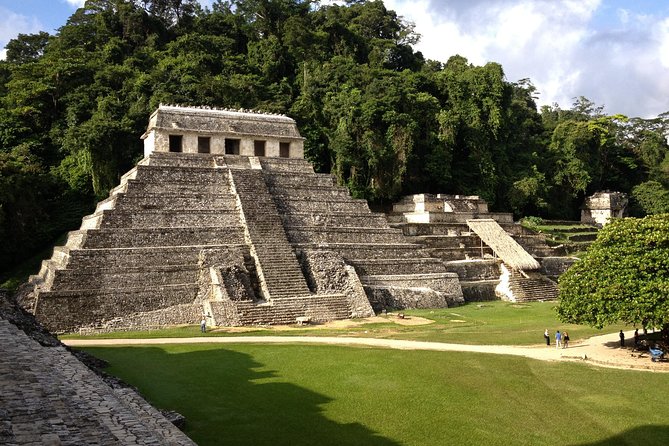
Palenque deserves careful attention. The site is associated with King Pakal the Great, whose tomb was found in 1952. The jade funerary mask connected with Pakal is one of the most famous works of Maya art, and the royal story gives the ruins a strong human focus.
You have about two hours at the archaeological zone. That is enough to see major structures and hear the main story, though history enthusiasts may wish the schedule allowed more time. Palenque is one of the places where the quality of the guide matters most. A clear explanation of Pakal, royal power, tomb discovery, and Maya art can transform a fast visit into a memorable one.
The trip then moves to Campeche, with roughly eight hours assigned to the historic center. That is a major change of subject and scenery. Campeche is a colonial port city on the Gulf coast, shaped by Spanish rule and repeated pirate attacks.
Use this time to walk, see the colonial streets, and take in the city’s seafront character. The long stop is helpful after the archaeology, but the day may feel full because Palenque and Campeche are both substantial destinations.
You spend the night at H177 Hotel. One of the useful features of the overnight plan is that some hotels sit close enough to town centers for independent exploration, though the exact freedom you have will depend on the day’s timing and your guide.
Same city, a different century:
- Historic Downtown Walking Tour
★ 5.0 · 1,289 reviews - Historic Center Food Tour in Mexico City
★ 5.0 · 1,263 reviews - Mexico City: Historic Downtown Walking Tour
★ 4.8 · 1,039 reviews - Walking Tour of the Historic Center of Mexico City
★ 5.0 · 870 reviews
Day 4: Edzna, Uxmal, and Mérida
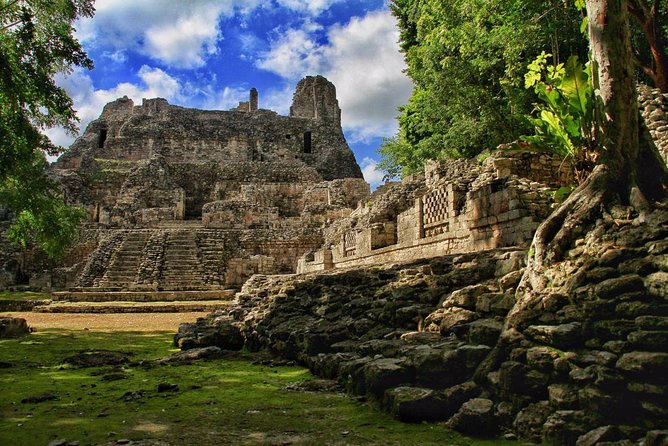
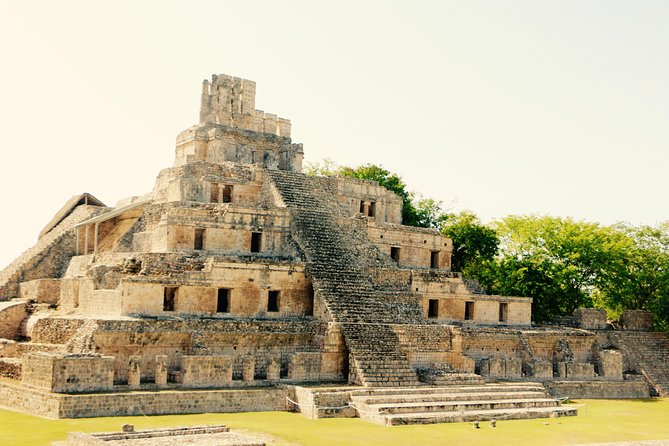
Edzna receives about 90 minutes. Its best-known feature is the Temple of the Five Stories, a large structure tied to one of the major Maya royal traditions. The site is less famous than Chichen Itza or Uxmal, which can make the visit feel more focused.
Next is Uxmal, with two hours to explore. Uxmal is famous for its detailed decoration and distinctive architectural style. Its buildings do not simply repeat the forms you see at Tulum or Chichen Itza. Look closely at the carved surfaces and rounded design elements, and ask your guide how Uxmal fits into the wider Puuc region.
The city was built and rebuilt over time, which adds another layer to the visit. Two hours is a reasonable introduction, though anyone fascinated by Maya architecture may want longer.
Mérida receives about eight hours and is the overnight stop. This is a welcome shift from archaeological zones to a living city. Mérida is the largest city in southeastern Mexico and is known for its colonial center, cathedral, and local restaurants.
The Cathedral of Mérida is listed as a specific stop, but the broader value is having time in the city. Ask your guide for a restaurant recommendation and a clear meeting time. Gran Real Yucatan or Los Aluxes Hotel is used for the fourth night.
Day 5: Finishing at Chichen Itza
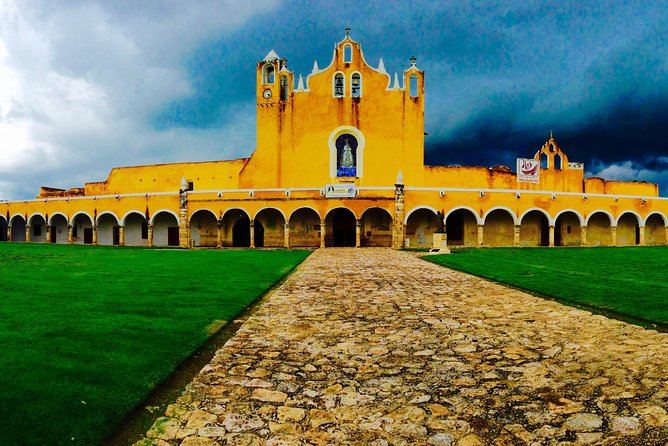
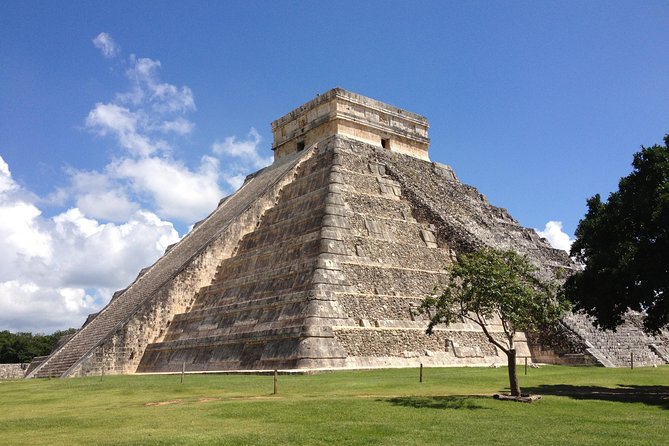
Chichen Itza is saved for the final day. You have about two and a half hours, making this the longest archaeological visit on the schedule.
The site is one of Mexico’s most famous ancient cities and is recognized as one of the New Seven Wonders of the World. Its fame also means it can feel more formal and busy than Kohunlich, Becan, or Chicanná. Still, the scale and architectural variety make it a fitting final stop.
Use your time for the principal monuments and ask about the city’s role in Maya history. A good guide should help you see more than the most photographed pyramid. The visit is long enough for a useful overview, but not for a slow, all-day study of the site.
The tour ends after Chichen Itza, but the supplied details do not specify the final drop-off time or location. Confirm that point before booking, especially if you have an evening flight or another hotel reservation.
What the hotels and transport mean in practice
Four hotel nights are included: Calakmul Xpujil, Nutuntun Hotel, H177 Hotel, and either Gran Real Yucatan or Los Aluxes Hotel. The exact room experience can differ from night to night. One stay was described as noisy because of local construction, while the others were praised for comfortable rooms, air conditioning, swimming pools, or a resort-like setting.
That mix is normal for a route covering so much ground. The hotels are selected for location and practicality, not as a single luxury resort experience. Pack lightly, keep essentials in a day bag, and expect to move rooms each night.
Transport is included with a driver-guide, and some departures may use both a guide and a separate driver. Strong guide and driver pairings included Max with Moises, as well as Abraham and Jose. Max was especially praised for explaining ancient and modern history and for helping with restaurant choices and town visits.
The vehicle has been described as large and air conditioned, which matters in the heat and during long road sections. Group size is capped at 10, and departure is guaranteed once at least two people are booked.
Food, pacing, and the guide question
Meals are not included. This keeps the advertised price more controlled, but it means you need money and planning for breakfast, lunch, dinner, drinks, and snacks.
Several guide pairings have taken groups to local restaurants, which is one of the pleasures of this route. Ask where and when you will stop for meals rather than assuming food breaks are built into every day. Carry a few snacks, especially on the long days between sites.
The guiding standard is the biggest variable. Max, Abraham, and Jose were praised for clear history, local recommendations, safe driving, and help with travel arrangements. Another guide was criticized for rushing through sites, giving short explanations, skipping proper meal stops, and failing to keep close watch in crowded streets.
That poor account should not be treated as a prediction, but it is a useful warning. At the start, tell your guide that you want time for questions, photographs, meals, and a steady walking pace. If the group is small, speak up early when the schedule feels too fast.
Who should book this five-day Maya tour
I would recommend this trip to you if you want a broad introduction to Maya archaeology and do not mind changing hotels. It suits history fans, photographers, and curious visitors who want more than a Cancun beach holiday.
It also works well for families or friends who prefer a prearranged route. The included admissions and transport remove much of the planning burden. A small group can also make it easier to ask questions and adjust the pace.
I would be cautious if you need long rest periods, dislike early starts, or want full control over meals and sightseeing time. Most people can participate, and service animals are allowed, but the information does not promise a fully accessible route at every archaeological site. Ask specific mobility questions before paying.
You can cancel for a full refund at least six full days before the start time. Cancellation two to six full days ahead allows a 50 percent refund, while cancellations less than two full days ahead are not refunded.
Is the $1,195 price worth it?
The price makes sense when you add up the four hotel nights, ten archaeological admissions, intercity transport, and guiding. You also gain access to sites that are difficult to combine independently in five days.
The value is strongest for someone who wants coverage. You see famous monuments, lesser-known ruins, colonial cities, and a waterfall in one organized trip. The value is weaker if you would rather spend a whole day at Palenque, Uxmal, or Chichen Itza.
I would book it if the route matters more to you than having a relaxed schedule. Before confirming, ask which guide is assigned, how meals are handled, where the final drop-off will be, and how much time is planned at each stop.
Should you book it?
Book this tour if you want to connect the major Maya sites with southern Yucatán, Campeche, Mérida, and Palenque without arranging every transfer yourself. The route is ambitious, the small group is a real plus, and the mix of famous and quieter sites is excellent.
Skip it if you want a slow holiday or expect every guide to provide the same level of historical detail. For the right person, this is a strong five-day survey of Maya civilization and colonial southeastern Mexico, with long drives as the unavoidable cost of seeing so much.
FAQ
How long is the Maya heritage tour?
The tour lasts approximately five days.
What time does pickup begin?
Pickup begins at 7:30 a.m.
Where can pickup take place?
Pickup is available from hotels in Cancun or Playa del Carmen. You should provide your hotel name if it is not shown among the sample pickup locations.
How many people can join the tour?
The group has a maximum of 10 travelers.
Is the tour guaranteed to depart?
Yes. Departure is guaranteed once at least two people are booked.
Are archaeological entrance fees included?
Yes. Admissions to the listed archaeological sites are included.
Are meals included?
No. Food and drinks are not included. The staff can recommend places to eat along the route.
Which hotels are used?
The listed hotels are Calakmul Xpujil for Night 1, Nutuntun Hotel for Night 2, H177 Hotel for Night 3, and Gran Real Yucatan or Los Aluxes Hotel for Night 4.
Can I cancel the tour for a refund?
You can receive a full refund by canceling at least six full days before the start time. A cancellation two to six full days ahead receives a 50 percent refund, while cancellations less than two full days before the start time are not refunded.
Just added around Mexico
- Private Half Day Cultural Tour to Mayan Ruins and Cenote★ 4.5 · 31 reviews
- Ancient Chacchoben Mayan Ruins & Mayan Experience from Costa Maya★ 5.0 · 96 reviews
- Colima Volcano Cultural Tour: Coffee Plantation, Hacienda and Comala Magic Town★ 5.0 · 30 reviews
- Private Tour in Chichen Itza Official History Guide★ 5.0 · 36 reviews
- Archaeological Tour in Tulum and Coba with Kuxtal Cenote★ 4.0 · 114 reviews
- Calakmul Ancient Maya City Tour – From Campeche★ 4.5 · 24 reviews
- Calakmul Ancient Maya City Tour From Xpujil★ 4.5 · 38 reviews
- La Paz Tour, Historical City, Beach, Colonial and Beautiful scenery on the way!★ 4.5 · 26 reviews
Mexico History Tours, compared.
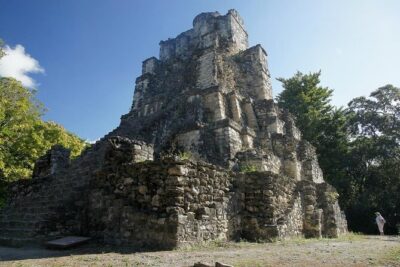
Tulum Archaeological Site & Sian Ka’an Muyil Tour from Tulum
Read our review →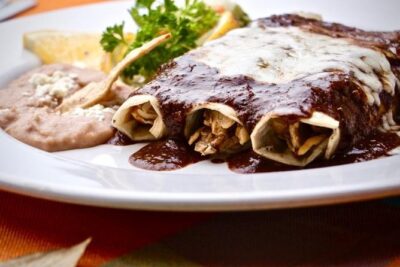
Mexico City Historical Centre Food Tour with 7 Authentic Tastings
Read our review →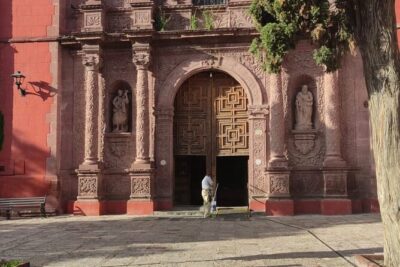
Historical and Cultural Walking Tour of San Miguel de Allende
Read our review →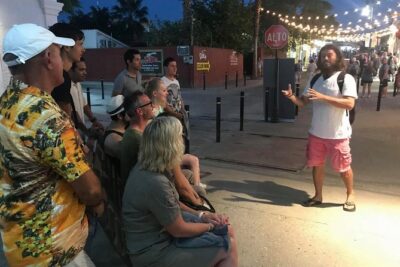
Historical and Cultural Walking Tour of San José del Cabo
Read our review →Browse the lists this tour appears in