Review · MEXICO CITY
Historic Downtown Walking Tour
Mexico City’s historic center is a place where Aztec ruins, Spanish churches, grand civic buildings, and modern street life sit almost on top of one another. This tour gives you a fast, useful introduction, starting at the Zócalo and ending near the National Museum of Art and the famous El Caballito statue. The city’s story unfolds block by block, which makes walking the right way to see it.
I like the clear route and the local guides, especially names such as Estefania, Emiliano, Mar, and Nadia, who are praised for explaining history in accessible English. I also like the practical food and sightseeing advice woven into the walk. The main drawback is pace: three hours covers a lot, and some guides speak quickly or move ahead in crowded areas.
Key points to know before you book
- The route connects six major sights from the Zócalo to Palacio de Bellas Artes and the National Museum of Art.
- Aztec, colonial, and modern Mexico meet in one short walk, giving you useful context for later museum visits.
- Guides make the difference, with Emiliano, Estefania, Mar, and Nadia receiving especially strong praise for clear storytelling and practical advice.
- You will see only part of Templo Mayor, mainly the outdoor ruins, so plan a separate museum visit if you want a full look at the archaeological site.
- The price is $26.53 per person, a fair rate for a three-hour guided orientation if you want history and local suggestions without booking a private tour.
- Group size needs checking, since the tour is described as capped at 15 participants, while the additional booking information lists a maximum of 25.
Why this is a smart first walk in Mexico City
I would put this tour near the start of a Mexico City visit. The historic center can feel confusing at first because its buildings belong to several different eras, and the most important clues are not always obvious from the sidewalk.
A good guide helps you connect the pieces. You learn how the Aztec capital shaped the modern city, how Spanish colonial power changed the center, and how Mexico’s later political and cultural life appears in its public buildings and monuments.
The tour is also a useful warm-up for museums. After seeing the Templo Mayor ruins and hearing the basic story of Mexico City’s development, you will have a better framework for museums and historic sites elsewhere in the city.
The walk lasts about three hours and covers a relatively concentrated area. That is long enough to get a solid introduction, but short enough to leave you free for lunch or another museum afterward. The route is not a leisurely stroll with long breaks. You should expect steady walking and plenty of listening.
More History Walking Tours in Mexico
- Mexico City: Historic Downtown Walking Tour
★ 4.8 · 1,039 reviews - Walking Tour of the Historic Center of Mexico City
★ 5.0 · 870 reviews - Historical and Cultural Walking Tour of San Miguel de Allende
★ 5.0 · 641 reviews
Starting at the Zócalo, the city’s great stage
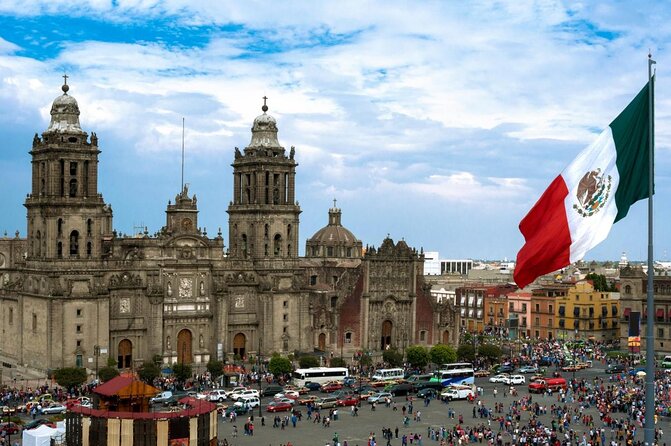
The meeting point is at C. de Monte de Piedad 11, beside the Zócalo, Mexico City’s enormous central square. This is an excellent place to begin because the square is more than an open plaza. It is the symbolic heart of the capital and a useful starting point for understanding the city’s political, religious, and national identity.
The first stop lasts about 15 minutes. Your guide explains why the Zócalo matters and how it functions as the center of the country. This opening gives you orientation before the group moves into the older layers of the city.
The square can be crowded and noisy, so your guide’s voice matters. Emiliano is especially praised for projecting clearly, while other strong guides such as Estefania and Nadia are described as easy to follow and willing to answer questions.
Bring your attention to the way the surrounding buildings frame the plaza. You are not simply looking at a square. You are standing at the meeting point of several versions of Mexico City.
Templo Mayor and the Aztec city beneath the pavement
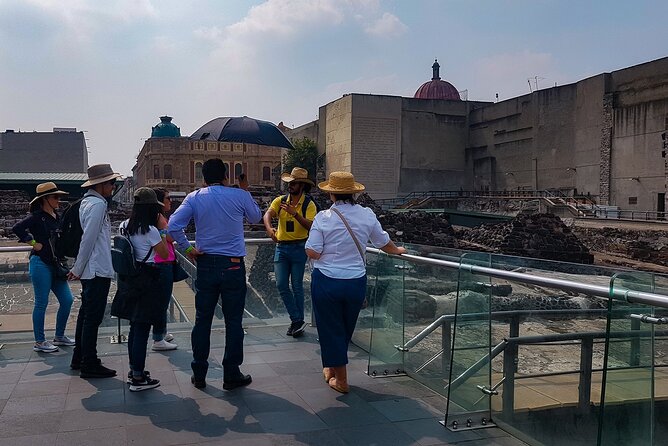
The next stop is Plaza Manuel Gamio, where you see the remains of Templo Mayor, the central religious complex of the Aztec capital. The tour allows about 30 minutes here.
This is one of the most valuable parts of the walk because it makes Mexico City’s past physically visible. The modern center was built over the earlier Aztec city, and the ruins help explain why the streets and buildings around you carry such heavy historical weight.
The important limitation is that this is not a full archaeological museum visit. On the walking tour, you mainly see the outdoor ruins and receive an explanation from the guide. If Templo Mayor interests you, plan to return for more time and a separate museum visit.
That limitation is not a flaw in the walking tour. It is simply a matter of scope. Three hours cannot cover the full site, the museum, and the rest of the center in a relaxed way. The outdoor stop works best as a first look that tells you where to return.
Guides such as Mar are praised for explaining pre-Hispanic history clearly, including the wider story of Mexico’s pyramids and ancient cultures. That background can make the ruins easier to read, especially if you are new to Mexican history.
Inside the Metropolitan Cathedral
The tour then enters the Mexico City Metropolitan Cathedral for about 30 minutes. This is one of the longest stops, and rightly so.
The cathedral represents the Spanish and Catholic transformation of the city. Its scale and interior give you a sharp contrast with the archaeological remains nearby. Within a few minutes, you move from the Aztec capital to the religious center built by colonial Mexico.
A guide adds value here by explaining the cathedral as part of a larger historical change, rather than treating it as only a beautiful church. The tour focuses on its place in Mexican Catholic life and the role it has played in the country’s story.
This stop also gives your feet a short break from open-air walking, though you should still expect to stand while listening. The route is easy enough for anyone with moderate physical fitness, but comfortable shoes are a practical choice.
More Old Town and Historic Centre Walks in Mexico
- Historic Center Food Tour in Mexico City
★ 5.0 · 1,263 reviews - Mexico City Historical Centre Food Tour with 7 Authentic Tastings
★ 5.0 · 723 reviews - Private Walking Tour Gems of the Historic Center of Mexico City
★ 5.0 · 87 reviews - Mérida: Montejo Boulevard and Historic Center bike tour
★ 4.7 · 43 reviews
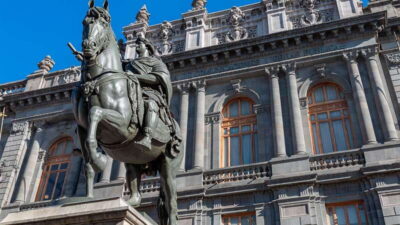
Plaza Manuel Tolsá and the story of El Caballito
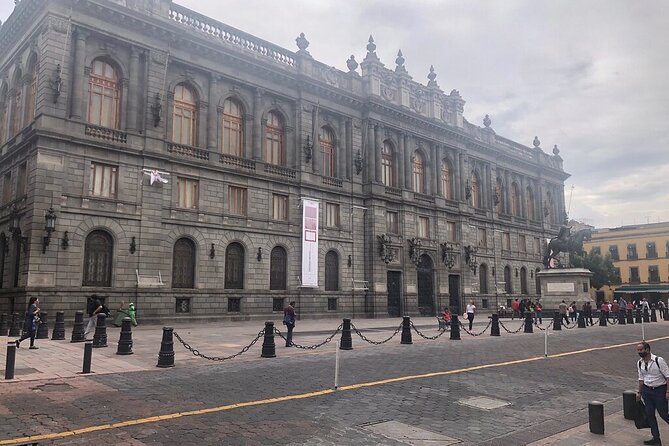
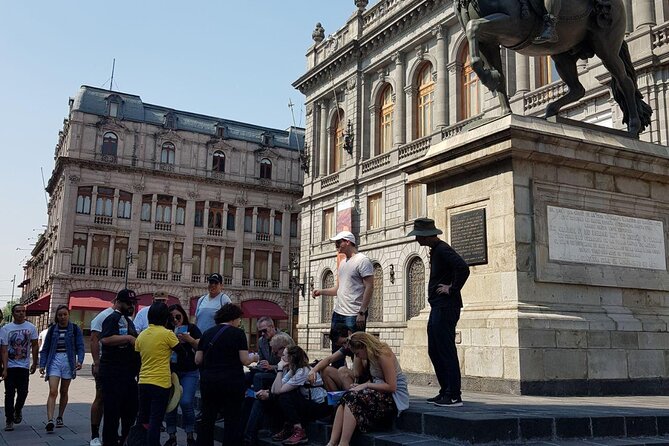
The group continues to Plaza Manuel Tolsá for about 10 minutes. This is a shorter stop, centered on one of Mexico City’s best-known statues.
The plaza offers a change of scale after the Zócalo and cathedral. Instead of a vast public square or a monumental church, you get a more focused look at a historic urban setting and an emblematic work of public art.
The stop is brief, so do not expect a long art lecture. Its value comes from seeing another important corner of the center and understanding how monuments help mark Mexico City’s changing political and cultural identity.
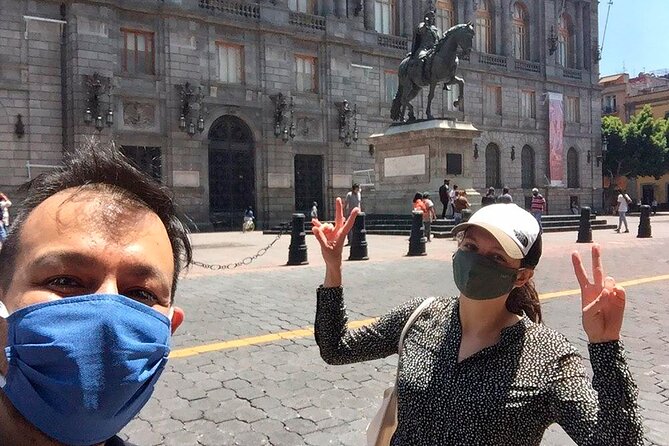
The tour eventually ends near the El Caballito statue, in front of the National Museum of Art. That makes this part of the route especially useful if you plan to continue exploring on foot after the guide says goodbye.
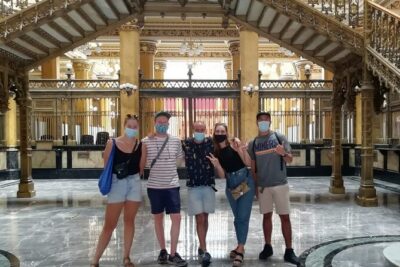
Palacio Postal, a surprising interior stop
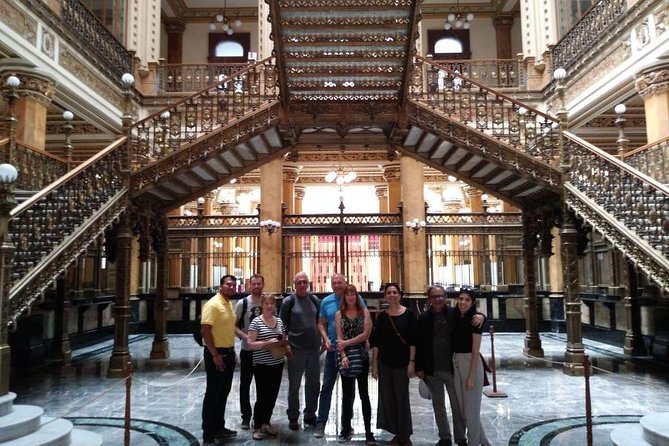
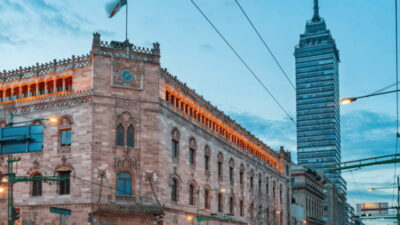
The group enters Palacio Postal for about 15 minutes. This grand post office is often a pleasant surprise because it is far more ornate than most people expect from a postal building.
The stop gives you a look at the city’s early modern ambitions and its taste for elaborate public architecture. It also breaks up the sequence of ruins, churches, and plazas with an interior that feels different from the other sites.
The visit is short, so the guide’s explanation helps you notice details you might otherwise pass without a second glance. Take a moment to look up and around rather than rushing through the building.
As with several stops on this route, the goal is introduction rather than a full architectural study. You see the building, hear why it matters, and then continue toward Bellas Artes.
Palacio de Bellas Artes and the end near El Caballito
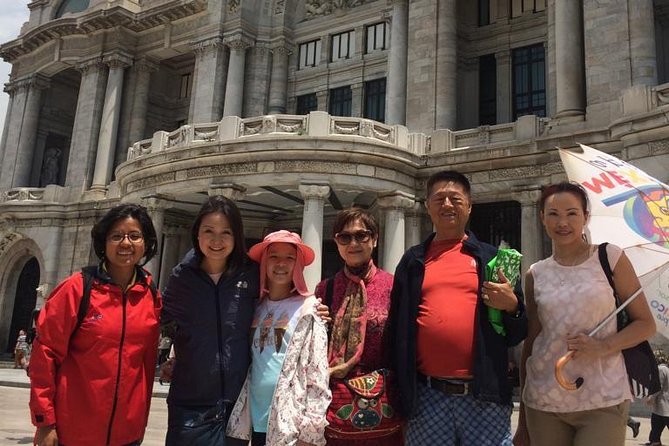
The final major stop is Palacio de Bellas Artes, with about 15 minutes devoted to the building. Its Art Nouveau exterior and place in Mexico City’s twentieth-century story make it one of the most recognizable landmarks on the route.
The guide helps place Bellas Artes in the city’s artistic and architectural development. The short stop is enough to appreciate its role and appearance, but you may want to return later if you want to enter, see performances, or spend more time with the art inside.
The official end is at the National Museum of Art on C. de Tacuba 8, near El Caballito. This is a useful finish because you are left close to another major museum and within the historic center’s network of streets and plazas.
You can treat the ending as a handoff to the rest of your day. Ask your guide for food suggestions or ideas for nearby sights. Several guides, including Mar, Emiliano, and Nadia, are praised for giving practical recommendations beyond the formal route.
The guides are the real variable
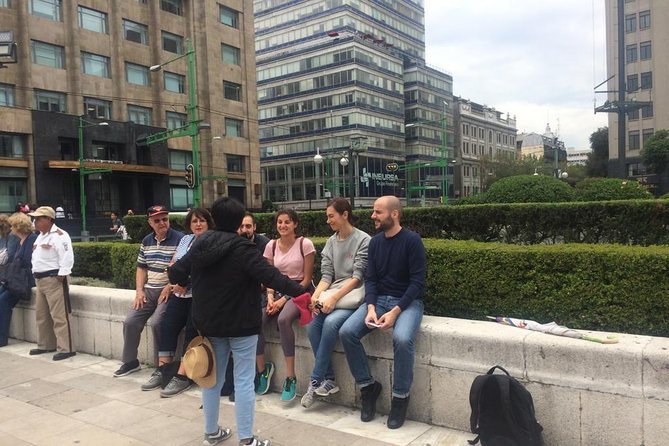
The route is fixed, but the feel of the tour depends heavily on the guide. The strongest reports consistently highlight clear English, good pacing, historical depth, and an ability to connect culture, politics, architecture, and food.
Emiliano is praised for organized explanations, strong English, a clear voice, and storytelling that brings the past to life. Estefania receives similar praise for making the transition from the Aztecs to modern Mexico understandable. Mar is noted for warmth, pre-Hispanic history, and useful food advice, while Nadia is praised for an accessible style and a good sense of humor.
That does not mean every guide will suit every person. One guide was described as speaking too quickly, and another group found it hard to hear at times. A separate experience felt less engaging and did not cover the expected buildings well.
The practical lesson is simple: stay close to your guide, especially in crowded plazas, and ask for a slower explanation if needed. If your group grows beyond the advertised small size, hearing may become more difficult. The tour highlights a cap of 15 participants, but the additional information allows up to 25, so confirm the expected group size when booking.
What $26.53 gets you
At $26.53 per person, this is a reasonable value for a three-hour guided walk in one of Mexico City’s most important areas. You are paying for a certified local guide, a structured route, and context that can be difficult to assemble on your own during a first visit.
The value is strongest if you want orientation. A guide can help you understand why the ruins, cathedral, plazas, and civic buildings belong in one story. You also gain recommendations for food and later sightseeing, which can make the tour useful beyond its scheduled end.
The price is less compelling if you prefer to move slowly, take many photographs, or spend serious time inside museums. Several stops are brief, and the route covers a lot of ground. You are buying a lively overview, not a private architectural seminar.
No transport to the meeting point is included, and lunch is not included, though food may be available to purchase. Tips are optional but appreciated. Museum admission details should be checked at booking, since the information provided separately describes entrance fees in an unclear way.
Pace, crowds, and practical preparation
The walk requires moderate physical fitness. Wear comfortable shoes and expect to be on your feet for much of the three hours. The tour stays near public transportation, so reaching the meeting point is practical, though your transport to the start is your responsibility.
Crowds are the main practical challenge. Mexico City’s center is active, and it is possible to lose sight of a guide if you stop behind the group. Stay near the front, listen for the guide’s instructions, and keep the guide in view when crossing plazas or moving through busy streets.
English is offered, and the guide’s command of the language can make a major difference. The best guides use clear structure and a strong voice. If you have trouble hearing, say so early rather than waiting until the group has moved on.
The tour is suitable for solo visitors, couples, and families who want a shared introduction. Group discounts are available, and mobile tickets make the booking simple. Service animals are allowed.
Free cancellation is available up to 24 hours before the start time for a full refund. Cancellations or changes within 24 hours are not refunded, and the cut-off follows local time.
Who should book this walking tour
You should book it if this is your first time in Mexico City and you want a firm sense of place before visiting more museums. It is also a good fit if you enjoy history but do not want a lecture detached from the streets.
Families may like the changing scenery. The route moves from a huge plaza to ruins, a cathedral, a statue, an ornate post office, and Bellas Artes, so there is plenty of visual variety. Solo visitors can also use the walk to get oriented and gather ideas for the rest of the trip.
I would be more cautious if you need a slow pace, dislike groups, or want detailed time inside every building. The tour covers six stops in roughly three hours, and the guide may move quickly.
Should you book it?
For most first-time visitors, yes. The combination of Aztec remains, colonial religion, grand public architecture, and modern cultural landmarks gives you a useful foundation for Mexico City.
Book it early in your stay, especially since it is commonly reserved about 18 days ahead. Go in expecting a fast overview, not a full museum tour. Stay close to the guide, ask questions, and return later to Templo Mayor or Bellas Artes if a particular subject catches your interest.
At $26.53, it is a sensible way to get your bearings, learn the city’s basic story, and finish with a better plan for the days ahead.
FAQ
How long does the Historic Downtown Walking Tour last?
The tour lasts approximately three hours and includes six main stops in Mexico City’s historic center.
Where does the tour start?
It starts at C. de Monte de Piedad 11 in Centro Histórico, beside the Zócalo.
Where does the tour end?
The tour ends near the El Caballito statue, in front of the National Museum of Art at C. de Tacuba 8.
Which language is offered?
The tour is offered in English. The highlights also indicate that Spanish tours may be available.
Is Templo Mayor included?
Yes. The route visits Plaza Manuel Gamio and the outdoor ruins of Templo Mayor. A full museum visit is not part of the described stop.
Is transportation included?
No. Transport to the meeting point is not included. The area is near public transportation.
How large is the group?
The tour highlights a maximum of 15 participants for an intimate experience. The additional information also lists a maximum of 25 travelers, so you should confirm the expected group size when booking.
What is the cancellation policy?
You can cancel at least 24 hours before the start time for a full refund. Cancellations or changes made within 24 hours are not refunded.
Just added around Mexico
- Private Half Day Cultural Tour to Mayan Ruins and Cenote★ 4.5 · 31 reviews
- Ancient Chacchoben Mayan Ruins & Mayan Experience from Costa Maya★ 5.0 · 96 reviews
- Colima Volcano Cultural Tour: Coffee Plantation, Hacienda and Comala Magic Town★ 5.0 · 30 reviews
- Private Tour in Chichen Itza Official History Guide★ 5.0 · 36 reviews
- 5 Days Mayan Heritage History Tour★ 4.5 · 31 reviews
- Archaeological Tour in Tulum and Coba with Kuxtal Cenote★ 4.0 · 114 reviews
- Calakmul Ancient Maya City Tour – From Campeche★ 4.5 · 24 reviews
- Calakmul Ancient Maya City Tour From Xpujil★ 4.5 · 38 reviews
Mexico City History Tours, compared.


Mexico City Historical Centre Food Tour with 7 Authentic Tastings
Read our review →
Walking Tour in Mexico City for Exploring their Cultural Heritage
Read our review →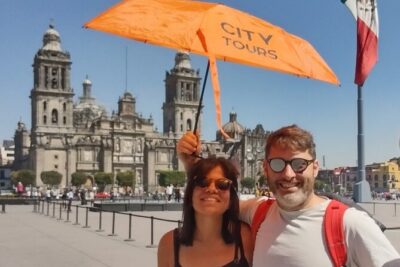
Mexico City: Guided walking tour through the most historic parts of the city.
Read our review →