Review · MEXICO CITY
Walking Tour of the Historic Center of Mexico City
Mexico City’s historic center makes the most sense when you see its layers together: Aztec temples under Spanish streets, colonial churches beside government offices, and Diego Rivera’s social commentary inside a working ministry. This three-hour small-group walk gives you that broad picture without trying to turn every stop into a museum tour.
I like the mix of major sights and useful local context. The route includes the Zócalo, Templo Mayor, Rivera murals, Palacio de Bellas Artes, Palacio Postal, and the House of Tiles, while guides such as Fernanda, Alexia, Luis, Nat, and Benjamin add stories about food, politics, music, Indigenous languages, and daily life. I also like the group limit of 10 people, which makes questions and street crossings easier.
The main drawback is physical: you will walk on cobblestones and spend much of the tour standing, with little chance to sit. Mexico City’s altitude, strong sun, and crowded streets can slow the group, so this works best if you are comfortable on your feet and willing to accept a flexible pace.
Key details that shape the experience
- Aztec and Spanish Mexico in one walk: Templo Mayor, the cathedral, the Zócalo, and colonial buildings show how the city was rebuilt over its earlier foundations.
- A rare look at Rivera murals: You enter the Ministry of Education to see a large group of Diego Rivera murals, covering work, politics, festivals, and social struggle.
- Small groups help: The maximum is 10 people, and guides can answer questions without losing control of the route.
- English is the working language: Guides including Fernanda, Alexia, Luis, Nat, and others have led lively English-language walks.
- The route finishes near two major landmarks: You end beside Palacio de Bellas Artes and the House of Tiles, a handy place to continue exploring.
- Plan for sun and uneven streets: Bring water, wear comfortable shoes, and expect to stand for long stretches.
Why this walk is a smart first look at Centro Histórico
Mexico City can feel too large to grasp on a first visit. The historic center gives you a manageable starting point, but even here the story is crowded into a few blocks. A temple precinct, a cathedral, a royal palace, a former customs square, a mining school, and grand early 20th-century buildings all sit close together.
This tour works because it explains the connections. You are not simply checking off buildings. You are learning how the Mexica capital was reshaped after the Spanish conquest, how New Spain traded with Asia, how 20th-century artists portrayed ordinary people, and how those old spaces still function today.
The guides are the strongest part of the experience. Fernanda is described as warm, funny, and especially good at connecting past events with present-day Mexico. Alexia brings thoughtful commentary beyond basic dates and architectural labels. Luis has been praised for his personal love of Mexico City and for offering useful recommendations after the walk. Nat, Benjamin, Sarah, Eduardo, and others have also led groups through the route.
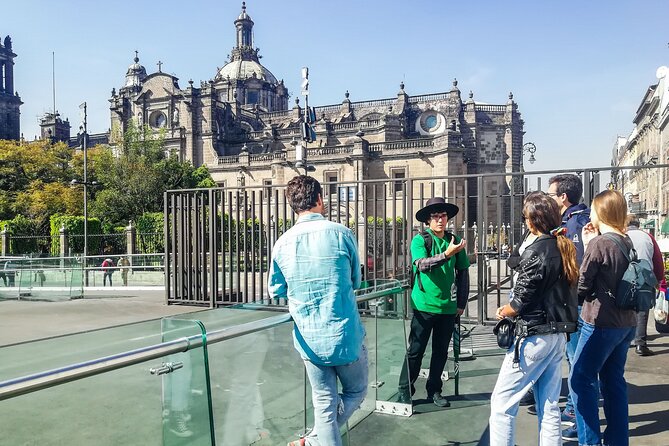
That range matters because this is not a recorded audio tour. Your experience depends partly on the person holding the green shirt and umbrella. The good news is that the guide style appears to favor questions, storytelling, and practical care, including shade, street crossings, and bathroom breaks when needed.
More History Walking Tours in Mexico
- Historic Downtown Walking Tour
★ 5.0 · 1,289 reviews - Mexico City: Historic Downtown Walking Tour
★ 4.8 · 1,039 reviews - Historical and Cultural Walking Tour of San Miguel de Allende
★ 5.0 · 641 reviews
Starting in the Zócalo, the city’s great public room
The walk begins at Plaza de la Constitución, usually called the Zócalo. This huge square is the right place to begin because Mexico City’s political and religious power is gathered around it.
You look toward the National Palace, the Supreme Court of Justice, and the surrounding commercial streets. The mention of silversmith shops points to the area’s continuing trade, while the buildings around the square introduce the shift from Mexica rule to Spanish colonial government and modern national power.
Do not expect a long architectural inspection of each building here. The 15-minute stop is more about orientation and scale. Your guide can help you understand where you are, what the surrounding buildings represent, and why the square remains central to public life.
The Zócalo can be crowded and exposed. A guide who keeps the group together is useful, especially during a late afternoon departure when the streets fill with people. The square is also a good place to take in the contrast between formal government buildings and the everyday activity around them.
The Metropolitan Cathedral and the city built in layers
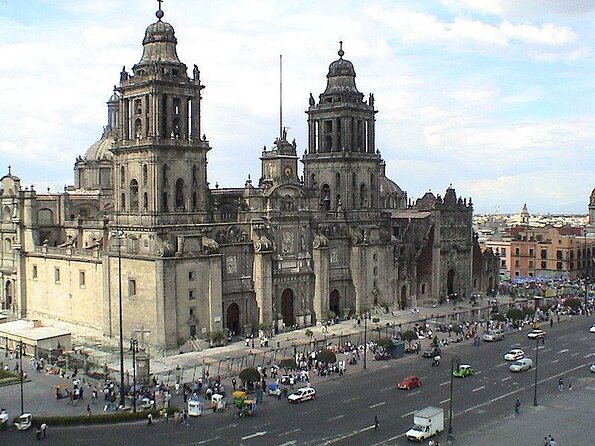
The Metropolitan Cathedral is discussed from the outside. The guide covers its construction, origins, and blend of Baroque and Neoclassical design.
The cathedral is not just another grand church. Its position beside the Zócalo shows how Spanish colonial power occupied the symbolic center of the earlier Mexica capital. Looking at the building from outside also keeps the tour moving, though you should know that this stop is not an interior cathedral visit.
The listed time is about 10 minutes, so the guide’s explanation matters more than a detailed architectural survey. You will hear how the building developed over time and how its different styles reflect changing periods of construction. Admission is not included, and the stop is presented as an exterior explanation.
This is one place where you may want to return on your own if you have a strong interest in church interiors. The walking tour gives you context first, which can make a later visit more meaningful.
Templo Mayor and the Mexica capital beneath the streets
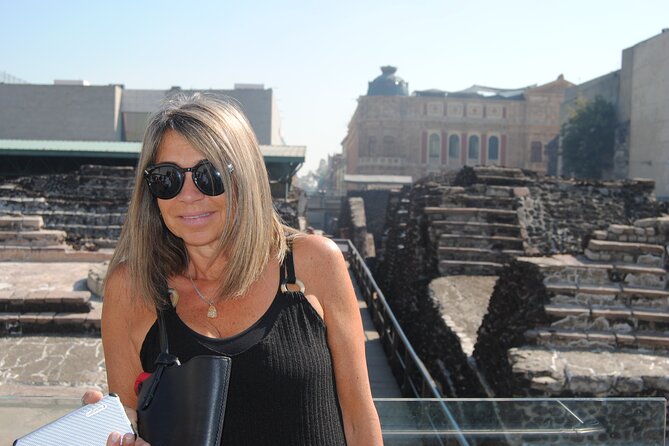
Near the cathedral and Zócalo, the route turns toward the remains of Templo Mayor. The tour views the archaeological ruins from outside and explains their importance to the Mexica.
The key idea is geography. Your guide helps you understand how the temple precinct related to the rest of the city and why the archaeological remains are so important. The site was dedicated to the god of rain and the god of the sun, two forces tied to survival, agriculture, and political power.
This is a short look rather than a full museum visit. That is both a strength and a limit. You gain a clear introduction to the ruins without spending the morning inside the archaeological museum, but anyone wanting detailed artifacts, excavation history, or a long site visit will need to return separately.
Still, this section gives the walk its strongest sense of place. You are standing in a modern capital while looking at evidence of the city that came before it. The Spanish colonial center did not replace every trace of the Mexica city. It built over and around it.
More Old Town and Historic Centre Walks in Mexico
- Historic Center Food Tour in Mexico City
★ 5.0 · 1,263 reviews - Mexico City Historical Centre Food Tour with 7 Authentic Tastings
★ 5.0 · 723 reviews - Private Walking Tour Gems of the Historic Center of Mexico City
★ 5.0 · 87 reviews - Mérida: Montejo Boulevard and Historic Center bike tour
★ 4.7 · 43 reviews
Rivera’s murals inside the Ministry of Education
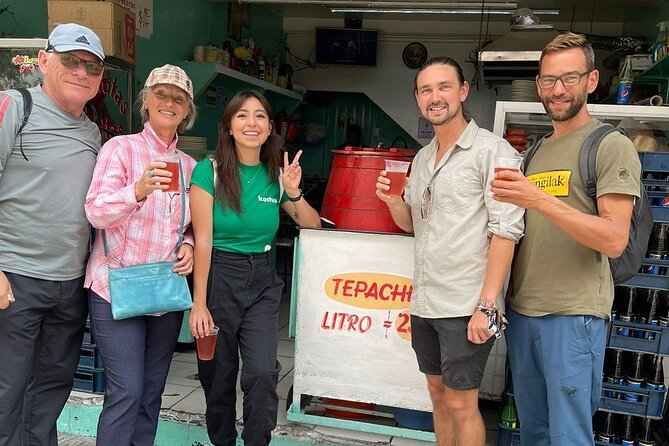
The Museo Vivo del Muralismo is one of the most distinctive stops. You enter the Ministry of Education and see a large group of Diego Rivera’s murals, including roughly a third of the murals he painted during his career.
This is not a quick glimpse at one famous panel. The murals cover festivals, traditions, labor, trade, politics, and social struggle in early 20th-century Mexico. They help explain why Mexican muralism was placed in public buildings rather than kept only in galleries. Art here was meant to speak to ordinary people.
The visit lasts about 25 minutes, making it one of the longer stops. Guides have allowed a few extra minutes when the group wanted to look more closely, but you should expect an introduction rather than a full art-history lecture.
I would pay close attention to how your guide explains the people and activities in the murals. The value is not only in recognizing Rivera’s name. It is in seeing how art recorded Mexican identity, class, work, and political ideals after revolution.
Admission to this stop is included. That makes it an especially useful part of the tour because you get access to a place that could be easy to miss when exploring the center independently.
Santo Domingo and the global trade of New Spain
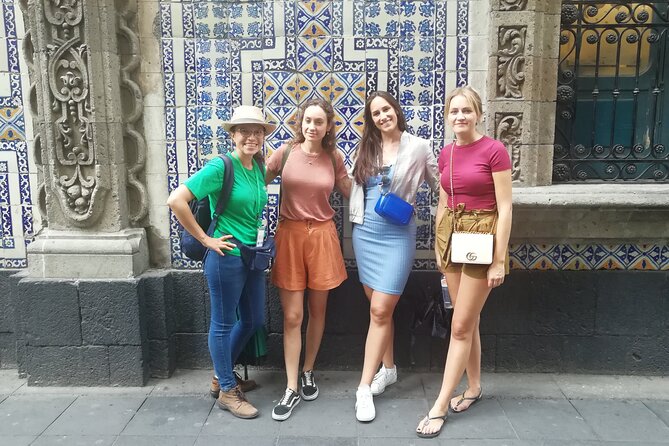
Plaza de Santo Domingo offers a different view of colonial Mexico. The square witnessed important events during the viceroyalty of New Spain and was connected to trade in spices and goods with Asia.
That Pacific connection can be easy to overlook. Mexico City was not an isolated colonial capital. Goods, people, and ideas moved between New Spain and Asia, and the square’s story helps place the city inside a wider trading system.
The guide also discusses the Holy Inquisition and French attempts to conquer Mexico. These subjects show that the plaza was tied to religion, commerce, and international conflict, not simply to attractive colonial façades.
The stop lasts around 15 minutes and is free to enter. It is mainly an outdoor explanation, so the quality depends on how well the guide turns the square into a story. This is where a good guide can make a familiar-looking plaza much more interesting.
Plaza Tolsa, a useful pause for modern Mexico
Plaza Tolsa provides a break beneath the shade. That pause is welcome because the route involves continuous walking, and the plaza becomes a natural place for wider conversation.
Topics here include Indigenous languages, Day of the Dead traditions, music, politics, and gastronomy. These subjects may sound broad, but they help move the tour beyond old stones and official buildings. You begin to connect the historic center with the Mexico you are seeing in shops, food stalls, public spaces, and conversation.
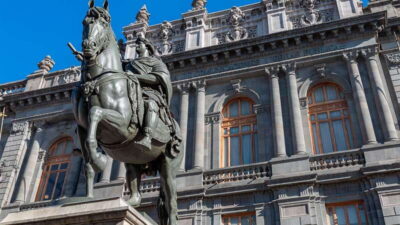
The square also includes the equestrian statue of Charles IV, known locally as El Caballito, or the little horse. You see the exterior of the National Museum of Art and the Mining Palace as well.
This 20-minute stop is less about entering each building and more about reading the square as a group of cultural and architectural clues. It is also a good moment to ask your guide for neighborhood recommendations. Luis, in particular, has been praised for sharing a useful list of places to visit after the walk.
The archaeological window beneath an ordinary street
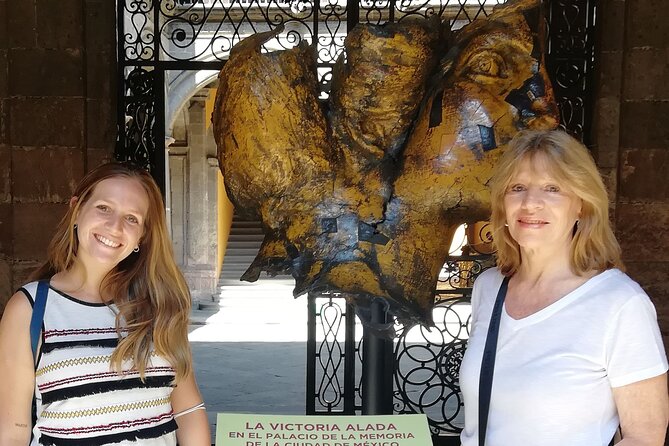
The Ventana Arqueológica is a small but clever stop. Through an archaeological window beside the main temple, you see evidence of the past beneath the modern street.
The stop lasts only about five minutes, but it makes a memorable point: much of Mexico City’s earlier history remains below today’s sidewalks and buildings. Your guide explains how the remains were found and the secret that many downtown structures conceal.
This is not a large excavation or a long museum visit. Its value comes from the surprise. You look down through a small opening and realize that the city’s history is not confined to designated ruins. It is built into the ground beneath the center.
Admission is included. Keep your expectations modest, since the viewing area is brief, but do not dismiss it as filler. It reinforces the central idea of the tour better than a long lecture might.
Bellas Artes, Palacio Postal, and the final stretch
The route continues to Palacio de Bellas Artes, one of Mexico City’s essential landmarks. The building’s exterior and interior art are described as part of the stop, though the listed admission is free rather than a separately included museum ticket. Check with your guide on the day if you want to enter beyond the areas covered by the walk.
The building is a visual change from the earlier colonial sites. Its presence shows Mexico City reaching toward a grander modern cultural identity. The stop lasts about 15 minutes, enough to appreciate the design and hear why the building matters, but not enough for a complete tour of its exhibitions.
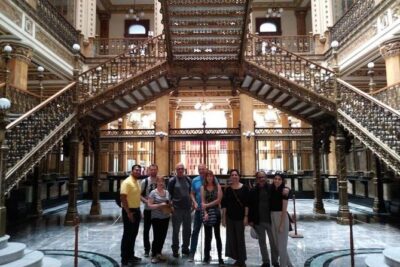
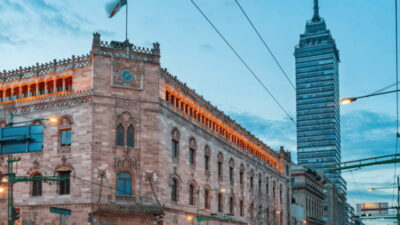
Next comes Palacio Postal, a still-functioning palace with a decorative façade and a story tied to Mexico’s economic and political ambitions. The guide explains why such a majestic building was created and what it represented.
Admission is not included here. The stop is about the exterior and the building’s role, so you can return later if the interior catches your eye.
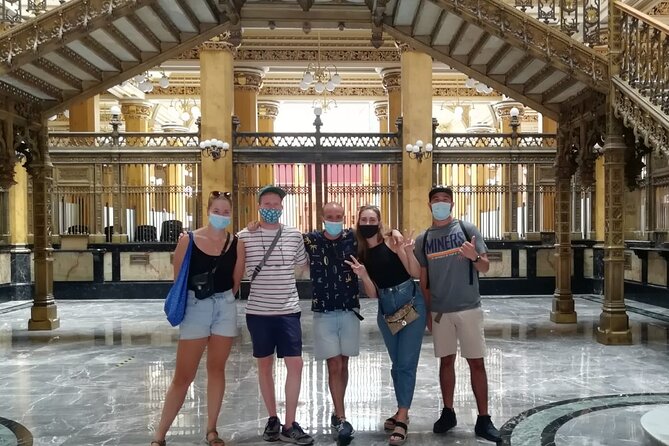
The walk ends near Edificio Guardiola, beside Palacio de Bellas Artes and the House of Tiles. The House of Tiles is one of the city’s most photographed façades, known for its patterned tile covering. It is a fitting final stop because it brings together the route’s main themes: commerce, colonial architecture, public life, and the way Mexico City’s past remains part of its present streets.
How much walking, waiting, and standing to expect
The advertised duration is about three hours, but the pace can change. A mixed group may move more slowly on cobblestones, and extra questions or time with the murals can affect which stops receive the most attention.
You will walk between sites rather than ride in a vehicle. Some stops last only five or 10 minutes, while others offer time to rest in shade or examine a building more closely. There are not many scheduled seats, so wear supportive shoes and bring water.
Altitude is another practical concern. One person specifically found the long stretches without seating difficult while adjusting to Mexico City’s elevation. The guide can look for shade and help with comfort, but the route remains a walking tour.
Most people can take part, and service animals are allowed. The tour is near public transportation, but getting to the Zócalo meeting point is your responsibility. Tips, transport, and food or sweets purchased along the way are not included.
Is the small-group format worth the booking cost?
No price is provided here, so I cannot judge the exact cost against other paid tours. The sensible way to assess value is to consider what you are paying for: an English-speaking guide, a planned route through many major sights, entry to the Ministry of Education mural area and archaeological window, and a group capped at 10.
The route is also close to what some companies call a free walking tour, so compare the price before booking. If the fee is modest, the small group and structured access may justify it. If the price is high, you should ask yourself how much you value a guide who can explain the connections, manage street crossings, answer questions, and help you decide what to revisit later.
Gratuities are not included. If your guide, such as Fernanda, Alexia, Luis, Nat, or Benjamin, gives you a good afternoon, budget for a tip separately.
Who should book this Mexico City walk?
You should book it if this is your first time in Mexico City and you want a clear introduction before exploring museums and neighborhoods alone. It is also a good fit if you enjoy history presented through buildings, public squares, art, and local stories rather than through a single museum collection.
The tour suits English-speaking visitors who like to ask questions. The small group makes that easier, and the guides have been praised for answering questions thoughtfully and adjusting to the group’s needs.
I would hesitate if you need frequent seating, dislike uneven pavement, or want long interior visits at every landmark. This is an overview with selected entries, not a deep examination of the cathedral, Templo Mayor museum, Bellas Artes collections, or Palacio Postal interior.
The best plan is to use the walk as your orientation. Afterward, return to the one or two places that caught your attention. That approach lets the guide handle the complicated historical connections while leaving you time for a more focused visit later.
FAQ
How long is the walking tour?
The tour lasts approximately three hours.
What language is the tour offered in?
The tour is offered in English.
How many people can join the group?
The maximum group size is 10 travelers.
Where does the tour begin?
It begins at Plaza de la Constitución in Mexico City’s Centro Histórico.
Where does the tour end?
It ends at Edificio Guardiola on Avenida 5 de Mayo, beside Palacio de Bellas Artes and the House of Tiles.
Is admission included at every stop?
No. Admission is included for the Museo Vivo del Muralismo and the Ventana Arqueológica. The cathedral and Palacio Postal list admission as not included, while several outdoor stops are free.
Is transportation included?
No. Transportation to the meeting point is not included. The tour is near public transportation.
Can I cancel for a full refund?
Yes, if you cancel at least 24 hours before the experience’s start time. Cancellations within 24 hours are not refunded. If poor weather or an insufficient minimum group causes the tour to be canceled, you are offered another date or experience, or a full refund.
Just added around Mexico
- Private Half Day Cultural Tour to Mayan Ruins and Cenote★ 4.5 · 31 reviews
- Ancient Chacchoben Mayan Ruins & Mayan Experience from Costa Maya★ 5.0 · 96 reviews
- Colima Volcano Cultural Tour: Coffee Plantation, Hacienda and Comala Magic Town★ 5.0 · 30 reviews
- Private Tour in Chichen Itza Official History Guide★ 5.0 · 36 reviews
- 5 Days Mayan Heritage History Tour★ 4.5 · 31 reviews
- Archaeological Tour in Tulum and Coba with Kuxtal Cenote★ 4.0 · 114 reviews
- Calakmul Ancient Maya City Tour – From Campeche★ 4.5 · 24 reviews
- Calakmul Ancient Maya City Tour From Xpujil★ 4.5 · 38 reviews
Mexico City History Tours, compared.


Mexico City Historical Centre Food Tour with 7 Authentic Tastings
Read our review →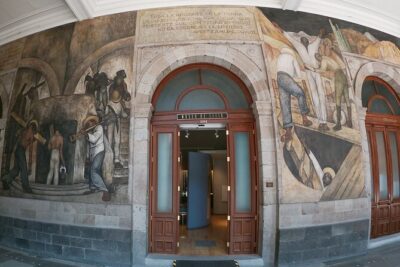
Walking Tour in Mexico City for Exploring their Cultural Heritage
Read our review →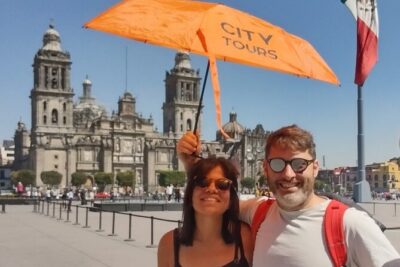
Mexico City: Guided walking tour through the most historic parts of the city.
Read our review →