
Review · WASHINGTON DC
DC: Ghosts of Georgetown Haunted History Nighttime Tour
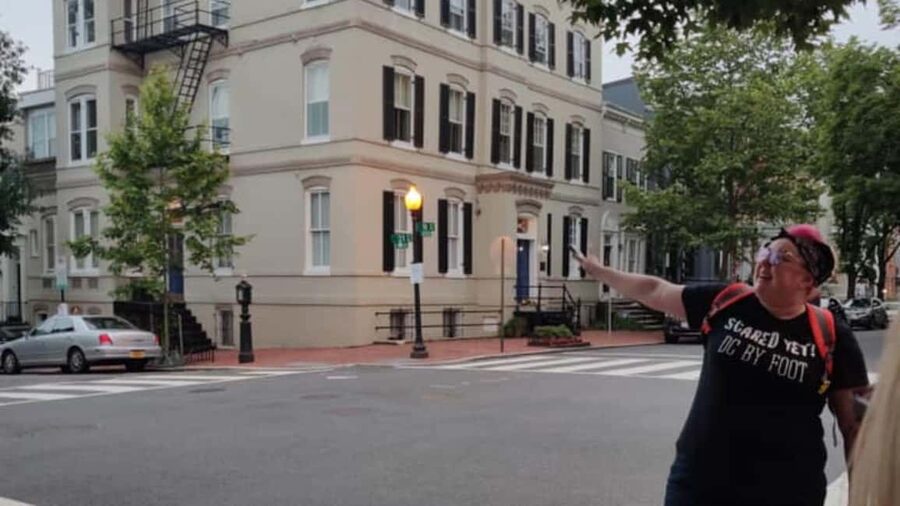
Georgetown gets much more interesting after dark, when its polished row houses and quiet lanes become the setting for tales of curses, Civil War suffering, strange neighbors, and restless spirits. The tour also reaches the Old Stone House, one of Washington’s oldest homes, and ends at the famous steps from The Exorcist.
I like the mix of local history and spooky storytelling, rather than a walk built only around jump scares. I also like that guides such as Sonia, Amelia, Sarah, Trevor, Erin, and Ingeborg bring different personalities to the route. The main consideration is simple: this is a storytelling tour, not a guaranteed ghost sighting, and the 90 minutes can feel short if you want a detailed architectural tour of every house.
I also like the reasonable $39 price, especially for a small slice of Georgetown history, access to a historic building’s yard, and a licensed guide. You will be walking outdoors at night, though, so comfortable shoes and a willingness to keep moving matter more than a taste for horror.
Key points to know
- The Old Stone House begins the story: Visit the yard of a pre-Revolutionary home said to be among Washington’s most haunted buildings.
- The Exorcist Steps provide a memorable finish: Walk the staircase made famous by the 1973 horror film and hear the real Georgetown connection behind the story.
- The scares are family-friendly: Expect eerie tales, dark humor, curses, and true crime without a tour designed only to frighten children.
- The history reaches beyond ghosts: Stories touch on Victorian-era crime, Civil War hospitals, boarding schools, domestic rules, and unusual Georgetown residents.
- Guide quality is central: Sonia, Amelia, Sarah, Trevor, Erin, and Ingeborg have all led this experience, with storytelling and personality praised repeatedly.
- Plan for a 90-minute night walk: Starting times vary, and the route includes several outdoor stops through historic Georgetown.
Why Georgetown works so well after dark
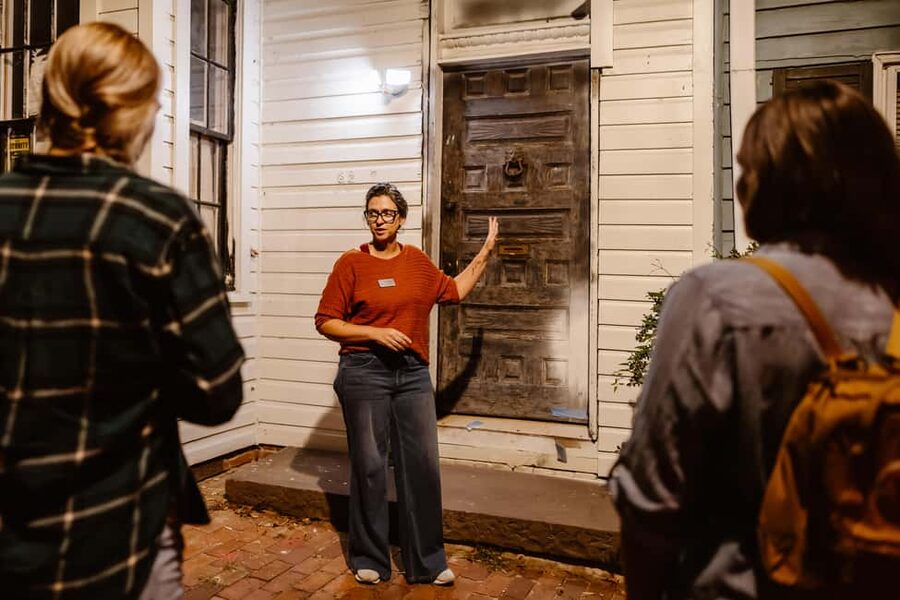
Georgetown is older than Washington, DC, and that distinction gives the tour a useful sense of place. You are not walking through a purpose-built entertainment district. You are moving along old streets lined with historic houses, porches, gardens, and narrow urban spaces that have been part of the city’s story for centuries.
At night, the neighborhood’s neat appearance takes on a different mood. The tour uses that contrast well. Manicured gardens and elegant Victorian row houses become backdrops for stories about people who lived difficult, strange, or troubled lives behind those respectable facades.
I would not book this expecting a theatrical haunted house. The appeal is closer to an evening history walk with a supernatural edge. You hear stories, look closely at old buildings, and let the setting do much of the work.
The family-friendly approach also makes this a flexible choice. Parents can bring older children and teenagers who enjoy spooky stories, while adults still get plenty of local history and architecture. The material includes death, amputations, curses, and true crime, so the mood is not light throughout, but it is presented as a guided historical experience rather than a shock show.
More Dark History and Haunted Tours in the USA
- Savannah History and Haunts Candlelit Ghost Walking Tour
★ 5.0 · 3,235 reviews - New Orleans Small-Group Haunted History Carriage Tour
★ 4.5 · 2,289 reviews - New Orleans Haunted History Ghost Tour
★ 4.5 · 2,084 reviews
Starting at the Old Stone House
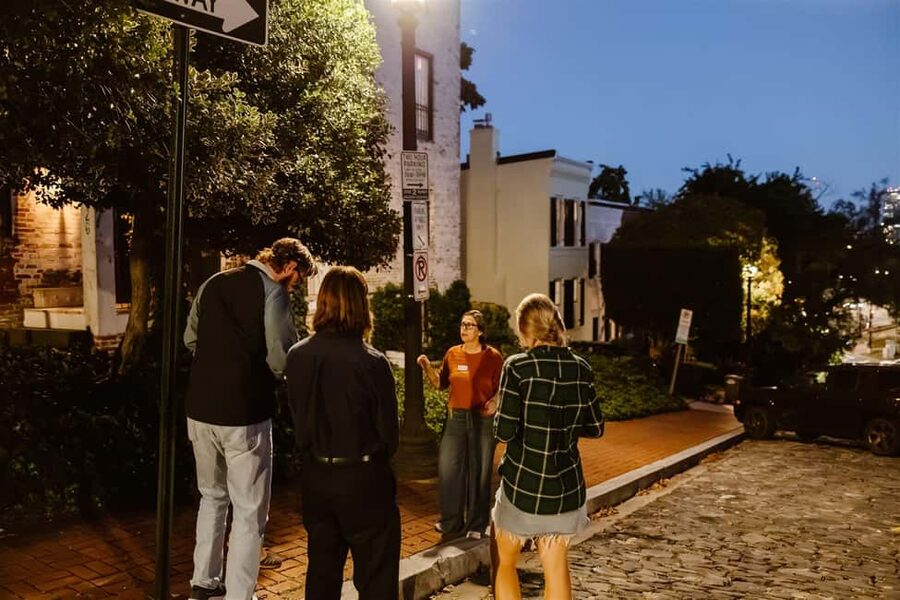
The meeting point is outside the Old Stone House at 3051 M Street NW. Beginning here is a smart choice because the building gives the guide an immediate, physical place to tell the first stories.
This pre-Revolutionary home is described as one of the oldest and most haunted buildings in Washington, DC. The experience includes access to its yard, which adds something that a simple sidewalk talk would miss. You are not just hearing about a haunted address from across the street. You get to stand beside the building and look into the space around it while the guide explains its past.
The story may include the house’s original builder, who is said to still roam its halls. That wording keeps the claim in the realm of local legend, which is exactly where it belongs. The tour does not need to prove a ghost to make the building interesting. Its age and survival already give it a strong connection to Georgetown’s earliest days.
This first stop also sets the tone for the rest of the evening. Expect a guide who combines facts with performance, rather than a dry lecture. Amelia, for example, was praised for making the 90-minute route feel much shorter, while Sarah was noted for acting out parts of the stories. That kind of delivery matters at night, when a flat presentation can lose a group quickly.
Haint Blue porches and spirits at the threshold
One of the more unusual details on the route involves porches painted Haint Blue. The color is traditionally linked with keeping spirits from crossing onto a porch, at least according to the belief explained during the tour.
The story gets a clever turn when the guide asks what happens if the spirit is already inside. That small idea captures the tour’s style: historical detail, folklore, and a bit of humor are mixed together instead of being treated as separate subjects.
This stop is useful for visitors who like cultural traditions as much as ghost stories. You get a clue about how residents tried to protect homes from supernatural forces, then hear how those same homes acquired darker tales. It also gives you a reason to look up at Georgetown’s porches and facades instead of simply walking from one address to the next.
The route includes photo stops, but this is not a photography tour. Street lighting and the evening setting may limit your pictures. Take a few if you like, but keep your attention on the guide, since the story is the main attraction.
Boarding schools, hospitals, and Civil War suffering
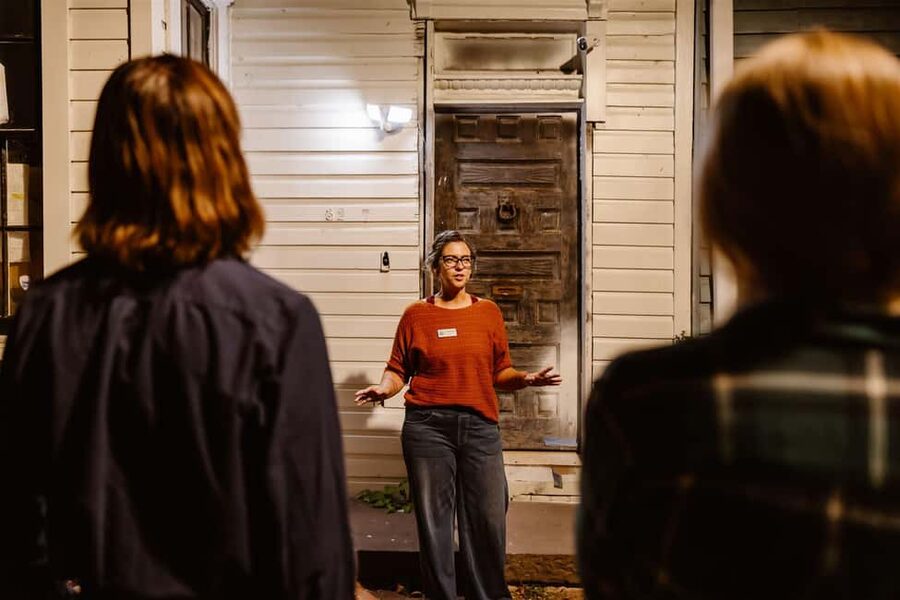
The tour moves into a more serious part of Georgetown’s past with stories about boarding schools that became hospitals during the American Civil War. Here the supernatural material connects with documented wartime suffering.
You hear about amputations carried out without sedation and the sounds that may have filled these buildings. This section is less playful than the tales of curses and eccentric residents. It reminds you that a haunted place often feels disturbing because real people suffered there, not simply because a ghost story has been attached to it.
For families, this is worth knowing before booking. The tour is family-friendly, but that does not mean every story is gentle. The Civil War material may be unsettling for younger children, especially when paired with talk of battlefield injuries and hospital conditions.
For adults and teenagers, this is one of the more valuable parts of the walk. It gives the ghost stories historical weight. Instead of hearing only that a building is haunted, you get a sense of the painful events that may have shaped its reputation.
Same city, a different century:
- History and Hauntings of Salem Guided Walking Tour
★ 5.0 · 14,564 reviews - Charleston’s Old South Carriage Historic Horse & Carriage Tour
★ 5.0 · 10,023 reviews - Beneath The Streets Underground History Tour
★ 4.5 · 8,006 reviews - Big Island in a Day: Volcanoes Waterfalls Sightseeing and History
★ 5.0 · 6,569 reviews
Houses with rules that outlast their owners
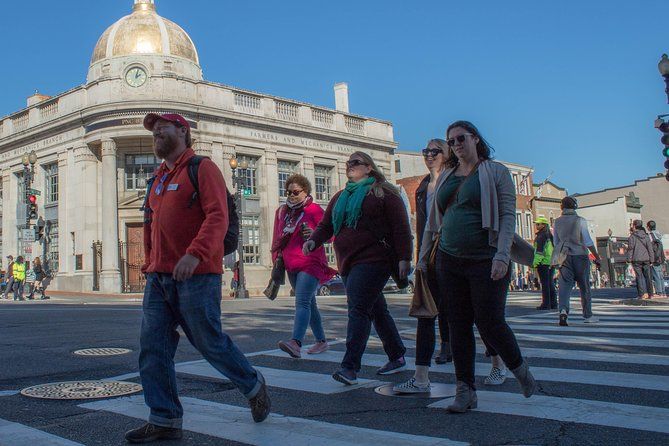
Another stop concerns a historic house where the lights reportedly turned off at the same time each night. The explanation involves a nanny whose rules continued long after she was gone.
That story has a different kind of fright. It is not about a violent apparition or a sudden scare. It is about routine, memory, and the unsettling thought that a household could keep following the habits of someone who no longer lived there.
These smaller stories help keep the tour varied. If every stop involved a famous murder or a theatrical ghost, the route would soon feel repetitive. Instead, you hear about domestic life, staff, owners, and the odd habits that can become local legend.
The guide’s delivery makes a big difference here. Erin has been praised for clearly enjoying the work and telling stories well. A guide who can handle quiet, odd details is just as important as one who can make a dramatic scene sound frightening.
The eccentric man with stairs to nowhere
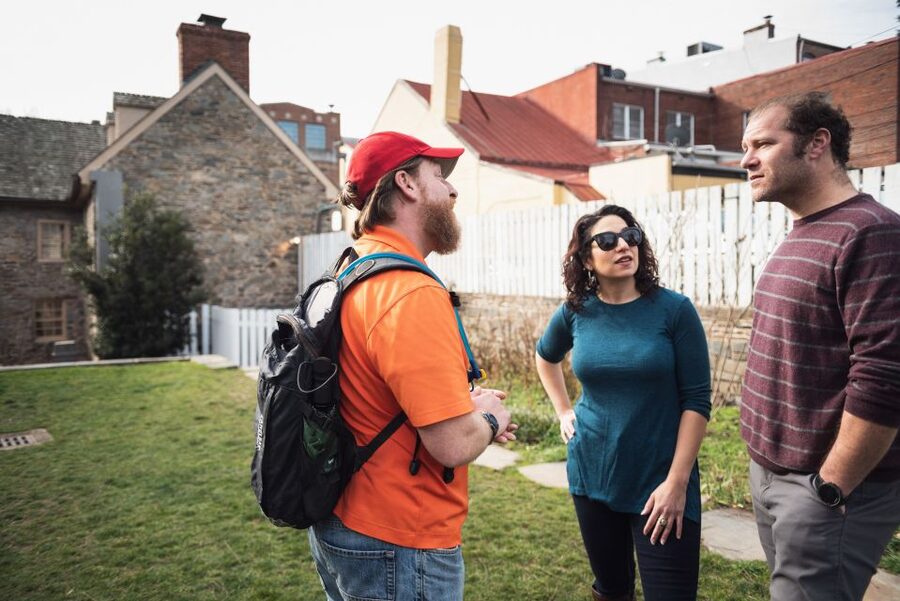
The route also introduces an unusual Georgetown character who built stairs to nowhere, slept in a coffin, and refused to add electricity to his 1799 home.
This is the kind of story that works because it is strange before any ghost enters the picture. You get a portrait of a stubborn, eccentric resident whose choices made his house memorable. Then the guide adds the darker claim: one guide refuses to lead the tour because this man has supposedly stalked her for ten years and flickered lights whenever she passed.
That tale should be taken as folklore, but it is a strong example of how the tour uses the neighborhood itself. You are not being shown a generic haunted attraction. You are hearing about particular houses and particular personalities, each with its own story.
The mix of humor and unease is useful. A coffin-sleeping homeowner can sound almost comic at first, while the flickering-light story brings the mood back toward the supernatural. Guides such as Sonia and Trevor have been praised for being personable and entertaining, qualities that help these shifts feel natural.
Martin’s Tavern and the middle stretch of the walk
Martin’s Tavern is included as one of the named stops along the route. The tour also passes several other Georgetown locations, including the Laird-Dunlop House, Halcyon Georgetown LLC, and a private or undisclosed stop.
Not every stop is presented as a long visit inside a building. Several are brief photo stops or outdoor explanations. This matters if you are expecting a series of museum admissions. The experience is mainly a walking route through the neighborhood, with the streets and house exteriors providing the setting.
The unnamed stop adds a little mystery, but you should not assume it means a secret interior attraction. The available details identify it only as a hidden or secret stop, so the safest expectation is another location included in the guide’s storytelling.
The middle part of the tour is where a good guide earns the price. Georgetown has plenty of attractive streets, but the value comes from learning why specific houses matter and how the stories connect with the city’s past. Ingeborg, for example, has been praised for her broad knowledge of Georgetown and DC, along with a friendly, enthusiastic style.
Reaching the Exorcist Steps
The final major stop is the Exorcist Steps, a steep staircase associated with the 1973 film The Exorcist. The stairs are one of Georgetown’s most recognizable horror locations, and they give the tour a clear ending point.
You walk down the steps and hear the true story that inspired a Georgetown student to write the book behind the film. That connection is more interesting than simply pointing out a movie location. It links the neighborhood’s real people and stories with the version of Georgetown that millions of film viewers know.
The steps are likely to be the tour’s most satisfying photo opportunity, but they are also the part that requires the most care. You are walking outdoors at night, and the staircase is steep. Wear shoes with a secure grip and take your time. The tour description identifies the Exorcist Steps as the finish, while the meeting information also says the activity ends back at the meeting point, so confirm the precise end arrangement when you book.
If you have not seen The Exorcist, the stop still works as a piece of Georgetown film history. If you have seen it, the location gives the finale extra atmosphere. Either way, it is a memorable place to finish a night walk.
Guide style makes the biggest difference
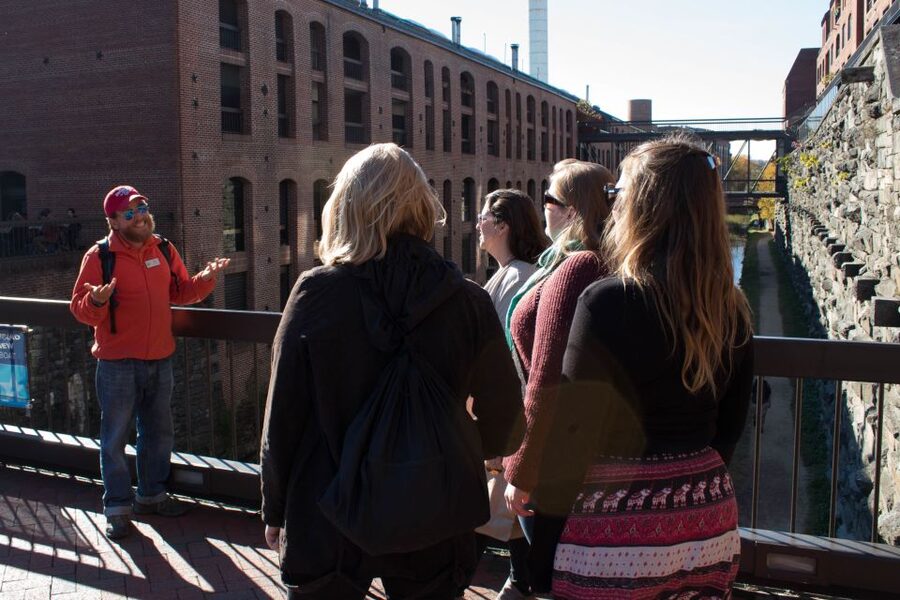
The listed guides include Sonia, Amelia, Trevor, Ingeborg, Sarah, and Erin. That variety means the tone can change depending on who leads your departure, but the strongest pattern is clear: this tour depends heavily on delivery.
Sonia has been praised for her personality and ability to carry the experience from beginning to end. Amelia made the time pass quickly through an informative and entertaining presentation. Sarah used acting and expressive storytelling, which appealed especially to a group of teenagers.
Trevor has been described as both personable and well informed, while Ingeborg brought strong Georgetown and Washington knowledge. Erin was praised for her obvious enjoyment of guiding and her storytelling.
You should expect a live performance rather than an audio guide. The guide may use humor, dramatic pauses, and character voices to make the stories memorable. That is good news if you like social tours. It also means the exact feel may depend on the individual guide and the energy of the group.
Is $39 a fair price?
At $39 per person, I consider this a fair price for a 90-minute guided walk in one of Washington’s most historic neighborhoods. You are paying for a licensed English-speaking guide, access to the Old Stone House yard, a planned route, and a collection of stories that would be difficult to assemble on your own in one evening.
The value is strongest if you enjoy local history, architecture, folklore, and film locations together. It is weaker if you want actual paranormal investigation, extended time inside historic houses, or a guarantee of seeing something supernatural.
The tour’s 4.7 rating from 80 reviews suggests a consistently positive response, and the repeated praise focuses on the guides’ personality, storytelling, and local knowledge. One useful point comes through clearly: not seeing a ghost does not mean the night failed. The experience is built around stories and atmosphere, with supernatural claims treated as part of Georgetown’s lore.
Free cancellation up to 24 hours before the tour and the option to reserve now and pay later make the booking less rigid. Starting times vary, so check the available departure when planning dinner or another evening activity.
Who should book this Georgetown ghost walk?
I would choose this tour for families with older children, couples looking for an unusual night activity, teenagers who like horror films, and history fans who enjoy folklore with their architecture.
It also suits first-time visitors who want to see Georgetown after dark without committing to a long evening. The 90-minute length is manageable, and the route gives you several different angles on the neighborhood: old houses, wartime history, local customs, eccentric residents, and movie history.
I would be more cautious if you dislike walking at night, have trouble with steep steps, or want a quiet architectural tour. The stories include disturbing wartime details and true crime, so sensitive younger children may not enjoy every section.
Should you book it?
Book it if you want a lively, family-friendly night walk that treats Georgetown as both a historic neighborhood and a place of local legend. The Old Stone House and Exorcist Steps provide strong anchors, while the stories about Haint Blue porches, Civil War hospitals, unusual homeowners, and stubborn household routines give the route variety.
Skip it if your main goal is proof of ghosts or a long visit inside historic buildings. For most visitors, the best reason to go is the combination of a licensed guide, a manageable 90-minute route, and stories that make you look at Georgetown’s polished houses in a new way.
FAQ
How long is the Ghosts of Georgetown tour?
The tour lasts 1.5 hours, or 90 minutes.
How much does the tour cost?
The price is $39 per person.
Where does the tour begin?
It begins outside the Old Stone House at 3051 M Street NW, Washington, DC 20007.
Where does the tour end?
The route is described as ending at the Exorcist Steps. The meeting information also says the activity ends back at the meeting point, so confirm the exact end arrangement when booking.
Is the tour offered in English?
Yes. The live tour guide leads the experience in English.
Is this a family-friendly tour?
Yes. It is described as family-friendly, though stories include Victorian crime, Civil War amputations, curses, and haunted houses.
Does the tour include the Old Stone House?
Yes. You visit the Old Stone House area and receive access to the yard of one of Washington, DC’s oldest and most haunted buildings.
Can I walk down the Exorcist Steps?
Yes. Walking down the Exorcist Steps is included.
Can I cancel for a refund?
Yes. You can cancel up to 24 hours in advance for a full refund. You can also reserve now and pay later.
Just added around the USA
- Red Rocks Amphitheatre Historical Walking Tour★ 5.0 · 74 reviews
- 1-Hour Segway Tour of Cheyenne Cañon Art, History and Nature★ 5.0 · 36 reviews
- Colorado Springs – Guided Walking Ghost / History Tour★ 5.0 · 168 reviews
- Ancient Landscapes Private Geology Hike at Garden of the Gods★ 5.0 · 31 reviews
- Village Food Tours Lunch & History Tour★ 5.0 · 80 reviews
- 2.5 Hour Kayaking with Manatee and History Tour in Tarpon Springs★ 5.0 · 24 reviews
- Safety Harbor Ghost Tour★ 5.0 · 60 reviews
- Historical Bicycle Tour of Dunedin★ 5.0 · 44 reviews
Washington DC History Tours, compared.

Guided African American History Tour with Reserved Museum Entry
Read our review →
DC Monuments & History Guided E-Cart Tour-Blankets
Read our review →
African American History Tour with Museum of African American History Ticket
Read our review →
Historic Georgetown: History, Gossip, & Architecture Walking Tour
Read our review →
Washington, DC: African American History Tour & Museum Entry
Read our review →
D.C: Monuments & History Guided Open-Air Bus Tour-Day &Night
Read our review →
DC: Georgetown History & Architecture Tour with Local Guide
Read our review →
Washington DC: African American History Museum Private Tour
Read our review →Browse the lists this tour appears in