
Review · HISTORY TOURS
Oslo: Small Group History, Art & Secrets Tour
Oslo’s story makes more sense when you walk it in sequence, from the Royal Palace and royal avenues to medieval traces, rebuilt streets, financial squares, and the striking waterfront. This tour connects the city’s fires, royal past, art, and modern design instead of treating each sight as a separate photo stop.
I like the small group size, limited to 10 people, and the way the route mixes famous places with less obvious details such as Christian IV’s Glove and the Bank Square. I also like the library visit, since entering Deichman Bjørvika gives you a calm indoor break and a close look at modern Norwegian architecture. The main caution is the pace: three hours on foot and no wheelchair access make comfortable shoes and fair mobility important.
Key points to know before you book
- A full central Oslo route: Walk from the Royal Palace past City Hall, Karl Johans Gate, Parliament, Akershus Fortress, the Stock Exchange, and the waterfront.
- A useful history lesson: Your guide explains how fires changed Oslo and how trade, government, and rebuilding shaped the capital.
- A proper small group: The limit of 10 allows time for questions and makes it easier to hear the guide on busy streets.
- An indoor design stop: Enter Deichman Bjørvika for 20 minutes of free time, photos, and a look at its light-filled public spaces.
- Multiple guide languages: Tours are offered in English, Spanish, Italian, and German.
- Good first-day timing: The walk ends near Oslo Central Station, with easy access to more sightseeing, food, and public transport.
Why this three-hour walk works in Oslo
Oslo can feel spread out at first. The palace district, historic center, fortress, and Bjørvika waterfront each have a different mood, and it is easy to visit them without understanding how they fit together.
This walk gives you that framework. You begin at the Royal Palace, move down the city’s main ceremonial street, cross the old civic center, and finish among the Opera House and Deichman Library. The route is not just a checklist of buildings. It is a lesson in how Oslo changed from an older town into Norway’s present-day capital.
The group is capped at 10, which matters on a walking tour. You should be able to hear the guide more easily than in a large crowd, and there is a better chance to ask about a building, a royal detail, or a local recommendation. Guides named in past bookings include Anders, Martin, Magnus, Michael, Monica, Lester, and Radu. The exact guide depends on the date and language, but the experience places clear emphasis on stories, questions, and practical advice.
At $35 per person, the price is modest for three hours with a local guide and entry to Deichman Library. You are not paying for museum admissions, because no museum entry is included, but the route itself covers many major sights. For a first visit, I think the value is strongest when you want orientation and context rather than a long indoor museum visit.
More Small-Group History Tours in the world:
- Pompeii: Small Group Tour with an Archaeologist
★ 4.8 · 12,264 reviews - London Small Group Tour of Historical Pubs
★ 5.0 · 10,422 reviews - Pompeii Small Group Tour with an Archaeologist
★ 5.0 · 6,593 reviews
Starting beneath the Royal Palace
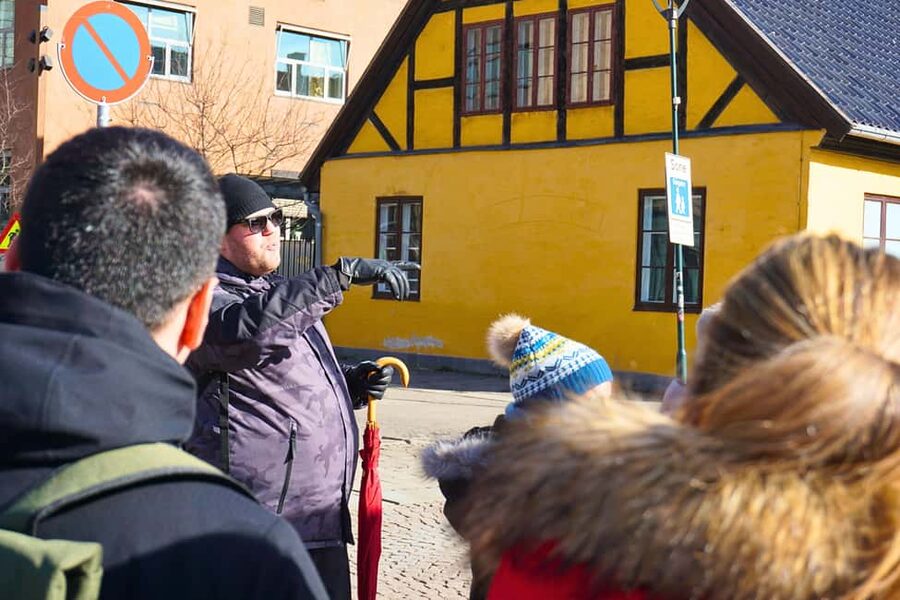
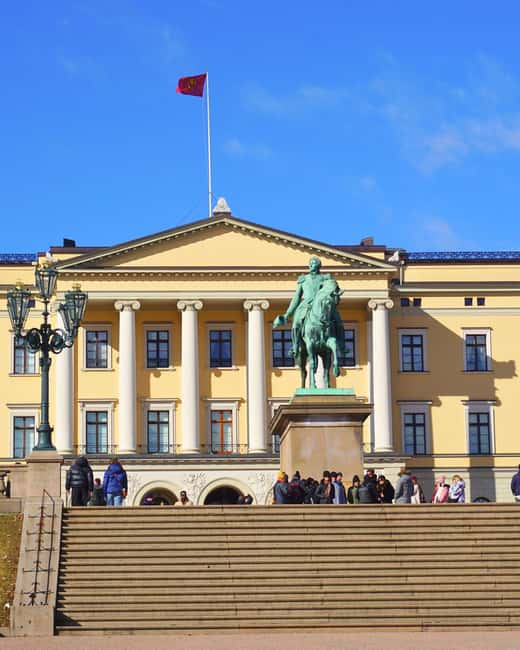
Meet your guide in front of the Royal Palace, marked by a red umbrella. This is a sensible starting point because Slottsparken gives the tour breathing room before the group reaches the denser central streets.
The palace area introduces Oslo’s royal identity and provides a scenic beginning. From here, the route heads toward the Nobel Peace Center, with about 10 minutes for a guided look and walking. You will not receive a museum ticket as part of the tour, so the emphasis is on the building, its setting, and its place in Oslo’s civic life.
The walk then continues to Oslo City Hall. This is a 10-minute photo and sightseeing stop, with time to hear about the building and its role in the city. City Hall is also a useful point for understanding Oslo’s relationship with the harbor, since the route soon moves toward the waterfront.
You should expect frequent stops rather than long periods of standing in one place. Bring water, especially in warmer weather, and wear shoes that can handle several hours of pavement.
Karl Johans Gate and the political heart of Oslo
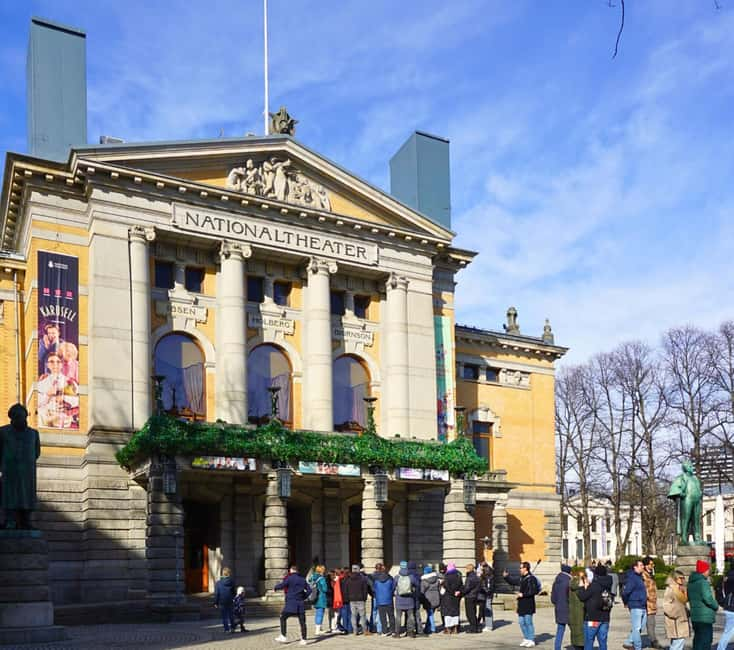
The Norwegian National Theater comes next, with a short visit, guided explanation, and views along the way. This part of the route brings art and literature into the story. One guide, Martin, was praised for adding facts about art and even performing music associated with a famous Ibsen play, so the cultural side of the walk can be more lively than a standard architecture tour.
From the theater, you continue along Karl Johans Gate for around 15 minutes. This is Oslo’s best-known central avenue, linking the palace with the heart of the city. It is an important street not only for photographs but also for seeing how royal, political, commercial, and public life meet in one corridor.
The Norwegian Parliament follows, with about 15 minutes for a photo stop and explanation. This is where the tour shifts from royal history to the way Norway is governed today. A guide who explains the buildings in sequence can help you see why this avenue feels like more than a shopping street.
The route also includes Christian IV’s Glove. This brief stop is one of the more unusual parts of the walk. It points back to Oslo’s earlier urban story and to the decisions that shaped the city after destruction and fire. It is the kind of detail you could easily pass without noticing alone.
Akershus Fortress and Oslo’s older story
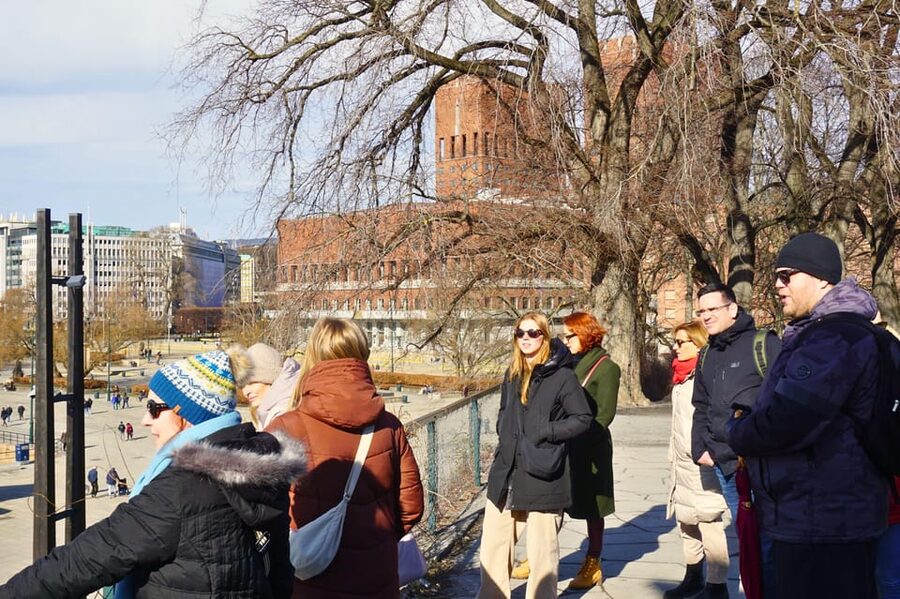
Akershus Fortress is the major historic stop, with about 15 minutes of walking and guided sightseeing. Its elevated position gives you a useful view toward the harbor and helps explain why this site mattered to Oslo’s defense and development.
Do not expect a full fortress visit with extended time inside every section. The schedule treats Akershus as part of a moving city walk, so you will hear the key story, see important views, and continue through the surrounding streets. If you want a detailed, slow exploration of the fortress interiors, you would need extra time outside the tour.
This is also where the contrast between old and new Oslo becomes clear. The fortress represents the city’s strategic and medieval past, while the waterfront ahead points to redevelopment, commerce, and modern architecture. The guide’s job is to connect those periods rather than leave you with disconnected dates.
The tour’s historical focus includes Oslo’s devastating fires and the rebuilding that followed. That background is valuable because many central streets make more sense once you know that the city was repeatedly reshaped. You will hear how rebuilding affected street plans, civic buildings, and the capital’s move toward a more organized modern center.
More History Tours in the world:
- Prague: Medieval Dinner with Unlimited Drinks
★ 4.4 · 19,847 reviews - Pompeii: Entry Ticket and Guided Tour with an Archaeologist
★ 4.8 · 19,459 reviews - History and Hauntings of Salem Guided Walking Tour
★ 5.0 · 14,564 reviews - Athens: Acropolis & up to 5 Archaeological Sites Combo Pass
★ 4.2 · 13,904 reviews
Bank Square, trade, and the city’s financial side
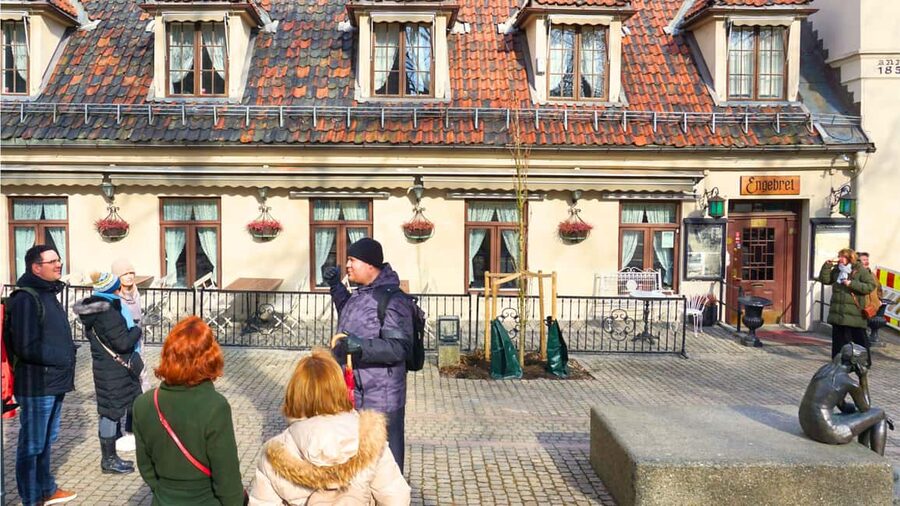
After the fortress, the group moves through Bank Square, with time for a photo, a visit, and views along the way. This is a good pause in the route because it shifts attention from kings and fortifications to money, commerce, and urban growth.
The Bank of Norway and Oslo Stock Exchange follow. Each receives a guided sightseeing stop, with the Stock Exchange scheduled for around 15 minutes. These buildings help explain how trade and finance helped Oslo grow into a modern Scandinavian center.
I appreciate this section because it avoids making the city’s story only about palaces and old stones. Oslo was also shaped by shipping, business, public institutions, and the movement of money through the port. The guide can show you how those forces changed the city’s identity.
The route is fairly packed. You will cover a large central area in three hours, and that is a strength if you want broad orientation. It is less suited to you if you prefer to sit for long periods, study one building in depth, or stop for extensive photography at every corner.
The waterfront view of Opera House and Munch Museum
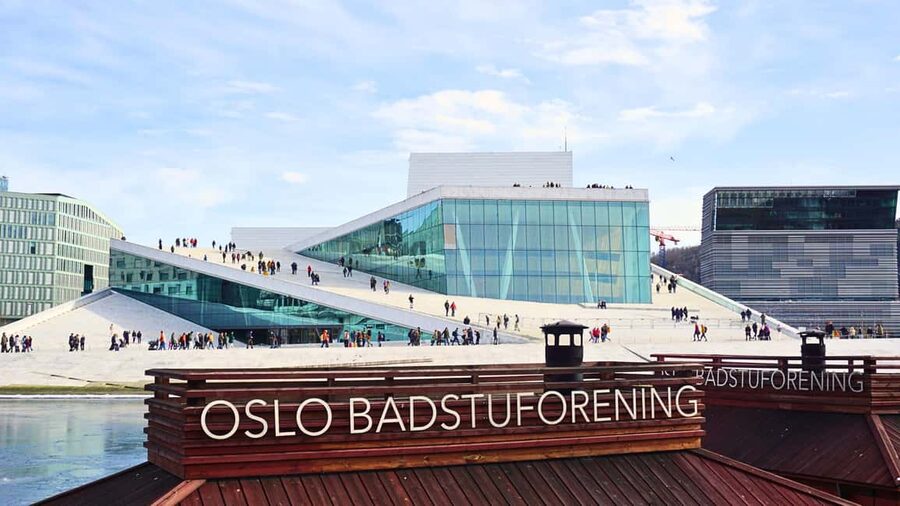
The Oslo Opera House is one of the tour’s most scenic moments. The schedule allows about 15 minutes for a break, photographs, a visit, and guided information. From the pier side, you also get views toward the Munch Museum, another major piece of Oslo’s modern waterfront.
This part of the city feels very different from the fortress and palace districts. The architecture is bold, open, and closely tied to the harbor. You can use the stop to take photographs, listen to the guide, and reset before the final indoor visit.
The tour does not include a ticket to the Opera House or Munch Museum. That is worth noting if you hope to see an exhibition or attend a performance. The value here is the outside view, the waterfront setting, and the explanation of how these buildings fit into Oslo’s recent development.
The guide may also point out scenic views over the Oslofjord during the route. The exact view depends on weather and the walking conditions, but the waterfront section is one of the best reasons to bring a camera.
Inside Deichman Bjørvika
The final major stop is Deichman Bjørvika, Oslo’s award-winning main library. The group spends about 20 minutes here, including a break, photographs, free time, and sightseeing.
This is more than a quick look through the doors. You get to enter the building and see its open, light-filled public spaces. The design gives you a clear example of how modern Norway treats libraries as places for gathering, reading, study, and public life rather than simply shelves of books.
The library is especially useful on a walking tour because it offers an indoor pause near the end. If the weather turns wet or cold, those 20 minutes will feel welcome. Still, the stop is short, so you should not expect a full architectural tour or extended time to explore every floor.
I would make a note of the library’s location if you plan to return on your own. It is near the Opera House and Oslo Central Station, making the area convenient for continued sightseeing after the tour.
What the group experience is really like
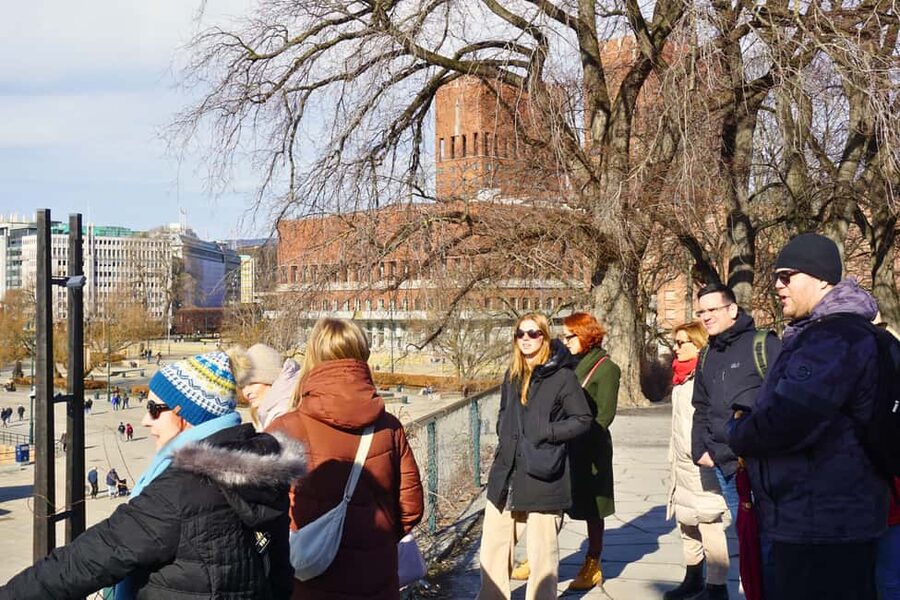
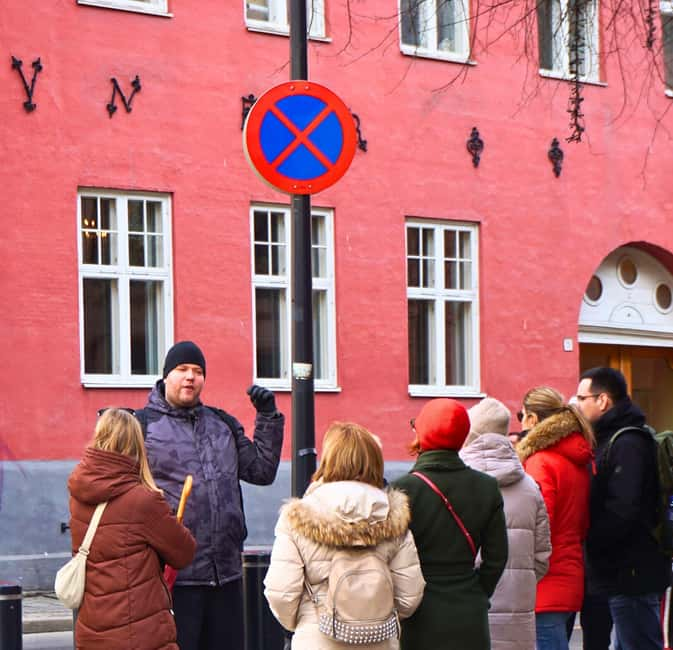
The small format is one of the strongest features. A maximum of 10 participants gives the guide room to answer questions and keep an eye on slower walkers. One booking described the guide allowing time for the whole group to hear the explanation, which is important on a route with traffic, wind, and city noise.
The tone can vary by guide. Anders is associated with witty stories, local restaurant suggestions, and practical tips for the rest of your stay. Martin has been praised for combining history and art with a memorable musical touch. Magnus is noted for friendly delivery and clear English, while other guides have helped in Spanish, Italian, and German.
You should not book this expecting a silent, self-paced walk. The experience works best when you enjoy listening, asking questions, and moving from stop to stop. Past groups have included international participants, and the small format can feel almost private when the booking is light.
The tour is not suitable for wheelchair users or people with mobility impairments. The route includes extended walking, streets, public spaces, and the fortress area. Comfortable shoes are essential, and weather-appropriate clothing is not optional in Oslo. Bring water and a camera, and keep a waterproof layer handy if the forecast looks uncertain.
When to take it and who will value it most

I would schedule this walk early in an Oslo visit. It gives you a map in your head, shows you where the palace, Parliament, fortress, waterfront, library, and station sit in relation to one another, and leaves you with ideas for later.
It is particularly useful for first-time visitors, short stays, and anyone arriving by train or cruise who wants a compact introduction to central Oslo. It also suits people who like history explained through streets and buildings rather than through a long museum lecture.
You may want something else if your priority is art museums, detailed fortress interiors, or a slow photography walk. Museum admission is not included, and the three-hour schedule favors range over depth.
The tour ends near Oslo Central Station or Centropa Restaurant & Bar. That makes it easy to continue with lunch, dinner, shopping, or another part of the city without arranging a separate ride back.
Should you book the Oslo History, Art and Secrets Tour?
I would book it if you want a friendly, structured introduction to Oslo for $35. The strongest reasons are the route’s range, the small group limit, the historical explanation of the city’s fires and rebuilding, and the chance to enter Deichman Library.
Choose another experience if you need step-free access, dislike steady walking, or want long visits inside museums. For most first-time visitors with reasonable mobility, this is a practical way to get your bearings fast and understand why Oslo looks the way it does today.
Free cancellation up to 24 hours before the start and reserve-now, pay-later booking add useful flexibility. Check the available starting time and language, then meet the guide at the Royal Palace with your shoes, water, camera, and weather gear ready.
FAQ
Where does the Oslo walking tour begin?
The meeting point is in front of the Royal Palace. The guide will have a red umbrella open.
Where does the tour finish?
The walk finishes near Oslo Central Station or Centropa Restaurant & Bar.
How long does the tour last?
The tour lasts three hours.
How much does the tour cost?
The listed price is $35 per person.
What languages are available?
The live tour guide may lead the experience in English, Spanish, Italian, or German.
Is Deichman Library included?
Yes. The tour includes entry to the Deichman Bjørvika library, with time for photographs, sightseeing, and free time inside.
Are museum tickets included?
No. Tickets to museums are not included.
Is the tour suitable for wheelchair users?
No. The activity is not suitable for wheelchair users or people with mobility impairments.
Just added around the world
- Scenic Train ride to historical cities of Morretes and Antonina★ 4.0 · 188 reviews
- 6-Day Cultural Tour to Machu Picchu★ 5.0 · 76 reviews
- Jewish Heritage of Curacao★ 4.5 · 68 reviews
- The Curacao’s Colorful History Walking Tour★ 5.0 · 55 reviews
- Discover Scuba Diving Amathounta’s Ancient Port★ 5.0 · 30 reviews
- Olous – Guided Snorkelling Excursion to Discover Olous Sunken Ancient City★ 4.5 · 31 reviews
- Night Walking Tour of Medieval Cuenca★ 5.0 · 64 reviews
- WWII – The Battle of Crete Day Tour★ 5.0 · 103 reviews