
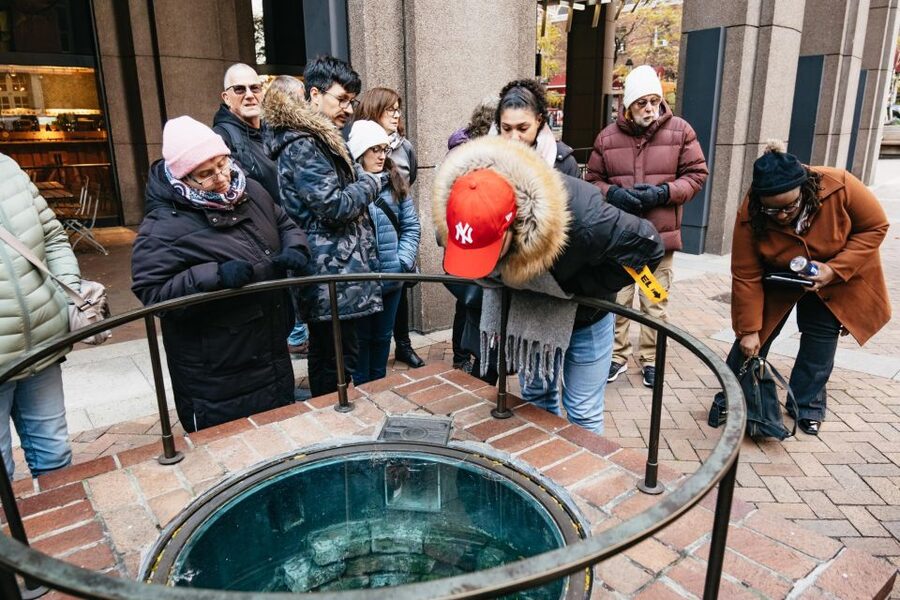
Review · NEW YORK CITY
NYC: History of Slavery & Underground Railroad Walking Tour
New York’s colonial story looks different when you begin with the African Burial Ground National Memorial. This 150-minute walk brings slavery, resistance, abolition, and the Underground Railroad into the streets around Lower Manhattan, where the past is often easy to miss.
I like the route for two reasons: it connects famous sights such as Wall Street and Trinity Church with lesser-known stories, and it treats enslaved people as people who resisted, organized, escaped, and helped build the city. The $49 price is fair for a licensed guide and two and a half hours of focused history, though this is still a walking tour on city pavement, so comfortable shoes matter.
Key points
- Begin with the African Burial Ground National Memorial, a solemn archaeological site honoring enslaved Africans in colonial America.
- Connect famous Lower Manhattan landmarks to African American history, including Fraunces Tavern, Trinity Church, and Wall Street.
- Learn how the Underground Railroad worked, through secret routes, safe houses, and people who risked property and safety to help others escape.
- Hear about uprisings, kidnappings, and dramatic escapes, rather than receiving a softened version of slavery.
- Expect a serious but human presentation, with guides such as Maia, Sean, Shaun, Ludie, and Damaras praised for clear storytelling and thoughtful answers.
- Plan for 150 minutes outdoors, with weather-appropriate clothing and shoes that can handle a city walk.
Why this Lower Manhattan walk matters
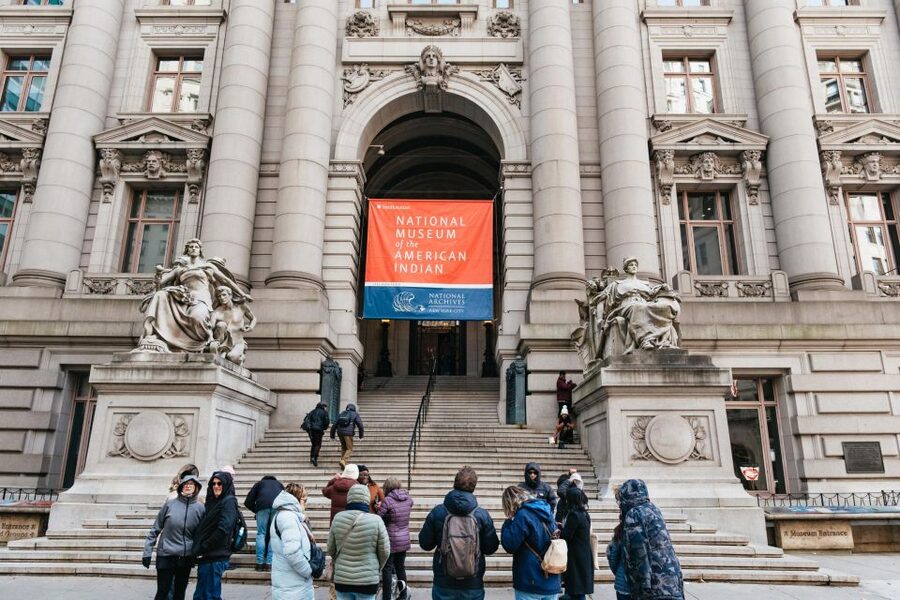
I find this tour most valuable because it changes the way you read New York. Fraunces Tavern, Trinity Church, and Wall Street are familiar names, but the tour places them within a longer story about forced labor, commerce, resistance, and Black New Yorkers.
That context matters. You are not simply looking at old buildings and memorizing dates. You are learning how African Americans helped shape New Amsterdam and New York from the colonial period onward. You also hear about the revolts, kidnappings, and escapes that reveal how contested slavery was, even in a city often presented as a center of trade and finance.
The subject is difficult. A good guide needs to explain the violence without turning it into spectacle, and the strongest reports from this experience describe guides who handled the material with grace, empathy, and directness. The tour also asks you to consider the role that ordinary people and institutions played in slavery and the slave trade.
That can make the walk uncomfortable. It should. Still, the tone is not simply bleak. Alongside oppression, you hear about courage, organizing, resistance, and the people who risked their homes and safety to help others reach freedom.
More History Walking Tours in the USA
- History and Hauntings of Salem Guided Walking Tour
★ 5.0 · 14,564 reviews - Boston: Freedom Trail History Small Group Walking Tour
★ 5.0 · 6,450 reviews - Historic Charleston Guided Sightseeing Walking Tour
★ 5.0 · 6,216 reviews
Meeting at the American Indian Museum
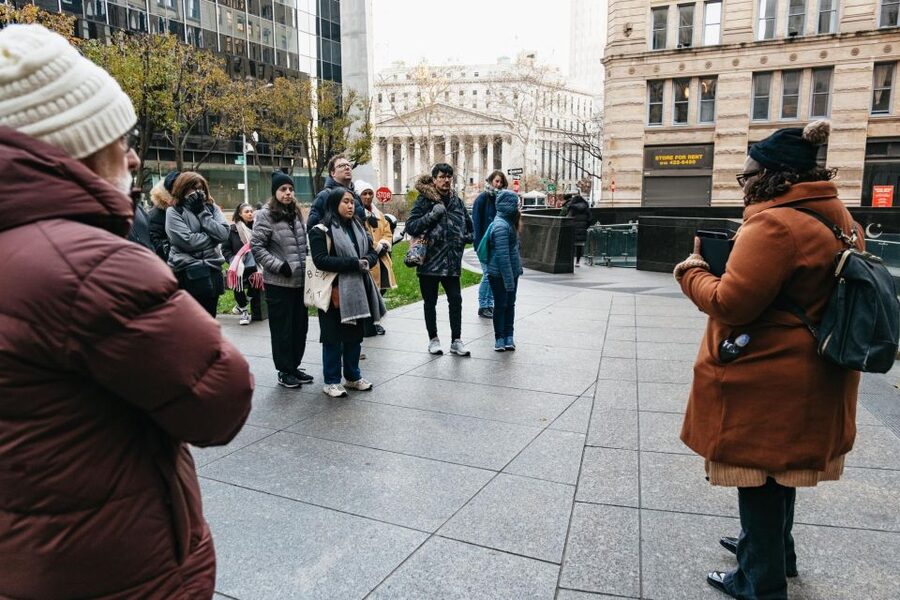
The meeting point is in front of the American Indian Museum. From there, your licensed English-speaking guide leads the group into a part of Lower Manhattan where several layers of New York history sit close together.
The starting point is worth checking carefully before you leave. The tour information also describes the African Burial Ground National Memorial as the opening archaeological site, so you should expect the early part of the walk to focus on that memorial and the colonial history surrounding it. The exact order of nearby stops can depend on the guide and street conditions.
Allow time to arrive without rushing. This is a city walking tour, not a coach excursion, and you will get more from it if you begin ready to listen rather than squeeze it between two tight appointments. The walk lasts 150 minutes, so I would not schedule a museum booking immediately afterward.
The African Burial Ground National Memorial
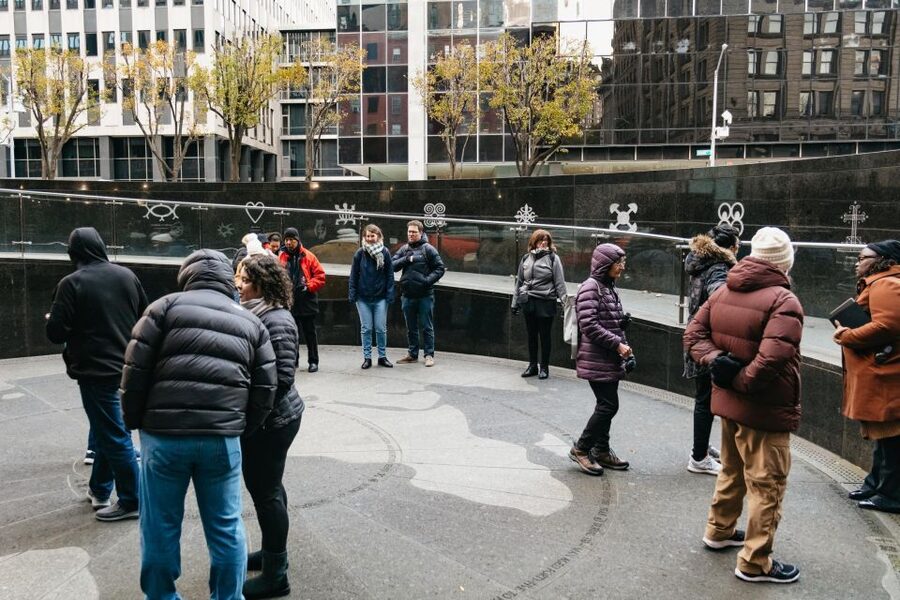
The African Burial Ground gives the tour its moral and historical center. This archaeological site and memorial honors enslaved Africans who died in colonial America. Beginning here makes clear that the story is not only about famous abolitionists or celebrated escape routes. It is also about the people whose lives were constrained, exploited, and too often erased.
The site gives the guide a place to explain early African American life in New York. You learn how slavery was part of the city’s colonial foundations and how enslaved people contributed to the growth of New Amsterdam and later New York.
I appreciate this opening because it prevents the Underground Railroad from becoming a romantic adventure story. Before discussing secret routes and safe houses, the tour establishes what people were trying to escape and why freedom carried such enormous risk.
You should expect a respectful stop rather than a fast photo opportunity. The memorial calls for attention, and the subject may feel heavy. That is part of its value. If you want only light sightseeing, this is not the right tour. If you want a clearer understanding of how New York developed, it is a powerful place to begin.
From colonial New Amsterdam to modern New York
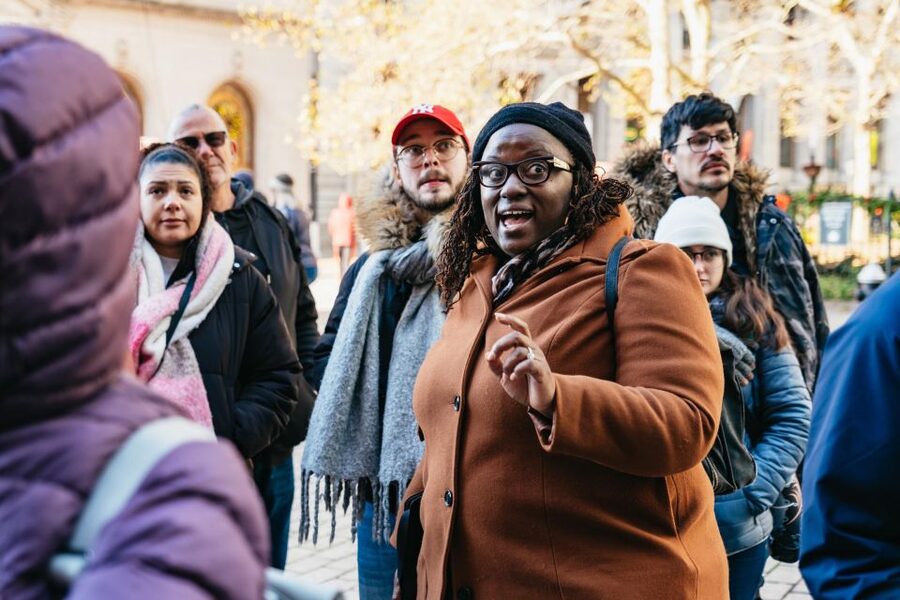
As the walk continues, the guide connects the early colonial period to the city you see now. That link is one of the strongest parts of the experience. You may pass ordinary streets and buildings, but the commentary gives them another layer.
The story covers more than slavery as a legal system. It includes African American contributions, resistance, revolts, kidnappings, and the efforts of people who fought for abolition. You learn that New York’s history was shaped not only by wealthy merchants, political leaders, and builders, but also by enslaved workers and free Black communities.
Previous guides have included Maia, Maya, Sean, Shaun, Ludie, and Damaras. The exact guide for your departure will vary, but the experience depends heavily on the person leading it. The strongest guide style here is conversational and open to questions. Several guides have been praised for answering awkward questions without becoming defensive, while also adding humor at suitable moments.
That balance is useful. You get a serious account of slavery, but not a lecture delivered without human warmth. If you have questions about language, responsibility, or the difference between slavery in New York and elsewhere, ask them. The guides are expected to engage rather than simply recite facts.
Same city, a different century:
- Charleston’s Old South Carriage Historic Horse & Carriage Tour
★ 5.0 · 10,023 reviews - Beneath The Streets Underground History Tour
★ 4.5 · 8,006 reviews - Big Island in a Day: Volcanoes Waterfalls Sightseeing and History
★ 5.0 · 6,569 reviews - Charleston Horse-Drawn Carriage Tour: Explore Historic Charleston
★ 5.0 · 3,561 reviews
Fraunces Tavern, Trinity Church, and Wall Street
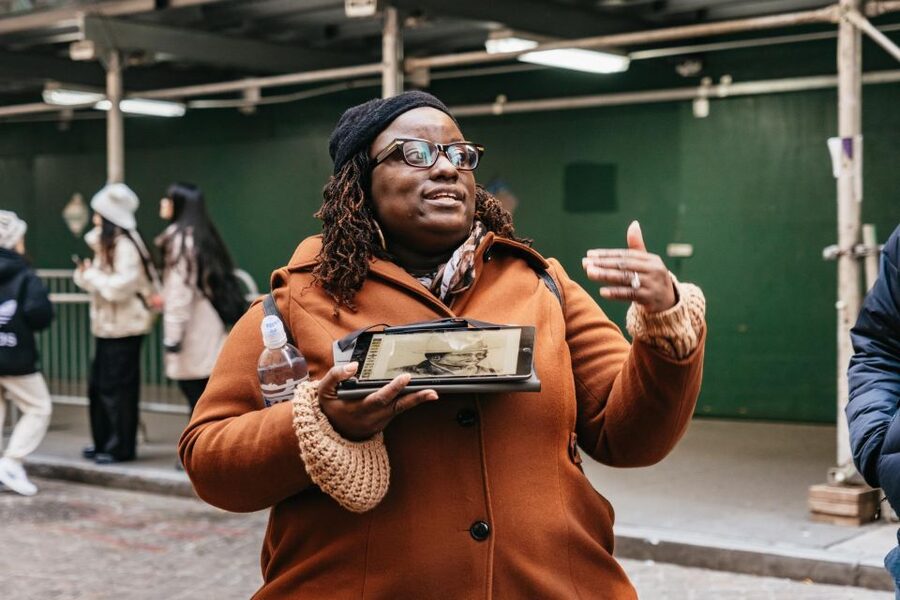
The famous sights on this route serve as anchors for the history. Fraunces Tavern, Trinity Church, and Wall Street are not treated as isolated attractions. Instead, they help show how power, commerce, religion, and public life intersected with slavery and abolition.
Fraunces Tavern is especially useful as a reminder that old New York was a working city as well as a political one. Trinity Church brings religious institutions and colonial society into the conversation. Wall Street raises questions about money, trade, and the systems that made slavery profitable.
The value is in the connection. You could visit these places independently and learn a little about each building. On this walk, you hear how the city’s celebrated institutions fit into a broader story that includes Black labor and resistance.
Do not expect an interior tour of every landmark. The supplied details identify these places as significant sights along the walk, but the focus is the guide’s interpretation from the streets. The experience is strongest for people who want context and stories rather than extended building visits.
How the Underground Railroad actually worked
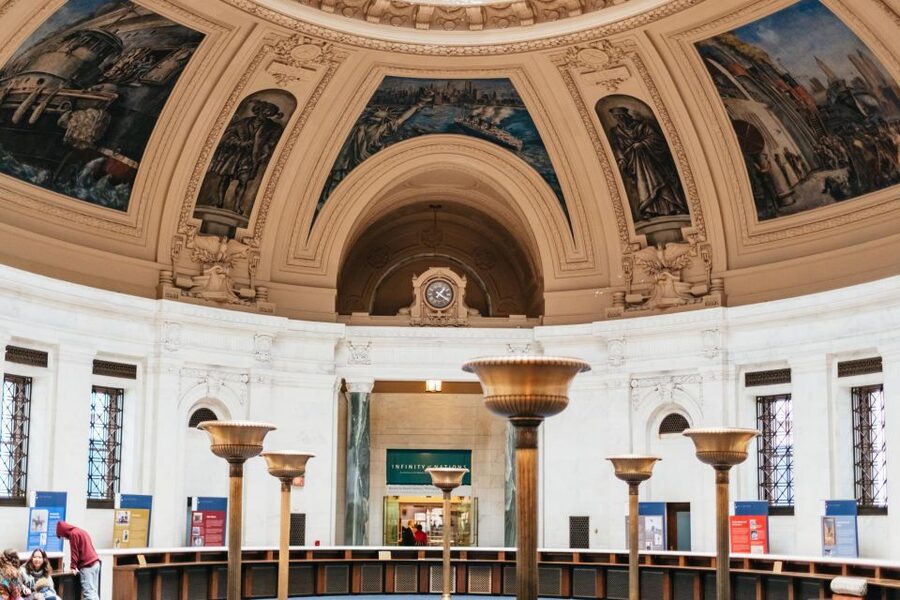
The Underground Railroad was not a real railway, and the tour explains the network in practical terms. You learn about clandestine routes, safe houses, and the people who helped enslaved African Americans move toward free states and Canada.
The route includes former locations connected with the Underground Railroad. At these stops, the guide explains how escape depended on secrecy, trust, timing, and personal courage. The tour also addresses the risks faced by helpers, who could lose property, safety, and freedom by assisting someone escaping slavery.
I like this part because it avoids treating the Underground Railroad as a neat line from one famous place to another. The story is about a loose network, not a single organization with signs and schedules. It worked through human relationships and hidden support.
You will also hear about dramatic escapes and the dangers that could follow. Kidnapping was a real threat, and the journey toward freedom was not guaranteed. This gives the subject its proper weight. The walk honors bravery without pretending that every escape succeeded.
A guide-led discussion, not just a list of dates
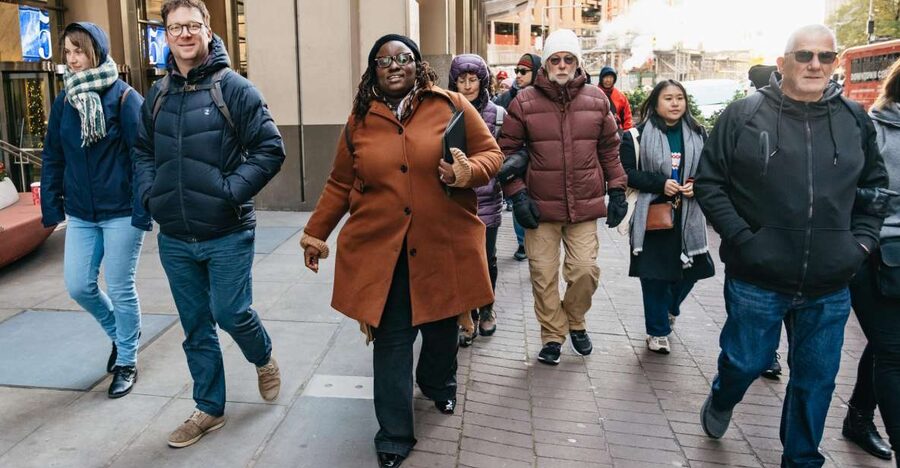
The best reason to choose a guided walk is the human voice. Printed signs can tell you that an event happened. A strong guide can explain why it mattered, who was affected, and what questions it raises today.
This tour has earned praise for clear, thoughtful presentation. Maia has been singled out for covering African American history from the formation of New Amsterdam through the African Burial Ground National Memorial. Sean and Shaun have been praised for answering questions and sharing detailed stories. Ludie has also been described as an excellent guide, while Damaras was remembered for kindness and humor.
You should treat those names as examples, not a promise about who will lead your departure. The guide can change. Still, the comments point to what this tour does best: it encourages questions, handles an emotionally difficult topic with care, and makes room for more than one kind of visitor.
One useful detail is that the group may sometimes be small. A group of three, for example, allows for an intimate conversation, but group size is not guaranteed. If you prefer a private experience, this is not advertised as a private tour.
Is $49 a good value?
At $49 per person, the price is reasonable for a 150-minute guided walk in central Manhattan. You are paying about $19.60 per hour for a licensed guide, historical interpretation, and a route that links several major locations with sites you might otherwise pass without noticing.
The value is strongest if you would not research this subject on your own. The guide supplies the connections, explains the Underground Railroad, and answers questions in real time. That is more useful than simply walking past a plaque or reading a short museum panel.
The price is less compelling if you want a broad sightseeing tour with many attractions or lots of free time for photographs. This is a focused history experience. Slavery, abolition, resistance, and African American contributions are the main subject from beginning to end.
Hotel pickup and drop-off are not included. You need to reach the American Indian Museum yourself, and you remain responsible for getting back to your next stop. On the positive side, you can reserve now and pay later, and cancellation is free up to 24 hours before the start time.
What to wear and how demanding is the walk?
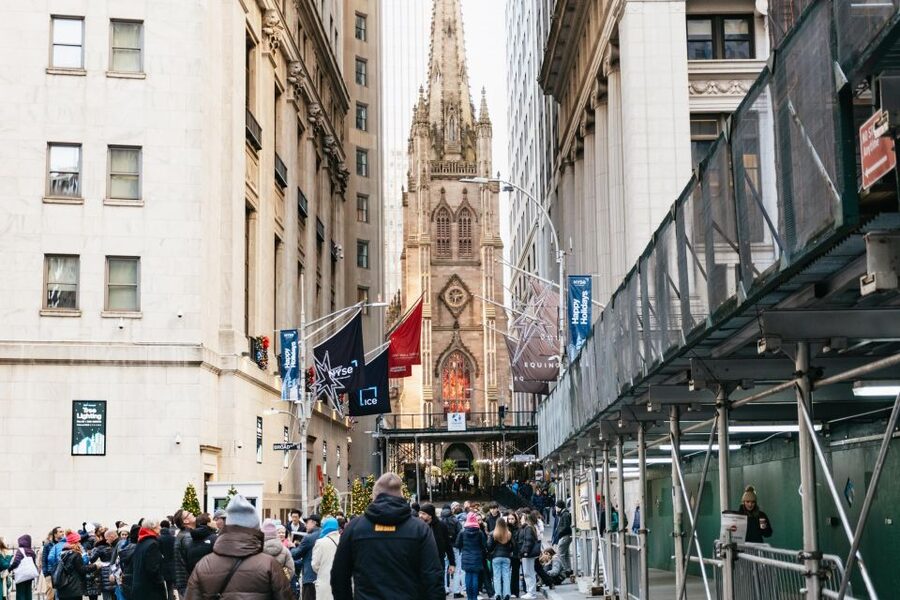
Wear comfortable shoes and clothing suited to the weather. The tour lasts two and a half hours, and even a moderate city walk can become tiring when you are standing outdoors and moving between stops.
One useful point from the experience is that the walking is manageable rather than extreme. Still, do not confuse that with a seated tour. You will be on your feet, crossing city streets, and listening in an outdoor setting.
Rain does not necessarily ruin the experience. One guide has been praised for placing much of the explanation under shelter during wet weather. That is a good sign, but you should still dress for the forecast. The tour provider does not promise indoor coverage at every stop.
I would choose a morning or early afternoon departure if you want to combine the walk with nearby Lower Manhattan sights. Check the available starting times when booking, since the schedule can vary.
Who should book this tour?
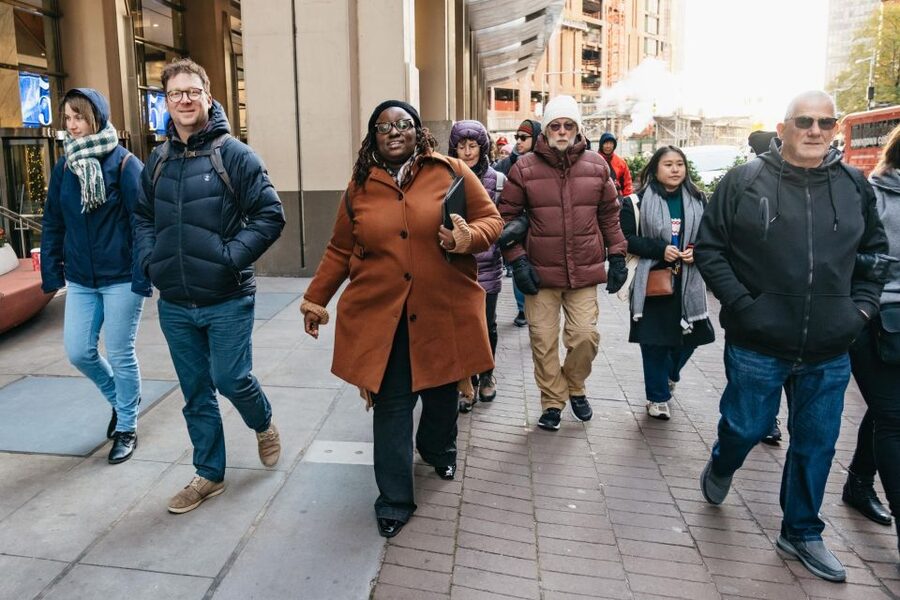
I recommend this experience for first-time visitors who want more than the usual New York checklist. It also suits lifelong New Yorkers. The walk has shown even people who grew up in the city how much history can remain unseen in familiar streets.
It is a good choice for students, history-minded families, and anyone trying to understand the United States beyond its most polished public stories. The English-language guide makes it a practical option for visitors who are comfortable following a detailed discussion in English.
The tour may not suit young children who need constant movement or visitors looking for a light, entertaining stroll. The subject includes slavery, violence, kidnapping, and the long fight for freedom. Come prepared for serious material, respectful discussion, and some difficult questions.
Should you book the slavery and Underground Railroad walk?
Book it if you want to understand how African Americans shaped New York and if you are willing to give 150 minutes to a serious subject. The combination of the African Burial Ground National Memorial, Underground Railroad locations, Fraunces Tavern, Trinity Church, and Wall Street gives you a fuller view of Lower Manhattan than a standard sightseeing walk.
The main caution is simple: this is not a casual landmark tour. You will walk outdoors, stand for periods, and confront painful history. For $49, I consider it a strong value for a focused, guide-led lesson that connects famous places with lives often left out of the usual New York story.
FAQ
How long does the tour last?
The walking tour lasts 150 minutes, or two and a half hours.
Where is the meeting point?
Meet in front of the American Indian Museum in New York.
What language is the tour conducted in?
The live tour guide speaks English, and English is the listed tour language.
What does the price include?
The $49 price includes the walking tour and a licensed New York tour guide. Hotel pickup and drop-off are not included.
What should I bring?
Bring comfortable shoes and clothing suitable for the weather.
Can I cancel or pay later?
You can cancel up to 24 hours in advance for a full refund. You can also reserve now and pay later.
Just added around the USA
- Red Rocks Amphitheatre Historical Walking Tour★ 5.0 · 74 reviews
- 1-Hour Segway Tour of Cheyenne Cañon Art, History and Nature★ 5.0 · 36 reviews
- Colorado Springs – Guided Walking Ghost / History Tour★ 5.0 · 168 reviews
- Ancient Landscapes Private Geology Hike at Garden of the Gods★ 5.0 · 31 reviews
- Village Food Tours Lunch & History Tour★ 5.0 · 80 reviews
- 2.5 Hour Kayaking with Manatee and History Tour in Tarpon Springs★ 5.0 · 24 reviews
- Safety Harbor Ghost Tour★ 5.0 · 60 reviews
- Historical Bicycle Tour of Dunedin★ 5.0 · 44 reviews
New York City History Tours, compared.

NYC: Speakeasy Drinks and Prohibition History Tour
Read our review →
The Original Greenwich Village Food & Cultural Tour Since 1999
Read our review →
The Speakeasy Adventure: A Tipsy Trip Through History
Read our review →
Speakeasy Drinks and Prohibition History Tour NYC
Read our review →
NYC: Night Out Prohibition History Bar and Speakeasy Tour
Read our review →
Soul of Harlem: Strivers Row, Apollo Theatre, Gospel History
Read our review →
New York: Mafia and Gangster History Tour in Little Italy
Read our review →
New York City: Flatiron Food, History, and Architecture Tour
Read our review →Browse the lists this tour appears in