
Review · GREECE
Olympia: Archaeological Site & Museum E-Ticket & Audio Guide
Olympia is best understood on foot, among the broken temples, training grounds, and stadium where the ancient Olympic Games began. This ticket pairs entry to the archaeological site with the Archaeological Museum and the Olympia Ancient Olympic Games Museum, while a phone-based audio guide explains what you are seeing. I like the freedom to set your own pace and the way the narration leads you from the Gymnasium through the Palaestra, Heraeon, and other key ruins. I also like that the ticket works for the full day, rather than forcing you through one rushed visit. The main drawback is that the audio tour covers the site only, not the Archaeological Museum, and you must bring a charged phone and headphones.
The $41 price makes the most sense if you plan to visit all three included places. You get no transport and no live guide, so this suits independent visitors who can reach Olympia on their own and want historical context without joining a group. Download everything before you arrive, since a weak connection at the site could make setup awkward.
Key points to know before you go
- Three attractions on one date: Enter the archaeological site and the Olympia Ancient Olympic Games Museum anytime that day, with timed entry for the Archaeological Museum.
- A guided route without a live guide: The audio tour starts at the Gymnasium and finishes near Pheidias’ workshop.
- About one hour of site narration: The route covers major remains with short stories, directions, and historical explanations.
- Offline access helps: Text, audio, and maps can be downloaded to your phone using about 100 to 150 MB of storage.
- Bring your own equipment: A compatible Android or iOS phone, headphones, comfortable shoes, a hat, and sunscreen are essential.
- Good for independent sightseeing: You can pause, repeat, or revisit the audio tour before or after your visit.
What the $41 ticket actually covers
This is not simply an audio guide with admission added on. The ticket covers three separate Olympia attractions, which gives you enough material for a substantial day if you take your time.
Your archaeological site ticket is valid at any time on the selected date. The Archaeological Museum has a selected time slot, so pay attention to that when planning your day. You also receive entry to the Olympia Ancient Olympic Games Museum, which you can visit anytime on the same date.
That combination is the strongest reason to consider the price. If you only want to walk through the ruins, $41 may feel high compared with a basic admission ticket. If you intend to visit both museums and use the narration, the package has a more convincing value.
The audio content is supplied through the Clio Muse Tours app. It is available in English, German, Italian, French, and Spanish. You receive instructions by email, then download the app and tour to your phone before arrival. The offline format is useful because you do not need to depend on mobile service while walking around the site.
There is no live guide, transportation, food, drinks, smartphone, or headphones included. Think of this as a well-organized self-guided visit, not a guided excursion from a hotel, cruise port, or nearby city.
More Ancient History Tours in Greece
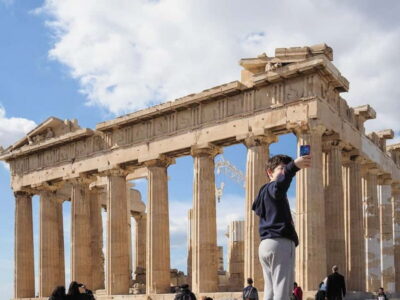
- Athens: Acropolis & up to 5 Archaeological Sites Combo Pass
★ 4.2 · 13,904 reviews - Athens: Ancient Greek Theater Performance
★ 4.7 · 2,481 reviews - Historical Delphi One Day Tour with Arachova Stop & Expert Guide
★ 4.5 · 1,247 reviews
Beginning at the Gymnasium
The suggested audio route begins at the Gymnasium inside the archaeological site. This was part of Olympia’s athletic complex, and it gives you a fitting start because the Olympic story was built around training as much as competition.
From here, the audio guide directs you through the ruins in a clear order. That matters at Olympia. The site is spread across open ground, and at first glance it can feel like a collection of scattered stones. A route with instructions helps you connect the remains to the place they once occupied.
The narration uses short sections rather than a long lecture. You can stop to look, listen, and move on when ready. One useful feature is the ability to repeat the audio later, so you can revisit an explanation after seeing the ruins in person.
You should download the tour before entering. The app requires an Android phone version 5.0 or later, or a compatible iPhone. It does not work with Windows Phones, older iPhone models such as the iPhone 5 and 5C, several older iPads, or older iPod Touch devices. Leave 100 to 150 MB of free storage.
The Palaestra and the athletic side of Olympia
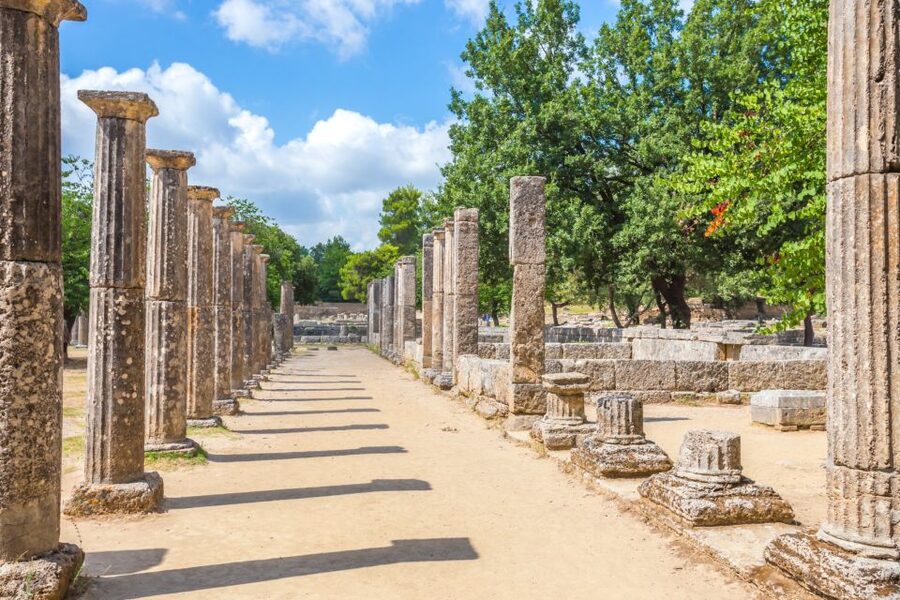
The route continues to the Palaestra, another important part of the training complex. This stop helps you picture Olympia as an active sports center rather than only a religious sanctuary.
The Palaestra was connected with athletic preparation, and the audio guide uses the ruins to explain the daily world behind the competitions. That kind of context is valuable because the surviving walls do not always reveal their purpose on their own.
You may find the narration easiest to follow if you stay close to the suggested route and listen before moving on. One person using the app described the directions as chronological and easy to follow, with clear guidance about where to go next. That is especially useful for families, since children can use the tour on their own phones and still know where the next stop lies.
The app also includes maps and written content. If you prefer reading to listening, you can use those sections instead. Still, bring headphones if you can. One visitor managed to use the phone speaker, but open-air ruins are not always ideal for shared listening, and headphones let you hear the narration more clearly.
The Prytaneion, Philippeion, and Temple of Hera
As the route continues, you meet the Prytaneion, the Philippeion, and the Temple of Hera. These stops broaden the story beyond sport.
The Prytaneion was connected with the officials and ceremonial life of Olympia. The Philippeion has a different character, tied to the Macedonian royal family and the changing political world around the sanctuary. The Temple of Hera is one of the site’s essential stops, and the audio guide helps explain why it belongs in the story of Olympia rather than serving as a minor ruin on the way to the stadium.
The strength of a self-guided route here is control. You can stand longer at the Temple of Hera, take photographs, or pause the recording without holding up a group. You can also skip ahead if your interest is stronger in athletics than architecture.
The tradeoff is that nobody is physically present to answer a question. A live guide can react to your interests and point out details you might miss. This audio tour gives you a prepared path, but you remain responsible for looking carefully and managing the app.
More Archaeological Site Tours in Greece:
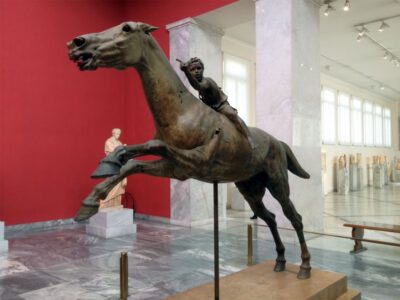
- Athens: National Archaeological Museum Ticket & Audio Guide
★ 4.3 · 1,330 reviews - Mykonos Town: Archaeological Site of Delos Guided Day Trip
★ 4.6 · 1,296 reviews - Delphi: Archaeological Site & Museum Ticket with Audio Tours
★ 4.3 · 721 reviews - Athens: National Archaeological Museum Ticket w/ Opt. Audio
★ 4.4 · 713 reviews
The Temple of Zeus and the Ancient Stadium
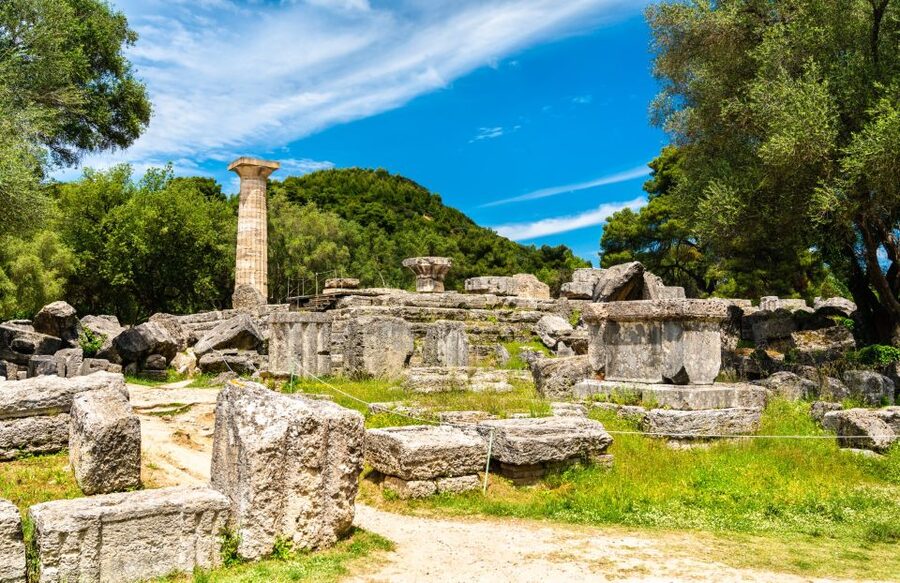
The Temple of Zeus is the visual and historical center of the visit. Even in ruin, its scale makes clear that Olympia was a major sacred site, not simply an athletic field.
The narration adds the story behind the stones, columns, and fallen architectural pieces. Short anecdotes can make the remains easier to picture, particularly when you are standing in a wide open area with little shade and many separate structures.
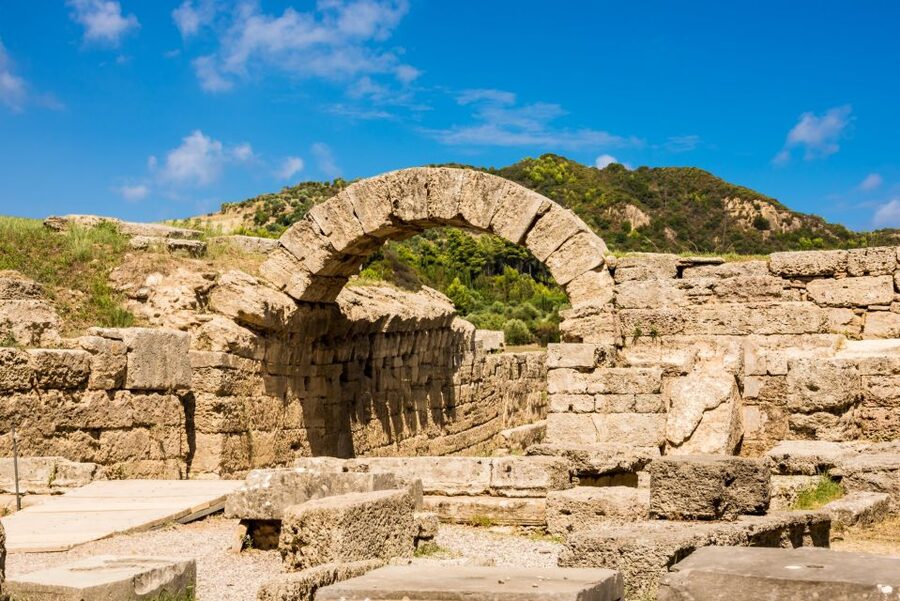
The Ancient Stadium is the moment when the athletic purpose of Olympia becomes most direct. You can see the long running ground and imagine competitors arriving for events that later shaped the modern Olympic tradition. The audio guide helps connect this space to the rules, rituals, and public meaning of the Games.
Plan your footwear carefully. The site calls for comfortable shoes, and the combination of uneven ground, walking distance, and bright sun can make flimsy sandals a poor choice. Bring a hat and sunscreen. Shade is limited, so a morning or later-day visit may feel easier than walking through the site at the hottest part of the afternoon.
Nymphaion and Pheidias’ workshop
The Nymphaion adds another layer to Olympia’s practical and ceremonial life. Water structures are easy to overlook when grand temples and stadium remains attract most of the attention, but this stop helps show how the sanctuary functioned as a place where people gathered for extended periods.
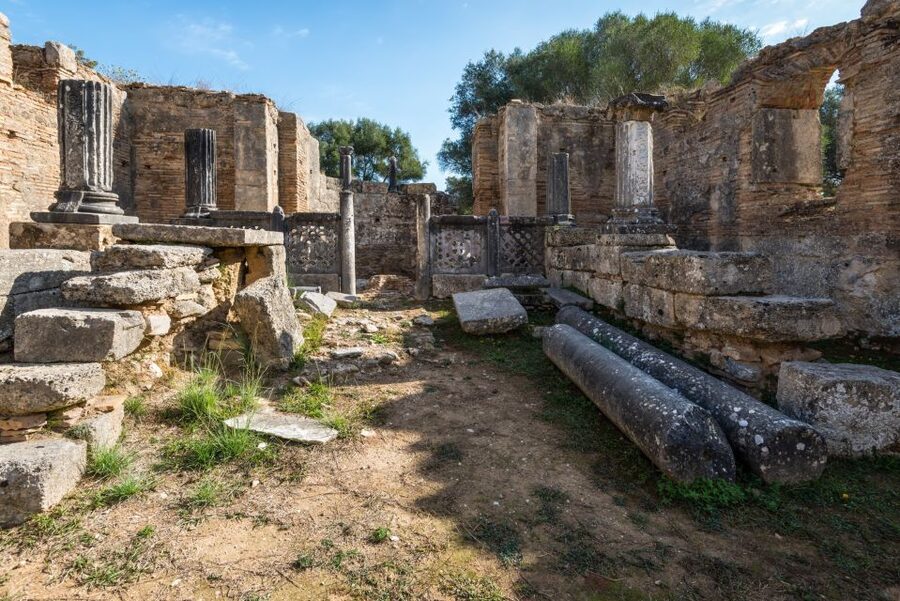
The route ends near the entrance to Pheidias’ workshop. This is a particularly useful final stop because it connects the site to the making of one of antiquity’s most famous works, the statue of Zeus at Olympia.
You finish inside the archaeological site, near the workshop entrance. Since there is no meeting point or guide waiting for you, you can continue exploring after the audio route ends or make your way to the museums. The audio tour can also be used again later, which is handy if you want to replay the final section after seeing the museum displays.
The suggested route lasts about an hour according to the activity details and practical experience with the audio. Allow extra time for photographs, pauses, and walking between points. A one-hour narration does not mean the entire archaeological site should be rushed in one hour.
The Archaeological Museum needs its own plan
The Archaeological Museum of Ancient Olympia is included, but the self-guided audio tour does not cover it. That distinction is easy to miss and affects how you should plan the day.
Use the separate museum time slot shown on your ticket. Inside, you will see original objects connected with the sanctuary and its excavations, but you will need to read the displays or arrange another source of information yourself. The site audio will not automatically continue into the museum.
I would visit the ruins with the audio guide first if your schedule allows, then use the museum to make sense of what you have seen. The outdoor remains can feel abstract at first. Museum objects give them scale, detail, and a stronger connection to daily and religious life.
The museum is also the main entrance area, which matters for access. The entrance has steps and can be a barrier for people with limited mobility. Parts of the archaeological site are not wheelchair accessible. The other entrance is recommended for people with lesser mobility, though the ticket and route should be checked carefully in advance.
The Olympia Ancient Olympic Games Museum
The second museum focuses on the Olympic Games, making it a natural companion to the stadium and athletic buildings. Since admission is included and valid anytime on your selected date, you can place it before or after the outdoor visit.
This museum is useful if you want the competition side of Olympia explained in a more concentrated setting. It also gives families a break from the sun and walking. One family found the phone-based directions and narration engaging for children aged 12 and 13, though each person will need access to the tour as appropriate.
Remember that this museum is included as an entry ticket, not as part of the archaeological site audio tour. The distinction is simple: the app guides you through the ruins, while the two museums are places you explore with their own displays.
App setup, timing, and comfort
The smoothest visit begins before you leave for Olympia. Open the supplier email, download the app, download the audio content, and confirm that the ticket is visible on your phone. Test the audio with your headphones.
Keep your phone fully charged. The tour depends on it, and the site offers little reason to assume you can recharge conveniently. Storage space also matters, so free at least 100 to 150 MB before downloading.
There is no meeting point. You make your own way to Ancient Olympia, with a car being the easiest option noted for reaching the starting point. Transportation is not included, and the ticket does not arrange a driver or transfer.
Do not bring oversized luggage, large bags, or heavy cases. The site is better suited to a small day bag with water, sun protection, and your phone. Food and drinks are not included, so plan those separately.
What the audio guide does well, and where it falls short
The best part of the audio guide is its structure. It does not simply provide facts in random order. It starts at the Gymnasium, moves through the athletic and religious buildings, and ends at Pheidias’ workshop. Clear directions reduce the chance of missing major points.
The storytelling also adds value. The material includes historical information, less familiar anecdotes, and short original sections based on research. That format is easier to absorb than a long academic explanation while you are walking outdoors.
The weakness is the lack of personal response. You cannot ask for clarification, change the route to suit a special interest, or receive help if the app behaves oddly. One person found it took time to learn how to move backward and forward depending on walking speed. Give yourself a few minutes to get comfortable with the controls.
The phone format is also dependent on conditions. Bright sun can make screens harder to read, and open-air noise can affect a phone speaker. Headphones are listed as something to bring, and I would treat them as essential rather than optional.
Who should book this Olympia experience
I would choose this for independent visitors who want a clear route but do not want a live guide or a fixed group schedule. It is also a sensible option for families who can share the audio across several phones and want younger visitors to follow directions at their own pace.
It works well for visitors who can spend most of a day in Olympia. The three included admissions give you enough to do beyond the one-hour site narration, and the audio can be repeated after the visit.
I would think twice if you need transportation, prefer a human guide, or want detailed commentary inside both museums. The ticket does not provide any of those things. Visitors with limited mobility should also check the entrance arrangement carefully because steps and uneven access affect parts of the experience.
The non-refundable policy makes preparation important. Check your date, phone compatibility, storage, and museum time slot before committing.
Should you book it?
Book this experience if you value independent sightseeing with a planned route and intend to visit the archaeological site plus both museums. The combination of admissions, offline maps, and narration gives you a practical way to understand Olympia without joining a group.
Skip it if you only want a quick look at the stadium or already have a guidebook and transport arranged. At $41, the package earns its price through the three entries and the convenience of the audio route, not through luxury or personal service. Download everything early, bring sun protection and headphones, and allow more than one hour for the full visit.
FAQ
What does the Olympia ticket include?
It includes entry to the Archaeological Museum of Ancient Olympia at the selected date and time slot, entry to the archaeological site anytime on the selected date, and entry to the Olympia Ancient Olympic Games Museum anytime on that date. It also includes a self-guided audio tour for the archaeological site.
Is there a live guide?
No. This is a self-guided audio tour used on your smartphone. No live guide is provided.
Which languages are available?
The audio guide is available in English, German, Italian, French, and Spanish.
Do I need my own phone and headphones?
Yes. You need a compatible Android or iOS smartphone, and you must bring your own headphones. The phone should be charged before arrival. The tour requires about 100 to 150 MB of storage.
Does the audio guide cover the museums?
No. The audio guide is for the archaeological site only. The ticket includes entry to both museums, but no self-guided audio tour for the Archaeological Museum is included.
Is the site accessible for people with limited mobility?
Parts of the site are not wheelchair accessible. The main entrance near the museum has steps, so visitors with lesser mobility are advised to use the other entrance. Reduced or free tickets are not supplied by this booking provider.
More Audio Tours in Greece
- Mycenae Archaeological Site Ticket & optional SG audio tours
★ 4.4 · 203 reviews - Archaeological Site of Mycenae: E-Ticket with Audio Guide
★ 4.2 · 144 reviews - Athens: Roman Agora & Ancient Agora E-ticket & 2 Audio Tours
★ 4.1 · 107 reviews - Half Day Ancient Corinth and Canal VR Audio Guided Tour
★ 5.0 · 104 reviews
More Self-Guided Tours in Greece
- Athens: Ancient Agora E-Ticket and Audio Tour
★ 3.9 · 413 reviews - Katakolo Port: Transfer to Ancient Olympia and VR Audio Tour
★ 4.1 · 403 reviews - Heraklion Archaeological Museum Ticket & Audio Guide
★ 4.3 · 396 reviews - Delphi: Archaeological Site & Museum Ticket with Audio Tour
★ 4.4 · 275 reviews
Just added around Greece
- Olous – Guided Snorkelling Excursion to Discover Olous Sunken Ancient City★ 4.5 · 31 reviews
- WWII – The Battle of Crete Day Tour★ 5.0 · 103 reviews
- Heraklion Highlights: Knossos, Museum & Historic City Drive★ 5.0 · 64 reviews
- Knossos & Archaeological Museum Shared Guided Tour from Chania★ 5.0 · 41 reviews
- Chania’s Clash of Empires: A Self-Guided Audio Tour★ 4.5 · 28 reviews
- Ancient Corinth Private Tour from Corinth★ 5.0 · 56 reviews
- Epidavros sea kayak at the Ancient sunken city tour, small ancient theater★ 5.0 · 96 reviews
- Small-group Corfu Town Historical Walking Tour★ 5.0 · 39 reviews
Greece History Tours, compared.
Athens: Acropolis & up to 5 Archaeological Sites Combo Pass
Read our review →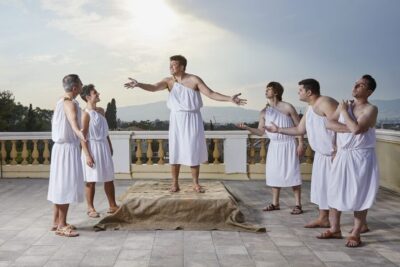
Athens: National Archaeological Museum Ticket & Audio Guide
Read our review →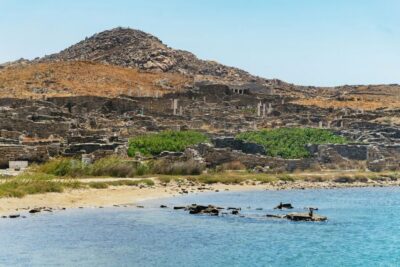
Mykonos Town: Archaeological Site of Delos Guided Day Trip
Read our review →
Historical Delphi One Day Tour with Arachova Stop & Expert Guide
Read our review →
From Athens: Ancient Corinth Day Trip with Canal & VR Guide
Read our review →
Historic Athens: Small Group Electric Bike Tour
Read our review →
Acropolis, Parthenon & Athens Old City Heritage Walking Tour
Read our review →Browse the lists this tour appears in