

Review · GREECE
Small-group Corfu Town Historical Walking Tour
Corfu Town’s story is written in layers: Venetian fortifications, French-planned squares, British civic buildings, Greek Orthodox devotion, and the scars of wartime bombing. This three-hour walk gives you a useful introduction without trying to cover the whole island, and the Old Fortress provides the strongest opening scene.
I like the small group size, which gives you a real chance to ask questions and hear your guide clearly. I also like the local angle. Guides such as Electra, Ariti, Alice, Nausica, and Debbie bring in modern Corfu, restaurant suggestions, Greek coffee, daily life, and family connections to the town. The main drawback is simple: you will be on your feet for nearly the entire tour, often on old streets and hard surfaces.
Key points
- The Old Fortress is the tour’s main paid sight: About an hour is set aside for Corfu’s Venetian stronghold, with admission included.
- The route connects four eras: Venetian, French, British, and Greek influences appear in the fort, squares, churches, and civic buildings.
- The guides are the real strength: Electra, Ariti, Alice, Nausica, and Debbie are praised for warm conversation and clear local insight.
- Groups stay small: The experience is designed for close guide contact, with a maximum of 10 listed and many departures operating with fewer people.
- St. Spyridon adds a personal side: You see the church and relics of Corfu’s patron saint, not just another historic building.
- Plan for the heat: Summer guides make an effort to use shade, but Corfu’s sun and a full morning of walking still require sensible preparation.
Why this walk is a smart first look at Corfu Town
I would use this tour early in a Corfu stay. It gives you a map in your head, explains why the streets look more Italian than mainland Greek, and puts the major sights into a sensible order.
The walk begins at the Old Fortress, then moves across Spianada Square and into the old town. From there, you visit St. Spyridon Church, pass the former San Giacomo Theatre and Town Hall, and finish near the old Jewish quarter before returning to the meeting point.
That order works well. You start with a large defensive monument, then move into the civic and religious heart of town. By the time you reach the narrow lanes, you have enough background to understand why Corfu looks and feels different from many other Greek destinations.
The tour costs $95.86 per person. That is not a casual drop-in price for a walk, but it can be fair value if you want a personal guide, included Old Fortress admission, and a clear introduction in English. The strongest value comes when the group is small. Several departures have had only three, four, or six people, and some early-season groups have been private in practice.
More History Walking Tours in Greece
- Acropolis, Parthenon & Athens Old City Heritage Walking Tour
★ 4.5 · 876 reviews - Athens: History of Rebellion Walking Tour
★ 5.0 · 110 reviews - Ancient Athens for Kids 4-Hour Private Walking Tour
★ 5.0 · 66 reviews
Starting at the Old Fortress with an hour inside
Your guide meets you in front of the Old Fortress at the statue of Schulemburg. After an introduction, you enter the fortress together. Admission is included, which saves you from handling that part separately.
The fortress is the most substantial stop on the route. Its Venetian military character gives you the first clue to Corfu’s position in the Adriatic world. You are not simply looking at old walls. You are beginning with the reason the town developed as a defended port and why Venetian influence remains so visible.
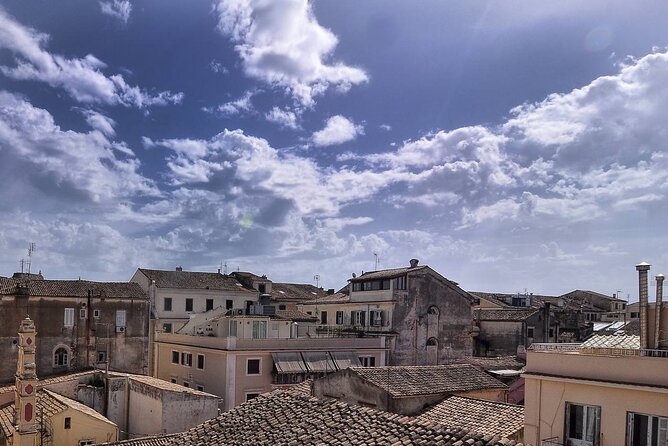
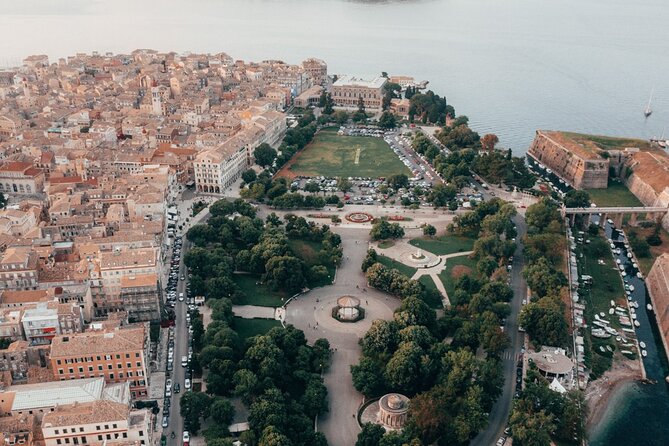
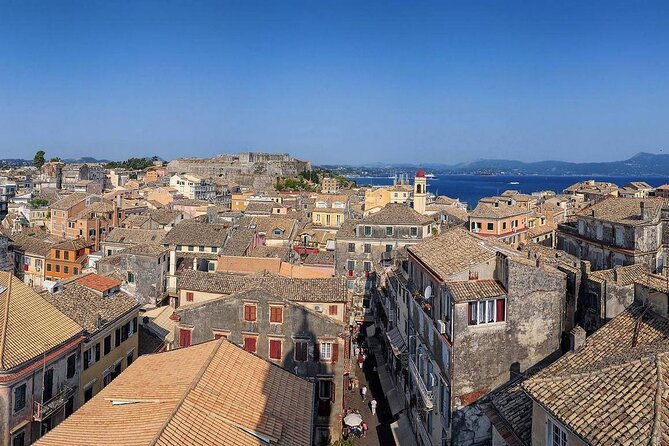
Allow yourself to look beyond the formal explanation. From a fortification, you get a sense of how the town is arranged, with the open Spianada area and the dense old streets pressed against the defensive works. Your guide can connect the site to Corfu’s later French, British, and Greek periods, making the fort a useful starting point rather than an isolated monument.
The one practical point is footwear. The tour information describes a fairly easy walk for most people, but the Old Fortress is still an old stone site, and the entire outing keeps you moving. Wear shoes that are comfortable for several hours on foot.
Spianada Square and the French imprint
After the fortress, the group crosses to Spianada Square, the great open space at the center of Corfu Town. Its name comes from a Venetian word for an open, flat area. Before the nineteenth century, this was largely an empty defensive zone. The French later shaped it into a public square.
That change tells you a lot about the town. Corfu was not formed by one ruling power alone. The Venetians defended it, the French gave the center a more civic form, and the British later added major public buildings. Your guide can make those changes easier to spot as you walk.
The Liston lines one side of the square, with cafes and restaurants under its arcades. It is a pleasant place to pause and watch the town operate, though the tour itself does not include a meal or a cafe stop. If you want a drink, lunch, or time for people-watching, you may prefer to return here after the walk.
Spianada is also known for cricket. Matches are played here, making it the only place in Greece where the sport is played. That odd detail is a good reminder of the British period and gives the square a character you would probably miss without local explanation.
The scheduled visit here lasts about 20 minutes. That is enough for orientation and context, but not enough for a long cafe break or an extended visit to every corner of the square.
The Palace of Saint Michael and Saint George
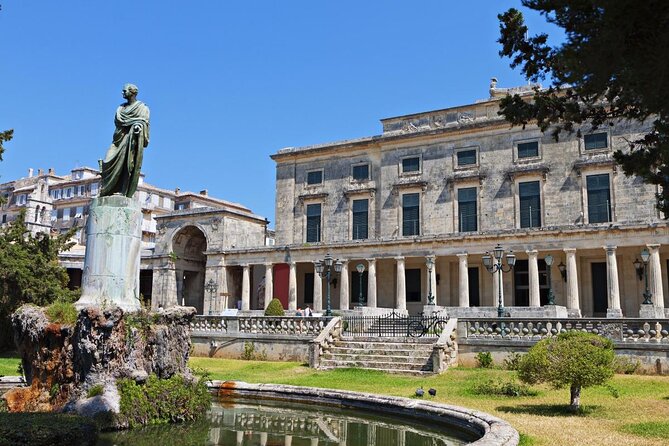
On the northern side of the historic center is the Palace of Saint Michael and Saint George, the largest major building from the British rule period. The British controlled the Ionian Islands from 1814 until 1864, when the islands were reunited with Greece.
The building was commissioned by Sir Thomas Maitland, the British Lord High Commissioner. It served as his residence and housed the administrative headquarters of British rule. Its size and formal appearance make more sense once you know it was built to project authority, not simply to provide offices.
Today, the palace houses the Corfu Museum of Asian Arts. It is the only museum in Greece devoted solely to art and antiquities from the Far East and India. The collection contains about 15,000 works.
The walking tour explains the building and its role, but the supplied schedule does not list a museum visit or a separate admission. I would not assume that you will have time to explore the interior. If Asian art interests you, note the palace as a place to return to independently.
This is one of the tour’s useful habits: it introduces sights that you may want to revisit. You get context first, then you can decide where to spend more time later.
More Small-Group History Tours in Greece:
- Historic Athens: Small Group Electric Bike Tour
★ 4.9 · 966 reviews - Small-Group Food and Cultural Tour in Corfu
★ 5.0 · 299 reviews - Athens: Small Group E-Bike Tour of Historic Highlights
★ 4.9 · 154 reviews - Athens Highlights by E-Bike: Small-Group Historic Tour
★ 5.0 · 131 reviews
St. Spyridon Church and Corfu’s living faith
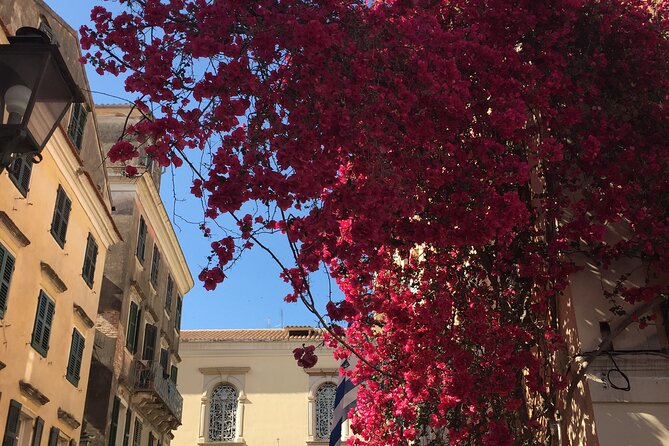
St. Spyridon Church is a different kind of stop. The Old Fortress and palace speak about governments and military power. This church shows how belief still shapes local identity.
St. Spyridon is Corfu’s patron saint and is regarded locally as a protector of the island. The church dates from the sixteenth century, and its Venetian-style architecture fits the wider look of the old town. Its bell tower is the highest point in Corfu Town and can be seen from many parts of the historic center.
Inside, a crypt holds the saint’s relics in a double sarcophagus. That gives the visit a personal and religious weight that a quick exterior photograph cannot provide. You should enter respectfully, especially if services or prayer are taking place.
The planned stop lasts about 20 minutes. That is enough for an explanation and a look inside, but it is not a long church tour. Dress and behave appropriately for an active place of worship.
I especially like this part of the walk because it keeps Corfu from becoming a parade of Venetian facades. You see how the town’s past remains tied to present-day faith and local tradition.
The Town Hall and the former San Giacomo Theatre
The route then winds through narrow streets to Town Hall Square. In the Venetian period, this was an exclusive neighborhood for wealthy residents, with villas and an opera house.
The building now used as the Old Town Hall began as a club for noblemen. In 1720, it became the Noble Theatre of Saint Giacomo of Corfu. It was converted into a Town Hall in 1903.
That sequence is a neat lesson in changing city life. A building can move from private social club to public theater to civic office as political power and public taste shift. The guide’s explanation helps you see the square as more than a handsome backdrop.
The stop is listed at about 15 minutes. Expect a short exterior explanation rather than a full performance venue visit. The narrow streets around it are part of the appeal, but they also mean the group may need to pause to let other pedestrians pass.
The Jewish quarter and the marks left by war
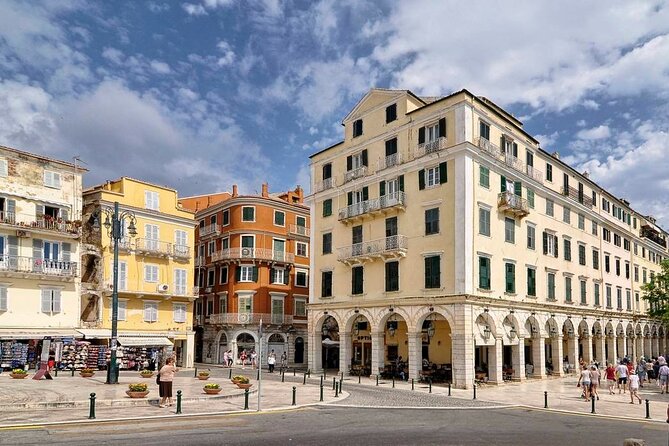
Near the Venetian fortifications, the old Jewish quarter was known in Greek as Evraiki. It once covered the southeast part of the city, with narrow alleyways and tall, faded houses that recalled Venice.
The quarter lost much of its unity after bombing during the Second World War. That detail matters because Corfu Town can look almost perfectly preserved at first glance. The walk helps you notice where the city’s story includes damage, loss, and rebuilding, not only elegant architecture.
This section may be less polished than the square or fortress, but I find it valuable for that very reason. It broadens the tour beyond the postcard view. You get a sense of the communities that shaped the town and the events that changed its streets.
The information supplied does not give a fixed duration for this section. Treat it as part of the walk through the old town rather than a separate museum-style visit.
The guides make the small group worthwhile
The guide can make or break a history walk, and this experience has several strong names attached to it. Electra is praised for bringing Corfu’s past to life, adjusting the route for shade during hot weather, and sharing the town with obvious local affection. On an evening walk, she has been able to point out how locals use the center after the heat of the day.
Ariti is described as warm, engaging, and happy to explain both history and modern island life. Alice, also called Alkistis, adds local touches such as a favorite spot for Greek coffee. Nausica is praised for her clear English, humor, local food advice, and command of Corfu’s customs. Debbie has deep family roots in the town and brings that personal connection to the walk.
You may not receive one particular guide, so I would not book solely on the hope of meeting a named person. The pattern is still useful: this is not designed as a memorized speech delivered at a distance. Expect questions, conversation, and practical suggestions when the group is small.
A history teacher has also led the tour, which suits anyone who wants dates, political changes, and careful explanations. At the same time, the guides are described as friendly and personable rather than stiff. That balance is important on a three-hour walk.
Pace, heat, group size, and timing

The tour lasts about three hours and is offered in English. Morning and evening departures are available, though the supplied meeting information gives a 10:00 a.m. start for this booking.
Morning is useful if you want to continue exploring afterward. Evening can be more comfortable in hot weather and lets you see Corfu Town when local life becomes more active. Since the precise departure options can vary, check the time shown when you book.
The group is limited to eight in the main description, while the additional information gives a maximum of 10 people. In practice, small groups of three, four, and six have taken part, and some April departures have been private because the season was still beginning.
That small size is a major part of the value. You can ask why a building matters, stop for clarification, and hear local recommendations without shouting across a crowd. It also means the experience may feel more personal than a standard city walk.
The walk is described as fairly easy for most people, but you should still expect to stand and walk for the full three hours. One person specifically noted that teenagers who are not interested in history may lose focus, so families should think about the listening element, not just the distance.
Corfu can be very hot in July. Guides have made an effort to keep groups in the shade, but you should bring water, wear a hat, and use sun protection. Comfortable shoes matter more than dressing up.
Price, practical fit, and cancellation
At $95.86, this is best judged against the amount of guide time rather than the number of sights. You are paying for an English-speaking local guide, a small group, roughly three hours of discussion, and entry to the Old Fortress. If you want only a quick orientation and prefer to explore alone, the price may feel high.
I think the cost makes more sense for a first visit, a short stay, a cruise stop, or anyone who wants the history explained in plain language. It is also useful for returning visitors who want more than another walk through familiar lanes.
The tour starts and ends at the meeting point on Agoniston Politechniou in Corfu Town. It is near public transportation, and confirmation is provided when you book. Service animals are allowed, and most people can take part, though the walking requirement remains important.
Free cancellation is available up to 24 hours before the start time for a full refund. Cancellations or changes made less than 24 hours before the start are not accepted for a refund.
Who should book this Corfu walk?
I would book it if you want a clear introduction to Corfu Town, care about the forces that shaped the island, and prefer talking with a local guide instead of following an audio track. It works especially well on your first day, when the route can give you a useful base for the rest of your stay.
It also suits couples, families with history-minded older children, and small groups who value conversation. The strongest parts are the Old Fortress, St. Spyridon Church, the changing role of the civic buildings, and the local advice from guides such as Electra, Ariti, Alice, Nausica, and Debbie.
I would skip it if you dislike guided history walks, cannot comfortably stay on your feet for three hours, or want lots of unstructured time for shopping and cafes. If you do book, choose a cooler departure when possible and consider adding Kanoni afterward for a fuller Corfu day.
The high rating of 4.9 from 39 ratings and the 97 percent recommendation fit the experience’s main strengths: excellent guide interaction, small groups, strong local character, and a well-chosen route through Corfu Town.
FAQ
How long is the Corfu Town walking tour?
The tour lasts approximately three hours.
What language is the tour offered in?
The experience is offered in English.
Where does the tour begin?
The meeting point is at Agoniston Politechniou, Kerkira 491 00, Greece. The detailed route says the guide meets the group in front of the Old Fortress at the statue of Schulemburg.
Where does the tour finish?
The activity ends back at the meeting point.
Is admission to the Old Fortress included?
Yes. Admission to the Old Fortress is included in the tour price.
Does the tour visit St. Spyridon Church?
Yes. The route includes a visit of about 20 minutes to the Church of Saint Spyridon.
How large is the tour group?
The main description says the group is limited to eight. Additional information lists a maximum of 10 people, and some departures have had only three, four, or six participants.
Are morning and evening departure times available?
Yes. The experience offers a choice of morning or evening departure times. The supplied meeting information lists a 10:00 a.m. start for one departure.
Can I cancel for a full refund?
Yes. You can cancel at least 24 hours before the start time for a full refund. Cancellations and changes made less than 24 hours before the start are not accepted for a refund.
Just added around Greece
- Olous – Guided Snorkelling Excursion to Discover Olous Sunken Ancient City★ 4.5 · 31 reviews
- WWII – The Battle of Crete Day Tour★ 5.0 · 103 reviews
- Heraklion Highlights: Knossos, Museum & Historic City Drive★ 5.0 · 64 reviews
- Knossos & Archaeological Museum Shared Guided Tour from Chania★ 5.0 · 41 reviews
- Chania’s Clash of Empires: A Self-Guided Audio Tour★ 4.5 · 28 reviews
- Ancient Corinth Private Tour from Corinth★ 5.0 · 56 reviews
- Epidavros sea kayak at the Ancient sunken city tour, small ancient theater★ 5.0 · 96 reviews
- Sea Kayak Epidavros – Ancient Sunken City Tour★ 5.0 · 213 reviews
Greece History Tours, compared.
Athens: Acropolis & up to 5 Archaeological Sites Combo Pass
Read our review →
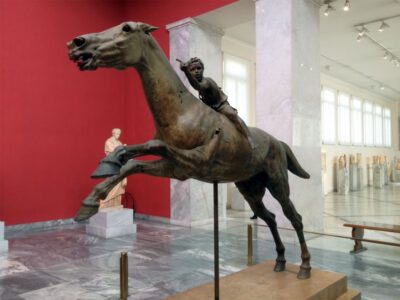
Athens: National Archaeological Museum Ticket & Audio Guide
Read our review →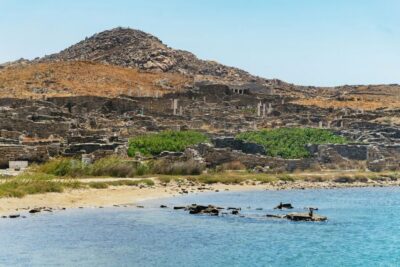
Mykonos Town: Archaeological Site of Delos Guided Day Trip
Read our review →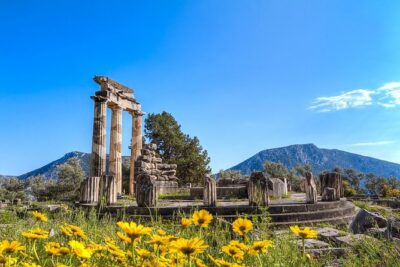
Historical Delphi One Day Tour with Arachova Stop & Expert Guide
Read our review →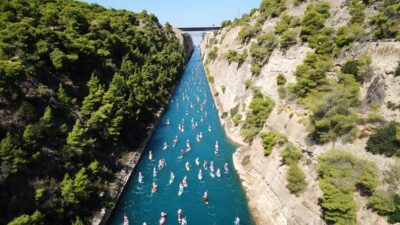
From Athens: Ancient Corinth Day Trip with Canal & VR Guide
Read our review →
Historic Athens: Small Group Electric Bike Tour
Read our review →
Acropolis, Parthenon & Athens Old City Heritage Walking Tour
Read our review →Browse the lists this tour appears in