
Review · BUCHAREST
Private Bucharest: History & Food with Traditional Meal
Bucharest makes more sense when you eat your way through its past. This private four-hour walk links Revolution Square, Victory Street, Old Town, and the immense People’s Palace with the food shaped by Ottoman, Balkan, Russian, German, and Austro-Hungarian influences. You get a three-course Romanian meal at the end, not just a quick snack between sights.
I like the private format, especially for families or first-time visitors who want to stop for questions and photos. I also like the way the route connects politics, architecture, and food: a covrig near Revolution Square, stories of royal Bucharest and Communist rule, then local dishes at a handsome old inn. Guides such as Elaina, Andra, Mara, and Monica have been praised for warmth, patience, and clear explanations.
The main consideration is food quantity during the walk. The meal is substantial, but the earlier tastings may be limited, and the tour description suggests more individual samples than some people receive. At $140 per person, this is best viewed as a private history walk with lunch, not as a full-day food crawl.
Key points to know before booking
- Revolution Square sets the political stage: Learn how the 1989 uprising began at the former Palace Square.
- The food follows the map: Covrig, mici, sarmale, sour soups, and schnitzel reflect Romania’s neighbors and former rulers.
- The route covers Bucharest’s main contrasts: Royal landmarks, inter-war buildings, medieval lanes, Communist power, and modern nightlife.
- The private guide makes a difference: You can ask detailed questions and set a comfortable pace, which helps with children.
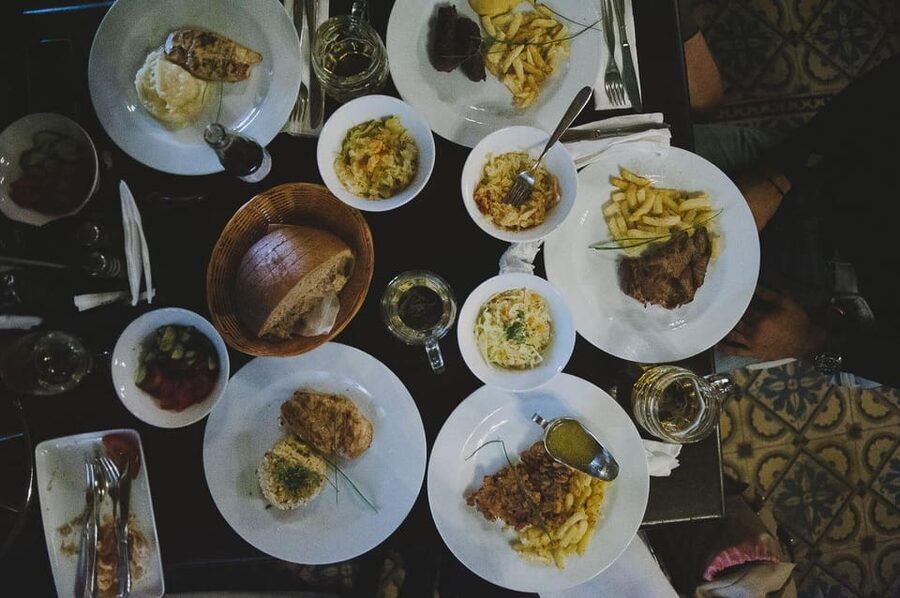
- The final meal is the centerpiece: A three-course Romanian meal comes with house beer, wine, or a soft drink.
- The tour has a lighter footprint: It is carbon neutral and run by a B Corp certified operator.
Revolution Square, where Bucharest’s modern story turns
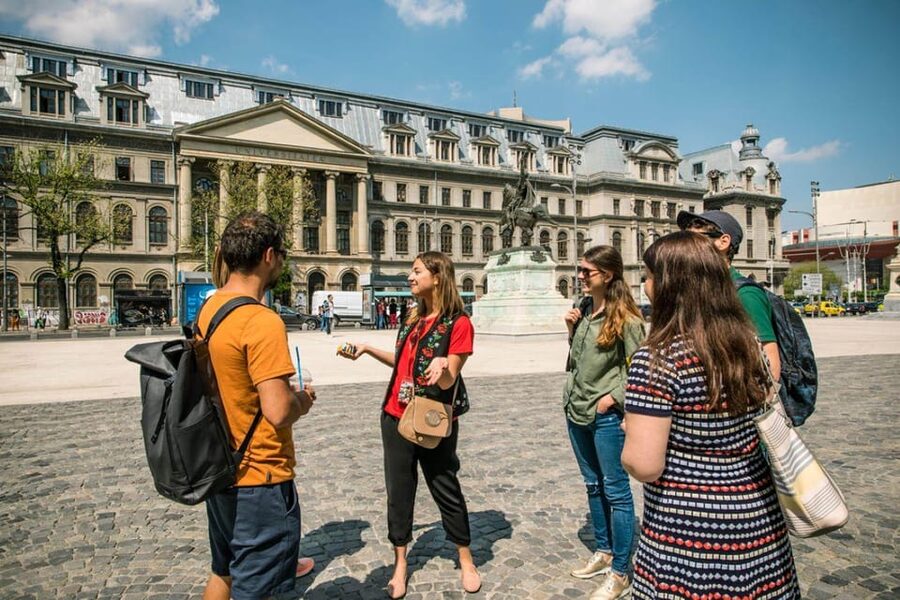
Meet at the Equestrian Statue of Carol I in Sector 1. This puts you beside Revolution Square, formerly called Palace Square, one of the most useful starting points in Bucharest because several centuries of power sit within a short walk.
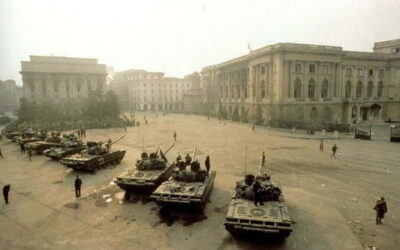
The square is closely tied to the fall of Nicolae Ceausescu. In December 1989, he gave a speech here expecting the usual public support. The crowd turned against him, helping set the Romanian Revolution in motion. Your guide can use the square to explain not only what happened, but also how quickly a staged political event became a public revolt.
Look around before moving on. The former Royal Palace points to Romania’s monarchy. The Romanian Athenaeum brings music and national culture into the picture. Athenee Palace, once a meeting place for diplomats, spies, journalists, and political figures, adds the intrigue of the years between the two world wars.
I like this opening because it gives you a working timeline. Romania is not presented as a string of unrelated monuments. You see royal ambition, foreign influence, dictatorship, and revolution in one compact area.
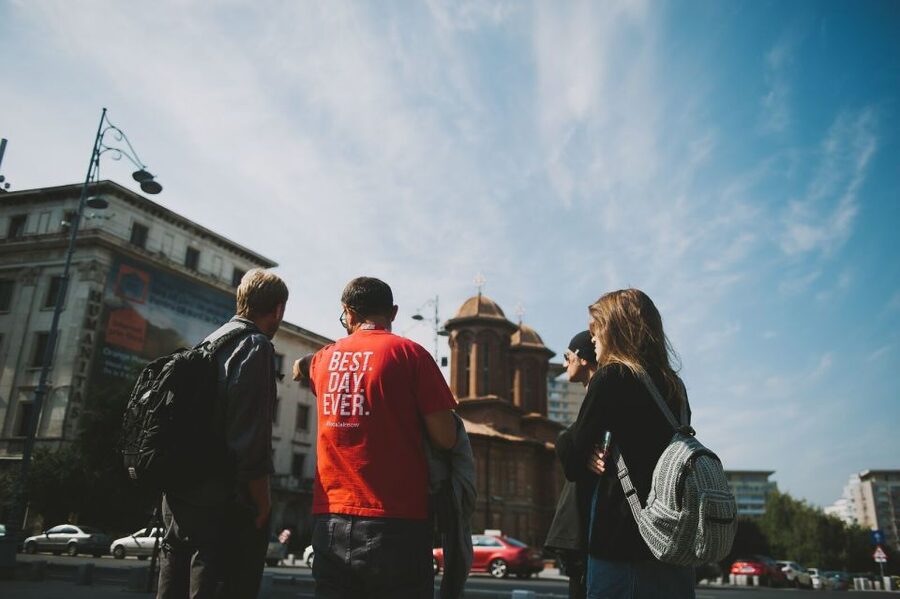
The first food stop is a covrig, a salty baked snack eaten widely in Romania. Its background is linked to Habsburg or German merchants in the medieval period. It is a small detail, but a useful one: food here is not simply local in an isolated sense. It carries traces of movement across borders.
More Local Culture and Traditions Tours in Bucharest:
- Roma Culture, Realities and Slavery History, Walking tour
★ 4.9 · 52 reviews - Amsterdam Food and Cultural Tour with Tastings
★ 5.0 · 4,315 reviews - Sevilla Food Tour: Tapas, Wine, History & Traditions
★ 5.0 · 3,468 reviews
Victory Street and the French-looking side of Bucharest
From Revolution Square, the route heads south along Calea Victoriei, or Victory Street. Its name recalls Romania’s victory in the 1871 War of Independence. Full unification of the three Romanian principalities came later, in 1918, and that delay helps explain why regional traditions and cooking remain distinct.
You will hear about three broad food identities: Moldova is associated with sweeter flavors, Transylvania with earthy cooking, and Muntenia, the region around Bucharest, with spicier dishes. These are useful guideposts rather than strict rules, but they help you understand why Romanian cuisine can feel varied from one region to the next.
Calea Victoriei also shows why Bucharest was once nicknamed the Paris of the East. The route includes grand inter-war buildings and French-influenced urban design, though the city’s appearance is far more mixed than that nickname suggests. Along the way, look for the Telephone Palace, the Military Circle, and the former National Theatre.
Kretzulescu Church is another important stop. Its red-brick exterior and Orthodox design provide a quieter counterpoint to the formal institutions around it. A good guide will help you read the city at street level, pointing out how churches, government buildings, hotels, and commercial architecture occupy the same route.
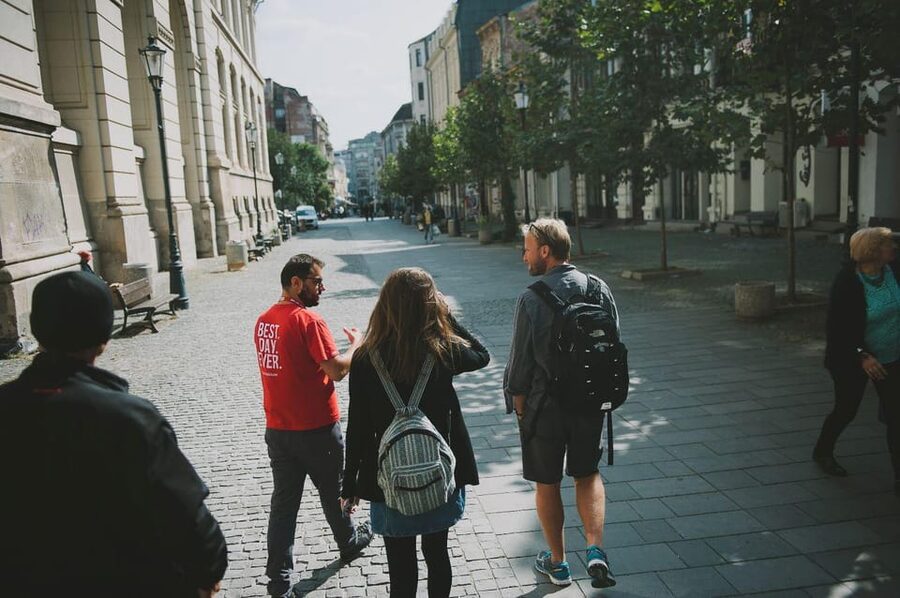
The practical point is that this is not a hop-on, hop-off overview. You move through the center at walking speed, with time to notice architectural details. Wear casual clothes and comfortable shoes. The tour lasts four hours, so it is long enough to cover ground but short enough to fit into a first day in Bucharest.
Old Town, where East and West meet over lunch ingredients

South of Victory Street, the atmosphere changes. Bucharest’s Old Town is the medieval core, a network of lanes and passageways where merchants, religious communities, rulers, and foreign visitors once crossed paths.
The area has ties to Ottoman rule, Transylvanian princes, Orthodox monasteries, and the old trading routes between East and West. That mixture shows up in the food. Mici, the skinless grilled sausages, connect to Balkan cooking. Sarmale, stuffed cabbage leaves, reflect Ottoman influence. Borscht and ciorba point toward Slavic and regional soup traditions, while schnitzel recalls Austro-Hungarian influence.
Do not expect to eat a full serving of every dish named along the route. The experience is designed to explain these foods and culminate in a three-course meal. One important practical difference is that the meal is more certain and substantial than the small tastings along the walk.
Old Town is also where the tour’s architectural contrasts become most useful. You might pass lavish interiors, princely courts, small Orthodox religious sites, and old commercial buildings within minutes. The contrast between restored facades and rougher stretches is part of Bucharest’s character. The area also has a strong evening scene, with restaurants and bars occupying buildings that once served very different purposes.
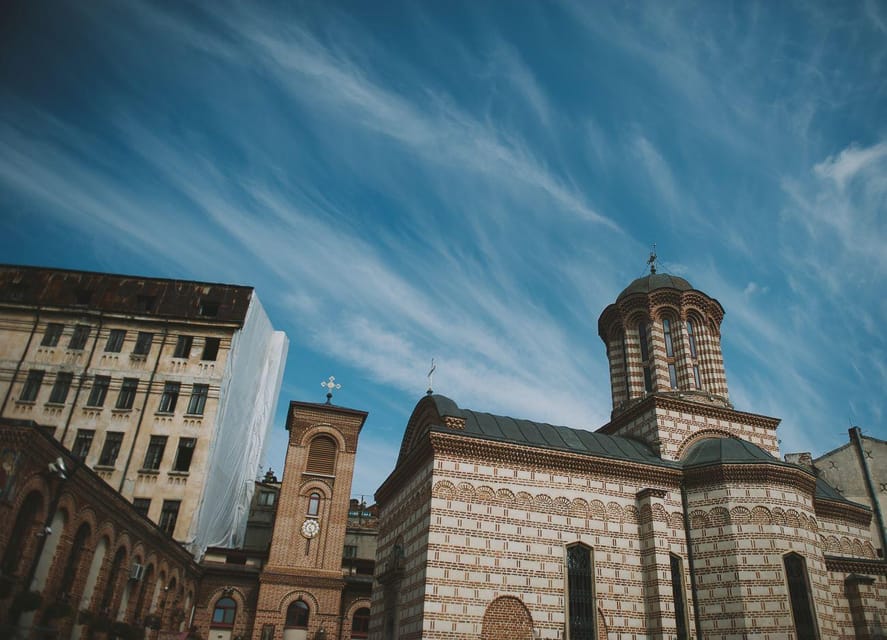
Hanul lui Manuc is a major landmark in this part of the route. This large wooden inn has long been associated with trade, lodging, and social life. It is also connected to the final meal, held at a traditional hanu, or inn, described as one of the city’s most attractive.
That setting matters. A meal in a historic inn gives the food some context. You are not simply handed a plate of Romanian dishes and told to guess what they are. Your guide can link the meal to the people, borders, and political changes discussed earlier.
The People’s Palace and the heavy mark of Communism
Before the meal, the route includes a look at the People’s Palace, now associated with Romania’s Parliament. It was the centerpiece of Ceausescu’s plan to reshape Bucharest on an enormous scale.
The building is often described as the second largest building in the world, behind the Pentagon. Even from the outside, its size helps explain the cost and ambition of the Communist regime’s urban projects. Whole neighborhoods were cleared to make room for monumental government architecture, changing the city in ways that still affect Bucharest.
This stop gives the tour a useful final turn. You begin with the speech that helped bring down Ceausescu, then see the building that represents his megalomania. The connection between the two is stronger than a basic sightseeing stop because your guide can place the palace within the wider story of Communist Bucharest.
The tour does not appear to include an interior visit to the People’s Palace. Treat it as an exterior look and historical explanation rather than a palace tour. If you want to explore the inside, you will need to arrange that separately.
More Private History Tours in Bucharest:
- Visit Bulgaria – Veliko Tarnovo Medieval Fortress – Private tour from Bucharest
★ 5.0 · 51 reviews - Private Tour: Transylvanian Castles and Brasov’s Medieval Old Town
★ 5.0 · 42 reviews - Bucharest Jewish Heritage | Holocaust Memorial | Private Car Tour
★ 5.0 · 38 reviews - Private Historical Walking Tour of York
★ 5.0 · 1,324 reviews
Three courses at a traditional Bucharest inn
The final meal is included in the $140 price. You receive three courses of Romanian food, plus one house beer, wine, or soft drink. Additional food and drinks cost extra.
The menu is described as a sampling of local specialties, so expect a meal that represents the geography and history discussed during the walk. Specific dishes can vary, and the information provided does not promise a fixed menu. If you have dietary restrictions, ask about them before booking or at the start of the tour.
This is where the tour earns much of its value for people who want an introduction rather than a specialist food expedition. You can ask what a dish contains, how it is normally served, and which regional influence it reflects. The meal also gives you a chance to sit down after several hours on city streets.
Food quantity is worth keeping in mind. Some people may expect a long sequence of tastings because the route discusses many dishes. In practice, the included experience centers on the three-course meal, with the covrig and any other sampling serving as part of the wider story.
The drink choice adds a small piece of history. Ancient Dacians were said to have drunk so much wine that their leader, Burebista, banned wine production. They then turned to brewing beer, at least according to the old story. You can raise a glass of Romanian wine or local beer and let your guide explain where fact ends and colorful tradition begins.
What the private format means for you
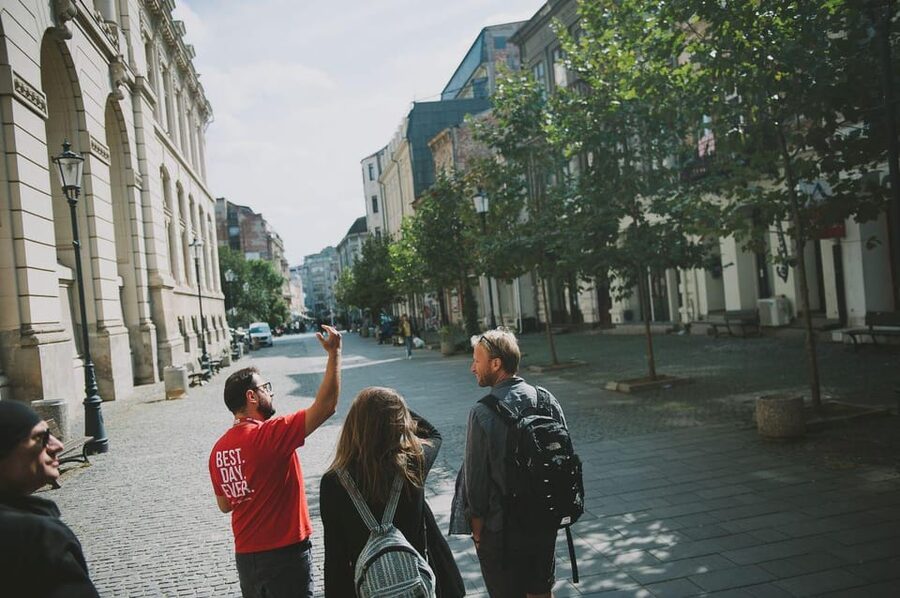
This is a private group tour with a live English-speaking guide. That makes it more flexible than a large scheduled walk. You can ask about architecture, politics, food, or daily life without waiting for a group of strangers to finish their questions.
The format is especially helpful for families. Children under six can join free, but you must tell the operator when booking. An eight-year-old was included successfully on an earlier tour, with photo pauses and explanations paced so the child could follow along. That does not guarantee every family’s experience will be identical, but the route has proven workable for children when the guide adjusts the pace.
Guides have included Elaina, Andra, Mara, Ioanna, Monica, Dana, and Andrei. Their strongest reported qualities are friendliness, patience, clear explanations, and enthusiasm for Bucharest. That matters because the tour covers difficult subjects, including dictatorship, revolution, and forced urban change. A good storyteller can keep these topics understandable without turning the walk into a lecture.
The four-hour length is another advantage. You get a proper introduction to central Bucharest without giving up an entire day. I would book it near the start of your stay, since the route can help you understand where the Old Town, main boulevards, historic squares, and major political landmarks fit together.
Is $140 per person a fair price?
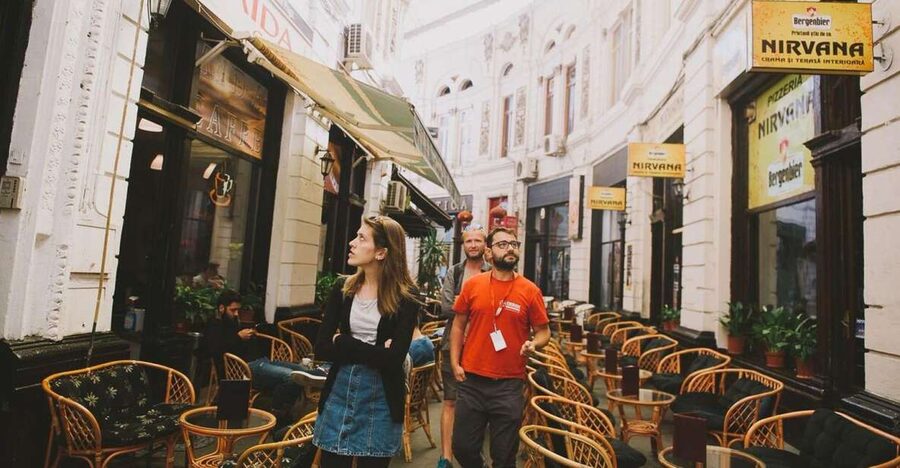
The price is high compared with a basic group walking tour, but the comparison is not quite fair. You are paying for a private guide, four hours of personal attention, and a three-course meal with a drink. You also get a food-focused explanation of Romanian history, not just a list of buildings.
The value is strongest for two or more people who care about having their own guide. A solo visitor pays the same per-person rate, so the cost feels steeper. Still, a private introduction can be useful if you have limited time or want direct answers rather than a standard script.
The weaker value point is the limited food sampling before lunch. If your top priority is trying many small dishes at several addresses, seek a dedicated food tour instead. If you want Bucharest history, architecture, and a proper Romanian meal in one booking, the price is easier to justify.
Cancellation is flexible: you can cancel up to 24 hours before the start for a full refund, and you can reserve now and pay later. The tour is carbon neutral and operated by a B Corp certified company, which may matter if you prefer booking with a business that tracks its environmental and social impact.
Who should book this Bucharest experience?
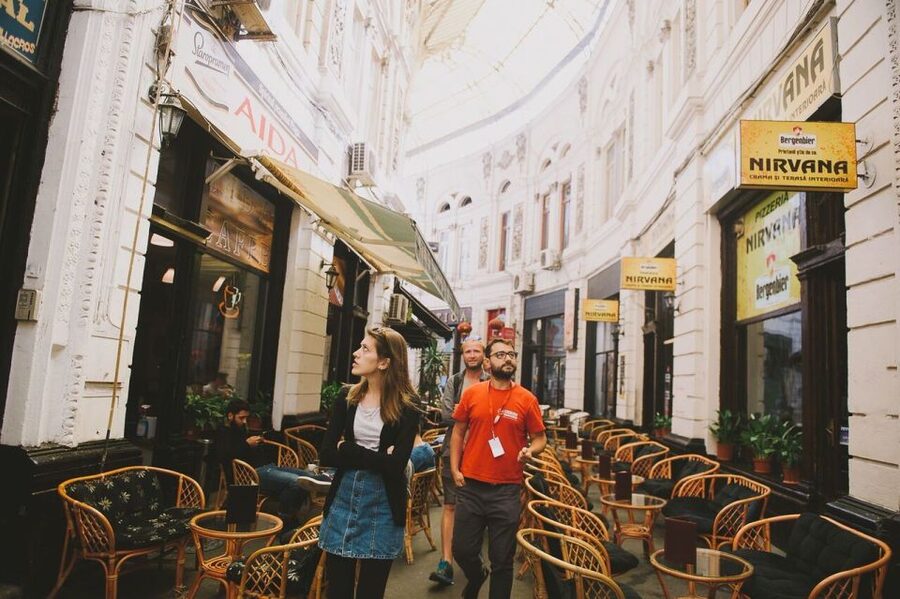
I would choose this tour for a first visit, especially if you want your first hours in Bucharest to have a clear shape. It suits couples, families, and small private groups who enjoy asking questions and eating a full local meal.
It also works well for anyone curious about how Romania’s borders and political history affected daily life. The food is not treated as decoration. Covrig, mici, sarmale, sour soups, schnitzel, beer, and wine all help explain the outside influences that shaped the country.
I would hesitate only if you want a bargain tour, a long restaurant crawl, or a visit inside the People’s Palace. For those goals, this experience is not the right tool.
Should you book it?

Book it if you want a well-paced Bucharest introduction that combines major sights with a meaningful meal. The private guide, central route, family-friendly approach, and strong record of warm guiding make it a sensible first-day choice.
Just set your expectations correctly. This is a history and food tour with lunch, not a four-hour tasting marathon. If that balance sounds right, $140 per person buys a focused way to understand Bucharest before exploring the city on your own.
FAQ
Where does the tour meet?
The meeting point is the Equestrian Statue of Carol I in Sector 1, Bucharest, postal code 030167.
How long does the tour last?
The tour lasts four hours. Starting times depend on availability.
What language is the tour conducted in?
The live tour guide speaks English.
Is this a private tour?
Yes. It is operated as a private group experience.
What food is included?
The experience includes a three-course Romanian meal and a covrig tasting. The meal features local specialties, though a fixed menu is not specified.
Is a drink included?
Yes. You receive one house beer, wine, or soft drink with the meal.
Are children allowed?
Yes. The tour is child-friendly, and children under six may join free of charge. Tell the supplier when booking if you are bringing a child under six.
Can I cancel the booking?
You can cancel up to 24 hours in advance for a full refund.
Is transportation included?
No transportation service is listed. The experience follows a central sightseeing route on foot, so wear casual clothing and comfortable shoes.
More Food Trips in Bucharest
- Historic Ybor City Food Walking Tour
★ 5.0 · 2,210 reviews - Victoria Guided Food and History Tour
★ 5.0 · 2,015 reviews - Barcelona Tapas Walking Tour: Food, Wine & History
★ 4.5 · 1,928 reviews - Gastown Historic Walking Food Tour
★ 5.0 · 1,863 reviews
More Food and Drink Trips in Bucharest
- Barcelona: Tapas Walking Tour with Food, Wine, and History
★ 4.8 · 4,261 reviews - Normandy D-Day Small-Group Day Trip with Omaha Beach, Cemetery & Cider Tasting
★ 5.0 · 2,786 reviews - Madrid Tapas & Taverns Small Group Food & History Tour
★ 5.0 · 2,664 reviews - Edinburgh: Whisky Tasting with History and Storytelling
★ 4.9 · 2,451 reviews
Just added around Bucharest
- Private Tour: Transylvanian Castles and Brasov’s Medieval Old Town★ 5.0 · 42 reviews
- Visit Bulgaria – Veliko Tarnovo Medieval Fortress – Private tour from Bucharest★ 5.0 · 51 reviews
- Guided Walking Tour of Historical Bucharest★ 5.0 · 84 reviews
- Day Trip to Medieval Bulgaria- Small group tour★ 3.5 · 75 reviews
- Bucharest Jewish Heritage | Holocaust Memorial | Private Car Tour★ 5.0 · 38 reviews
- 2-Day Medieval Transylvania with Brasov,Sibiu and Sighisoara Tour from Bucharest★ 4.5 · 145 reviews
- Day trip to Dracula’s Castle, Peles Castle and Medieval Brasov★ 4.5 · 41 reviews
- 3-Day Medieval Transylvania Package Tour★ 4.7 · 31 reviews
Bucharest History Tours, compared.
Bucharest: Communism and History Guided City Walking Tour
Read our review →
From Bucharest: Small Group Day Trip to Medieval Bulgaria
Read our review →
Bucharest: 3-Hour Dark History Tour with a Local
Read our review →
Peles Castle, Dracula’s Castle and Medieval Town of Brasov in one day
Read our review →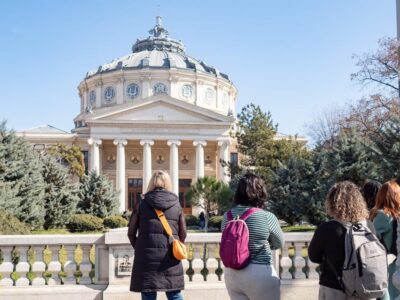
Bucharest: Small Group History, Art & Secrets Tour
Read our review →
2-Day Medieval Transylvania with Brasov,Sibiu and Sighisoara Tour from Bucharest
Read our review →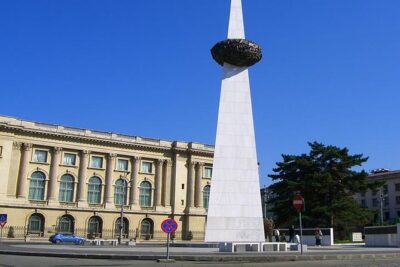
Browse the lists this tour appears in