
Review · ROME
Rome: Introduction to the Colosseum and Ancient City Tour
The best part of this Rome tour is the way it links the Colosseum to the wider ancient city. You get inside the arena with a guide, then walk through the Roman Forum and Palatine Hill, where temples, government buildings, palaces, and sweeping views bring the old city into focus. I like the clear two-part format: guided explanation first, free time afterward.
I also like the practical audio headsets and the choice of five languages. Guides including Alessandro Palma and Catherine have earned praise for precise explanations, humor, and careful answers. The main drawback is that the office or meeting area can be crowded, and you must bring official ID. Without it, entry cannot be guaranteed.
Key points at a glance
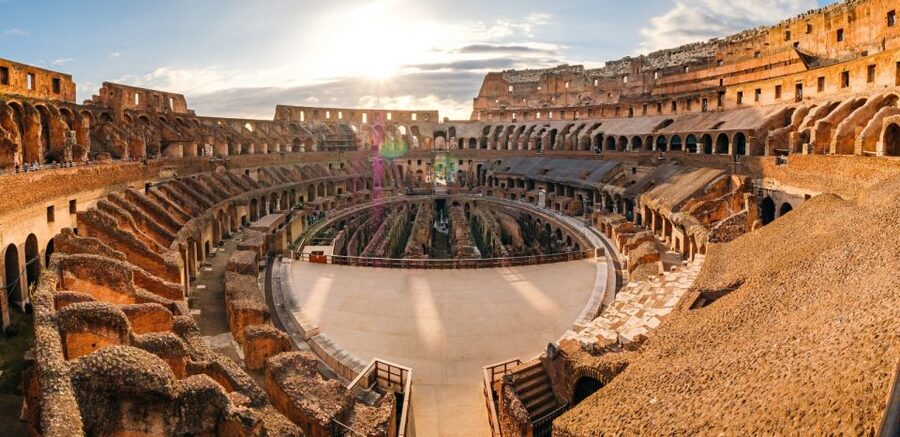
- See the Colosseum with a live guide: Learn why the Flavian emperors built it, how its entrances worked, and how games could run for up to 100 days.
- Walk through the heart of ancient Rome: Visit the Forum, once the city’s political, religious, social, and financial center.
- Stand on Rome’s founding hill: Palatine Hill holds layers from the 7th century BCE through the Imperial Age, Renaissance, and 20th century.
- Hear the stories behind the ruins: Myths, gladiators, emperors, engineering, and Roman power all have a place in the tour.
- Keep some time for your own pace: After the guided portion, you can look around the monuments without being tied to a constant lecture.
- Finish near Trajan’s Column: The famous victory monument gives the tour a strong final image of Roman authority.
Why this two-and-a-half-hour format works
Ancient Rome can feel like a giant pile of broken stones if you arrive without a plan. This tour gives you a clear route and the basic story first, then lets you look again with better eyes.
The advertised duration is 2.5 hours, though visits in July and August last two hours. That is enough time for a strong introduction, but not enough for every corner, inscription, and museum display in the archaeological area. I see that as a useful trade-off for a first visit. You get the major monuments without spending half a day on one guided walk.
The tour is offered in English, French, German, Italian, and Spanish. Radios and headsets help you hear the guide near busy streets, large ruins, and groups moving through the sites. The equipment matters here. The Colosseum and Forum are open, echoing places, and it is easy to lose a sentence while looking at a wall or column.
After the guided tour, you have time to enjoy the monuments at your own pace. That is especially useful at the Forum and Palatine Hill, where you may want to pause for a view, study a ruined building, or take photographs without stopping the whole group.
More Ancient History Tours in Italy
- Colosseum: Underground and Ancient Rome Tour
★ 4.7 · 12,691 reviews - Colosseum & Ancient Rome with Arena Floor Option I Max 6 People
★ 5.0 · 3,306 reviews - Rome: Colosseum, Ancient Rome Tour or AudioGuided Tour
★ 4.4 · 2,879 reviews
Entering the Colosseum and understanding its purpose
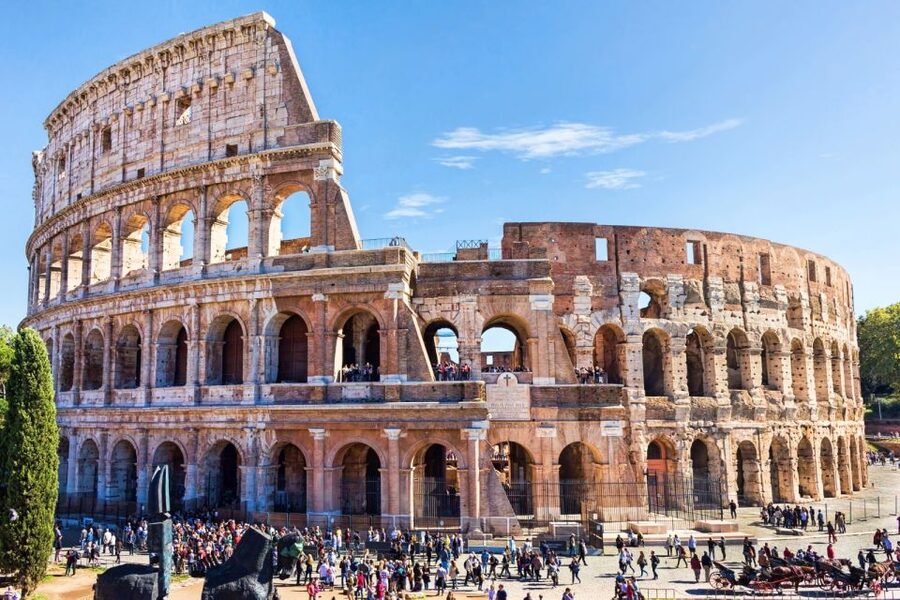
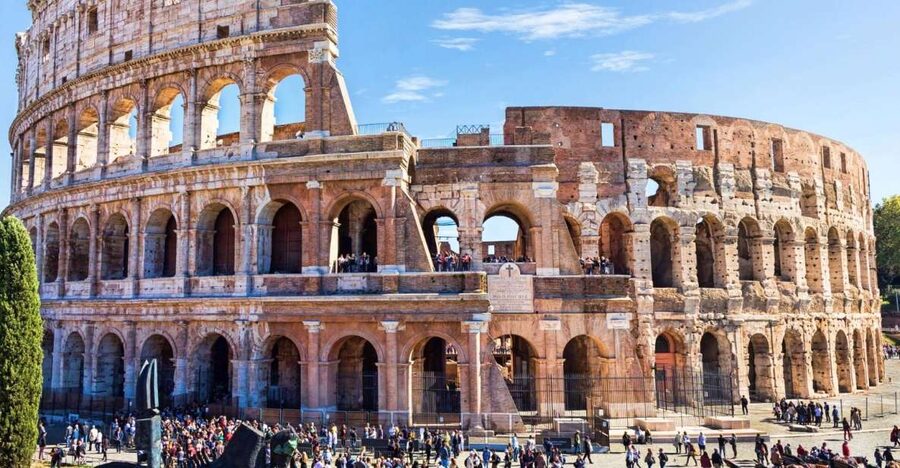
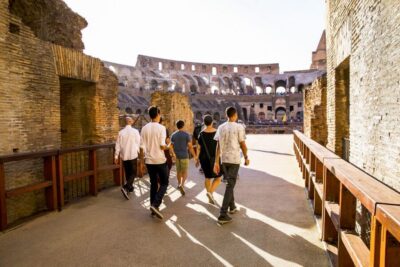
The Colosseum was designed on a huge scale. It had more than 80 entrances and could hold around 50,000 spectators. A guide can make those numbers useful by explaining how the building moved and managed such a large crowd, rather than leaving them as trivia.
The arena was built under the Flavian Dynasty for three main reasons. It gave something impressive to Roman citizens, helped the new dynasty gain public favor, and displayed Roman building skill. It was also a place for public entertainment, including gladiatorial contests and other games.
The political point matters. The Colosseum was not only a sports venue. It showed that the emperors could organize labor, materials, crowds, and grand public events on a scale few people in the ancient world could match. Your guide connects the stone structure to the power system behind it.
Festivals and games could last as long as 100 days. That detail gives you a better sense of the building’s role in Roman life. The arena was not a quiet monument in its own time. It was a major public stage, filled with noise, spectacle, and carefully managed ceremony.
Expect stories about gladiators and the people who watched them. The guide also explains the engineering, which is one of the strongest reasons to choose a guided visit. On your own, you can admire the arches and massive walls. With an explanation, you begin to see how entrances, circulation, and the building’s design supported the crowds.
The Colosseum is also the busiest part of the visit. You need to arrive at the correct meeting point for the option you booked, and a crowded tour office can make that harder than expected. Give yourself time to identify the right group, especially if several Crown Tours groups gather nearby.
The Roman Forum, where daily Roman life took place
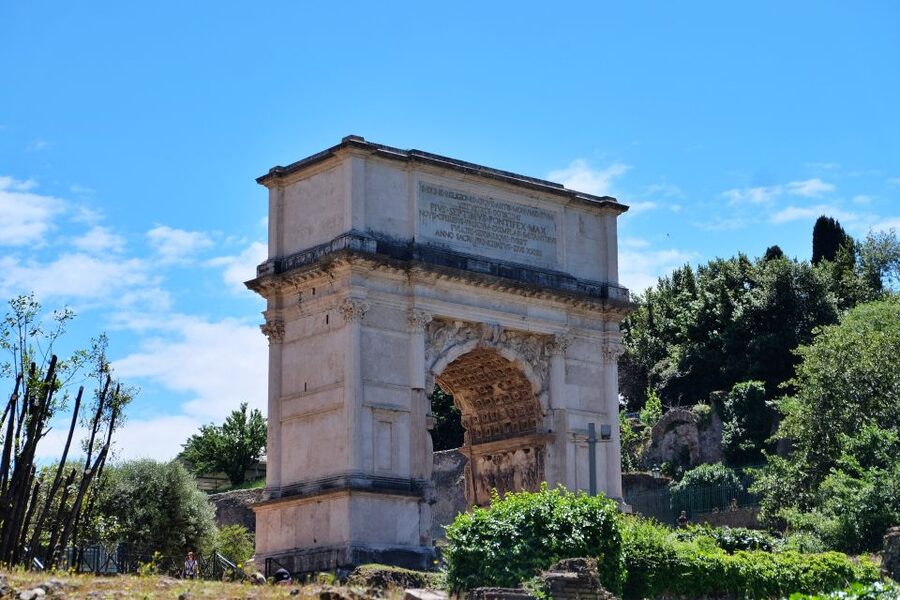
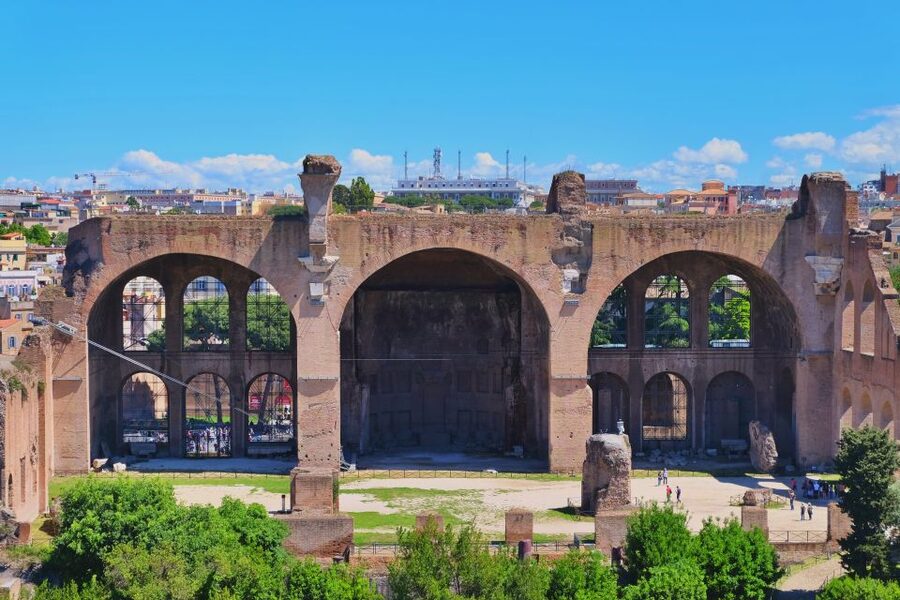
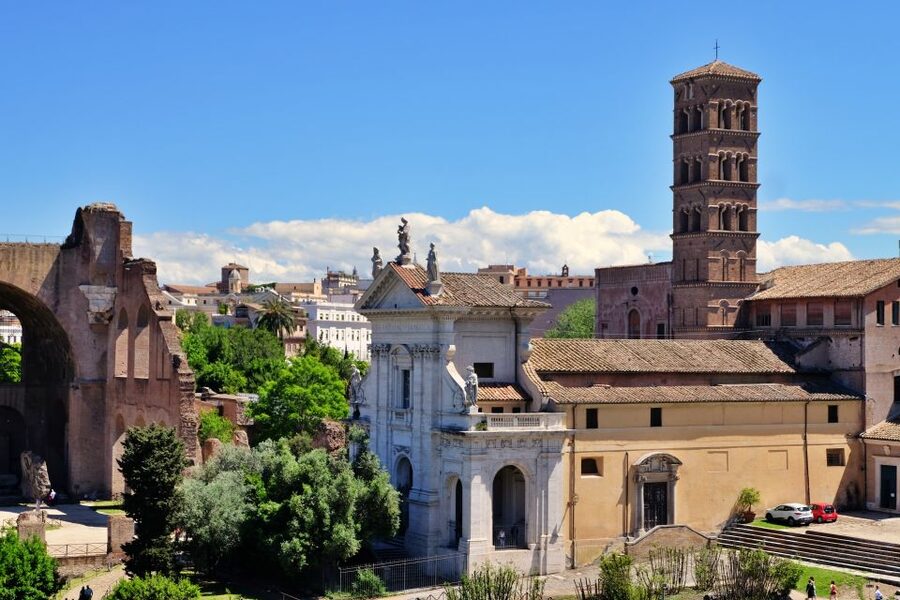
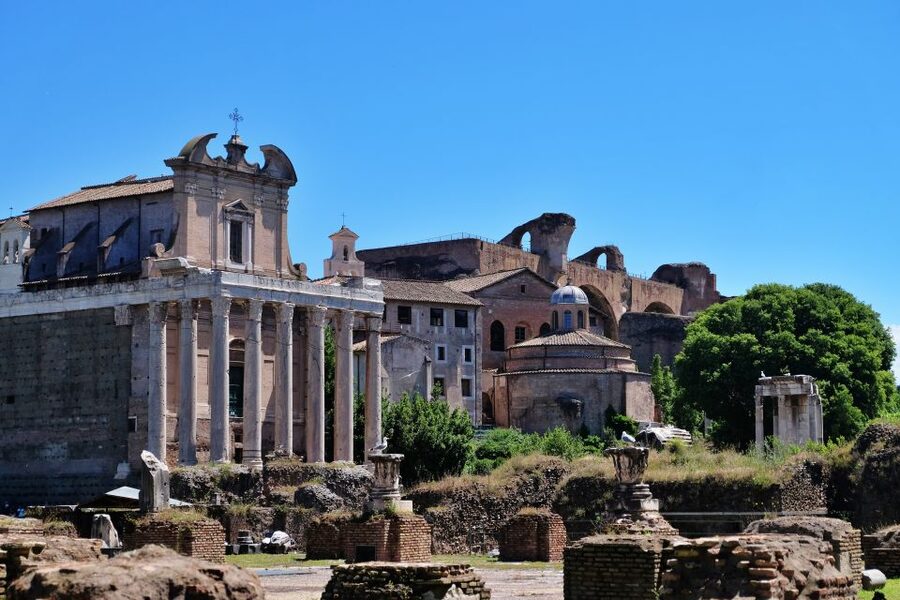
From the Colosseum, the tour leads into the Roman Forum. This was the political, religious, social, and financial center of the Roman Empire. It is one of the places where a guide adds real value because the ruins are scattered, incomplete, and easy to misunderstand.
The Forum was not reserved for emperors and senators. All levels of Roman society passed through it. Wealthy politicians, merchants, workers, religious officials, and people without homes could be found in the same public center, each using it for different reasons.
That broad mix gives the Forum a more human scale. You are not just looking at the remains of government buildings. You are walking through the place where business was conducted, religious duties were performed, political alliances were formed, and ordinary people tried to get through the day.
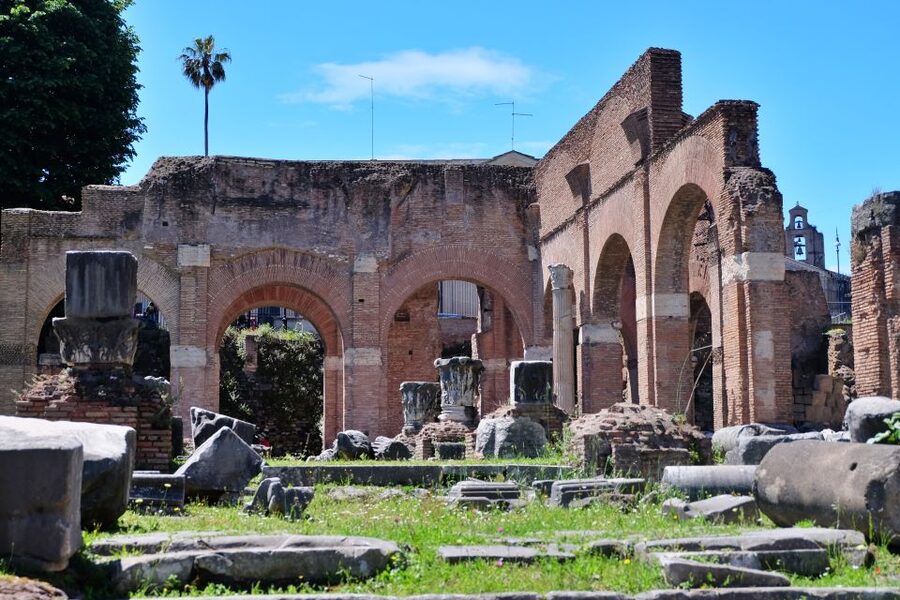
The surviving structures appear in fragments, but those fragments can still show how tightly Roman public life was packed together. A guide helps you connect the remains to the larger functions of the Forum. The explanations also give context for the myths and legends that grew around ancient Rome.
The Forum can be visually confusing. Foundations overlap, columns are incomplete, and later construction changed the site. I recommend listening closely during the guided part, then using your free time to return to the areas that caught your attention. The self-guided time works best when you already know what you are looking at.
Palatine Hill and Rome’s layers of power
Palatine Hill is more than a high point beside the Colosseum. It is described as the foundation point of Rome, and the site holds evidence from several very different periods.
The earliest remains reach back to the 7th century BCE, during the early kingdom of Rome. Later layers belong to the Roman Republic, followed by the grand palaces of the Imperial Age. The hill lets you see how Rome repeatedly built over its own past while expanding its power.
The remains of Emperor Domitian’s palace are among the most striking parts of the hill. They help explain the distance between everyday Roman life and the private world of imperial rule. On the Forum below, public politics played out. On the hill above, emperors created residences suited to their rank.
The site also contains traces from later periods. The Farnese family left its mark during the Renaissance, and Mussolini’s presence belongs to the 20th century. That range is one of Palatine Hill’s best features. You are not seeing one frozen period of Rome. You are seeing many eras layered in one place.
You will also get panoramic views toward the Colosseum. Bring your camera, but do not rush past the view. It helps you understand the relationship between the arena, the Forum, and the hill. From above, the ancient center feels less like separate attractions and more like one connected urban area.
The hill does require walking through an archaeological site, and surfaces may be uneven. The provided information does not specify a detailed route or accessibility conditions, so anyone with mobility concerns should check before booking. Electric wheelchairs are not permitted.
More Ancient History Tours in Rome
- Colosseum Underground & Ancient Rome Guided Tour
★ 4.5 · 2,590 reviews - Pantheon Elite Guided Tour – Rome’s Iconic Ancient Temple
★ 5.0 · 1,447 reviews - Ancient Rome: Colosseum Underground Group Tour
★ 4.5 · 1,059 reviews - Colosseum Express Guided Tour and Ancient Rome Admission Included
★ 4.0 · 1,008 reviews
Myths, gladiators, and the guide’s role
A good ancient Rome tour has to balance fact with story. Too many dates can flatten the experience. Too many legends can blur what is known. This tour promises both the myths and legends of Rome and explanations of the monuments themselves.
The guide’s personality appears to matter a great deal here. Alessandro Palma is noted for detailed explanations, curiosity, humor, and attention to the people in his group. Catherine led a French-language group of eight and used precise French, images, and clear explanations. Those details suggest that the quality of your particular guide can shape the visit.
You should expect a live guide rather than a recorded commentary. That gives you a chance to ask questions and request clarification. It also means the experience may vary somewhat by language, group, and guide. Crown Tours offers the tour in five languages, so confirm your selected language and meeting instructions carefully.
Headsets are included. Use them, even if you normally avoid tour equipment. In the Colosseum and Forum, you will often want to look away from the guide while still following the explanation. The radio system lets you do both.
What the $58 price gets you
At $58 per person, this is not the cheapest way to see the Colosseum. But the price includes the Colosseum entrance, the Roman Forum and Palatine Hill visit, a live guide, headsets, and reservation arrangements.
The standard adult archaeological entry fee is €16, plus a €2 reservation fee. Children under 18 enter free to the archaeological sites, though the tour also includes guide services, audio devices, reservations, and other tour arrangements. That distinction matters when you compare this with simply obtaining an entry ticket.
You are paying mainly for structure and explanation. If you already know ancient Roman history and prefer to move alone, a self-guided visit may offer better value. If you want the ruins explained in real time, especially on a first visit, the additional cost can make sense.
The tour’s strongest value comes from the connection between the Colosseum and the Forum. Buying separate access is not the same as understanding how the arena, political center, and imperial hill fit together. Here, the route gives you one continuous story.
The non-refundable policy makes timing important. Do not book casually if your Rome plans are uncertain. You also need to submit the full names of all participants. Incomplete booking information may prevent entry.
Practical details before you go
Bring a passport or ID card for every participant, including children. This is mandatory, not a suggestion. The name details on the booking also need to be complete.
Do not bring a suitcase or oversize luggage. There is no suitcase storage or compartment available. Leave sharp objects, weapons, food, drinks, alcohol, drugs, aerosols, glass objects, and pets behind. Smoking is not allowed, and unaccompanied minors cannot join.
The meeting point may change based on the option you choose. Read the booking information closely and allow extra time to find the correct Crown Tours group. One practical tip is to look for the tour office before the start time, since a crowded office can make the right group difficult to identify.
Wear sensible walking shoes and carry only what you need. The official restrictions are strict, and traveling light will make the entrance process easier. Since the route includes the Colosseum, Forum, and Palatine Hill, you will want your attention on the ruins, not on managing a large bag.
Who should book this Colosseum tour?
I would choose this for a first visit to Rome, especially if you want the major ancient sites covered in one organized morning or afternoon. The guide gives you a foundation, while the later free time lets you slow down and take photographs.
It also suits couples, families with older children, and visitors who want a live explanation in their own language. The five-language choice is a real advantage, and the headsets should help families stay together while still hearing the guide.
History fans may appreciate the range of periods on Palatine Hill, from the early kingdom through the emperors, Renaissance, and modern era. The tour is not limited to gladiator stories. It also covers engineering, public life, political power, and the changing use of the hill.
I would think twice if you dislike fixed schedules, prefer total independence, or need a highly accessible route. The tour is also a poor match if you cannot bring ID or might need to cancel. In July and August, the shorter two-hour format gives you less time on site.
Should you book it?
Book this tour if you want a clear introduction to the Colosseum, Forum, and Palatine Hill without trying to decode the ruins alone. The best reasons are the connected route, live explanations, headset system, and time to continue at your own pace.
The main cautions are the non-refundable booking, strict ID requirement, possible confusion at the meeting office, and limits on luggage and mobility equipment. If those conditions work for you, $58 is a fair price for a guided introduction to ancient Rome, particularly when you value context as much as entry.
FAQ
How long does the tour last?
The listed duration is 2.5 hours. In July and August, the visit lasts two hours.
Which sites are included?
The tour includes entrance to the Colosseum, plus visits to Palatine Hill and the Roman Forum. It ends at Trajan’s Column.
What languages are available?
Live guides are available in English, French, German, Italian, and Spanish.
Is the Colosseum ticket included?
Yes. Entrance to the Colosseum is included, along with the Palatine Hill and Roman Forum visit.
Do I need to bring identification?
Yes. You must bring a passport or ID card, including for children. Entry cannot be guaranteed without identification.
Can I bring luggage?
No. Oversize luggage is not allowed, and there is no suitcase compartment available.
Can I explore on my own?
Yes. After the guided portion, you can enjoy the monuments at your own pace.
More Ancient Rome and Colosseum Tours
- Rome: Colosseum with Arena, Roman Forum and Palatine Guided Tour
★ 4.0 · 5,598 reviews - Colosseum with Arena, Roman Forum and Palatine Hill Guided Tour
★ 4.5 · 3,526 reviews - Rome: Colosseum Arena, Roman Forum & Palatine Hill Tour
★ 4.5 · 1,874 reviews - Colosseum, Roman Forum & Palatine Hill Guided Tour
★ 4.5 · 1,568 reviews
Just added around Rome
- Rome: Colosseum and Ancient Rome Guided Walking Tour★ 4.5 · 95 reviews
- Secrets of Rome: Historical True Crime Small Group Tour★ 4.9 · 85 reviews
- Rome: Rome at Night Evening Historical Walking Tour★ 4.9 · 24 reviews
- Rome Secrets: Dark History & Tasty Bites Tour★ 5.0 · 37 reviews
- Rome Pantheon Semi-Private Guided Tour with an Archaeologist★ 5.0 · 60 reviews
- Rome: Ostia Antica Archaeological Park Ticket & Audio App★ 4.6 · 146 reviews
- Rome: Food Tour of the Historic Center with Rooftop Spritz★ 4.7 · 43 reviews
- Rome: Guided Tour of Colosseum and Ancient Rome★ 4.9 · 74 reviews
Rome History Tours, compared.
Colosseum: Underground and Ancient Rome Tour
Read our review →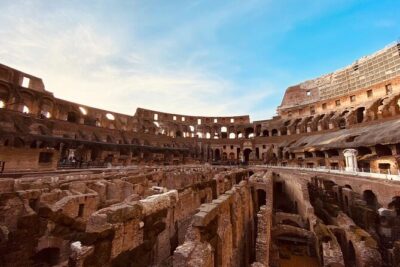
Rome: Colosseum with Arena, Roman Forum and Palatine Guided Tour
Read our review →
Colosseum with Arena, Roman Forum and Palatine Hill Guided Tour
Read our review →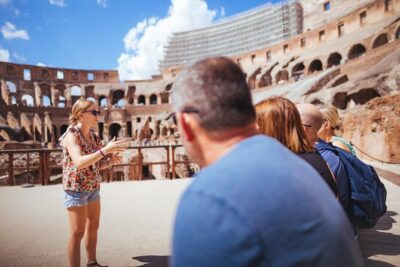
Colosseum & Ancient Rome with Arena Floor Option I Max 6 People
Read our review →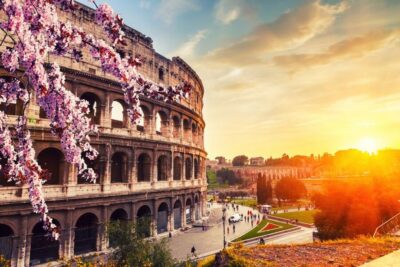
Rome: Colosseum, Ancient Rome Tour or AudioGuided Tour
Read our review →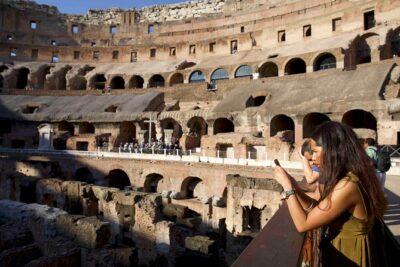
Colosseum Underground & Ancient Rome Guided Tour
Read our review →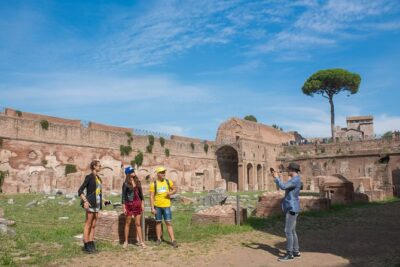
Rome: Colosseum Arena, Roman Forum & Palatine Hill Tour
Read our review →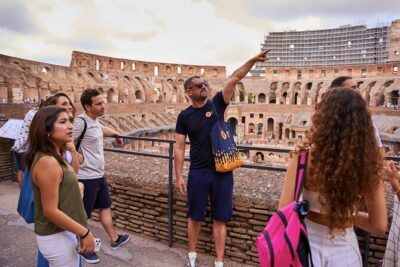
Colosseum, Roman Forum & Palatine Hill Guided Tour
Read our review →Browse the lists this tour appears in