
Review · NEW ZEALAND
Auckland: Inner-City Glowworm Experience in Ancient Volcano
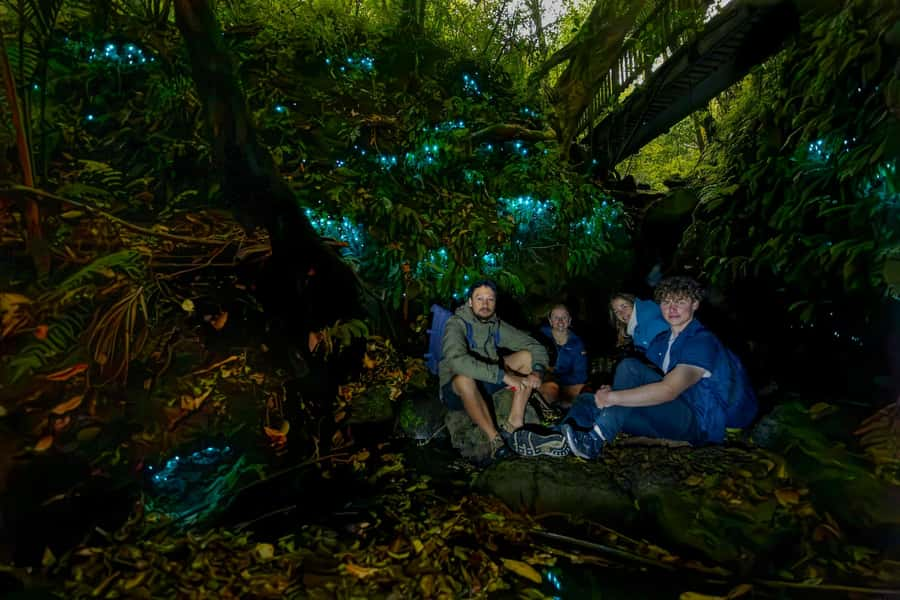
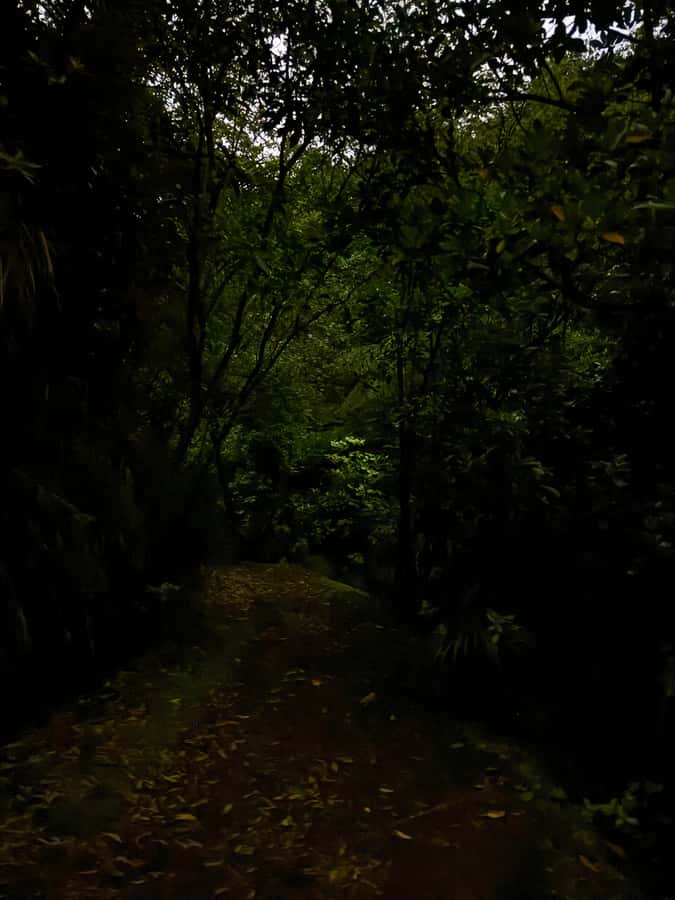
Auckland’s glowworms are not tucked away on a long day trip. They shine beside a creek in Pukekawa, a 100,000-year-old volcanic site inside Auckland Domain. For $35, you walk roughly 1.3 kilometers through dark bush, past a waterfall and native nikau palms, then stop close to the tiny lights.
I like the central location, especially if you are staying near Auckland’s CBD, and I like the open, natural setting. You are not behind glass or on a fixed cave walkway, and you can take photos without flash. Guides such as Marius, Jonti, Millie, and Caleb add useful facts about glowworm life and the Domain.
The tradeoff is simple: this is a short city nature walk, not Waitomo Cave. Glowworm numbers can vary, the path is dark and uneven, and you will climb about 30 steps over a gentle but sometimes slippery route.
Key points to know before you book
- Glowworms in the city: You stay inside Auckland Domain, close to the center and the War Memorial.
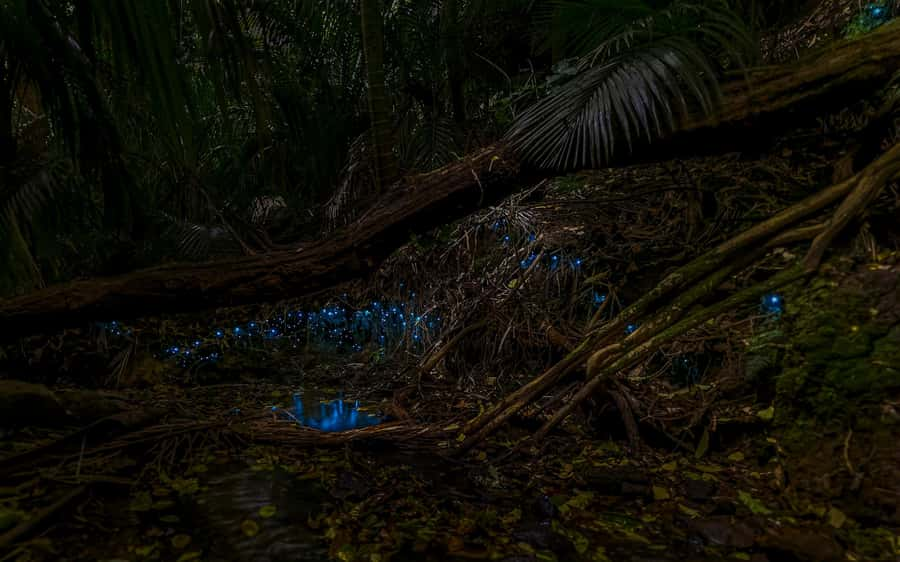
- Natural viewing: The glowworms live beside a creek, under a bridge, and near a waterfall rather than in a formal attraction.
- One-hour format: This is a useful evening activity when you do not have time for a full-day trip to Waitomo.
- Small-group feel: Private and small-group options are available, making it easier to ask questions and get close to the habitat.
- Uneven walking: Expect about 30 steps, gravel, tree roots, a roughly 5 percent gradient, and possible mud or water.
- Modest expectations: You may see many glowworms, but the display is usually less extensive than in a dedicated cave system.
Why Auckland Domain is an unusual glowworm setting
The first surprise is the setting. Pukekawa is an ancient Pleistocene-era volcano, and Auckland Domain is the city’s oldest park. By day, it is known as a major green space near the Auckland War Memorial Museum. At night, its bush tracks and streams become a much quieter world.
That contrast gives the tour its appeal. You can spend the day in central Auckland, eat dinner nearby, and still see native nocturnal life without arranging a long transfer into the countryside. One visitor reached the meeting point by bus and walked about five minutes from the stop. The central location also makes a rideshare practical, and parking is available near the cafe.
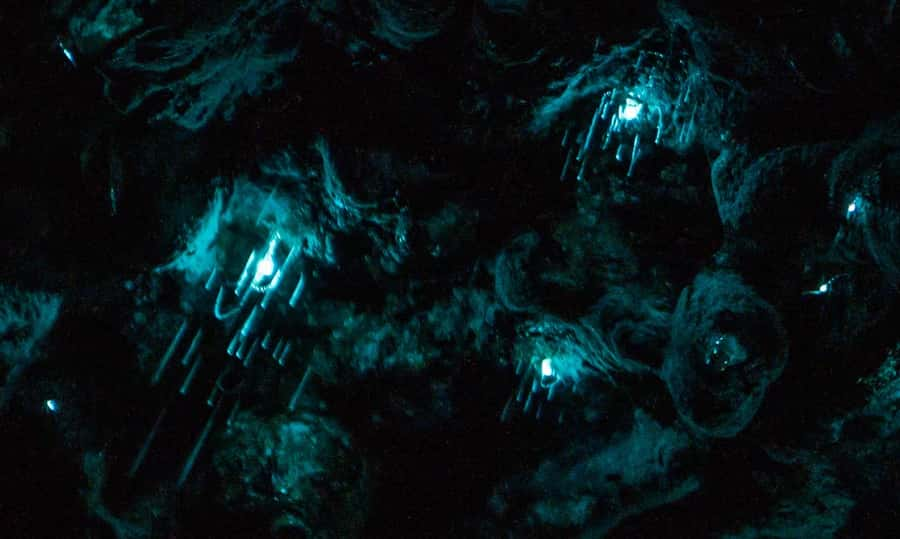
The glowworms here are New Zealand glowworms, commonly known as pūpū whakaruruhau in Māori. They are not worms in the usual sense. They are the larval stage of a fungus gnat, and their blue-green light helps attract small insects toward sticky silk threads.
Your guide explains the life cycle, feeding habits, and habitat. That extra context matters because the lights are small. Once you understand what you are seeing, the creek bank becomes more than a dark patch dotted with stars.
More Ancient History Tours in the world:
- Pompeii: Entry Ticket and Guided Tour with an Archaeologist
★ 4.8 · 19,459 reviews - Athens: Acropolis & up to 5 Archaeological Sites Combo Pass
★ 4.2 · 13,904 reviews - Colosseum: Underground and Ancient Rome Tour
★ 4.7 · 12,691 reviews
Starting at Wintergarden Cafe
Meet outside Wintergarden Cafe inside Auckland Domain. The cafe itself may be closed during the evening, so do not expect to buy food or drinks there at the start. Use the nearby park roads, restrooms, and car park as your orientation points.
The meeting area is close to the museum and its illuminated columns, which can help you find your way after dark. If you walk from the CBD, allow about 30 minutes, depending on your starting point. A bus, car, or rideshare may be easier if you are arriving after sunset.
The tour lasts one hour, so punctuality matters. There is no included transportation, and the guide meets you at the Domain rather than collecting you from a hotel.
Following the dark path through Pukekawa
Once the walk begins, you leave the open park area and follow a darker path through bush. The route covers about 1.3 kilometers and includes gravel, undulating ground, tree roots, and around 30 steps up and down.
The path is not lit with permanent lights. Guides carry their own lights, and some visitors have used phone lights to help with footing. That darkness is part of the reason the glowworms show well, but it also means you should watch each step instead of staring at the bush.
The route has only about a 5 percent gradient, yet the roots and steps make it more active than a flat city stroll. Wear shoes that grip well and that you do not mind getting wet or muddy. The walk can be easy for a fit person who is comfortable outdoors, but it is not suitable for a wheelchair or for someone who needs a smooth, well-lit path.
The setting includes native nikau palms, a creek, and a small waterfall. The waterfall is one of the most distinctive parts of the walk because it gives you a natural focal point before the glowworms take over. At night, water, rock, and tree cover make the park feel far removed from downtown, even though the city is close.
Finding the glowworms beside the creek
The guide leads you toward the glowworm habitat, often around the creek and beneath a bridge. You may climb down closer to the bank or adjust your position for a better view. This is the point where the tour feels more like a small outdoor expedition than a standard city attraction.
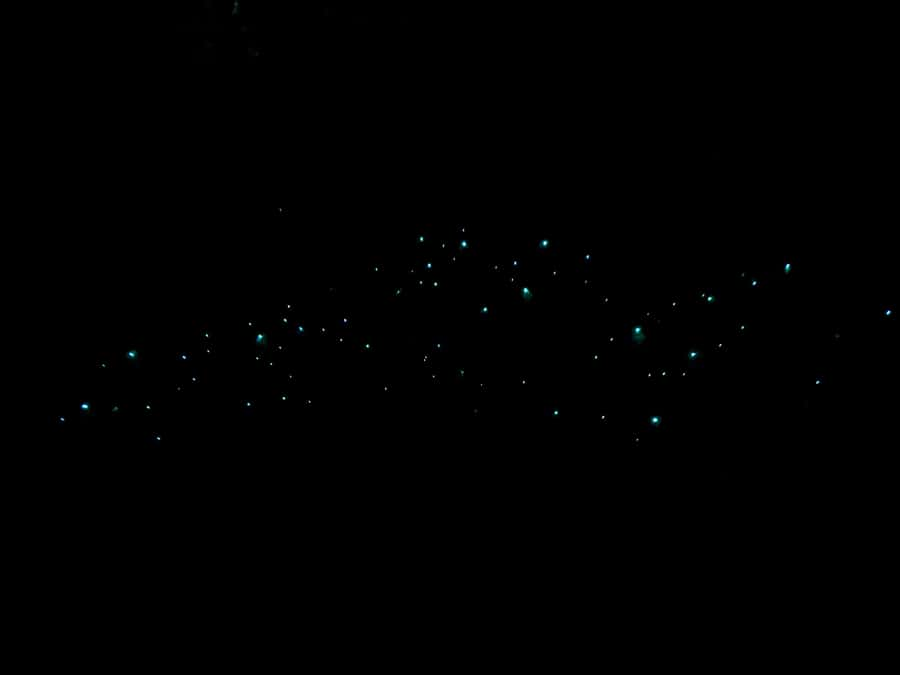
The glowworms hang in damp, sheltered places. Their lights appear as tiny blue-green points, like a low cluster of stars close to the ground. The display is not a large underground ceiling covered in lights. Instead, you are looking at individual creatures in a living habitat.
That difference is important when you choose between this tour and a cave trip. Waitomo offers a much bigger and more famous glowworm experience, but reaching it takes more time and money. This Auckland walk gives you a shorter, less commercial setting at a fraction of the effort.
Numbers can vary. One evening may produce a strong display, while another may feel sparse. A four-star assessment specifically noted that the glowworm count was a little disappointing, even though the guide and walk were enjoyable. Keep your expectations at small natural encounter, not glowing cave ceiling, and you are more likely to value what the tour offers.
More History Tours in the world:
- Prague: Medieval Dinner with Unlimited Drinks
★ 4.4 · 19,847 reviews - History and Hauntings of Salem Guided Walking Tour
★ 5.0 · 14,564 reviews - Pompeii: Small Group Tour with an Archaeologist
★ 4.8 · 12,264 reviews - Lisbon: History, Stories and Lifestyle Walking Tour
★ 4.8 · 10,902 reviews
What guides add to the one-hour walk
The guide is central to this experience. The route alone is not difficult to understand, but a guide helps you spot the glowworms, explains what you are looking at, and keeps the group moving safely through the dark.
Marius has been praised for balancing safety, natural details, and glowworm information. Jonti has led tours with humor and strong explanations about the creatures and the Domain. Millie, Caleb, and Bree have also guided groups, with particular attention to making the walk both informative and welcoming.
Guides may point out more than glowworms. One evening included an eel-like animal in the river, and another guide identified constellations overhead. These moments are not guaranteed, but they show why the tour is more than a quick stop at a viewing point.
The small-group format helps here. With fewer people, you can ask about the larval stage, feeding threads, or the volcanic park without holding up a large crowd. Private and small-group bookings are available if you want a more personal pace.
Photography without flash
You may take photographs, but flash is not allowed. This protects the dark conditions and avoids ruining the view for the group.
Glowworms are difficult subjects for a phone camera. You may capture the surrounding bush or a few points of light, but do not expect every image to match what your eyes see. A camera with better low-light ability may help, though the tour information does not promise special photography equipment or lighting.
The benefit is access. You can photograph the glowworms in their natural setting without barriers between you and the creek bank. Follow the guide’s instructions, keep your light pointed at the path, and avoid crowding the closest viewing spot.
At least one group found that people gathered near the lower bank and not everyone could see equally well. If that happens, ask the guide to rotate positions. Good communication matters more here than camera gear.
Price, timing, and overall value
At $35 per person, this is one of the easier glowworm experiences to fit into an Auckland stay. The price includes an experienced English-speaking guide, but not transportation. It is a strong value if you want a one-hour activity and do not want to give up a full day for Waitomo.
The price is less compelling if your main goal is the largest possible glowworm display. The natural population is smaller than in dedicated cave systems, and conditions can affect what you see. You are paying for access, location, interpretation, and convenience as much as for the lights themselves.
The one-hour length works well before or after dinner. It also suits a cruise stop or a short Auckland visit, provided you can reach the Domain at the selected start time. You can cancel up to 24 hours in advance for a full refund, and the reserve-now, pay-later option keeps the booking flexible.
Who should book this Auckland night walk
I would choose this tour if you are staying in central Auckland, enjoy short outdoor walks, or want a taste of New Zealand wildlife without a major excursion. Couples, families with older children, photographers, and nature-minded visitors can all find something worthwhile here.
It is also a good choice if your schedule is tight. You get glowworms, volcanic terrain, native bush, a creek, and a waterfall in one compact outing. The combination is unusual: few city activities take you from museum-adjacent parkland to a dark stream habitat within minutes.
I would be cautious if you have back or heart problems, limited fitness, mobility issues, claustrophobia, or a medical condition affected by uneven ground. The tour is not suitable for wheelchair users, people with visual impairments, or people over 75 according to the activity guidance.
The path is outdoors rather than inside a tight cave, so claustrophobia is not the obvious concern. Still, it is dark, and the route can feel confined beside the creek. If darkness or unstable footing worries you, this may not be the best evening activity.
Practical tips for a smoother visit
Wear comfortable walking shoes with good grip. Shoes that can handle mud or wet ground are the safest choice, especially near the stream and waterfall.
Bring water and a camera, but leave the flash switched off. Comfortable clothing is useful because you will be outdoors at night and moving over uneven ground.
Arrive with enough time to find Wintergarden Cafe. The cafe may be closed, so use the nearby car park, restrooms, museum columns, or park roads as landmarks rather than looking for an open cafe counter.
If you are walking from the CBD, remember that the park can feel quiet and dark after sunset. Stay on the lit road while approaching the meeting point, and follow the guide’s lights once the tour begins.
Should you book the Pukekawa glowworm experience?
Book it if you want convenience and atmosphere more than a giant glowworm spectacle. The tour brings you close to native glowworms in a surprising city setting, and the waterfall, palms, creek, and volcanic ground make the short walk feel worthwhile.
Skip it if you expect Waitomo-scale numbers, a fully lit path, or an easy paved stroll. This is a dark, natural route with steps and roots. For the right visitor, $35 buys a memorable hour and a rare chance to see glowworms without leaving Auckland.
FAQ
Where does the glowworm tour meet?
Meet outside Wintergarden Cafe inside Auckland Domain.
How long does the experience last?
The guided experience lasts one hour.
How far do you walk?
The route is approximately 1.3 kilometers.
Is transportation included?
No. Transportation is not included, so you must reach Auckland Domain independently.
Is the tour conducted in English?
Yes. The live guide speaks English.
Can I take photographs?
Yes, photography is allowed, but flash photography is not permitted.
Is the route suitable for wheelchairs?
No. The route includes about 30 steps, gravel, tree roots, uneven ground, and a roughly 5 percent gradient.
What should I wear?
Wear comfortable walking shoes, ideally shoes you do not mind getting wet or muddy, along with comfortable clothing.
Will I see as many glowworms as at Waitomo?
The glowworm population here is smaller than in dedicated cave systems, so the display may not be as extensive. The benefit is viewing glowworms in an open natural setting inside Auckland.
Can I cancel the booking?
Yes. You can cancel up to 24 hours in advance for a full refund.
Just added around the world
- Scenic Train ride to historical cities of Morretes and Antonina★ 4.0 · 188 reviews
- 6-Day Cultural Tour to Machu Picchu★ 5.0 · 76 reviews
- The Curacao’s Colorful History Walking Tour★ 5.0 · 55 reviews
- Discover Scuba Diving Amathounta’s Ancient Port★ 5.0 · 30 reviews
- Jewish Heritage of Curacao★ 4.5 · 68 reviews
- Olous – Guided Snorkelling Excursion to Discover Olous Sunken Ancient City★ 4.5 · 31 reviews
- Night Walking Tour of Medieval Cuenca★ 5.0 · 64 reviews
- WWII – The Battle of Crete Day Tour★ 5.0 · 103 reviews
New Zealand History Tours, compared.

Auckland: All Blacks Experience Guided Cultural Tour
Read our review →
All Blacks Experience: Interactive Guided Cultural Tour
Read our review →
Skip the Line:WWI & WWII Combo Exhibitions at the Omaka Aviation Heritage Centre
Read our review →
Evening Champagne Cruise on Historic 1935 Motor Yacht.
Read our review →
Blenheim: Omaka Aviation Heritage Centre Admission Ticket
Read our review →
Skip the Line: Dangerous Skies WWII Exhibition – Omaka Aviation Heritage Centre
Read our review →Browse the lists this tour appears in