Review · GUIDED
Tbilisi: Guided Walking Tour of Historic City
Tbilisi packs an unusual amount of history into a small walking area. In three hours, this tour links a mosque, synagogue, churches, a sulfur-bath district, a modern glass bridge, and the statue of the city’s founder. That mix is the real appeal: you get old Georgia and present-day Tbilisi in one walk.
I especially like the small group limit of 10, which makes it easier to ask questions and stop for photos. I also like the practical local advice, with guides such as Sally sharing food suggestions, shopping tips, tourist-scam warnings, and ideas for the rest of your Georgia trip.
The main consideration is the ground beneath your feet. This is a proper city walk, with stairs and uneven surfaces in places, so comfortable shoes matter. The tour is listed as wheelchair accessible, but the stated mobility warning is worth taking seriously.
Key points at a glance
- Five Religions Connecting Square: See several faith communities close together, a useful introduction to Tbilisi’s mixed cultural past.
- A strong first-day orientation: The route covers major sights while giving you practical advice about food, wine, shopping, and getting around.
- Sulfur baths and Leghvtakhevi Waterfall: Old Tbilisi is not only churches and monuments. Water, bathing, and narrow lanes shape the city’s character.
- Metekhi Church and King Gorgasali: Look across the Mtkvari River and connect the city’s setting with its founding legend.
- Modern contrasts: The Bridge of Peace, Rike Park, and Europe Square show how newer Tbilisi sits beside the old town.
- Good value at $14: For a three-hour guided introduction, the price is modest, especially if this is your first time in the capital.
Why this Old Tbilisi walk works so well

I like walking tours that help you understand a city before you start exploring it alone. This one gives you a map in your head: the old religious quarter, the river, the bridges, the bath district, and the lanes leading toward the Armenian church.
At $14 per person, the value is strong. You are paying for three hours with a local guide, not for transport or entry tickets to a major paid attraction. The benefit is the explanation: why the baths are here, how trade shaped the old town, what the statues mean, and where to eat afterward.
The experience is also small enough to feel personal. With no more than 10 participants and a minimum of two, you should have a fair chance to hear the guide and ask questions. Several guides are named in the booking information and guest feedback, including Sally and Nick. Sally receives especially warm praise for her energy, humor, food advice, and ability to adjust the walk to people’s interests. Nick is described as clear and well informed, with a strong grasp of the city’s past.
That said, guide style can affect the pace. One person may enjoy a great deal of historical detail, while another may find it a lot to absorb in a short time. If you prefer a light stroll with only a few facts, this may feel information-heavy. If you like asking questions and connecting places to events, it should suit you well.
More History Walking Tours in the world:
- History and Hauntings of Salem Guided Walking Tour
★ 5.0 · 14,564 reviews - Lisbon: History, Stories and Lifestyle Walking Tour
★ 4.8 · 10,902 reviews - Amsterdam: Life of Anne Frank and World War II Walking Tour
★ 4.8 · 10,467 reviews
Starting on Rustaveli Avenue
The meeting point is in front of the Magti Office at 20 Shota Rustaveli Avenue. Arrive about 10 minutes early. That gives you time to find the office and avoid starting the walk in a hurry.
The route then heads toward Old Tbilisi. Since the tour covers a lot of ground, wear shoes you would happily use on stone paving and stairs. Bring water, and dress for the forecast because the walk runs in rain or sunshine.
The exact route includes several photo and commentary stops, but not every stop is named in the supplied schedule. Think of the listed points as a guided sequence rather than a rigid museum itinerary. The guide may pause at overlooked corners or add a short stop when a question or local story makes it worthwhile.
Meidan Bazaar and the old trading quarter

Meidan Bazaar is an early anchor for the walk. This area recalls Tbilisi’s role on trade routes linking different parts of the region. The old bazaar was once a center for merchants and daily commerce, while the present-day area gives you a chance to see how the old town functions as a visitor district.
Your guide can help you read the setting rather than simply photograph it. Look for the compact scale of the lanes and the way shops and restaurants occupy old-town buildings. A short stop here is useful for orientation, though you should not expect a full shopping excursion or a long market visit.
The route also includes Jan Shardeni Street. This is one of the more active old-town streets, with restaurants, cafés, and places to pause. It can feel more polished and visitor-focused than the quieter lanes, so I would use the stop to compare the public face of Old Tbilisi with the less-traveled streets later in the walk.
Five religions in one city quarter
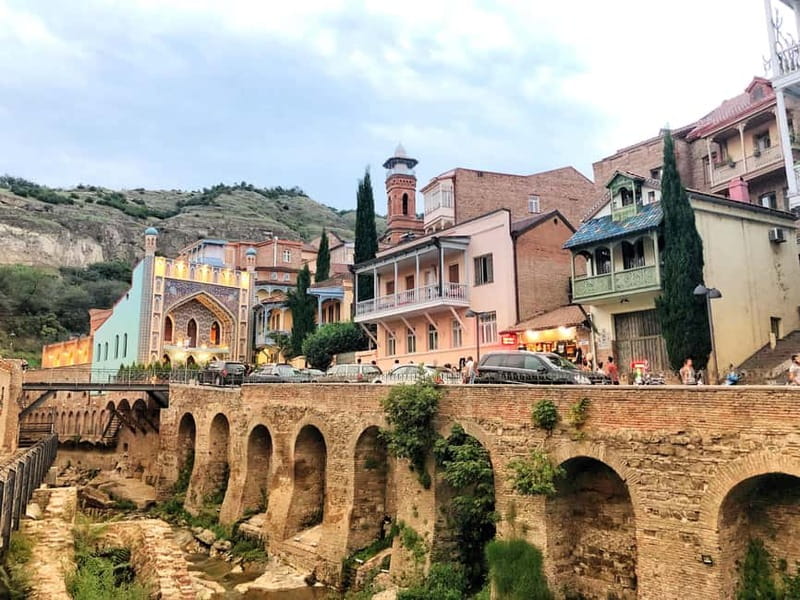
One of the most meaningful early stops is the Five Religions Connecting Square. The point is not simply to collect another photograph. Nearby religious buildings represent the close presence of different communities, including churches, a mosque, and a synagogue.
For you, this is a useful way to understand Tbilisi’s identity. The city has long been shaped by different peoples, faiths, languages, and empires. Seeing these places in relation to one another makes that idea concrete.
The route may include a church interior if conditions and timing allow, but interior access is not guaranteed in the supplied details. Dress respectfully and follow the guide’s instructions. Religious buildings are active places of worship, not just sightseeing stops.
More Guided Tours in the world:
- Pompeii: Entry Ticket and Guided Tour with an Archaeologist
★ 4.8 · 19,459 reviews - Edinburgh: Edinburgh Castle Guided History Tour with Tickets
★ 4.8 · 9,933 reviews - Berlin: Third Reich & Cold War Guided Walking Tour
★ 4.9 · 8,378 reviews - Historic Charleston Guided Sightseeing Walking Tour
★ 5.0 · 6,216 reviews
Jan Shardeni Street and the Tamada sculpture
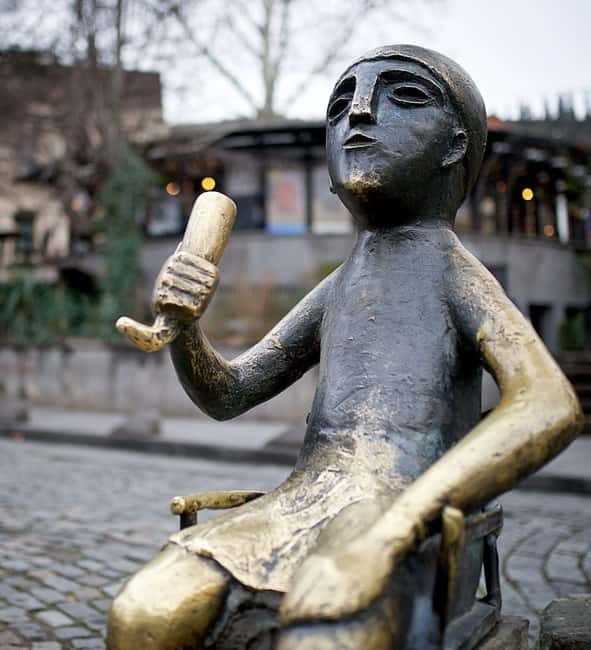
The Tamada sculpture celebrates the toastmaster, a central figure in Georgian hospitality and social life. Georgian meals are closely tied to speeches, shared wine, and the person who guides the sequence of toasts. The statue offers a quick visual introduction to that custom.
I like this stop because it connects culture to ordinary social behavior. You are not just hearing about an old king or a battle. You are getting a clue about how Georgians present food, friendship, and welcome.
The guide may also use this point to explain Georgian wine traditions and suggest places for a meal or tasting. Optional wine tasting or lunch can be arranged in advance, but it is not part of the standard $14 tour. Ask before booking if you want to add it.
The Bridge of Peace, Rike Park, and Europe Square
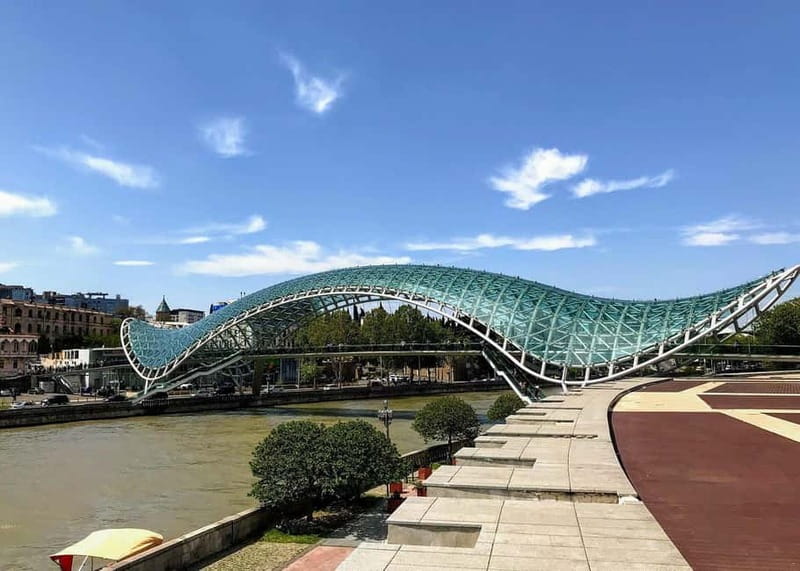
The Bridge of Peace creates one of the walk’s clearest visual contrasts. Its modern glass and steel design crosses the Mtkvari River beside the older streets of Tbilisi. From here, the old town does not look sealed in the past. It looks like a living city that keeps adding new layers.
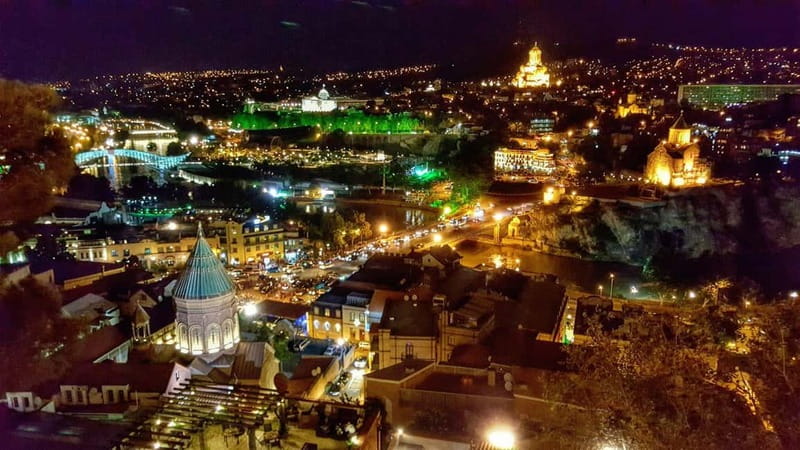
The route continues through Rike Park and Europe Square. These open spaces give your legs a brief change from narrow lanes and stone surfaces. They also provide better sightlines toward the river, Metekhi Church, and the surrounding hills.
This part can be busy and exposed, depending on the weather and time of day. It is mainly a sightseeing and photo section, with the guide adding context about the city’s newer public spaces. If you are looking for a long break, this is not a scheduled café stop, so plan to eat or rest after the tour.
The Berlin Wall Stone and a modern historical reminder
A small Berlin Wall Stone appears on the route as a monument linked to freedom. It is easy to pass without noticing, which is exactly why a guide adds value here.
The stop broadens the tour beyond medieval churches and Georgian legends. Tbilisi’s story also includes the political changes of the modern era and the way public monuments connect local places with wider European history.
Do not expect a large memorial complex. This is a brief stop with symbolic weight, best understood through the guide’s explanation rather than through size or spectacle.
Metekhi Church and King Gorgasali
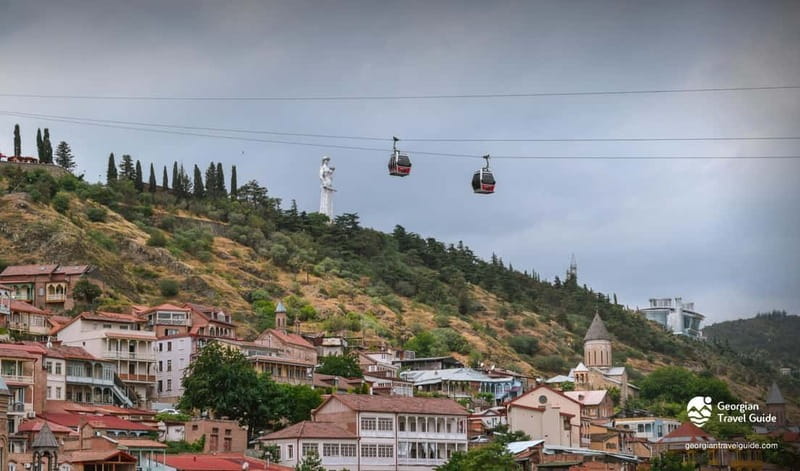
Metekhi Church is one of the walk’s key landmarks. Set above the Mtkvari River, it offers a strong view and a sense of how Tbilisi grew around steep ground, water, and defensive positions.
Nearby, the statue of King Vakhtang Gorgasali recalls the traditional story of Tbilisi’s founding. He is closely linked with the city’s origin, and the sulfur springs play an important part in the legend.
This is a good place to slow down. You can look across the river, take photographs, and ask how legend and documented history fit together. The guide’s role matters here because the setting alone cannot explain why this church and statue are so important.
The approach may involve steps or uneven paving. If you have limited mobility, tell the operator before booking and ask for a clear description of the route. The activity is marked wheelchair accessible, but the warning about stairs and rough surfaces should not be ignored.
Abanotubani and the sulfur baths

Abanotubani is the district most closely associated with Tbilisi’s sulfur springs. Its domed brick bathhouses are among the city’s most distinctive sights, and the warm mineral waters help explain the city’s name and early appeal.
You will see the bath district from the outside during the standard walk. This is not a bathing session, and the entry price does not include a private room or treatment. Still, the stop gives you useful context if you plan to visit a bath later.
I would ask the guide for practical advice about choosing a bath and fitting it into your schedule. The tour specifically includes recommendations for local food, wine, and activities, so this is a sensible time to ask about what to do after the walk.
The area can be slippery or crowded, and the paving is not always smooth. Keep your camera secure, stay with the group, and leave enough time for the guide’s explanation instead of rushing from one dome to the next.
Love Bridge and Leghvtakhevi Waterfall
From Abanotubani, the walk reaches the Bridge of Love and Leghvtakhevi Waterfall. This is one of the more surprising sections because a narrow natural gorge and waterfall sit close to the old city streets.
The waterfall gives the route a change of mood. You have moved from religious buildings, statues, and river views to water, rock, and a tighter path. It is a good photo stop, but the ground can be uneven, so take your time.
The Bridge of Love is a short landmark rather than a major attraction that needs a long visit. Its value comes from the setting and the way the route shows how much variety fits into Old Tbilisi. You can see the waterfall, the bath district, and historic streets within a compact area.
Samghebro Street and the Armenian church
The final section moves toward Samghebro Street, a quieter route where the guide can point out details that are easy to miss alone. The street is described as less traveled, with stories in its walls and buildings.
The walk finishes at 1 Samghebro Street near the historic Armenian church. This church adds another layer to Tbilisi’s religious and cultural story. It is a fitting final stop because the tour begins by showing several faiths close together and ends with another reminder of the city’s Armenian heritage.
The finish is practical. You are left in the old town rather than returned to the starting point, so you can continue sightseeing, find lunch, or follow the guide’s recommendations. Ask for directions before separating if you are still learning the city layout.
The guides and the style of the walk
The strongest part of this activity is the guide’s personal input. Sally is repeatedly praised for a warm, energetic style, clear explanations, patience with questions, and useful advice on food and things to do in Tbilisi. She has also adjusted parts of the walk to individual interests, including extra church visits and a quick wine tasting when possible.
Nick is also named as a guide and is described as good at explaining the city’s history. The experience may therefore vary slightly in tone depending on who leads your group, but the format remains the same: a local-led walk with stories, landmarks, and time for questions.
The pace is generally suited to people who want to stop for photos and conversation rather than race between sights. Families can also find it workable. One guide kept children aged 11 and 13 engaged by mixing historical information with stories and practical observations.
If English is not your first language, the tour is conducted in English and Russian. One person found the guide’s English easy to understand, but communication can naturally vary by guide and group. Other languages may be possible with advance notice.
Is $14 a good deal in Tbilisi?
For $14, I consider this a very good introduction to the capital. You cover major landmarks, get local context, and receive advice that can save time during the rest of your stay. The small group is another advantage because a private tour would normally cost far more.
The price does not include lunch, wine tasting, bath entry, or transport. That keeps the base price low, but you should budget separately if you want to add those experiences.
You can cancel up to 24 hours before the start for a full refund, and the reserve-now, pay-later option helps if your Georgia plans are still changing. Check the available start times when booking because the duration is fixed at three hours, but the start time can vary.
Who should book this walk?
I would book it early in a Tbilisi stay, especially if you have only one or two days in the city. It gives you a useful mental map and helps you decide where to return for food, wine, baths, churches, or museums.
It suits first-time visitors, history fans, culture seekers, families with older children, and anyone who wants local advice instead of only taking photographs. It is also useful for people who have already seen some sights alone but want the stories behind them.
I would hesitate if you need a fully flat route, dislike frequent explanations, or want a slow café-and-shopping stroll. The ground can be uneven, some sections include stairs, and the tour covers a lot in three hours.
Should you book it?
Book this tour if you want a low-cost, well-rounded introduction to Old Tbilisi with a local voice. The best reason to go is not any single monument. It is the way the walk connects faiths, trade, legends, bath culture, modern architecture, and everyday Georgian hospitality.
Arrive early, wear reliable shoes, bring water, and ask the guide for food and bath advice. If possible, take this walk near the start of your visit, when Sally, Nick, or another local guide can help you make better choices for the days that follow.
FAQ
How long does the Tbilisi walking tour last?
The tour lasts three hours.
How much does the tour cost?
The listed price is $14 per person.
Where does the tour start?
The meeting point is in front of the Magti Office at 20 Shota Rustaveli Avenue.
Where does the tour finish?
The walk finishes at 1 Samghebro Street.
Which languages are available?
The tour is conducted in English and Russian. Other languages may be available with advance notice.
What landmarks are included?
The route includes the Five Religions Connecting Square, Meidan Bazaar, Jan Shardeni Street, the Tamada sculpture, the Bridge of Peace, Rike Park, Europe Square, Metekhi Church, Abanotubani, the Bridge of Love, Leghvtakhevi Waterfall, and the historic Armenian church.
Is the tour suitable for wheelchair users?
The activity is listed as wheelchair accessible, but some paths include stairs and uneven surfaces. It is not recommended for people with limited mobility, so confirm the route details before booking.
What should I bring?
Bring water and wear comfortable shoes. Since the walk runs rain or shine, dress suitably for the weather.
Just added around the world
- 6-Day Cultural Tour to Machu Picchu★ 5.0 · 76 reviews
- Scenic Train ride to historical cities of Morretes and Antonina★ 4.0 · 188 reviews
- Jewish Heritage of Curacao★ 4.5 · 68 reviews
- The Curacao’s Colorful History Walking Tour★ 5.0 · 55 reviews
- Discover Scuba Diving Amathounta’s Ancient Port★ 5.0 · 30 reviews
- Olous – Guided Snorkelling Excursion to Discover Olous Sunken Ancient City★ 4.5 · 31 reviews
- Night Walking Tour of Medieval Cuenca★ 5.0 · 64 reviews
- WWII – The Battle of Crete Day Tour★ 5.0 · 103 reviews
Guided, compared.
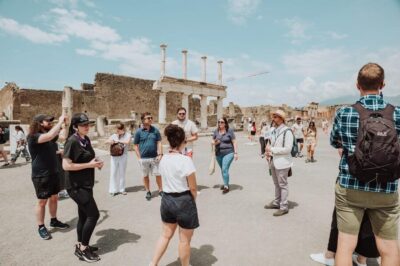
Pompeii: Entry Ticket and Guided Tour with an Archaeologist
Read our review →
History and Hauntings of Salem Guided Walking Tour
Read our review →
Edinburgh: Edinburgh Castle Guided History Tour with Tickets
Read our review →
Berlin: Third Reich & Cold War Guided Walking Tour
Read our review →
Historic Charleston Guided Sightseeing Walking Tour
Read our review →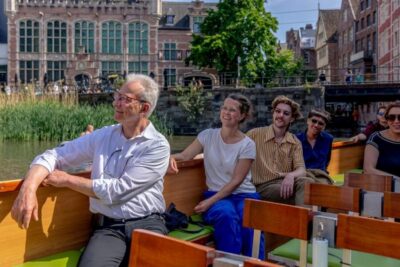
Ghent: 50-Minute Medieval Center Guided Boat Trip
Read our review →
Rome: Colosseum with Arena, Roman Forum and Palatine Guided Tour
Read our review →