
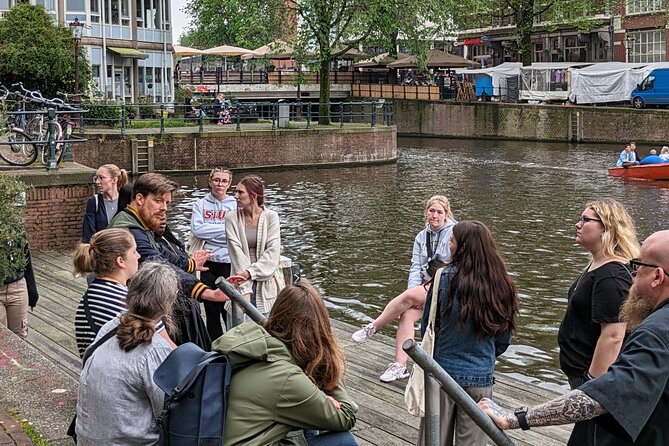
Review · AMSTERDAM
Amsterdam 2 Hour History Walking Tour
Amsterdam’s story comes into focus quickly on this small-group history walk. In two hours, you move from the canal belt to De Wallen, Dam Square, the old Jewish Quarter, the East India Company headquarters, Begijnhof, and the famous Monet bridge. It is a brisk course in how water, trade, religion, war, and tolerance shaped the city.
I like the relaxed group size, capped at 10, and the mix of serious history with plainspoken humor. I also like the practical advice built into the walk, especially for a first visit. Guides Axel and Mark have both been praised for making the past easy to follow and the atmosphere comfortable.
The main drawback is the pace. Ten stops in two hours means most places receive only a few minutes, and this is an outdoor walk that depends on good weather. If you want long museum visits or detailed architectural study, choose a slower tour.
Key points at a glance
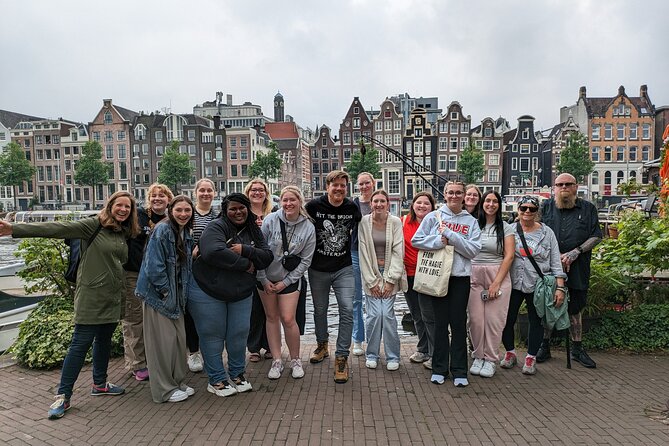
- Ten major stops in two hours: You cover the canal belt, De Wallen, Dam Square, South Church, Jodenbreestraat, the former East India Company headquarters, Stopera, Begijnhof, the Royal Palace, and Groenburgwal.
- A true small-group format: The maximum is 10 people, which gives you a better chance to hear the guide and ask questions than on a large city walk.
- History with useful local advice: The guide explains Amsterdam’s past while sharing tips to help you get more from the rest of your stay.
- Serious subjects are included: The walk addresses the Jewish community during the war, the Hunger Winter, colonial trade, religious change, and the city’s long struggle with water.
- A strong first-day choice: The 11:00 a.m. start, central route, and finish near public transport make it useful for getting oriented early in your visit.
- Bring your own water: There are places to refill a bottle, but bottled water is not supplied.
Why this two-hour route works for a first look at Amsterdam
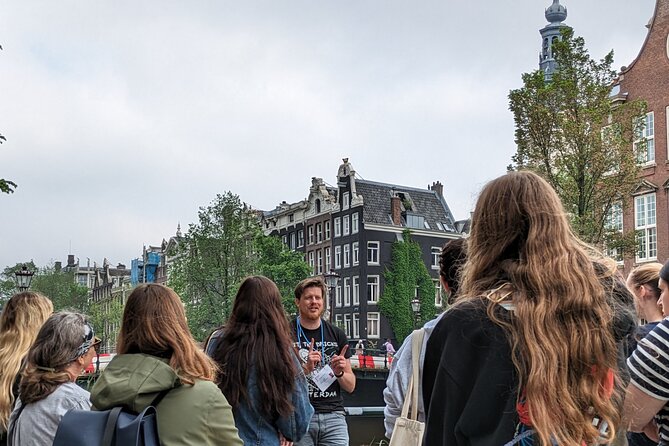
Amsterdam can seem easy to understand at street level: canals, narrow houses, bicycles, and busy squares. The harder part is seeing how those pieces connect. This tour gives you that framework.
The canal belt is not just pretty scenery. It reflects a city built around water, drainage, trade, and careful land use. At Dam Square, the guide returns to the same basic problem from another angle: how a low-lying country built power and identity while constantly managing water.
That repeated theme gives the tour a clear thread. You are not simply collecting landmarks. You are hearing why Amsterdam developed the way it did.
The route also refuses to present the city as only charming. It includes De Wallen, the Protestant Reformation, Jewish life and wartime suffering, and the Dutch East India Company’s global trade. That range matters. You get an introduction to both the attractive and difficult parts of Dutch history.
At $30.04 per person, the price is reasonable if you want a compact orientation with a local guide. You are paying for about two hours of explanation, not entrance tickets or a long private tour. Since most stops are free outdoor locations, the value rests mainly on the guide’s storytelling and the route’s organization.
The maximum group of 10 helps justify the cost. A small group can stay together in busy streets without feeling like a procession, and you can usually hear the guide more easily. The tradeoff is that the tour is a survey, not a deep study of any one subject.
More History Walking Tours in Amsterdam
- Amsterdam: Life of Anne Frank and World War II Walking Tour
★ 4.8 · 10,467 reviews - Amsterdam: Haunted History and Ghost Walking Tour
★ 4.5 · 488 reviews - Amsterdam History Walking Tour
★ 5.0 · 281 reviews
From the canal belt to De Wallen
The walk begins at Hit the Bricks Walking Tours on Prinsenstraat at 11:00 a.m. The opening stop is the Grachtengordel, Amsterdam’s famous canal belt.
Here you learn how Dutch life has been shaped by water. The subject is practical rather than decorative: how people had to live with water, control it, and build a culture around that challenge. This is a useful beginning because it gives later stops more meaning.
The canal belt also provides some of the tour’s best early photo opportunities. You get the attractive Amsterdam most people expect, but with an explanation of why the city looks this way.
The group then heads to De Wallen, the Red Light District. The stop is short, about 10 minutes, but the subject is broad. You learn why the neighborhood exists, how it works, and how Dutch society views it.
That approach is more useful than treating De Wallen as a quick photo stop. You are given social and historical context, while the guide keeps the discussion grounded in the place around you. This is also one point where the small group helps. A group of 10 is less intrusive and easier to manage on crowded streets.
Do not expect a full tour of every side street or a long discussion of modern policy. The itinerary allows only a brief look, so think of it as an introduction that helps you understand what you are seeing.
Dam Square and the country’s struggle with water
Dam Square is the central point of Amsterdam and the end of the walk. It also appears as an important historical stop during the route, where the guide connects the square to the Dutch fight against water and the country’s way of thinking.
The square can be crowded and visually distracting, but that is part of its value. You are standing in the city’s main public space, surrounded by transport links and major buildings. It is a practical place to finish because you can easily continue to another part of Amsterdam afterward.
The Royal Palace is also covered here. You learn how the Dutch royal family came to be, how France influenced that story, and why the national color is orange even though the Dutch flag is red, white, and blue.
Admission to the palace is not included. The tour gives you outside context rather than a palace visit, so plan a separate visit if you want to see the interior. This is a good example of the tour’s limits: it introduces major subjects but does not turn them into separate attractions.
Because the walk ends on Dam Square, you finish about two minutes from the starting area and near public transport. That makes the route easy to fit into a first full day in the city.
South Church and the move from Catholic to Protestant
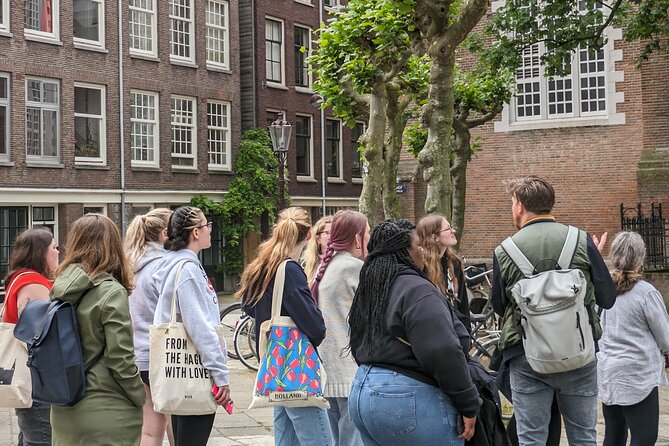
South Church provides a quieter pause. In the inner courtyard beside the church, the guide explains how and why the Dutch moved from Catholicism to Protestantism.
The courtyard setting suits the subject. It offers a calmer place to listen after the activity around De Wallen and Dam Square. You are not just told that the Reformation happened. You learn how religious change affected Dutch society and public life.
The stop lasts about five minutes, so the explanation remains an overview. Still, this short visit adds an important layer to the tour. Amsterdam’s buildings, institutions, and social attitudes make more sense once you understand the country’s religious break.
This is one of the tour’s quieter moments, and it may appeal to you if you prefer history tied to real places rather than a string of facts delivered while walking.
More History Walking Tours in the Netherlands
- Amsterdam: Highlights & History Walking Tour
★ 4.8 · 266 reviews - Anne Frank and Amsterdam Jewish History Walking Tour
★ 5.0 · 259 reviews - Amsterdam: Ghost Walking Tour and Dark History
★ 4.8 · 118 reviews - Amsterdam: Iconic Canals & Historic Sights Walking Tour
★ 4.5 · 90 reviews
Jodenbreestraat and the hard wartime story
At Jodenbreestraat, the route reaches the beginning of Amsterdam’s Jewish Quarter. The subject becomes more serious as the guide discusses the tens of thousands of Jewish people who lived in Amsterdam before and during the war, along with the devastating Hunger Winter.
The stop lasts about five minutes, which means the treatment cannot be complete. But including it is important. A city history walk should not present Amsterdam only through canals, trade, and attractive old streets.
You may want to visit a dedicated museum or memorial afterward if this period matters especially to you. This tour gives you orientation and context, not the full emotional or historical treatment of Amsterdam’s wartime experience.
The placement of this stop also works well. After hearing about religious change and before learning about Dutch global power, you see that the city’s story contains both cultural achievement and profound loss.
The East India Company and Dutch global power
At Bushuis and the Oost-Indisch Huis, you learn about the former headquarters of the Dutch East India Company. The guide explains how a small country built a vast empire and gained control over major spice trade routes while also fighting for its own independence.
This is a valuable correction to the simple idea of the Netherlands as a small, peaceful trading country. The stop connects commerce, military power, empire, and national survival.
The building gives the subject a physical anchor. You are looking at a place where decisions connected Amsterdam to distant parts of the world. The tour does not offer a long academic treatment, but it gives you the basic frame needed to understand Dutch prosperity and its costs.
I particularly like this stop for visitors who want more than postcard Amsterdam. It places the city within a much larger world, while still explaining the story in a manageable way.
Stopera and the city’s modern self-image
At the Stopera pier, the route reaches the Amstel River and Amsterdam’s modern city hall. You learn why locals call the building Stopera and why many consider it one of the city’s ugliest structures, yet still feel a sense of pride in it.
This stop adds a little humor and shows how residents relate to their own city. Amsterdam is not presented as a place where every building is admired. Local identity includes teasing, criticism, and affection at the same time.
The pier also gives you a change of setting after the older streets. You see how the historic center connects to modern government and daily city life. Since the stop lasts about five minutes, it works best as a quick piece of local character rather than an architectural lesson.
Begijnhof, the Royal Palace, and the final photo
Begijnhof is one of the route’s most appealing stops. This quiet inner courtyard feels removed from the streets around it, and the guide explains the beguine women who built and lived in the community.
The contrast is the point. You move from crowded public streets into a more private, peaceful setting without leaving central Amsterdam. It is a good place to slow down, listen, and notice how much variety the city can hold in a small area.
You then return to the Royal Palace and finish at Groenburgwal. The final stop is brief, only about three minutes, but it has an obvious purpose: you see the famous Monet bridge and have time to take a photo.
This ending is light after the heavier historical material. It also gives you a memorable image of Amsterdam to carry into the rest of your visit. Just keep expectations realistic. You are stopping for a photograph, not receiving a full art-history lesson about Monet or the bridge.
What the guide adds to the experience
The strongest part of a short history tour is the person leading it. With so many stops, a guide has to make quick connections and explain difficult subjects without losing the group.
Axel has been singled out for giving an informative, engaging overview of Amsterdam’s history and present-day culture, with plenty of amusing facts. Mark is also associated with a friendly, funny, socially comfortable style. You are not guaranteed one particular guide, but those examples show the tone to expect: accessible, personal, and less formal than a classroom lecture.
The included tips and tricks are useful because the walk is designed for people still getting their bearings. You can ask about the city as you go, then use that information for the rest of your stay. Discount codes for other tours are available upon request, which may help if you want to add another activity with the same operator.
One booking problem has been reported in connection with a voucher not reaching the operator, though the situation was resolved with a substitute 90-minute canal tour. This appears to be an administrative issue rather than a feature of the walking route, but it is sensible to keep your confirmation available on your phone and check the meeting details before setting out.
Practical details that affect your day
The tour starts at 11:00 a.m. at Prinsenstraat 13 and ends on Dam Square. Both locations are central, and the finish is close to transport connections.
The walk lasts about two hours and has a maximum of 10 people. Most travelers can participate, and service animals are allowed. The experience is near public transportation, which makes it easy to reach and easy to follow with another central activity.
Bring comfortable shoes and a refillable water bottle. Bottled water is not included, but there are several places to fill your bottle.
Good weather is required. If poor weather cancels the experience, you are offered another date or a full refund. You can also cancel for a full refund up to 24 hours before the start time. Changes or cancellations inside that window are not accepted.
This tour is often booked about 27 days ahead. That does not mean you must plan a month out, but it does suggest that the small-group places can fill early, especially during popular dates.
Who should book this walk?
I would choose this tour for a first visit, especially if you want a useful overview before exploring Amsterdam on your own. The route covers enough ground to show how the city fits together, and the tips can help you plan later days.
It also suits you if you enjoy history but prefer short explanations at real locations. The tour addresses religion, war, Jewish life, empire, royalty, water management, and local humor without turning the day into a lecture.
You may want something else if you dislike walking in busy areas, need a fully indoor activity, or prefer to spend 30 minutes at each site. The route is fast, some stops last only five minutes, and the weather can affect the schedule.
Should you book the Amsterdam History Walking Tour?
Book it if you want a friendly, compact introduction to Amsterdam and value a small group over a long attraction visit. The best reasons are the 10-person limit, the broad historical range, and the practical advice you can use immediately.
Skip it if you already know the city well or want a specialist tour focused only on art, architecture, wartime history, or the Red Light District. For most first-time visitors, though, $30.04 is fair for two hours of guided context, especially when the route finishes in the center and leaves you ready to explore on your own.
FAQ
How long does the Amsterdam History Walking Tour last?
The tour lasts approximately two hours.
What time does the tour start?
It starts at 11:00 a.m.
Where does the tour begin?
The meeting point is Hit the Bricks Walking Tours at Prinsenstraat 13, 1015 DA Amsterdam, Netherlands.
Where does the tour end?
The tour ends on Dam Square, about two minutes’ walk from the starting area.
How large is the tour group?
The maximum group size is 10 people.
Is the tour offered in English?
Yes. The experience is offered in English.
Is bottled water included?
No. You should bring a refillable water bottle because there are several places to fill it during the walk.
Is admission to the Royal Palace included?
No. Admission to the Royal Palace is not included.
Can I cancel for a full refund?
Yes. You can cancel up to 24 hours before the start time for a full refund.
What happens if bad weather cancels the tour?
You will be offered a different date or a full refund.
More Two-Hour Tours in Amsterdam
- Historic Amsterdam 2-Hour Private Tour with Local Guide
★ 4.9 · 53 reviews - Amsterdam: 2-hour History & Culture tour with a Local
★ 5.0 · 35 reviews - Berlin’s Best: 2 Hour Walking Tour Third Reich and the Cold War
★ 5.0 · 5,486 reviews - 2-Hour Gettysburg Battlefield Guided History Bus Tour with a National Park Guide
★ 4.5 · 2,201 reviews
Just added around Amsterdam
- Amsterdam Walking Tour: Urban Legends & History with local guide★ 5.0 · 39 reviews
- Amsterdam: Luxury Canal Cruise with Historic VR Experience★ 5.0 · 305 reviews
- Amsterdam: Anne Frank and World War II Walking Tour (TOP RATED)★ 4.5 · 72 reviews
- Small Group Tour to Nazi WWII concentration camp from Amsterdam★ 5.0 · 112 reviews
- Amsterdam 3 hrs Bike Tour – live guide En/Fr/De/Nl/Sp★ 4.5 · 138 reviews
- Guided Walking Tour Amsterdam – Legends, History & Ghost Stories★ 5.0 · 28 reviews
- LGBTQI+ History Tour of Amsterdam★ 5.0 · 123 reviews
- Amsterdam Haunted History and Ghost Walking Tour★ 5.0 · 47 reviews
Amsterdam History Tours, compared.

Amsterdam: Life of Anne Frank and World War II Walking Tour
Read our review →
Amsterdam: Dutch WWII Resistance Museum Entry Ticket
Read our review →
Amsterdam: Haunted History and Ghost Walking Tour
Read our review →
Amsterdam High-End Dutch Food & History Tour – Up to 8 guests
Read our review →
Amsterdam: Historic City Sightseeing Canal Cruise
Read our review →
Amsterdam: National Holocaust Museum Entry Ticket
Read our review →
Anne Frank and the Jewish History of Amsterdam Private Tour
Read our review →Browse the lists this tour appears in