

Review · INDIA
Amritsar Heritage Walking Tour
Amritsar’s most revealing sights are often found between the famous monuments. This walking tour links the Partition Museum, Saragarhi Memorial, Jallianwala Bagh, old religious sites, and narrow lanes near the Golden Temple, giving you both major history and everyday city life. I especially like the old-lane access and the way guides such as Prerit and Hardik explain local stories in clear, friendly conversation.
The price is reasonable for nearly three hours with a guide, particularly if you are new to Amritsar and want help getting your bearings. I also like that the walk ends outside the Golden Temple, leaving you well placed to visit the shrine on your own. The main caution is that the level of historical detail may vary, and entry fees are not included.
Key points at a glance
- Starts at the Partition Museum: Begin with the human cost of the 1947 division of India and Pakistan.
- Walks through old Amritsar: Reach narrow lanes, traditional neighborhoods, Guru Bazar, and the old banyan tree known as Baba Bohar.
- Covers Sikh history and local culture: Hear about Saragarhi, Maharaja Ranjit Singh, religious institutions, and Amritsar’s social life.
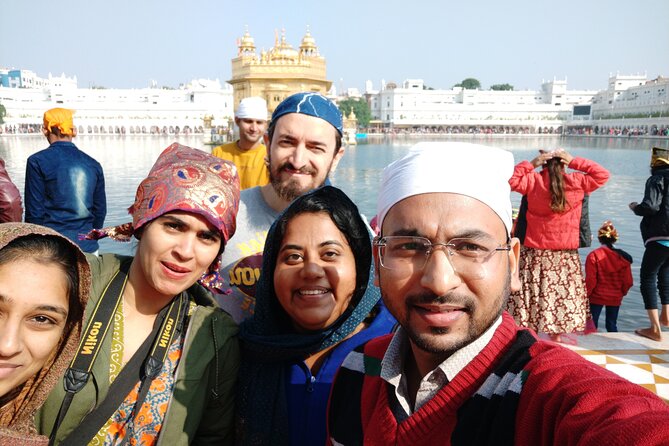
- Ends near the Golden Temple: The final point is outside Sri Harmandir Sahib, a useful location for continuing your sightseeing.
- Small maximum group size: The tour accepts up to 20 people, though this is still a group walk rather than a private outing.
- Good value at $16.66: The guide, route, and access to lesser-known lanes make the cost fair, but museum and memorial admission charges are extra.
Why this walk works well in Amritsar
Amritsar can be easy to experience in fragments. You visit the Golden Temple, perhaps Jallianwala Bagh, then move on without seeing how the old city fits together. This walk gives those places a shared setting.
You begin at the Town Hall, move through historic streets, and finish by the Golden Temple. That route matters. It shows Amritsar as more than a collection of religious and political landmarks. You see how commerce, worship, memory, and daily life occupy the same compact part of the city.
The guides are described as friendly storytellers who speak English, Hindi, and Punjabi. Prerit is noted for punctuality, organization, and an easy grasp of the city’s architecture and past. Hardik is praised for his English, welcoming manner, and willingness to answer extra questions. Your guide may be someone else, but these names give you a sense of the style to expect: conversational rather than formal, with facts mixed with local anecdotes.
This is a walking tour, not a museum lecture. You will cover roughly 2 hours 45 minutes, with time spent outdoors and on city streets. The route is designed to include eight to ten historic or cultural places, though the time at each stop differs greatly.
More History Walking Tours in India
- Fontainhas Heritage Walk by Make It Happen
★ 5.0 · 2,834 reviews - The Great Indian Food Tour: Old Delhi Food and Heritage Walk
★ 5.0 · 1,698 reviews - Old Goa Heritage Walk by Make It Happen
★ 5.0 · 797 reviews
Starting with Partition at the Town Hall
The walk opens at the Partition Museum in Amritsar’s Town Hall building. This is a strong starting point because the 1947 division of India and Pakistan shaped families, communities, and the modern identity of the region.
The museum tells the story of more than 18 million people affected by Partition. The tour allows about ten minutes at this first stop, and admission is not included. That short time is useful for orientation, but it is not enough for a full museum visit. If you want to read the exhibits carefully, see personal accounts, and take in the collection at your own pace, plan to return separately.
I like beginning here because it gives the rest of the walk a human frame. The old streets are not just pretty lanes. They are part of a city shaped by movement, loss, trade, and rebuilding.
Ask your guide questions if you want more context about how Partition affected Amritsar. The quality of this section may depend on the guide’s approach, so it is worth speaking up if you want more than a brief introduction.
Saragarhi and the memory of Sikh soldiers
From the museum, you walk toward the Saragarhi Memorial Gurudwara. The stop honors 21 Sikh soldiers who gave their lives while serving in the British army.
This part of the walk introduces a different kind of historical memory. Partition and Jallianwala Bagh focus on political violence and mass suffering. Saragarhi brings in military service, loyalty, courage, and the complicated role of Sikh soldiers within the British Indian army.
The value here comes from the connection between place and story. Instead of hearing about the soldiers in an isolated classroom setting, you visit a site used to remember them. The stop also helps explain why Sikh history cannot be reduced to one period or one political event.
The supplied route gives no separate time estimate for this stop, so expect it to be a shorter point along the walk. If military history interests you, ask the guide to explain the event in more detail.
Maharaja Ranjit Singh and the Punjab Empire
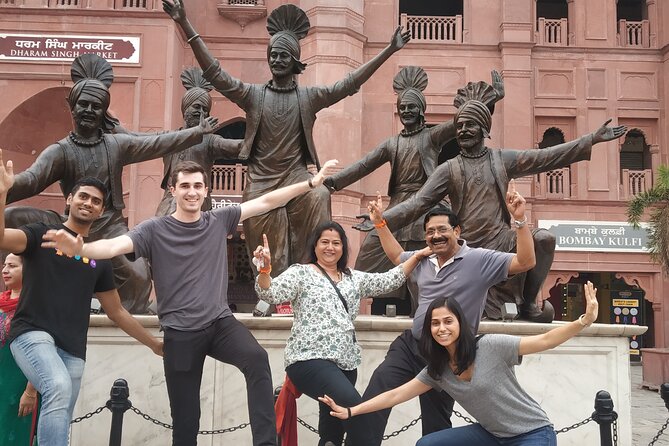
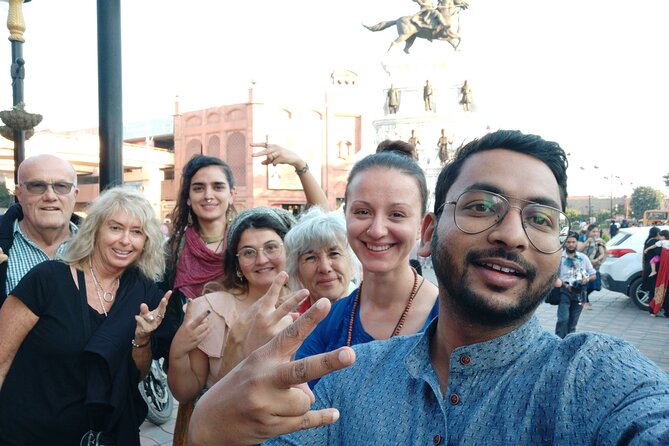
A statue of Maharaja Ranjit Singh provides the next major history lesson. The guide discusses the ruler and the Punjab Empire, adding political background to the religious and cultural themes of the walk.
This is a useful counterweight to the later stop at Jallianwala Bagh. Amritsar’s story includes tragedy, but it also includes power, state-building, art, public life, and regional pride. The statue offers a quick visual anchor for that earlier period.
The stop lasts about ten minutes and is free. You will not spend long here, but the guide’s explanation can help you place Amritsar within the wider story of Punjab. If you already know a great deal about Maharaja Ranjit Singh, this may feel brief. For a first visit, it is a practical introduction.
Same city, a different century:
- Old Delhi Food, Heritage&Cultural Walk with Rickshaw ride to Masterji Kee Haveli
★ 5.0 · 742 reviews - Blue City Heritage Private Walking Tour With Pickup and Drop-Off
★ 5.0 · 441 reviews - Kolkata Heritage Tram Tour
★ 4.0 · 395 reviews - Private Heritage Walking Tour in Jaisalmer Fort and Old Bazaar
★ 5.0 · 306 reviews
Jallianwala Bagh: the walk’s most serious stop
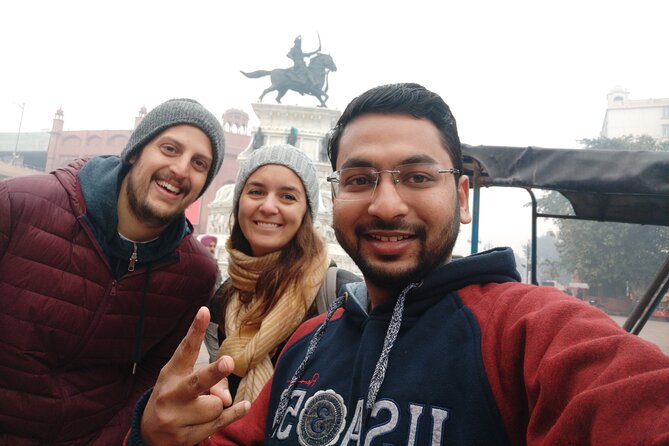
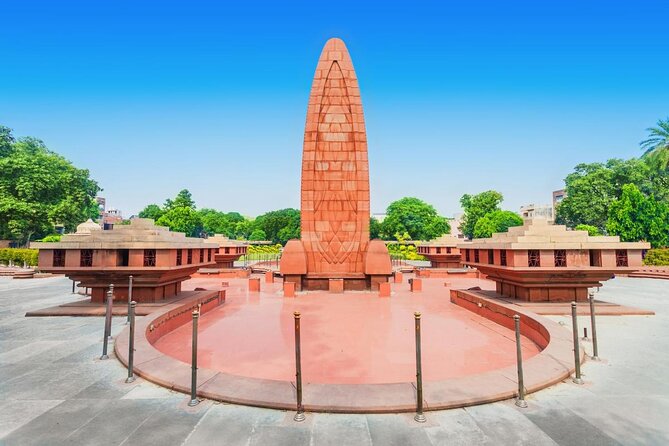
Jallianwala Bagh is likely to be the emotional center of the tour. The memorial marks the massacre that took place on April 13, 1919, during the Baisakhi festival.
The route allows about 30 minutes here. That is enough to walk through the memorial grounds and hear the main account, though admission is not included. The guide’s role is particularly useful because the site can otherwise be reduced to a few dates and a stark memorial. A good explanation connects the event to colonial rule, public gathering, and the wider political mood of the time.
You should expect a serious change in tone here. The opening part of the walk introduces the city’s background. Jallianwala Bagh asks you to confront a specific act of violence and its lasting place in Indian memory.
I would not rush this stop. Listen to the guide, take a quiet look around, and leave time later if you want a longer visit. The tour schedule gives you a focused introduction, not an exhaustive study.
Udasin Akhara and Amritsar’s religious life
The walk then turns toward Udasin Akhara on Sangal Wala Road. The visit lasts about 20 minutes and is included in the route without an extra admission charge.
An akhara is a religious institution with its own traditions and community role. This stop broadens your understanding of Amritsar beyond the Golden Temple. Sikh identity and Punjab’s religious life developed alongside several institutions, practices, and groups, and a stop such as this gives you a less familiar part of the city’s spiritual character.
One guide described by a participant also included an ashram visit as a highlight. The exact presentation may depend on the day and guide, but you should expect a quieter cultural stop rather than another large monument.
This is one of the places where asking questions will improve the experience. Ask what the institution is used for, how it relates to the city, and what customs you should respect. The tour is designed for conversation, and the guides are open to questions.
Guru Bazar and the old lanes
The longest part of the route, about 1 hour 30 minutes, takes you through Guru Bazar and the older streets of Amritsar. This is where the tour moves furthest from standard sightseeing.
You walk through narrow alleys, see local commercial life, and hear about the communities that shaped the old city. The route also leads toward Baba Bohar, a large old banyan tree in the middle of the city. A tree like this may sound like a small detail, but it helps you notice how older public spaces survive inside a dense urban area.
This section is the best reason to book the walk rather than simply visiting the Golden Temple and Jallianwala Bagh by yourself. You might pass through the same area without understanding what you are seeing. With a guide, the lanes become a lesson in local business, architecture, religious practice, and neighborhood life.
One point deserves a fair warning. The walk’s treatment of business communities may receive more attention than some people expect, including a focus on Marwari culture. If you want a broad survey of Amritsar’s many communities, ask your guide how the route will be balanced.
The lanes are also where the walking pace and group size matter most. A maximum of 20 people is not especially intimate, but it is manageable for a city walk. Stay close to the guide, since narrow streets and turns can make a large group harder to follow.
How much history will you really get?
The tour promises stories, facts, and explanations of Sikh history and culture. It delivers a useful introduction, but you should set your expectations correctly.
This is not a specialist academic tour. Some sections are brief. The walk combines Partition, colonial history, Sikh institutions, royal Punjab, local commerce, architecture, and daily life in less than three hours. That range is its strength, but it also means no single subject receives a full treatment.
I would book it if you want a readable introduction before exploring Amritsar on your own. You will get names, dates, places, and themes to follow up later. I would be more cautious if you want a tightly sourced history lecture with extensive detail at every stop.
The guides’ strengths appear to be warmth, local familiarity, and storytelling. Prerit and Hardik are both singled out for being engaging and helpful, and the tour is built around conversation. Still, one poor account raised a serious concern about legends and unverified claims being presented as fact. That makes it sensible to treat colorful stories as stories unless the guide clearly separates tradition from documented history.
Price, group size, and what is not included
At $16.66 per person, this is fairly priced for a guided walk lasting close to three hours. You are paying for route planning, local interpretation, access to old lanes, and the convenience of ending near the Golden Temple.
The value is strongest if you are visiting Amritsar for the first time. A guide can save you time and help you understand places that would otherwise appear disconnected. The price is less compelling if you only want the major monuments, since you can visit some of them independently.
Admission tickets are not included. The Partition Museum and Jallianwala Bagh both list entry as extra, so carry money for those visits. Personal expenses and adventure activities are also excluded.
This is a group tour, with up to 20 people. That keeps the price low, but it means you will not receive the same attention as on a private walk. The tour has recorded more than ten bookings in the past month and holds a 4.9 rating from 112 reviews, with 99 percent recommending it, which suggests steady demand. I would still focus on the route and your expectations rather than the rating alone.
Confirmation arrives at booking, and the meeting point is near public transportation. Most people can take part, but the experience involves nearly three hours on foot, including old streets and narrow lanes.
Who should book this Amritsar walk?
I recommend it for:
- First-time visitors who want a clear introduction to Amritsar
- Solo visitors who prefer a guided route through the old city
- People interested in Sikh culture, Partition, colonial history, and local traditions
- Anyone who wants to see more than the Golden Temple area
- Visitors who enjoy asking questions and learning through conversation
You may want another option if you need a private guide, extensive time inside museums, or a highly academic account of Punjab’s past. The group format and broad route favor variety over depth.
The walk is also a good early activity in your stay. It introduces the Golden Temple neighborhood, points out streets you may want to revisit, and gives you background for later visits to the museum and memorial. Since the tour ends outside the Golden Temple, you can continue to Sri Harmandir Sahib afterward if your schedule and energy allow.
Should you book it?
Book the Amritsar Heritage Walking Tour if you want the city explained through both famous sites and ordinary streets. Its strongest features are the old-lane route, the mix of Sikh and colonial history, the stop at Jallianwala Bagh, and the chance to finish near the Golden Temple.
Go in expecting a lively introduction, not a complete history course. Ask questions, confirm which stories are historical and which are local tradition, and budget separately for admission tickets. At $16.66, it is a sound choice for a first look at Amritsar, especially if you want help finding the city’s less obvious corners.
Free cancellation is available if you cancel at least 24 hours before the start time. Changes or cancellations within 24 hours are not refundable.
FAQ
Where does the Amritsar Heritage Walking Tour begin?
The tour begins at the Partition Museum in the Town Hall building on Hall Road, Town Hall, Katra Ahluwalia, Amritsar.
Where does the walking tour end?
It ends outside Sri Harmandir Sahib, commonly known as the Golden Temple, in the Atta Mandi area.
How long does the tour last?
The stated duration is approximately 2 hours 45 minutes.
Are entrance tickets included?
No. Admission tickets and entry fees are not included. The Partition Museum and Jallianwala Bagh both list admission as extra.
What languages can the guide speak?
The guide can speak English, Hindi, and Punjabi.
What is the cancellation policy?
You can receive a full refund by cancelling at least 24 hours before the experience starts. Cancellations or changes made within 24 hours are not accepted for a refund.
Just added around India
- Exploring Mylapore: A Cultural & Historical Walking Tour★ 5.0 · 42 reviews
- Chennai Heritage & Cultural Walk (2 Hours Guided Walking Tour)★ 3.5 · 32 reviews
- Georgetown heritage walking tour in Chennai about the founding of Chennai★ 5.0 · 144 reviews
- The Hipster Chandigarh Architecture History Tour★ 5.0 · 54 reviews
- See Bangalore through my eyes (Cultural / Historical / Walking Tour)★ 5.0 · 60 reviews
- 2 days Private tour of Hampi world heritage site from Bangalore by car★ 5.0 · 75 reviews
- Discover Bangalore with Me (A Private Historical Walk Tour)★ 5.0 · 24 reviews
- Treasures of Mysuru – day tour★ 5.0 · 27 reviews
India History Tours, compared.


The Great Indian Food Tour: Old Delhi Food and Heritage Walk
Read our review →

Old Delhi Food, Heritage&Cultural Walk with Rickshaw ride to Masterji Kee Haveli
Read our review →
Blue City Heritage Private Walking Tour With Pickup and Drop-Off
Read our review →
Private Heritage Walking Tour in Jaisalmer Fort and Old Bazaar
Read our review →
Old Delhi Food-Spice Market-Temples Tour Soon Featured on NETFLIX
Read our review →Browse the lists this tour appears in