
Review · INDIA
Kolkata Heritage Tram Tour
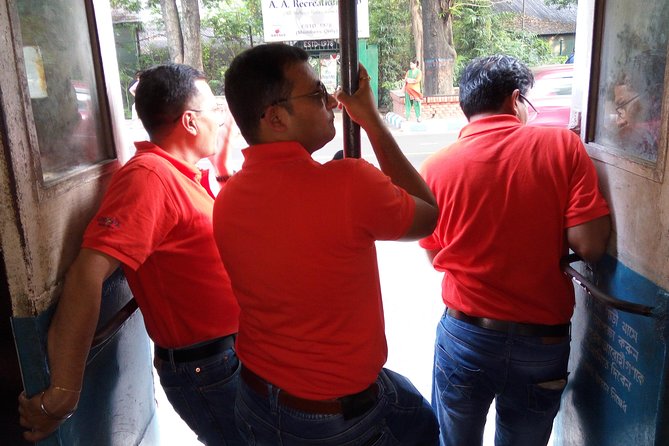
Kolkata’s heritage tram is the star here. India’s only tram network gives you a slow, open view of the city as it wakes up, then the tour gets off the rails at places such as Tipu Sultan Masjid and Mother Teresa’s former home. It is a useful first look at a city that can feel hard to read from a taxi window.
I like the early 7:00 am start, when traffic is lighter and the streets are easier to watch. I also like the mix of tram history, religious buildings, old cemeteries, and everyday Kolkata, rather than a parade of famous monuments. The main consideration is sound: one guest found the guide hard to hear over street noise, though the operator planned to add headsets.
Key points to know before booking
- India’s only tram network: The ride is both transport and a piece of Kolkata’s industrial history.
- A 7:00 am start: Early timing means less traffic and a city just beginning its day.
- Central Kolkata in one outing: You see temples, churches, a mosque, a cemetery, colleges, and Mother House.
- Small-group format: The maximum group size is 20 people, with pickup offered.
- Food is included: Snacks and refreshments are provided during the roughly 2 to 3 hour experience.
- Strong local guiding: Arif, Haris, and Mr. Ariff are associated with the tour, with particular praise for local knowledge and personal connections to Kolkata.
Why the tram is the right way to begin in Kolkata
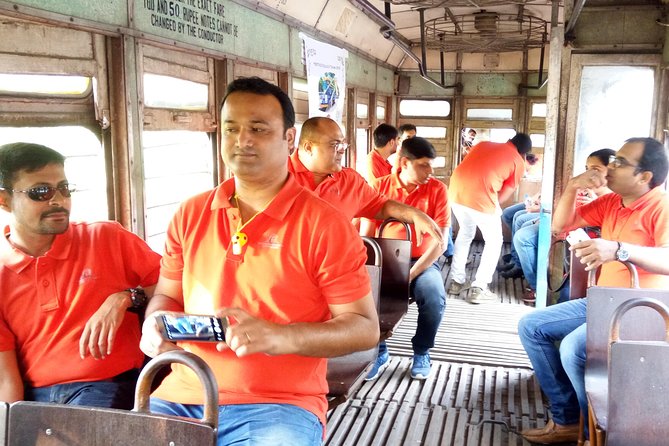
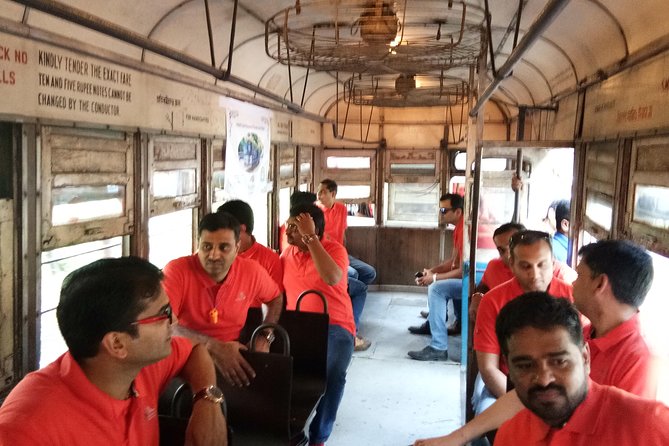
A tram forces you to slow down. You are not sealed inside a car rushing from one address to another. You get time to watch shops open, pedestrians cross, old façades pass close by, and central Kolkata shift from quiet morning to working city.
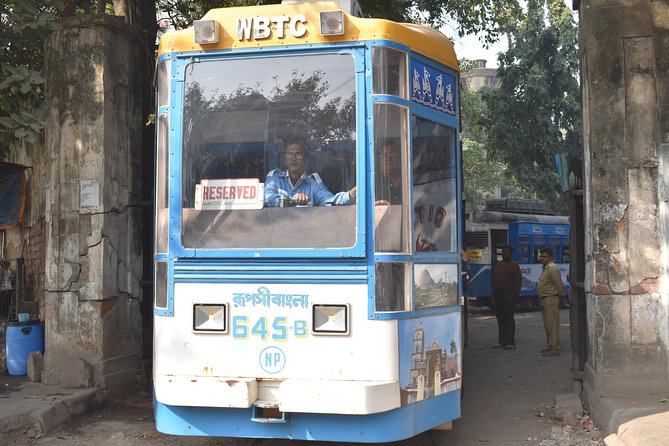
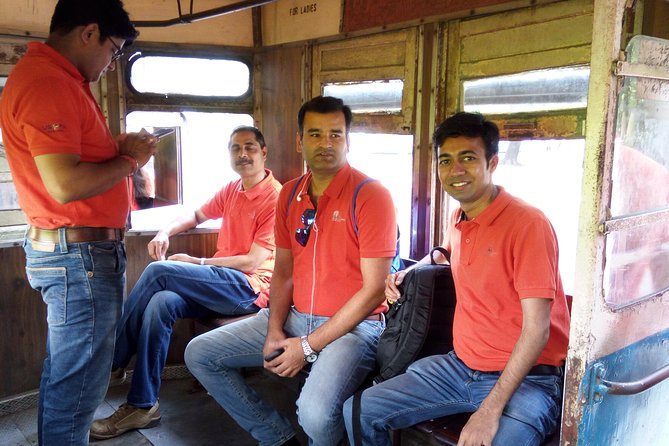
The tram itself is part of the attraction. One account describes century-old cars with their original mechanical systems, which will appeal to anyone interested in public transport, engineering, or old city life. The ride is not just a convenient way to connect sightseeing stops. It gives the tour a clear sense of place.
The route also offers a useful correction to the usual Kolkata postcard. You may see the Maidan and Victoria Memorial, but the day is not built around grand monuments alone. The focus spreads across faiths, education, colonial-era buildings, social work, and streets that still carry the marks of several communities.
More History Tours in India:
- Fontainhas Heritage Walk by Make It Happen
★ 5.0 · 2,834 reviews - The Great Indian Food Tour: Old Delhi Food and Heritage Walk
★ 5.0 · 1,698 reviews - Old Goa Heritage Walk by Make It Happen
★ 5.0 · 797 reviews
The 7:00 am start works in your favor
You meet at 7:00 am, and that is early by holiday standards. Here, the timing makes sense. Kolkata’s traffic can make short distances feel long, so beginning before the city fully fills its roads gives you more time to look around and less time sitting in congestion.
The early hour also shapes the mood. You see a city in transition, with morning activity replacing the quiet of dawn. One account describes the streets as easier to observe before traffic builds. That is a real advantage for a tour based on sights outside the tram as much as views from inside it.
Pickup is offered, and confirmation is sent when you book. The activity is near public transport, though the supplied details do not specify exact pickup zones or whether every hotel is covered. Ask for the pickup arrangement when you reserve.
A route built around Kolkata’s many communities
The stops form a broad central Kolkata portrait. You move from Hindu temples to Christian churches, a historic cemetery, a mosque, educational institutions, and Mother House. Some places receive a proper visit, while others appear to be points of interest seen along the route.
That variety is the tour’s greatest strength. Kolkata’s story cannot be reduced to one empire, one religion, or one famous person. The route lets you notice how different traditions occupy the same central streets.
It also helps to keep expectations in check. This is not a private guided visit inside every building. The published timing gives about 20 minutes at Sacred Heart Church, 20 minutes at Tipu Sultan Masjid, 20 minutes at Nonapukur Tram, and 30 minutes at Mother House. Other locations may be viewed from the tram or discussed as you pass.
Temples, churches, and early views of Kolkata
The route includes Birla Mandir on Asutosh Chowdhury Avenue in Ballygunge. Built by the Birla family, this Hindu temple is dedicated to forms of Vishnu, including Rama and Krishna. It offers an early reminder that Kolkata’s religious and architectural story is not limited to colonial buildings.
Another Birla family landmark is also included, although the supplied details do not identify it by name. You should treat this as a passing point or interpretive stop rather than assume a long interior visit.
The tour then moves through several Christian sites. Sacred Heart Church receives a listed 20-minute stop. Its setting connects Kolkata to the Portuguese legacy of Bengal, a part of the city’s past that is easy to miss when your attention is fixed on the better-known colonial sights.
The route also includes an older church described as a quiet place of worship and reflection. Since the precise name and visit time are not given, the guide’s explanation matters more than a checklist approach. You are likely to get more from hearing how these institutions fit into the city than from simply taking a photograph outside.
Same city, a different century:
- Old Delhi Food, Heritage&Cultural Walk with Rickshaw ride to Masterji Kee Haveli
★ 5.0 · 742 reviews - Blue City Heritage Private Walking Tour With Pickup and Drop-Off
★ 5.0 · 441 reviews - Private Heritage Walking Tour in Jaisalmer Fort and Old Bazaar
★ 5.0 · 306 reviews - Old Delhi Food-Spice Market-Temples Tour Soon Featured on NETFLIX
★ 5.0 · 304 reviews
Lower Circular Road Cemetery and the city’s quieter history
Lower Circular Road Cemetery, also called General Episcopal Cemetery, was established in 1840 and remains a functioning cemetery. It contains about 12,000 graves, making it one of the route’s most substantial historical sites.
A cemetery stop changes the pace of the tour. Instead of another busy intersection or grand façade, you get a place where names, dates, and weathered stones point to the people who shaped earlier Kolkata. It is also a useful place to consider the city’s old European communities without turning the past into a museum display.
The supplied schedule does not give a separate entry time here, so you should not expect a long guided cemetery walk unless the operator confirms one. Still, its inclusion adds weight to the route. You see that heritage can be found in working, imperfect places, not only in polished attractions.
Education, service, and central Kolkata institutions
The tour passes the Assembly of God Church School, founded after Pastor Buntain responded to the needs of poor and homeless children. The first school opened in January 1964 with 200 pupils. That detail gives the building a social purpose beyond its religious identity.
Maulana Azad College is another important point. Founded in 1926, it is a government-administered liberal arts and science college near the junction of Rafi Ahmed Kidwai Road and SN Banerjee Road. It represents Kolkata as a center of education and public life, not simply a place of monuments.
You also pass Thoburn Memorial Methodist Church, established in 1873, and the Lord Jesus Church in Taltala. The latter was once a Church of Scotland Presbyterian place of worship before being handed over to the Jesuits in 1959, according to the supplied information.
Other route points include the Muslim Institute, founded in 1902, and the West Bengal Urdu Academy, created to support the Urdu language. A heritage book store is also included. These stops may be brief, but together they show how language, schooling, faith, and civic groups have shaped the city.
Sacred Heart Church and Tipu Sultan Masjid
Sacred Heart Church and Tipu Sultan Masjid are the clearest scheduled visits in the middle of the outing. Each receives about 20 minutes, with admission listed as free.
Tipu Sultan Masjid is named after Tipu Sultan, the ruler of Mysore. The mosque is valued for both its architecture and its place in Kolkata’s cultural past. A 20-minute stop will not allow a full architectural study, but it is enough to see the building, hear the guide’s explanation, and compare it with the churches and temples earlier in the route.
At both religious sites, dress and behavior should be respectful. The supplied details do not state any formal dress code, so use ordinary good judgment and follow instructions from the guide or people at the site.
Nonapukur Tram and the meaning of the ride
Nonapukur Tram is one of the most important stops for anyone booking this experience mainly for transport history. It is described as the birthplace of Calcutta Tramways, with about 20 minutes scheduled there.
This stop gives context to what you have already experienced on the tram. Instead of treating the vehicle as a quaint photo prop, you learn how it connects to Kolkata’s wider transport story. The combination of an operating heritage tram and a tram-related site is much more satisfying than a ride without explanation.
If you are a transit fan, this is likely one of the strongest parts of the tour. If you are not, it still helps explain why the tram has such a lasting place in the city’s identity.
Mother House gives the morning a reflective ending
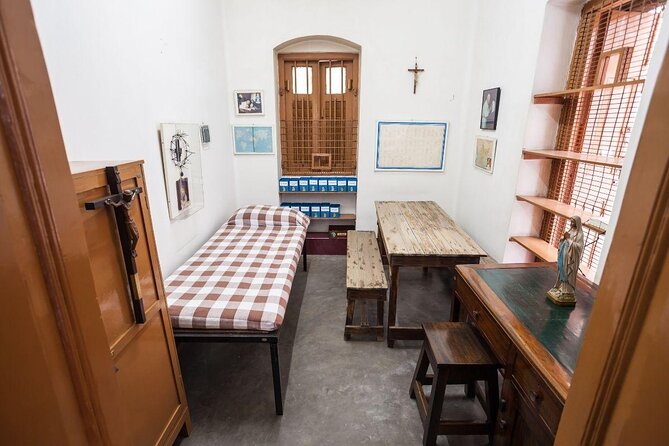
Mother House is the final named stop, with about 30 minutes. It is Mother Teresa’s former home and the final resting place of St. Teresa.
This is a more focused stop than a simple roadside landmark. You have time to visit, listen, and consider the work associated with the place. The stop also gives the route an emotional change of tone after the movement and noise of the tram ride.
You should not expect the entire tour to center on Mother Teresa. The value of the morning is the contrast between Mother House and the other sites: a mosque, old churches, a cemetery, schools, a tram center, and Hindu temples. Mother House is one chapter in a larger Kolkata story.
Snacks, guiding, and the group size
Snacks and refreshments are provided, which is especially useful with a 7:00 am start. The exact food is not specified, but one account describes a generous bag of snacks and drinks. That makes the arrangement feel practical rather than decorative. You can start the morning without planning a separate breakfast stop.
The maximum group size is 20 people. That is not an intimate private tour, but it is small enough to keep the group manageable at short stops. The main issue is hearing the guide, especially near traffic or inside a noisy tram.
Arif and Haris are named as guides connected with the experience. Mr. Ariff is also described as the company owner and, at times, the driver and guide. He has deep roots in Kolkata, and the strongest praise focuses on personal knowledge, local connections, and a clear interest in the city beyond standard sightseeing.
If listening is important to you, stand or sit near the guide when possible. Ask about headsets before booking, since one planned improvement was to provide them.
Is $60 a fair price?
At $60 per person, this is not the cheapest way to ride a tram. You are paying for more than the vehicle: a local guide, a planned route, several landmark stops, snacks, refreshments, and the convenience of pickup. For a first morning in Kolkata, that package can be good value.
The price makes the most sense if you want orientation. You see several parts of central Kolkata in a single outing, then you can return later to the places that caught your attention. It is also useful if you prefer guided context to arranging separate taxis, entrance questions, and short visits on your own.
The value is weaker if your only goal is a long tram ride. The experience lasts about 2 to 3 hours, and part of that time is spent getting off the tram at churches, the mosque, Nonapukur, and Mother House. You are buying a city introduction, not a full-day tram excursion.
Who should book this Kolkata experience?
I would choose this tour for a first visit, especially if you want help making sense of central Kolkata. It suits people who like public transport, local stories, religious architecture, and a broad look at city life.
It also works well for anyone who wants a gentler alternative to walking through busy streets for several hours. You still get out at key sites, but the tram handles part of the movement between them.
You may want a different plan if you need a fully private experience, long visits at every landmark, or guaranteed quiet audio. The group can reach 20 people, and the tram and street traffic may make commentary hard to catch at times.
Free cancellation is available if you cancel at least 24 hours before the 7:00 am start. Changes made inside that window are not accepted, and a poor-weather cancellation offers either another date or a full refund. The tour requires good weather.
Should you book it?
Book it if you want a practical first look at Kolkata with a memorable transport theme. The tram, Nonapukur connection, early streets, mixed religious sites, and Mother House give the morning real variety. The local guiding associated with Arif, Haris, and Mr. Ariff is another reason to choose it, particularly if you value personal stories over a memorized monument list.
Skip it if you want only the city’s headline sights or a long, quiet visit at each location. For most first-time visitors, though, the $60 cost buys useful orientation, snacks, pickup, and a rare ride through a tram system found nowhere else in India.
FAQ
Where does the Kolkata Heritage Tram Tour take place?
The tour takes place in Kolkata, India, with a route through central Kolkata and nearby areas.
What time does the tour start?
The tour starts at 7:00 am.
How long does the experience last?
The tour lasts approximately 2 to 3 hours.
How much does the tour cost?
The listed price is $60 per person.
Is pickup available?
Yes. Pickup is offered, though the supplied details do not specify the exact pickup areas.
Is food included?
Yes. Snacks and refreshments are provided during the experience.
What is the maximum group size?
The tour can have a maximum of 20 travelers.
Which major stops are included?
Named stops include Sacred Heart Church, Tipu Sultan Masjid, Nonapukur Tram, and Mother House. The route also includes Birla Mandir, Lower Circular Road Cemetery, Maulana Azad College, Thoburn Memorial Methodist Church, and other Kolkata landmarks.
Can I cancel for a full refund?
Yes. You can cancel at least 24 hours before the start time for a full refund. Poor weather may lead to a different date or a full refund.
Just added around India
- Exploring Mylapore: A Cultural & Historical Walking Tour★ 5.0 · 42 reviews
- Chennai Heritage & Cultural Walk (2 Hours Guided Walking Tour)★ 3.5 · 32 reviews
- Georgetown heritage walking tour in Chennai about the founding of Chennai★ 5.0 · 144 reviews
- The Hipster Chandigarh Architecture History Tour★ 5.0 · 54 reviews
- See Bangalore through my eyes (Cultural / Historical / Walking Tour)★ 5.0 · 60 reviews
- 2 days Private tour of Hampi world heritage site from Bangalore by car★ 5.0 · 75 reviews
- Discover Bangalore with Me (A Private Historical Walk Tour)★ 5.0 · 24 reviews
- Treasures of Mysuru – day tour★ 5.0 · 27 reviews
India History Tours, compared.
The Great Indian Food Tour: Old Delhi Food and Heritage Walk
Read our review →

Old Delhi Food, Heritage&Cultural Walk with Rickshaw ride to Masterji Kee Haveli
Read our review →
Blue City Heritage Private Walking Tour With Pickup and Drop-Off
Read our review →
Private Heritage Walking Tour in Jaisalmer Fort and Old Bazaar
Read our review →
Old Delhi Food-Spice Market-Temples Tour Soon Featured on NETFLIX
Read our review →
Panaji: Heritage Walk through Goa’s Latin Quarter
Read our review →Browse the lists this tour appears in