
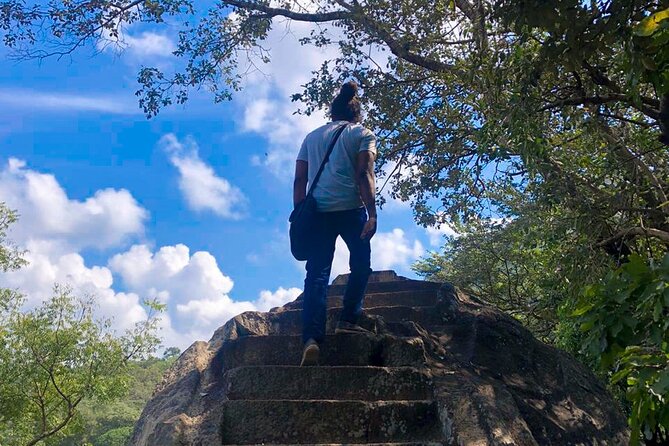
Review · HISTORY TOURS
Explore & Ride the history of anuradhapura with Vogel Tours
Anuradhapura is too spread out to understand well by simply ticking off temples. This private tour with Ajee Vogel gives you a clear route through the sacred city, from the ancient Sri Maha Bodhi tree and great stupas to bathing ponds, monasteries, guardstones, and a small museum.
I like the personal format, especially the chance to ask direct questions about Buddhism and Sri Lankan culture. I also like the practical touches: local snacks, tea or coffee, and private transport for a small group.
The main thing to check before paying is group size. The price is listed as $40 for up to three people, while another description says groups of up to 10 can be accommodated. Entrance fees are also separate, at $30 per person for the UNESCO area.
Key points to know before you book
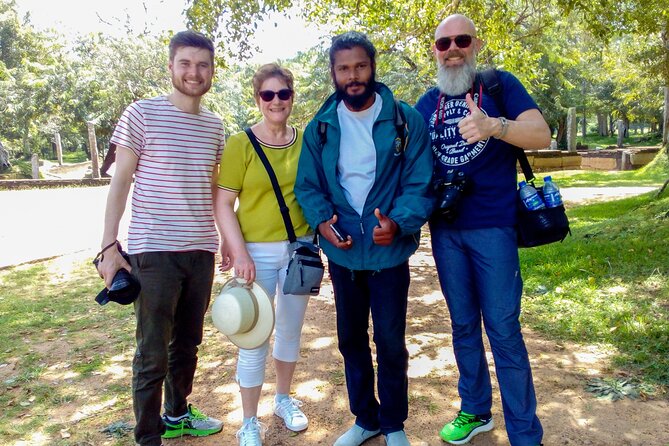
- Ajee Vogel leads the tour personally, explaining Anuradhapura’s Buddhist sites, architecture, and past in clear English.
- The route covers 12 important stops, including Sri Maha Bodhi, Ruwanwelisaya, Abhayagiri, and Jetavanaramaya.
- The listed visit takes about three hours and 35 minutes, before allowing for driving, questions, and refreshments.
- The $40 price covers the private tour for up to three people, but the $30 UNESCO entrance fee is charged separately per person.
- Tea, coffee, snacks, and private transport are included, with transport specifically supplied for up to three people on request.
- You will remove your shoes at sacred places, so wear footwear that is easy to take off and put back on.
Why a guide helps in Anuradhapura
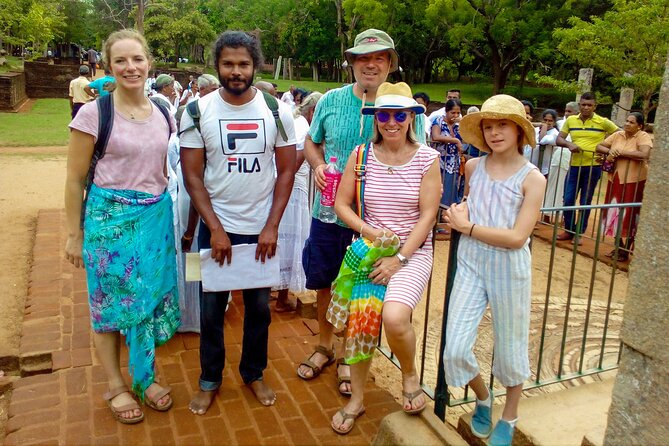
Anuradhapura is not one compact ruin you can walk across in an hour. Sacred trees, enormous stupas, old monastery buildings, ponds, statues, and museums are spread through a large archaeological area.
Without context, it can be hard to tell why one weathered stone matters more than another. Ajee Vogel’s role is useful here. He explains the Buddhist meaning behind the sites, points out details in the architecture, and connects separate ruins to the wider story of Anuradhapura.
The tour is also private, so you can stop to ask questions instead of following a fixed group pace. That matters at places such as the moonstone, guardstones, and monastery refectory, where a short explanation can turn an ordinary-looking ruin into something much easier to read.
The experience is especially suited to first-time visitors who want a fast introduction. It also works well if you have only a few hours in town and do not want to spend time working out the road connections between sites.
More History Tours in the world:
- Prague: Medieval Dinner with Unlimited Drinks
★ 4.4 · 19,847 reviews - Pompeii: Entry Ticket and Guided Tour with an Archaeologist
★ 4.8 · 19,459 reviews - History and Hauntings of Salem Guided Walking Tour
★ 5.0 · 14,564 reviews
Sri Maha Bodhi and the sacred heart of the city
The first stop is Jaya Sri Maha Bodhi, a sacred Bodhi tree in Mahamewuna Garden. It is a living religious site, not simply an archaeological object behind glass.
You have about 30 minutes here. That gives you enough time to see the tree and its setting, listen to the explanation, and observe the devotional side of Anuradhapura. The stop is free, though normal temple etiquette still matters.
This is a good place to begin because it introduces the religious importance of the city before you move on to its monumental buildings. Ask Ajee about the role of the Bodhi tree in Buddhism and the link between faith, pilgrimage, and Anuradhapura’s royal past.
Dress with respect at all sacred sites. You should also expect to remove your shoes at religious places, so socks can be useful if the ground is hot.
Lovamahapaya and the scale of ancient building
Lovamahapaya lies between Ruwanwelisaya and Sri Maha Bodhi. It is also called the Brazen Palace or Lohaprasadaya.
The planned stop is short, around 15 minutes, but the site helps you picture the scale of the former monastery complex. The building is remembered for its large structure and historic importance, even though what you see today is not a complete palace in the modern sense.
This is one of the places where a guide adds real value. The remains may not immediately explain themselves, but Ajee can provide the background needed to understand how monastery buildings fitted into the old city.
An entrance fee is not included at this stop. Since fees can vary by site or be tied to the wider UNESCO zone, you should keep the required admission money ready.
Ruwanwelisaya, the great white stupa
Ruwanweli Maha Seya, also called Swarnamali Maha Seya, is one of Anuradhapura’s most important stupas. The planned visit lasts about 30 minutes.
A stupa is a hemispherical Buddhist structure associated with sacred relics. Ruwanwelisaya is not just an impressive shape on the skyline. Its purpose, scale, and place in Buddhist worship are central to understanding why Anuradhapura remains important.
This is one of the strongest stops for photographs, but try not to reduce it to a quick picture stop. Walk slowly, notice the surrounding details, and listen to the explanation of the stupa’s religious role.
Admission is listed as free here. You will still need to follow temple rules, including removing shoes where required and dressing appropriately.
Same city, a different century:
- Athens: Acropolis & up to 5 Archaeological Sites Combo Pass
★ 4.2 · 13,904 reviews - Colosseum: Underground and Ancient Rome Tour
★ 4.7 · 12,691 reviews - Pompeii: Small Group Tour with an Archaeologist
★ 4.8 · 12,264 reviews - Lisbon: History, Stories and Lifestyle Walking Tour
★ 4.8 · 10,902 reviews
Kuttam Pokuna and the engineering of the twin baths
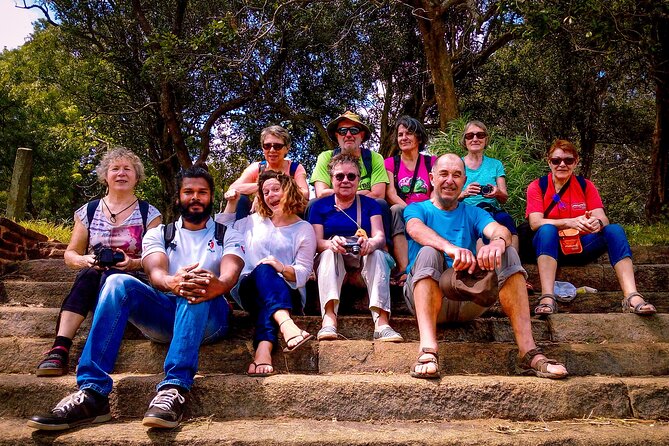
The Twin Baths, or Kuttam Pokuna, are two old bathing ponds. They are among the best-preserved examples of practical water management in the ancient city.
The stop lasts about 15 minutes. It is shorter than the visits to the major stupas, but it adds useful variety to the tour. Anuradhapura was not only a place of worship. It also needed systems for water, bathing, food, and daily monastic life.
The ponds are a good reminder that ancient Sri Lankan sites should not be judged only by their tallest monuments. Look at the stonework and the layout. Ajee can help explain how this practical feature fitted into the monastery setting.
An entrance fee is not included at this point, so remember that the overall admission cost is separate from the tour price.
Samadhi Statue and the meaning of meditation
The Samadhi Buddha is a famous statue in Mahamevnawa Park. It is about 7 feet 3 inches high and shows the Buddha in a seated meditation posture associated with his first enlightenment.
You have around 15 minutes here. The visit is brief, but the statue offers a quieter pause between larger architectural sites. It also gives Ajee a chance to explain Buddhist imagery and meditation in a direct, accessible way.
If Buddhism is one of your main interests, this stop will likely be more rewarding with a guide than on your own. The posture and expression carry meaning that is easy to miss if you are looking only at the stonework.
The admission fee is not included at this stop.
Abhayagiri and the monastery world
Abhayagiri Dagaba is part of a major monastic complex that supported Theravada, Mahayana, and Vajrayana Buddhist traditions. The planned visit lasts about 15 minutes, though the wider area can reward more time if your schedule allows.
This stop helps correct the common idea that Anuradhapura is simply a collection of isolated stupas. Abhayagiri was a large religious and educational centre, with buildings and facilities serving monks and visitors.
The route then continues to the Main Refectory of Abhayagiri Monastery. This square building measures about 42.7 metres on each side and was used for alms giving. The stop is planned for 10 minutes.
The refectory is particularly useful for understanding ordinary monastery life. It shows how large religious communities needed carefully organized spaces for meals and daily routines. Four stages of construction are associated with the building, giving Ajee an opportunity to explain how the site developed over time.
Both stops carry a separate admission cost according to the tour details.
The moonstone, guardstones, and carved entrances
The Sandakada Pahana, or moonstone, is a semi-circular carved stone usually placed at the bottom of a staircase. It is one of the most distinctive features of ancient Sri Lankan architecture.
You have around 15 minutes here. Look closely at the carving rather than treating it as decoration. The moonstone is a compact lesson in symbolism and design, and Ajee can explain the details that give it meaning.
The route also includes Rathna Prasadaya and its guardstone, described as one of the finest ancient guardstones in Sri Lanka. The stop is planned for 10 minutes.
These two sites work well together. The moonstone is underfoot at the entrance, while the guardstone protects and marks the approach. Together they show how Buddhist architecture used thresholds to shape the visitor’s movement into a sacred space.
Admission is not included for either stop.
Eth Pokuna, the Elephant Pond
Eth Pokuna, or Elephant Pond, is a huge man-made rectangular pond near Lankaramaya. It measures about 159 metres long, 52.7 metres across, and 9.5 metres deep.
The scheduled stop is only 10 minutes, so expect a quick look rather than a long walk around the full structure. Even so, the size of the pond makes it a useful stop for understanding the resources needed to support a large monastic community.
The name gives you a sense of its scale, but the measurements make the point even better. This was serious hydraulic engineering, not a small garden pool.
The entrance fee is separate.
Jetavanaramaya and the final museum stop
Jetavanaramaya is another major monastery complex, built by King Mahasena in the fourth century. The visit lasts about 30 minutes, giving you more time than some of the smaller archaeological stops.
This is a strong place to end the outdoor portion of the tour. By this point, you will have seen sacred trees, stupas, baths, monastery buildings, and carved entrances. Jetavanaramaya brings many of those themes together in one large religious complex.
The final stop is the Jetavanaramaya Museum, housed in a 1937 British colonial building. The museum displays objects found at Jetavanaramaya and gives you a more focused look at the material uncovered in the area.
The museum admission is listed as free. The wider archaeological area still has the separate UNESCO entrance charge.
What the $40 price really covers
At $40 per group, this is a strong price if you are two or three people sharing the cost. Private transport, a personal guide, snacks, and tea or coffee are included, and the route covers a lot of ground in a short time.
For one person, the value is less striking, since the same group price is not divided among companions. The separate $30-per-person government charge is the key extra cost. For three people, that means $90 in entrance fees on top of the $40 tour price.
The price information needs one clarification before booking. The main offer says up to three people, and private transport is also specified for up to three. Another description says the guide can handle up to 10 people. Ask Vogel Tours Srilanka to confirm the maximum group size, vehicle arrangement, and total entrance cost for your party.
The itinerary itself includes about three hours and 35 minutes of scheduled stops. Since the advertised duration ranges from one to five hours, the full experience will depend on driving time, questions, refreshment breaks, and how long you spend at each place.
Who will get the most from this tour
I would choose this tour if you want the main sights explained rather than simply photographed. It is a good match for couples, families, and small groups who prefer a private outing to a larger shared vehicle.
It also suits anyone interested in Buddhism. The strongest praise for Ajee Vogel centres on his explanations of Buddhism, Anuradhapura, and Sri Lanka’s past. His English is described as good, and his friendly manner is part of the appeal.
You may want a different arrangement if you prefer a slow archaeological study of just two or three sites. This route covers 12 stops, and several visits are only 10 or 15 minutes. It is designed to give you broad coverage, not long, quiet sessions at every ruin.
The tour requires good weather. If poor weather causes cancellation, you are offered another date or a full refund. Free cancellation is available up to 24 hours before the start time, but changes or cancellations inside that window are not accepted.
Should you book Explore and Ride Anuradhapura?
Book it if you have limited time, want private transport, and value clear explanations of Buddhist sites and Sri Lankan culture. Ajee Vogel’s personal guiding style, the broad route, and the small-group format make this a practical introduction to Anuradhapura.
Before confirming, ask two questions: exactly how many people the vehicle can carry, and whether your quoted total includes every required entrance payment. If you are comfortable with the additional $30-per-person UNESCO fee and a fairly brisk route, this tour offers a useful way to see the sacred city without losing the story behind the stones.
FAQ
How much does the tour cost?
The tour costs $40 per group for up to three people. The $30-per-person entrance fee for the UNESCO area is not included.
Who guides the tour?
The tour is led by Ajee Vogel of Vogel Tours Srilanka.
How long does the experience last?
The advertised duration is approximately one to five hours. The listed stops add up to about three hours and 35 minutes, before transport and other time.
What sites are included?
The route includes Jaya Sri Maha Bodhi, Lovamahapaya, Ruwanwelisaya, the Twin Baths, the Samadhi Statue, Abhayagiri Dagaba, the Main Refectory of Abhayagiri Monastery, the Sandakada Pahana, Eth Pokuna, Rathna Prasadaya, Jetavanaramaya, and the Jetavanaramaya Museum.
Is transportation included?
Private transportation can be supplied for up to three people if requested.
Are snacks and drinks included?
Yes. Snacks and coffee or tea are included.
Is this a private tour?
Yes. Only your group participates in the activity.
Do I need to remove my shoes?
Yes. You must remove your shoes when entering sacred places.
Can I cancel for a refund?
You can cancel at least 24 hours before the start time for a full refund. Cancellations or changes made less than 24 hours before the start time are not accepted, and poor-weather cancellations offer a different date or a full refund.
Just added around the world
- Scenic Train ride to historical cities of Morretes and Antonina★ 4.0 · 188 reviews
- 6-Day Cultural Tour to Machu Picchu★ 5.0 · 76 reviews
- Jewish Heritage of Curacao★ 4.5 · 68 reviews
- The Curacao’s Colorful History Walking Tour★ 5.0 · 55 reviews
- Discover Scuba Diving Amathounta’s Ancient Port★ 5.0 · 30 reviews
- Olous – Guided Snorkelling Excursion to Discover Olous Sunken Ancient City★ 4.5 · 31 reviews
- Night Walking Tour of Medieval Cuenca★ 5.0 · 64 reviews
- WWII – The Battle of Crete Day Tour★ 5.0 · 103 reviews