
Review · BRUGES
2-Hour Historical Walking Tour in Bruges with Praline Included
Bruges reveals its best stories on foot, and this tour links the postcard views with the stranger details behind them. You move from Burg Square through the Markt, canal-side lanes, medieval trade quarters, old hospitals, breweries, and chocolate shops before returning to the heart of town. The guide ties the stones together with stories about beer, medicine, war, swans, art, and Bruges’ less polished past.
I like the small-group format, listed for no more than six people, and the way the route mixes major sights with odd corners such as Stoofstraat, the smallest street in Bruges. I also like the local character: Peter and Joost are named guides, with Peter described as a Bruges native who adds humor, food advice, and practical suggestions for the rest of your visit.
The main point to check is the tip-based setup. The advertised price is only $3.63 per person, which is remarkable value for two hours, but the guide’s income depends on gratuities. Also, the praline is offered only when the relevant shop is open, so treat it as a pleasant extra rather than a guarantee.
Key things to know before you book
- A full old-town circuit: The route covers Bruges’ principal squares, canals, churches, museums, bridges, markets, and medieval lanes.
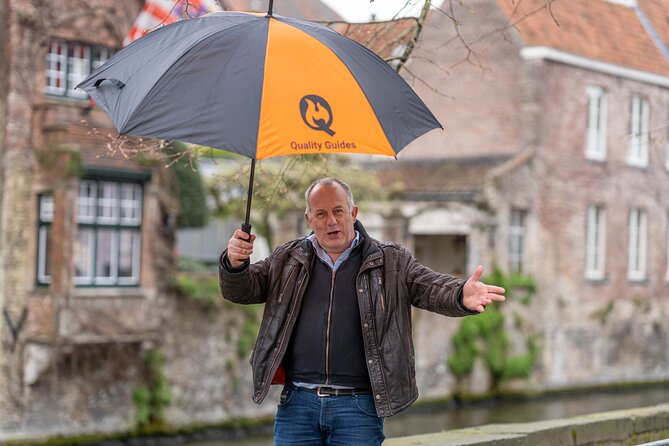
- Local guides with personality: Peter and Joost are specifically praised for clear English, humor, storytelling, and useful restaurant and beer recommendations.
- The city beyond the postcards: You hear about the darker sides of Bruges, including medieval hygiene, the old red-light district, plague, war, and the trade that made the city wealthy.
- A gentle two-hour pace: Stops are frequent, with breaks for water, toilets, and rest. You still cover plenty of ground, so comfortable shoes matter.
- Great photo locations: Sint-Janskaai, Boniface Bridge, and Rosary Quay provide some of the city’s finest medieval backdrops.
- Very low starting price: At $3.63, the tour is inexpensive, but you should plan to tip if the guide gives you a worthwhile introduction to Bruges.
Starting at Burg Square and the Markt
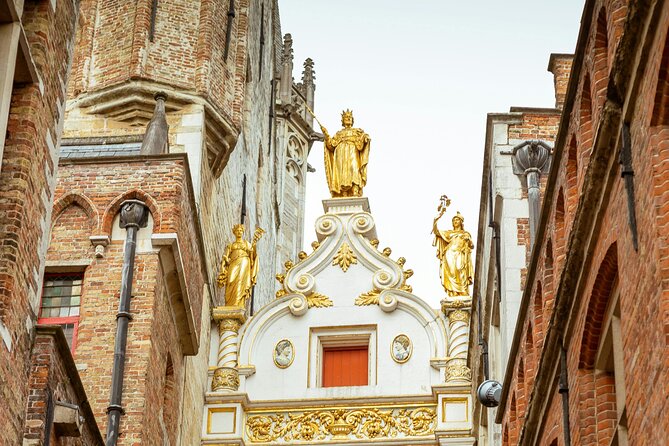
The meeting point is Markt 4, in the central Markt, though the walk begins with an introduction at Burg Square. This is a smart way to frame Bruges. Burg is where the city’s civic and political story begins, while the Markt shows how trade and commerce shaped its public face.
At Burg Square, you hear about the early development of Bruges and the buildings that later gathered around its center. The stop lasts about 10 minutes, enough time to get your bearings without turning the opening into a long lecture.
The Markt follows, with its Belfry, former cloth halls, and medieval buildings. Five minutes may sound brief, but this is an orientation walk, not a building-by-building inspection. You get the broad picture first, then can return later to the sites that interest you most.
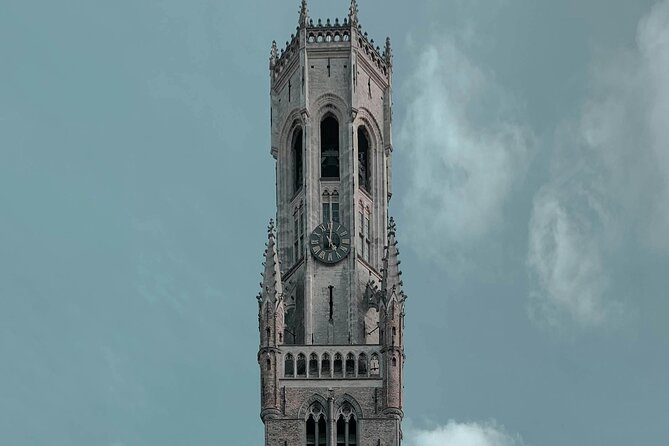
The Belfort, or Belfry, receives its own short stop. The guide explains its origins, current problems, and connection to the wealth generated by Bruges’ cloth trade. This is useful context because the tower is more than a famous photograph. It represents civic power, commercial success, and the city’s effort to protect its privileges.
More History Walking Tours in Belgium
- Historical Walking Tour: Legends of Bruges
★ 5.0 · 2,541 reviews - Historical Walking Tour: The Story of Bruges – by Legends
★ 4.7 · 483 reviews - Bruges: Private Historical Highlights Walking Tour
★ 4.7 · 191 reviews
War, Gruuthuse, and Bruges’ changing fortunes
The route then moves to the Praalboog Pro Patria, where the guide discusses Belgian independence and Bruges during the First and Second World Wars. This broadens the walk beyond medieval Bruges. The city can sometimes feel frozen in the past, but its modern political and wartime story matters too.
At the Gothic gate associated with Gruuthuse, you hear about the companies offering canal tours. The stop is only a few minutes, but it gives you a chance to understand how water remains central to Bruges’ identity and economy.
The Gruuthuse Museum courtyard is one of the more atmospheric stops. Here, the story turns to beer and the wealth of the Gruuthuse family. The guide explains how the resident made money through Gruut, and why the city eventually shifted from Gruut to hops. You do not need to visit the museum to follow the explanation, since the talk takes place in the courtyard.
This is the sort of detail that makes a walking tour useful. Instead of simply being told that Bruges had wealthy merchants, you learn about the products and systems that helped create that wealth. The beer story also gives you a practical thread to follow later if you want to explore Belgian brewing.
Art, medicine, and the praline connection
The Church of Our Lady, listed here as the O.L.V.-kerk Museum, brings art into the route. You hear about the church, its Pietà, and other valuable works. The stop is short, around five minutes, so it is best understood as an introduction rather than a substitute for a proper visit.
The same is true of the Groeningemuseum later in the walk. The guide points out the importance of Jan van Eyck, Hans Memling, Hugo van der Goes, Gerard David, and other Flemish Primitives. These painters are central to Bruges’ artistic identity, and a quick explanation can help you decide if you want to spend more time inside the museum afterward.
Saint John’s Hospital adds one of the tour’s most unusual connections: the link between medieval medicine and pralines. The guide explains how medicine in the Middle Ages helped lead to the creation of pralines. That story makes the chocolate stop feel less like a simple free sample and more like part of Bruges’ long tradition of trade, care, craft, and commerce.
A praline from the Guild of Bruges Chocolatiers is included when the relevant shop is open. I would not book this walk for the chocolate alone, but it is a nice touch at this price. If the shop is closed, the advertised extra may not be available.
Canal views at Sint-Janskaai and Walplein
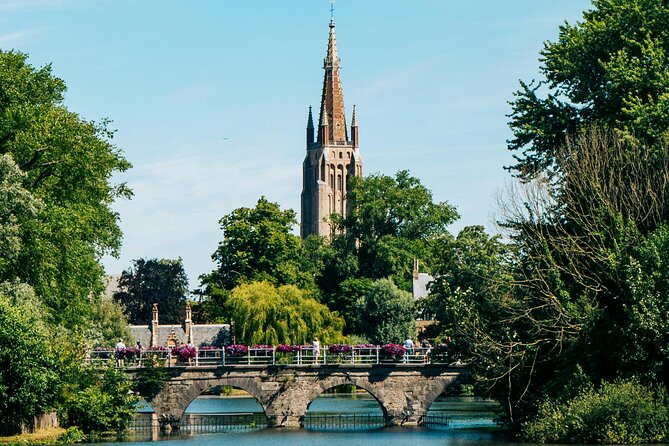
At Sint-Janskaai, the group stops beside the water for a photograph with a medieval backdrop. Bruges is at its most appealing from the canal edges, where brick facades, old bridges, and quiet water create the familiar image that brings many people here.
The route continues to Walplein and Huisbrouwerij De Halve Maan, the well-known brewery with a pipeline running beneath the city. The stop gives you a glimpse of the brewery and the square, along with a modern solution to a practical urban problem. It is another example of the walk connecting old Bruges with the city that functions today.
You will not tour every interior on this route. That is an important distinction. The guide helps you understand where to return, rather than trying to replace the Belfry, Gruuthuse Museum, Church of Our Lady, or Groeningemuseum with rushed indoor visits.
More History Walking Tours in Bruges:
- Bruges: Nightly Tales and Untold History Walking Tour
★ 4.9 · 154 reviews - Bruges at Night: Murder, Mystery & Dark Stories Small Group Walk
★ 5.0 · 137 reviews - Bruges: History, Chocolate and Beer Walking Tour
★ 4.9 · 65 reviews - 2-Hour Medieval Walk and Chocolate Tasting in Bruges
★ 5.0 · 48 reviews
Stoofstraat and the less polished medieval city
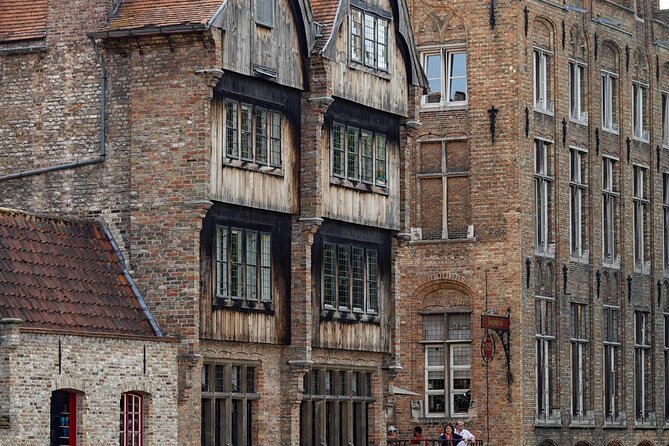
Stoofstraat is one of the most memorable stops because it takes you away from the polished postcard version of Bruges. It is the city’s smallest street and is linked to the medieval red-light district. The guide also discusses customs that grew from this area and reveals the darker side of Bruges’ swan stories.
This section adds useful balance. Bruges is beautiful, but its past was not tidy or romantic. Narrow streets, trade, vice, waste, and social divisions were all part of medieval city life. If you prefer tours that include uncomfortable details along with pretty buildings, this stop will appeal to you.
Katelijnestraat brings you back to familiar Belgian pleasures: chocolate, waffles, and fries. Yet the guide also discusses plague and the darker days of Bruges. That pairing works well. You see the modern food culture while learning that the same streets once faced disease and hardship.
The walking route includes rest stops, drinking water, and public toilets. The pace is described as gentle, and one account notes that it worked well for senior participants. Still, two hours in a historic center means plenty of walking and standing. A moderate level of fitness is requested, so wear shoes that can handle uneven city streets.
Boniface Bridge and the city’s most photographed corners
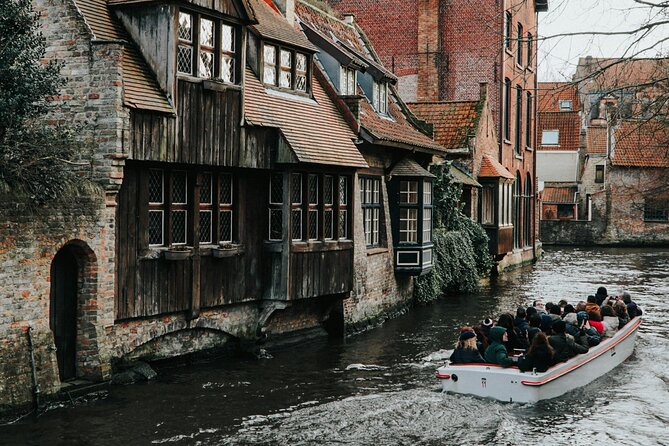
Boniface Bridge is presented as the ultimate bridge of love, but the guide also points out its less romantic side. This is one of the most picturesque locations in Bruges, set among medieval gardens, and it is likely to be one of your favorite photo stops.
Rosary Quay is another highlight. From here, you can frame the Belfry and the Church of Our Lady in one view. The location also connects to the hotel seen in the film In Bruges, including the window from which Colin Farrell’s character jumped.
You may recognize several views from photographs, films, and travel brochures. The benefit of having a guide here is not simply knowing where to point your camera. You get the story behind the view, then receive time to take the picture without rushing through the stop.
Tanners, fish markets, and the return to Burg
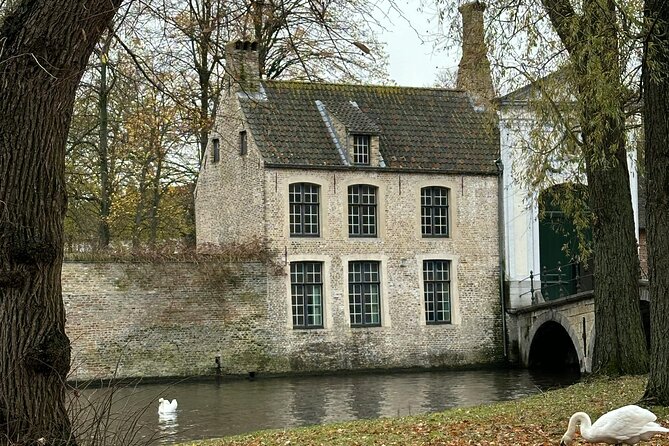
Huidenvettersplein tells the story of medieval tanners. This was once one of the foulest and least hygienic parts of Bruges, because tanning involved unpleasant materials and dirty work. Today, the square is a much easier place to visit, with spots to eat and drink.
That contrast is worth noticing. Many old European squares look charming now because the messy trades have disappeared. A short explanation about the tanners helps you imagine how different the city would have smelled and functioned in the Middle Ages.
At Vismarkt, the guide explains that Bruges had two fish markets, intended for two types of customers. The square also forms an entry to the city center, where Gothic, Renaissance, and Classicist styles meet. If architecture is not your main interest, the story about the market gives you a reason to look more closely.
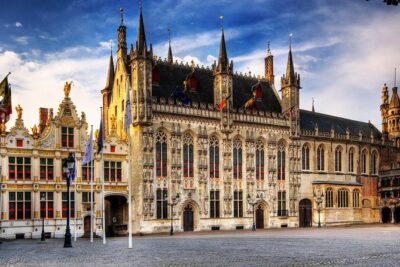
The final stop returns to Burg Square. The town hall, Blood Chapel, and courthouse bring several periods and styles together. The guide uses this setting to close with true stories about Bruges, linking the city’s religious, civic, commercial, and sometimes difficult past.
Returning to the original meeting point is convenient. You finish in the center, close to the places where you began, and can easily continue to a museum, lunch, canal ride, brewery, or another walk.
What the guides add to the route

The strongest feature of this experience is the guide rather than any single monument. Peter is repeatedly described as funny, engaging, clear in English, and deeply familiar with Bruges. He grew up in the city and is said to provide recommendations for eating, drinking, and further sightseeing.
Joost receives similar praise for his energy, storytelling, and enthusiasm for his home city. You should expect a guide who talks often and keeps the route moving, not a silent escort between photo stops.
Humor is part of the style. That helps the two hours pass quickly, but it also means the tour may not suit you if you want a strictly academic lecture. The history is presented through anecdotes, unusual facts, and local stories. For most people, that makes the city easier to remember.
The small maximum group of six should make it easier to hear, ask questions, and stay connected to the guide. One comment describes a larger group being handled well, but the stated maximum for this experience is six. Families can also manage it, though a child may need freedom to move around during stops. A 16-month-old was accommodated during one walk, but no special child program is offered.
Is $3.63 really the whole cost?
The listed price is $3.63 per person, which is exceptionally low for a two-hour guided walk. At that rate, you are paying mainly for access to a local introduction, with the praline as an extra if the shop is open.
The important catch is the tip expectation. One booking note describes the tour as tip-based, and several comments make clear that the guide’s income depends on gratuities. If you enjoy the walk, budget for a decent tip rather than treating $3.63 as the final amount.
That arrangement can be good value, especially if you use the tour to plan the rest of your stay. You can learn which museums deserve more time, where to eat or drink, and which views to revisit when the group has moved on.
The tour is offered in English and is generally suitable for people with moderate fitness. It is near public transportation, service animals are allowed, and confirmation is provided when you book. Free cancellation is available up to 24 hours before the start time. Changes or cancellations inside that window are not accepted for a refund.
Who should book this Bruges walk?
I would choose this tour if you have only a short time in Bruges, are visiting for the first time, or want a clear map of the old center before choosing where to spend your afternoon. It is also a good fit if you like history delivered with humor rather than a formal lecture.
The route suits photographers because it includes Sint-Janskaai, Boniface Bridge, and Rosary Quay. It suits food-minded visitors because it covers chocolate, waffles, fries, beer, pralines, and recommendations for places to eat and drink.
You should think twice if you want extended time inside museums or churches. The stops at the art sites are brief, and admission to the interiors is not included. You should also be comfortable with a tip-based model and with walking for two hours, even at a gentle pace.
Should you book it?
Yes, if you want an affordable and lively introduction to Bruges. The route covers the essential sights but also includes the city’s stranger stories: medieval hygiene, the old red-light district, beer production, medicine, wartime Bruges, tanners, swans, and the practical problems of a modern brewery pipeline.
Book it early if your schedule is fixed, since the experience is often reserved about 19 days ahead. Keep the following hour free after the tour so you can return to the places that caught your attention. At $3.63 plus a fair tip, this is a strong way to get your bearings before exploring Bruges on your own.
FAQ
Where does the Bruges walking tour start?
The meeting point is Markt 4, 8000 Brugge, Belgium. The route begins at Burg Square and returns to the meeting point at the end.
How long does the tour last?
The walk lasts approximately two hours.
What language is the tour offered in?
The tour is offered in English.
What is included in the price?
A local expert guide, rest stops, access to drinking water and public toilets along the way, and a praline from the Guild of Bruges Chocolatiers are included. The praline is available only if the relevant shop is open.
Is the tour suitable for people with limited mobility?
The tour requests a moderate level of physical fitness and involves walking between many historic sites. The pace is described as gentle, but the supplied information does not confirm wheelchair accessibility.
How many people can join the tour?
The activity has a maximum of six participants.
Are service animals allowed?
Yes, service animals are allowed.
Can I cancel for a refund?
Yes. You can cancel up to 24 hours before the experience start time for a full refund. Cancellations or changes made less than 24 hours before the start are not accepted for a refund.
More Two-Hour Tours in Bruges
- Berlin’s Best: 2 Hour Walking Tour Third Reich and the Cold War
★ 5.0 · 5,486 reviews - 2-Hour Gettysburg Battlefield Guided History Bus Tour with a National Park Guide
★ 4.5 · 2,201 reviews - Kyoto Gion: 2-Hour Geisha Culture & History Walking Tour
★ 5.0 · 1,186 reviews - 2 Hour LoDo Historic Walking Tour in Denver
★ 5.0 · 1,106 reviews
Just added around Bruges
- Bruges Bites & Sights – Belgian Food, Beer & A Little Bit Of History★ 5.0 · 94 reviews
- Medieval Tour in Bruges with Chocolate Tasting★ 5.0 · 71 reviews
- Bruges at Night: Murder, Mystery & Dark Stories Small Group Walk★ 5.0 · 137 reviews
- Best of Bruges: History, Chocolate & Beer Tour★ 5.0 · 256 reviews
- Food tasting & Historical walk★ 4.5 · 47 reviews
- 2-Hour Medieval Walk and Chocolate Tasting in Bruges★ 5.0 · 48 reviews
- Across Bruges History Equals Fun with chocolate and waffle sample★ 5.0 · 34 reviews
- Historical walk in Bruges with local guide. Praline included★ 5.0 · 31 reviews
Bruges History Tours, compared.
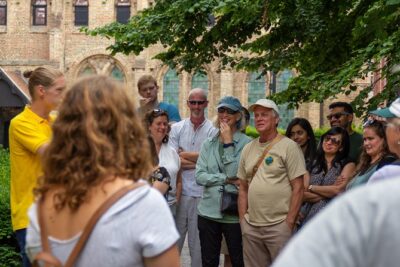
THE Storytelling Tour of Bruges | First Day Must | History & Tips
Read our review →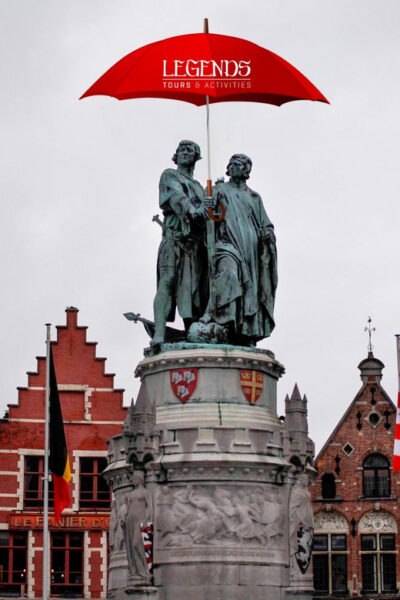
Historical Walking Tour: The Story of Bruges – by Legends
Read our review →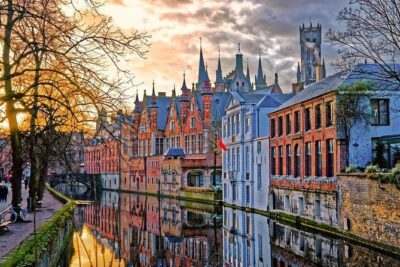
Private Historical Tour: The Highlights of Bruges
Read our review →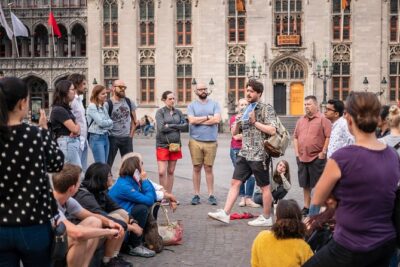
Bruges: Historium Bruges Medieval Experience Ticket
Read our review →
Bruges: Nightly Tales and Untold History Walking Tour
Read our review →Browse the lists this tour appears in