
Review · BUDAPEST
Budapest Historical Sightseeing – Free Walking Tour
Budapest’s past is not tucked away in one museum. It is written across its squares, memorials, grand facades, and political statues. This 2½-hour Pest-side walk moves from the Hungarian National Museum to Parliament, with stops in the Jewish Quarter, at Liberty Square, and beside the Shoes on the Danube memorial. You get a brisk first look at Budapest’s complicated story, including communism, wartime persecution, royal ambition, and modern city life.
I like two things especially. First, the route gives you useful bearings on your first day, ending near the Chain Bridge with much of central Pest behind you. Second, the tip-based price makes this one of the easier ways to spend a few hours learning the city without straining a sightseeing budget. Guides including Victoria, Peter, Elizabeth, George, and Sabi have been praised for clear English, local tips, humor, and strong command of Hungarian history.
The catch is simple: you must walk roughly three miles, often over cobblestones, and the group can reach 50 people. A large group may make it harder to hear, and the tour does not cross to Buda or take you inside the major buildings. Bring water, wear good shoes, and remember that the low booking price does not replace a tip for the guide.
Key points to know before you go
- The route covers Pest, not Buda: You see Fisherman’s Bastion, Matthias Church, the Buda Castle area, and Gellért Hill from across the Danube.
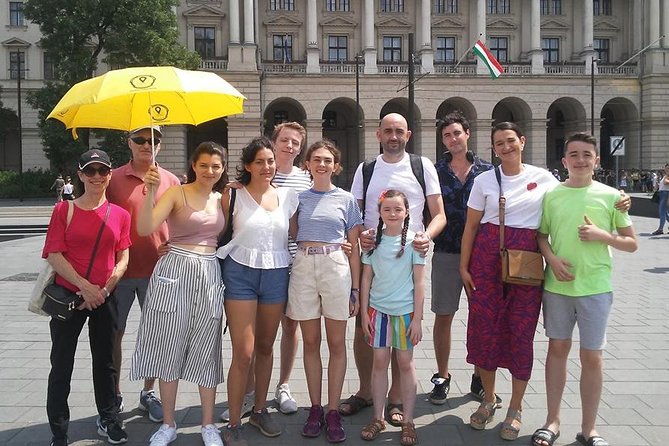
- The meeting point is easy to spot: Find the yellow-shirted guide at OTP Bank, Kálvin tér 12 to 13.
- The route is history-heavy: Expect the 1948 uprising, the Jewish Quarter, World War II, communism, and modern Hungarian customs.
- The final stops are emotionally powerful: The Parliament view and Shoes on the Danube memorial give the walk a serious finish.
- The group may be large: The maximum is 50 people, though some departures are smaller.
- The price works through tips: You pay a small booking fee, then decide what the guide’s work was worth.
Why this Pest-side walk makes sense early in your trip
I would put this tour near the start of a Budapest visit. It gives you a working map of the central Pest side, introduces the city’s major political and religious landmarks, and leaves you with ideas for the rest of your stay.
The route also helps explain why Budapest can feel like several cities at once. You move past grand nineteenth-century buildings, reminders of Nazi and Communist rule, restored public spaces, nightlife streets, and solemn memorials. That mix is the point. Budapest is not presented as a tidy museum piece.
The guides add another useful layer: present-day advice. Victoria has been praised for explaining customs, public rules, food, transport, and sensible places to eat. Sabi has helped people understand how to get a 72-hour transit pass. Elizabeth has been singled out for helping first-time visitors understand the city’s layout. Those practical details can save you time after the tour.
The guide quality can vary, as it does on any departure-based walking tour. Victoria, Peter, Elizabeth, George, and Sabi are named in the feedback, with especially strong praise for Victoria’s energy, historical command, humor, and clear English. One unhappy experience described a guide as too sharp and too fast, so it is fair to say that the tone depends on who leads your group and on how well the group listens.
More History Walking Tours in Budapest:
- BloodThirsty Hungary: Walking tour & Dark Historical Stories
★ 4.9 · 633 reviews - Budapest Jewish Heritage Memorial Walking Tour & Synagogue Entry
★ 5.0 · 568 reviews - Budapest: Jewish History Guided Walking Tour with Historian
★ 4.8 · 205 reviews
Meeting the yellow-shirted guide at Kálvin tér
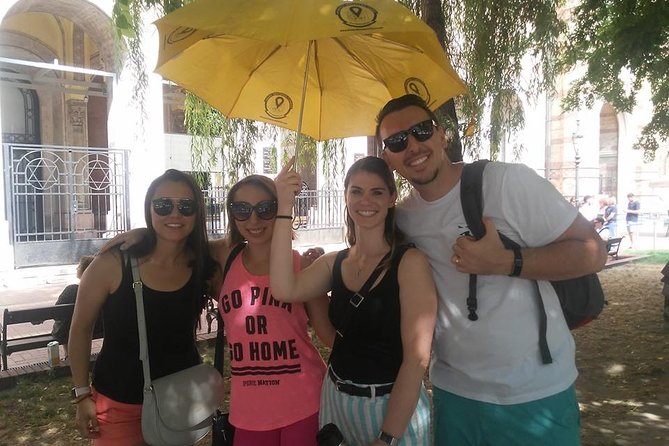
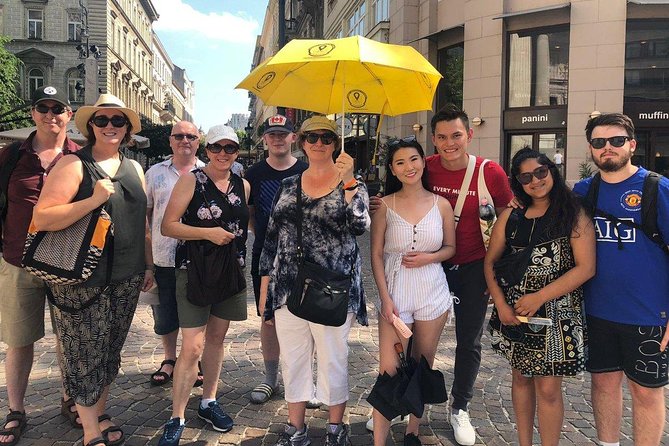
The official meeting point is OTP Bank at Kálvin tér 12 to 13. The guides wear yellow, which should help you find the right person in a busy square.
Kálvin Square has places to sit and some shelter from bad weather. That matters because the tour begins outdoors and does not include a café stop. You are advised to buy coffee or tea before starting if you want it. There is a short five-minute break for drinks and the toilet, but no food or drink is provided.
The first listed stop is the Hungarian National Museum, whose gardens are close to the meeting area. This opening gives the guide room to explain the museum, its collections, and its founder. You also hear about the mythical turul bird, a recurring national symbol, and the 1948 uprising.
The National Museum is a smart place to begin because it points you toward the city’s national story before the walk moves into more personal and political subjects. You also hear about District VIII, once known for grand palaces and later associated with a rougher reputation. The short stop is not a museum visit, so you should not expect to see the collections indoors.
From Unger’s House to Deák Square
The walk continues to Unger’s House, an unusual creation linked to architect Miklós Ybl. Its courtyard brings together Byzantine, Gothic, Moorish, Renaissance, and Romantic touches. That combination makes it a useful architecture lesson: Budapest’s historic buildings often resist one neat label.
The stop is only about five minutes, so pay attention as the guide points out the details. You are seeing the exterior and courtyard rather than taking a full architectural tour. The building is described as fading, which adds an honest note to the city’s grand appearance. Not every beautiful historic facade is perfectly restored.
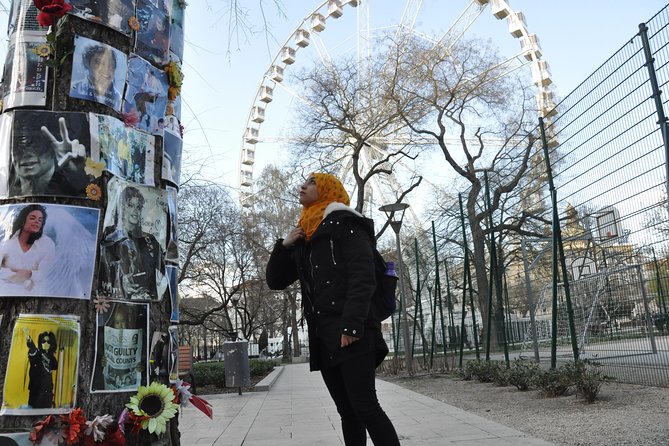
At Elizabeth Square, you see the Budapest Eye and hear how the square has changed. The area is also associated with some of the city’s popular bars and nightlife. This is one of the places where the tour shifts from old Budapest to current Budapest. You get a quick sense of where younger city life gathers, without spending the evening there.
The Danubius Hotel Astoria comes next. The guide points out its French Empire style and its connection with international stars and film productions, including the Josephine Baker Story. It is a very brief exterior stop, but it shows how Budapest’s hotels and public buildings became part of the city’s social and cinematic life.
Walking through the Jewish Quarter
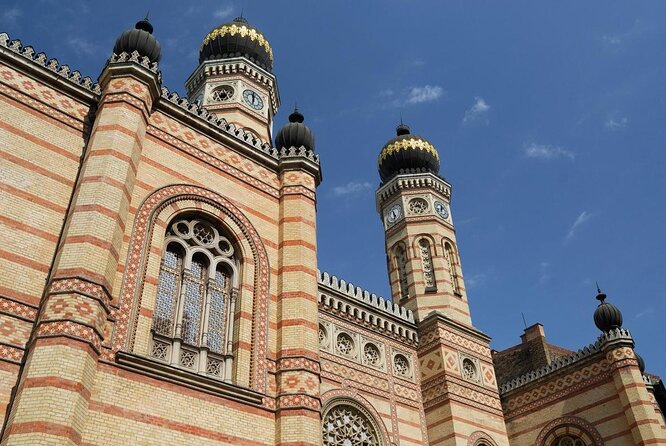
The Jewish Quarter is one of the most important parts of the route. Here, the guide explains how the area once supported a Jewish community, became a ghetto during the Second World War, and later drew artists, students, independent shops, designers, and bars.
That sequence is difficult but necessary. You see how a district can carry several identities at once, and how the modern entertainment scene sits beside painful wartime memory. The walk does not turn this into a full Jewish heritage tour, but it gives you enough context to understand why the neighborhood deserves more than a quick night out.
Expect the streets to be active and sometimes noisy. In a large group, you may need to stay close to the guide and speak up if you cannot hear. The route offers context from the street rather than extended indoor visits, so book a specialized museum or synagogue tour separately if you want a fuller treatment.
More History Tours in Budapest:
- Budapest: Historic Cruise with Welcome Drink
★ 4.7 · 6,512 reviews - Buda Castle District Dark History, Legends and Vampire Night Tour
★ 4.5 · 1,240 reviews - Budapest: Sir Lancelot Medieval Dinner with Drink and Show
★ 4.1 · 1,155 reviews - Budapest: Jewish Heritage Guided Tour with Synagogue Ticket
★ 4.8 · 533 reviews
St. Stephen’s Basilica and the road to Liberty Square

At St. Stephen’s Basilica, the guide explains the building’s name and its link to Hungary’s first king, Stephen. The stop is outside, and admission is not included. That keeps the walking tour moving, but it means you will need a separate visit if you want to see the interior.
From the basilica, the group continues toward Szabadság tér, or Liberty Square. This is one of the strongest political stops on the route. You see the Communist memorial and hear about the forces that shaped twentieth-century Hungary.
The square is especially useful for first-time visitors because it helps connect Hungarian memory with the country’s modern identity. The tour’s focus on communism is one of its stated strengths. You are not getting only kings, churches, and decorative buildings. You are also hearing about dictatorship, outside control, and the way those subjects remain part of public life.
The guide then points out the Stock Exchange Palace, described as Budapest’s largest privately owned historic landmark. You see it from outside, and entry is not included. The building adds another example of the city’s grand scale, though the stop is short at about three minutes.
Statues, Parliament, and Hungary’s political story
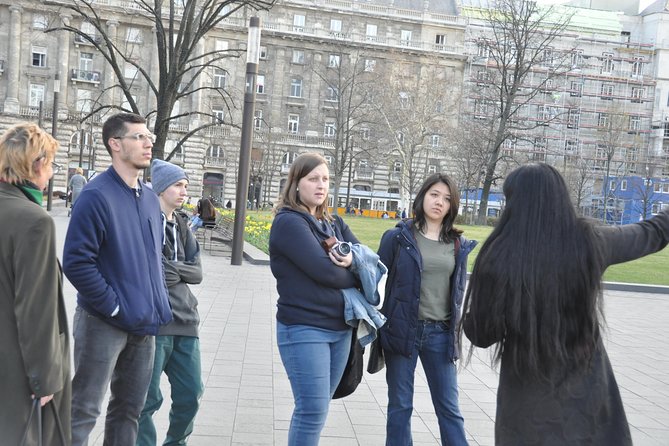
The Ronald Reagan statue provides a lighter moment. The guide explains why Reagan appears to be walking away from Parliament and why George H. W. Bush is shown waiting nearby. These statues offer an accessible way into the end of the Communist period and Hungary’s relationship with the West.
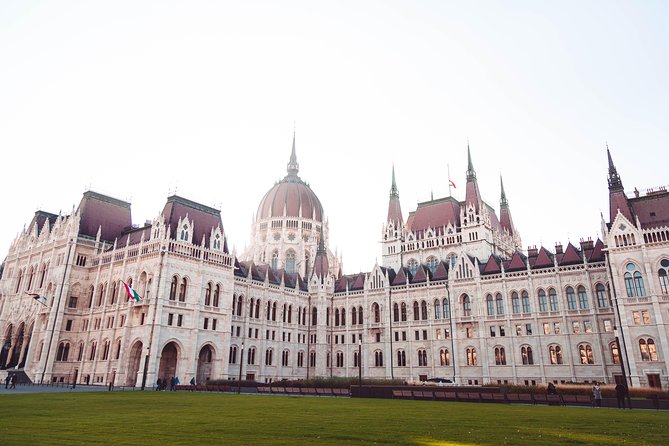
At Parliament, the tour reaches one of Budapest’s essential sights. You stand outside the neo-Gothic and electric-style building, look across the Danube toward Buda, and hear about important buildings around the square. The former Ministry of Justice, the agricultural museum, and a chocolate museum are among the nearby points mentioned.
The outside view is the focus. Admission to Parliament is not included, so you should arrange a separate interior visit if that is important to you. Still, the exterior setting does much of the work. The river, the broad square, and the building’s scale make this a memorable stop even without an indoor tour.
This is also where group size matters most. One person described a departure of about 25 people as manageable, while larger or noisier groups may make it harder to hear. Tell the guide promptly if you are struggling to follow. The organizers expect participants to speak up rather than silently fall behind.
Seeing Buda from Pest
The Fisherman’s Bastion stop can be misunderstood. You do not cross the river to explore the bastion. Instead, you see it from the Pest side, along with Matthias Church and the former royal palace area in the distance.
The guide also points out Margaret Island and Gellért Hill across the river. This gives you a useful preview of Buda and helps you decide what to visit next. You will not get the close-up experience of walking the castle district, but you do get a geographic overview without adding the climb and time needed for a separate Buda excursion.
This is a good example of the tour’s limits and its value. It introduces many places, but it does not replace them. Think of it as a city orientation with historical commentary, not a full entry ticket to Budapest’s main monuments.
Chain Bridge and the Shoes on the Danube
The route finishes around Széchenyi Chain Bridge, known locally as Lánchíd. The guide explains the bridge’s history and reconstruction. From here, you are near the end point at Id. Antall József rkp. 1, and you can walk back toward the city center or return toward the starting area.
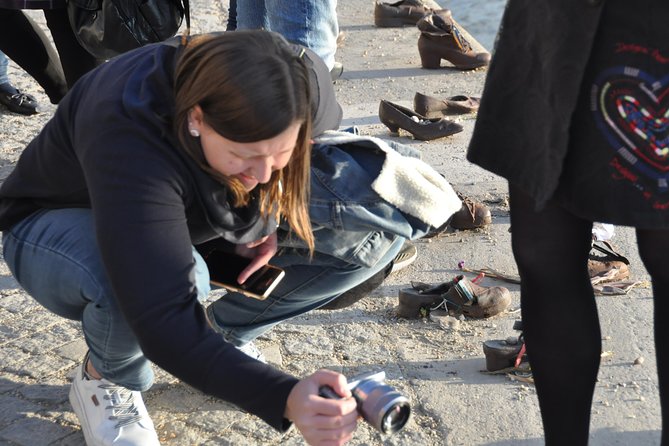
The final memorial is Shoes on the Danube Bank. Sixty pairs of iron shoes recall Jewish people who were lined up and shot on the riverbank during the Holocaust. It is a small, simple, and profoundly serious memorial. The tour does not need a grand presentation here. The objects themselves make the point.
Ending with this memorial gives the route weight. You have seen imperial architecture, nightlife streets, political statues, and Parliament. Then you face a quiet reminder of what happened to people who lived in this city. Allow yourself a moment before moving on.
What the $3.63 price really means
At $3.63 per person, this is an excellent budget choice if you understand the arrangement. The booking price is minimal, and tips are a central part of the guide’s income. If the guide gives you two and a half hours of clear history and useful city advice, plan your budget around leaving a fair tip.
The low price does not buy a private experience. The maximum group size is 50, and not every departure will be equally easy to hear. You also pay separately for toilets, drinks, and any admissions. Public toilets can cost 100 to 500 Hungarian forints.
For many people, the value is not the number of sights checked off. It is the time saved figuring out how Budapest fits together. You leave with a route through Pest, a view across to Buda, and a better sense of which places deserve a return visit.
Walking conditions, weather, and practical preparation
You should be comfortable walking about three miles over roughly two and a half hours. Cobblestones and long periods outdoors make supportive shoes important. The tour is not recommended if you cannot manage that distance.
Pack water and choose your clothing for the forecast. Sunscreen, an umbrella, or a warm jacket may all be sensible at different times of year. Cold weather can be severe, and one departure took place in conditions as cold as minus 9 degrees Celsius. The operator notes that Budapest can reach minus 25 degrees Celsius.
Children under 12 are welcome, but the experience is best suited to adults and children over 12. Service animals are allowed. Other dogs are not permitted, and guide dogs require official papers carried by the owner. The tour does not offer a hearing induction loop.
You receive confirmation when booking, and the tour is offered in English with an in-person guide. It runs near public transport, which makes both the meeting point and the end of the walk practical.
Should you book this Budapest walk?
Book it if you want an inexpensive, history-led introduction to Pest, especially on your first day. It suits you if you enjoy walking, outdoor sights, political history, architecture, and direct local advice. The strongest guides, including Victoria, Peter, Elizabeth, and Sabi, have been praised for clear explanations, humor, and help with the rest of your stay.
Think twice if you need a quiet small-group tour, indoor access to Parliament or the basilica, or a route that explores Buda in detail. You may also prefer a private tour if hearing a guide in a group is difficult.
For most first-time visitors who can walk the distance, this is a high-value start to Budapest. Wear good shoes, arrive ready for the weather, listen closely, and treat the low price as a starting point rather than the full cost of the experience.
FAQ
How long does the Budapest Historical Sightseeing Free Walking Tour last?
The tour lasts approximately 2 hours and 30 minutes.
Where does the tour begin?
It begins at OTP Bank, Budapest, Kálvin tér 12 to 13, 1085 Hungary.
How can I find the guide at Kálvin Square?
The guides wear yellow, making them easier to identify at the meeting point.
Where does the tour finish?
It finishes at Id. Antall József rkp. 1, near the Chain Bridge. From there, you can walk back toward the starting point or continue into the city center.
Is the tour conducted in English?
Yes. The experience is offered in English.
Does the route include Buda Castle and Fisherman’s Bastion?
The route does not cross to Buda. You see Fisherman’s Bastion, Matthias Church, the former royal palace, Margaret Island, and Gellért Hill from the Pest side.
Are entrance tickets included?
The tour includes an in-person guide, but admission to St. Stephen’s Basilica and the Stock Exchange Palace is not included. The main itinerary focuses on exterior viewing and public spaces.
Is food or coffee included?
No. There is no food or drink provided. A short five-minute break allows time to buy a drink and use the toilet.
How much walking is involved?
You should be able to walk about three miles. Comfortable shoes are important, particularly on cobblestones.
Can I cancel for a full refund?
You can cancel at least 24 hours before the start time for a full refund. Changes or cancellations made less than 24 hours before the start time are not accepted for a refund.
Just added around Budapest
- Time Machine Budapest Historical Exhibition Ticket★ 5.0 · 32 reviews
- Budapest Jewish Heritage: Synagogues, Shoes, Secrets & Flódni★ 5.0 · 47 reviews
- Michael Jackson History Exhibition Ticket★ 5.0 · 42 reviews
- Private Jewish Heritage Tour including Hotel Pickup★ 4.5 · 35 reviews
- Communist History Evening Walking Tour of Budapest★ 4.5 · 23 reviews
- Jewish Heritage / Full tour★ 5.0 · 59 reviews
- Jewish Heritage in Hungary with a Historian★ 5.0 · 37 reviews
- Budapest Paddle Steamer Danube Cruise with Tokaj & Audio Guide★ 4.5 · 338 reviews
Budapest History Tours, compared.
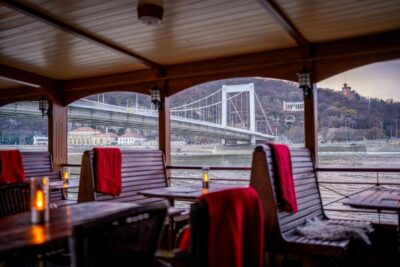
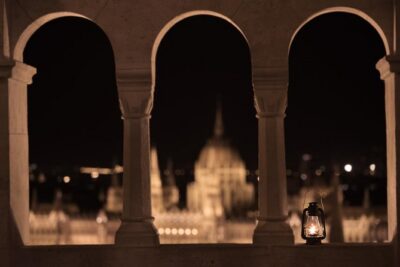
Buda Castle District Dark History, Legends and Vampire Night Tour
Read our review →
Budapest: Sir Lancelot Medieval Dinner with Drink and Show
Read our review →
BloodThirsty Hungary: Walking tour & Dark Historical Stories
Read our review →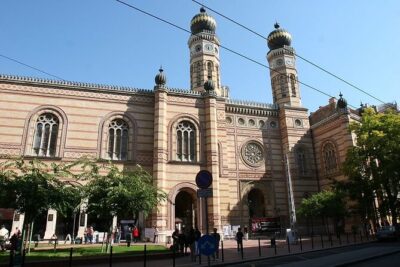
Budapest Jewish Heritage Memorial Walking Tour & Synagogue Entry
Read our review →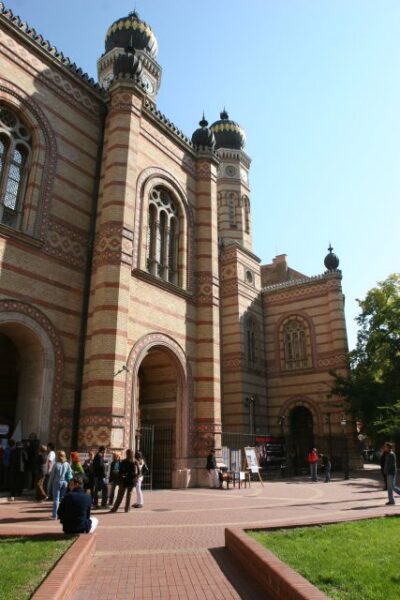
Budapest: Jewish Heritage Guided Tour with Synagogue Ticket
Read our review →
Budapest Paddle Steamer Danube Cruise with Tokaj & Audio Guide
Read our review →
Budapest Historic Downtown Bicycle Tour in small groups
Read our review →Browse the lists this tour appears in