
Review · BUDAPEST
Budapest Jewish Heritage Memorial Walking Tour & Synagogue Entry
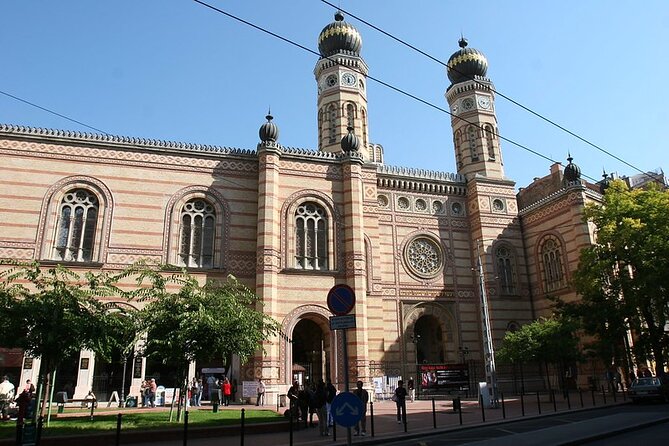
Budapest’s Jewish Heritage Memorial Walking Tour brings together one spectacular building, difficult wartime history, and the living Jewish quarter in a single morning. You begin inside the vast Dohány Street Synagogue, then move through its museum, memorial garden, former ghetto streets, and, on the longer route, another working synagogue and kosher café.
I like the way the tour connects big historical events with real places, especially the Raoul Wallenberg and Carl Lutz memorials. I also like the small-group size, capped at 15 people, and the chance to hear personal context from guides such as Benjamin, Daniel, Barbara, Barbie, and Turo.
The main drawback is pace. Some of the first three hours involve sitting and listening inside the synagogue, and the Essential Tour has less neighborhood walking than you may expect. If you want more street time and a pastry break, choose the Grand Tour.
Key things to know before you book
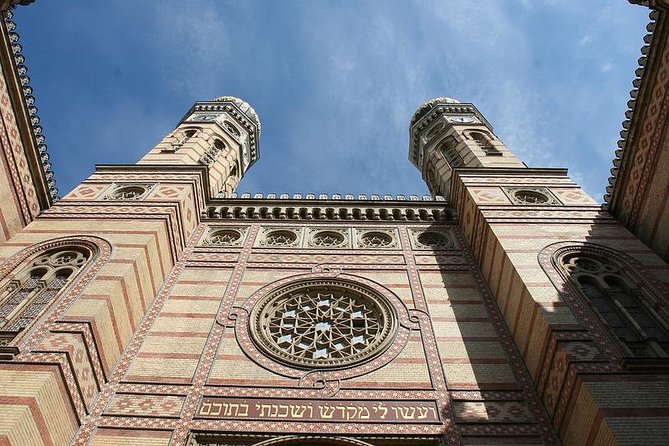
- Dohány Street Synagogue anchors the visit: You receive entry to Europe’s largest synagogue and the second largest in the world.
- The Jewish Museum adds daily life and ritual: Its collection covers Hungarian and Eastern European Jewish heritage, holidays, art, and the Holocaust.
- The Grand Tour is the better choice for depth: It adds Kazinczy Street Synagogue, Carl Lutz Memorial Park, Gozsdu Udvar, and a kosher bakery stop.
- The guide makes a major difference: Benjamin is often singled out for clear explanations, warmth, and personal insight, while Daniel, Barbara, Barbie, and Turo have also led praised visits.
- The meeting point is central and simple: Start at Dohány u. 2 at 10:00 a.m., near public transportation.
- The $83.44 price is easiest to justify on the Grand Tour: Included admissions and a small group make the longer version a stronger buy for history-minded visitors.
Why this tour matters in Budapest
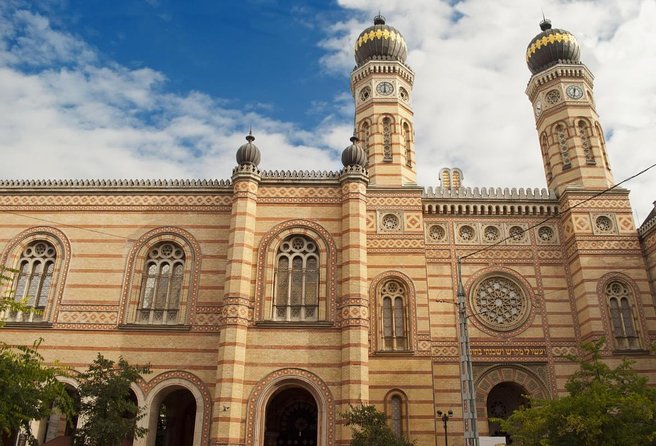
Budapest’s Jewish quarter is not just a collection of beautiful synagogues. It is a place where religious life, urban history, wartime persecution, memory, and present-day culture meet within a few city blocks.
That mix gives this tour its purpose. You are not simply looking at decorative interiors. You are learning how Jewish life developed in Hungary, how the community suffered during the Second World War, and how memorials preserve the names and actions of people who resisted that destruction.
The visit also works for people who are not Jewish. The subject is part of Budapest’s civic history, and the guides explain Jewish customs, holidays, community life, and European anti-Semitism in a way that does not require previous background.
The tour is offered in English and lasts about three hours. The group limit of 15 is useful here. A guide can answer questions and keep the discussion personal without the crowd becoming unwieldy.
More Jewish Heritage Tours in Budapest:
- Budapest: Jewish Heritage Guided Tour with Synagogue Ticket
★ 4.8 · 533 reviews - Budapest: Jewish History Guided Walking Tour with Historian
★ 4.8 · 205 reviews - Budapest Grand Half-Day Jewish Heritage Tour
★ 4.8 · 135 reviews
Starting inside Dohány Street Synagogue
Meet your guide and group at the entrance to Dohány Street Synagogue at 10:00 a.m. The building is the first major stop and the visual centerpiece of the morning.
The synagogue is enormous, ornate, and unlike the plain synagogue interiors many visitors may have seen elsewhere. You receive an interior visit lasting about 30 minutes, though the guide’s explanation makes this more than a quick look around. The discussion places the building within Budapest’s Jewish community and explains why it became such an important symbol.
This is also where the tour’s listening-heavy style begins. One former participant felt the group spent too long seated inside and wanted more movement and neighborhood detail. That is a fair warning. If you prefer a walking tour that keeps moving every few minutes, the opening may feel slow.
I see the seated time differently, but only up to a point. The synagogue is a major historic site, and rushing through it would miss much of its meaning. Still, you should book this experience expecting a guided history lesson as well as a walk.
The building’s survival gives the stop extra weight. You will hear about the community that built and used it, the persecution that followed, and the way the site now serves memory as well as worship.
The Jewish Museum and the story of everyday life
Next comes the Hungarian Jewish Museum and Archives, with about 45 minutes devoted to the collection. This stop helps prevent the tour from becoming only a story of tragedy.
The museum presents Jewish heritage through art from Hungary and Eastern Europe. You also see material connected with Jewish holidays, religious tradition, and everyday life. A separate room addresses the Hungarian Holocaust, giving the wartime story a direct place within the museum.
I value this balance. Memorials naturally focus on loss, but a community cannot be understood only through the worst years of its past. The museum shows religious practice, family life, art, and cultural traditions alongside persecution and loss.
The quality of this part depends strongly on the guide. Guides such as Benjamin have been praised for explaining not just what happened, but why events unfolded as they did. That distinction matters. Dates and names can be useful, but a clear explanation of politics, prejudice, and social change gives the visit lasting value.
Allow time to look at the objects yourself. One account found the museum portion too lightly guided, so do not expect every display to receive a long explanation. The guide gives the larger framework, while some browsing is left to you.
Memorials, the former ghetto, and the weight of place
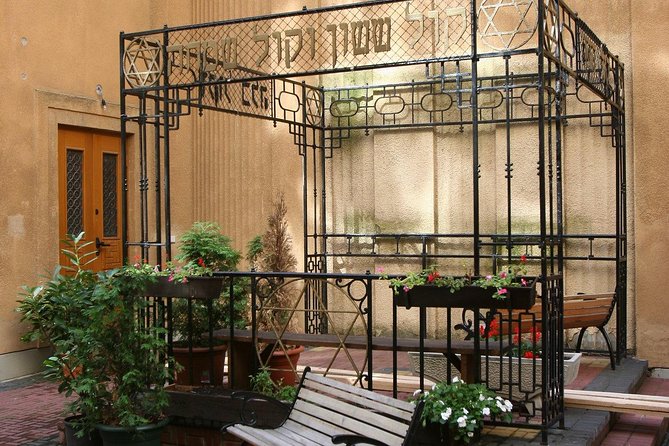
The Essential Tour continues through memorial sites and the old Jewish Quarter. This area was once a ghetto during the Second World War, and walking its streets gives the historical discussion a physical setting.
The Raoul Wallenberg Holocaust Memorial Park is one of the most important stops. Wallenberg is credited with saving thousands of people in Budapest’s Jewish community. The park includes the memorial associated with those who died, and the site asks you to hold both rescue and mass loss in mind.
Heroes’ Temple also appears on the shorter route. It honors Jewish lives lost during the First World War, extending the story beyond the Holocaust and showing that Jewish remembrance in Budapest covers more than one period of conflict.
The tone here is sober. The tour does not treat the quarter as just a fashionable nightlife district. Gozsdu Udvar, which appears on the Grand Tour, now draws people for food, shopping, and evening activity, but the wider neighborhood also carries traces of the wartime ghetto and the community that lived there.
This is where a good guide adds the most. Benjamin has been praised for connecting the streets to Hungarian politics, Jewish life, and his own perspective. Turo has also been noted for listening to questions while keeping the group on schedule. Those qualities matter in a place where the subject can easily become either too abstract or too rushed.
More History Walking Tours in Budapest:
- Budapest Historical Sightseeing – Free Walking Tour
★ 5.0 · 1,302 reviews - BloodThirsty Hungary: Walking tour & Dark Historical Stories
★ 4.9 · 633 reviews - Palace District Evening Culinary, Wine, and History Walk
★ 5.0 · 55 reviews - Budapest: Nightlife Bar Crawl Walking Tour
★ 5.0 · 38 reviews
The Grand Tour adds the stronger second half
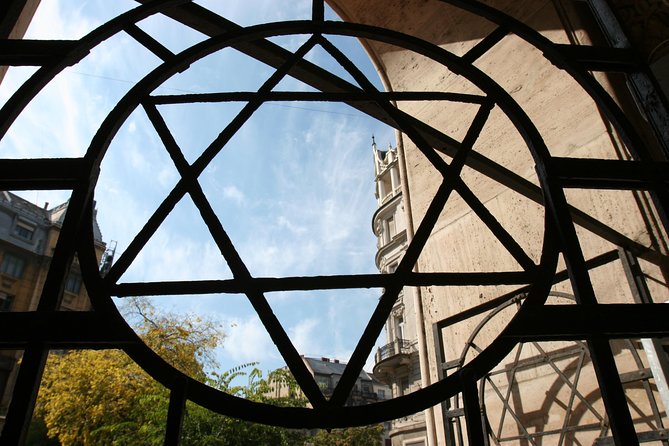
If your schedule allows, I would choose the Grand Tour. It continues beyond the synagogue, museum, and main memorials, adding several stops that make the Jewish quarter feel more complete.
The route passes through Gozsdu Udvar, a short stop of about five minutes. This is not a full visit or a food tour. Instead, it gives you a quick look at one of the quarter’s best-known passages and helps connect the historic district with present-day Budapest.
The group then visits Carl Lutz Memorial Park for about 20 minutes. Lutz was another figure associated with saving Jewish lives during the Second World War. The memorial adds an important comparison with Wallenberg and broadens the story of how individual actions mattered during a period of terrible danger.
The Grand Tour also includes a Judaica shop according to the experience details reflected in the visit accounts. This can be useful if you want to see ritual objects in a contemporary setting, and one person used the opportunity to find tefillin. Do not count on the stop as a formal museum visit, but it adds a practical link between Jewish tradition and present-day community life.
Kazinczy Street Synagogue and the kosher café stop
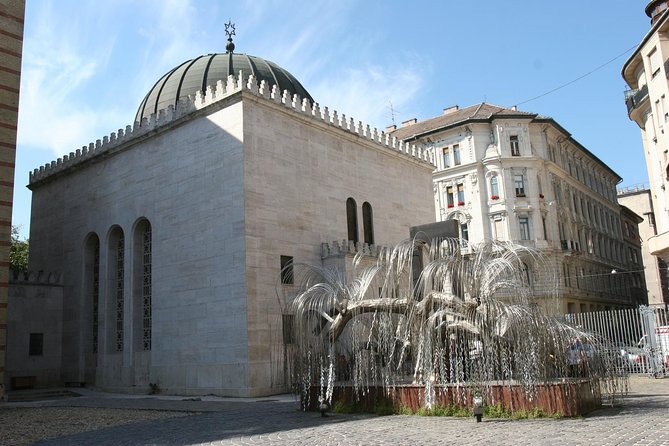
Kazinczy Street Synagogue is the Grand Tour’s other major admission. It is the main synagogue of Hungarian Orthodox Jewry and is built in the Art Nouveau style.
This synagogue gives you a useful contrast with Dohány Street Synagogue. Instead of seeing only one grand institution, you get a clearer sense of differences within Budapest’s Jewish community. The building is also one of the largest operating Orthodox synagogues in Europe.
The visit lasts about 30 minutes. As with Dohány, listen for the guide’s explanation of how the synagogue fits into religious and communal life rather than focusing only on decoration.
The tour ends with a choice connected to kosher food. You can accept an invitation for cake at the glatt kosher Fröhlich confectionery, or receive a 10 percent discount at the glatt kosher Carmel restaurant for later that evening. The cake and coffee stop is a small touch, but it makes the Grand Tour feel more relaxed after several serious memorial sites.
The Carmel discount is not a meal included in the tour. You use it independently later, so treat it as a useful extra rather than part of the $83.44 value.
Essential or Grand: which version fits you?
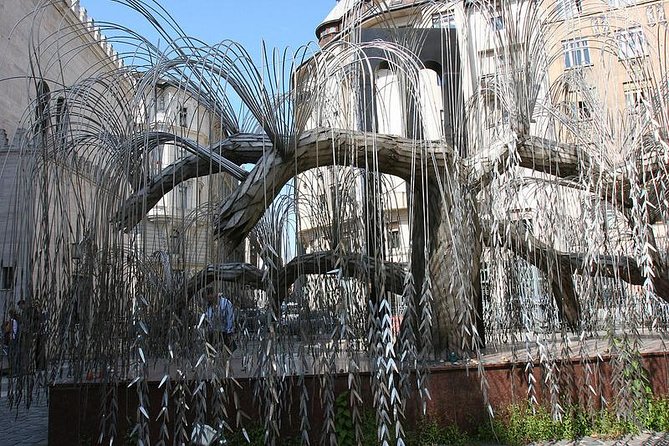
The Essential Tour suits a tight Budapest schedule. It covers Dohány Street Synagogue, the Jewish Museum, the Raoul Wallenberg memorial, the former Jewish Quarter, and Heroes’ Temple.
Choose it if you want the core story in a shorter format or if you already have evening plans. It still includes the main synagogue admission and museum visit, so you are not getting a token introduction.
The Grand Tour is the better choice if Jewish history is one of your main reasons for visiting Budapest. You gain Kazinczy Street Synagogue, Carl Lutz Memorial Park, Gozsdu Udvar, the Judaica shop, and the kosher pastry option.
I would especially choose the Grand Tour if you enjoy comparing religious buildings, asking questions, and seeing how a historic community functions beyond memorials. The additional time also gives the guide more room to discuss modern Hungarian Jewish life and the political setting around the quarter.
The tradeoff is time and intensity. The subject is serious, and the tour covers a lot in roughly three hours. One person found the experience too focused on sitting and listening, while others wanted the extended version because of the added neighborhood context. Your choice should depend on whether you prefer a compact introduction or a fuller morning.
How much value do you get for $83.44?
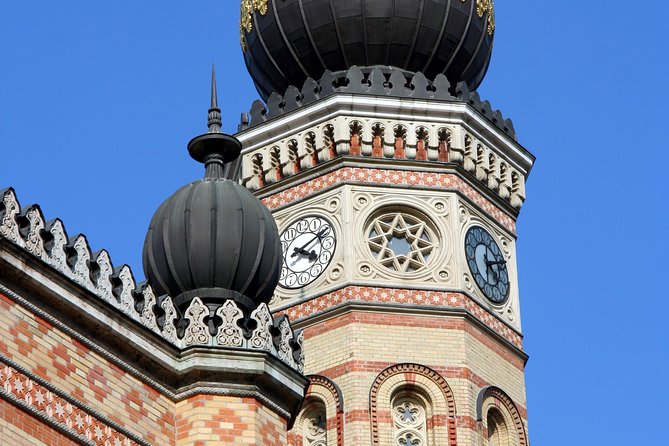
At $83.44 per person, this is not a bargain walking tour. The price makes more sense when you use the included admissions and select the Grand Tour.
You receive a professional English-speaking guide, entry to Dohány Street Synagogue, and, on the Grand Tour, entry to Kazinczy Street Synagogue. The group maximum of 15 also matters. A private guide would cost much more, while a large group would make a sensitive subject harder to discuss.
The value is strongest for you if you would otherwise visit the synagogues and museum separately without a clear historical framework. The guide links the buildings, memorials, wartime events, and living community. That connection is the part you are paying for.
The value is weaker if you only want photographs of the synagogue or a fast stroll through the Jewish Quarter. You can expect explanations, pauses, and some sitting. It is designed for learning, not just sightseeing.
Practical details that shape the morning
The tour begins at Dohány Street Synagogue, Budapest, Dohány u. 2, 1074 Hungary. It starts at 10:00 a.m. and ends at a different location, so plan your next activity with that in mind.
There is no hotel pickup or drop-off. The meeting point is near public transportation, which makes it fairly easy to reach from other parts of Budapest, but you need to get yourself to the synagogue.
The experience is offered in English and uses a mobile ticket. Most people can participate, and the group is limited to 15. The tour is typically reserved well ahead, with an average booking time of 53 days before the visit, so early planning is sensible during busy periods.
Free cancellation is available up to 24 hours before the start time for a full refund. Changes or cancellations made later are not accepted for a refund.
Guides make or break this experience
The repeated strength of this tour is the guide. Benjamin is often praised for a warm, clear style and for answering questions about Jewish culture, Hungarian politics, restaurants, and community life. His local background and personal connection to the subject can make the material feel less like a script.
Daniel has also been described as good at explaining the reasons behind historical events, not only the facts. Barbara and Barbie have been noted for engaging delivery and solid coverage of political themes. Turo has been praised for balancing enthusiasm, questions, and time.
That said, guide quality can vary. One person found the guide too quiet and wanted more feeling from the Jewish perspective. Another felt the museum was not guided closely enough. Those comments point to the limits of any group tour: you cannot choose the guide, and the experience depends partly on speaking volume, group dynamics, and how much discussion develops.
Still, the overall satisfaction level is strong, with a 4.8 rating and 94 percent recommending it. I would treat that as a sign that the format works well for most people, while keeping the sitting and listening issue in mind.
Who should book this tour?
Book it if you want a serious introduction to Budapest’s Jewish past and present, especially if you prefer a guide who can explain context rather than hand you a list of dates.
It suits first-time visitors, people with family or cultural ties to Jewish history, and anyone interested in European anti-Semitism, wartime rescue efforts, religious architecture, or social history. You do not need to be Jewish to benefit from it.
Choose the Essential Tour when time is short. Choose the Grand Tour when you want the best value, more walking, a second synagogue, a memorial to Carl Lutz, and the kosher pastry stop.
Skip it if you want a quick, constantly moving walk or if you dislike extended talks inside historic buildings. For everyone else, this is a worthwhile way to understand why Budapest’s Jewish Quarter is more than a pretty district with restaurants and nightlife.
FAQ
Where does the Budapest Jewish Heritage Memorial Walking Tour begin?
It begins at Dohány Street Synagogue, Budapest, Dohány u. 2, 1074 Hungary.
What time does the tour start?
The tour starts at 10:00 a.m.
How long does the tour last?
The tour lasts approximately three hours.
Is the tour offered in English?
Yes. The tour is offered in English.
What is included in the price?
The price includes a professional guide and entrance to the Great Synagogue. The Grand Tour also includes entrance to Kazinczy Street Synagogue.
Is hotel pickup included?
No. Hotel pickup and drop-off are not included.
How many people can join the group?
The tour has a maximum of 15 participants.
What is the difference between the Essential Tour and the Grand Tour?
The Essential Tour covers Dohány Street Synagogue, the Jewish Museum, memorial sites, the former Jewish Quarter, and Heroes’ Temple. The Grand Tour adds Gozsdu Udvar, Carl Lutz Memorial Park, Kazinczy Street Synagogue, a Judaica shop, and a kosher cake or restaurant option.
Can I cancel for a full refund?
Yes. You can cancel at least 24 hours before the local start time for a full refund. Cancellations or changes made less than 24 hours before the start time are not accepted for a refund.
Just added around Budapest
- Time Machine Budapest Historical Exhibition Ticket★ 5.0 · 32 reviews
- Budapest Jewish Heritage: Synagogues, Shoes, Secrets & Flódni★ 5.0 · 47 reviews
- Michael Jackson History Exhibition Ticket★ 5.0 · 42 reviews
- Private Jewish Heritage Tour including Hotel Pickup★ 4.5 · 35 reviews
- Communist History Evening Walking Tour of Budapest★ 4.5 · 23 reviews
- Jewish Heritage / Full tour★ 5.0 · 59 reviews
- Jewish Heritage in Hungary with a Historian★ 5.0 · 37 reviews
- Budapest Historic Downtown Bicycle Tour in small groups★ 5.0 · 288 reviews
Budapest History Tours, compared.
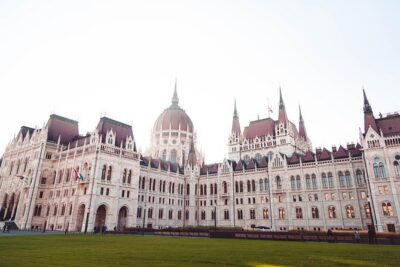
Budapest Historical Sightseeing – Free Walking Tour
Read our review →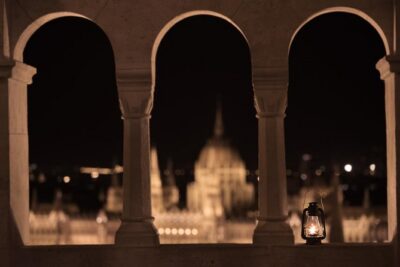
Buda Castle District Dark History, Legends and Vampire Night Tour
Read our review →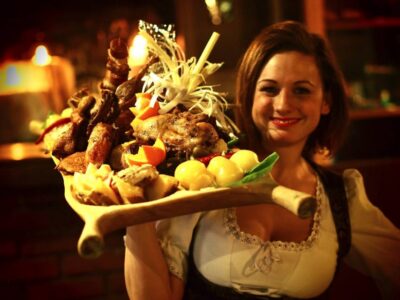
Budapest: Sir Lancelot Medieval Dinner with Drink and Show
Read our review →
BloodThirsty Hungary: Walking tour & Dark Historical Stories
Read our review →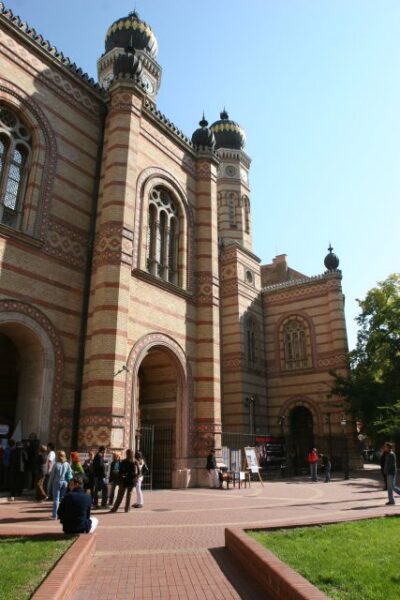
Budapest: Jewish Heritage Guided Tour with Synagogue Ticket
Read our review →
Budapest Paddle Steamer Danube Cruise with Tokaj & Audio Guide
Read our review →
Budapest Historic Downtown Bicycle Tour in small groups
Read our review →Browse the lists this tour appears in