
Review · BUDAPEST
Budapest Jewish Heritage: Synagogues, Shoes, Secrets & Flódni
Budapest’s Jewish Quarter is best understood on foot, where grand synagogues, cramped former ghetto streets, memorials, and everyday city life sit close together. This private walk connects those pieces with a Jewish guide who can explain both the public story and the family life behind it. You visit three very different synagogues, then pause at the Shoes on the Danube and the remnants of the 1944 ghetto.
I like the personal format, especially the chance to ask questions instead of following a fixed group speech. I also like the final flódni, a traditional Jewish-Hungarian pastry that gives the tour a small, human finish. Guides such as Gabriella, Miklós, Edith, Peter, and Kata have been praised for thoughtful storytelling and personal insight.
The main consideration is time. Two hours and 45 minutes can cover a lot, but it cannot provide a full Holocaust seminar, a lengthy visit inside every synagogue, and a complete survey of Hungarian Jewish life. Entrance fees are not included, and synagogue access may need to be handled separately.
Key points at a glance
- Three synagogue traditions: Compare the grand Neolog Great Synagogue, Moorish Rumbach Street Synagogue, and colorful Orthodox synagogue on Kazinczy Street.
- A private, conversational walk: Your group has the guide to itself, making it easier to ask questions and adjust the emphasis.
- Wartime sites with context: Visit the Carl Lutz Memorial, Shoes on the Danube, former ghetto area, and a surviving section of ghetto wall.
- Guides with varied personal perspectives: Gabriella, Miklós, Edith, Peter, and Kata are among the named guides associated with the experience.
- Flódni at the finish: End with a traditional Jewish pastry rather than simply walking away after the last memorial.
- Budget for entry tickets: Synagogue admission is not part of the listed price, and public transportation is also separate.
Why this walk gives Budapest’s Jewish Quarter a human scale
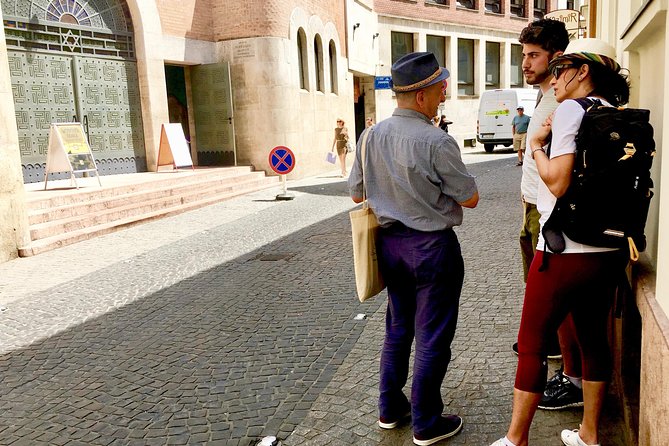
The tour begins at Herzl Square near Dohány Street, in Budapest’s District VII. This is the old Jewish Quarter, though you should not expect a preserved historic village. The area has changed greatly, and much of the wartime quarter is now mixed with shops, restaurants, apartment buildings, and nightlife.
That contrast is part of the point. You are not simply touring old buildings. You are trying to picture a community that shaped Budapest, endured persecution, and then carried on through enormous loss. A good guide helps you connect those stages without reducing the story to a list of dates.
The private setup matters here. You can ask why Hungarian Jewish life developed along different religious lines, how families lived between the First and Second World Wars, or how the ghetto functioned. The guide can also spend more time on a subject that matters to your group.
The guides named in the experience bring different strengths. Gabriella is praised for her warmth and command of Hungarian Jewish history. Miklós is a retired educator who often places local events in a wider European setting. Edith uses questions to make you think about what you are seeing. Kata has shared family connections to Hungarian Jewish life, the Holocaust, and the Soviet occupation. The exact guide is not guaranteed, but the experience is built around this kind of personal teaching.
More Jewish Heritage Tours in Budapest:
- Budapest Jewish Heritage Memorial Walking Tour & Synagogue Entry
★ 5.0 · 568 reviews - Budapest: Jewish Heritage Guided Tour with Synagogue Ticket
★ 4.8 · 533 reviews - Budapest: Jewish History Guided Walking Tour with Historian
★ 4.8 · 205 reviews
The Great Synagogue: Budapest’s grand opening chapter
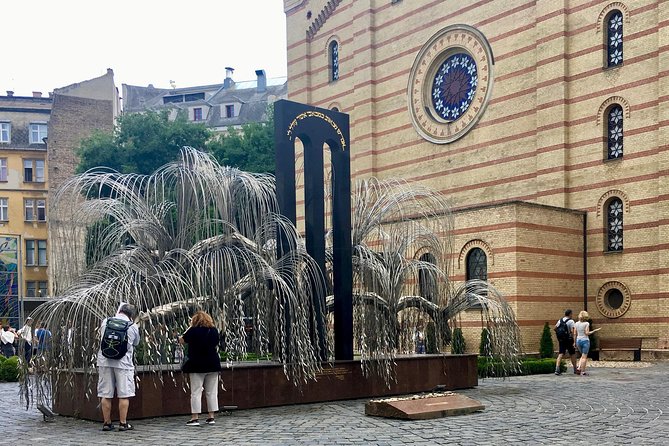
The first major stop is the Dohány Street Synagogue, commonly called the Great or Central Synagogue. It is the largest synagogue in Europe, with seating for about 3,000 people, and it serves the Neolog branch of Judaism.
The building gives you an immediate sense of the size and influence of Budapest’s Jewish community in the 19th century. Its architecture is distinctive, and your guide explains why it differs from the other synagogues in the district. That comparison is useful because the three houses of worship are not simply three attractive buildings. Each reflects a different branch and social outlook within Hungarian Judaism.
The stop is listed as about 20 minutes. That is enough for an introduction and orientation, but not a full museum visit. Admission is not included, so confirm what you will see from outside and what requires a separate ticket when booking. If the Great Synagogue is your main reason for coming, you may want extra time there beyond this walk.
The historical discussion is just as important as the architecture. You hear about the fate of Hungarian Jews during the Second World War and the many Hungarian Jews who became prominent in science, business, film, and the arts. Names such as Tony Curtis and Estée Lauder may come up in the wider story of Hungarian Jewish contribution and identity.
Rumbach Street: a different branch, a different design
A short walk brings you to Rumbach Sebestyén Street Synagogue. Built in 1872 by Otto Wagner, it served the more moderate Conservative community. Its Moorish design and restored interior make it a useful counterpoint to the Great Synagogue.
The stop lasts about 15 minutes, and admission is not included. The attraction here is comparison. Instead of seeing one synagogue as the whole story, you begin to understand how several Jewish communities shared the same district while maintaining distinct religious practices and identities.
The restored interior is especially helpful for that comparison. It has decorative detail and a more intimate feel than the enormous Dohány Street building. Ask your guide to explain the differences among Neolog, Conservative, and Orthodox practice, since the tour is designed to use the buildings as an introduction to those divisions.
Carl Lutz and the limits of individual rescue
The Carl Lutz Memorial offers a brief but important pause. Lutz was a Swiss diplomat who helped save tens of thousands of Jews in Budapest from persecution and deportation during the war.
The stop is listed at about 10 minutes and is free. The value comes from the explanation around the monument. In a tour that deals with state persecution and mass murder, it is important to remember the people who used their official positions, personal courage, or access to documents to help others.
Do not expect a long standalone lecture here. Instead, the memorial forms part of the larger wartime story. It also helps you avoid viewing the Jewish Quarter only through tragedy. The district’s past includes resistance, rescue, daily survival, and the choices made by individuals under extreme pressure.
More History Tours in Budapest:
- Budapest: Historic Cruise with Welcome Drink
★ 4.7 · 6,512 reviews - Budapest Historical Sightseeing – Free Walking Tour
★ 5.0 · 1,302 reviews - Buda Castle District Dark History, Legends and Vampire Night Tour
★ 4.5 · 1,240 reviews - Budapest: Sir Lancelot Medieval Dinner with Drink and Show
★ 4.1 · 1,155 reviews
Kazinczy Street: Budapest’s Orthodox synagogue
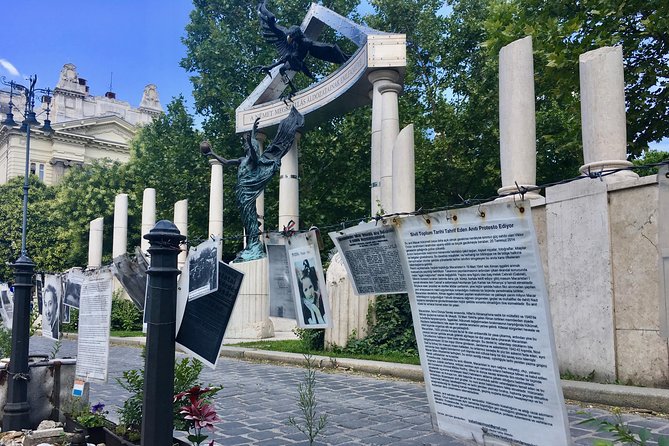
The synagogue on Kazinczy Street introduces the Orthodox community. Built in 1913, it has late Art Nouveau details, bright colors, and stained glass designed by Miksa Róth.
This is another short stop, listed at about 10 minutes, and admission is not included. Its smaller scale and decorative style help complete the architectural comparison begun at the Great Synagogue and Rumbach Street.
For me, this is one of the most useful parts of the route because the three synagogues show that Jewish Budapest was not one uniform community. The buildings reflect different religious traditions and different experiences of urban Jewish life. If you enjoy architecture, pay attention to how the guide links design with community identity rather than treating each synagogue as an isolated monument.
Shoes on the Danube: a quiet, serious pause
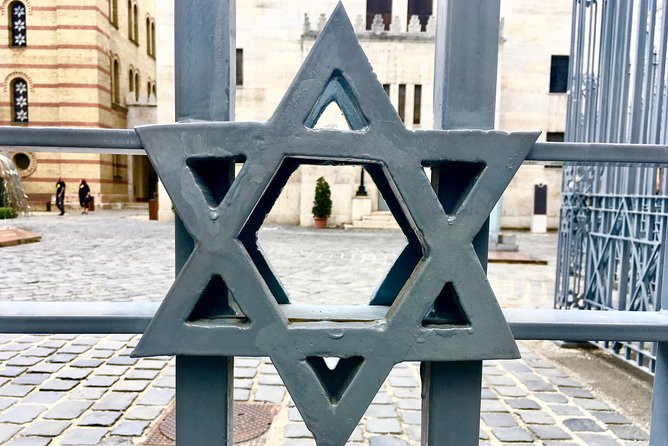
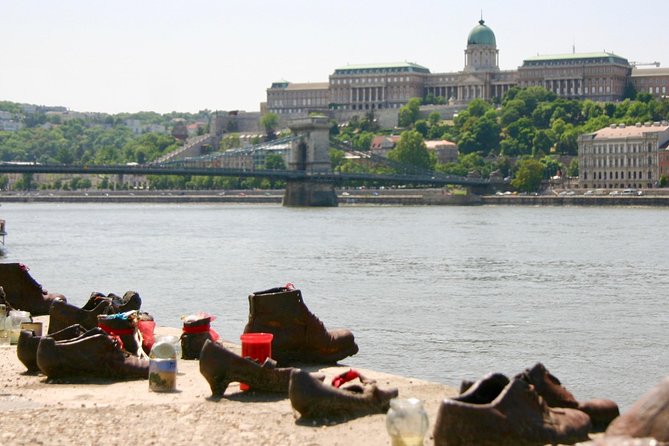
The Shoes on the Danube Bank memorial is one of Budapest’s most direct memorials. Metal shoes line the riverbank, recalling Jewish victims who were ordered to remove their shoes before being shot into the Danube during the Second World War.
The stop takes about 10 minutes, and admission is included because it is a public memorial. The simplicity is its force. There is no large building to distract you. You look at the shoes, the river, and the empty space where people once stood.
Your guide’s role here is to provide context without rushing you. This is not a spot for a long, theatrical speech. It calls for a respectful pause. The memorial can be especially meaningful if you have family connections to Jewish history, but you do not need a personal connection to understand its basic human weight.
The walk’s sequence also matters. After the synagogues and their community life, you reach a place that shows what happened when persecution became organized murder. That movement from culture to catastrophe is difficult, but it gives the earlier stops greater meaning.
The former ghetto and the surviving wall
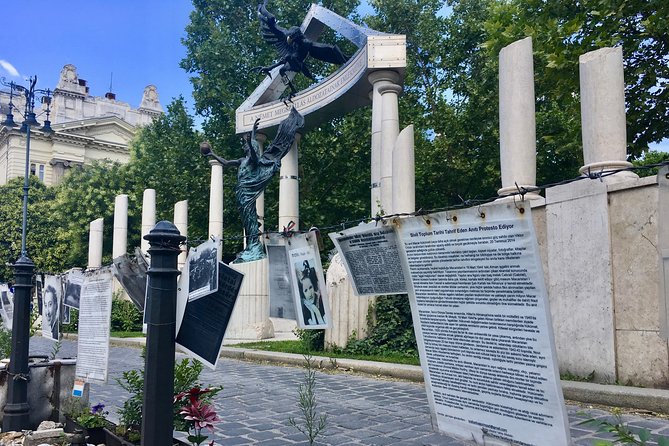
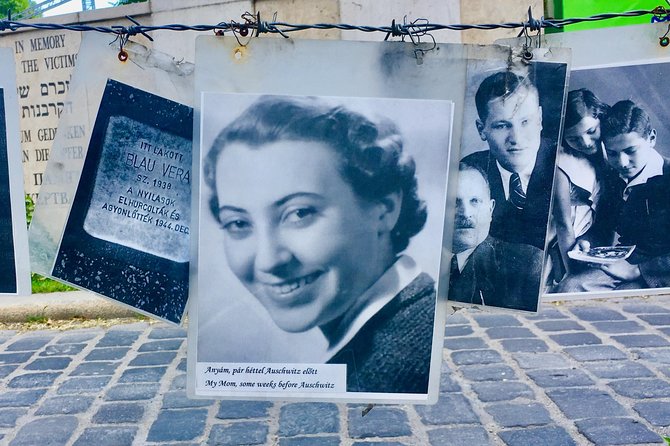
The route returns to Budapest’s Jewish Quarter and the area of the former 1944 ghetto. A small section of the ghetto wall still survives in the center of the city.
This section of the walk is less about grand sights and more about imagination. Much of the old quarter has changed, so you need the guide’s stories to picture the crowded conditions, fear, hunger, and uncertainty of those confined there. The scheduled stop is about 15 minutes.
The experience can vary here depending on your guide and your questions. One guide may focus more on family life between the two world wars. Another may spend more time on the ghetto, rescue efforts, or the decisions made by Hungarian authorities. If you want detailed accounts of protection, deportation, or daily survival, say so early in the walk.
That point is worth making plainly. This tour is a Jewish heritage tour with a strong wartime section, but it is not presented as a specialist Holocaust-only program. One past participant wanted more detailed stories about how people protected themselves and what happened step by step. The guide explained that Hungarian Jews had largely trusted the state and did not imagine that their own government would betray them. That exchange shows why it helps to tell your guide what kind of history you want to explore.
Flódni: ending with food and conversation
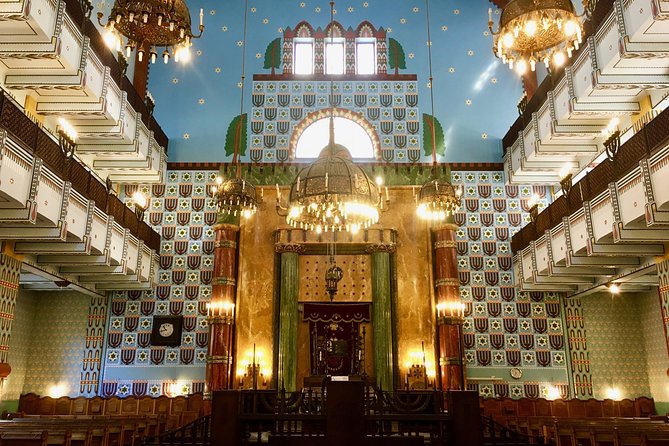
The walk ends around Dohány Street with flódni, a traditional Jewish pastry. It is made with layered fillings, commonly associated with ingredients such as apple, walnut, poppy seed, and plum, though the exact serving details are not specified here.
Food is a smart ending for this subject. It brings the conversation back to ordinary life, family traditions, and the culture that survived. The pastry is not meant to erase the difficult parts of the tour. It gives you a chance to discuss what you have seen while sharing something connected to Jewish-Hungarian life.
The final stop is listed at about 20 minutes. Some guides have also offered time for coffee or a discussion in a nearby café, but that should not be treated as a guaranteed extra. The stated inclusion is the flódni snack.
What the $102.95 price really buys you
At $102.95 per person, this is not the cheapest way to walk through the Jewish Quarter. The price makes more sense for a private group that values a guide’s attention and wants a conversation rather than a large group presentation.
The tour includes hotel pickup, a historian guide, a Jewish guide, and the pastry. The meeting point is Dohány u. 1, and the activity ends back at the meeting point. Public transportation tickets are not included, and synagogue entrance fees are separate.
That last point affects the real cost. If you plan to enter the Great Synagogue, Rumbach Street Synagogue, or Kazinczy Street Synagogue, set aside additional money. The listed schedule gives you short stops at each, so clarify the entrance plan before you go.
For two people, the private format can feel expensive. For a family or small group, it may offer better value because you can ask questions, set the pace within reason, and focus on the subjects that matter most to you. It also suits travelers with limited time. One couple with a tight ship schedule found the private format helpful because the guide could keep the visit focused.
The tour is offered in English, confirmation is provided when you book, and free cancellation is available until 24 hours before the start time. Most people can take part, service animals are allowed, and the start is near public transportation.
Who should book this experience
I would choose this tour if you want to understand the Jewish Quarter as a living part of Budapest’s story, not just collect photographs of synagogues. It is especially useful for first-time visitors who want an introduction to the district before returning independently to the Great Synagogue or Jewish memorials.
It also suits Jewish visitors looking for a connection to Hungarian family or cultural history. Kata, for example, has shared personal family experience connected with the Holocaust and Soviet occupation, along with the way she raises her daughter in Hungarian Jewish culture. That kind of perspective may give the walk an added personal meaning, though the guide assigned to you can vary.
Non-Jewish visitors are welcome and can gain a great deal from the tour. One guide begins by asking why the group chose the experience, which helps shape the conversation. You do not need prior knowledge. You do need to be ready for serious material and honest discussion.
I would be more cautious if you want a long, formal visit inside each synagogue or a tightly documented Holocaust research tour. The short schedule limits the time at individual sites, and the experience may lean toward discussion, interpretation, and local context rather than exhaustive detail.
Should you book the Budapest Jewish Heritage walk?
Book it if you want a private, human-scale introduction to Budapest’s Jewish Quarter, with three distinct synagogues, wartime memorials, a former ghetto site, and food at the end. The strongest feature is the guide. Gabriella, Miklós, Edith, Peter, and Kata are all associated with the warm, question-friendly style this experience aims for.
Before paying, confirm which synagogue entrances are covered on your chosen date, since the listed price does not include admission. Also tell the guide if you want more time on family life, architecture, rescue efforts, or the Holocaust.
At 96 percent recommended and rated 4.9 from 47 reviews, the experience has a strong record. Its best value comes when you treat it as a thoughtful introduction and conversation, not as a complete account of every chapter in Hungarian Jewish history. Finish with flódni, then return to the quarter on your own. You will see the streets differently.
FAQ
How long does the Budapest Jewish Heritage tour last?
The tour lasts approximately 2 hours and 45 minutes.
Where does the tour begin?
It begins at Budapest, Dohány u. 1, 1074 Hungary, near Herzl Square and the Great Synagogue.
Where does the tour end?
The activity ends back at the meeting point.
Is hotel pickup available?
Yes. Hotel pickup is included as an offered feature, though you should confirm the arrangements when booking.
Is the tour private?
Yes. Only your group participates in the private activity.
Is the tour offered in English?
Yes. The experience is offered in English.
Are synagogue entrance tickets included?
No. Entrance tickets are not included in the listed price. Public transportation tickets are also separate.
Is flódni included?
Yes. The tour includes an authentic Jewish dessert, flódni, at the end of the walk.
Can I cancel for a full refund?
Yes. You can cancel at least 24 hours before the experience start time for a full refund. Cancellations made less than 24 hours in advance are not refunded.
Just added around Budapest
- Time Machine Budapest Historical Exhibition Ticket★ 5.0 · 32 reviews
- Michael Jackson History Exhibition Ticket★ 5.0 · 42 reviews
- Private Jewish Heritage Tour including Hotel Pickup★ 4.5 · 35 reviews
- Communist History Evening Walking Tour of Budapest★ 4.5 · 23 reviews
- Jewish Heritage / Full tour★ 5.0 · 59 reviews
- Jewish Heritage in Hungary with a Historian★ 5.0 · 37 reviews
- Budapest Paddle Steamer Danube Cruise with Tokaj & Audio Guide★ 4.5 · 338 reviews
- Budapest Historic Downtown Bicycle Tour in small groups★ 5.0 · 288 reviews
Budapest History Tours, compared.
Budapest Historical Sightseeing – Free Walking Tour
Read our review →
Buda Castle District Dark History, Legends and Vampire Night Tour
Read our review →
Budapest: Sir Lancelot Medieval Dinner with Drink and Show
Read our review →
BloodThirsty Hungary: Walking tour & Dark Historical Stories
Read our review →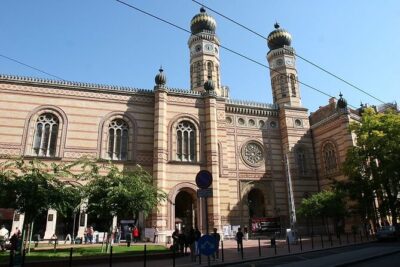
Budapest Jewish Heritage Memorial Walking Tour & Synagogue Entry
Read our review →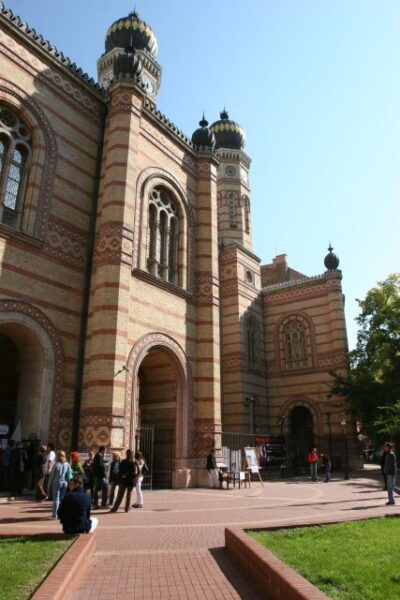
Budapest: Jewish Heritage Guided Tour with Synagogue Ticket
Read our review →
Budapest Paddle Steamer Danube Cruise with Tokaj & Audio Guide
Read our review →Browse the lists this tour appears in