
Review · GOA
The Cultural And Historical Walking Tour in Margao
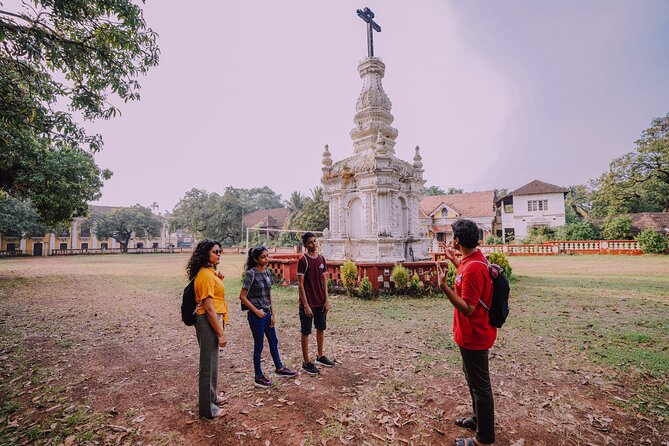
Margao’s story is written in its lanes, churches, mansions, and fading details. This three-hour walk begins at the 450-plus-year-old Holy Spirit Church, then heads through old neighborhoods where grand Goan homes and smaller architectural clues explain how the town grew.
I like the small group, limited to about eight people in the main description and up to ten in the operating details. I also like the finish: local snacks at food joints give you a taste of daily Margao, not just a history lesson.
The main caution is guide quality. The assigned guide may be enthusiastic, but one account found the local history and heritage explanations thin. If you want a deeply researched architectural tour, keep your expectations measured.
Key points to know before booking
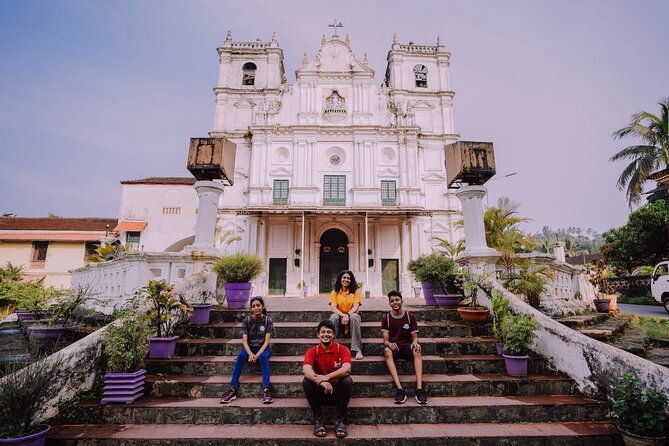
- The Holy Spirit Church is the anchor: Begin with one of Goa’s oldest churches and hear about its unusual architecture and annual phenomenon.
- The route is entirely on foot: You wind through Margao’s lanes and suburbs, so comfortable shoes matter.
- Small groups help: A maximum of roughly eight to ten people makes questions and conversation easier.
- The stories go beyond dates: Expect local legends, mansion histories, Portuguese-era connections, and the tale of the Margao Massacre.
- Snacks are included: The final food stop includes pre-decided portions, while extra food and drinks cost more.
- The price is modest: At $11.15 per person, the walk offers good value if you want orientation, stories, and a small taste of local food in one outing.
Starting at the Holy Spirit Church at 4:00 pm
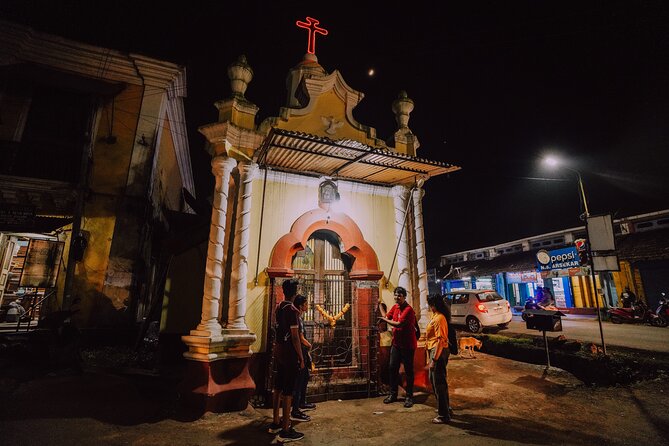
You meet at Holy Spirit Church on Holy Spirit Road in Borda, Madgaon, at 4:00 pm. The same place serves as the finish, which keeps the outing simple. You do not need to arrange a taxi between the start and end, and you can plan the rest of your evening from a known point.
The church is more than a meeting landmark. It is the first major subject of the walk and one of the oldest churches in Goa, with a history stretching back more than 450 years. The tour focuses on both its design and a special event said to occur each year. Those details give the opening stop a sense of discovery without asking you to travel far from central Margao.
I would arrive a little early. The meeting point is specific, but a busy town can still make a first-time arrival slower than expected. Your confirmation arrives at booking, and the experience uses a mobile ticket, so keep the booking available on your phone.
The 4:00 pm start also makes practical sense. Margao can be warm, and an afternoon walk is easier than a midday route. Still, the tour lasts about three hours, so you should expect to be on your feet into the evening.
More History Walking Tours in India
- Fontainhas Heritage Walk by Make It Happen
★ 5.0 · 2,834 reviews - The Great Indian Food Tour: Old Delhi Food and Heritage Walk
★ 5.0 · 1,698 reviews - Old Goa Heritage Walk by Make It Happen
★ 5.0 · 797 reviews
Why Margao works better on foot
Margao is often treated as a transport stop or shopping town. A walking tour changes the scale. Instead of passing old houses through a vehicle window, you can look closely at façades, lanes, walls, and the relationship between large homes and ordinary residential streets.
That is the real value here. The route is not built around a single grand monument. It connects pieces of the town so your guide can explain how Margao was established and how its architecture reflects different periods of local life.
The route uses winding back alleys and suburbs. This is useful if you want to see parts of town you would not easily find alone, but it also means the experience is best for someone comfortable walking through urban streets for several hours. The description does not promise a flat or effortless stroll, so choose shoes with good support.
Because the group is small, you should have a better chance to ask about details that catch your eye. A large group can turn a lane walk into a moving lecture. Eight people, or at most ten, gives the guide room to stop and explain, while still keeping the price low.
Reading the old Goan mansions
The mansions are among the most interesting parts of the walk. Margao is known for its large Goan houses, and the guide uses them to explain more than decoration. Architectural details can point to status, outside influence, family history, and the town’s connections with the Portuguese period.
You are not simply touring a row of pretty façades. The purpose is to understand why these houses were built and what their details may reveal. Some homes hold stories in their design, while others connect to the wider development of Margao.
One mansion receives special attention because of the infamous Margao Massacre. The site is linked to marks associated with battles fought during the making of the town. That gives the walk a darker edge. It also shows why local history is not only about handsome churches and grand homes.
The quality of this section depends heavily on the guide. One account found the guide friendly and eager but not strong on Margao’s history or heritage, apart from a few anecdotes about selected houses. That is a fair warning. You may get a lively local story, but you should not book this expecting the depth of a specialist architectural scholar.
The town’s Portuguese-era connections
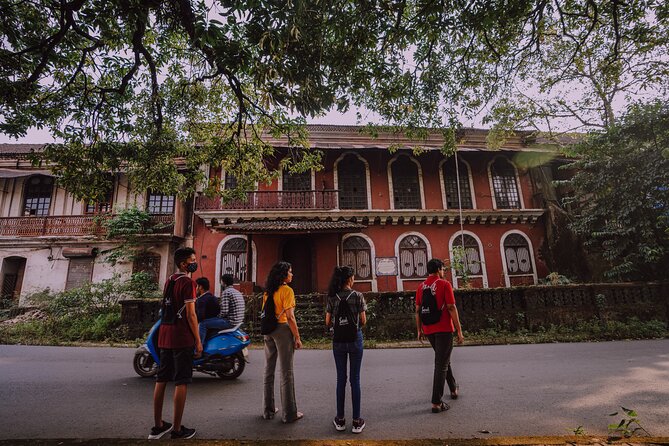
The walk also visits splendid structures once important to the Portuguese. The information provided does not name every structure or explain its exact former role, so you should expect the guide to provide the context on the day.
That uncertainty is worth noting, but it does not make the idea less useful. Margao’s buildings make more sense when you understand how administration, religion, commerce, and local families shaped the town. A guide can connect those threads in a way a self-guided stroll may not.
You also visit a special monument associated with one of India’s greatest personalities. The exact name is not specified, so you will need to hear the explanation during the walk. This is one place where a good guide can add real value by explaining why the monument matters and how it fits into Margao’s public memory.
The best way to approach the route is to look closely and ask questions. If a balcony, doorway, wall mark, or unusual church feature catches your attention, bring it up. The small group makes that possible, and the tour is designed around stories rather than silent sightseeing.
More Local Culture and Traditions Tours in India
- Old Delhi Food, Heritage&Cultural Walk with Rickshaw ride to Masterji Kee Haveli
★ 5.0 · 742 reviews - Experience Bangalore – City Tour, Authentic Food & market (Food/Culture/History)
★ 5.0 · 156 reviews - Old Delhi Walking Tour: Food, Culture & Spice Bazaars
★ 5.0 · 94 reviews - See Bangalore through my eyes (Cultural / Historical / Walking Tour)
★ 5.0 · 60 reviews
Local legends and the Margao Massacre
This is not a dry chronology of dates. The walk includes legends and stories tied to the town, including the Margao Massacre and the marks left by conflict. That storytelling approach can make old buildings easier to remember.
At the same time, stories need careful handling. A local legend is not the same as a documented historical fact. If you are especially interested in Goa’s political or colonial past, ask the guide which parts are recorded history and which are oral tradition.
The supplied information calls the church’s annual phenomenon a special event and describes the mansion as full of mysteries. Those phrases signal a story-led tour. You should expect memorable anecdotes and local interpretation, not a detailed academic lecture with extensive source material.
That can be a good match for a first introduction to Margao. You get enough context to notice more as you walk around later. If you already know Goa’s history well, the content may feel lighter, especially if your guide is not particularly strong on heritage details.
Ending with Goan snacks
The final stop includes snacks at local food joints, with pre-decided portions included in the price. This is a small but important part of the experience. Food gives the walk a local finish and breaks up the history and architecture.
The inclusion is not the same as a full meal. Additional food and drinks are not covered, so do not arrive expecting dinner. If you have a large appetite, dietary restrictions, or strong food preferences, plan around the snack stop and ask what is being served when you meet.
I like this format because it keeps the price honest. You are paying for a guided walk with a modest taste of local food, not for a restaurant meal disguised as a tour. The snack also gives you a chance to talk with the guide and other people in the group before the activity ends.
The exact food items are not specified, so I would avoid booking this for one particular dish. Treat the snack as an added local sample rather than the main reason to go.
Is $11.15 good value?
At $11.15 per person, this is an inexpensive way to spend an afternoon in Margao. The fee includes the guide, snacks in set portions, tour-related goodies, and all listed fees and taxes. You are also getting a route that takes you into lanes you might not confidently find on your own.
The value is strongest if you want three things at once: a local introduction, a guided walk, and a small taste of Goan food. Even if the historical commentary varies in depth, the price leaves room for the experience to function as a useful orientation.
The value is weaker if you want a highly specialized history tour. One account specifically found the guide enthusiastic but lacking strong knowledge of Margao’s heritage, with only a few good anecdotes about particular houses. That does not mean every guide will be the same, but it does mean you should not assume the tour will be equally detailed every time.
The tour includes no private transportation. That is not a serious drawback because the activity itself is built around walking, but it matters if you have mobility limits or prefer a vehicle-based sightseeing route. The information says most people can participate, yet it does not promise an accessible route or describe the pavement, stairs, or seating.
Who will enjoy this Margao walk?
You are a good match if you like seeing a town slowly, asking questions, and noticing details that a standard sightseeing drive would miss. The tour suits first-time visitors who want an introduction to Margao’s architecture, religious sites, local stories, and food.
It is also a sensible choice for mobile visitors who enjoy walking rather than being driven between attractions. The route lasts about three hours, so you should be comfortable spending most of that time on foot.
Families and mixed-age groups may appreciate the short stories and snack stop, but the tour is not described as a children’s activity. The group size is small enough to keep things personal, provided everyone can keep pace.
You may want another option if you need a private guide, a guaranteed expert in architecture, a detailed food tour, or a vehicle. The activity is a general cultural walk, not a private research tour or a full meal.
Practical details that affect the day
Wear comfortable walking shoes and bring whatever you normally need for a three-hour outing. The exact route length is not given, so do not assume that a short map distance means a short effort.
Keep your phone charged because the ticket is mobile. The meeting point and return point are both Holy Spirit Church, which makes the logistics easier than a one-way route.
The activity has free cancellation up to 24 hours before the start time. If you cancel less than 24 hours before 4:00 pm, you do not receive a refund, and changes inside that window are not accepted. The cut-off follows local time.
The tour is offered by Soul Travelling. Its overall score is listed as 4.9 from 280 ratings, with 99 percent recommending it. Those numbers suggest broad satisfaction, but the specific criticism about guide knowledge is still useful when setting your expectations.
Should you book the Cultural and Historical Walking Tour in Margao?
Book it if you want an affordable, small-group introduction to Margao with a strong sense of place. The Holy Spirit Church, old mansions, battle stories, Portuguese-era buildings, local legends, and snack stop make a good three-hour outline.
I would book it as an orientation tour, not as the final word on Margao’s history. The route has plenty of interesting subjects, but the guide’s depth may vary. Go ready to ask questions, watch the buildings closely, and enjoy the town at street level.
At $11.15, the risk is modest. If you prefer a relaxed walking experience with local stories and a bite of Goan food, this is a sensible pick. If you require detailed scholarship, private attention, or accessible transport, choose a different format.
FAQ
Where does the Margao walking tour start?
The tour starts at Holy Spirit Church on Holy Spirit Road in Borda, Madgaon, Goa 403601, India.
What time does the tour begin?
The start time is 4:00 pm.
How long does the experience last?
The walking tour lasts approximately three hours.
Does the tour include food?
Yes. Pre-decided portions of snacks at local food joints are included. Additional meals, food, and drinks are not included.
Where does the tour finish?
The activity ends back at the meeting point at Holy Spirit Church.
What is the cancellation policy?
You can cancel for a full refund up to 24 hours before the experience start time. Cancellations or changes made less than 24 hours in advance are not accepted for a refund.
Just added around India
- Exploring Mylapore: A Cultural & Historical Walking Tour★ 5.0 · 42 reviews
- Chennai Heritage & Cultural Walk (2 Hours Guided Walking Tour)★ 3.5 · 32 reviews
- Georgetown heritage walking tour in Chennai about the founding of Chennai★ 5.0 · 144 reviews
- The Hipster Chandigarh Architecture History Tour★ 5.0 · 54 reviews
- See Bangalore through my eyes (Cultural / Historical / Walking Tour)★ 5.0 · 60 reviews
- 2 days Private tour of Hampi world heritage site from Bangalore by car★ 5.0 · 75 reviews
- Discover Bangalore with Me (A Private Historical Walk Tour)★ 5.0 · 24 reviews
- Treasures of Mysuru – day tour★ 5.0 · 27 reviews
Goa History Tours, compared.


Panaji: Heritage Walk through Goa’s Latin Quarter
Read our review →
Browse the lists this tour appears in