
Review · BUDAPEST
Budapest: Communist History Tour with House of Terror Option
Budapest’s Communist past is not locked away in a textbook. It is written across the city, from the Soviet memorial at Liberty Square to the Parliament memorial honoring victims of dictatorship. This two-hour walk connects those places with the stories of Soviet occupation, political fear, and the 1956 uprising.
I like two things here: the small groups, limited to 10 people, and the choice between a playful look at daily life at the Budapest Retro Center or the far darker House of Terror. Guides such as Alexandra, Flora, Noémi, and Bea are praised for clear explanations and personal insight. The main consideration is emotional weight, especially at the House of Terror, and the walk may be tiring if you have trouble keeping pace.
Key points at a glance
- Start beside the Hungarian Parliament: The route begins among some of Budapest’s most important political monuments.
- See the Soviet Liberation Memorial: This is the last Communist monument left in its original city location.
- Connect places with the 1956 revolution: Your guide explains where the anti-Soviet uprising unfolded and why it still matters.
- Choose your ending carefully: The Retro Center is playful and nostalgic, while the House of Terror is stark, disturbing, and serious.
- Expect a small English-speaking group: With no more than 10 participants, you can ask questions without shouting across a crowd.
- Allow for personal stories: Some guides grew up under Communist rule or share family connections to Hungary’s past.
Why Budapest’s Communist story is worth your time
Many first-time visitors focus on Budapest’s grand architecture, thermal baths, and river views. Those are good reasons to come, but they can leave out the hard middle of the 20th century. Hungary spent 45 years under Communist rule and Soviet military occupation, and that period shaped family life, religion, work, travel, and public speech.
This tour gives you a way to read modern Budapest through those years. You are not simply walking past a statue or a government building. You are learning why a monument was built, why another was never removed, and how ordinary people adjusted to a system they could not openly challenge.
I especially like the local focus. The tour is not limited to broad Cold War politics. It includes the unspoken memories carried by older Hungarians, the role of the Catholic Church, the 1956 revolution, political trials, deportations, labor camps, and the eventual end of Communist rule in 1989.
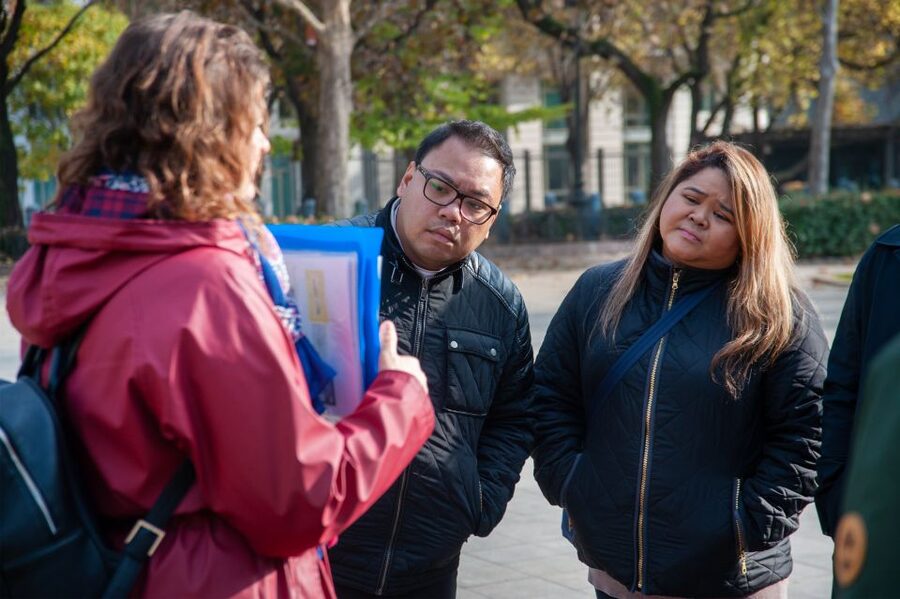
The English-language guiding is one of the strongest reasons to book. Guides including Kati, Veronika, Alexandra, Flora, and Noémi have been praised for answering questions clearly, adding family stories, and adjusting their pace to the group. One guide even handled a mixed-language group in English and Hungarian. That kind of flexibility can make a difficult subject easier to follow.
More Cold War and Communism Tours in Budapest:
- Communist History Evening Walking Tour of Budapest
★ 4.5 · 23 reviews - Berlin: Third Reich & Cold War Guided Walking Tour
★ 4.9 · 8,378 reviews - Berlin’s Best: 2 Hour Walking Tour Third Reich and the Cold War
★ 5.0 · 5,486 reviews
From Parliament to the memorials of dictatorship
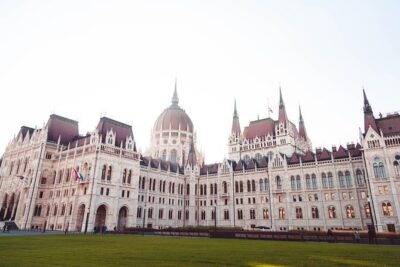
The walk begins at the Hungarian Parliament, one of Budapest’s most striking buildings. Here, the tour sets the political scene before moving into the physical evidence of dictatorship and resistance.
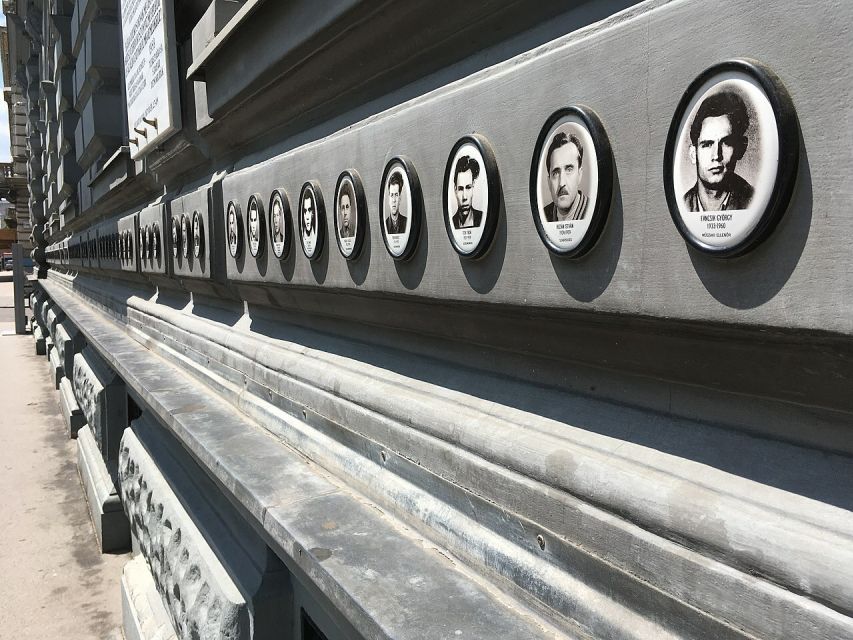
You will see dramatic monuments connected with the victims of Hungary’s Red dictatorship. Your guide explains what they commemorate and how the period affected people beyond the names of major political leaders. This opening works well because Parliament represents the country’s democratic institutions, while the nearby memorials point to the decades when those institutions were controlled or suppressed.
This is also a useful place to ask questions. If you know little about Hungary’s Communist period, you can get the basic timeline here. If you already follow Cold War history, you can ask about Hungary’s particular experience rather than receiving a general account of Eastern Europe.
The route is a walking tour across central Budapest, so expect to spend much of the first part outdoors. Comfortable shoes are sensible. The exact meeting point can vary according to the option you book, so check your confirmation carefully rather than assuming every group starts in the same place.
Liberty Square and the Soviet memorial
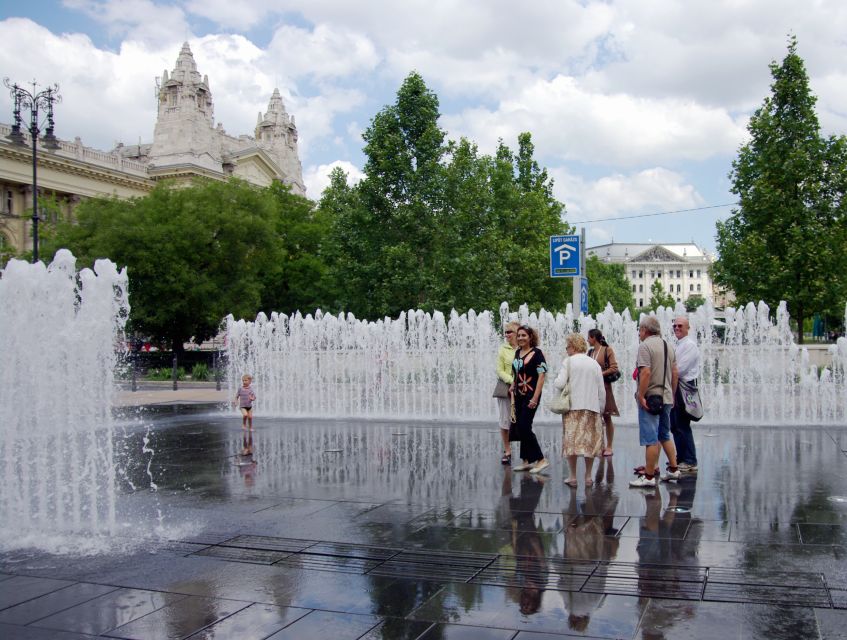
The next important stop is Liberty Square, where you will find the Soviet Liberation Memorial. It is described as the last Communist monument in Budapest still standing in its original location.
That fact gives the stop extra force. Monuments are never just decoration, especially in a city that has changed political systems. Your guide can explain how the memorial fits into the Soviet version of events and how Hungarians have viewed it over time.
Liberty Square also helps show the tension between official memory and lived memory. A monument may describe liberation, while many families remember occupation, fear, shortages, surveillance, or the loss of political freedom. The tour presents that complicated contrast rather than reducing the period to a simple good-versus-bad story.
You will want to pause here and listen before rushing on for photographs. The square contains several layers of Hungarian political memory, and the guide’s explanation is what turns the setting into a meaningful stop.
Cardinal Mindszenty and the quiet details of resistance
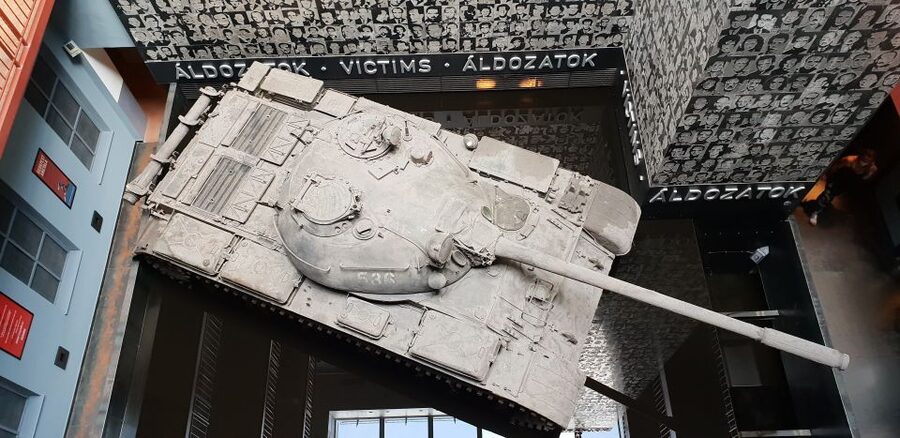
The route includes the famous windows where Cardinal József Mindszenty spent many years in exile. His story brings religion and political resistance into the tour.
This is one of the more unusual details of the itinerary. You are not only seeing grand state monuments. You are also looking at a specific building connected with a church leader who became a symbol of opposition to Communist control.
The stop helps explain why the regime feared independent institutions. Churches, schools, newspapers, and civic groups could offer people forms of loyalty outside the state. Your guide places Mindszenty’s exile within the wider story of pressure on religious and political figures.
For me, details like this are more useful than a long list of dates. They give you something visible to remember after the walk, and they show how historical events affected real places in the city.
More History Tours in Budapest:
- Budapest: Historic Cruise with Welcome Drink
★ 4.7 · 6,512 reviews - Budapest Historical Sightseeing – Free Walking Tour
★ 5.0 · 1,302 reviews - Buda Castle District Dark History, Legends and Vampire Night Tour
★ 4.5 · 1,240 reviews - Budapest: Sir Lancelot Medieval Dinner with Drink and Show
★ 4.1 · 1,155 reviews
The Cold War bunker and the 1956 uprising
The tour also points out ventilation channels connected with a secret underground nuclear bunker built during the Cold War. You do not simply hear that Budapest lived under the threat of conflict. You see a small piece of the system built to prepare for it.
The bunker detail adds variety to the route. The tour is not only about speeches, memorials, and political leaders. It also covers the physical infrastructure of a divided and anxious era. The ventilation channels may look modest, but they hint at what was hidden below the streets.
Your guide then connects the city to the Hungarian anti-Soviet revolution of 1956. This is a central part of the experience. You learn where events took place, what the uprising meant, and what followed when Soviet power was used to crush it.
If you are interested in Cold War history, this section alone may justify the booking. The tour turns a major event into a series of city locations. That makes the story easier to remember than a lecture delivered indoors.
The subject can be haunting. One guide described the period through personal experience, while others have drawn on family stories. Their approach can make the material feel immediate, but it also means you should expect serious discussion rather than a light sightseeing walk.
Morning option: the Budapest Retro Center
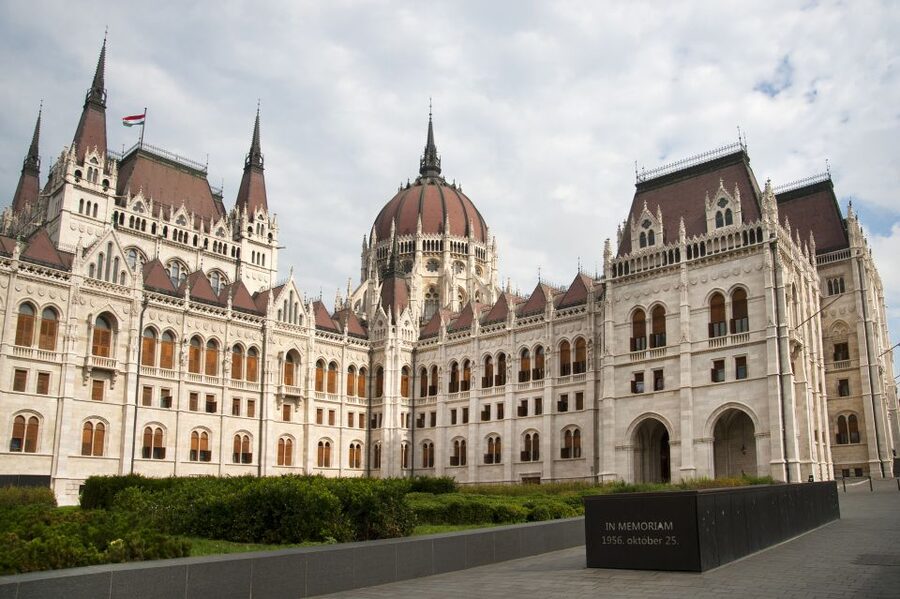
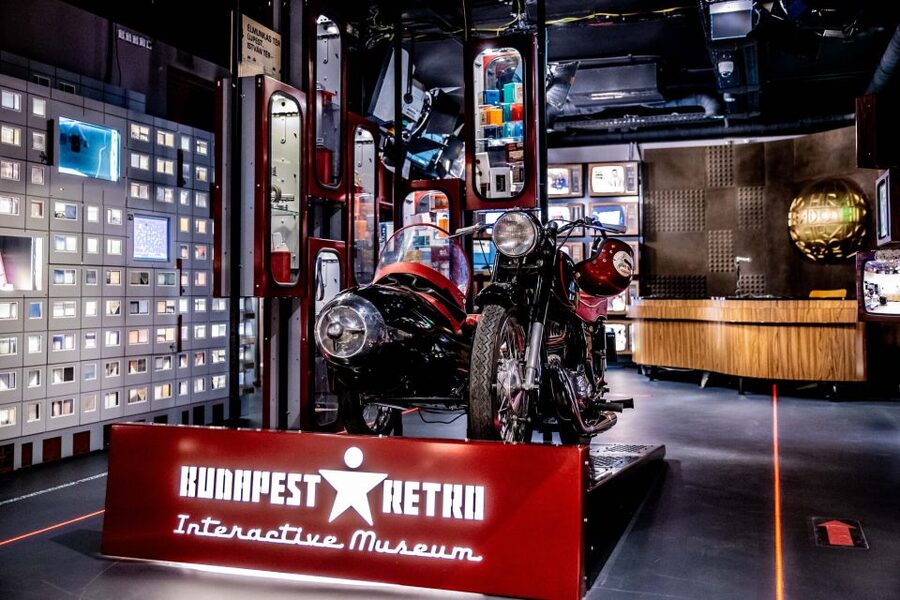
Choose the morning option and the walking tour is followed by a one-hour guided visit to the Budapest Retro Center. This is the lighter of the two museum choices, though it still documents a political period.
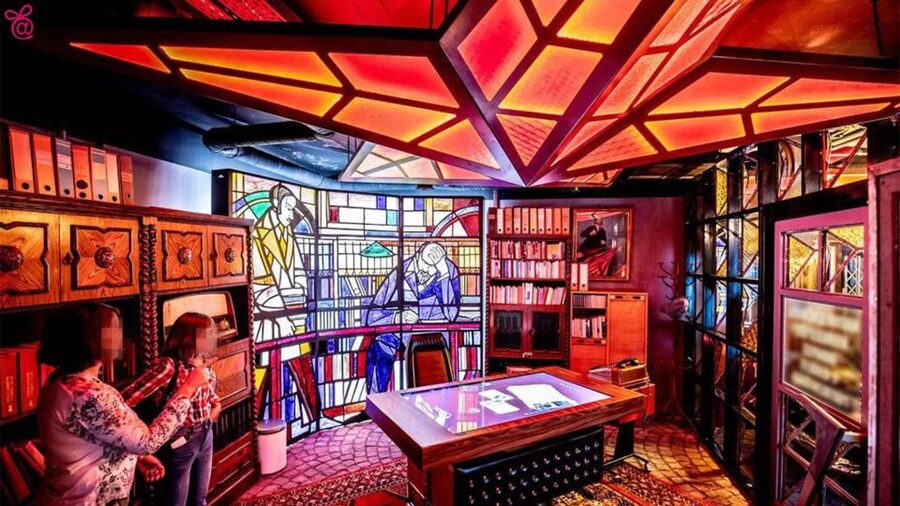
The collection covers everyday life from the 1960s through the 1980s. Across three floors, you can see street scenes, typical vehicles, home interiors, thousands of period objects, and material connected with the Soviet-Hungarian space flight.
The appeal is its ordinary detail. Political history can feel remote when presented through leaders and treaties. A kitchen interior, a car, a television setting, or a common household object shows how the system appeared in daily life.
The exhibition is designed to be interactive. You can dress as a Communist comrade or try presenting the news as a television announcer from the period. That playful approach makes this option a good fit for families, teenagers, and anyone who wants historical context without spending the entire visit in a grim museum.
Do not mistake the fun presentation for a complete account of oppression. The Retro Center is strongest at showing the look and feel of everyday life, not at replacing the more difficult political discussion. If your main goal is to understand imprisonment, interrogation, deportation, and political violence, choose the House of Terror instead.
Afternoon option: the House of Terror Museum
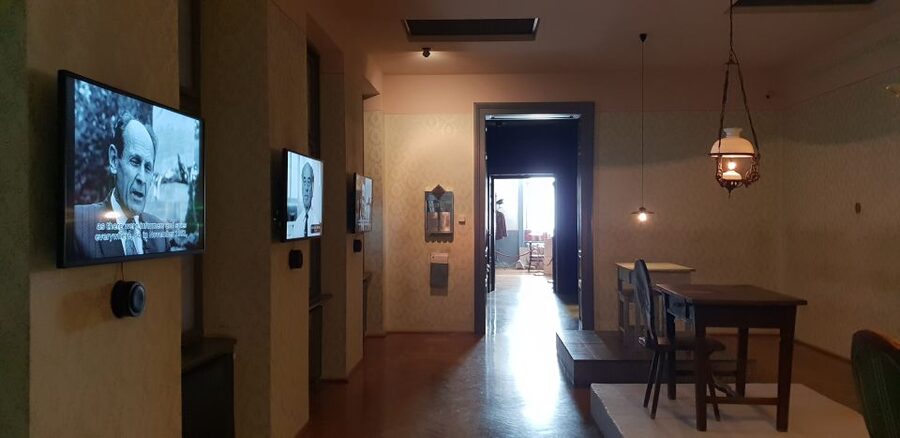
The afternoon option adds entry to the House of Terror Museum, located in the former headquarters of Hungary’s State Protection Police, the local version of the Soviet KGB. You visit the museum on your own after the walking portion unless you select the guided museum option.
The museum covers the transition from Nazi rule during World War II to Soviet Communist occupation. Its displays address the economy and daily life of the 1950s, interrogation and torture cells, the office of the feared director, mass deportations, labor camps, political trials, and the consequences of the 1956 revolution.
This is a much heavier experience than the Retro Center. The building itself carries the story, and the subject matter is designed to disturb. You should not treat it as just another stop on a sightseeing schedule. Give yourself time to process what you see.
A guide is particularly useful here. The museum contains strong displays and difficult material, but context helps you understand how the rooms fit into Hungary’s political story. Meryl, a history teacher, found that a guided visit added substantial value, and that is a sensible point for anyone who prefers explanation over simply reading labels.
The museum is not operated by the tour guide. Your guide is an independent professional, not a museum employee. Also, do not search for your ticket at the museum ticket office. The guide provides it to you.
One practical warning: the House of Terror has sometimes been closed for renovations. When that happens, the guide may adapt the experience, as Alexandra did for one group, but you should confirm current conditions before booking if the museum is your main reason for choosing this tour.
A third choice: a guided visit inside the House of Terror
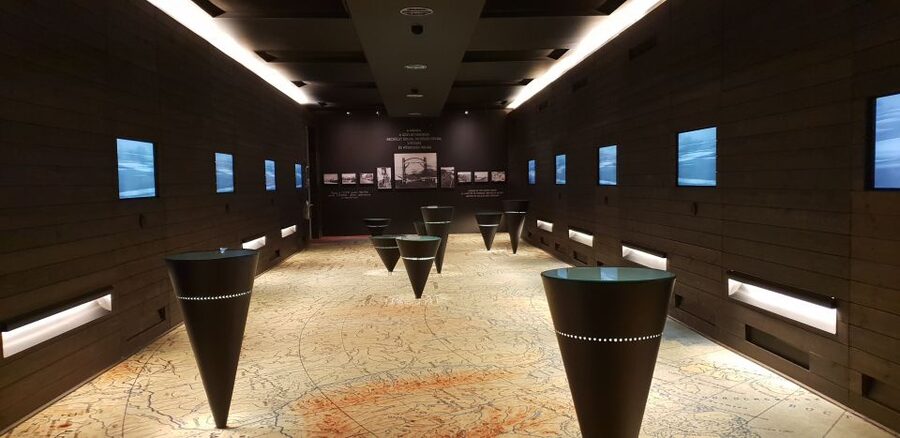
The options are not limited to the walk plus a self-guided museum visit. You can also select a guided tour of the House of Terror itself.
This version follows the museum’s story from World War II and Nazi rule through Communist occupation and the end of the regime in 1989. Your guide leads you through the cells, offices, displays, and accounts of deportations, camps, political trials, and the 1956 uprising.
The advantage is focus. You can ask questions as the story unfolds, rather than trying to piece together the meaning of each room alone. Several guides, including Noémi, Alexandra, Flora, and Naomi, have been praised for clear explanations and for helping English speakers get more from the museum.
The exact balance between walking time and museum time depends on the option you select. Read the option name carefully at booking, since the meeting point and museum arrangement may change.
How the guides shape the experience
The subject is serious, so the guide matters. A dry list of dates would make this tour feel like homework. The best guiding here appears to combine facts, place-based explanation, and personal connection.
Kati has been noted for precise dates, figures, and links between Hungarian and American involvement. Veronika has shared what it was like to grow up in Hungary under Communist rule. Flora has been praised for patience and for answering questions about this complicated era.
Alexandra is another frequently praised guide. She has been described as clear, expressive, enthusiastic, and attentive to the pace of the group. On one tour, she waited for people using walking aids before continuing the explanation, which is a useful sign for anyone concerned about being rushed.
Small groups make a real difference. With a maximum of 10 people, you can ask about your own family connections or clarify terms you have never heard before. Some tours may be even smaller, including private-feeling experiences with only two or three participants.
The walk still requires you to keep moving. One participant who was ill could not complete every part, despite receiving understanding from the guide. If you are not feeling well or use walking aids, tell the guide early and allow extra time.
Is $58 a fair price?
At $58 per person, this is not the cheapest way to see Budapest. The value depends on how much help you want with the history.
You are paying for an English-speaking professional guide, a small group, the themed city walk, and entry to either the Budapest Retro Center or the House of Terror, depending on your selection. A museum ticket alone will not explain the connection between Parliament, Liberty Square, Mindszenty, the bunker, and 1956.
I think the price is fair for the House of Terror option if you care about context and questions. The museum covers difficult material that can be hard to place without an informed guide. The Retro Center option is a better value for a lighter, more visual experience, especially if you like social history and everyday objects.
The main question is not simply how much the tour costs. It is whether you would make sense of these places on your own. If you already know Hungarian 20th-century history well, you may prefer visiting independently. If the subject is new to you, the guide is likely to add enough value to justify the fee.
Who should book this Budapest Communist history tour?
I would recommend it to anyone interested in the Cold War, modern European politics, religious resistance, or family history. It also suits students and teachers. One participant who teaches history planned to use what she learned in the classroom.
It is a strong choice for people with Hungarian family connections. The tour can put grandparents’ or parents’ memories into a physical setting, though that can make the experience emotional.
Choose the Retro Center if you want a less distressing look at Communist-era daily life. Choose the House of Terror if your priority is political repression, state violence, and the personal cost of dictatorship.
This is not the best fit if you want only beautiful architecture, shopping, or cheerful sightseeing. The walk includes difficult subjects and may leave you thoughtful rather than entertained. That is not a flaw, but you should plan the rest of your day accordingly.
Should you book it?
Book this tour if you want Budapest to make more sense beyond its postcard views. The route links visible city sites with the 45-year Communist period, and the small group gives you room to ask direct questions.
My strongest recommendation is to choose the House of Terror with a guide if you want serious political history. Pick the Retro Center if you prefer an approachable look at homes, vehicles, media, and daily life. Either way, check the meeting point and selected museum option carefully, wear comfortable shoes, and arrive ready for a thoughtful walk rather than a casual city stroll.
FAQ
How long does the Communist History Tour last?
The stated duration is two hours. The morning option includes a one-hour guided visit to the Budapest Retro Center after the walking portion.
What language is the tour conducted in?
The tour is conducted in English by a live guide.
How many people are in the group?
The group is limited to 10 participants.
Where does the tour begin?
The meeting point can vary depending on the option you book. Check the details for your selected option before arriving.
Which places are covered on the walking tour?
The route includes the Hungarian Parliament, monuments connected with victims of dictatorship, Liberty Square, the Soviet Liberation Memorial, the windows linked with Cardinal Mindszenty’s exile, Cold War nuclear bunker ventilation channels, and sites connected with the 1956 uprising.
What is included with the morning option?
The morning option includes the Communist-themed walking tour and a one-hour guided visit to the Budapest Retro Center.
What is included with the House of Terror option?
The House of Terror option includes entry to the museum. Depending on the option selected, the museum visit may be self-guided or led by the tour guide.
Is the tour provided by the House of Terror Museum?
No. The guide is an independent professional and is not employed by the museum.
Where do I collect my museum ticket?
Do not look for the ticket at the museum ticket office. You receive it from your tour guide.
Just added around Budapest
- Time Machine Budapest Historical Exhibition Ticket★ 5.0 · 32 reviews
- Budapest Jewish Heritage: Synagogues, Shoes, Secrets & Flódni★ 5.0 · 47 reviews
- Michael Jackson History Exhibition Ticket★ 5.0 · 42 reviews
- Private Jewish Heritage Tour including Hotel Pickup★ 4.5 · 35 reviews
- Communist History Evening Walking Tour of Budapest★ 4.5 · 23 reviews
- Jewish Heritage / Full tour★ 5.0 · 59 reviews
- Jewish Heritage in Hungary with a Historian★ 5.0 · 37 reviews
- Budapest Paddle Steamer Danube Cruise with Tokaj & Audio Guide★ 4.5 · 338 reviews
Budapest History Tours, compared.
Budapest Historical Sightseeing – Free Walking Tour
Read our review →
Buda Castle District Dark History, Legends and Vampire Night Tour
Read our review →
Budapest: Sir Lancelot Medieval Dinner with Drink and Show
Read our review →
BloodThirsty Hungary: Walking tour & Dark Historical Stories
Read our review →
Budapest Jewish Heritage Memorial Walking Tour & Synagogue Entry
Read our review →
Budapest: Jewish Heritage Guided Tour with Synagogue Ticket
Read our review →
Budapest Paddle Steamer Danube Cruise with Tokaj & Audio Guide
Read our review →Browse the lists this tour appears in