
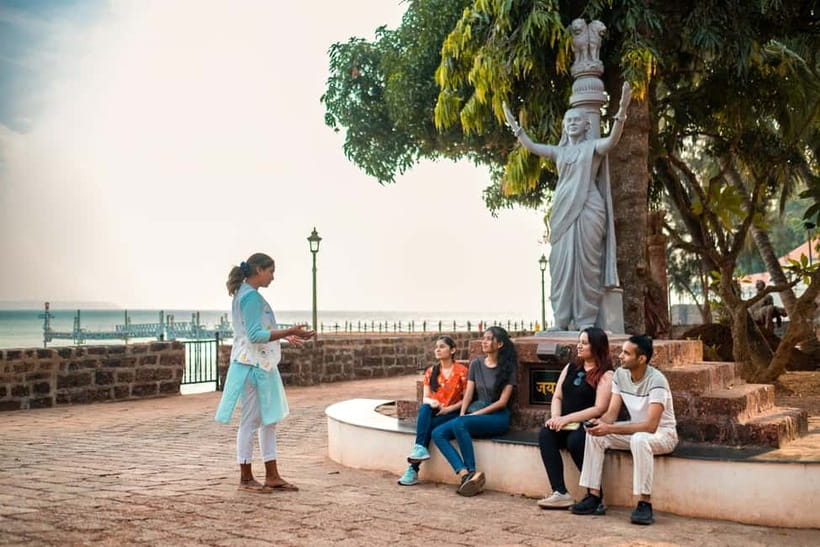
Review · INDIA
Candolim: Heritage Walk of Fort Aguada Port and Jail Complex
Fort Aguada’s lower fort is more than a fine Portuguese monument. It is a former defense post, prison, chapel, and political battleground, with sea views that help explain why this site mattered. The hour-long walk takes you into prison cells and service areas that ordinary visitors may not be able to enter.
I like the personal storytelling, especially when guides such as Veron Franco, Niranjan, and Yashashvi connect the fort to Goa’s liberation movement. I also like the price: $10 includes monument entry, which makes this a useful history stop even if you have only a short time in Candolim.
The main drawback is the heat. One tour began at noon, and the fort offers little relief from the sun, so I would choose an earlier or later start if one is available. This is a walking tour, not a vehicle ride, and the full experience lasts only about an hour.
Key points to know before you book

- Enter the lower fort’s private-access areas: See a chapel, freshwater spring, former kitchens, and prison cells that are not generally open to the public.
- Hear Goa’s political story: The walk covers Portuguese colonial power, attacks by the Dutch and Marathas, and Goan freedom fighters.
- Meet at the ticket counter: Your English-speaking storyteller meets you at the Lower Fort Aguada Port and Jail Complex.
- Pay one modest price: The $10 fee includes the Fort Aguada monument ticket, reported by one guest as worth about 400 rupees for foreign visitors.
- Plan around the sun: The tour lasts one hour, but the midday heat can make the exposed fort uncomfortable.
- Expect a private group: You receive a live guide rather than a recorded audio tour, with time for a more personal explanation.
Why Fort Aguada’s lower fort matters

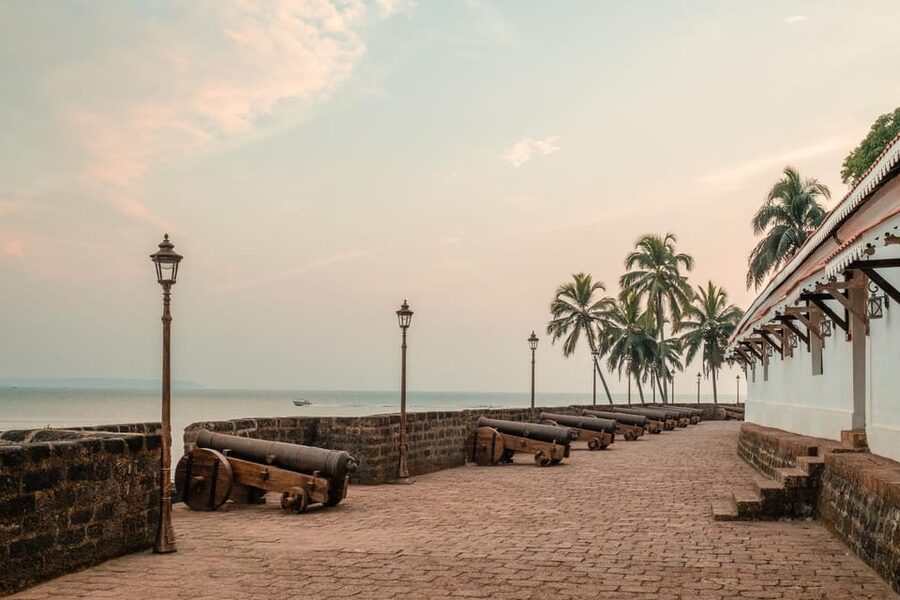
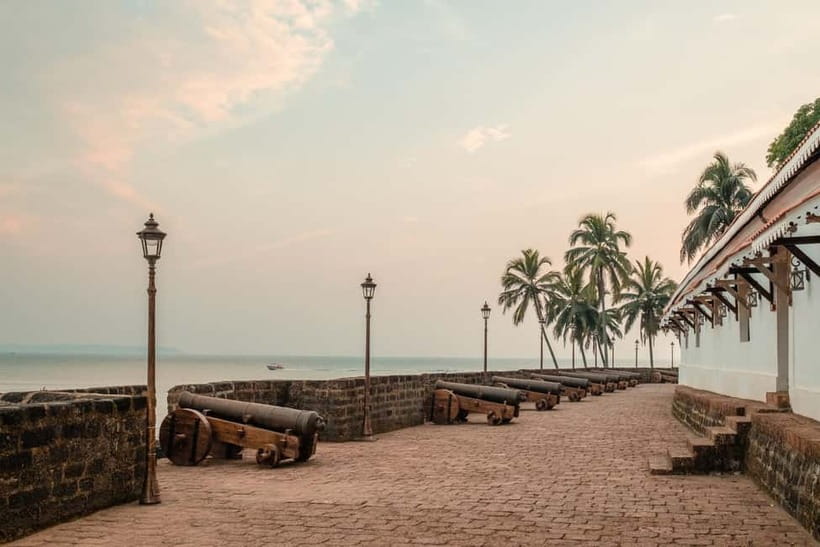
Fort Aguada is often treated as a quick photo stop, but the lower complex gives you a better sense of Goa’s difficult colonial past. The Portuguese built the fort as a strategic defense point, and its position beside the sea helped protect the colony from attacks by the Dutch and the Marathas.
The fort’s purpose changed over time. Under Portuguese dictator Antonio Salazar, the lower fort was repurposed as a prison for convicted Goan freedom fighters. That shift gives the site two very different identities: a military stronghold built to defend colonial power, and a jail used against people who challenged that same rule.
I find that contrast more useful than a simple list of dates and architectural features. You can look at a wall and see a defensive structure, then hear how the same complex later held people fighting for Goa’s independence. The guide’s job is to connect those layers so the fort feels like a place where events happened, not just an old stone building.
The walk also brings in the wider struggle between Indian kingdoms and the Portuguese empire. That context helps you understand that control of Fort Aguada was not settled once and forgotten. The fortress was part of larger contests over territory, trade, power, and colonial rule.
More History Walking Tours in India
- Fontainhas Heritage Walk by Make It Happen
★ 5.0 · 2,834 reviews - The Great Indian Food Tour: Old Delhi Food and Heritage Walk
★ 5.0 · 1,698 reviews - Old Goa Heritage Walk by Make It Happen
★ 5.0 · 797 reviews
Starting at the Lower Fort Aguada ticket counter
Your meeting point is the ticket counter at the Lower Fort Aguada Port and Jail Complex Heritage Walk. This is a straightforward arrangement, but you should allow enough time to find the lower fort rather than assuming that every Fort Aguada entrance leads to the same place.
The tour provider describes the experience as a private group with a live English-speaking guide. That format is a good fit if you want to ask questions or slow down briefly at an important room. It also avoids the flat, rushed feel that can come with an audio guide.
Guides have included Veron Franco, Niranjan, and Yashashvi. The strongest part of their work appears to be storytelling rather than simply pointing out walls. Veron Franco, in particular, has covered subjects ranging from dictatorship and religion to colonialism, giving the walk a wider frame than military history alone.
If you arrive early, you may find that the walk can begin before the scheduled time, depending on the guide. One guest arrived 15 minutes early and began then, but you should treat that as a helpful possibility rather than a promise. The published duration is one hour, and the walk returns to the same lower complex.
The Portuguese architecture and defensive story
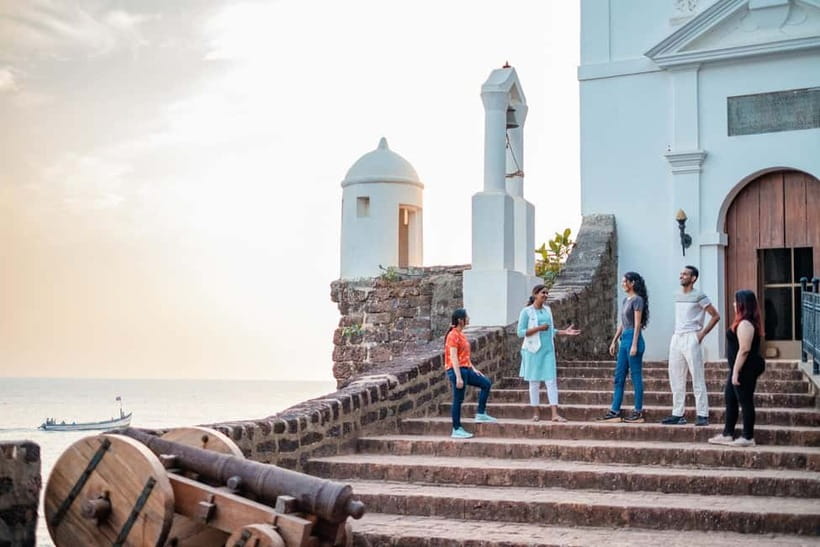
The first part of the walk sets up Fort Aguada as a Portuguese military site. You will see the architecture in its proper setting, with the fort overlooking the sea and built to guard an important coastal position.
The Portuguese-style design is one of the clear visual pleasures here. Still, the building becomes more interesting when you know what its walls were meant to do. The guide explains how the fort helped defend the Portuguese colony from Dutch and Maratha attacks, and how battles between Indian kingdoms and the colonial empire shaped control of the area.
I like this kind of explanation because it keeps the architecture from becoming decoration. The thick walls and strategic position are tied to fear, trade, military planning, and the need to control the coast. You do not need to be a military-history enthusiast to appreciate that the setting was chosen for practical reasons.
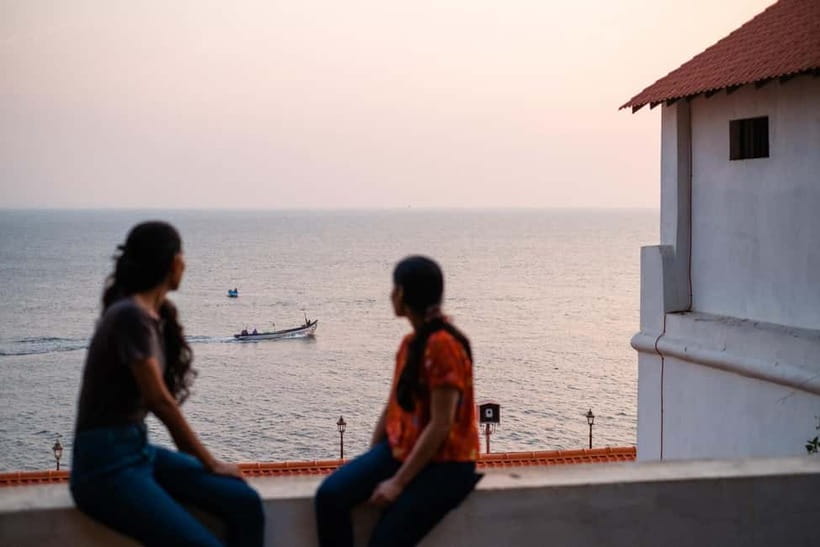
The sea views are another strong feature. They are not just a backdrop for photographs. From the fort, the open water helps you picture the approach of ships and understand why this location mattered to colonial rulers. Bring your camera if you like, but give yourself time to look beyond the obvious view.
The site is exposed, though, and the heat can change the mood quickly. A midday departure may be uncomfortable, especially during hotter periods. Since the walk is only an hour, choosing a cooler starting time can make it easier to listen and look around without focusing on the sun.
The chapel, spring, and former kitchens
The exclusive-access sections are the main reason I would choose this guided walk rather than simply visiting the monument on your own. The route includes a small chapel, a freshwater spring, and former kitchens, areas that are not generally accessible to the public.
The chapel adds a religious layer to the fort. Portuguese colonial sites often combined military, administrative, domestic, and religious functions, and this small space helps show that the fort was not used only by soldiers. Your guide can place it within the daily life of the complex rather than leaving it as an isolated architectural curiosity.
The freshwater spring is especially useful for understanding the practical side of a coastal fort. A defensive post needed a water supply if it was to function during a threat or siege. You can look at this feature as a simple source of water, but it also tells you about planning and survival.
The former kitchens bring the site down to human scale. Armies and prison staff needed food, cooking space, storage, and routine. These rooms may not be as dramatic as the fort walls, but they help you picture the people who lived and worked here.
Access to these places is valuable because they are easy to miss on a casual visit. You might photograph the main structure and leave without realizing how much of the complex was devoted to everyday needs. The guide’s access and explanation turn small rooms into meaningful stops.
Same city, a different century:
- Old Delhi Food, Heritage&Cultural Walk with Rickshaw ride to Masterji Kee Haveli
★ 5.0 · 742 reviews - Blue City Heritage Private Walking Tour With Pickup and Drop-Off
★ 5.0 · 441 reviews - Kolkata Heritage Tram Tour
★ 4.0 · 395 reviews - Private Heritage Walking Tour in Jaisalmer Fort and Old Bazaar
★ 5.0 · 306 reviews
Entering the Aguada jail and its prison cells

The prison is the most powerful part of the walk for many people. The cells are described as dingy, and that plain detail matters. This is not a polished museum display designed to make the past comfortable. The spaces give you a direct sense of confinement.
The lower fort became a prison complex under Antonio Salazar, and it was used to hold convicted Goan freedom fighters. Your guide explains how the jail fitted into the larger story of Goa’s struggle for independence, bringing attention to people who are often less visible in standard accounts of colonial history.
I appreciate that the tour focuses on unsung heroes rather than only on famous rulers and military leaders. The fort was built by a colonial power, but the prison story shifts attention toward the people who resisted that power. That change in viewpoint is one of the walk’s strongest features.
The prison also makes the history more personal. A battle description can feel distant, while a cell suggests daily restrictions, uncertainty, and separation from family. You may find the rooms stark rather than visually impressive, but that is part of their value.
A small modern museum inside the prison complex is also included in the price, according to the tour details. You may have time to look around it after the guided portion, though the scheduled walk itself lasts one hour. If you want a long museum visit, do not assume the tour leaves unlimited time for it.
What the one-hour route feels like

This is a compact experience, not a full-day heritage program. In one hour, you move through the fort’s defensive story, colonial history, prison complex, and selected service areas before returning to the starting point.
That short length works well if you are based in Candolim and want to add history to a beach-focused trip. It also suits you if long walking tours leave you tired or if you have other plans that day. The route gives you a focused introduction without asking for half a day.
The tradeoff is depth. A guide can cover many subjects in an hour, but you will not get an exhaustive account of every room, battle, or period connected with Fort Aguada. One particularly strong guide covered dictatorship, religion, and colonialism in a single visit, which shows the range of the discussion but also suggests a brisk pace.
Because this is a private group, you may have a better chance to ask questions than on a large public tour. The guide can explain a detail that catches your attention instead of moving immediately to the next stop. The experience depends heavily on the storyteller, and the guides named above have been praised for clear, enthusiastic delivery.
The price and what it includes
At $10 per person, this is good value if you want both entry and interpretation. The price includes the Fort Aguada monument ticket and access to the chapel, spring, kitchens, and prison cells. One guest specifically noted that the foreign-entry charge was about 400 rupees and included in the tour cost, making the package feel worthwhile.
The price does not include pickup, drop-off, food, drinks, snacks, or transport inside the monument. That is not a major problem because the experience is designed as a walking trail, but you need to arrange your own way to the meeting point.
You also should not expect equipment supplied for changing weather. Umbrellas, raincoats, hats or caps, face masks, and sanitizers are not provided. Carry what you need, especially water and sun protection, since the fort is exposed and the tour involves walking.
The $10 cost is most attractive when you care about the parts of the fort that are normally closed or easy to miss. If you only want a quick photograph of the exterior, you may not need a guide. If you want the jail’s political story and access to interior areas, the added cost is modest.
Free cancellation is available up to 24 hours before the start for a full refund, and you can reserve now and pay later. Those terms are useful if your Goa plans may shift, but they do not change the basic need to check the start time and arrive at the lower fort.
Who will enjoy this Fort Aguada walk

I would recommend this to you if you enjoy places where architecture and political history meet. The tour is especially suitable if Goa’s liberation movement interests you, or if you want more than a standard explanation of Portuguese buildings.
It is also a good choice for first-time visitors who want a short introduction to Goa’s colonial past. The guide links local events to larger subjects such as empire, religion, dictatorship, and resistance, so you leave with a clearer sense of how the fort fits into Goa’s story.
Families with older children may appreciate the one-hour length and the tangible prison spaces. The cells, kitchens, spring, and chapel give the history physical points of reference. The subject matter is serious, though, and younger children may not be interested in the political details.
You should think twice if you dislike heat, uneven outdoor walking, or compact historical tours. The fort is not a vehicle-based attraction, and you will spend the visit on foot. Also, if your interest is limited to panoramic views and photography, the storytelling may feel like more than you need.
Practical tips for a better visit
- Choose your time with care. A noon start was found uncomfortably hot, so an early or later departure is preferable when available.
- Bring sun protection. The provider does not supply hats, caps, umbrellas, or raincoats.
- Wear practical walking clothes. The route is on foot through a historic monument complex.
- Arrive at the lower fort ticket counter. Do not rely on a general Fort Aguada landmark alone.
- Ask questions. The private-group format gives you a better chance to ask about the jail, liberation movement, or Portuguese rule.
- Allow a little extra time after the tour. The modern prison museums are included in the price, and you may want to see them after the guided hour.
- Keep expectations focused. The route covers a lot in 60 minutes, but it is an introduction rather than a complete study of the fort.
Should you book the Fort Aguada Heritage Walk?
Book it if you want Fort Aguada to make sense, not just look attractive in photographs. The combination of sea defenses, Portuguese architecture, prison cells, a chapel, a freshwater spring, and stories of Goan freedom fighters gives you far more context than a quick unguided stop.
I would be most likely to book this for the access to the lower fort’s less familiar areas and the chance to hear a local storyteller explain the prison’s political past. The $10 fee is fair because entry is included, and the private English-language format adds useful personal guidance.
Skip it if you want a leisurely, unstructured visit or if you are visiting at the hottest part of the day and cannot change the timing. For most history-minded visitors staying around Candolim, though, this one-hour walk is an efficient and worthwhile way to meet the serious side of Fort Aguada.
FAQ
Where does the Fort Aguada Heritage Walk begin?
Meet the storyteller at the ticket counter of the Lower Fort Aguada Port and Jail Complex Heritage Walk.
How long does the experience last?
The guided walk lasts one hour and returns to the Lower Fort Aguada Port and Jail Complex.
What language is the tour offered in?
The live tour guide speaks English.
Is the tour private?
Yes. The experience is offered as a private group.
Does the price include entry to Fort Aguada?
Yes. The monument entry ticket is included in the price.
Which parts of the fort receive exclusive access?
The walk includes exclusive access to a freshwater spring, former kitchens, and prison cells. It also includes access to a chapel.
Is transportation provided?
No. This is a walking trail, and pickup, drop-off, and vehicle transport inside the monument complex are not included.
Just added around India
- Exploring Mylapore: A Cultural & Historical Walking Tour★ 5.0 · 42 reviews
- Chennai Heritage & Cultural Walk (2 Hours Guided Walking Tour)★ 3.5 · 32 reviews
- Georgetown heritage walking tour in Chennai about the founding of Chennai★ 5.0 · 144 reviews
- The Hipster Chandigarh Architecture History Tour★ 5.0 · 54 reviews
- See Bangalore through my eyes (Cultural / Historical / Walking Tour)★ 5.0 · 60 reviews
- 2 days Private tour of Hampi world heritage site from Bangalore by car★ 5.0 · 75 reviews
- Discover Bangalore with Me (A Private Historical Walk Tour)★ 5.0 · 24 reviews
- Treasures of Mysuru – day tour★ 5.0 · 27 reviews
India History Tours, compared.


The Great Indian Food Tour: Old Delhi Food and Heritage Walk
Read our review →

Old Delhi Food, Heritage&Cultural Walk with Rickshaw ride to Masterji Kee Haveli
Read our review →
Blue City Heritage Private Walking Tour With Pickup and Drop-Off
Read our review →
Private Heritage Walking Tour in Jaisalmer Fort and Old Bazaar
Read our review →
Old Delhi Food-Spice Market-Temples Tour Soon Featured on NETFLIX
Read our review →Browse the lists this tour appears in