
Review · PRAGUE
Communism & Nuclear Bunker Tour + 70s Canteen Lunch (own expense)
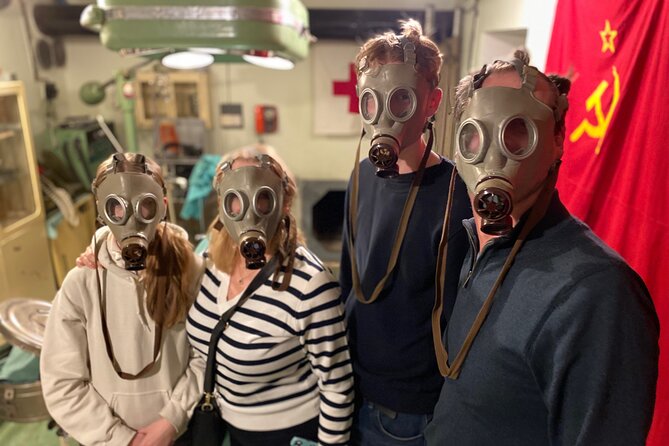
Prague’s most revealing modern-history experience ends underground. After walking from the Powder Tower through the Old Town and Wenceslas Square, you enter a real 1950s nuclear bunker with Cold War displays, gas masks, and hands-on exhibits. It is a sharp change from Prague’s castles and Gothic churches, and that is exactly why I like it.
I especially like the small groups, capped at 10, and the way guides such as Klara and Leo connect national events to daily life under Communism. The stop at a 1970s worker’s canteen is another strong point: you can try Czech food and Kofola in a setting most sightseeing routes skip. The main drawback is that the walk covers serious political history at a fairly brisk pace, and the bunker’s narrow, underground spaces are not suitable for people with claustrophobia.
Key points before you book
- The bunker is the grand finale: A Cold War shelter beneath the upper part of Wenceslas Square includes a 10 EUR admission fee.
- The tour links major events: You follow the story from Czechoslovak independence in 1918 through Nazi occupation, Communist rule, the Prague Spring, and the Velvet Revolution.
- The canteen is genuinely local in feel: Food and drinks cost extra, but the 1970s setting gives the lunch stop its appeal.
- Small groups make a difference: With no more than 10 people, you have room to ask questions and discuss difficult subjects.
- The route is central and walkable: It begins at the Powder Tower and ends at Wenceslas Square, near public transportation.
- Plan for about three and a half hours: The tour is offered in English and uses a mobile ticket.
Why this tour adds something Prague’s old center cannot
Prague can easily become a parade of medieval towers, ornate churches, and grand squares. Those sights are essential, but they tell only part of the country’s story. This tour shifts your attention to the 20th century, when Czechoslovakia faced occupation, dictatorship, Soviet control, economic pressure, and a long struggle for political freedom.
I like the way the route uses familiar city spaces as evidence. Old Town Square is not just a picturesque plaza. Wenceslas Square is not simply a good place for shopping. Narodni Street is tied to the student demonstration that helped bring down the Communist regime, while Bartolomejska Street recalls the secret police apparatus.
The guide’s role matters here. The strongest part of this experience is not a long list of dates. It is the explanation of how political decisions affected ordinary people, including work, food, travel, education, religion, and family life. Klara is praised for making difficult material easy to follow and for sharing personal and family perspectives from Communist-era Czechoslovakia. Leo is also noted for clear explanations, humor, and thoughtful answers.
The result is a tour that works best when you want context, not just photographs.
More Cold War and Communism Tours in Prague:
- Prague: Communism History and Nuclear Bunker Guided Tour
★ 4.7 · 2,417 reviews - Prague Communism History and Nuclear Bunker Tour
★ 5.0 · 1,742 reviews - Prague: World War II and Communist History Tour
★ 4.7 · 130 reviews
Starting at the Powder Tower and Republic Square
Meet your guide beneath the blue umbrella at the Powder Tower, at Náměstí Republiky 5. This is a useful starting point because Republic Square sits between Prague’s Old Town and New Town, and the grand medieval gateway quickly gives way to the political story of modern Czechoslovakia.
The opening section covers the creation of Czechoslovakia in 1918 and the reasons Hitler took an interest in the new state. You also hear how the Second World War shaped the postwar political climate and why the Communist Party won the 1946 election.
This first stop lasts about 15 minutes. It is short, so do not expect a full lecture on the First Republic or the war. Instead, the guide sets up the forces that made the later Communist takeover possible. That context is useful because the events of 1948 did not happen in isolation.
The Powder Tower is easy to reach by public transportation, and the meeting point is central. Arrive with enough time to identify the blue umbrella, especially if the square is busy.
Old Town Square and the era of fear
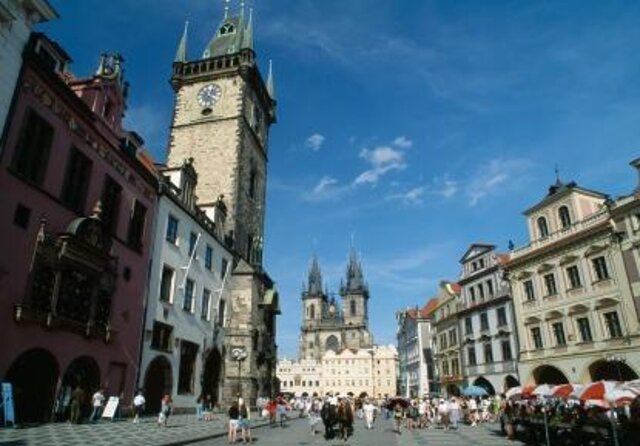
The next stop is Old Town Square, one of Prague’s most photographed places. Here, the Communist Party celebrated its victory in 1948. The contrast is striking: tourists gather around the astronomical clock and church towers, while the guide explains how this same space became a stage for a new political order.
This section lasts about 20 minutes and focuses on the 1950s, often described as an era of fear. You learn about manipulated trials, working camps, collectivization, the secret police, and life behind the Iron Curtain. The guide also points out where Prague’s enormous Stalin monument once stood.
This is where the tour moves from political change to personal cost. The important question is not only who held power, but how that power reached into farms, workplaces, schools, and homes. I find this approach more useful than treating Communism as an abstract system.
The stop is outdoors, so conditions can affect your comfort. The square itself is busy and open, and you will be standing while listening. Comfortable shoes and a willingness to concentrate amid city noise will help.
Wenceslas Square, the Prague Spring, and the Velvet Revolution
The tour continues toward Wenceslas Square, where the story turns to 1968 and 1989. In August 1968, Soviet-led forces crushed the Prague Spring, the reform movement that had promised a more open form of socialism. Your guide explains how the occupation played out around Wenceslas Square and nearby Vinohradska Street.
The political story then moves to November 1989 and the Velvet Revolution. You hear about student protests, the state police response on Narodni Street, and the rise of Vaclav Havel and other figures who shaped modern Czech history.
This is the longest outdoor history section, about 30 minutes. It is also the point where the route can feel most meaningful because the streets around you still function as the city’s everyday center. Shops, offices, trams, and pedestrians make it easier to picture these events as real public confrontations rather than distant textbook material.
The tour does not present Prague as a collection of old buildings alone. It shows you where people gathered, protested, celebrated, and faced state force. If you have already taken a general city tour, this route gives familiar streets a different meaning.
More Battlefield and Military History Tours in Prague:
- 2-Hour Gettysburg Battlefield Guided History Bus Tour with a National Park Guide
★ 4.5 · 2,201 reviews - Loch Ness & Culloden Battlefield Private Tour from Inverness
★ 5.0 · 932 reviews - Nuremberg: Historischer Kunstbunker WWII Art Bunker Tour
★ 4.8 · 921 reviews - Gettysburg Battlefield Self-Guided Driving Audio Tour
★ 4.5 · 910 reviews
Lunch in a 1970s worker’s canteen
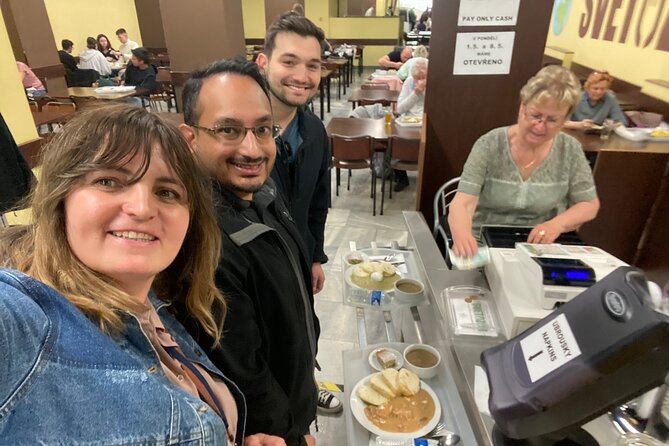
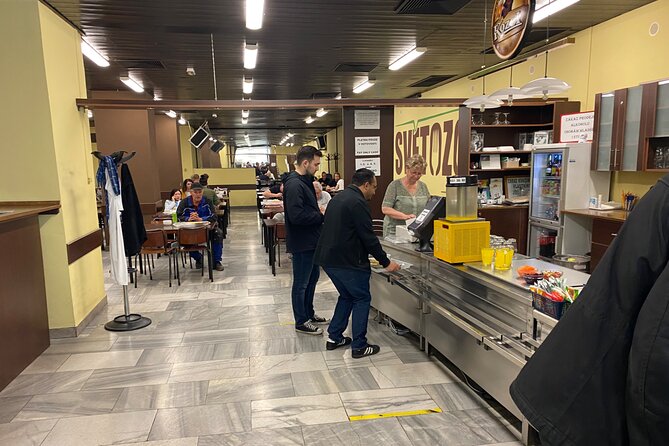
The canteen stop lasts about 30 minutes and takes place in an authentic worker’s canteen dating from the 1970s. Food and drinks are not included, so bring money for your meal. You can order a proper working-class Czech lunch, have a beer, or try Kofola, the popular Czech soft drink.
This is not a polished restaurant arranged for sightseeing. That is the point. You get a glimpse of a practical dining tradition connected to the Communist period, and your guide can help you choose from the available food. One meal described by the guide was pork on paprika with potatoes, a dish that brought back memories of home for one participant.
I like this stop because it gives the tour a social dimension. You have just heard about shortages, political control, and everyday life. Now you sit down in a place connected to the working world and see how food fits into that story.
Keep your expectations realistic. The canteen is included in the route, but the meal is your own expense, and the price of lunch is not specified. If you are on a strict budget, you can limit yourself to a drink. If you want the full experience, set aside extra cash for food and beverages.
Entering the nuclear bunker beneath Wenceslas Square
The bunker is the tour’s main physical attraction. It is located in the upper part of Wenceslas Square, and the entrance fee of 10 EUR is included in the tour price. You finish the walk by going underground into a Cold War shelter dating from the 1950s.
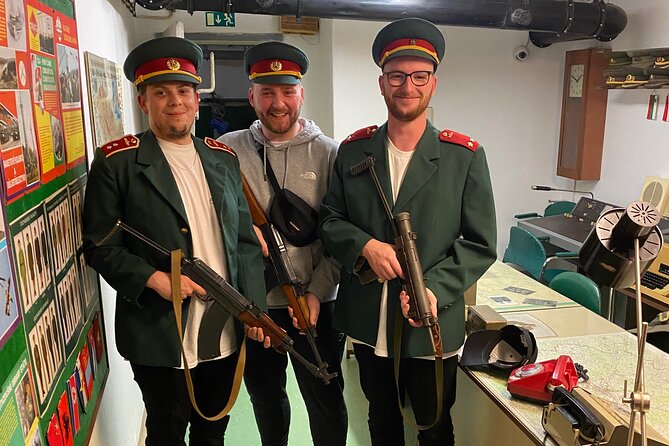
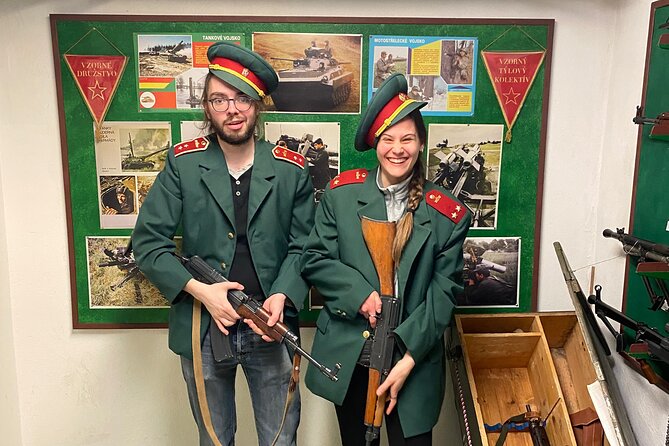
Allow about an hour for this part. The bunker contains Soviet-era artifacts and exhibits that help explain what a nuclear shelter was meant to do. You might handle a gas mask, take part in a mock secret-police interrogation, or see objects linked to military and civil-defense life. Some participants have also been able to hold replica weapons or try activities connected with the shelter’s displays.
The exhibits make the bunker more than an empty concrete room. You see how fear of nuclear war shaped public planning and how people were expected to respond in an emergency. The atmosphere is naturally serious, but the interactive elements keep the visit from becoming a dry museum stop.
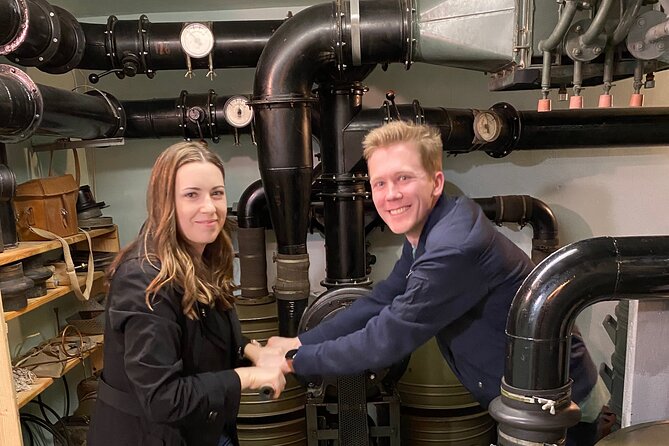
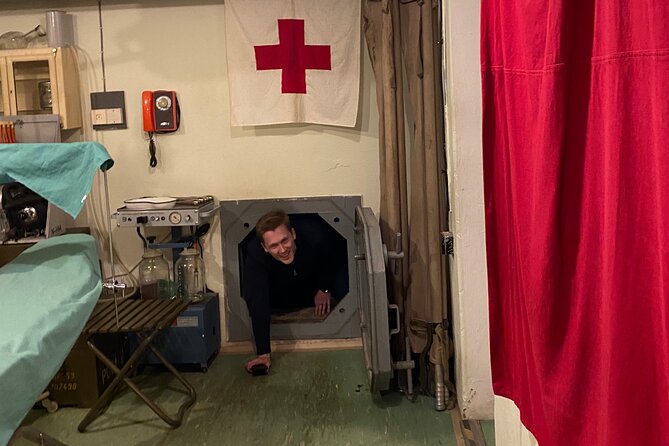
There are physical limits to note. You take an elevator down one level, then walk about 30 steps to a second level below ground. The tour provider says the experience is not recommended for people with claustrophobia. Some mobility is required, and the underground setting may feel tight even if you normally handle museums and walking tours without difficulty.
The bunker concludes the experience in the upper section of Wenceslas Square. From there, you can continue sightseeing, shop, or use public transportation to reach another part of Prague.
How much value do you get for $35.07?
At $35.07 per person, the price is reasonable for a three-and-a-half-hour English-language tour with a maximum group size of 10. The included bunker admission is listed as 10 EUR, which accounts for a noticeable share of the price. You are also paying for a local guide, a carefully planned walking route, and a small-group format.
The value is strongest if you want interpretation. The city’s streets and squares are free, but knowing what happened there changes what you see. The guide also helps you understand details that would be easy to miss, such as the former secret-police headquarters on Bartolomejska Street and the location of the former Stalin monument.
The meal is not included, so budget extra for lunch and drinks. That arrangement is fair because you choose what to eat and how much to spend. Still, the phrase canteen lunch should not be mistaken for an included meal.
The small group is another reason the price works. With only a few people, the guide can answer personal questions and adjust the conversation. One booking had just two participants, and the guide still operated the tour. That kind of flexibility is valuable if you prefer discussion over a fixed speech.
What to know about the guides
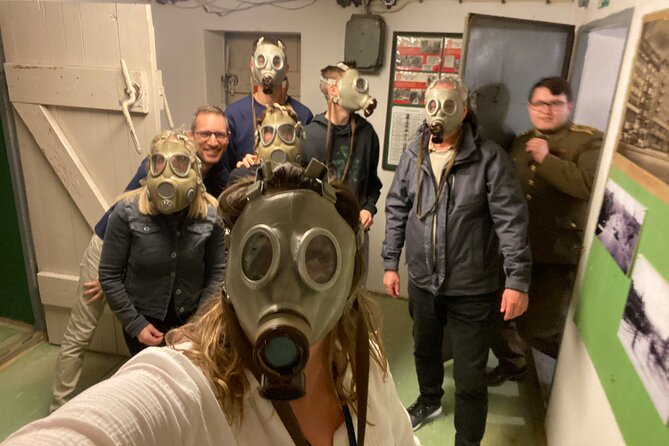
The experience has been led by guides including Klara and Leo. Klara’s strongest contribution is her personal connection to the subject. She explains how Communist rule affected everyday life and uses photographs and family stories to make the political material easier to understand.
Leo is praised for detailed explanations, humor, and a clear account of the Czech Republic’s path through Communism. Both styles suit the subject because the material can become heavy if presented only as dates and official titles.
The guide can also make the canteen less intimidating. If you are unsure what to order, ask for help. The group may sit together, and the lunch stop can become an informal discussion rather than a rushed break.
Guide assignments can change, so you should not book solely on the promise of one particular person. Still, the repeated strength of the guiding makes the human element one of the tour’s best reasons to go.
Who should book this Prague tour?
I would choose this tour if you have already seen Prague’s main medieval sights and want a better understanding of the country’s recent past. It suits history fans, students, politically curious visitors, and anyone who prefers local neighborhoods and real public spaces to a string of famous photo stops.
It is also a good choice for solo visitors. The small group gives you a natural way to meet people, and the canteen stop creates time for conversation.
You may want a different activity if you dislike political history, cannot walk for roughly three and a half hours, or feel uneasy in narrow underground spaces. This is not a sightseeing tour built around grand interiors and panoramic views. Its rewards come from explanation, atmosphere, and the feeling of seeing Prague through a less familiar lens.
Book at least a little ahead if your schedule is fixed. The experience is often reserved about 40 days in advance. Free cancellation is available up to 24 hours before the start time, but cancellations or changes made later are not accepted.
Should you book it?
Yes, if you want Prague’s 20th-century story brought down to street level. The bunker is memorable, but I would not treat it as the only reason to go. The best value comes from the combination of the walk, the guide’s personal explanations, the canteen, and the underground shelter.
Choose it knowing that lunch costs extra and the bunker requires some mobility. If those points suit you, this is a focused, personal way to understand what Czechoslovakia endured between 1948 and 1989, and how Prague changed when that system finally fell.
FAQ
How long does the Communism and Nuclear Bunker Tour last?
The tour lasts approximately three hours and 30 minutes, including the walking route, canteen stop, and bunker visit.
Where does the tour begin?
It begins at the Powder Tower, Náměstí Republiky 5, in Prague’s Old Town. Look for the guide holding a blue umbrella.
Where does the tour end?
The tour ends in the upper part of Wenceslas Square, near the nuclear shelter.
Is the bunker admission included?
Yes. The 10 EUR Cold War Museum admission fee is included in the tour price.
Is lunch included in the ticket price?
No. Food and drinks at the 1970s worker’s canteen are at your own expense.
What language is the tour offered in?
The tour is offered in English.
How many people can join the tour?
The group has a maximum of 10 participants.
Is the tour suitable for people with claustrophobia?
No. The experience is not recommended for people with claustrophobia because the bunker is underground and includes narrow spaces. Some mobility is also needed, including about 30 steps to the second underground level.
More Trips with Lunch in Prague
- Normandy D-Day Sites & Cemetery Day Trip from Paris with Lunch
★ 5.0 · 6,877 reviews - Montserrat with Black Madonna & Medieval Winery with Tapas/Lunch
★ 5.0 · 5,209 reviews - Douro Valley: Historical Sites, Wine Experience, Lunch & Cruise
★ 5.0 · 5,133 reviews - Tromsø: Reindeer Camp and Sami Cultural Tour with Lunch
★ 4.7 · 3,326 reviews
Just added around Prague
- Prague: Communists and World War II Tour★ 4.7 · 88 reviews
- Prague: Medieval Underground Guided Tour★ 4.5 · 209 reviews
- Prague: 3–Hour Communism and World War 2 E-Bike Tour★ 4.9 · 56 reviews
- From Prague: Medieval Dinner, Show, Castle and Brewery★ 4.3 · 48 reviews
- Terezin In-Depth Holocaust Tour From Prague’s Center (max 7 pax)★ 5.0 · 170 reviews
- Prague: World War II and Communist History Tour★ 4.7 · 130 reviews
- Prague: World War 2 and Operation Anthropoid Walking Tour★ 4.8 · 193 reviews
- Prague: Plague Doctor Old Town History Walking Tour★ 4.9 · 204 reviews
Prague History Tours, compared.
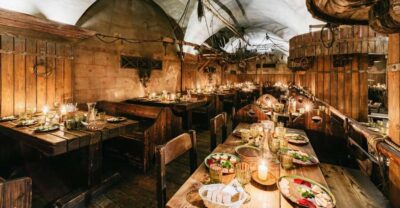
Prague: Medieval Dinner with Unlimited Drinks
Read our review →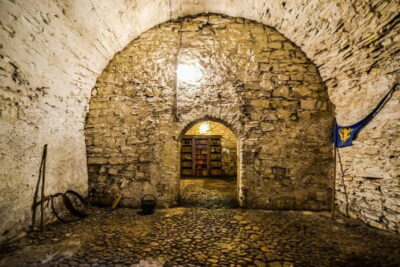
Prague: Oldtown, Medieval Underground & Dungeon History Tour
Read our review →
Prague: Ghosts, Legends, Medieval Underground & Dungeon Tour
Read our review →
Prague Old Town, Medieval Underground and Dungeon Historical Tour
Read our review →
Prague 5 Courses Medieval Dinner and Live Performances
Read our review →
Prague: Communism History and Nuclear Bunker Guided Tour
Read our review →
Prague: Historic City Center Bus Tour with Top Sights
Read our review →
Prague Historic Pub Tour with Drinks Included
Read our review →Browse the lists this tour appears in