
Review · PRAGUE
Prague Communism History and Nuclear Bunker Tour
Prague’s medieval center gets most of the attention, but this tour takes you into the city’s far more recent and unsettling past. You’ll hear about secret police arrests, the 1968 Soviet invasion, the 1989 Velvet Revolution, and daily life under communism before entering a nuclear bunker four floors below ground.
I like the mix of street history and physical sites, especially the former StB holding cells and the bunker museum. I also like that the best guides, including Stan, Pavel, Lada, and Ladislav, use personal memories to make Cold War history feel human. The main caution is that the quality depends heavily on the guide, and a sizable part of the tour can go to transport rather than sightseeing.
Key points to know before booking
- The bunker is four floors underground: Expect a stark, no-frills Cold War museum with mannequins, old equipment, and 1980s objects.
- The walking route covers major political sites: You’ll connect Národní třída, Wenceslas Square, the Velvet Revolution Memorial, and the former secret police building.
- Personal storytelling can make the difference: Guides who grew up under communism, such as Stan or Lada, have added a strong human side to the facts.
- The tour lasts about 2 hours and 20 minutes: Allow extra time, since the duration can shift by 10 or 15 minutes with group size.
- You need to manage stairs and confined spaces: The bunker includes many steps and ramps, and the experience is not suitable for people with mobility problems or claustrophobia.
- The price includes more than a walk: At $45.16, you get the guide, bunker admission, transport, a photo booklet, and a bunker survival guide.
Prague’s Cold War story starts in the open air
This is not a tour of grand palaces or old-town legends. It deals with the part of Prague’s past that still feels close: one-party rule, surveillance, Soviet influence, street protests, and the sudden collapse of communist power in 1989.
You begin in central Prague at Malé Náměstí, inside the passage about 20 meters to the right of Hotel U Prince. The meeting point is easy to reach by public transport, but the ticket office sits inside the passage, not directly on the square. Give yourself a few minutes to find it, especially if you are arriving close to departure.
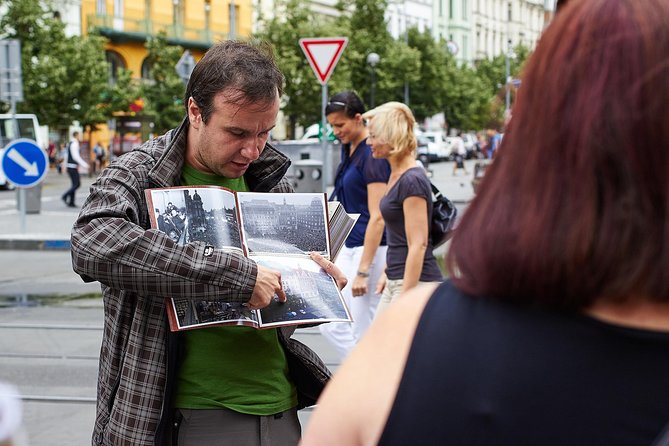
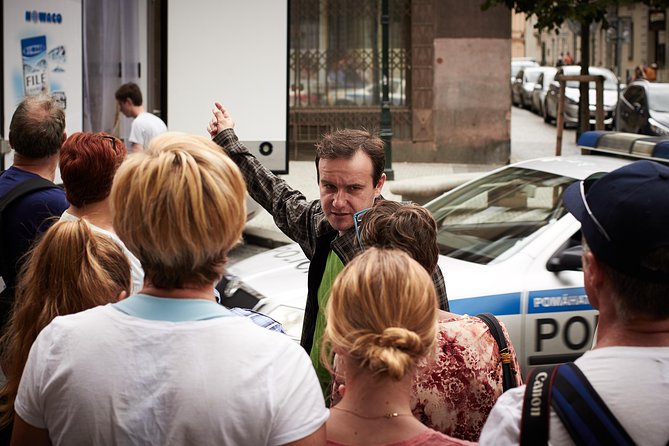
The first section is a guided walk through the city. It is not simply a series of photo stops. The guide connects places to the political events that took place there, explaining how public spaces changed meaning during the communist period and after the Velvet Revolution.
I like this approach because the city becomes a timeline. A square is not just a square when you understand the speeches, protests, invasions, and arrests linked to it.
More Cold War and Communism Tours in Prague:
- Prague: Communism History and Nuclear Bunker Guided Tour
★ 4.7 · 2,417 reviews - Communism & Nuclear Bunker Tour + 70s Canteen Lunch (own expense)
★ 5.0 · 1,036 reviews - Prague: World War II and Communist History Tour
★ 4.7 · 130 reviews
The StB holding cells and Vaclav Havel’s story
One of the most unusual stops is the former StB holding-cell site. The StB was Czechoslovakia’s secret police, and this building gives the tour a physical link to political surveillance and detention.
The stop also brings in Vaclav Havel, the playwright, dissident, and later president. His story helps explain the distance between official communist life and the underground culture that challenged it. The visit is brief, listed at about 10 minutes, so do not expect a full museum treatment or a long examination of every room.
That short timing is typical of the walking portion. You will hear the main story at each place, then move on. If you want a detailed study of the StB, Havel, or dissident literature, you will need another source or a longer specialist tour.
Still, the site matters because it is not an abstract lesson. You are standing where people were held by the state. That can say more than a polished display in a conventional museum.
Národní třída and the Velvet Revolution
Národní třída is central to the story of November 1989. The tour explains the political events and recent Czech history connected with the street, then links them to the Velvet Revolution Memorial.
The revolution was peaceful, but the atmosphere before the collapse of communist rule was tense. Demonstrations, police action, student involvement, and public pressure all helped bring about the end of the regime. The memorial gives you a place to consider those events at street level.
This is one of the strongest parts for anyone who wants to understand modern Prague. The medieval city can make Czech history feel distant, but the Velvet Revolution happened within living memory. Depending on your guide, you may hear personal memories of growing up under communism or of the changes that followed.
The best guides add humor without making light of the subject. Stan has been praised for mixing personal stories with facts and present-day observations. Lada has also brought a personal and direct style to the route. The guide assigned to your departure can vary, so you should treat those names as examples, not a promise.
Wenceslas Square and the 1968 invasion
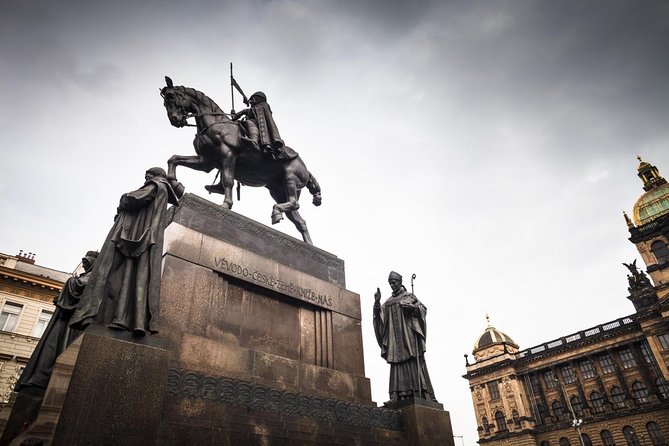
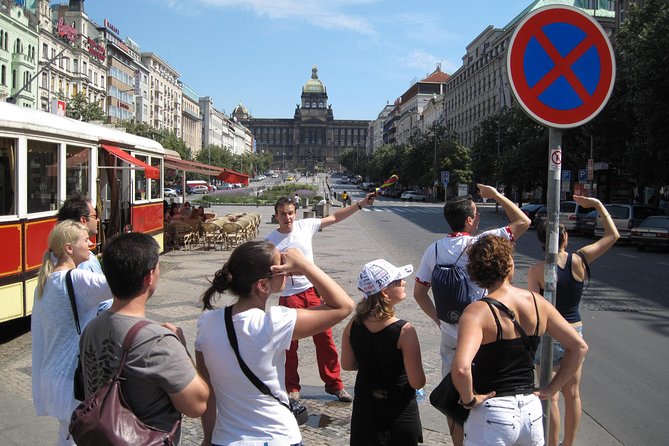
Wenceslas Square provides the setting for the tour’s discussion of the August 1968 Soviet invasion and Alexander Dubcek. This is a key moment in Czechoslovakia’s postwar story.
Dubcek’s reform program aimed to loosen the strict communist system. The Soviet-led invasion ended that experiment and began a period of tighter control known as normalization. The square later became a major public stage for protests and political change.
A guide can make this stop useful even if you know little about Czech politics. The basic sequence is easier to follow when you connect it to a real place: reform, invasion, repression, dissent, and finally mass protest in 1989.
The stop is short, around 10 minutes. That is enough for an outline, but not enough for a full political lecture. If your main goal is a detailed account of the Prague Spring, ask questions when the guide allows it. Some guides welcome discussion, while one or two sessions have been criticized for spending too much time on side topics or repeating points.
More Battlefield and Military History Tours in Prague:
- 2-Hour Gettysburg Battlefield Guided History Bus Tour with a National Park Guide
★ 4.5 · 2,201 reviews - Loch Ness & Culloden Battlefield Private Tour from Inverness
★ 5.0 · 932 reviews - Nuremberg: Historischer Kunstbunker WWII Art Bunker Tour
★ 4.8 · 921 reviews - Gettysburg Battlefield Self-Guided Driving Audio Tour
★ 4.5 · 910 reviews
Olšanské náměstí and socialist Prague
Olšanské náměstí takes you away from the polished center and into a former workers’ district. Here you see socialist architecture and original buildings from the 1970s concrete era.
This stop helps balance the political stories with the physical city created under communist rule. Architecture can reveal a lot about a government’s priorities: standardization, function, public housing, and large-scale planning. The buildings may not be conventionally beautiful, but they show how ordinary people lived and how Prague expanded during that period.
Do not expect a long architectural walk. The listed stop lasts about 10 minutes, and the tour’s focus remains communism and the Cold War rather than design history. Still, I like having this neighborhood included. Without it, the tour could feel like a quick route between famous protest sites.
The journey to the bunker takes time
After the central walking section, you travel to the Prague Nuclear Bunker Communism and Cold War Museum. Transport is included, and some departures have used a tram as part of the journey.
This transfer is useful because the bunker is not simply another room in the old town. It also affects the pace. A tour advertised at about 2 hours and 20 minutes can include a long transport segment, with one account putting the tram ride at close to 45 minutes.
That matters if you are planning another activity immediately afterward. I would keep at least a little spare time beyond the stated duration. The overall length can also vary by 10 or 15 minutes depending on group size.
The ride is not necessarily wasted time. A guide may continue explaining Prague’s recent past while you travel, and it gives you a break from walking. But if you want two solid hours of site visits, this may feel less efficient than expected.
Four floors underground in the nuclear bunker
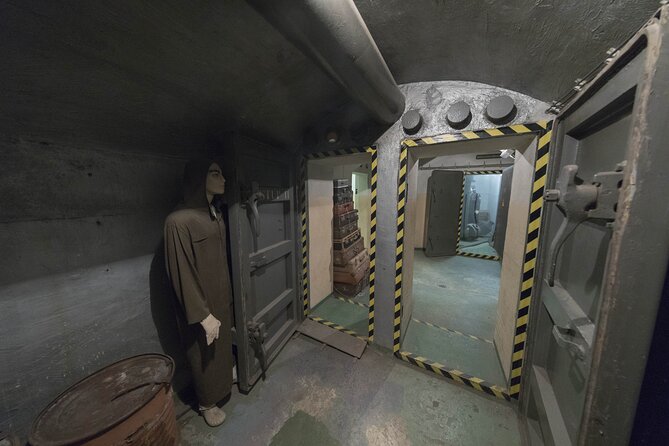
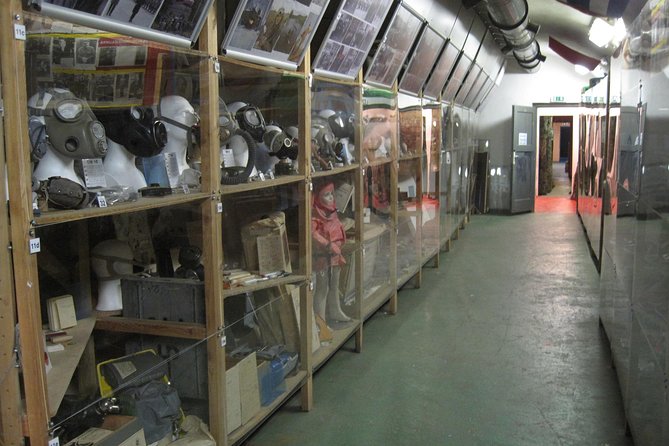
The bunker is the tour’s main physical attraction. You descend four floors underground into a Cold War shelter designed around the fear of nuclear conflict.
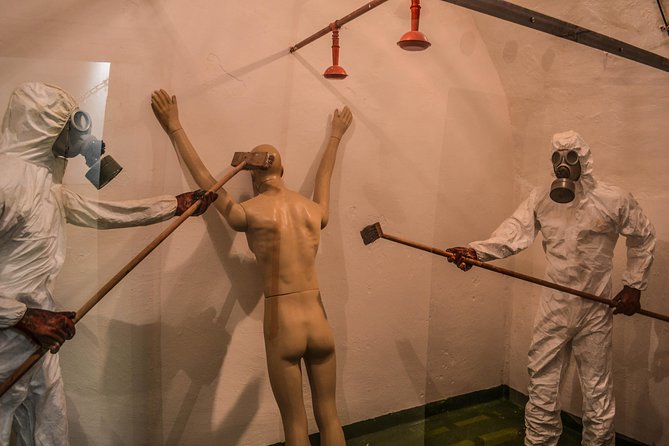
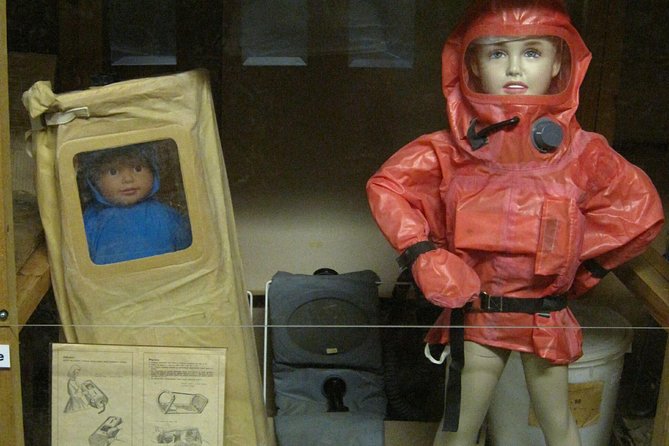
The museum is described as no-frills. You might see old mannequins, equipment, and 1980s objects, along with displays connected to survival and civil defense. It is not a polished modern exhibition with extensive interactive technology. Its value comes from the setting itself: thick underground spaces, utilitarian rooms, and the knowledge that Prague had to plan for a possible nuclear attack.
You should expect many stairs and ramps. That is important, since the bunker is not suitable for anyone with a walking disability or significant mobility issue. It is also not recommended for people with claustrophobia or serious heart problems.
The atmosphere is sober rather than entertaining. The subject is frightening by nature, and the museum presents a period when nuclear war was part of everyday public anxiety. One useful extra is the bunker survival guide included with the tour, along with a photo booklet.
For some people, the bunker will be the highlight. For others, it may feel underwhelming, especially if they expect a large collection or a carefully arranged national museum. The objects can seem like a mixed group of Cold War and 1980s material rather than a fully developed account of life under communism.
That difference comes down to what you want. If you want to physically enter a Cold War bunker, this tour delivers something unusual. If you want a detailed social history of Czechoslovakia, the bunker alone will not provide it.
Guide quality shapes the entire experience
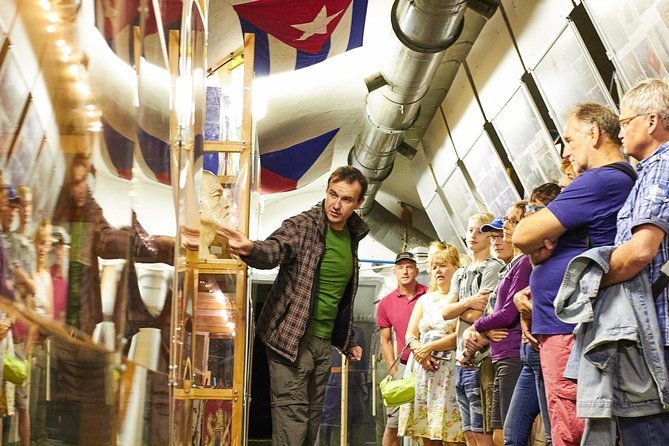
The guide is the most important variable. A strong guide turns a short stop into a clear story, while a weak one can make the route feel slow and scattered.
Several guides have made a strong impression through personal experience. Stan has been described as funny, charismatic, and deeply familiar with Cold War life. Pavel has combined friendly explanations with Czech historical background. Ladislav has used his own story to make the period feel immediate, and guides identified as L have brought memories of growing up under communism and leaving the country.
That personal angle is valuable, but it is not automatically enough. A guide who simply repeats that communism was bad may leave you with a one-sided account. You need explanations of how the system worked, what official policy claimed to do, and how ordinary people navigated daily life.
The strongest version of this tour gives you both: political facts and lived experience. The weaker version can become repetitive, overly personal, or light on historical context. The guide also has to manage a group of up to 26 people, which may affect how much time there is for questions.
The tour requires you to speak the chosen language. You cannot rely on another participant to translate during the walk, and disruptive behavior is not permitted. That rule helps the group stay together and keeps the guide’s commentary understandable.
Is $45.16 a fair price?
At $45.16 per person, the cost is reasonable if you want the bunker and the city walk in one outing. You receive admission to the bunker museum, an English live guide, transport to and from the bunker, and two printed items.
The value is less clear if you are mainly interested in Prague’s communist-era buildings. The walking stops are short, and transport takes a meaningful share of the total time. You are paying for access to the bunker, the route between sites, and the guide’s interpretation, not for a long visit at each location.
I would compare it this way:
- Book it if you want a guided introduction to Prague’s Cold War story and a bunker visit in the same package.
- Think twice if you prefer museums with extensive written displays and a large collection of original objects.
- Book it for the personal storytelling when you enjoy learning from someone with direct memories of the period.
- Skip it if stairs, ramps, underground rooms, or enclosed spaces will make the experience uncomfortable.
The 95 percent recommendation rate and 4.8 rating from 1,742 ratings suggest that the package works very well for many people. The lower scores point to real concerns, not just minor complaints: uneven guide quality, long transport, and a bunker display that may feel basic.
Who should take this Prague tour?
This suits adults and older children who can handle a long walking route, stairs, and a serious subject. It is especially useful if you already know Prague’s medieval center and want to understand the country’s modern political story.
It also works well for families when the children are old enough for difficult historical material. The tour is not permitted for the smallest preschool-age children, and it is not designed as a light sightseeing activity.
History enthusiasts will likely get the most from it, but you do not need to arrive with a background in Czech politics. The guide supplies the basic sequence of events. You will benefit most if you ask focused questions and pay attention to the links between the stops.
Wear comfortable walking shoes. Photos are allowed, but video recording requires special permission. Do not arrive under the influence of alcohol or drugs, and avoid booking this if you are pregnant and concerned about the stairs, ramps, or underground setting.
Should you book the Communism History and Nuclear Bunker Tour?
Book this tour if you want a practical introduction to Prague’s communist past, especially the 1968 invasion, the Velvet Revolution, secret police activity, and Cold War fears. The combination of outdoor sites and a real bunker gives the subject shape, and a strong guide can make the experience personal and memorable.
I would not book it expecting a full academic account of Czechoslovak communism or a large, polished museum. The bunker display is basic, the walking stops are brief, and the transfer can take longer than you expect.
For most visitors with a serious interest in modern Prague, the tour is worth considering at $45.16. Keep your schedule flexible, prepare for stairs, and understand that the guide’s style will shape the day. If you get a guide such as Stan, Pavel, Lada, or Ladislav, the personal stories may be the part you remember longest.
FAQ
Where does the Prague Communism History and Nuclear Bunker Tour start?
It starts at the ticket office inside the passage at Malé Náměstí Square 459/11, about 20 meters to the right of Hotel U Prince in Prague 1.
Where does the tour end?
The tour ends at Malé Náměstí 459/11, the same central address used for the start.
How long does the tour last?
The scheduled duration is about 2 hours and 20 minutes. It can vary by roughly 10 or 15 minutes depending on group size.
What is included in the price?
The price includes entrance to the Nuclear Bunker Museum, an English live guide, transport to and from the bunker, a photo booklet, and a bunker survival guide.
Is transport to the bunker included?
Yes. Transport to and back from the bunker is included in the tour.
How many people can join the tour?
The maximum group size is 26 people.
Is the tour suitable for someone with mobility problems?
No. The tour is not suitable for people with walking disabilities or mobility issues. The bunker includes many stairs and ramps.
Is the bunker suitable for someone with claustrophobia?
No. The experience is not recommended for people with claustrophobia, serious heart issues, or similar concerns.
Can I cancel for a full refund?
Yes, if you cancel at least 24 hours before the experience starts. Cancellations made within 24 hours are not refunded, and changes within that period are not accepted.
Just added around Prague
- Prague: Medieval Underground Guided Tour★ 4.5 · 209 reviews
- Prague: Communists and World War II Tour★ 4.7 · 88 reviews
- From Prague: Medieval Dinner, Show, Castle and Brewery★ 4.3 · 48 reviews
- Prague: 3–Hour Communism and World War 2 E-Bike Tour★ 4.9 · 56 reviews
- Prague: World War II and Communist History Tour★ 4.7 · 130 reviews
- Terezin In-Depth Holocaust Tour From Prague’s Center (max 7 pax)★ 5.0 · 170 reviews
- Prague: Plague Doctor Old Town History Walking Tour★ 4.9 · 204 reviews
- Prague: Immersive History Walking Tour and VR★ 4.8 · 73 reviews
Prague History Tours, compared.
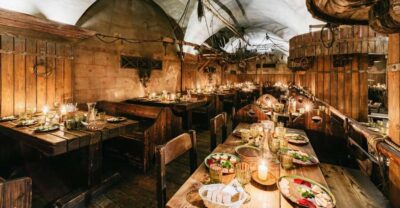
Prague: Medieval Dinner with Unlimited Drinks
Read our review →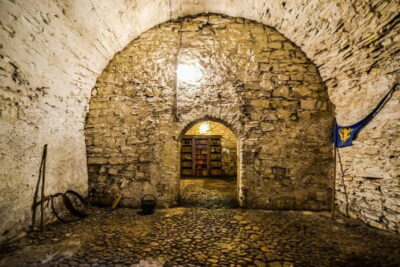
Prague: Oldtown, Medieval Underground & Dungeon History Tour
Read our review →
Prague: Ghosts, Legends, Medieval Underground & Dungeon Tour
Read our review →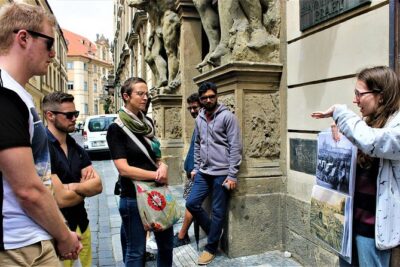
Prague Old Town, Medieval Underground and Dungeon Historical Tour
Read our review →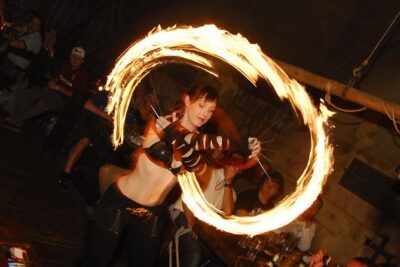
Prague 5 Courses Medieval Dinner and Live Performances
Read our review →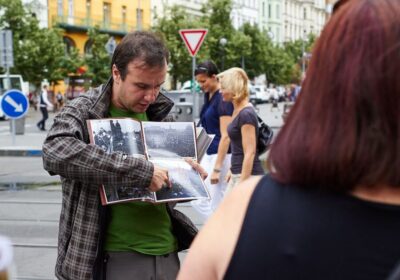
Prague: Communism History and Nuclear Bunker Guided Tour
Read our review →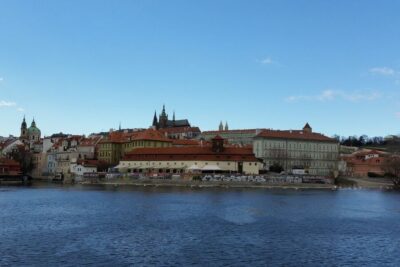
Prague: Historic City Center Bus Tour with Top Sights
Read our review →
Prague Historic Pub Tour with Drinks Included
Read our review →Browse the lists this tour appears in