
Review · FRANCE
Toulouse Food & History Tour with a Chef (in English)
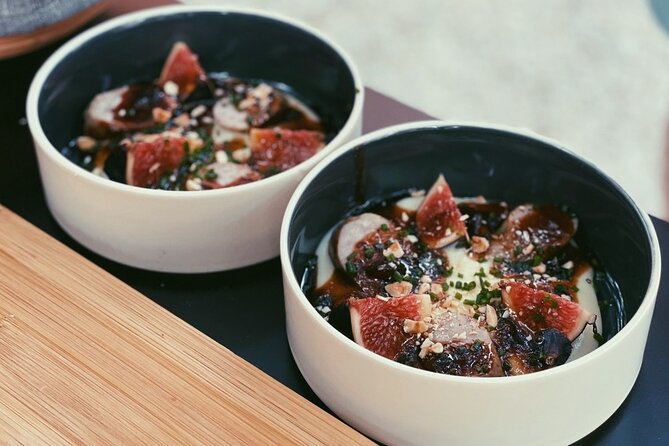
Toulouse’s best stories come with something to eat. On this four-hour walk, chef Alejandro ties each tasting to a place in the city, from a chocolatine near the Fondation Bemberg to Toulouse sausage in Place Saint-Georges and cheese with wine at Marché Victor Hugo.
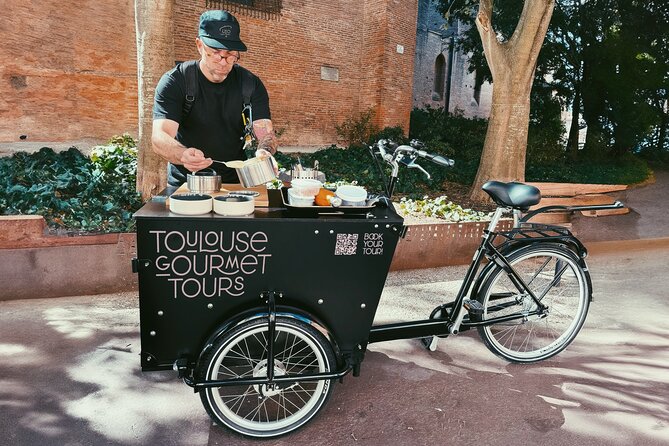
I like the food-history pairing, which gives names, dates, and old buildings a clear purpose. I also like the small-group format and Alejandro’s rolling food cart, which lets him prepare and plate dishes beside the sights rather than herd you into a restaurant.
The main catch is simple: you stand and walk for the entire tour. There is no seating, and the $133.02 price is fair only if you value a guided history walk, seven tastings, local food advice, and a chef-hosted format in one package.
Key points to know before booking
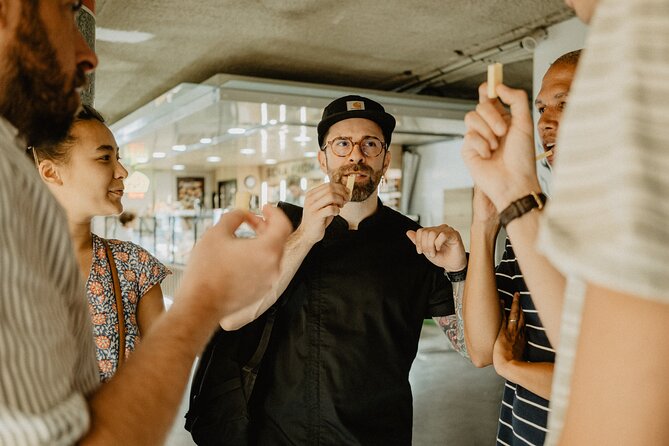
- Seven tastings, seven Toulouse stories: Each food stop connects to a building, square, person, or turning point in the city.
- Chef Alejandro leads the walk: He prepares and plates food from a mobile cart, with most items brought along in advance.
- The route covers central Toulouse: You visit the Fondation Bemberg, the Garonne waterfront, Place Saint-Georges, Marché Victor Hugo, Saint-Sernin, and Place du Capitole.
- The food is strongly local: Expect chocolatine, a pastry-shop sweet, Toulouse sausage, cheese and wine, regional charcuterie, and a traditional Toulouse dessert.
- Plan for four hours on your feet: Comfortable shoes matter more than smart clothes.
- Tell the operator about restrictions early: Food allergies and a preference not to drink alcohol should be reported at least 24 hours ahead.
Why this Toulouse tour feels different
Many city food walks move from shop to shop and leave the history in the background. This one reverses the order. Alejandro tells a story at a landmark, then serves a food connected to that story.
That structure gives the tour a clear rhythm. You are not simply eating seven unrelated samples. You are following a seven-part route through Toulouse, with sweet and savory stops spaced between old streets, squares, churches, and river views.
The format also makes the chef central to the experience. Alejandro is not only explaining what you are eating. He brings a mobile cart, prepares and plates the food along the route, and uses the presentation to make each stop feel like a small course in an outdoor meal.
One practical detail is worth understanding. The food is presented as fresh, but not every item is cooked on the spot. The cheese and wine pairing is assembled at the market, while most other food is prepared ahead and carried on the tour. That is not a restaurant lunch with a kitchen behind the door. It is a carefully planned tasting menu served outdoors.
The experience is offered in English and starts at 10 a.m. The group is intended to be small. The supplied details give two different maximum sizes, 10 and 14, so I would confirm the final group limit when booking if crowd size matters to you.
More Food and Drink Trips in France:
- Normandy D-Day Small-Group Day Trip with Omaha Beach, Cemetery & Cider Tasting
★ 5.0 · 2,786 reviews - From Strasbourg: Medieval Villages & Wine Tasting Day Trip
★ 4.8 · 329 reviews - Nice : Wine Tasting at a Historic Château in a Land Rover !
★ 4.9 · 156 reviews
Starting at the Fondation Bemberg and Hôtel d’Assézat
Meet at the Fondation Bemberg, in the Hôtel d’Assézat on Place d’Assezat. This is a strong starting point because the building introduces Toulouse through architecture and money rather than through a standard list of monuments.
Alejandro explains the city’s grand private mansions and how wealthy families in the 16th century could afford them. The subject gives you a useful lens for central Toulouse: elegant façades were not accidental decoration, but signs of commercial success and social power.
The first tasting is the city’s iconic baked good. The experience does not treat the pastry as a quick snack grabbed between sights. Instead, it becomes part of the opening story about Toulouse and its food traditions.
This first stop is also a good test of the tour’s style. If you prefer a guide who connects small details to a larger story, you will likely settle into the format quickly. If you want a full architectural tour of the Fondation Bemberg’s art collection, this is not that. The building is a setting and a historical subject, not a museum visit with admission and extended gallery time.
The Garonne at Quai de la Daurade
The walk continues to Quai de la Daurade, where the river adds space and a change of pace. Here you hear about the great fire of Toulouse, which burned much of the city in the 15th century and changed the way it was built.
That story matters because it helps explain why Toulouse’s architecture is not simply a preserved medieval scene. Fires, rebuilding, and changing materials shaped the city you see today. The riverfront view gives the tale a physical setting rather than leaving it as an abstract date.
At the quay, you receive a sweet from the town’s oldest pâtisserie. It is a useful contrast with the first pastry, showing how the tour moves through different parts of Toulouse’s food identity without turning the meal into one heavy course after another.
The waterfront stop should also be one of the easier places to listen. You have room for the river view, but you are still standing. If you need regular chances to sit down, the four-hour structure will feel demanding.
Tour de Serta and Toulouse’s timber-frame past

Tour de Serta brings the group to the oldest timber-frame house in Toulouse, dating from 1533. This is a smaller-scale stop than the grand mansion and the wide riverfront, but it gives the route useful variety.
Old timber framing makes the city’s building history more tangible. You are looking at a specific house with a specific date, not only hearing about Toulouse in broad terms. The stop also helps show the range of central Toulouse, from merchant wealth and formal residences to older domestic structures.
There is no separate food course described for this stop, so think of it as one of the tour’s history-focused pauses. That balance is sensible. Seven tastings over four hours is generous, and a few stops need to let the food settle while the story continues.
More Food Trips in France:
- Avignon: Historic District Guided Food & Wine Walking Tour
★ 4.8 · 84 reviews - Bordeaux Historic and Gourmet Food Walking Tour
★ 4.5 · 82 reviews - Toulouse Food & History Tour with a Chef (in English)
★ 5.0 · 59 reviews - Historical Center, Bordeaux Food Tour
★ 5.0 · 33 reviews
Place Saint-Georges and the real Toulouse sausage
At Place Saint-Georges, Alejandro tells the story of a wrongful execution in the 18th century and explains how the case influenced France’s political future after the Revolution. It is a darker subject, but it gives the square more weight than a quick photo stop.
The food here is the tour’s main savory moment: la véritable saucisse de Toulouse. Toulouse sausage is one of the region’s best-known products, so this is the point where the city’s identity becomes especially direct and edible.
The pairing works because it links a local specialty to the place where the story unfolds. You are not just hearing about the region’s signature sausage in a generic food market. You are eating it as part of a wider explanation of Toulouse and its people.
Portion size is not specified, so you should think of the seven tastings as a progressive sampling menu rather than seven full meals. You will eat enough to make lunch unnecessary for many people, but the tour is not presented as a sit-down feast.
Marché Victor Hugo and the cheese-and-wine course
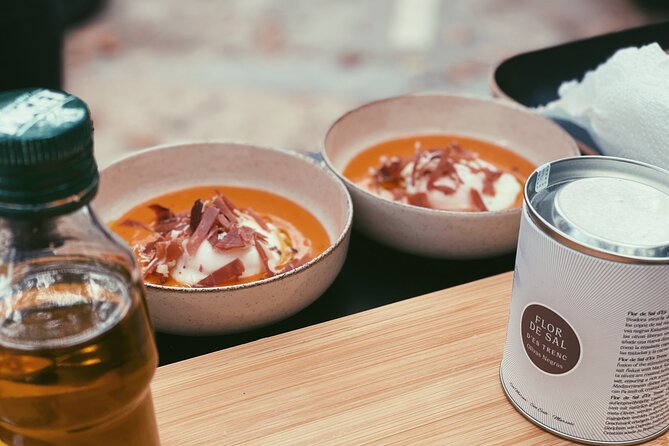
Marché Victor Hugo is one of the more useful stops for anyone who wants to understand how Toulouse has changed. Alejandro traces the site from a medieval rampart to an art nouveau market and then to a concrete car park.
That sequence is a compact lesson in urban change. A city does not remain frozen in its most picturesque period. Defensive walls disappear, markets take their place, and later redevelopment can produce something far less graceful.
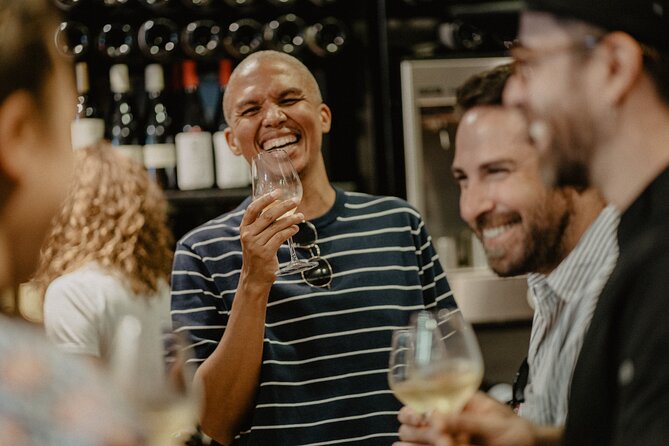
This is also where the tour’s cheese and wine pairing comes into focus. The tasting highlights artisanal, highly local cheeses and wine, and it is the one course prepared directly around the market stop rather than simply served from the cart.
If you do not drink alcohol, tell Toulouse Gourmet Tours at least 24 hours in advance. The same advance notice applies to food allergies. The operator specifically asks for that information, and giving it early is far better than trying to solve a dietary issue once the walk has started.
Saint-Sernin and a dessert with an ancient recipe
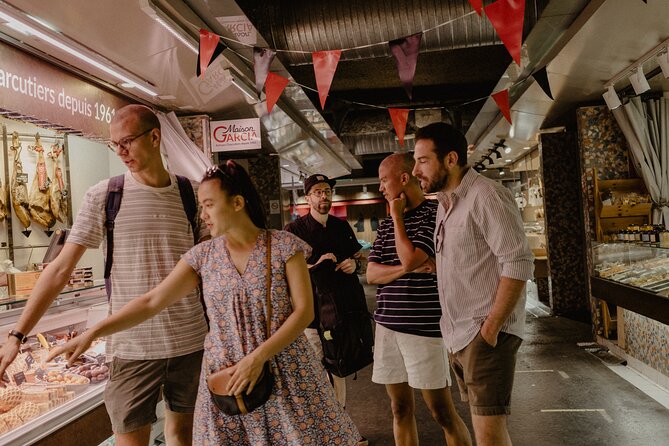
The route reaches Basilique Saint-Sernin, one of Toulouse’s most important religious landmarks. Here you hear about the city’s first Christian, who opposed the Roman Empire.
The church gives this part of the walk a strong setting. You are not only discussing early Christianity in a classroom-style way. You are standing beside a major religious monument while the story is told, which helps connect Toulouse’s later identity to its Roman-era past.
The tasting is the tour’s most famous Toulouse dessert, a cake said to have a recipe more than 2,000 years old. It provides a sweet finish to the main food sequence and adds an unusually long historical thread to the meal.
The tour ends at Basilique Saint-Sernin, at 7 Place Saint-Sernin. The end point is about a five-minute walk from Place du Capitole, so you are still well placed for further sightseeing after the tour, even though the final stop itself is Saint-Sernin.
Place du Capitole and Toulouse’s aviation story
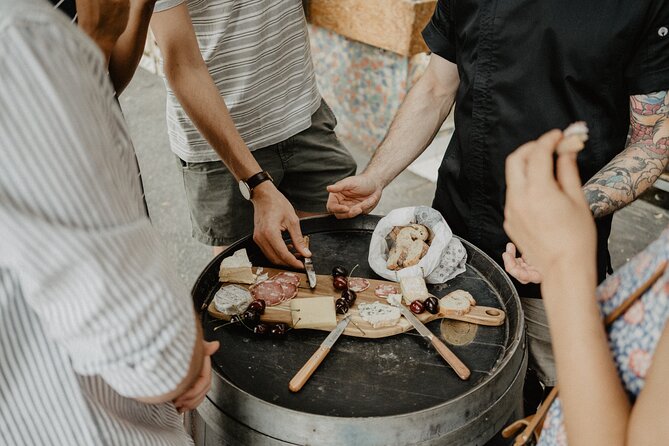
Place du Capitole brings the route to one of Toulouse’s signature public spaces. The final story shifts from religious and medieval subjects to aviation, explaining why Toulouse became a European aerospace center and the headquarters of Airbus.
That change of subject is a smart way to finish. Toulouse is not only old mansions, churches, pastries, and regional sausage. It is also a modern industrial and technological center. The food course here is the area’s most typical charcuterie product, giving the ending a savory note after the cake at Saint-Sernin.
The supplied route lists both Place du Capitole and Saint-Sernin among the final landmarks, while the formal end point is Saint-Sernin. In practice, the route brings you through the major central sights and leaves you close to the Capitole area. Confirm the exact order with the guide on the day, as walking routes can be adjusted.
What the $133.02 price includes in practical terms
At $133.02 per person, this is not a budget snack crawl. You are paying for four hours with a chef, seven tastings, English guiding, food preparation and presentation, and a history route through central Toulouse.
The value improves if you want several services in one booking. A standard history walk would give you the buildings and stories but not the food. A casual food crawl might give you local bites but not the context behind them. This experience combines both and adds the chef’s personal recommendations.
Alejandro’s follow-up advice is another useful part of the format. The experience includes recommendations for markets, food shops, bars, and restaurants, and the guide has provided photos and notes to help participants remember the route. That can be especially helpful if you schedule this near the start of your stay and use the suggestions for later meals.
The value is weaker if you mainly want a seated lunch, a large number of restaurant dishes, or a flexible route with plenty of free time. Four hours is a long period to remain on your feet, and the food is served at outdoor stops rather than at tables.
Who should book this four-hour walk
I would choose this tour for a first or second day in Toulouse. It gives you a quick map of central landmarks, introduces local food, and can point you toward places to eat during the rest of your stay.
It suits you especially well if you:
- Like food with a story attached to it
- Prefer small groups to large coach-style sightseeing
- Enjoy a guide who explains local customs and historical background
- Want an English-language experience
- Are comfortable walking and standing for four hours
- Appreciate recommendations for markets, shops, and restaurants
Families can also find the mix useful, as long as everyone can manage the walking and standing. The route includes serious subjects, including fire, execution, religion, and political change, so it is not designed as a children’s-only activity.
You should think twice if you have limited mobility, need frequent seating, or want to avoid all alcohol and cannot give advance notice. Service animals are allowed, and the route is near public transportation, but the walking format remains the central fact.
Timing, weather, and cancellation details
The tour starts at 10 a.m. and lasts about four hours. Wear comfortable shoes and clothing, since there is no seating during the food stops.
Free cancellation is available up to 24 hours before the start time. Changes or cancellations inside that 24-hour window are not accepted for a refund. The experience also depends on good weather and a minimum number of participants. If poor weather or low enrollment cancels the tour, you are offered another date or experience, or a full refund.
Should you book the Toulouse Food and History Tour?
Book it if you want Toulouse explained through both its streets and its table. The strongest feature is the connection between place, story, and food: a pastry at a historic mansion, a riverfront sweet, Toulouse sausage in Place Saint-Georges, local cheese and wine at Marché Victor Hugo, and regional specialties near the city’s major landmarks.
I would not book it simply because you need lunch. Book it because you want a chef-hosted city walk with a clear narrative and useful food advice afterward. For an English-speaking visitor who can stay on their feet, the combination is distinctive enough to justify the price.
FAQ
How long is the Toulouse Food and History Tour?
The tour lasts approximately four hours.
What time does the tour start?
The tour starts at 10 a.m.
Where does the tour begin?
It begins at Georges Bemberg’s Foundation, at the Hôtel d’Assézat on Place d’Assezat in Toulouse.
Where does the tour end?
The tour ends at Basilique Saint-Sernin de Toulouse, at 7 Place Saint-Sernin. The end point is about a five-minute walk from Place du Capitole.
Is the tour conducted in English?
Yes. The experience is offered in English.
Do I need to tell the operator about allergies or alcohol preferences?
Yes. You should notify Toulouse Gourmet Tours at least 24 hours in advance about food allergies or if you do not drink alcohol.
Just added around France
- Medieval Carcassonne: Interactive Ghost Story & City Game★ 3.5 · 33 reviews
- Carcassonne During World War 2★ 5.0 · 127 reviews
- Carcassonne ‘s Medieval Walls: A Self-Guided Tour★ 4.5 · 43 reviews
- Small Group Guided D-Day Tour and Mémorial de Caen Museum★ 5.0 · 237 reviews
- Normandy: Private tour D-Day landing beaches American sector★ 5.0 · 62 reviews
- Mémorial de Caen Museum Admission and Guided Tour of D-Day Sites★ 4.5 · 275 reviews
- Private Day Tour including Normandy Landing Beaches & Battlefields from Caen★ 5.0 · 53 reviews
- Private Bordeaux History Tour with a glass of Bordeaux wine.★ 5.0 · 28 reviews
France History Tours, compared.

Normandy D-Day Sites & Cemetery Day Trip from Paris with Lunch
Read our review →
Paris: Louvre Museum Entry with History of Mona Lisa
Read our review →
Normandy D-Day Small-Group Day Trip with Omaha Beach, Cemetery & Cider Tasting
Read our review →
Normandy D-Day Beaches and American Cemetery Day Trip from Paris
Read our review →
Normandy American D-Day Beaches Full Day Tour from Bayeux
Read our review →
Normandy American D-Day Experience – Group tour from Bayeux
Read our review →
Normandy Beaches Half-Day Afternoon Trip from Bayeux (A2)
Read our review →
Omaha Beach D-Day Experience – Afternoon group tour from Bayeux
Read our review →Browse the lists this tour appears in