
Review · VENICE
Venice: City Center Historical Guided Walking Tour
Venice reveals itself best on foot, one narrow callo and small square at a time. This tour links the grand sights of St. Mark’s Square and Rialto Bridge with quieter corners, Teatro La Fenice, and a short VR presentation that shows how the city looked centuries ago.
I like the low $14 price and the chance to hear local stories from guides such as Ana, Natalia, Valentina, and Francesco. I also like the optional gondola ride, especially for a first visit. The main catch is pace: if you walk slowly or have mobility limits, the guide may not be able to wait.
Key points to know before booking
- St. Mark’s and Rialto in one walk: You cover Venice’s two essential sightseeing areas in a compact tour.
- Quiet calli and campi: The route moves beyond the busiest paths into narrow streets and smaller squares.
- La Fenice from the outside: You pass one of Europe’s best-known opera houses, but monument admission is not included.
- A short VR history lesson: The Venice Gallery recreates old St. Mark’s Square and the Grand Canal through virtual reality.
- Optional gondola ride: This adds a classic water-level view, but it takes place after a gap in the schedule.
- Brisk, efficient timing: The walk can last about one hour, while the full option may run up to 2.5 hours.
Starting with Venice’s most famous addresses
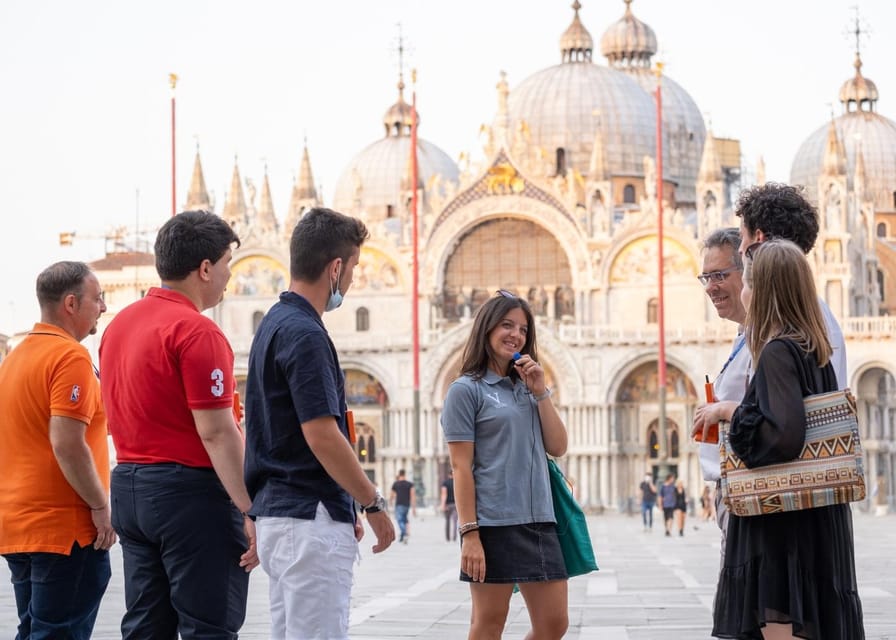
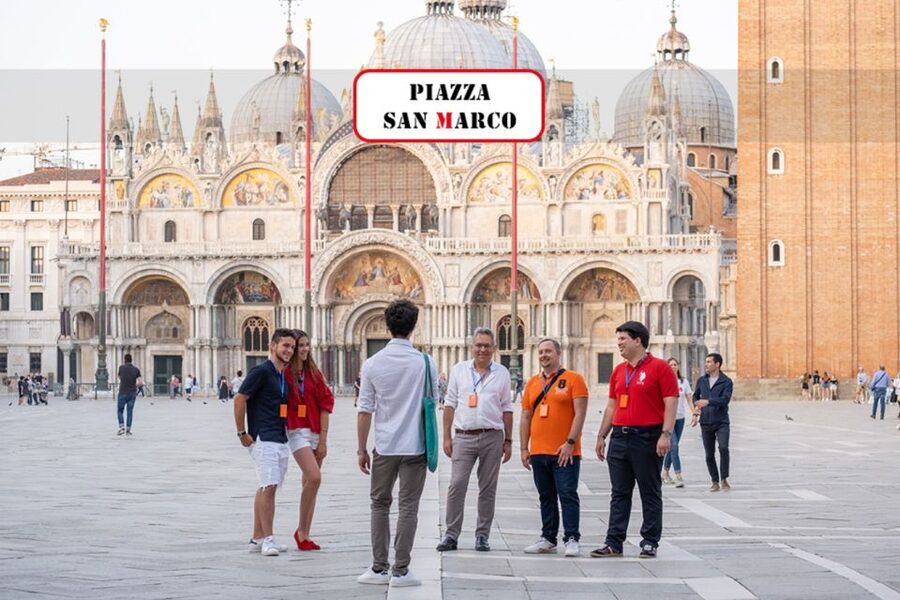
This is a good orientation walk for your first day in Venice. You begin around the San Marco area, where ornate facades, arcades, and open views make it easy to see why this part of town has drawn visitors for centuries.
St. Mark’s Square gives the tour its grand opening. You can expect the guide to explain the square’s role in Venetian public life while pointing out the architecture around it. The square is impressive, but it can also be crowded and noisy, so having a guide helps you understand what you are looking at instead of simply taking photographs and moving on.
The tour does not include entry to the major monuments. That keeps the price down and makes the walk faster, but it also means you will not tour the interior of St. Mark’s Basilica, the Doge’s Palace, or other paid sights as part of this experience. If those interiors are high on your list, plan separate visits.
The guide commentary is the real value here. Ana has been praised for fitting a surprising amount into an hour, while Natalia and Valentina have been singled out for making historical facts easy to follow. The tour operates in one language at a time, with English, Italian, Spanish, French, and German available depending on your chosen departure.
More History Walking Tours in Italy
- Palermo: Street Food and History Walking Tour
★ 4.9 · 1,486 reviews - Verona: History and Hidden Gems Guided Walking Tour
★ 5.0 · 1,379 reviews - Florence Walking Tour with Accademia, Uffizi & Lunch
★ 4.0 · 1,033 reviews
Rialto Bridge and the Grand Canal
From San Marco, the route heads toward Rialto. This is one of the most useful parts of the walk because it connects two very different sides of Venice: the ceremonial world around St. Mark’s and the trading district that grew around the Grand Canal.
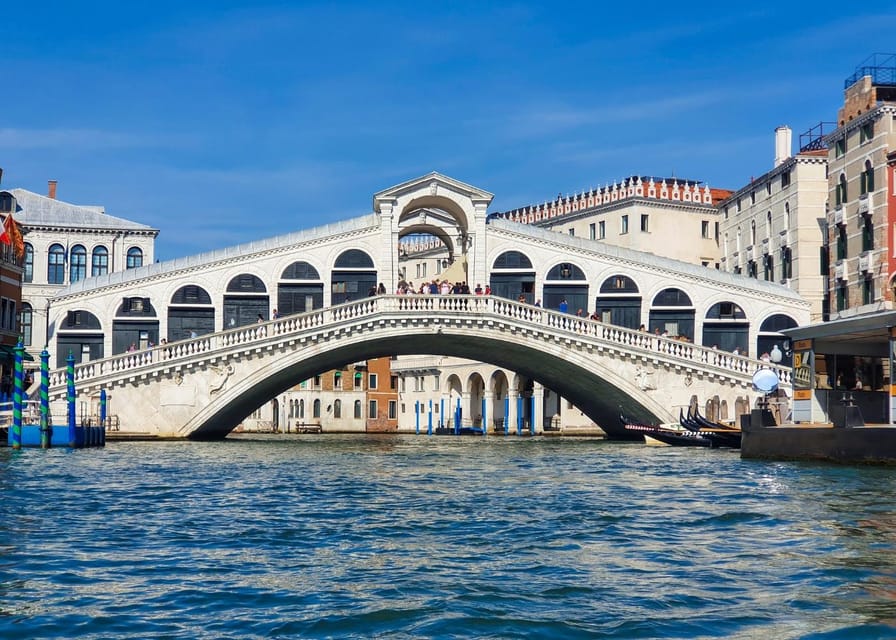
Rialto Bridge is the photo stop. From its upper span, you get a broad view along the Grand Canal, with water traffic and old palaces lining the banks. At the foot of the bridge, the scene opens up again, giving you another angle for photographs.
Your guide may explain how the bridge developed from an earlier wooden crossing into the stone structure you see today. That story adds meaning to a place that can otherwise feel like a crowded photo platform. You learn why Rialto mattered to merchants and how the Grand Canal functioned as the main route through the Venetian Republic.
I would not expect a quiet, contemplative stop here. Rialto is one of Venice’s busiest points, and the bridge can feel packed. Still, the view is worth the squeeze, especially if you are new to the city and want a clear picture of how the waterways organize Venice.
Calli, campi, and the quieter side of Venice
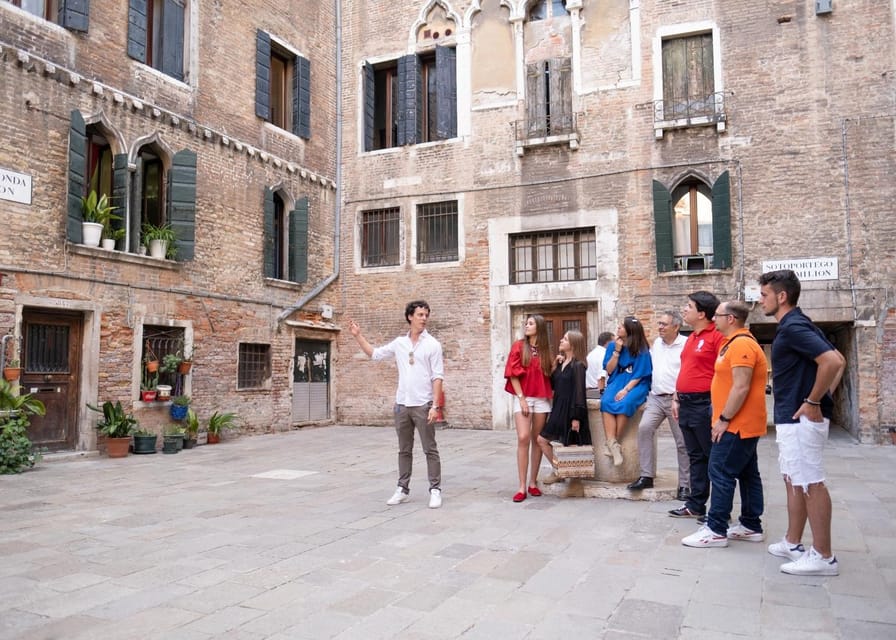
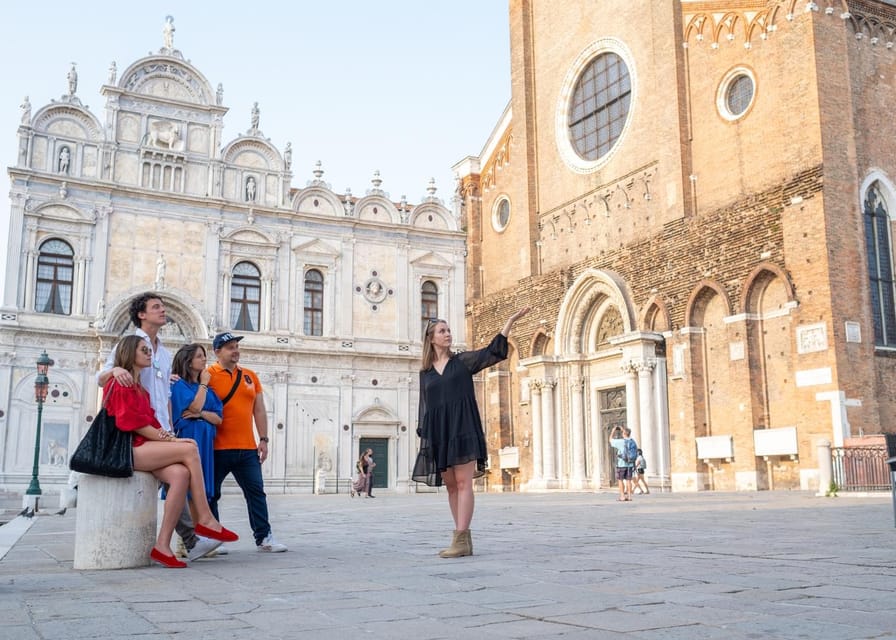
The most rewarding part of the itinerary may come between the headline sights. Venice is built for wandering, and the guide leads you through calli, the city’s narrow lanes, and campi, its smaller squares.
These passages show a less polished but more human side of the city. You may pass old facades, modest corners, and streets that feel far removed from the main route between St. Mark’s and Rialto. One guide has taken visitors into areas that have changed little in roughly a century. That kind of detour gives the walk more character than a simple checklist of monuments.
A short stop at a small bar may also be included. One account describes a welcome café break with cicchetti, Venice’s small bar snacks, while another mentions a spritz stop. Treat this as a pleasant possibility rather than a guaranteed food tour feature, since the exact stop may depend on the guide and schedule.
This is also where your footwear matters. The streets are uneven in places, and you are walking continuously rather than stopping at every corner. The pace is not described as a race, but the guide has a schedule and may have another group waiting at the office. If you need frequent rests or walk slowly, this tour may feel too demanding.
Passing Teatro La Fenice
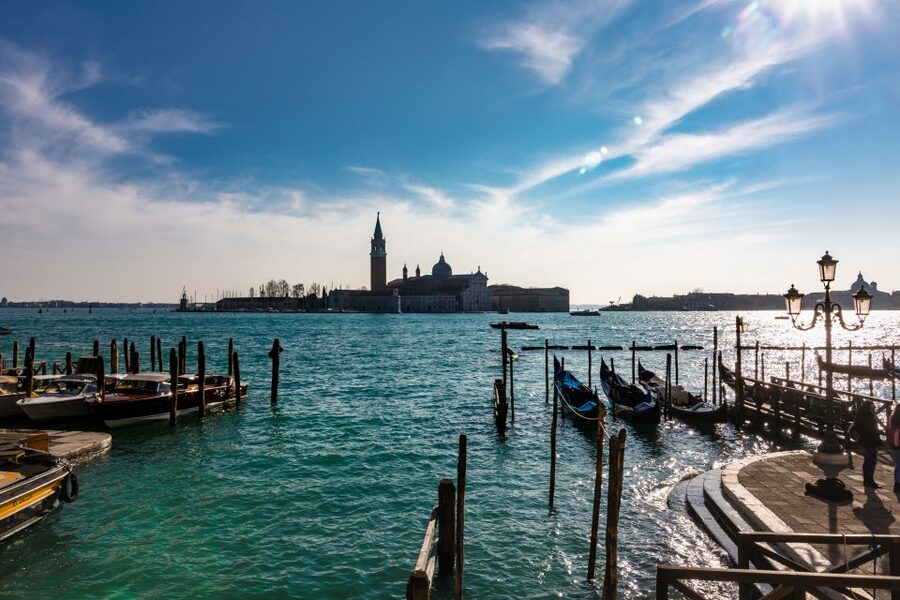
Teatro La Fenice is another strong landmark on the route. The opera house is one of the most famous in the world, and even an exterior pass gives the walk a useful cultural stop between the main squares.
The name La Fenice means the phoenix, an apt title for a theater known for surviving major fires and returning to the city’s cultural life. The tour presents it as a symbol of endurance and opera tradition, but remember that the standard experience only passes by the theater. Admission is not part of the package.
That limitation is not necessarily a flaw. If you are short on time, seeing La Fenice from the route helps you place it on your Venice map without committing to another ticket. If you are passionate about opera or theater interiors, you will need to arrange a separate visit.
Same city, a different century:
- Pompeii: Entry Ticket and Guided Tour with an Archaeologist
★ 4.8 · 19,459 reviews - Colosseum: Underground and Ancient Rome Tour
★ 4.7 · 12,691 reviews - Pompeii: Small Group Tour with an Archaeologist
★ 4.8 · 12,264 reviews - Pompeii Small Group Tour with an Archaeologist
★ 5.0 · 6,593 reviews
The Venice Gallery and its VR journey
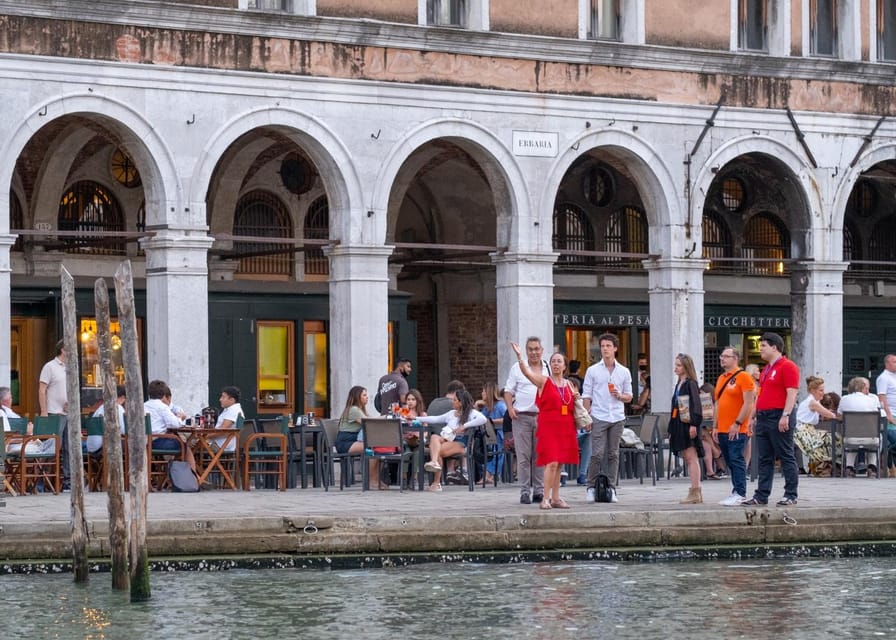
The VR portion gives the tour a change of pace. Inside a dedicated gallery, you put on a headset and see Piazza San Marco change through different periods. The presentation also carries you along the Grand Canal in a recreated view of Venice’s past.
I like this addition because it answers questions that a street walk cannot. Venice can be hard to read at ground level. The VR experience helps you picture how the square and waterways developed over time, making the buildings and canals you have just seen easier to understand.
It is a short presentation, not a full museum visit. You should think of it as a visual history lesson and a break from walking. The experience is likely to appeal most to families, first-time visitors, and anyone who enjoys technology alongside traditional guiding.
The timing matters. The VR visit forms part of the city-center experience, but the optional gondola ride is not necessarily back-to-back with the walk. You may have a gap between activities, so do not schedule a tight meal, train departure, or museum entry around the advertised total duration.
Adding the gondola ride
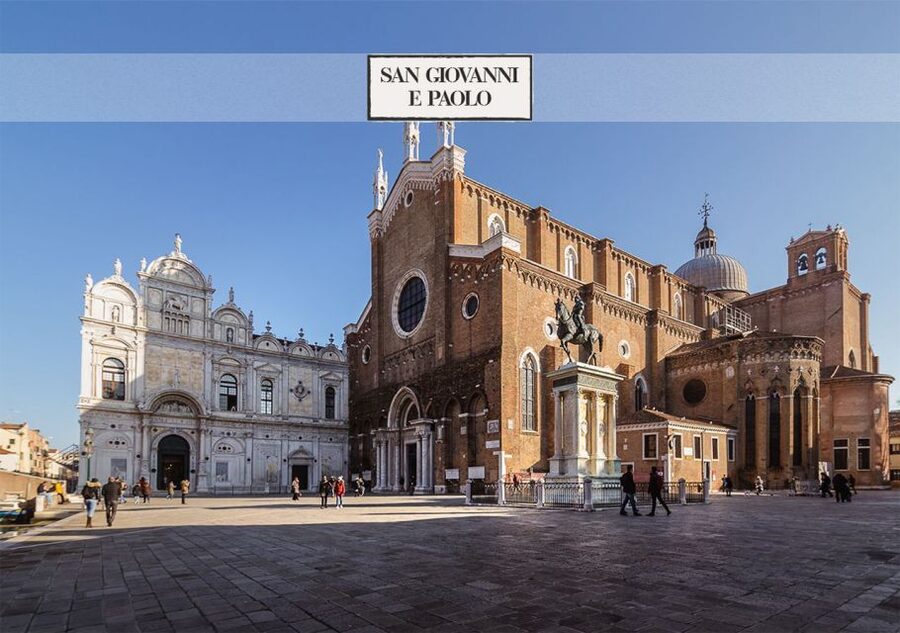
The gondola option changes the character of the day. On foot, Venice can feel maze-like and enclosed. From the water, you see the facades, bridges, and canals from the level for which the city was built.
The ride is sold as an add-on, so check that you select the correct option when booking. There is a time gap between the walking tour and the gondola ride. That is useful to know in advance because the full experience is not one continuous movement from street to boat.
The water ride can be especially atmospheric in poor weather. One visitor found a misty ride memorable and almost dreamlike, while also noting that daylight would provide a different view. That is practical advice: a later departure may feel more cinematic, but an earlier ride should give you clearer views of the buildings and water.
A gondola is a classic Venice experience, but it should not be the only reason you book this activity. The quality of the overall outing depends more on the guide, the walking route, and your comfort with the schedule. The boat adds a special viewpoint, but it does not replace a good walking introduction.
Guides and group arrangements
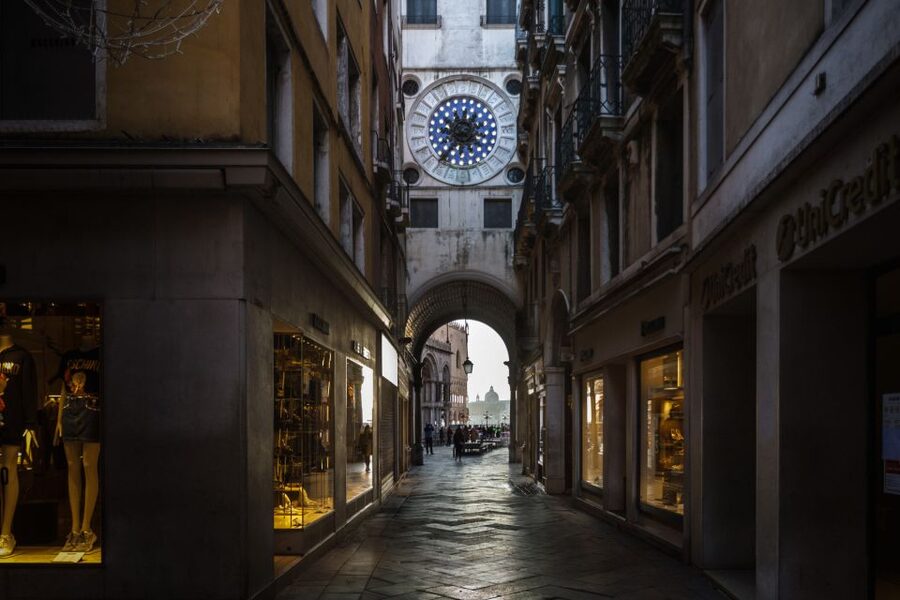
The tour uses live guides in five languages: English, Italian, Spanish, French, and German. It is monolingual, meaning your group receives the commentary in one selected language rather than a mix of several languages.
Guide quality matters greatly on a short historical walk. Ana has been praised for packing substantial information into one hour. Natalia is noted for making facts interesting, Valentina for a warm and enjoyable approach, and Francesco for useful explanations and humor.
You can choose a private or small-group format. The supplied information does not give a fixed maximum group size, so I would select the smallest available option if personal questions and a more relaxed feel matter to you. Groups larger than ten receive audio receiver devices, which should make it easier to hear in busy streets.
A local guide can also add texture that a map cannot. One guide was born and raised in Venice, and that local connection helped bring out older areas and everyday corners beyond the main tourist path. I would value that local perspective, particularly if you have already visited St. Mark’s and Rialto on your own.
What $14 gets you
At $14 per person, this is an inexpensive way to get your bearings in central Venice. The price includes the guide, audio equipment for groups over ten, and the VR visit. It does not include monument admission, hotel pickup, or hotel drop-off.
The low cost makes sense because the tour focuses on public streets and exterior views. You are paying for interpretation, route planning, and access to the VR gallery rather than a package of paid entrances.
The optional gondola ride changes the calculation. Compare the total price with the cost of booking a separate boat experience, and make sure you understand the timing before choosing it. The walking tour itself is the better value if you mainly want orientation and local stories. The combined option suits you if seeing Venice from the Grand Canal is a personal priority.
A 4.2 rating from 1,873 bookings suggests a generally solid experience with some room for variation. Short tours depend heavily on the individual guide, group size, weather, and how much time is available. The repeated strengths are clear: historical explanation, friendly guides, quieter streets, and an efficient route.
Weather, tides, and practical planning
Venice is an outdoor city, so bring clothing that can handle changing conditions. The walk operates in ordinary poor weather, and guides have continued to provide the tour in fog and rain. That said, exceptionally high tides can stop the walking tour. In that case, the activity may be postponed to the following day or refunded.
Wear comfortable shoes and be ready to walk steadily. The route includes narrow streets and small squares, and the guide may not be able to slow down for everyone. This is not the right pick if you need a very relaxed pace or frequent pauses.
Plan your day around the one to 2.5 hour duration. The shorter end appears to fit the walking portion, while the longer timing is more likely when the VR and gondola elements are included. Check the starting time and the exact option before you book.
The tour does not collect you from your hotel. You need to reach the meeting point independently, and no return transfer is provided. Those are small details, but they matter in Venice, where a route that looks close on a map can take longer through winding lanes and bridges.
Who should book this Venice walk?
I would recommend it to first-time visitors who want a quick introduction without paying for several monument entries. It also suits couples, families, and independent sightseers who want a guide to explain the city before exploring alone.
The tour works well early in a Venice stay. Use it to learn the relationship between San Marco, Rialto, the Grand Canal, and the smaller lanes. Afterward, you can return to the places that caught your interest with a better sense of direction.
It is less suitable for anyone who wants a slow photography walk, a full interior tour, or a long food experience. The cicchetti or spritz stop may be a welcome extra, but it should not be your main reason for booking. You also need to be comfortable with a brisk schedule and a possible wait before the gondola.
Should you book it?
Book this tour if you want a compact, affordable introduction to Venice with a capable live guide, the city’s two headline areas, quieter calli, La Fenice, and a VR history stop. Add the gondola if seeing the city from the water matters to you and you can handle the gap between activities.
Skip it if you need a slow pace, guaranteed monument entry, hotel transport, or a tightly timed gondola ride. For most able walkers on a first visit, though, $14 is a sensible price for orientation, context, and a look at parts of Venice you might miss while simply following the crowds.
FAQ
How long does the Venice walking tour last?
The activity lasts between one and 2.5 hours, depending on availability and the options selected. The gondola ride takes place separately, with a gap between it and the walking tour.
What places does the walking route include?
The route includes the San Marco area, St. Mark’s Square, Rialto Bridge, narrow calli, smaller campi, and a pass by Teatro La Fenice.
Is the gondola ride included?
The gondola ride is included only if you select the gondola option when booking.
Does the tour enter St. Mark’s Basilica or other monuments?
No. Entrance to monuments is not included.
Is the VR experience included?
Yes. The Venice Gallery VR journey through historic St. Mark’s Square is included in the walking tour.
Which languages are available?
Live guiding is available in English, Italian, Spanish, French, and German. The tour is monolingual.
Are audio devices provided?
Audio receiver devices are provided for groups with more than ten people.
Is hotel pickup or drop-off included?
No. You must make your own way to the tour, and hotel return transport is not included.
Is the tour suitable for people with mobility problems?
The route requires steady walking through Venice’s narrow streets and squares. The guide may not be able to slow down substantially, so it may not suit people who walk slowly or need frequent breaks.
What happens if there is exceptionally high tide?
The walking tour may be postponed to the following day. If it cannot be rescheduled, it will be refunded.
Just added around Italy
- Guided Cultural Tour of the Godfather Film in Messina★ 5.0 · 31 reviews
- Guided tour of the Riace Bronzes and the Archaeological Museum of Reggio Calabria★ 5.0 · 44 reviews
- SU NURAXI BARUMINI Unesco World Heritage Site★ 5.0 · 129 reviews
- Brescia the Unexpected: History, Local Stories & a drink★ 5.0 · 31 reviews
- Bolognese Cooking Class with Margherita in the Historic Center★ 5.0 · 26 reviews
- Tower and Power, Virtual tour in Medieval Bologna★ 4.5 · 54 reviews
- Bologna historical art walking tour with hidden gems and tastings★ 5.0 · 108 reviews
- Best of Bologna in one day : Food, architecture, art and history★ 5.0 · 27 reviews
Venice History Tours, compared.
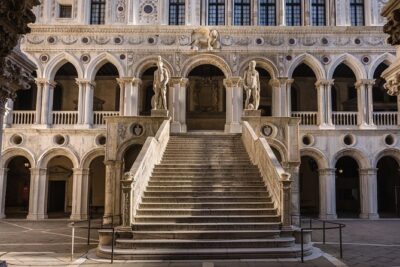
Venice’s Best: Basilica, Doge’s Palace, Gondola & History Gallery
Read our review →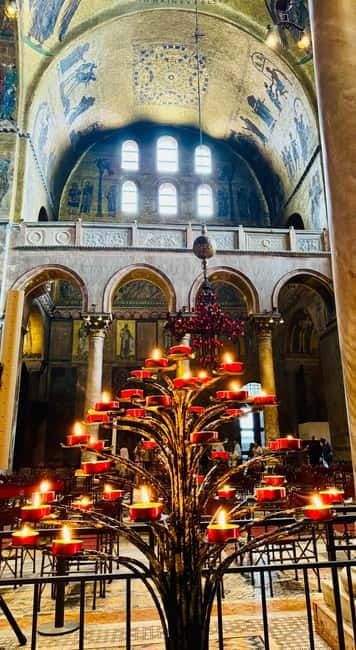
Venice: The History of St. Mark’s Basilica Tour
Read our review →
Venice: Bell Tower & St Mark’s Square History Gallery Ticket
Read our review →
Basilica, Doge’s Palace, History Gallery & Bell Tower Option
Read our review →
Venice: Doge’s Palace and Basilica Roman Empire Guided Tour
Read our review →Browse the lists this tour appears in