
Review · ITALY
Bologna historical art walking tour with hidden gems and tastings
Bologna reveals itself best in details: a sundial stretching across a church floor, a chapel crowded with painted stories, a canal once used by silk makers, and a medieval market still tied to old guilds. This art and history walk links those pieces with the city’s food traditions, so you get more than a quick parade of famous buildings.
I like two things right away. First, Riccardo Bacchi brings serious knowledge of Bologna’s art, politics, education, and architecture without keeping the story stuck in one period. Second, the route includes useful surprises, from the wooden anatomical theatre to a 13th-century house with original wooden pillars. The one drawback is pace: fitting this much into three to four hours means plenty of walking and a lot to absorb.
Key points
- Riccardo Bacchi’s local perspective: Expect detailed explanations of Bologna’s medieval, Renaissance, and Baroque art and architecture.
- A wide-ranging central route: See Piazza Maggiore, San Petronio, the Archiginnasio, Santo Stefano, the Quadrilatero, and more.
- Strong art focus: Niccolò dell’Arca’s terracotta masterpiece, Renaissance paintings, frescoes, and ancient books receive real attention.
- Food and commerce in context: The market streets and old guilds help explain why Bologna became such an important working city.
- Small details most city walks skip: Look for the medieval canals, speaking corners, old coats of arms, and wooden building supports.
- A fast but useful introduction: The tour works especially well early in your stay, when you want ideas for the next few days.
Why this Bologna walk works so well
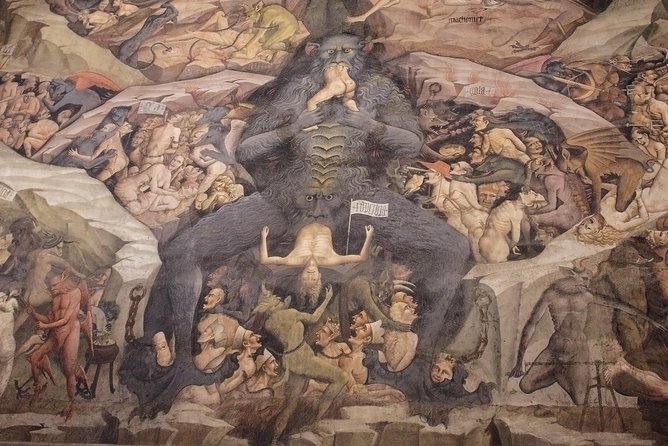
Bologna is easy to underestimate. Many people arrive for the food, glance at the towers, take a walk under the porticoes, and move on. This tour makes a strong case for staying with the city longer. Its churches, civic buildings, markets, university rooms, and works of art tell one connected story.
The route is not limited to postcard views. You spend time looking at how the city worked. Guilds shaped the market. Silk and hemp production depended on canals. The university changed the way medicine and learning were practiced. Wealthy families filled churches and public buildings with art. That wider frame gives the familiar sights more meaning.
Riccardo’s approach is a major part of the experience. He is described as an expert in Bologna’s medieval, Renaissance, and Baroque art, and his talks also reach into politics, science, education, and local culture. He has been able to adjust the emphasis to suit individual interests, and he offers suggestions for places to visit after the walk.
More History Walking Tours in Italy
- Venice: City Center Historical Guided Walking Tour
★ 4.2 · 1,873 reviews - Palermo: Street Food and History Walking Tour
★ 4.9 · 1,486 reviews - Verona: History and Hidden Gems Guided Walking Tour
★ 5.0 · 1,379 reviews
Piazza Maggiore and the city’s public face
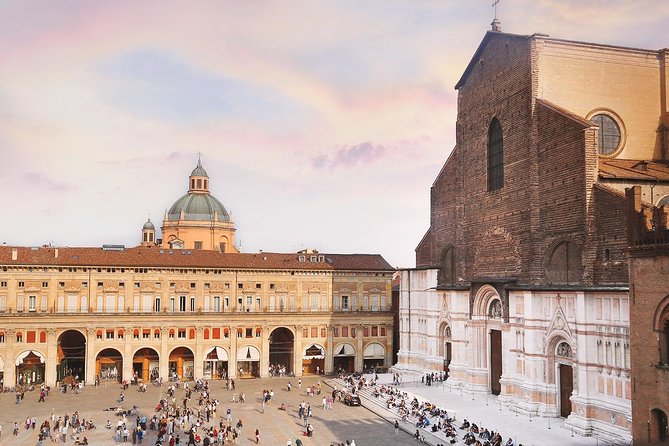
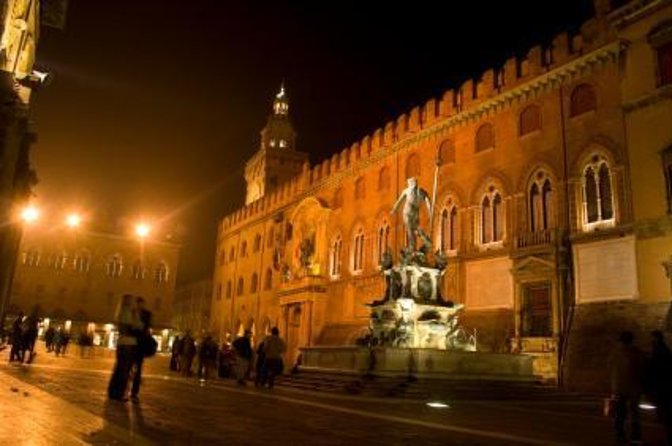
Meet at Bar Vittorio Emanuele on Piazza Maggiore, where the tour begins and ends. This is a sensible starting point because the square gathers Bologna’s civic, religious, and commercial story in one place.
You’ll examine the old medieval buildings around the square, including the four speaking corners. These corners carried messages and announcements for people who could not simply read a newspaper or check a phone. The tour also points out the former textile market, a reminder that Bologna’s economy was built on skilled work and trade.
The Fountain of Neptune brings in the Renaissance. Its sculpted figure is one of the square’s best-known sights, but the tour places it beside less obvious details, such as the old clock on the Council Palace facade. I like this mix of grand symbols and working-city clues. You learn to look above the shopfronts and beyond the center of the square.
Palazzo d’Accursio, from public power to private rooms
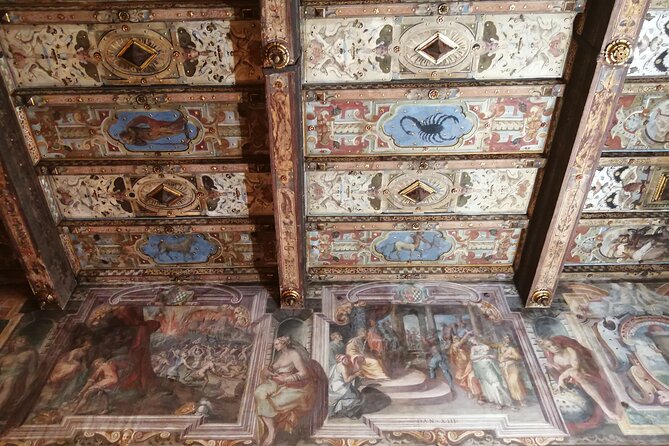
Palazzo d’Accursio gives you a closer look at how Bologna’s ruling institutions lived and worked. The route includes noble rooms on the first and second floors, frescoes, the bishop’s private chapel, and the large staircase designed for horses by Bramante.
That last detail is wonderfully practical. A grand staircase was not only for people in formal clothes. In a city where power was displayed through ceremony, architecture had to accommodate horses, processions, and officials.
The rooms of the seniors and the image known as the Earthquake’s Virgin by Francesco Francia add more layers to the building. Expect decoration, religious art, and civic history in the same visit. The schedule also lists Palazzo Comunale later, with Renaissance and Baroque ceilings, frescoes, sculptures, and Bramante staircases. Since these civic spaces are closely connected, your guide can help you understand how the buildings fit together rather than treating each room as an isolated stop.
San Petronio and Bologna’s giant sundial
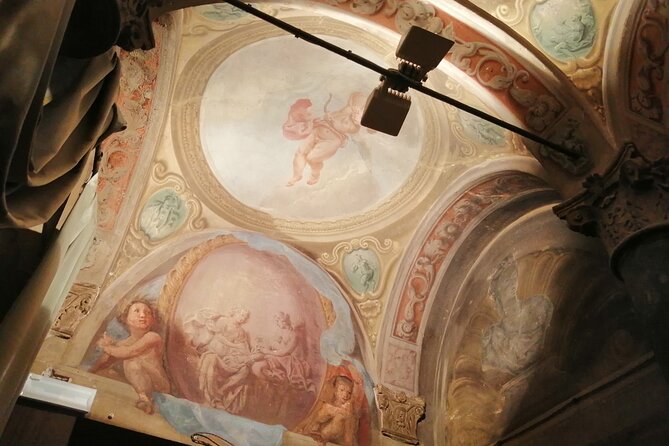
The Basilica of San Petronio receives about 35 minutes, enough time to focus on its strongest features without turning the visit into a rushed glance. The church is known for its enormous scale, but the interior details are the real reason to pay attention.
The floor sundial is described as the biggest in the world. It is a clever meeting of astronomy, mathematics, architecture, and daily life. You can see how a church served not only as a place of worship but also as a site for serious scientific observation.
The Bolognini Chapel brings a different kind of drama, with medieval frescoes covering its walls. You’ll also see four ancient crosses and paintings connected with Parmigianino and Lorenzo Costa. If you enjoy art history, this is one of the tour’s strongest sections. If you prefer a quick city overview, the number of names and works may feel dense.
Admission to San Petronio is included. Dress and behavior should suit a working basilica, and your time inside will be more rewarding if you pause for the guide’s explanation rather than trying to photograph every surface.
Same city, a different century:
- Pompeii: Entry Ticket and Guided Tour with an Archaeologist
★ 4.8 · 19,459 reviews - Colosseum: Underground and Ancient Rome Tour
★ 4.7 · 12,691 reviews - Pompeii: Small Group Tour with an Archaeologist
★ 4.8 · 12,264 reviews - Pompeii Small Group Tour with an Archaeologist
★ 5.0 · 6,593 reviews
The Archiginnasio and the old university
The Archiginnasio is one of Bologna’s most memorable stops. This Renaissance palace once housed the university, described here as the oldest in Europe. The building’s walls carry a huge collection of coats of arms, a visual record of students, families, and academic identity.
The tour also explores medicine’s less comfortable past. The wooden anatomical theatre shows how anatomy was taught through public dissection and formal demonstration. Its carved wood and theatrical design make the room striking, but the guide’s explanation is what gives it weight.
The Stabat Mater room and the long hall for books and old codes shift the mood toward scholarship. The tour includes references to precious works such as Leonardo da Vinci’s Flights of the Birds. This is a good place to ask questions if you care about the history of science, medicine, or books.
Admission is included. The visit works best for people who enjoy looking closely at rooms and symbols. It is not simply a beautiful old interior. It shows how Bologna connected status, learning, medicine, and public life.
The Quadrilatero, where history still smells like lunch
The Quadrilatero is the most natural point for the food side of the tour. Its narrow streets follow the pattern of a medieval market, with old food shops, stalls, guild traces, and ancient coats of arms.
You’ll learn how commerce shaped the center of Bologna. The market is not presented only as a place to eat. It becomes evidence of how trades were organized and how different crafts made their mark on the city.
The experience is also associated with tastings. A detailed account of the tour includes medieval-style rice cake and local wine, though the exact tasting arrangements should be confirmed when you book. That is useful to know if food is your main reason for choosing this walk. The emphasis remains art and history, not a full food crawl with many stops.
I like the balance here. You can admire a painting in the morning and then walk through the streets where food traditions developed in ordinary shops. Bring curiosity, and leave room for lunch afterward.
Santo Stefano, seven layers of Bologna’s past
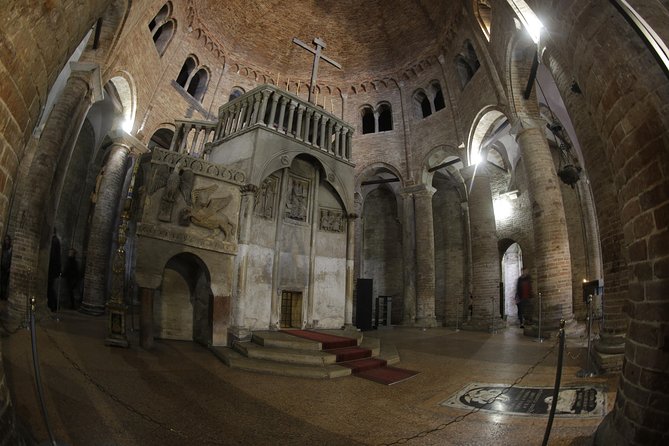
The Basilica and Sanctuary of Santo Stefano is given the longest stop, about 40 minutes. It is a group of churches rather than a single simple building, and the complex gathers many periods of Bologna’s past.
The route reaches back to a Roman temple built over a natural spring. It then moves through the churches, cloisters, monk cells, and carved capitals with animal faces. The cloister is linked with Dante Alighieri, adding a literary connection to the religious and architectural story.
This stop rewards careful attention. The complex is not polished into one neat style. Its appeal comes from the way different eras remain visible together. You may find the shifting layout less straightforward than a single basilica, which is exactly why a guide helps.
Santa Maria della Vita and moving terracotta
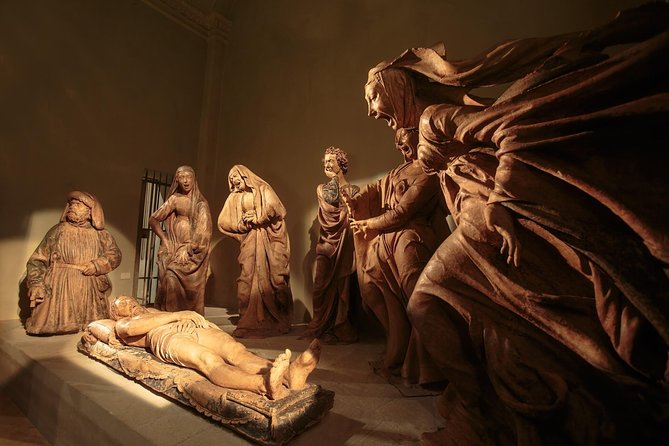
Santa Maria della Vita is a compact stop with one powerful focus: Niccolò dell’Arca’s terracotta group, created around 1470. The sculpture is known for its forceful treatment of movement and emotion.
This is one of the best examples of how the tour goes beyond architecture. You are not only shown an old church. You are asked to look at bodies, gestures, faces, and the way an artist made grief feel immediate.
The visit lasts about 20 minutes, so it will not overwhelm the rest of the route. Admission is included. If you care about sculpture, this may be a highlight, and it gives useful contrast with the frescoes and formal paintings seen earlier.
Towers, canals, and wooden building details
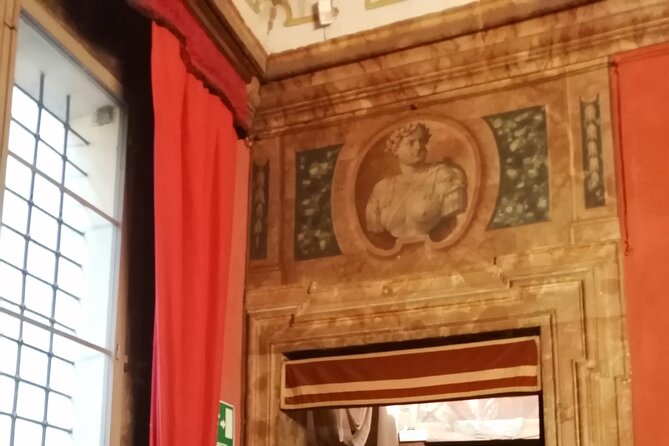
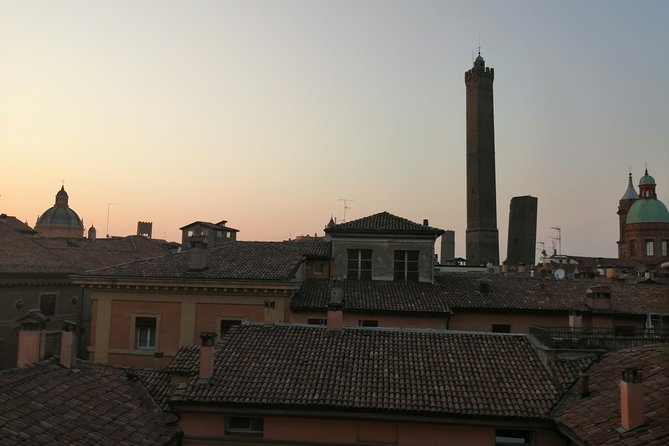
At street level, you’ll get a view of Bologna’s two famous towers: the 98-meter Asinelli Tower and the leaning Garisenda Tower. The route does not promise a climb, so think of this as an architectural viewing stop rather than a tower ascent.
The Finestrella offers another sharp change of subject. This small canal window points to medieval waterways built to support silk and hemp textile production. The canal system is tied to Bologna’s industrial past and is listed as UNESCO heritage in the supplied tour information.
The route also includes an example of a 13th-century house with original wooden pillars. These supports are easy to miss if you are hurrying through the streets. They show how much of Bologna’s story survives at eye level, in building materials and street details rather than major monuments.
These smaller discoveries are where the title’s promise of lesser-seen places is strongest. You do not need another grand church to understand the city. Sometimes a canal or a wooden post explains more about daily life.
How much walking and information to expect
The experience lasts about three to four hours and remains on foot. The maximum group size is 25 people, so it is not an intimate private walk by definition, though smaller departures may feel more personal. The route covers many stops, and the pace can be brisk.
I would choose this tour early in a Bologna stay. It gives you a working map of the center and points you toward places worth revisiting. Several people who took private or small-group versions used Riccardo’s later suggestions to plan additional days in the city.
Wear comfortable shoes and prepare to shift between outdoor streets, churches, civic rooms, market lanes, and university interiors. The tour is offered in English and is near public transportation. Most people can participate, but anyone who dislikes long walks or tightly packed cultural visits should consider the pace before booking.
Is $175.36 a fair price?
At $175.36 per person, this is not a bargain-priced orientation walk. The value depends on what you want from a guide.
You are paying for a long route, included admission to San Petronio, the Archiginnasio, and Santa Maria della Vita, and a specialist who can connect art with civic life, commerce, science, and food. The guide’s ability to customize the emphasis also matters, especially if your interests are specific.
The price is harder to justify if you want only the main square, the towers, and a few basic facts. You could see several outdoor sights on your own. It makes more sense if you want the meaning behind the details and would otherwise pay separate entry fees or spend time researching each site.
Group discounts are available. Because the tour is booked on average 54 days ahead, plan early if your dates are fixed.
Who should book this walk?
I would recommend it to you if you enjoy art, architecture, medieval cities, university history, or food traditions with context. It also suits a first visit because the route covers so many parts of central Bologna in one morning or afternoon.
It is especially useful for curious travelers who want more than a checklist. Riccardo has covered topics ranging from art history to politics and science, and the tour can respond to your interests.
You may want another option if you prefer a slow food-focused outing, a short highlights walk, or a tour built around only one museum. This experience asks you to stay alert for several hours. The reward is a much clearer sense of how Bologna’s public buildings, churches, markets, and small street details belong together.
Should you book it?
Book this tour if you want Bologna explained by someone who treats the city as a living classroom, market, church, workshop, and university town all at once. The strongest reasons are the art focus, the range of sites, and Riccardo Bacchi’s ability to connect famous sights with details you might otherwise miss.
Skip it if you want a relaxed stroll with little commentary. The route is full, the pace can be quick, and the information comes steadily. For an art-minded visitor who has three to four hours and wants a strong foundation for the rest of a Bologna stay, the price can be justified.
Free cancellation is available up to 24 hours before the start time. Changes or cancellations inside that window are not refunded.
FAQ
How long does the Bologna walking tour last?
The experience lasts approximately three to four hours.
Where does the tour begin?
It begins at Bar Vittorio Emanuele, Piazza Maggiore 1, Bologna.
Where does the tour end?
The activity ends back at the meeting point in Piazza Maggiore.
What language is the tour offered in?
The tour is offered in English.
What places are included on the route?
The route includes Piazza Maggiore, Palazzo d’Accursio, the Basilica of San Petronio, the Archiginnasio, the Quadrilatero, Santo Stefano, Santa Maria della Vita, the Asinelli and Garisenda towers viewed from street level, the Finestrella canal, a 13th-century house with wooden pillars, and Palazzo Comunale.
Are entrance tickets included?
Admission is included for the Basilica of San Petronio, the Archiginnasio, and Santa Maria della Vita. Other listed stops have free admission.
How large can the group be?
The maximum group size is 25 people. Group discounts are available, and the tour includes a mobile ticket.
Just added around Italy
- Guided Cultural Tour of the Godfather Film in Messina★ 5.0 · 31 reviews
- Guided tour of the Riace Bronzes and the Archaeological Museum of Reggio Calabria★ 5.0 · 44 reviews
- SU NURAXI BARUMINI Unesco World Heritage Site★ 5.0 · 129 reviews
- Brescia the Unexpected: History, Local Stories & a drink★ 5.0 · 31 reviews
- Bolognese Cooking Class with Margherita in the Historic Center★ 5.0 · 26 reviews
- Tower and Power, Virtual tour in Medieval Bologna★ 4.5 · 54 reviews
- Best of Bologna in one day : Food, architecture, art and history★ 5.0 · 27 reviews
- Private or semi-private tour of the historic center of Bologna★ 5.0 · 34 reviews
Italy History Tours, compared.
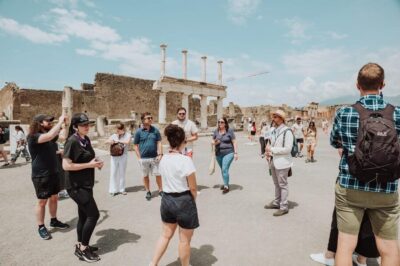
Pompeii: Entry Ticket and Guided Tour with an Archaeologist
Read our review →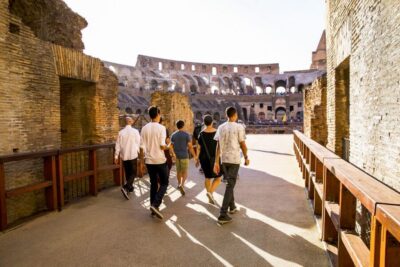
Colosseum: Underground and Ancient Rome Tour
Read our review →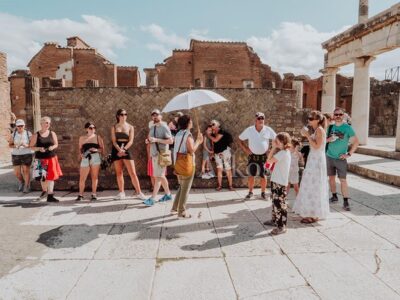
Pompeii: Small Group Tour with an Archaeologist
Read our review →Pompeii Small Group Tour with an Archaeologist
Read our review →
Rome: Colosseum with Arena, Roman Forum and Palatine Guided Tour
Read our review →
Venice: St. Mark’s Basilica Guided Tour & VR History Intro
Read our review →
Colosseum with Arena, Roman Forum and Palatine Hill Guided Tour
Read our review →
Herculaneum: Skip-the-Line Guided Tour with Archaeologist
Read our review →Browse the lists this tour appears in