
Review · ITALY
Verona: History and Hidden Gems Guided Walking Tour
Verona’s best stories are often tucked beside its famous sights. This two-hour walk with Fabio Massimo Rapanà, a licensed guide born and raised in the city, links Roman ruins, medieval power centers, river views, and quiet lanes into one clear story.
I like the small groups of up to 10 and the supplied headsets, which make it easy to follow Fabio even near busy streets. I also like the balance between headline sights such as the Arena and Piazza delle Erbe and less obvious corners that you could easily pass without noticing.
The main consideration is pace. You cover a lot of central Verona in two hours, with many short stops rather than long visits inside monuments. Entries, food, drinks, and transport are not included, so think of this as an orientation walk, not a full museum tour.
What makes this Verona walk worth your time
- Fabio’s local point of view: He was born and raised in Verona and connects buildings, events, architecture, and daily life.
- A compact but varied route: Ancient Roman remains, medieval squares, Gothic tombs, the Adige River, and Shakespeare’s Verona all appear in one circuit.
- Small-group comfort: The maximum of 10 people makes questions easier and avoids the feel of a large flag-led crowd.
- Headsets that actually matter: You can listen while walking instead of gathering tightly around the guide.
- Useful first-day tour: The route gives you a map of central Verona and helps you notice details when you return on your own.
- Good all-weather planning: The walk runs rain or shine, so comfortable shoes and water are essential.
Starting beneath the Italian flag in Piazza Bra
Meet Fabio beneath the Italian flag at Verona’s Town Hall, Palazzo Barbieri, in Piazza Bra. This is an easy place to find, and it puts you beside the city’s most famous monument from the first minutes of the tour.
Piazza Bra is a broad urban stage, with cafés, grand buildings, and the Arena at its center. Fabio uses the square to set the scene for Verona, then turns your attention to the amphitheater’s stone arches and enormous scale.
You stop at the Verona Arena for about 10 minutes. Fabio explains the gladiatorial contests held here and points out features of its Roman design. The Arena is one of those places that can become a quick photo stop unless someone gives it context. Here, the short talk helps you understand why this building mattered long before opera audiences filled it.
The tour does not include entry to the Arena. That is both a limit and a useful distinction. If you want to see the interior, you will need a separate ticket and another visit. This walk gives you the background first, then leaves you free to decide how much time you want to spend inside later.
More History Walking Tours in Italy
- Venice: City Center Historical Guided Walking Tour
★ 4.2 · 1,873 reviews - Palermo: Street Food and History Walking Tour
★ 4.9 · 1,486 reviews - Florence Walking Tour with Accademia, Uffizi & Lunch
★ 4.0 · 1,033 reviews
Roman gates and the old route toward the center
After Piazza Bra, the walk follows traces of Verona’s early medieval walls toward the Corso, one of the city’s oldest streets. This stretch is valuable because it shows how Verona grew in layers. The modern street pattern still follows the logic of the Roman and medieval city.
At Porta Borsari, you see one of the city’s best Roman-era gateways. The stop lasts only a few minutes, but it gives you a strong visual link to ancient Verona. Fabio also points out smaller details that are easy to miss when you are focused on shops and traffic.
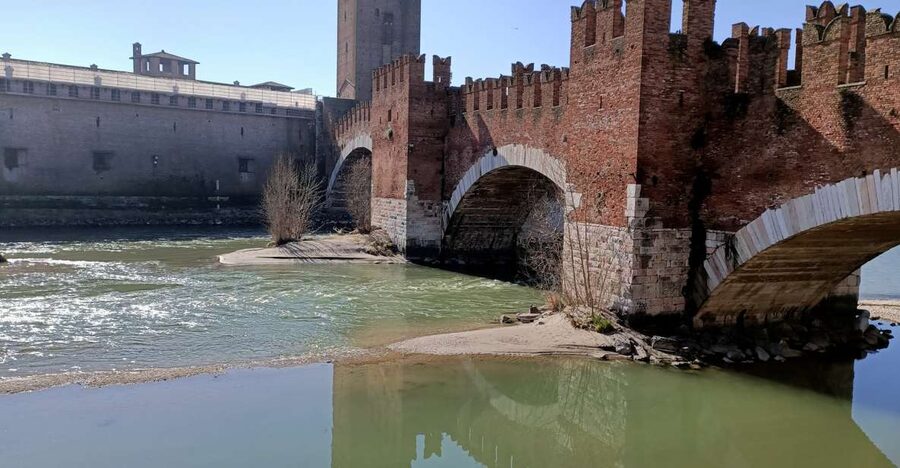
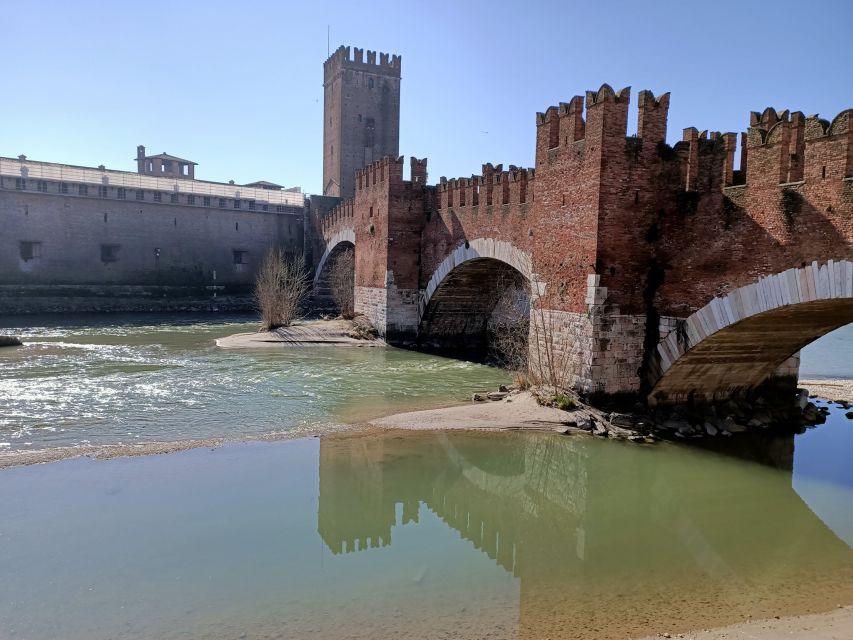
The route then reaches the area around Riva San Lorenzo, where you get views toward Castelvecchio and the Ponte Scaligero across the Adige River. The bridge’s brick towers and crenellated profile are especially striking from a distance.
This is one of the walk’s better changes of rhythm. You move from streets and façades to open river views, then back into the older center. Fabio’s storytelling helps tie the views to Verona’s political and military past instead of treating the bridge as just a scenic photo stop.
Quiet corners around Piazza delle Erbe
The walk continues through streets and small stops that are not usually the main reason people come to Verona. You pass the Church of San Giovanni in Foro and several lesser-noticed corners where old walls, façades, and street layouts reveal how much of the city survives in ordinary-looking places.
Fabio’s approach is especially useful here. Rather than rushing from one famous monument to another, he asks you to look up, examine a façade, and consider why a building sits where it does. You may begin noticing carved details, fragments of older construction, and changes in architectural style that would otherwise blend into the background.
At Piazza delle Erbe, you spend about 10 minutes. This was the city’s historic market square, and it remains one of Verona’s most attractive public spaces. Look for the oldest fountain in the city and the varied façades surrounding the square.
The stop has plenty of visual appeal, but it can also be busy and distracting. The headset helps here because you do not need to stand shoulder to shoulder with Fabio to hear him. He explains the market’s role and the stories behind the surrounding townhouses, giving the square more meaning than a quick photograph provides.
Piazza dei Signori and the power of medieval Verona
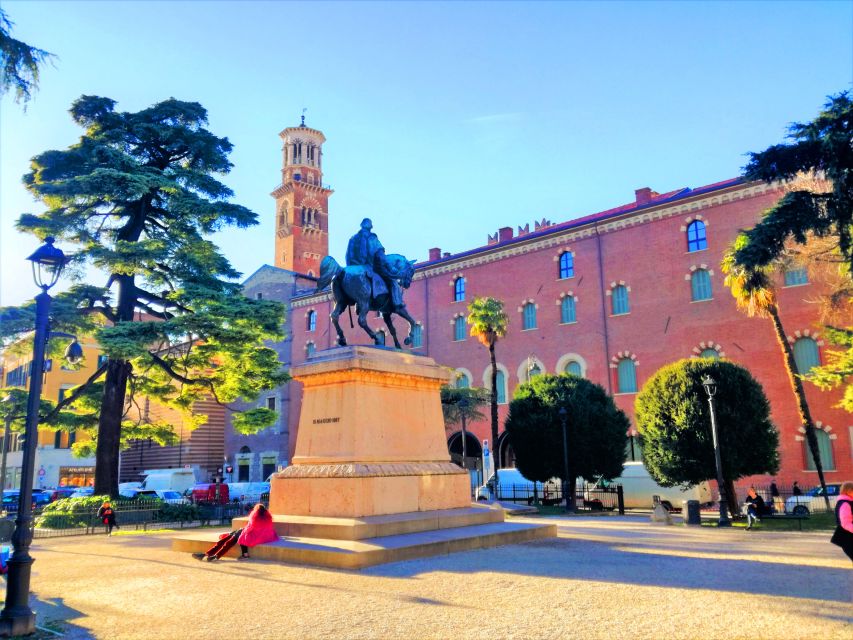
From Piazza delle Erbe, the route moves into Piazza dei Signori, a more formal square surrounded by buildings tied to Verona’s government and ruling families. You see Palazzo della Ragione, Palazzo della Scala, and Palazzo del Capitano.
This is where the medieval political story becomes clearer. The square is not simply a handsome collection of façades. It shows how authority was displayed through towers, civic buildings, and controlled public space.
Fabio points out the city’s highest tower and explains more about Verona during the medieval period. The details help you read the square as a place of power. The walk does not ask you to memorize dates, but it gives you enough context to understand why Verona’s rulers shaped the center so carefully.
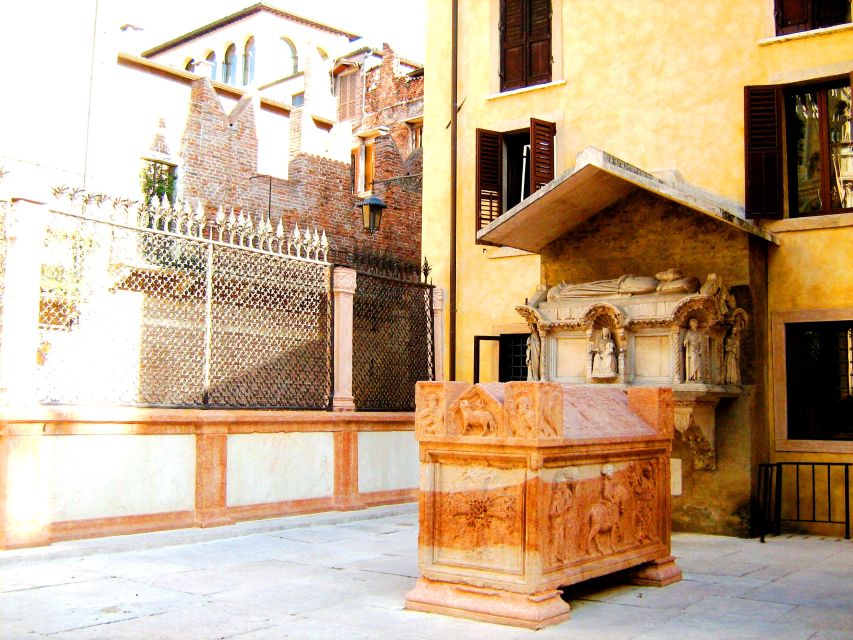
A later stop at the Arche Scaligere adds a dramatic architectural contrast. These ornate tombs belong to the powerful della Scala family and are among the most memorable medieval monuments in the city. You view them from outside, so anyone wanting a closer or interior visit will need to return separately.
Same city, a different century:
- Pompeii: Entry Ticket and Guided Tour with an Archaeologist
★ 4.8 · 19,459 reviews - Colosseum: Underground and Ancient Rome Tour
★ 4.7 · 12,691 reviews - Pompeii: Small Group Tour with an Archaeologist
★ 4.8 · 12,264 reviews - Pompeii Small Group Tour with an Archaeologist
★ 5.0 · 6,593 reviews
Santa Anastasia and the streets people rush through
The Basilica of Santa Anastasia appears as a photo stop rather than a long church visit. Even from outside, its size and Gothic character add another layer to the route. Fabio’s architectural commentary helps you compare it with the Roman and medieval structures seen earlier.
You also pass through smaller spaces such as Piazzetta Monte and Piazzetta Bra Molinari. These stops are brief, but they keep the walk from becoming a simple list of major attractions. You see how Verona’s identity is spread across lanes, courtyards, churches, and public squares.
I like this part of the route because it rewards attention rather than speed. The guide’s value is not just in leading you to a famous address. It is in showing you why an unmarked corner, an old passage, or an unusual façade deserves a second look.
The supplied headsets are a practical advantage throughout. Several people who took the tour particularly appreciated being able to hear clearly, including those with some hearing loss. You can walk at a comfortable distance, take in the building in front of you, and still follow the explanation.
Romeo, Juliet, and the real Verona behind the legend
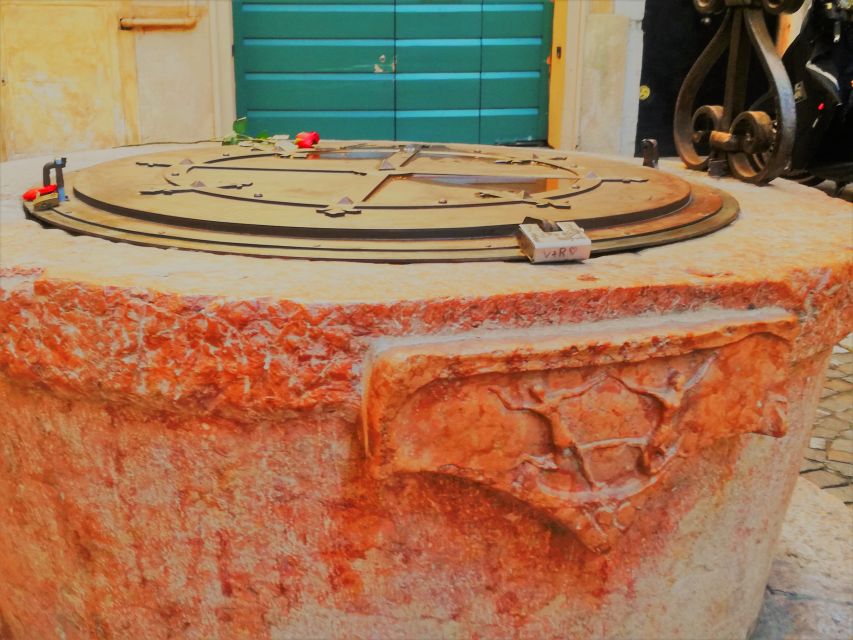
The route includes Casa di Romeo and Juliet’s House. At Romeo’s house, Fabio explains the setting associated with the story and the local traditions surrounding Shakespeare’s characters.
At Juliet’s House, you see the courtyard and balcony area from outside. This is one of Verona’s busiest and most commercial stops, and it can feel more crowded than the quieter streets earlier in the walk. The tour handles it as part of a wider historical route rather than presenting it as the whole identity of the city.
That is an important strength. Verona’s connection with Romeo and Juliet is famous, but the actual history behind Shakespeare’s tragedy is more complicated than a simple love story. Fabio discusses the historical inspiration and helps separate medieval Verona from the later literary fame attached to it.
You should not expect a long visit or included entry at Juliet’s House. Treat this as a useful introduction, then return later if you want more time for photographs or an interior visit.
The old market courtyard and overlooked religious sites
Near the end, the route reaches the Courtyard of the Old Market and several smaller sites, including the Verona synagogue and the former convent of Saint Mary della Scala of the Servants of Mary. These brief stops broaden the picture of the city beyond Roman ruins, ruling families, and Shakespeare.
The courtyard gives you another look at Verona’s commercial past. The synagogue and convent point toward the city’s religious and community history. Since the stops are short, Fabio’s explanation does much of the work. You are not entering each site for a formal tour, but you are learning why these places belong in Verona’s story.
The final stretch passes along Via Dietro Anfiteatro before returning to Palazzo Barbieri. By then, the route has covered a large portion of the historic center without requiring transport. It is a satisfying circuit for a first look, though the number of stops means the experience is more about connection and context than detailed inspection of every building.
How the timing and group size affect the experience
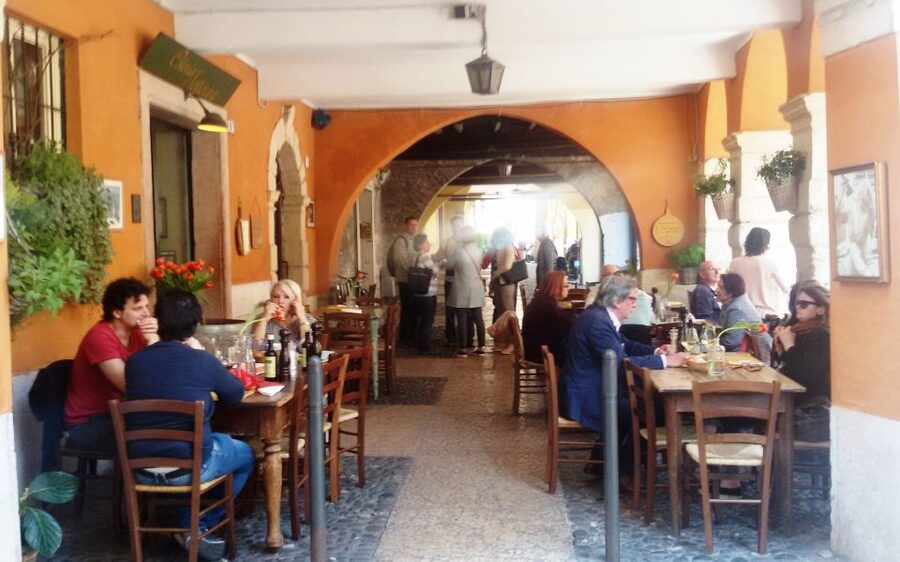
Two hours is enough to build a useful picture of central Verona, but it is not enough for lengthy stops inside monuments. Most locations receive between two and 10 minutes. That suits you if you want a strong introduction before exploring independently.
The small-group limit of 10 is one of the clearest practical advantages. Fabio can answer questions, remember names, and adjust his explanations to the group. One family also found that he kept a younger participant interested, which suggests the storytelling can work across age groups.
The tour is available in English, German, Italian, and Spanish. Private options and small-group formats are available. Headsets are supplied, and the route is wheelchair accessible according to the activity details.
There is no transport, so plan to reach the meeting point on your own. You also need to arrange any monument entries separately. Wear comfortable shoes, bring water, and prepare for rain or sun because the walk operates in all weather.
What $41 buys you in Verona
At $41 per person, this is not the cheapest way to stroll around Verona, but the value depends on how you use the two hours. You are paying for a licensed local guide, a carefully planned route, a small group, and live explanations at more than 30 points along the walk.
I see the strongest value in the interpretation. You could photograph the Arena, Piazza delle Erbe, Ponte Scaligero, and Juliet’s balcony without paying for a guide. What is harder to find on your own is the connection between Roman walls, medieval government, architecture, local legends, and the city’s street plan.
The price makes the most sense early in your stay. After the walk, you can return to the Arena, Juliet’s House, the churches, or the squares that interested you most. You also get recommendations for places to eat and practical local suggestions during the conversation, according to the experience details shared by participants.
If you already know Verona well and only want interior visits, this may not be the right use of your budget. If you are visiting for the first time and want to understand what you are seeing, $41 is a reasonable spend for a focused two-hour introduction.
Who should book this walk?
I would choose this tour if you enjoy history, architecture, and city stories more than a quick checklist of photo stops. It is also a good fit if you have only a short time in Verona and want a local framework before exploring on your own.
Families can benefit from Fabio’s lively delivery and short stops. The route also suits older visitors who prefer a guide who can move at a considerate pace, although you should still be comfortable walking for two hours.
The tour is less suitable if you want to enter several monuments during the outing, sit down often, or avoid walking in poor weather. The route is full of stops, but it remains a walking tour, and rain or shine is part of the arrangement.
Fabio’s enthusiasm is a major part of the experience. He mixes history, architecture, humor, and personal knowledge of Verona. The result is not just a list of facts. It is a way of learning to see the city’s small clues.
Should you book the Verona History and Hidden Gems tour?
Book it if you want Verona to make more sense, not just look pretty. The Arena, Piazza delle Erbe, Ponte Scaligero, medieval squares, Scaligero tombs, and Juliet’s balcony all appear, but the quieter streets and overlooked details give the walk its character.
The main tradeoff is simple: you get breadth and explanation instead of long visits inside individual sights. For a first morning or afternoon in Verona, I think that is a smart exchange. Take the tour early, note the places you want to revisit, and use the rest of your stay to explore them at your own pace.
FAQ
Where does the Verona walking tour begin?
Meet the guide beneath the Italian flag at Palazzo Barbieri, Verona’s Town Hall, in Piazza Bra.
How long does the tour last?
The walking tour lasts two hours.
What languages are available?
The tour is offered in English, German, Italian, and Spanish.
Is the tour wheelchair accessible?
Yes, the activity is listed as wheelchair accessible.
Are monument entry fees included?
No. Entries are not included, and the tour mainly views the sights from outside.
What should I bring?
Bring comfortable shoes and water. The tour operates rain or shine.
Just added around Italy
- Guided Cultural Tour of the Godfather Film in Messina★ 5.0 · 31 reviews
- Guided tour of the Riace Bronzes and the Archaeological Museum of Reggio Calabria★ 5.0 · 44 reviews
- SU NURAXI BARUMINI Unesco World Heritage Site★ 5.0 · 129 reviews
- Brescia the Unexpected: History, Local Stories & a drink★ 5.0 · 31 reviews
- Bolognese Cooking Class with Margherita in the Historic Center★ 5.0 · 26 reviews
- Tower and Power, Virtual tour in Medieval Bologna★ 4.5 · 54 reviews
- Bologna historical art walking tour with hidden gems and tastings★ 5.0 · 108 reviews
- Best of Bologna in one day : Food, architecture, art and history★ 5.0 · 27 reviews
Italy History Tours, compared.
Pompeii: Entry Ticket and Guided Tour with an Archaeologist
Read our review →
Colosseum: Underground and Ancient Rome Tour
Read our review →
Pompeii: Small Group Tour with an Archaeologist
Read our review →Pompeii Small Group Tour with an Archaeologist
Read our review →
Rome: Colosseum with Arena, Roman Forum and Palatine Guided Tour
Read our review →
Venice: St. Mark’s Basilica Guided Tour & VR History Intro
Read our review →
Colosseum with Arena, Roman Forum and Palatine Hill Guided Tour
Read our review →
Herculaneum: Skip-the-Line Guided Tour with Archaeologist
Read our review →Browse the lists this tour appears in