
Review · WARSAW
World War 2 in Warsaw walking tour in English
Warsaw’s World War II story is not confined to a museum. It is written into streets, squares, rebuilt buildings, and empty spaces where whole neighborhoods once stood. This 150-minute walk connects those places with the bombing of Warsaw, life under the SS, the Jewish Ghetto Uprising, and the 1944 Warsaw Uprising.
I like the use of old photographs and maps, which lets you compare the city before, during, and after the war. I also like the local angle: guides such as Magda, Gosia, Andrew, Albert, and Piotr bring family memories and Polish viewpoints to a difficult subject. The main drawback is the pace and the weather. It is an outdoor walk, and some people have found it brisk, while winter cold has cut tours short.
Key points to know before you go
- A walk through wartime Warsaw: Visit the former Nazi German District, former Adolf Hitler Square, the Jewish Ghetto area, execution sites, and Resistance strongholds.
- Local Polish guides: Guides were born and raised in Warsaw, with English-language presentations shaped by local and family experience.
- Photographs that rebuild the vanished city: Historical images help you see how streets and landmarks looked before destruction.
- A serious subject handled with care: The tour covers occupation, persecution, resistance, civilian suffering, and Polish resilience.
- Small-group format: A smaller group makes it easier to hear explanations and ask questions, though street noise can still be a problem.
- $20 for two and a half hours: That is good value if you want a city walk with substantial historical context rather than a quick introduction.
Why this Warsaw walk matters
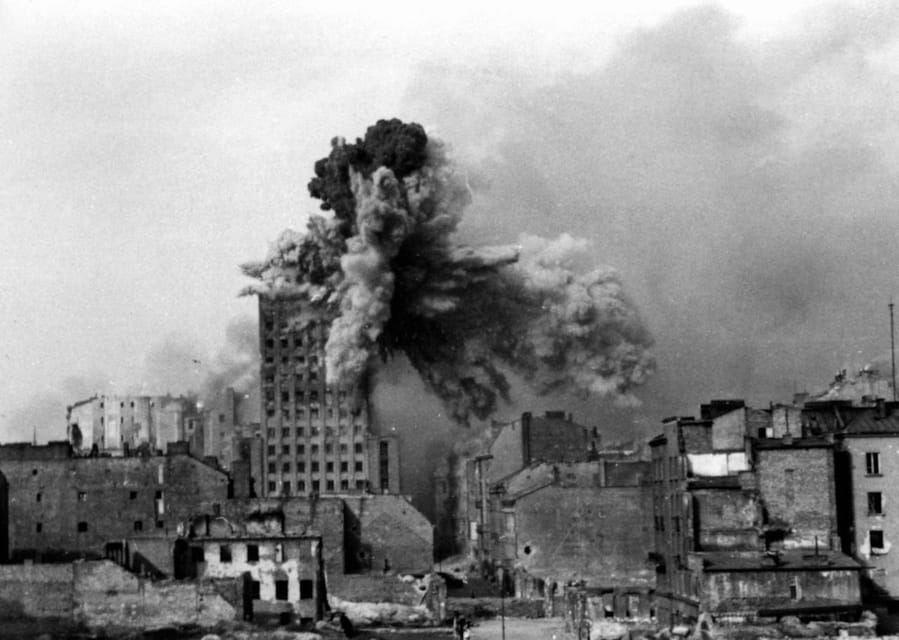
Warsaw suffered catastrophic destruction during World War II. The city endured bombing, German occupation, mass executions, the destruction of the Jewish Ghetto, and two major uprisings. The tour helps you follow those events in the places where they unfolded instead of treating them as a list of dates.
That location-based approach matters. A museum can show you a photograph of a street, but standing near the same area while a guide explains what once occupied it gives the story a sharper edge. You begin to understand how much of present-day Warsaw was rebuilt, moved, or changed after the war.
The tour also puts civilian life beside military and political events. You hear about people trying to live under German control, the restrictions imposed by the SS, the choices made by members of the Polish Resistance, and the experiences of Jewish and non-Jewish residents. That wider view keeps the walk from becoming only a parade of battle sites.
I especially value the local guides’ use of family stories. Several guides bring personal memories of how the war affected their relatives. These stories cannot replace historical evidence, but they can show how large events reached ordinary households.
More History Walking Tours in Poland
- Gdańsk City Sights & History Guided Walking Tour in English
★ 4.8 · 876 reviews - Warsaw: Jewish History Guided Walking Tour in English
★ 4.7 · 324 reviews - Historic Krakow : Old Town & Wawel Castle Walking tour
★ 5.0 · 318 reviews
Starting beside the orange umbrella
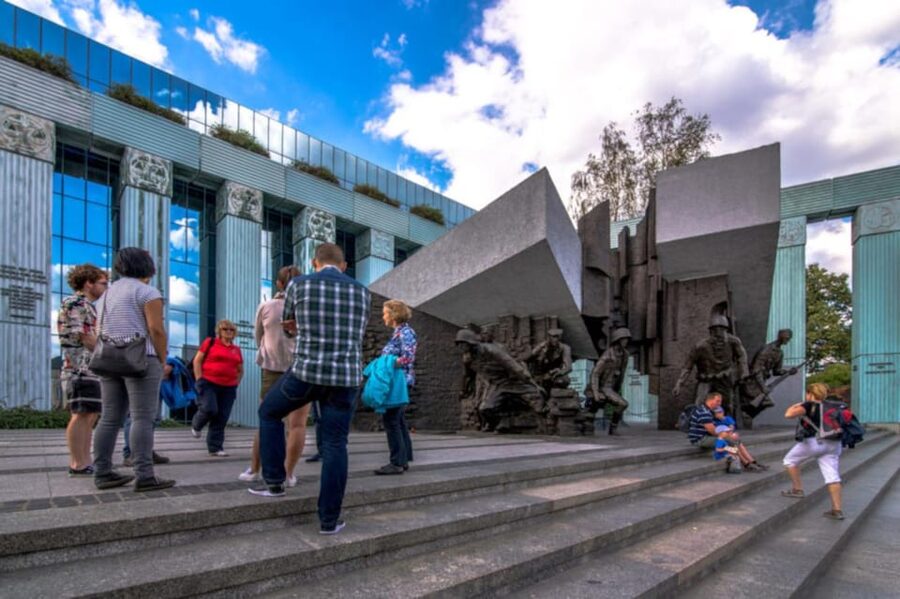
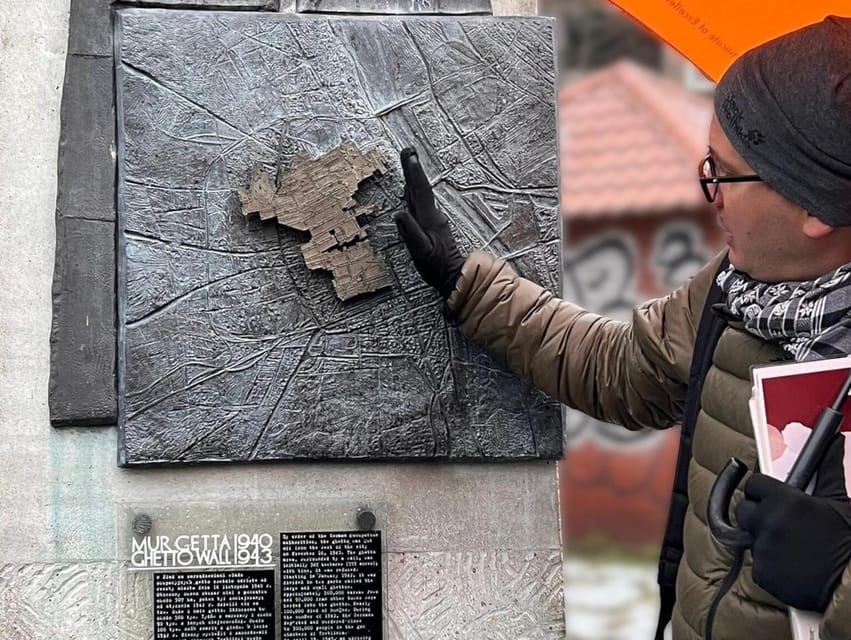
The meeting point is easy to identify once you know what to look for. Find the guide holding an orange umbrella, close to the roughly 20-meter-high column topped by a statue. Give yourself enough time to locate the column and scan for the umbrella, especially if the area is busy.
The color is worth remembering. One person specifically noted that the umbrella was orange rather than yellow, a small detail that could prevent a last-minute scramble. The guide is the person who checks you in and sets the tone for the walk, so arriving a few minutes early is sensible.
The group includes other tourists, and the experience is not a private tour. The small-group setup should make the explanations more personal than a large coach excursion, but you still need to stay close to the guide. Street traffic and passing crowds can make it harder to hear at times, and one participant suggested that a portable speaker could help in noisy areas.
The former Nazi German District

The opening section places Warsaw under German occupation. You learn how the city was controlled and how daily life changed under the SS. Rather than treating the occupation as a distant political event, the guide explains what it meant for the people living in the city.
This is also where the photographs become useful. A guide can hold up an image of the same area before or during the war, giving you a visual reference while you stand among later buildings and altered streets. Warsaw’s modern appearance can hide the scale of what happened, so these comparisons help correct your first impression.
The political background can be complicated, especially for someone who knows only the basic story of Germany’s invasion. Guides such as Albert and Andrew have been praised for explaining difficult material in clear English. That matters here, because the sequence of occupation, persecution, resistance, and destruction can become confusing without a steady timeline.
Do not expect the first section to be light sightseeing. The subject is harsh from the start. Still, the guides generally use a calm style, and some add gentle humor at suitable moments without making light of the suffering.
The former Adolf Hitler Square
The route continues to a place that once carried the name Adolf Hitler Square. The name itself shows how public space was used to impose German rule and erase Polish identity. Your guide explains the role of the square within the occupation and places it in the wider story of Warsaw under Nazi control.
This stop is valuable because it shows that history is not only found at ruins or memorials. A square can be physically renewed while retaining a difficult past. The guide’s explanation helps you read the site as a political symbol, not just another open space on a city map.
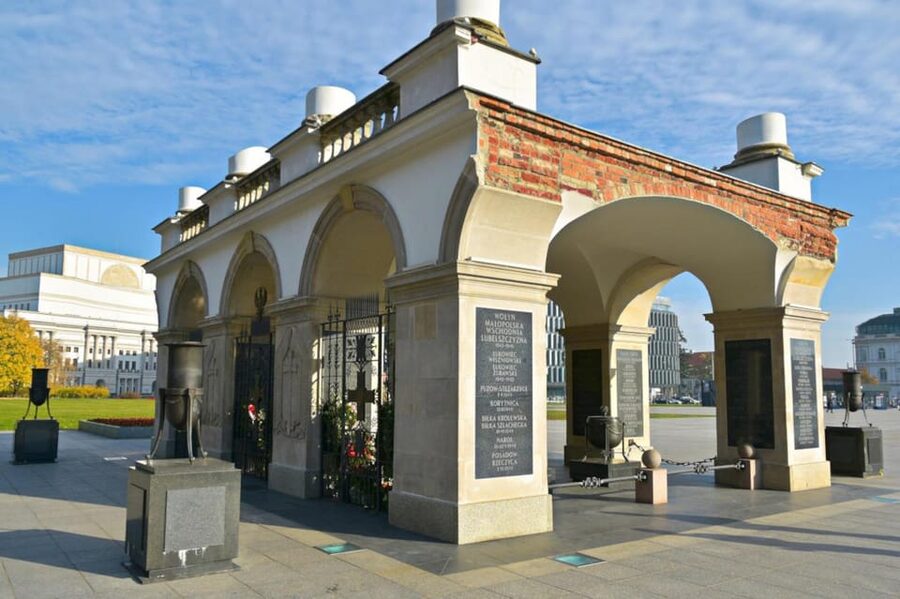
You may also see other civic activity during the walk. One participant found the changing of the guard at the Tomb of the Unknown Soldier especially moving. The tour may include that experience as part of the route, but it is best not to treat it as a guaranteed centerpiece, since public ceremonies can depend on timing.
Same city, a different century:
- Gdansk: City Cruise on Historical Polish Boat
★ 4.8 · 2,913 reviews - Warsaw: POLIN Museum of the History of Polish Jews Ticket
★ 4.7 · 1,142 reviews - Gdańsk: Sunset Cruise on a Historic Polish Boat
★ 4.9 · 977 reviews - Historic City Center Tour Gdansk in German
★ 4.6 · 455 reviews
The former Jewish Ghetto
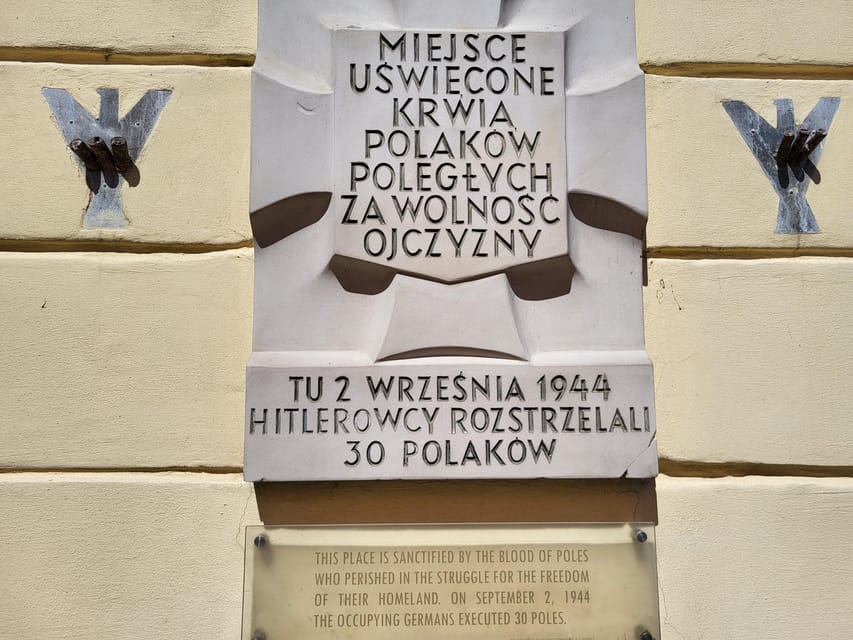
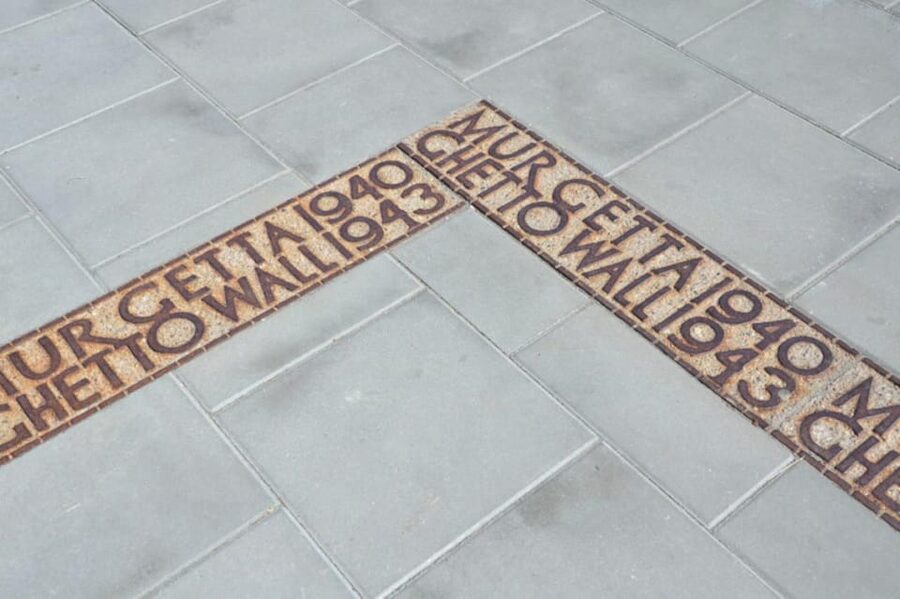
The former Jewish Ghetto is one of the most important parts of the route. Here the story shifts toward the forced confinement and persecution of Warsaw’s Jewish population, followed by the 1943 Jewish Ghetto Uprising.
The guide explains what the ghetto represented and how people resisted despite overwhelming conditions. The focus is not only on armed action. You also learn about civilians, daily survival, fear, and the limited choices available to people trapped by occupation policy.
This section can be emotional. One family with a 10-year-old found the subject powerful enough to prompt serious thought, while other participants described the walk as tearful. That does not make the tour unsuitable for families, but you should be ready for direct discussion of cruelty, death, and destruction.
The surrounding city can make the history harder to grasp. Modern streets and rebuilt structures do not always reveal the vanished neighborhood. This is where the guide’s pictures and explanations do much of the work. You see how the area looked before and during the war, then consider what was lost.
Execution sites and the cost of occupation
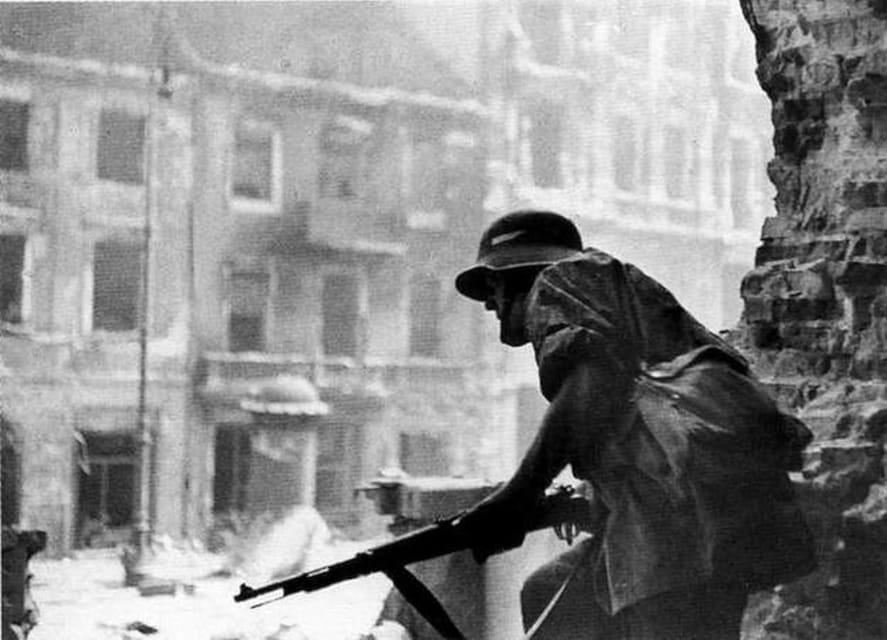
The tour also visits execution sites. These stops are not presented as casual photo opportunities. They show how terror was used against the population and how German forces tried to crush resistance through public and organized violence.
A guide’s tone matters greatly here. The best moments of the walk are not the most dramatic speeches, but the careful explanations of who was targeted, why the site mattered, and how ordinary people lived with the threat. Several guides have been praised for treating the subject with sensitivity while still answering difficult questions directly.
You may find these locations less visually striking than famous monuments. That is part of their value. The absence of grand architecture can force you to pay attention to the people and events rather than the appearance of the site.
The 1944 Warsaw Uprising and Polish Resistance
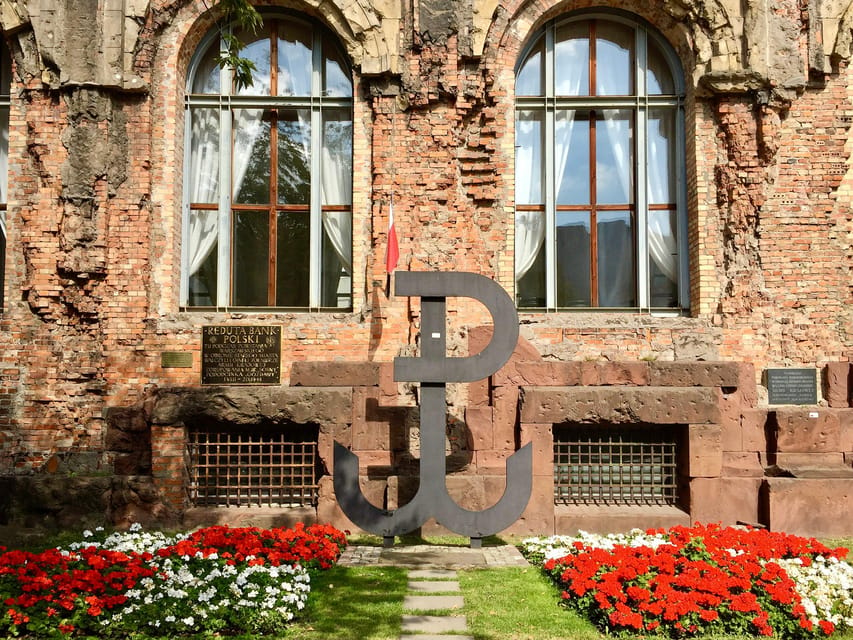
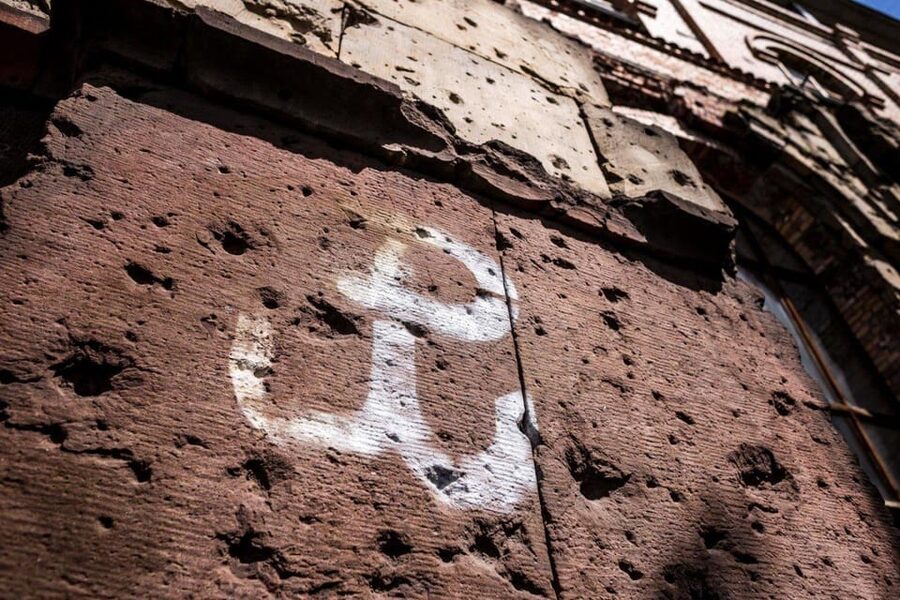
The final major theme is the 1944 Warsaw Uprising. The guide explains how Polish resistance fighters challenged German control and how civilians became caught in the fighting. You also hear about the city’s strongholds and the wider political pressure shaping Poland’s position during the war.
This part gives the tour its strongest sense of movement. The route links places associated with preparation, fighting, and resistance, helping you understand that the uprising was not an isolated episode. It grew from years of occupation and from the desire to regain control of Warsaw.
The Polish perspective receives proper attention here, including the political turmoil affecting Poland’s borders. That is useful context for visitors who know the uprising mainly as a military event. The guide helps connect the street-level story to the larger struggle over Poland’s future.
The balance is important. A patriotic account can become one-sided, but several guides have been praised for discussing different perspectives and the experiences of civilians. Piotr, for example, has been described as presenting the suffering and choices of people on different sides with care. You should still expect the tour to focus mainly on Warsaw and the Polish experience, not to provide a full history of every nation involved in World War II.
Old images, family stories, and clear explanations
The guides are the heart of this experience. Magda, Gosia, Iga, Piotr, Andrew, Albert, Arek, Peter, and others have led tours, and the most consistent strength is their ability to make complicated events understandable in spoken English.
I like the use of photographs because they keep the walk tied to visible places. You can see what Warsaw looked like before the war, compare it with wartime images, and then look at the rebuilt city around you. Maps would make the route even easier to follow, and one participant specifically wished for more map support, so consider making a note of locations if you plan to research further afterward.
Family stories add another layer. A guide’s personal connection can explain how war memories remain part of Polish life, but the stories are used alongside broader historical context rather than as a substitute for it. That combination makes the tour feel local without losing its basic structure.
The best guides also manage the mood well. The subject demands seriousness, but two and a half hours of unbroken grim detail can be tiring. Guides such as Piotr and Albert have been praised for adding light moments without downplaying the horror. That balance helps you stay focused.
Pace, weather, and physical comfort
The tour lasts 150 minutes, so plan for a substantial outdoor walk. One older participant found the guide’s pace too fast, while another person in extreme winter cold managed only about 45 minutes. Those comments are practical warnings, not minor complaints.
Wear shoes suited to city walking and dress for the forecast. Warsaw can be bitterly cold in winter, with reported temperatures around minus 17 to minus 20 Celsius during some tours. Gloves, warm footwear, and a hat are not optional in those conditions. In warmer months, the walk should be easier physically, though you still need to remain on your feet for much of the time.
The activity is listed as wheelchair accessible. One participant also noted that the route had no difficult steps or rough ground. Conditions can vary with crowds and street works, but the available information suggests this is a more manageable walking route than a tour built around uneven ruins.
If you have limited stamina, tell the guide at the start. You may be able to position yourself near the front or take brief pauses, but the tour is designed to keep moving between stops. The experience works best when you can stay with the group.
Is $20 a fair price?
At $20 per person, this is strong value for a 150-minute English tour led by a professional local guide. You are paying for a planned route, historical interpretation, visual material, and access to places that would be difficult to understand from a guidebook alone.
The value is greatest if you are new to Warsaw or want a clear first framework for the city’s wartime story. You could visit many of these areas independently, but you would need to research the sites, work out the route, and carry the historical context with you. The guide saves that preparation time.
It is less useful if you want an in-depth museum seminar or a private conversation tailored to your family’s interests. You join a shared group, and the pace and stopping time are set by the route. Still, the price leaves room in your budget for the Warsaw Uprising Museum or other historical sites later.
Tips are not included. The operator notes that commissions and taxes consume a large part of the booking price and invites you to tip if you enjoyed the tour. Treat that as optional, not as a required extra.
Who should book this walk?
I would recommend it to first-time visitors, history fans, families with older children, and anyone who wants to understand why modern Warsaw looks the way it does. You do not need to be a specialist. Guides are used to explaining the subject to people with different levels of background.
It is also a good choice for visitors who prefer people and places over a long museum visit. You will not simply hear dates. You will connect occupation, civilian life, Jewish resistance, Polish resistance, executions, and reconstruction across the city.
I would think twice if you dislike extended outdoor walks, struggle to hear in street noise, or are visiting during severe winter weather without proper clothing. The subject is emotionally heavy, too, so give yourself time afterward rather than scheduling another demanding activity immediately.
FAQ
How long is the World War 2 in Warsaw walking tour?
The tour lasts 150 minutes, or two and a half hours.
What language is the tour conducted in?
The tour is conducted in English with a live local guide.
Where is the meeting point?
Meet near the 20-meter-high column with a statue on top. Look for a guide holding an orange umbrella.
What places does the tour visit?
The route includes the former Nazi German District, former Adolf Hitler Square, the former Jewish Ghetto, execution sites, and strongholds connected with the Polish Resistance during the 1944 Warsaw Uprising.
Does the tour cover both Warsaw uprisings?
Yes. It covers the 1943 Jewish Ghetto Uprising and the 1944 Warsaw Uprising.
Is the tour wheelchair accessible?
Yes, the activity is listed as wheelchair accessible.
Is this a private tour?
No. You join a group of other tourists, although the groups are described as small.
What does the $20 price include?
The price includes a professional local guide. Tips are not included, but you may tip the guide if you feel the experience deserves it.
Should you book it?
Book this walk if you want a focused introduction to Warsaw’s World War II story before exploring the city on your own. The combination of local guides, old photographs, family stories, and real wartime locations gives you more context than a casual city stroll.
I would choose it early in your stay, then follow it with a museum visit if you want more detail. Bring warm clothing in winter, expect steady walking, and keep your schedule open enough to absorb a serious subject. For $20, it offers a thoughtful and useful way to understand Warsaw’s suffering, resistance, and rebuilding.
Just added around Poland
- Best of Wroclaw 3-Hour History and Culture Walking Tour★ 4.9 · 49 reviews
- Krakow: Vistula River Cruise with Historical Views★ 3.5 · 357 reviews
- Krakow: Kościuszko Mound Ticket – History & Views!★ 4.4 · 303 reviews
- Krakow Old Town Segway Tour — 2H of History, Fun & Discovery★ 4.8 · 91 reviews
- Warsaw: Historic Private Tour in Retro Fiat★ 4.9 · 41 reviews
- Archaeological Museum of Krakow Entrance Ticket★ 3.8 · 31 reviews
- Private Tour: Warsaw’s Communist History by Retro Fiat★ 5.0 · 115 reviews
- Private Historical Tour of Warsaw by a Retro Fiat with Pickup★ 5.0 · 190 reviews
Warsaw History Tours, compared.
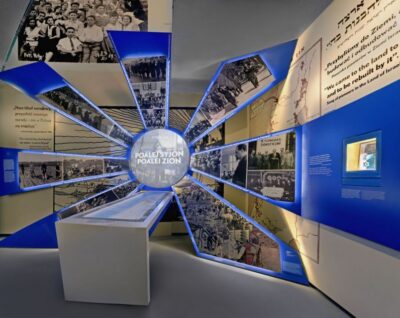
Warsaw: POLIN Museum of the History of Polish Jews Ticket
Read our review →
Warsaw: Chopin Concert at Historical Venue in Old Town
Read our review →
Warsaw: Jewish History Guided Walking Tour in English
Read our review →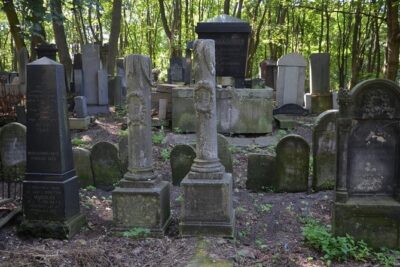
Private Tour: Warsaw’s Jewish Heritage by Retro Fiat
Read our review →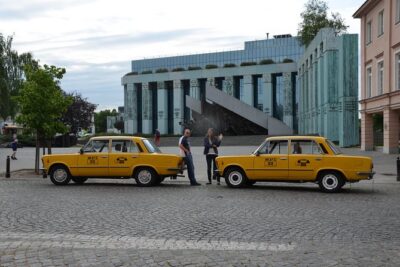
Private Historical Tour of Warsaw by a Retro Fiat with Pickup
Read our review →
Warsaw for WWII Buffs – private tour with hotel pickup
Read our review →
Private Tour: Warsaw’s Communist History by Retro Fiat
Read our review →
Browse the lists this tour appears in