
Review · ROME
Ancient Rome Guided Tour: Colosseum, Forum and Palatine & Pick Up
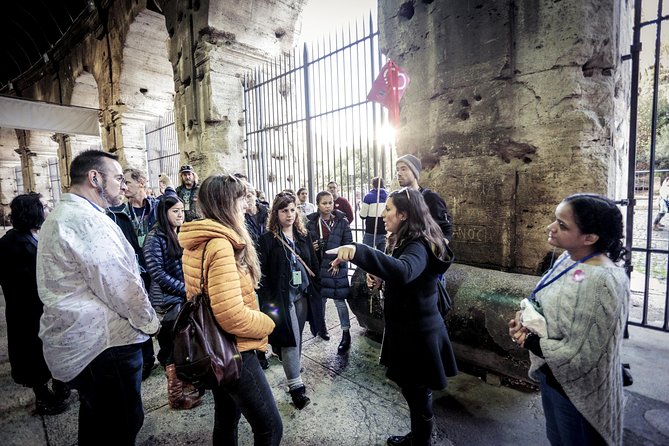
Rome’s ancient center is much easier to understand when someone connects the ruins for you. This half-day guided tour takes you across Palatine Hill, into the Colosseum, and along the Roman Forum, where Rome’s temples, roads and government buildings once formed the heart of the city.
I like the included hotel pickup and the compact route through three major sights. I also like that the guide and wireless headset let you focus on the ruins instead of sorting out tickets and directions. The main caution is the heat, uneven paving and variable guide quality. Pickup can also begin 45 minutes before departure, or 60 minutes for hotels outside the central area.
Key points before you book
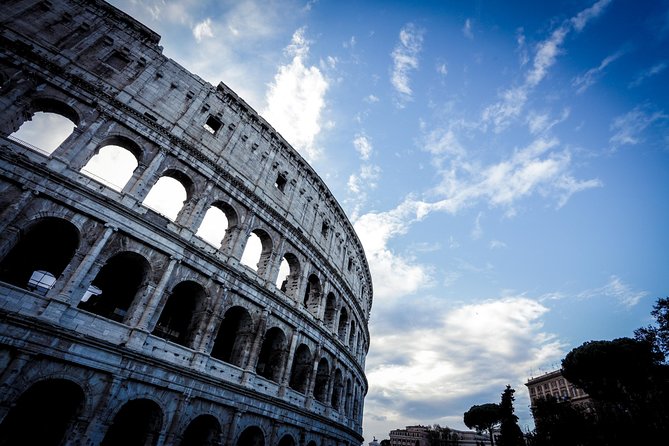
- Three major ancient sites in about three and a half hours: You cover Palatine Hill, the Colosseum and Roman Forum in one morning or afternoon.
- Pickup saves city-center guesswork: You are asked to wait in your hotel lobby 45 minutes early, or 60 minutes early for some non-central hotels.
- The Colosseum ticket and reservation fee are included: The listed admission value is €18, plus a €2 reservation fee.
- Expect real walking on rough surfaces: Cobblestones, marble slabs, steps, sun and uneven ground make sturdy shoes and water essential.
- Guide quality shapes the day: Rita, Roger, Nicoletta, Alessa and Letty received especially strong praise, but communication and group control can vary.
- Bring your passport or ID: Your full name must be supplied at booking, and identification is mandatory at the site.
What this Rome tour actually covers

For $98.86 per person, you get about three and a half hours in Rome’s principal ancient archaeological zone. The price includes transportation, a professional guide, wireless audio headsets, admission to the Colosseum, Roman Forum and Palatine Hill, and the Colosseum reservation fee.
That makes the tour more than an entry ticket. The Colosseum ticket and reservation fee account for €20 of the listed cost, while the remainder pays for transport, coordination, a guide and the convenience of moving through a difficult site without planning each step yourself.
I see the value most clearly if this is your first visit to Rome or if you have only a short stay. You can see the city’s biggest ancient sights without spending a day working out opening procedures, routes and ticket requirements.
Still, this is not a quiet or leisurely archaeological walk. The group can include up to 20 people, and the route keeps moving. You will get a useful overview, but a specialist private tour or a longer archaeology-focused visit would allow more time at individual buildings.
More Ancient History Tours in Italy
- Colosseum: Underground and Ancient Rome Tour
★ 4.7 · 12,691 reviews - Colosseum & Ancient Rome with Arena Floor Option I Max 6 People
★ 5.0 · 3,306 reviews - Rome: Colosseum, Ancient Rome Tour or AudioGuided Tour
★ 4.4 · 2,879 reviews
Hotel pickup is useful, but read the timing carefully
Pickup is one of the tour’s strongest practical features. Rome’s ancient center is easy to reach once you know the city, but getting there from an unfamiliar hotel can take time, especially if you are traveling with children or older family members.
The important detail is the early lobby requirement. You need to be ready 45 minutes before departure, or 60 minutes before departure if your hotel is considered outside the central service area. That is not a minor footnote. One pickup was reported as arriving 45 minutes after the requested waiting time, while another person missed the vehicle after not realizing the driver would come so early.
Ask your hotel reception to confirm the pickup instructions. The operator also asks you to check whether your hotel is covered. If it is not, you will need to reach the meeting point yourself at Colle Oppio Park, on Via delle Terme di Tito at the corner of Via Nicola Salvi, inside the park.
There is transportation to the archaeological area, but no drop-off afterward. Plan your next stop from the Colosseum area rather than expecting a return to your hotel.
Palatine Hill and the first view of imperial Rome
Palatine Hill is the centermost of Rome’s Seven Hills and rises about 40 meters above the Roman Forum. From its slopes, you look down toward the Forum on one side and Circus Maximus on the other.
This is a fine place to begin because it gives you the physical layout of ancient Rome before you enter the monuments below. You can see why emperors wanted their residences here. From the time of Augustus, imperial palaces occupied the hill, turning it into a statement of power as well as a home.
The best part is the broad view. You are not simply looking at scattered stone walls. You begin to see how the Forum sat in a valley, how the main roads connected the public buildings, and how Rome’s hills shaped the city.
The drawback is exposure. Palatine Hill has stretches with little shade, and the ground is uneven. In hot weather, your comfort depends on water, a hat and sensible pacing. Guides such as Roger and Nicoletta were praised for providing water breaks and seeking shade, but you should still arrive prepared.
The published itinerary gives Palatine Hill a very short listed stop time, yet the total tour includes the archaeological area. In practice, the exact time at each location may depend on the group, entrance conditions and the guide’s route. Think of Palatine Hill as an important part of the circuit, not as a long, separate hilltop hike.
Entering the Colosseum with the main admission handled
The Colosseum receives about an hour on the published schedule. That is enough to see the main interior levels and grasp the building’s scale, though it is not enough to examine every feature at a slow pace.
This oval amphitheater, also called the Flavian Amphitheatre, was built with travertine, tuff and brick-faced concrete. It remains the largest amphitheater ever built. A guide can help turn those construction facts into a clearer picture of how the building worked and why it mattered to Roman public life.
The included reservation makes the entry process easier than arranging a separate visit. You still need to pass the site’s checks, and your name matters. Supply the full names of everyone when booking, and carry the same passport or identity card information on the day. One person had trouble because a booking used a nickname instead of the full name on the passport, although a supervisor allowed entry after checking the situation.
That is a good reason to treat identification rules seriously. Another person could not enter because three members of the group did not have photo identification. The tour operator requires a passport or ID card, so do not leave it in your hotel room.
If you have a pacemaker, bring the required certificate. Without it, you may not be admitted unless you undergo screening.
Inside, the guide’s storytelling matters. Rita was praised for showing images of the Colosseum as it looked in earlier times and for taking family photographs at a scenic spot. Eglie was described as a strong storyteller, while Caro was appreciated for patience and clear explanations. These are the kinds of small touches that can make the hour feel personal rather than rushed.
More Ancient History Tours in Rome
- Colosseum Underground & Ancient Rome Guided Tour
★ 4.5 · 2,590 reviews - Pantheon Elite Guided Tour – Rome’s Iconic Ancient Temple
★ 5.0 · 1,447 reviews - Ancient Rome: Colosseum Underground Group Tour
★ 4.5 · 1,059 reviews - Colosseum Express Guided Tour and Ancient Rome Admission Included
★ 4.0 · 1,008 reviews
Walking the Via Sacra through the Roman Forum
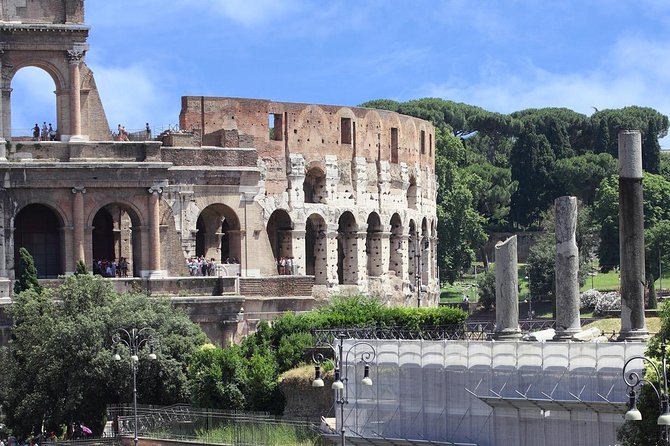
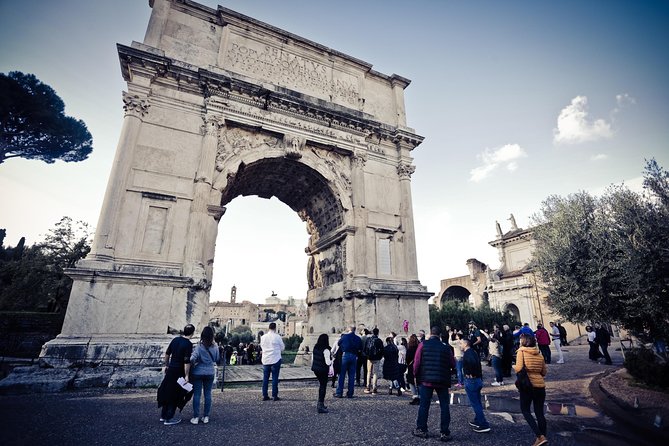
The Roman Forum is where the tour’s separate monuments begin to make sense. This rectangular public space was once a marketplace and later the center of civic, political and religious life.
You walk along the Via Sacra, the Sacred Road and the main street of ancient Rome. It ran from the Capitoline Hill through the Forum’s most important religious sites toward the Colosseum. The road gives you a natural thread through the ruins, even when the surrounding remains seem hard to identify.
The Forum can be confusing without help. Columns, foundations and partial walls do not always announce what they once were. A good guide points out how the buildings fit together and explains the public ceremonies that took place here. The tour also touches on the Roman triumph, the formal civil and religious ceremony held to celebrate a successful military commander.
The route can feel intense. You are walking over cobblestones and marble slabs, often under direct sun, while trying to listen and keep up with a group. Wear running shoes or other sturdy footwear. Sandals with thin soles are a poor match for this ground.
Use the wireless headset. In a crowded archaeological area, it lets you hear the guide without standing shoulder to shoulder around one speaking point. The system is especially useful when the group stops near a busy path or a large ruin.
The Imperial Forums and the road back toward the Colosseum
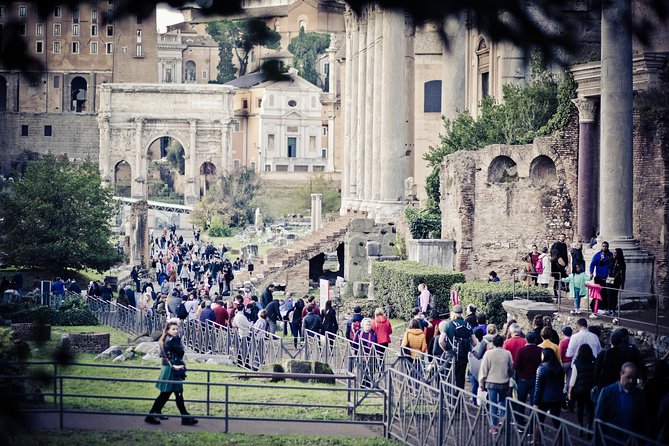
The route also connects with Via dei Fori Imperiali, the broad road running between Piazza Venezia and the Colosseum. Beneath and beside this road lie parts of the Forums of Trajan, Augustus and Nerva.
You may not spend a long separate period at each Imperial Forum, but the road adds useful context. Rome’s ancient center was not one single forum. Different emperors built their own public complexes, and later streets cut through parts of the archaeological area.
This is one place where a guide can help you look beyond the most famous monument. The Colosseum gets the photographs, but the nearby forums show how emperors used architecture to present power, order and victory.
The guide can make or break the experience
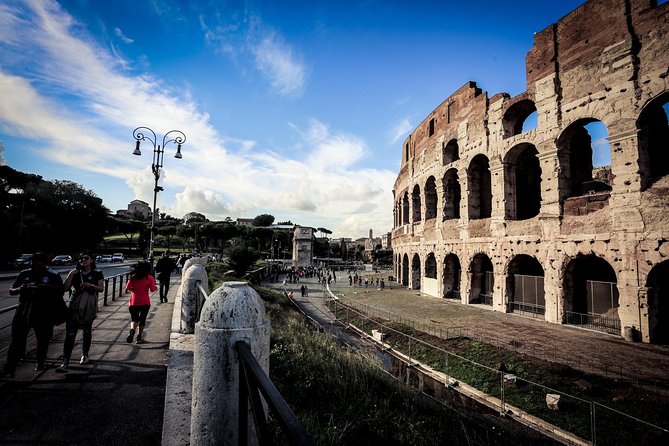
The strongest praise for this tour centers on the guides. Rita was described as energetic, funny and passionate, with a talent for keeping families involved. Roger was praised for clear directions, water breaks and making sure the group stayed together, even with tweens. Alessa, Letty, Nicoletta and Lina were also singled out for strong explanations and an easy pace.
That pattern tells you what to hope for: a guide who gives enough historical detail without burying you in dates, watches the group in the heat, and allows time for photographs.
But guide quality is not guaranteed. Some tours had trouble keeping the group together. One guide was difficult to follow in crowds because the flag was not used clearly. Another spoke too quickly or was hard to understand. One poor experience involved long stops in full sun, little time for pictures and limited help at the end of the visit.
You can reduce some of these problems by staying close to the guide, using the headset, and asking early if you cannot hear. If you are traveling with an older person, tell the guide at the start that the group needs a steady pace. This tour requires moderate physical fitness and is not recommended for people with impaired mobility.
Heat, crowds and what to carry
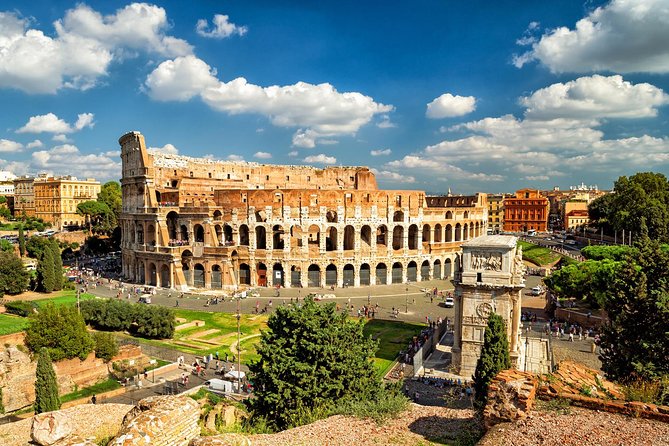
Rome’s ancient sites offer very little shade in some sections. Several guides made an effort to stop in shaded areas, but conditions change with the season, crowd levels and route.
Carry water, sunscreen and a hat. A light bag is easier than a heavy backpack, especially on uneven paving. Wear shoes with firm soles and good grip. The route is not a long-distance trek, but three and a half hours of standing and walking on ancient surfaces can tire you.
The tour is offered in English, though the operator notes that a guide may be multilingual. That can affect the pace and the amount of explanation in your language. If clear English is especially important to you, ask the operator what language arrangements apply to your departure.
The maximum group size is 20. That is small enough for a workable guided visit, but large enough that you should not expect a private conversation with the guide at every stop.
Who will get the most from this visit
I would choose this tour for a first-time Rome visitor who wants the key ancient sights in one organized outing. It also suits families who prefer a guide to keep the day moving, provided everyone can manage the walking and heat.
Hotel pickup is particularly useful if you are unsure about Rome’s transport system or staying somewhere that is not close to the Colosseum. The English tour, wireless headsets and included admission remove several common sources of stress.
I would hesitate if you want a slow, highly detailed study of Roman architecture. The schedule is tight, and the guide may need to keep the group moving. I would also think twice if anyone in your party has limited mobility or struggles with heat.
Morning departures may feel more comfortable in summer, and one recommendation specifically favored the morning tour. Still, departure times vary, so check the exact option before booking.
Is $98.86 a fair price?
The price is not simply the cost of entry. The advertised Colosseum ticket is valued at €18 per person, with a €2 reservation fee, and the tour also includes the Forum and Palatine Hill. Transportation, coordination and the guide account for the rest.
For you, the value depends on how much planning you want to avoid. If you would otherwise buy tickets, arrange transport, find the right entrance and learn the site from a guidebook, the package can be sensible. If you already have entry arranged and enjoy exploring ruins alone, the price may feel high.
The tour’s strong points are convenience and coverage. Its weak points are the fixed route, early pickup window and the fact that a less effective guide can reduce the value of the whole morning or afternoon.
Free cancellation is available if you cancel at least 24 hours before the start time. Changes made within 24 hours are not accepted, and a minimum number of participants is required for the tour to operate.
Should you book the Ancient Rome Guided Tour?
Book it if you want the Colosseum, Forum and Palatine Hill in one half-day visit, prefer organized transport, and value a guide who can explain what you are seeing. It is a practical choice for first-time visitors, families and anyone with limited time in Rome.
Before paying, confirm your hotel’s pickup coverage, set a lobby alarm for the required early waiting time, and prepare matching photo identification for every person. Bring water, sunscreen and serious walking shoes.
I would not book it for a slow architectural study or for a party with significant mobility limits. For everyone else, the tour offers a useful first look at ancient Rome, with the important warning that the guide you receive will shape the day as much as the monuments themselves.
FAQ
How long does the Ancient Rome Guided Tour last?
The tour lasts approximately three hours and 30 minutes.
Which sights are included?
Admission is included for Palatine Hill, the Colosseum and the Roman Forum. The route also includes context about the Via Sacra and Via dei Fori Imperiali.
Is hotel pickup included?
Pickup is offered, but coverage depends on your hotel. You should be ready in the lobby 45 minutes before departure, or 60 minutes early for some non-central hotels.
Where do I go if my hotel is not covered?
You should go to Colle Oppio Park, at Via delle Terme di Tito and the corner of Via Nicola Salvi, inside the park.
Is transportation included after the tour?
Transportation to the tour area is included, but drop-off is not included.
Do I need to bring identification?
Yes. You must bring your passport or ID card on the day of the tour. The full names of all participants are also required when booking.
Is the tour suitable for people with limited mobility?
The tour requires moderate physical fitness and is not recommended for people with impaired mobility because of the walking and uneven surfaces.
Can I cancel for a full refund?
Yes, if you cancel at least 24 hours before the experience begins. Cancellations or changes made less than 24 hours before the start time are not eligible for a refund.
More Ancient Rome and Colosseum Tours
- Rome: Colosseum with Arena, Roman Forum and Palatine Guided Tour
★ 4.0 · 5,598 reviews - Colosseum with Arena, Roman Forum and Palatine Hill Guided Tour
★ 4.5 · 3,526 reviews - Rome: Colosseum Arena, Roman Forum & Palatine Hill Tour
★ 4.5 · 1,874 reviews - Colosseum, Roman Forum & Palatine Hill Guided Tour
★ 4.5 · 1,568 reviews
Just added around Rome
- Rome: Colosseum and Ancient Rome Guided Walking Tour★ 4.5 · 95 reviews
- Secrets of Rome: Historical True Crime Small Group Tour★ 4.9 · 85 reviews
- Rome: Rome at Night Evening Historical Walking Tour★ 4.9 · 24 reviews
- Rome Secrets: Dark History & Tasty Bites Tour★ 5.0 · 37 reviews
- Rome: Introduction to the Colosseum and Ancient City Tour★ 4.8 · 75 reviews
- Rome Pantheon Semi-Private Guided Tour with an Archaeologist★ 5.0 · 60 reviews
- Rome: Ostia Antica Archaeological Park Ticket & Audio App★ 4.6 · 146 reviews
- Rome: Food Tour of the Historic Center with Rooftop Spritz★ 4.7 · 43 reviews
Rome History Tours, compared.
Colosseum: Underground and Ancient Rome Tour
Read our review →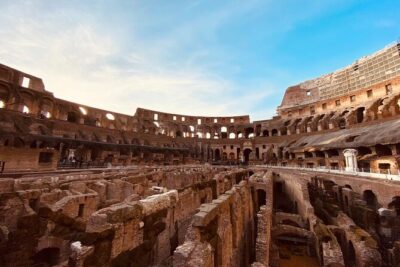
Rome: Colosseum with Arena, Roman Forum and Palatine Guided Tour
Read our review →
Colosseum with Arena, Roman Forum and Palatine Hill Guided Tour
Read our review →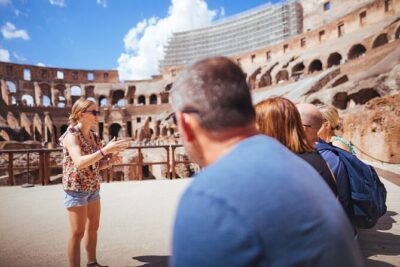
Colosseum & Ancient Rome with Arena Floor Option I Max 6 People
Read our review →
Rome: Colosseum, Ancient Rome Tour or AudioGuided Tour
Read our review →
Colosseum Underground & Ancient Rome Guided Tour
Read our review →
Rome: Colosseum Arena, Roman Forum & Palatine Hill Tour
Read our review →
Colosseum, Roman Forum & Palatine Hill Guided Tour
Read our review →Browse the lists this tour appears in