

Review · GUIDED
Arusha Guided Walking City Tour, Culture, Lifestyle & History
Arusha is more than a starting point for safari. This guided city walk takes you into the town’s past and daily life, from a German colonial fort and human evolution displays to fabric stalls, gemstone shops, and busy streets. I like the strong mix of history and local culture, and I like that guide Israel is often praised for clear English, warm manners, and a proud knowledge of Tanzania.
The Tanzanite Experience adds something unusual to an ordinary city tour. You learn how the blue-violet stone is mined, cut, and sold, then have the chance to browse the attached shop. The main thing to consider is that this is not a four-hour walk from start to finish. Some departures use a tuk-tuk or car between sights, and the amount of walking can vary.
Key points at a glance

- Old Boma Museum: See Arusha’s oldest building and exhibits on human evolution, colonial history, ecology, and wildlife.
- Tanzanite in its home country: Learn about Tanzania’s famous blue-violet gemstone and browse stones priced from about $100 upward.
- A guide who shapes the experience: Israel receives especially strong praise for his English, clear explanations, and friendly approach.
- Markets and modern Arusha: Shop for Maasai sandals, fabrics, jewelry, bags, blankets, and other locally made goods.
- Cultural Heritage Centre: Spend time in one of Africa’s major art galleries, with work from Tanzania and other African countries.
- Good value at $26: The fee covers the guide, Tanzanite museum, Cultural Heritage Centre, and central hotel pickup, but not the Old Boma admission or shopping.
What this Arusha city tour is really like
This is a useful first look at Arusha before a safari, Kilimanjaro climb, or other trip around northern Tanzania. You move through several parts of town rather than spending the whole morning in one museum. That gives you a better sense of how Arusha connects government offices, colonial buildings, shops, markets, art, and ordinary street life.
The published visit lasts about four hours, though the included information also allows for guided time ranging from roughly two and a half to six hours. That wide range suggests the pace can depend on the group, transport, traffic, and how long you spend shopping or asking questions.
Hotel pickup and drop-off are offered for hotels near the city center. The group can include up to 19 people, so you should ask about the expected group size if you want a very quiet, personal walk. The tour is also near public transport, and most people can take part.
At $26 per person, the tour offers a fair amount for the money. The guide, Tanzanite museum, Cultural Heritage Centre, and central hotel transfers are included. You still need to pay the $6 adult fee for the Natural History Museum, plus any food, drinks, purchases, and tip.
More Local Culture and Traditions Tours in the world:
- Amsterdam Food and Cultural Tour with Tastings
★ 5.0 · 4,315 reviews - Sevilla Food Tour: Tapas, Wine, History & Traditions
★ 5.0 · 3,468 reviews - Tromsø: Reindeer Camp and Sami Cultural Tour with Lunch
★ 4.7 · 3,326 reviews
Starting with Arusha’s Old Boma Museum
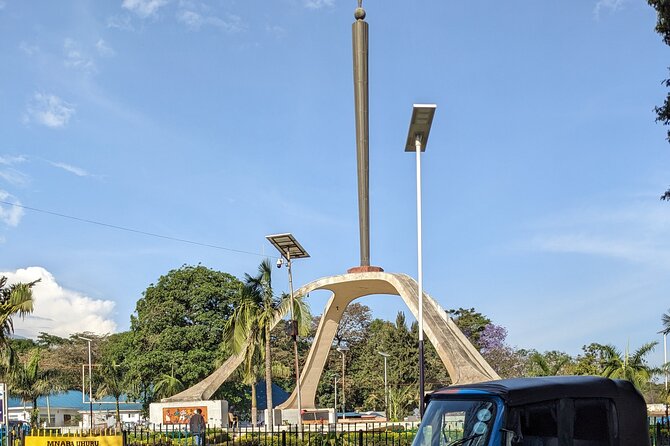
The Old Boma Museum is the most important history stop. The building began as a German colonial fort and is described as the oldest building in Arusha. Today it is a government museum with permanent and temporary displays.
Your guide first points out several major city landmarks on the way, including the headquarters of the East African Community, an international conference building, and a large public hospital. That short introduction helps you place Arusha in its regional role. This is not only a market town for safari visitors. It is also a center for diplomacy, public services, and East African cooperation.
Inside the museum, the human evolution display is likely to be the main draw. It explains evolution through replica fossils, early tools, and a replica of an old footprint found in East Africa. If you are heading to the Olduvai Gorge area or other archaeological sites, this gives useful background before you see them.
A second display covers the history of the Boma and Arusha from 1884 to 1919. The date range points to the building’s German colonial period and the early years of outside rule. The ecology and wildlife photography exhibit connects the city to the animals and natural areas that bring many people to northern Tanzania.
Plan about 45 minutes here. The museum admission is not included, so allow $6 per adult. That extra fee is modest, but you should know about it before arriving. If museums are not your priority, this is the stop most likely to feel slower than the market visits. If you want context, it is one of the tour’s most useful stops.
Learning why Tanzanite is so valuable
The Tanzanite Experience gives the tour a special local angle. Tanzanite is mined only in Tanzania, and the museum explains the work behind the stone rather than simply showing polished jewelry. You learn about mining, cutting, polishing, and the stories connected with the gemstone.
Tanzanite is known for its violet-blue color. The presentation also explains why its limited source makes it rare. The tour information compares its rarity favorably with diamonds, but treat exact comparisons as part of the sales presentation rather than a scientific measure. The practical value of the stop is that you can see how a rough stone becomes a finished piece and understand why color, cut, and size affect the price.
The museum visit takes about 30 minutes and is included in the tour fee. There is a shop on site, with stones and jewelry listed from about $100 to $3,000 and beyond. You are free to browse without buying, but bring a clear budget if you are tempted. A short city tour is not the right time for a rushed major purchase.
I like this stop because it connects a famous Tanzanian product with local work and trade. It also breaks up the older historical material with something very specific to the country. If you have no interest in jewelry, the museum section may be brief, but the guide’s explanation can still help you understand an industry you will see advertised across Arusha.
Finding the city at the Clock Tower
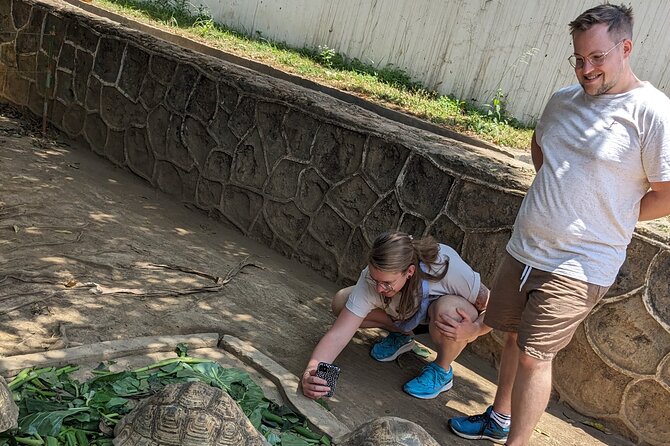
Arusha’s Clock Tower is a quick stop, but it helps you understand the city’s layout. It is a common meeting point and a useful landmark in the center. The tower was built by Galanos, a Greek businessman who came to Tanganyika in the early twentieth century.
A popular local claim says the tower sits between Cairo and Cape Town and marks the center point of Tanzania, Kenya, and Uganda. That claim is part of the tower’s identity, but it should be treated as local lore rather than a precise geographic fact. Your guide can explain how such stories become part of a city’s public character.
The scheduled stop is about 15 minutes. Afterward, the route continues past one of the oldest hotels and an old colonial-era school. These brief sights will appeal most if you enjoy seeing how a city’s older buildings remain part of modern daily life. Do not expect a long formal tour of each structure. The value is in the explanation and in seeing the city on foot.
More History Walking Tours in the world:
- History and Hauntings of Salem Guided Walking Tour
★ 5.0 · 14,564 reviews - Lisbon: History, Stories and Lifestyle Walking Tour
★ 4.8 · 10,902 reviews - Amsterdam: Life of Anne Frank and World War II Walking Tour
★ 4.8 · 10,467 reviews - Berlin: Third Reich & Cold War Guided Walking Tour
★ 4.9 · 8,378 reviews
Shopping at the Maasai market

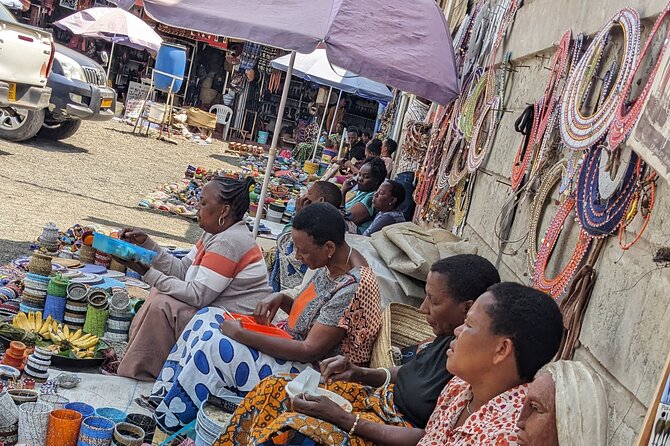
The Maasai Market Curios and Crafts is the most practical stop if you want souvenirs. It is an open-air market with African pots and pans, safari shirts, fabric clothing, Tanzania jerseys, Maasai sandals, jewelry, necklaces, bags, shuka blankets, and artwork.
The scheduled visit lasts about 25 minutes, which is enough for an introduction but not enough for a long, relaxed shopping session if you are comparing many stalls. Bring cash, as purchases are not covered and the tour information specifically advises you to carry money.
This is also where a guide adds real value. A busy market can feel confusing, especially if you are not used to local prices or sales approaches. Guide Israel is praised for helping people move through crowded streets and markets comfortably. His role is not just to point at objects. He can help explain what you are seeing and keep the stop from becoming a rushed hunt for souvenirs.
You should still shop with care. Compare prices, take your time, and buy because you like an item, not because you feel pressured. The market offers a more direct connection to local craft and trade than a hotel gift shop, but the selection and prices can vary from stall to stall.
Spending time at the Cultural Heritage Centre
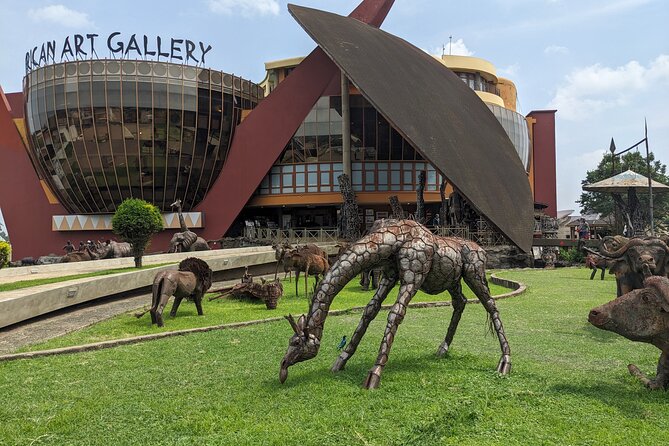
The Cultural Heritage Centre is the longest art-focused stop, at about 40 minutes. It is described as one of Africa’s biggest art galleries, with work from different parts of Tanzania and from other African countries.
This stop is broader than the Maasai market. Instead of mainly looking for small gifts, you can see sculpture, artwork, and other forms of African design in a gallery setting. There is also a shop nearby where you can buy souvenirs if something catches your eye.
The center works well near the end of the route because it brings together many themes from the day: local materials, traditional forms, modern presentation, and the way African art is sold to an international audience. It is also a sensible place to compare prices and quality before buying anything at the market.
The admission cost for the Cultural Heritage Centre is included. Purchases are not. If you are carrying shopping already, make sure you have a way to keep items secure for the rest of the tour.
The guide can make or break the walk
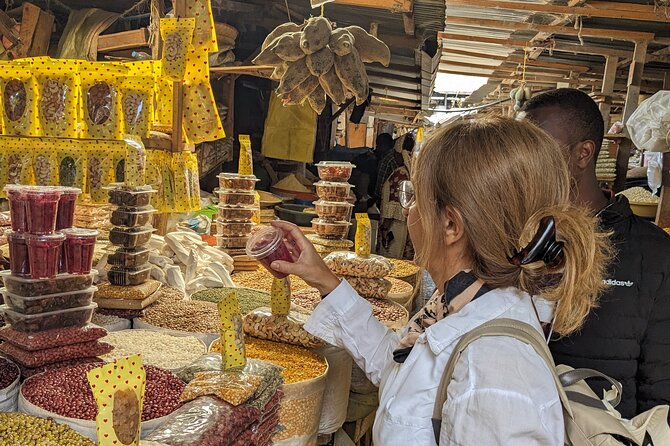
The strongest praise goes to the guides, especially Israel. He is described as young, energetic, easy to understand, and well informed about Arusha’s history and Tanzanian culture. His English is repeatedly singled out as very good, which matters when the tour covers colonial history, local customs, gemstones, and daily life in one morning.
A female solo visitor found the experience comfortable, and another person appreciated the way Israel handled busy streets and markets. That does not guarantee every departure will be identical, but it does point to the importance of the guide in this experience.
You should book this tour for the guide’s interpretation, not simply as a way to tick off five sights. The museums and markets are useful, but their value increases when someone explains what they mean. A good guide can also adjust the balance between history, shopping, and general city viewing.
If Israel is not your assigned guide, ask at booking if you have a strong preference. The provider is Tanzania Songbirds Safaris, and the information does not promise a particular guide for every departure.
Walking, tuk-tuks, and the pace of the day
The name suggests a full walking tour, but the actual experience can combine walking with local transport. One departure used a tuk-tuk to reach the first sight, and another account describes driving to several locations before walking short sections.
That mixed format is useful in a spread-out city. You save time and energy, especially in heat or traffic, and you can cover more ground than on foot alone. The tradeoff is that you may not get a long, continuous walk through Arusha’s neighborhoods.
Wear comfortable shoes anyway. You will walk through museums, markets, and central streets, and the exact amount can change. Since food and drinks are not included, carry water and plan for your own meal if the timing runs across lunchtime.
The group limit is 19 people. That is small enough for a workable city outing, though not as intimate as a private tour. If you want a slower pace for photography or extended shopping, ask how the guide handles group preferences.
Who will get the most from this tour
I would recommend this experience to someone arriving in Arusha with a free half-day and wanting an introduction before heading into the countryside. It suits first-time visitors, solo visitors who prefer some local guidance, and anyone curious about the city beyond safari lodges.
It is especially useful if you want several kinds of stops in one booking:
- A museum explaining Arusha’s colonial and human history
- A gemstone presentation linked to Tanzania
- A central landmark and older city buildings
- A market for clothing, crafts, and souvenirs
- A major African art center
It is less suitable if you want a long, uninterrupted walking route, a private guide guaranteed for the whole group, or a tour focused only on architecture. The mixed transport format means the day is more of a city sampler than a detailed neighborhood walk.
Price, extra costs, and practical planning
At $26, the tour is good value if you use all the included elements. The guide is the main reason to book it, but the included Tanzanite museum and Cultural Heritage Centre add meaningful stops without pushing the base price higher.
Budget separately for the $6 Old Boma admission. You also need money for food, drinks, souvenirs, and optional gratuity. The market and Tanzanite shop can make the day more expensive if you arrive without a spending limit.
Pickup and drop-off apply to hotels near the city center. If you stay farther out, confirm the arrangement before booking rather than assuming a door-to-door transfer. Confirmation is provided at booking, and free cancellation is available if you cancel at least 24 hours before the start time. Cancellations inside that window are not refunded, and changes are not accepted.
Should you book this Arusha city tour?
Book it if you want a friendly introduction to Arusha that mixes museums, shopping, art, and local history at a reasonable price. The best features are the wide range of stops and the chance to learn from a guide such as Israel, whose clear explanations and easy manner receive especially strong praise.
Skip it if your priority is a serious full-day museum visit or a purely pedestrian route. You should also allow extra money for the Old Boma and shopping. For most people with a spare half-day in Arusha, though, this is a practical way to get your bearings, understand the city, and see more than the inside of a safari vehicle.
FAQ
How long does the Arusha guided city tour last?
The tour is listed as approximately four hours. The provided timing also describes guided time ranging from about two and a half to six hours, depending on the day and the route.
What sights are included?
The route includes the Old Boma Museum, Tanzanite Experience, Arusha Clock Tower, Maasai Market Curios and Crafts, and Cultural Heritage Centre.
Is hotel pickup available?
Yes. Pickup and drop-off are offered for hotels near Arusha city center.
Is the Old Boma Museum admission included?
No. The Natural History Museum at the Old Boma costs $6 per adult and is paid separately.
Is the Tanzanite museum included?
Yes. Admission to the Tanzanite Experience is included in the tour price.
Is the Cultural Heritage Centre included?
Yes. The cost of visiting the African art gallery and Cultural Heritage Centre is included.
Is food included?
No. Food and drinks are not included, so you should bring money for anything you want during the tour.
Should I bring cash?
Yes. Cash is recommended for purchases at the Maasai market and other shopping stops. Souvenirs and gemstones are not included.
How many people can join the tour?
The maximum group size is 19 people.
What is the cancellation policy?
You receive a full refund if you cancel at least 24 hours before the experience start time. Cancellations or changes made less than 24 hours before the start time are not accepted and are not refunded.
Just added around the world
- Scenic Train ride to historical cities of Morretes and Antonina★ 4.0 · 188 reviews
- 6-Day Cultural Tour to Machu Picchu★ 5.0 · 76 reviews
- Jewish Heritage of Curacao★ 4.5 · 68 reviews
- The Curacao’s Colorful History Walking Tour★ 5.0 · 55 reviews
- Discover Scuba Diving Amathounta’s Ancient Port★ 5.0 · 30 reviews
- Olous – Guided Snorkelling Excursion to Discover Olous Sunken Ancient City★ 4.5 · 31 reviews
- Night Walking Tour of Medieval Cuenca★ 5.0 · 64 reviews
- WWII – The Battle of Crete Day Tour★ 5.0 · 103 reviews
Guided, compared.
Pompeii: Entry Ticket and Guided Tour with an Archaeologist
Read our review →
History and Hauntings of Salem Guided Walking Tour
Read our review →
Edinburgh: Edinburgh Castle Guided History Tour with Tickets
Read our review →
Berlin: Third Reich & Cold War Guided Walking Tour
Read our review →
Historic Charleston Guided Sightseeing Walking Tour
Read our review →
Ghent: 50-Minute Medieval Center Guided Boat Trip
Read our review →
Rome: Colosseum with Arena, Roman Forum and Palatine Guided Tour
Read our review →
Venice: St. Mark’s Basilica Guided Tour & VR History Intro
Read our review →Browse the lists this tour appears in