
Review · GREECE
Athens: Kotsanas Museum of Ancient Greek Technology Ticket
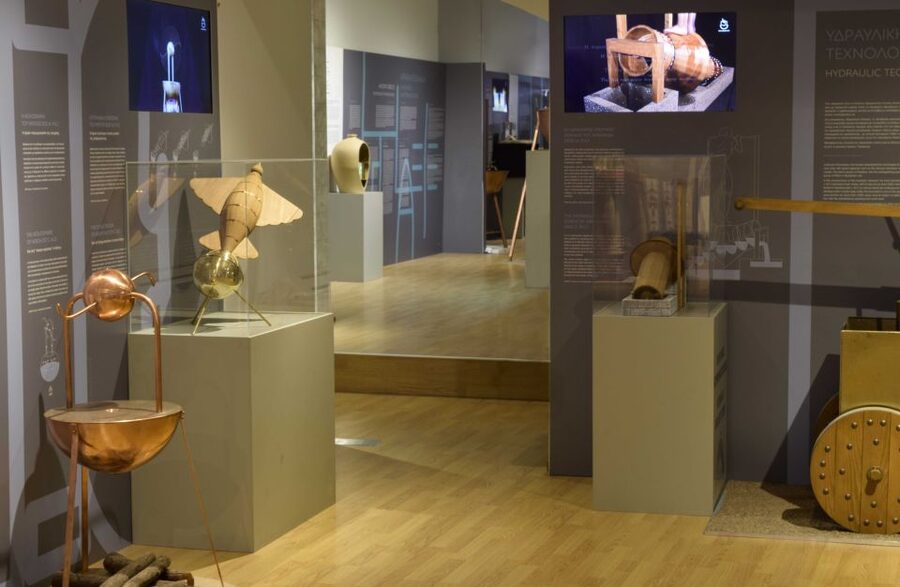
Ancient Greek technology was far more inventive than marble temples and battlefield machines. At the Kotsanas Museum, you can see working models of a calculating device, automatic figures, hydraulic clocks, and even early theatrical effects. The most eye-opening display is the Antikythera mechanism, often described as the oldest analog computer in the world.
I like the museum for two clear reasons: you can operate many of the models yourself, and the English explanations make complex mechanisms easier to follow. The main consideration is that this is a self-guided visit, not a live guided tour, so you need to read the panels and watch the videos at your own pace.
Key points
- About 100 operating models: See ancient Greek inventions brought to life rather than left as static objects.
- The Antikythera calculating mechanism: Examine a reconstruction of the ancient device used to model astronomical cycles.
- Hands-on displays: Operate selected mechanisms and watch how gears, water, air, and weights produce movement.
- Convenient central location: The museum is about a five-minute walk from Syntagma Metro Station.
- English learning material: Use labels, diagrams, posters, videos, animations, and documentaries to understand each invention.
- Easy one-day planning: Your ticket is valid for one day, with free cancellation up to 24 hours before the visit.
Why ancient Greek technology feels surprisingly modern
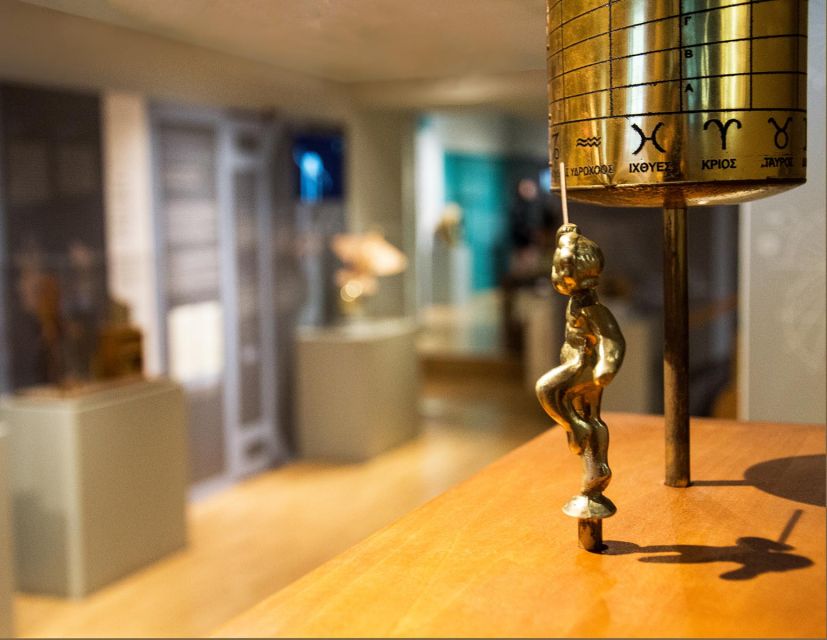
The first thing that catches you here is the gap between the date of the inventions and the ideas behind them. Ancient Greek engineers were not simply building practical tools. They were working with automation, timekeeping, mechanical calculation, hydraulics, theatrical effects, and programmable movement.
That makes this museum a useful change of pace from Athens museums filled with sculpture and pottery. You are not only looking at objects. You are trying to understand what makes a machine work.
The collection focuses on operating models, so the experience is about motion and cause and effect. A lever moves something else. Water controls a clock. Gears translate one kind of movement into another. A figure performs an action through a hidden mechanism. You get a direct sense of engineering rather than a general lesson in ancient culture.
The museum calls its main exhibition The Hi-Tech Inventions of Ancient Greeks. The name is playful, but the subject is serious. The displays show that several ideas usually associated with later technology had ancient precedents, even if the materials and methods were different.
More Ancient History Tours in Greece
- Athens: Acropolis & up to 5 Archaeological Sites Combo Pass
★ 4.2 · 13,904 reviews - Athens: Ancient Greek Theater Performance
★ 4.7 · 2,481 reviews - Historical Delphi One Day Tour with Arachova Stop & Expert Guide
★ 4.5 · 1,247 reviews
Finding the museum near Syntagma Square
The Kotsanas Museum is at Pindarou 6, in central Athens. From Syntagma Metro Station, the walk takes about five minutes, making this an easy stop to add before or after sightseeing around Syntagma Square.
The museum occupies a historic Art Nouveau building with about 700 square meters of exhibition space. That setting adds a little character before you even reach the displays. You are visiting a purpose-built museum collection inside an older central Athens building, not a temporary stand or a single-room exhibit.
The location is especially useful if you are planning a day on foot. You do not need a separate transport outing, and the ticket is valid for one day. Check the available starting times when booking, then fit the museum around your other plans.
Food and drinks are not allowed inside. That is a small practical point, but it matters if you are coming straight from a long walk or carrying refreshments. Finish them before entering.
Starting with the Antikythera mechanism
The Antikythera calculating mechanism is the exhibit most visitors will likely want to see first. The original ancient device is famous for its complex system of gears, and the museum presents a model that helps you understand how it operated.
Calling it an analog computer can sound like a modern label forced onto an ancient object. Here, the comparison makes sense because the mechanism used physical parts to calculate and display astronomical cycles. It did not use electricity or digital code, but it processed information through carefully arranged gears.
The value of the model is that it gives you something to study from several angles. You can look at the structure, read the explanations, and use the visual material to connect the parts with their purpose. Even if you are not comfortable with technical subjects, the model gives you a reason to slow down and ask how ancient engineers managed such precise work.
Do not expect the museum to turn you into a specialist in one visit. Instead, expect a strong introduction to an object that is easy to admire but harder to understand from a photograph alone.
Robots, clocks, and mechanical theater
The collection moves well beyond astronomy. You will see models connected with automation, clocks, water-powered systems, and theatrical machinery.
One featured invention is the robot-servant associated with Philon. Another is described as the cinema of Philon, suggesting a mechanical presentation rather than a modern film screening. These models show how movement and sequence could be used to create an experience for an audience.
Heron is represented by an automotive-puppet show. The phrase sounds unusual because it is unusual: the exhibit links self-moving mechanisms with performance. It is a good example of why the collection works best when you watch the demonstrations instead of only reading about them. A machine can sound abstract on a panel, but movement makes the idea much clearer.
The hydraulic clock of Ktesibios brings in another side of Greek engineering. Water was used to control the passage of time, showing how ancient designers worked with steady flow and carefully measured movement. This is one of the displays that helps you connect a familiar modern function, telling time, with a very different technical solution.
Together, these exhibits show that ancient engineering was not limited to weapons, buildings, or farming. It could also serve entertainment, measurement, calculation, and household tasks.
Same city, a different century:
- Athens: National Archaeological Museum Ticket & Audio Guide
★ 4.3 · 1,330 reviews - Mykonos Town: Archaeological Site of Delos Guided Day Trip
★ 4.6 · 1,296 reviews - From Athens: Ancient Corinth Day Trip with Canal & VR Guide
★ 4.6 · 1,073 reviews - Historic Athens: Small Group Electric Bike Tour
★ 4.9 · 966 reviews
Using the interactive mechanisms
The hands-on displays are one of the strongest reasons to choose this museum instead of simply reading about ancient inventions elsewhere. Many exhibits are interactive, and you can put selected mechanisms into use with your own hands.
That changes the visit from passive viewing to problem solving. You can see how a mechanism responds when you activate it, then compare the movement with the diagrams beside it. The interaction also helps younger visitors, who may lose interest in long labels but quickly understand a machine that moves when they operate it.
You should still give the displays time. The collection includes about 100 selected exhibits, and rushing from one to the next would reduce the visit to a quick series of curiosities. Read the short explanations, look at the diagrams, and try to connect each mechanism with the problem it was designed to solve.
Not every item will be equally exciting to every person. If gears and mechanical systems already interest you, you may want to study each model closely. If you prefer broad historical stories, focus on the displays that connect technology with daily life, theater, timekeeping, or calculation.
English explanations and visual learning
The museum provides audio-visual material in Greek and English. The information includes explanatory labels, large posters, detailed diagrams, photographs, and full bibliographical references.
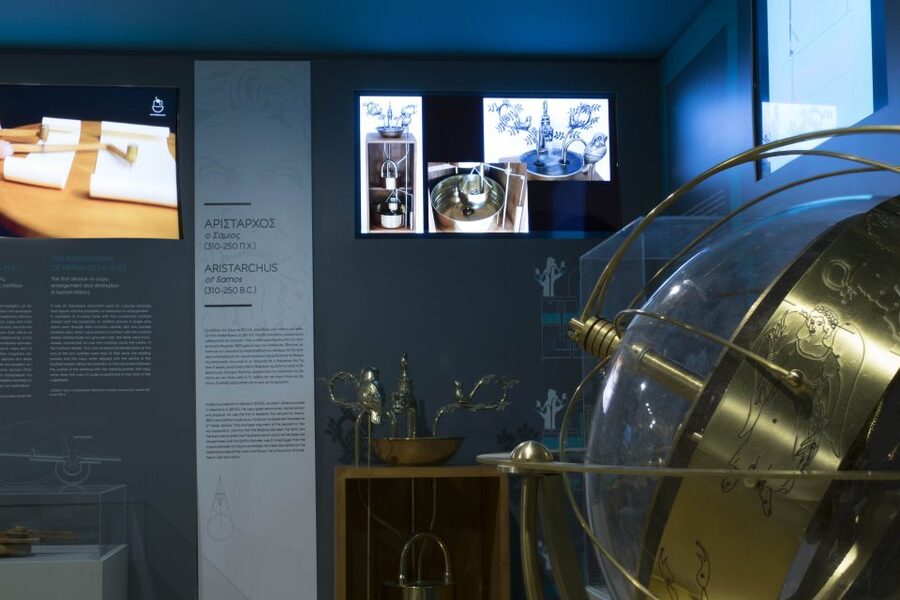
That range of material is helpful because the inventions can be hard to grasp through text alone. A large diagram may show the path of water or the relationship between gears. A photograph can place a model in context. Video and animation can show a process that would be difficult to follow while looking at a stationary reconstruction.
There are also projection stations with videos and animations, along with documentaries in which the exhibitor explains the function and use of the mechanisms. Since there is no guided tour included, these resources fill an important role. You can learn at your own speed without needing to coordinate with a group.
The English host or greeter can help with the basic visit, but the experience is primarily self-directed. If you want a personal conversation about every invention, this may feel less satisfying than a tour with a dedicated guide. If you like choosing your own pace, the format works well.
How much time and money should you allow?
The ticket costs $7.90 per person and is valid for one day. That is a modest price for a central Athens museum with around 100 operating models and a large amount of explanatory material.
The value depends on how you visit. A quick pass through the rooms may not feel like much for the money, especially if you skip the diagrams and videos. A slower visit, with time spent operating mechanisms and watching the demonstrations, makes better use of the ticket.
The activity does not state a fixed visit length, so you should not build your entire day around a precise end time. Check the available starting times and allow enough flexibility to stop at the displays that interest you. The central location makes it easy to place the museum between other Athens plans.
The ticket includes museum entry only. A guided tour is not included, so the price covers access to the collection and its self-guided learning material rather than personal instruction.
You can reserve now and pay later, which is useful if your Athens schedule is still changing. Free cancellation is available up to 24 hours in advance for a full refund. Those terms reduce the risk of fitting the museum into a busy city itinerary.
Who will get the most from this visit?
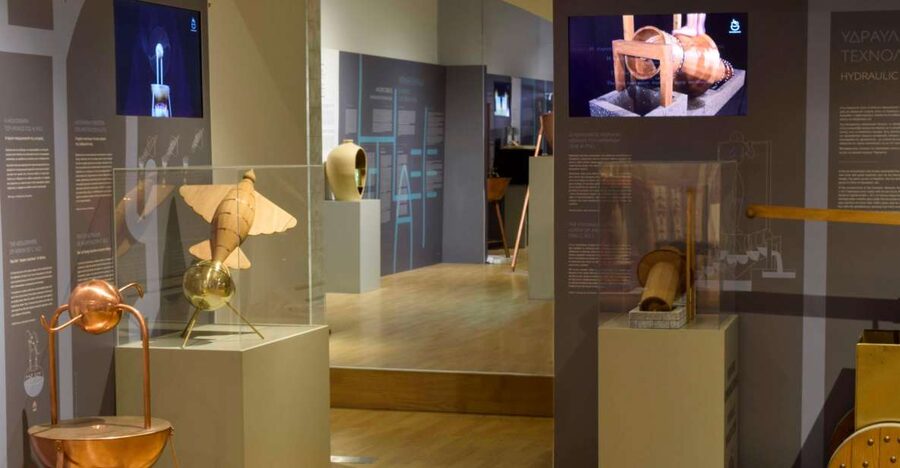
I would recommend the museum to anyone curious about how machines work, especially families, students, and adults who enjoy science or engineering. The interactive displays give children something to do, while the historical context gives adults more to think about than a simple button-pushing attraction.
It also suits you if you have already visited the Acropolis and want a different view of ancient Greece. The museum shifts attention from art and architecture to invention and practical reasoning.
The experience may be less appealing if you want a conventional guided tour or a large archaeological collection filled with original artifacts. Much of what you see here consists of operating models and explanatory displays. The purpose is to demonstrate ideas and mechanisms, not to present a traditional excavation museum.
The English material makes the visit accessible to international visitors. Wheelchair access is available, another practical advantage for people who need an accessible museum setting.
A sensible way to visit the collection
Start with the Antikythera mechanism, then move through the displays that interest you most. After that, return to any interactive models you skipped on the first pass.
Use the diagrams before trying to decide if a model is impressive. Ancient machines can look simple until you understand the problem they solve. A small change in gear size, water flow, or mechanical timing may be the whole point.
The projection stations are worth including because they show how the mechanisms function. Static models can leave you guessing, while animation and demonstration help explain the sequence of movements.
Keep your visit flexible. Since the ticket is valid for one day and the museum is close to Syntagma, you can combine it with nearby sightseeing rather than treating it as a distant excursion. Just remember that food and drinks are not permitted inside.
Should you book the Kotsanas Museum ticket?
Book it if you want an affordable, central Athens stop with hands-on technology, clear English information, and something different from the city’s major archaeological sites. The Antikythera mechanism, hydraulic clock, robot-servant, and mechanical theater models give the visit a clear focus.
Think twice if you need a live guide or prefer original ancient objects to working reconstructions. The museum’s strength is explanation through models and movement.
For $7.90, the ticket offers good value when you take time to read, watch, and operate the exhibits. Its 4.9 rating from 26 reviews also signals strong satisfaction, but the best reason to go is simple: this is one of the few Athens visits where ancient technology becomes something you can see in motion and, in several cases, operate yourself.
FAQ
Where is the Kotsanas Museum of Ancient Greek Technology?
The museum is at Pindarou 6, Athens 106 71, Greece. It is about a five-minute walk from Syntagma Metro Station.
How much does admission cost?
The ticket costs $7.90 per person.
What does the ticket include?
The ticket includes entry to the museum. A guided tour is not included.
Is the visit guided?
No. The ticket does not include a guided tour. You can use the English labels, diagrams, videos, animations, and documentaries to explore the exhibits independently.
Is English available at the museum?
Yes. The host or greeter is listed as English-speaking, and the museum provides explanatory audio-visual material in English and Greek.
How long is the ticket valid?
The ticket is valid for one day. Available starting times should be checked when booking.
Can I operate any of the exhibits?
Yes. Many of the exhibits are interactive, and you can use selected mechanisms with your own hands.
Is the museum wheelchair accessible?
Yes. The activity is listed as wheelchair accessible.
Can I cancel the booking?
Yes. You can cancel up to 24 hours in advance for a full refund.
Are food and drinks allowed inside?
No. Food and drinks are not allowed inside the museum.
Just added around Greece
- Olous – Guided Snorkelling Excursion to Discover Olous Sunken Ancient City★ 4.5 · 31 reviews
- WWII – The Battle of Crete Day Tour★ 5.0 · 103 reviews
- Heraklion Highlights: Knossos, Museum & Historic City Drive★ 5.0 · 64 reviews
- Knossos & Archaeological Museum Shared Guided Tour from Chania★ 5.0 · 41 reviews
- Chania’s Clash of Empires: A Self-Guided Audio Tour★ 4.5 · 28 reviews
- Ancient Corinth Private Tour from Corinth★ 5.0 · 56 reviews
- Epidavros sea kayak at the Ancient sunken city tour, small ancient theater★ 5.0 · 96 reviews
- Small-group Corfu Town Historical Walking Tour★ 5.0 · 39 reviews
Greece History Tours, compared.

Athens: Acropolis & up to 5 Archaeological Sites Combo Pass
Read our review →
Athens: National Archaeological Museum Ticket & Audio Guide
Read our review →
Mykonos Town: Archaeological Site of Delos Guided Day Trip
Read our review →
Historical Delphi One Day Tour with Arachova Stop & Expert Guide
Read our review →
From Athens: Ancient Corinth Day Trip with Canal & VR Guide
Read our review →
Historic Athens: Small Group Electric Bike Tour
Read our review →
Acropolis, Parthenon & Athens Old City Heritage Walking Tour
Read our review →Browse the lists this tour appears in