
Review · DUBLIN
Celtic Boyne Valley & Ancient Sites Day Tour From Dublin
The oldest stop here is not a castle. It is Loughcrew Cairns, where carved stones and passage tombs date back roughly 5,000 to 6,000 years. Add the Hill of Tara, Trim Castle, and Fore Abbey, and you get a full day of Irish history without renting a car.
I like the mix of famous and quieter places, especially the Hill of Tara and the climb to Loughcrew. Guides such as Flann, Alex, Barry, and Philip have been praised for clear stories, humor, and patience. The main drawback is the packed schedule, with a whiskey stop and lunch taking time away from Trim Castle or Fore Abbey.
Key points to know before booking
- Loughcrew requires a real uphill walk: The path can be steep, wet, windy, and slippery, especially on the way back down.
- The Hill of Tara offers ancient Ireland in one wide view: You see the Coronation Stone, An Forradh, and the setting once linked with Ireland’s High Kings.
- Trim Castle is the grand medieval contrast: It is Ireland’s largest Anglo-Norman castle, built in the 1170s.
- Fore Abbey gives the day a quieter finish: Its ruins include Saint Fechin’s Church, dating to about 900 AD.
- Lunch and castle entry cost extra: You should budget for both and expect the lunch stop to take a substantial part of the afternoon.
- The bus ride is part of the deal: Round-trip transport, air conditioning, and some buses with Wi-Fi and USB ports make a long day easier.
What this Boyne Valley day trip really offers
This is a history-heavy day in County Meath, not a tour built around dramatic coastal scenery. The Boyne Valley is about ancient ritual sites, royal ceremony, medieval power, monastic life, and the Irish countryside between them.
You leave Dublin at 8:00 a.m. from the Molly Malone statue on Suffolk Street. Arrive at least 10 minutes early. The group can be as large as 55 people, though some departures use a smaller bus with a little more room and easier movement.
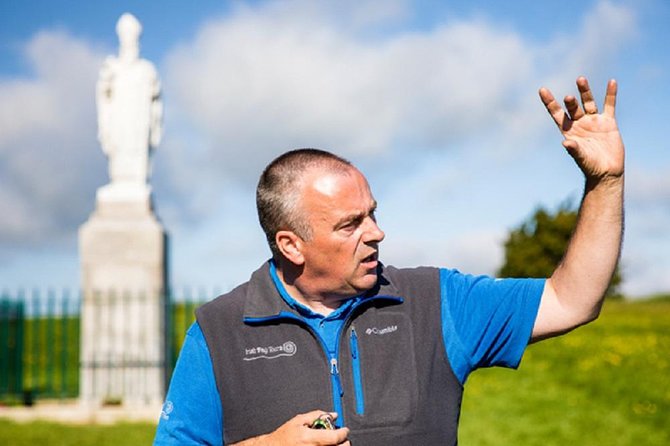
The drive north gives your guide time to set the stage. Guides have included Flann, Alex, Barry, Matthew, Philip, Alec, and John. The best guides add folklore, local stories, and useful context instead of simply pointing at a ruin and naming it. Flann in particular has been praised for combining history with humor and for helping the group stay on schedule.
This is a long day, about 10 hours, with several walks and stops. You will have breaks at service stations for toilets and food, but this is not a sit-back-and-watch-the-country tour. Bring good shoes, rain protection, and enough energy for a climb.
More Ancient History Tours in Dublin:
- From Dublin: Celtic Boyne Valley and Ancient Sites Tour
★ 4.5 · 618 reviews - Pompeii: Entry Ticket and Guided Tour with an Archaeologist
★ 4.8 · 19,459 reviews - Athens: Acropolis & up to 5 Archaeological Sites Combo Pass
★ 4.2 · 13,904 reviews
Hill of Tara and the old royal center
The first major stop is the Hill of Tara, once associated with Ireland’s High Kings. The site is open ground rather than a preserved palace. Its appeal comes from the setting and the traces of ceremonial use spread across the hill.
You will see the Coronation Stone and the An Forradh monument, along with broad views over the Boyne Valley. Your guide explains why Tara mattered and helps connect the grassy mounds with the political and religious life of ancient Ireland.
Allow about an hour here. The walk is not described as the hardest part of the day, but the ground can be uneven and weather can change quickly. The hill is exposed, so wind and rain can make a short visit feel less comfortable than the distance suggests.
I like Tara early in the itinerary. It gives you a sense of place before the day moves through castles, tombs, and monastic ruins. You are not just collecting old sites. You are seeing how different periods used the same region.
Trim Castle brings medieval Ireland into view
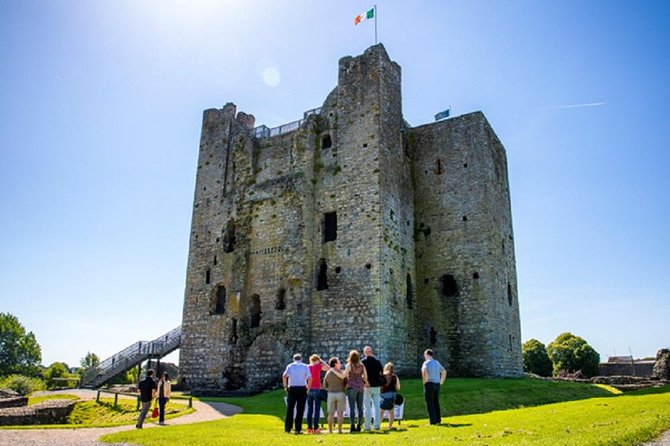
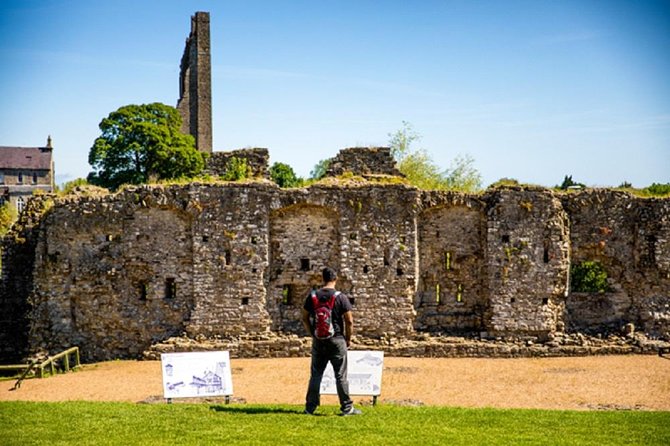
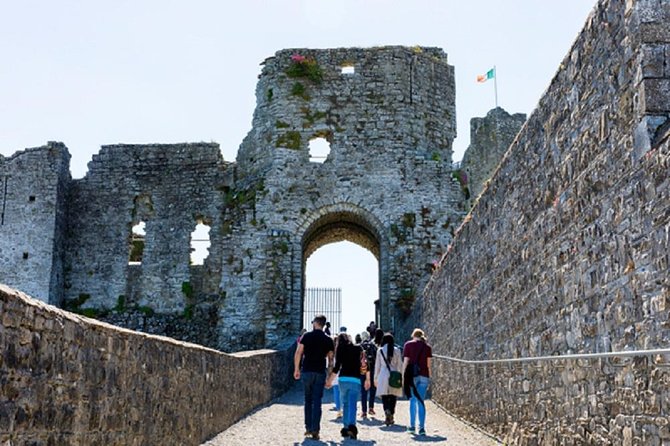
From Tara, the coach continues to Trim, a pleasant town on the River Boyne. Trim Castle is the largest Anglo-Norman castle in Ireland, built in the 1170s. Its massive central keep and broad grounds give you a much stronger sense of medieval power than a small ruined tower would.
You have time to walk around the grounds and take photographs, while the guide explains the castle and the town. The scheduled visit lasts about 70 minutes, which is enough for a good look but not enough for an unhurried exploration of every corner.
There is an important cost detail here. Entry to Trim Castle is listed as extra, even though the stop itself is part of the day. Check the current admission arrangement when booking and carry money for it. The castle is one of the day’s most substantial sights, so I would not skip it simply to save a modest additional fee.
Several people would prefer more time at Trim and less time at the distillery later. That is a fair criticism if medieval buildings are your main interest. Still, the castle works well in the sequence: Tara shows ancient ceremony, then Trim shows Norman military control.
Loughcrew Cairns and the climb worth making
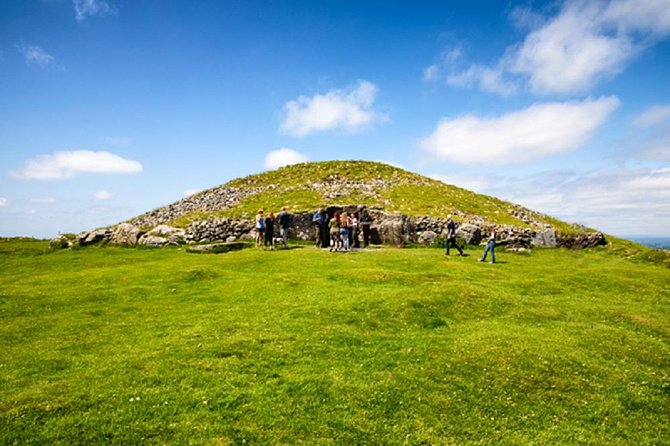
Loughcrew is the most unusual stop for many people. The cairns are Neolithic passage tombs, more than 5,000 years old, with carved stones and rock art inside. The site offers a direct look at a period that predates written Irish history by thousands of years.
The price of admission here is paid through the tour, but the physical price is the climb. The path rises over grass and can become slippery after rain. Expect a steep walk uphill, followed by an equally cautious descent. Some people may decide not to continue all the way to the top.
Wear shoes with a firm grip. Bring a waterproof jacket, and do not rely on an umbrella because strong wind can make one more trouble than help. The hilltop views reward the effort, but this is not a quick photo stop from beside the bus.
Inside the passage tomb, your guide helps explain the markings and the purpose of the structure. The space is old, narrow, and atmospheric, but you should not expect a large museum-style presentation. The value is in being near the stones and seeing the carved designs in their original setting.
Lunch follows at a nearby restaurant. It is not included, and the timing can feel disorganized if many people order at once. Sandwiches may be faster than soup, and guides such as Flann have helped by calling ahead or placing orders early. Ask about the quickest option if you want more time at the next stops.
More History Tours in Dublin:
- Dublin Historical Centre Food Tour with 8 Food Tastings & Drinks
★ 5.0 · 1,718 reviews - 2-Hour Historical Walking Tour from Dublin
★ 5.0 · 875 reviews - Historical 2-Hour Guided Walking Tour of Dublin
★ 4.7 · 865 reviews - Dublin to Cork, Blarney Castle & Cóbh Heritage Centre by train
★ 4.5 · 510 reviews
Fore Distillery changes the tone of the day
The visit to Fore Distillery shifts from ancient stones to modern craft and local whiskey. You receive a tasting and a presentation about distilling at the Fore Valley site. The stop is listed at about 25 minutes in the basic schedule, although some departures have spent much longer here when lunch and the whiskey talk were combined.
If you enjoy whiskey, this can be a pleasant change of pace. It gives you a look at a small local business and adds a living, working part of Ireland to a day otherwise focused on ruins.
If you do not drink, the tasting is optional in practical terms, and the history of whiskey may be the main benefit. Several people would rather have had more time at Trim Castle or Fore Abbey. The distillery does not connect as neatly to the ancient-sites theme as the other stops.
Lunch may also be available at the Barrel & Bean Café, but it is not included in the tour price. Ask about the meal timing before ordering. The stop can feel rushed when service is slow, or too long when the presentation runs over. This is the least predictable part of the day.
Fore Abbey and a quieter final ruin
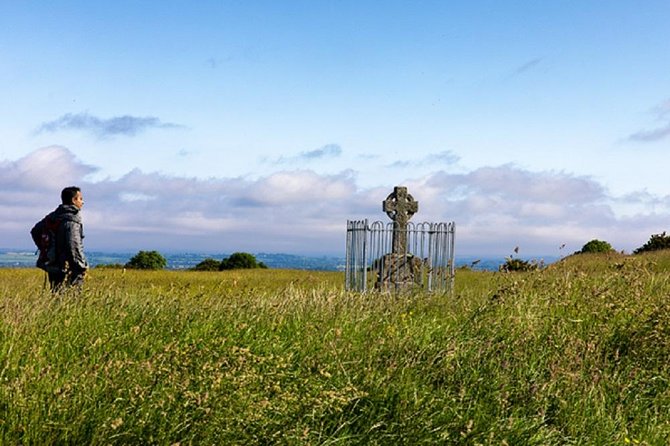
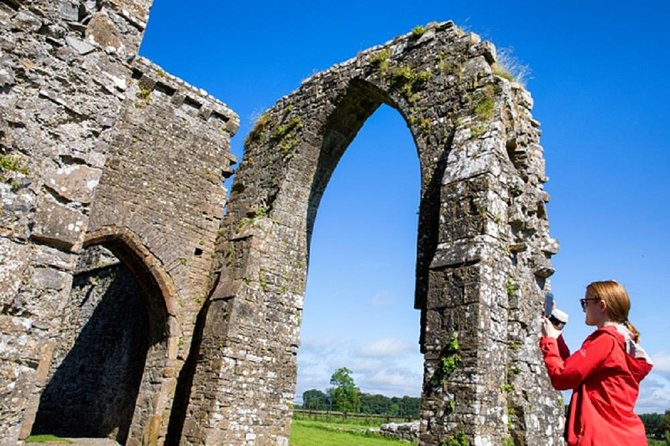
Fore Abbey is the final major stop. Saint Fechin founded a Christian monastery here in the seventh century. At its height, the settlement was home to about 300 monks and was destroyed 12 times.
The ruins include Saint Fechin’s Church, dating to around 900 AD. You have about 45 minutes at the abbey, though the wider Fore stop can occupy much more time when the village and distillery are combined.
The abbey itself is compact. You can explore the ruins, take photographs, and listen to the guide explain the site. Some people may find the surrounding village less compelling after the main ruins are seen, especially if they expected a longer guided visit inside a major complex.
I would still keep Fore on the itinerary. After the crowds and scale of Trim, the abbey provides a quieter look at Irish religious life. If you want a fast, efficient tour with a major attraction at every stop, the extra village time may test your patience. If you like old stonework and open-air ruins, it gives the day a gentle finish.
Guides make a large difference
This tour depends heavily on the person behind the wheel and microphone. Flann has been praised for his history, warmth, timing, and care with older people. Alex has been described as a strong storyteller, with useful information about Irish folklore and local places. Barry, Matthew, Alec, John, and Philip have also received praise for humor, patience, and clear explanations.
That praise is worth taking seriously because the sites are not all self-explanatory. Tara is mostly grassy earthworks. Loughcrew is a bare hill with ancient stones. Fore Abbey is a ruin. Without good commentary, the day can feel like a series of short walks between unrelated stops.
There have also been serious complaints about poor guiding, lateness, and unprofessional behavior on one departure. Another delayed start meant less time at certain sites. These problems do not describe every departure, but they show how much the experience can vary.
The tour company may use a driver-guide or bring in another guide. You cannot choose a specific person when booking. The best approach is to judge the day by the itinerary and the value of the sites, while understanding that the guide has an unusually large effect on the result.
Walking, weather, food, and bus comfort
This is a full outdoor day in Ireland. You should be ready for wet grass, steep slopes, wind, mud, and sudden changes in weather. The Loughcrew climb is the clearest physical challenge, but Tara and Fore also involve walking over open or uneven ground.
Good walking shoes matter more than stylish clothes. Bring a waterproof layer, warm clothing, and a small snack for the coach. Service-station breaks are provided, and you can buy food and use the toilets, but breakfast is your responsibility before departure.
The bus is air-conditioned, and some vehicles have Wi-Fi and USB ports. Seats have been described as comfortable on smaller coaches. The maximum group size of 55 means the day can feel busy, especially when everyone gathers for a guided explanation or orders lunch at once.
The frequent breaks are useful. You generally do not go for very long without a chance to stretch or use the toilet. That helps on a 10-hour outing, even though every stop also puts pressure on the schedule.
Is $84.65 a fair price?
At about $84.65 per person, the tour offers good value if you want to combine several Boyne Valley sites without driving. Round-trip transport from central Dublin, a driver-guide, and a full day of sightseeing are included.
The price does not cover lunch or Trim Castle entry. Those extras raise the real cost, so budget beyond the advertised fare. The distillery tasting is part of the program, but the optional café meal remains separate.
You are paying for access to a broad route that would be awkward to arrange by public transport in one day. You also avoid navigating rural roads, finding parking, and working out the order of sites yourself. A private car could give you more freedom, but it would not automatically provide the same context or the convenience of a planned route.
The value is strongest for a first visit to Ireland when you want ancient sites, medieval architecture, and monastic ruins in one day. It is weaker if you dislike group schedules, already have a car, or want long visits at only one or two places.
Who should book this day?
I would choose this tour if you like archaeology, ruins, Irish folklore, and countryside walks. It suits people who want more than Dublin but do not want to spend a night outside the capital.
It is also a good option for anyone who appreciates frequent stops and does not mind a busy itinerary. The mix of ancient tombs, a Norman castle, a monastery, and a distillery gives you several different kinds of Irish history.
I would hesitate if you have trouble with steep or slippery paths. The Loughcrew climb is not optional in spirit, even if you can stop partway. I would also hesitate if you want a relaxed meal or a carefully paced castle visit, since the lunch and distillery timing can take longer than expected.
The cancellation terms are practical: you can cancel for a full refund up to 24 hours before the start time. Changes made within 24 hours are not accepted, and a minimum group size applies.
Should you book the Celtic Boyne Valley tour?
Book it if you want a broad, practical introduction to the Boyne Valley and are willing to walk in poor weather. Loughcrew Cairns and Tara are the strongest reasons to go, while Trim Castle and Fore Abbey add useful medieval and monastic contrast.
Skip it if you want dramatic coastal scenery, a slow lunch, or a tightly focused castle tour. The distillery may feel like a detour, and the quality of the day depends heavily on the guide.
For most active visitors with one free day from Dublin, I think the tour offers solid value. Bring proper shoes, arrive early at the Molly Malone statue, budget for lunch and castle entry, and treat the schedule as a full day rather than a casual outing.
FAQ
Where does the tour start?
It starts at the Molly Malone statue on Suffolk Street, Dublin 2.
What time does the tour depart?
The scheduled start time is 8:00 a.m. You should arrive at least 10 minutes before departure.
How long does the experience last?
The tour lasts about 10 hours and returns to the Molly Malone statue in the evening.
What language is the tour offered in?
The tour is offered in English.
Is transportation included?
Yes. Round-trip transportation from Dublin is included, along with an air-conditioned coach and a driver-guide.
Is lunch included?
No. Lunch is not included. You can buy food at a nearby restaurant or café, and additional food stops are available during the day.
Is Trim Castle admission included?
Entry to Trim Castle is listed as an extra cost. The castle visit itself is part of the route.
How difficult is the walking?
The tour includes considerable walking, with a steep uphill section at Loughcrew Cairns. Paths may be wet, windy, slippery, or uneven.
Can I use Wi-Fi or charge my phone on the bus?
Some buses have Wi-Fi and USB ports. These features are not guaranteed on every vehicle.
Can I cancel for a refund?
You can cancel at least 24 hours before the scheduled start time for a full refund. Cancellations or changes made less than 24 hours in advance are not accepted.
Just added around Dublin
- Wicklow Historic Gaol: 1-Hour Tour★ 4.4 · 56 reviews
- Dublin: LGBT Pride Walking Tour with Queer History★ 5.0 · 24 reviews
- Dublin: Macabre History Walking Tour★ 4.9 · 95 reviews
- Dublin Private Highlights & History of 1916 Easter Rising Tour★ 5.0 · 154 reviews
- Dublin Private Medieval Walking Tour★ 5.0 · 69 reviews
- Dublin Historical Centre Private Food Tour with 8 Food Tastings★ 5.0 · 152 reviews
- The History of Dublin With Locals: 1916 Easter Rising PRIVATE Tour★ 5.0 · 73 reviews
- Walking Tour of Dublin’s Viking/Medieval Quarter with a Viking★ 5.0 · 171 reviews
Dublin History Tours, compared.

Dublin Historical Centre Food Tour with 8 Food Tastings & Drinks
Read our review →

Historical 2-Hour Guided Walking Tour of Dublin
Read our review →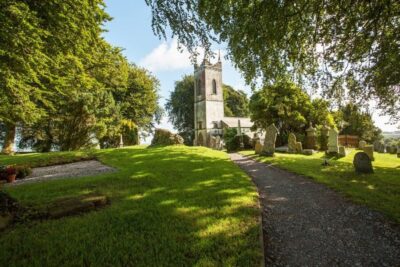
From Dublin: Celtic Boyne Valley and Ancient Sites Tour
Read our review →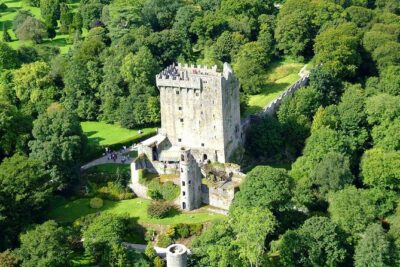
Dublin to Cork, Blarney Castle & Cóbh Heritage Centre by train
Read our review →
Dublin: Jeanie Johnston Tall Ship Irish Famine History Tour
Read our review →

Deliciously Dublin: The Artisan Donut Walking & History Tour
Read our review →Browse the lists this tour appears in