
Review · DUBLIN
Dublin: LGBT Pride Walking Tour with Queer History
Dublin’s queer history is written into ordinary streets, pubs, institutions, and protest sites. This two-hour walk connects those places to the people who challenged Irish law and public opinion, from early pride campaigners to Dr Lydia Foy and Panti Bliss. It is history with a human face, not just a list of dates.
I like the way the tour ties major sights such as the General Post Office and Trinity College to LGBTQ+ stories. I also like the guide-led approach: Helena brings humor, personal warmth, and plenty of room for questions. The main drawback is that two hours can only introduce a large and sometimes painful subject, so you should expect a focused city walk rather than a full survey of Irish queer history.
Key points
- Liberty Hall connects the walk to Ireland’s first pride protest, giving the political story a clear starting point.
- Dr Lydia Foy and the Gender Recognition Act show how legal change affected real lives.
- Trinity College introduces the Sexual Liberation Movement and the fight to question old social rules.
- The George and Diceman’s Corner bring the story into Dublin’s LGBTQ+ social and nightlife world.
- Helena’s style is warm, witty, and personal, with time for questions between stops.
- The tour is two hours, in English, wheelchair accessible, and priced at $27, with the option to cancel up to 24 hours ahead.
Dublin’s queer story begins in the street
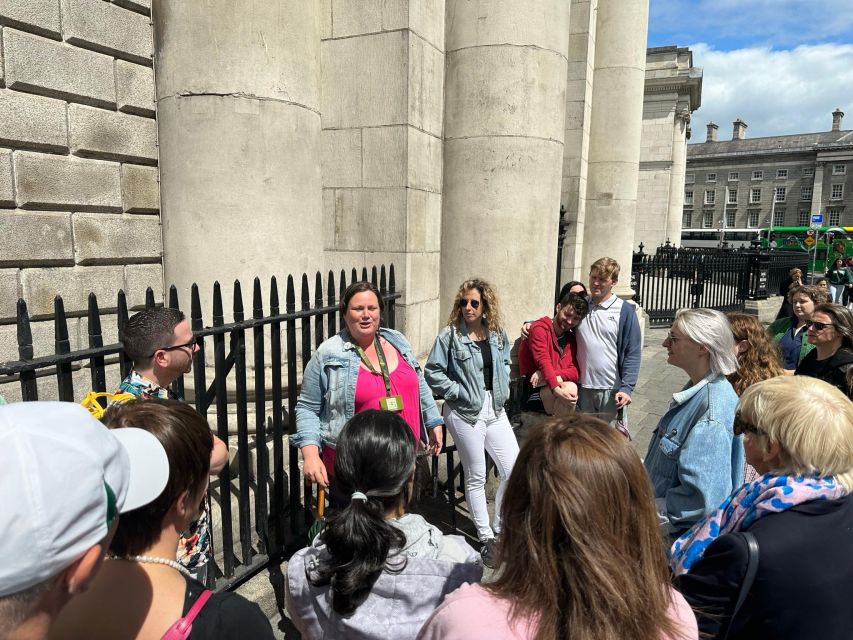
This is not a tour that treats LGBTQ+ history as a side note. It places queer lives within Ireland’s wider political and social changes, including revolution, civil rights, protest, gender recognition, and marriage equality.
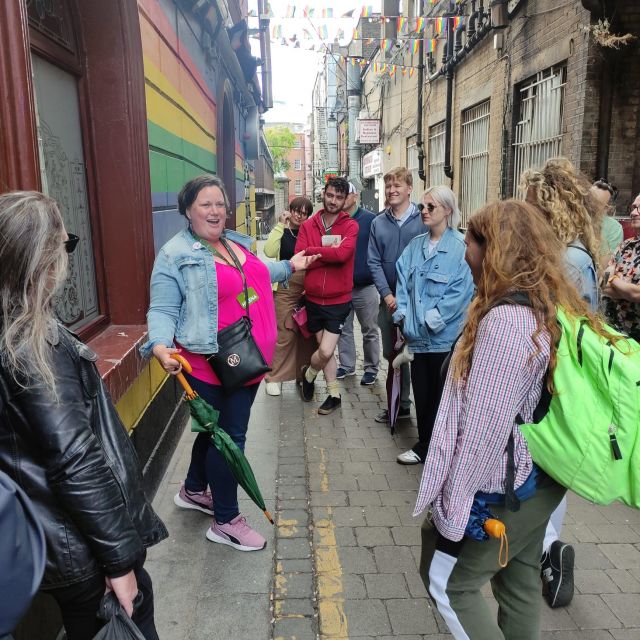
You meet outside the Old Storehouse Bar & Restaurant, where the guide carries a green umbrella. From there, the route moves through central Dublin on foot and returns to the same meeting point. The arrangement is simple, which matters in a city where a clear starting place can save you from a rushed first half-hour.
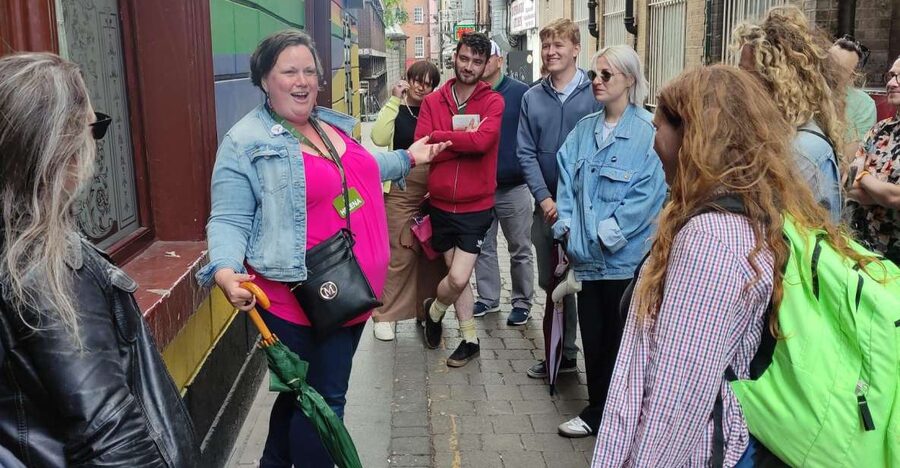
The walk is led in English, and Helena is especially suited to visitors who want more than a formal lecture. Her approach combines facts with personal anecdotes, jokes, and conversation. That makes difficult subjects easier to follow without making light of the harm faced by LGBTQ+ people.
You should wear comfortable shoes. The tour lasts two hours, so it is long enough to build a connected story but short enough to fit neatly into a morning or afternoon of sightseeing.
More History Walking Tours in Ireland
- 2-Hour Historical Walking Tour from Dublin
★ 5.0 · 875 reviews - Historical 2-Hour Guided Walking Tour of Dublin
★ 4.7 · 865 reviews - Dublin’s Haunted History Walking Tour
★ 4.3 · 345 reviews
Liberty Hall and the first pride protest
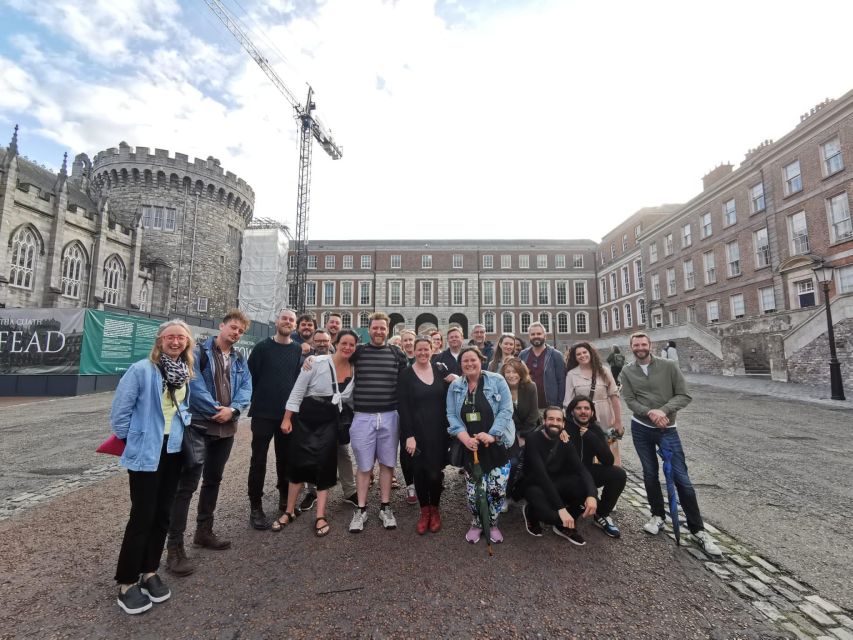
Liberty Hall gives the tour an important early anchor. Here, you hear about the first pride protest and the people who began pushing LGBTQ+ rights into public view.
This stop helps explain why physical places matter. A protest is not only a date in a book. It happens somewhere, in front of an institution, on a street used by ordinary Dubliners. Standing near that setting makes the story easier to picture and shows how public visibility became part of the campaign for equality.
The tour also places queer figures alongside Ireland’s revolutionary past. That is one of its strongest features. You are not given a separate, sealed-off story about LGBTQ+ people. Instead, you see how queer activists and public figures took part in the same arguments about freedom, citizenship, identity, and power that shaped modern Ireland.
The material is not all cheerful. Exclusion and abuse are part of the story, and the walk does not skip those subjects. Still, the direction is hopeful, moving from protest and marginalization toward legal recognition and greater public acceptance.
The General Post Office and Panti Bliss
The General Post Office brings the political story into one of Dublin’s best-known landmarks. You hear about revolutionary queer figures, including Panti Bliss, and consider how public performance and public speech can challenge accepted ideas.
Panti Bliss is particularly useful to the tour because her work links entertainment, activism, and national debate. Her story shows that LGBTQ+ rights have not advanced only through courtrooms or government buildings. Public personalities, performers, and outspoken campaigners also helped change how people talked about sexuality and identity.
For you, this stop adds a familiar Dublin sight to a less familiar subject. If you have already seen the GPO on a standard city tour, the queer history walk gives it another layer. The building is no longer only an emblem of the 1916 Rising. It becomes part of a broader conversation about who gets to speak for Ireland and who gets recognized within it.
The guide’s tone matters here. Helena is described as witty and energetic, but also careful with serious material. That balance keeps the tour engaging without turning painful history into entertainment.
Dr Lydia Foy and the fight for gender recognition
The story of Dr Lydia Foy brings the tour to one of its most important themes: legal recognition of gender identity.
You learn about Foy’s campaign and the Gender Recognition Act, seeing how one person’s long struggle can expose larger problems in law and public administration. This section gives the tour a clear human focus. Legal change may sound abstract, but the story shows how recognition affects a person’s daily life and dignity.
It also reminds you that equality is not a single finish line. Ireland’s progress from exclusion and abuse to marriage equality is significant, but the tour presents social change as an ongoing process rather than a completed victory.
This is the kind of stop that makes the $27 price easier to assess. You are not simply paying for two hours of walking. You are paying for interpretation, context, and a guide who can connect a legal milestone to a personal story. If you already know a great deal about Irish LGBTQ+ history, you may want a more specialist experience. For most visitors, this introduction should add useful context to a first visit to Dublin.
More History Walking Tours in Dublin:
- Deliciously Dublin: The Artisan Donut Walking & History Tour
★ 5.0 · 329 reviews - Walking Tour of Dublin’s Viking/Medieval Quarter with a Viking
★ 5.0 · 171 reviews - Dublin: Macabre History Walking Tour
★ 4.9 · 95 reviews - Dublin Private Medieval Walking Tour
★ 5.0 · 69 reviews
Trinity College and the Sexual Liberation Movement
At Trinity College, the focus shifts toward the Sexual Liberation Movement. The university setting provides a natural place to discuss changing ideas among students, campaigners, and wider Irish society.
The value of this stop is the connection between education and activism. Colleges can become places where old assumptions are challenged, but they also reflect the limits and tensions of the society around them. The tour uses Trinity to show how debates about sexuality entered public discussion and helped push Ireland toward wider civil rights.
This is also a good point to ask questions. Helena’s conversational style gives you space to clarify names, events, or terms as the route continues. Several people who spent time with her found the walk between stops nearly as useful as the formal talks because she kept chatting and adding context.
Do not expect an extended visit inside Trinity College. The point is to pass by the location and connect it to the story. If you want interior access or a campus-focused tour, this experience is not designed for that. Its strength is the wider city route and the links between places.
Hirschfield Centre and community spaces
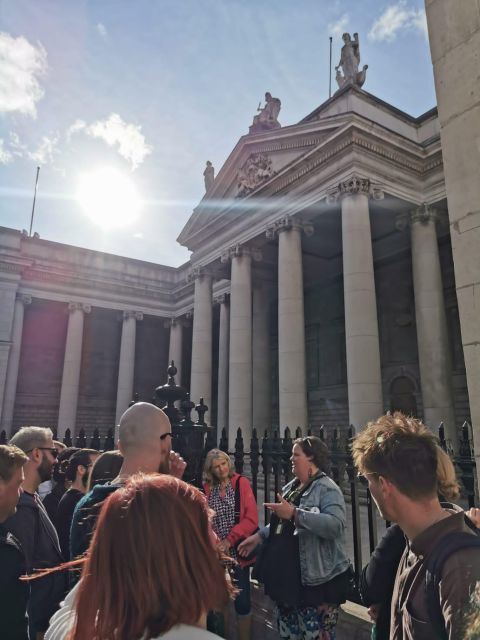
The Hirschfield Centre adds another part of the story: the need for places where LGBTQ+ people could meet, organize, and find support.
A community center can tell you as much about a movement as a famous protest. It points to the everyday work behind political victories, including building networks, sharing information, and creating safer social spaces. This stop helps prevent the tour from becoming a parade of famous names. It brings attention to the institutions and community efforts that made long-term change possible.
You may find this part especially useful if you want to understand how social movements grow. Pride marches and legal campaigns attract public attention, but community spaces help people sustain the work between major events.
The route includes several locations connected to Dublin’s LGBTQ+ life, so the walk feels grounded in the city rather than confined to one political district. You are constantly seeing how public spaces, cultural institutions, and social venues shaped the community’s experience.
Diceman’s Corner and the George
The tour passes Diceman’s Corner and the George, two locations that bring the story into Dublin’s social and nightlife culture.
The George is presented as Ireland’s most iconic LGBTQ+ venue. Its place on the route shows why nightlife matters in queer history. A bar or club can be a place to meet friends, find community, express yourself, and feel visible in a way that may not be possible elsewhere.
Diceman’s Corner adds another point of reference as the walk continues. Together, these stops help balance the political material with the lived experience of the community. You move from laws and protests to the ordinary question of where people gathered and built connections.
These places may appeal most to visitors who want to see present-day Dublin alongside its past. At the same time, this is still a history walk, not a pub crawl. The activity includes a guide and a walking route, but the information provided does not include drinks, entry to venues, or time set aside for nightlife.
That distinction is worth keeping in mind when you book. If you want an evening out, use the tour as an introduction and explore Dublin’s LGBTQ+ venues separately afterward.
From exclusion to marriage equality
The tour’s larger arc runs from exclusion and abuse to marriage equality. That shift is one of the clearest reasons to take the walk early in your Dublin visit.
Ireland’s recent social changes can look simple when reduced to a single headline. The route shows that equality came through many kinds of effort: personal campaigns, public protests, community organizing, legal battles, changing attitudes, and people willing to speak openly.
I appreciate that the experience includes both triumphs and difficulties. A purely celebratory tour would leave out too much. A tour focused only on suffering would miss the humor, courage, and community life that also shaped the movement.
The guide’s job is to keep those parts connected. Helena’s stories are described as funny, engaging, and important, with personal anecdotes adding warmth. That combination should suit you if you want a serious subject presented in a human, accessible way.
What the $27 price gets you
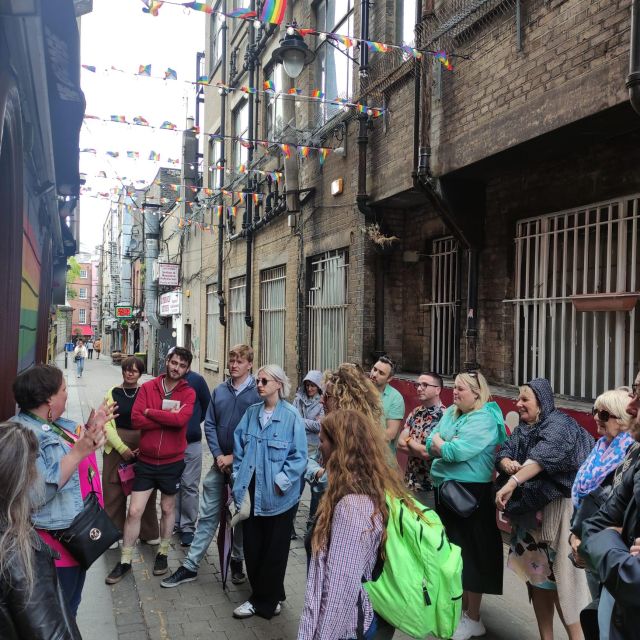
At $27 per person, this is a reasonably priced specialist walking tour in central Dublin. You get two hours with a live English-speaking guide and a route built around a subject that standard city tours often overlook.
The value is strongest if you are interested in Irish social history, LGBTQ+ rights, activism, or contemporary Dublin. It is also a good choice if you have already seen the main landmarks and want to understand them from another angle. The GPO, Trinity College, Liberty Hall, and the George become connected stops rather than isolated sights.
The value is less clear if you want a general introduction to Dublin. This tour does not aim to cover every major attraction, explain the city’s full political history, or provide museum-style displays. You are paying for a focused story and a guide’s interpretation.
The booking terms also make planning easier. You can reserve and pay later, and cancellation is free up to 24 hours before the start time. That flexibility is useful if your Dublin schedule depends on weather or changing plans.
Who should take this walking tour
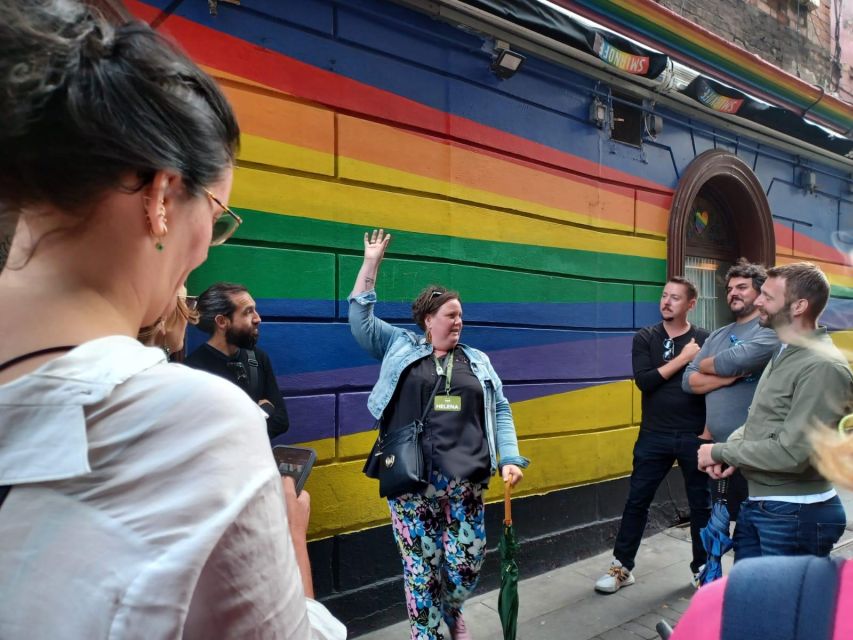
I would recommend it to LGBTQ+ visitors, allies, students of social history, and anyone who wants to understand how modern Ireland changed. It also suits parents and older children who can engage with serious topics. One person took the walk with a teenage son, and the format worked for both of them.
The tour is a good match for curious first-time visitors because it adds meaning to places you may already plan to see. It is also useful for repeat visitors who want a different side of Dublin.
You should choose another activity if you need a very detailed academic history, an indoor museum experience, or a nightlife tour. The route is introductory, and two hours places limits on how far it can go.
The experience is wheelchair accessible, though you should still check the exact route and current starting time when booking if mobility is a major concern. Comfortable shoes are the only listed item to bring.
Should you book it?
Book this tour if you want a focused, personal account of Dublin’s LGBTQ+ past and present, especially if you like learning through streets and landmarks rather than displays behind glass.
The strongest reasons are the carefully chosen stops, the links between queer history and Ireland’s wider political change, and Helena’s warm, funny teaching style. The main caution is scope: this is a two-hour introduction, not the final word on Irish queer history.
For $27, it offers a worthwhile way to see Dublin through stories many standard tours leave out. I would place it early in a city break, then return to the George or other places from the route if you want to explore the present-day scene in more depth.
FAQ
Where does the Dublin LGBT Pride Walking Tour begin?
Meet your guide directly outside the Old Storehouse Bar & Restaurant. Look for someone carrying a green umbrella.
Where does the tour finish?
The walking tour ends back at the meeting point outside the Old Storehouse Bar & Restaurant.
How long does the tour last?
The tour lasts two hours. Starting times vary, so check availability when booking.
What language is the tour in?
The live tour guide speaks English.
How much does the tour cost?
The listed price is $27 per person.
Which Dublin landmarks are included?
The route includes Liberty Hall, the General Post Office, Trinity College, the Hirschfield Centre, Diceman’s Corner, and the George.
Which LGBTQ+ figures are discussed?
The tour includes stories about Dr Lydia Foy, Panti Bliss, and other important figures in Ireland’s LGBTQ+ history.
Is the walking tour wheelchair accessible?
Yes, the activity is listed as wheelchair accessible.
What should I bring?
Bring comfortable shoes for the two-hour city walk.
Can I cancel the booking?
Yes. You can cancel up to 24 hours in advance for a full refund. You can also reserve now and pay later.
Just added around Dublin
- Wicklow Historic Gaol: 1-Hour Tour★ 4.4 · 56 reviews
- Dublin: Macabre History Walking Tour★ 4.9 · 95 reviews
- Dublin Private Highlights & History of 1916 Easter Rising Tour★ 5.0 · 154 reviews
- Dublin Private Medieval Walking Tour★ 5.0 · 69 reviews
- Dublin Historical Centre Private Food Tour with 8 Food Tastings★ 5.0 · 152 reviews
- The History of Dublin With Locals: 1916 Easter Rising PRIVATE Tour★ 5.0 · 73 reviews
- Walking Tour of Dublin’s Viking/Medieval Quarter with a Viking★ 5.0 · 171 reviews
- Dublin’s Haunted History Walking Tour★ 4.3 · 345 reviews
Dublin History Tours, compared.

Dublin Historical Centre Food Tour with 8 Food Tastings & Drinks
Read our review →
Historical 2-Hour Guided Walking Tour of Dublin
Read our review →
Celtic Boyne Valley & Ancient Sites Day Tour From Dublin
Read our review →
From Dublin: Celtic Boyne Valley and Ancient Sites Tour
Read our review →
Dublin to Cork, Blarney Castle & Cóbh Heritage Centre by train
Read our review →
Dublin: Jeanie Johnston Tall Ship Irish Famine History Tour
Read our review →
Browse the lists this tour appears in