
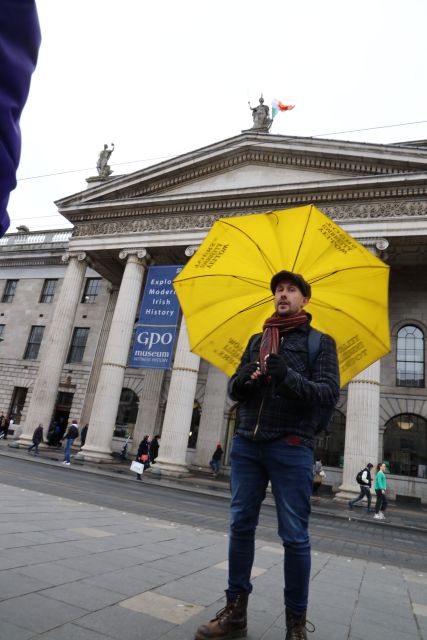
Review · DUBLIN
Dublin: Macabre History Walking Tour
Dublin’s darker past is not locked away in a museum. It is tucked beside old walls, along the river, near the cathedral, and in streets you might otherwise pass without a glance. This two-hour walk brings out the city’s grim tales, from public executions and medieval quarantines to grave robbing and man-eating rats.
I like the focus on places you can easily overlook, and I like the strong storytelling from guides Peter and Rob. Their style is lively, sometimes theatrical, and open to questions. The main consideration is tone: this is an adult tour built around death, crime, disease, and folklore, though one past participant felt it could have been even darker.
Key points
- Cuchulainn’s death: Hear the gruesome final chapter of one of Ireland’s great warrior legends.
- Dublin’s old streets: Cross both sides of the river and visit corners beyond the usual sightseeing route.
- Grave robbing and mummies: Learn how the city’s death trade once operated near the mortuary and old city walls.
- A lively guide: Peter and Rob use humor, drama, and local detail rather than reading a dry history lesson.
- Easy meeting point: Find the guide beside the Spire on O’Connell Street by looking for the yellow umbrella.
- Good value at $19: Two hours of guided walking costs less than many major Dublin attractions and adds context to the city center.
Starting beneath Dublin’s Spire
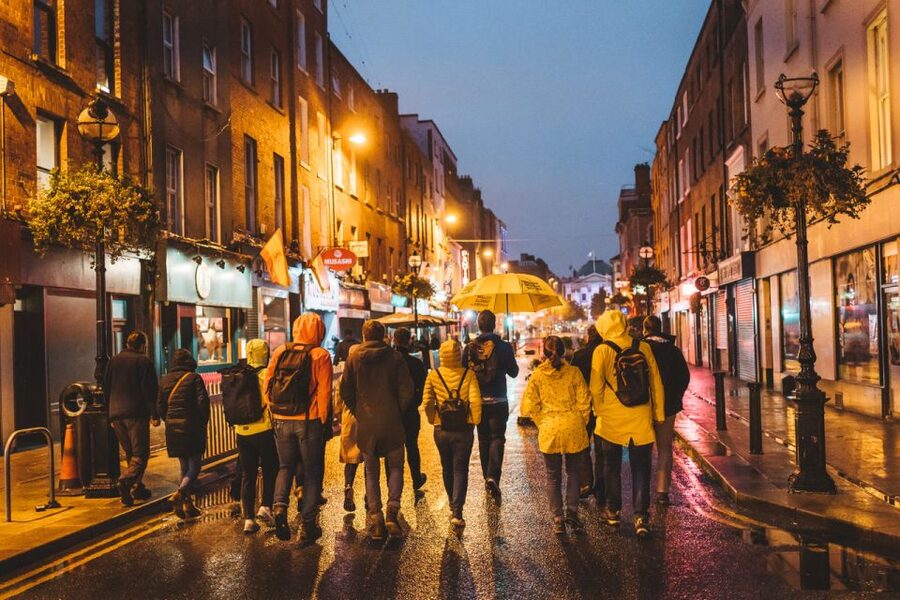
The tour begins beside the Spire, the tall needle in the middle of O’Connell Street. Look for the yellow umbrella. That detail matters in central Dublin, where several walking tours gather in the same broad area, and one participant noted that more than one yellow umbrella may appear.
The meeting point is central and simple to reach, but give yourself a few minutes to identify the right guide. The tour does not include hotel pickup, so you make your own way to O’Connell Street. At the end, you return to the same meeting point, which makes the walk easy to fit around lunch, shopping, or another central Dublin plan.
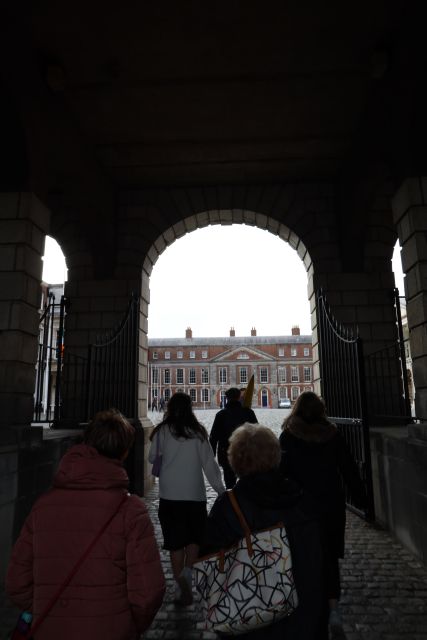
From there, you set off on foot through the old city center. The route explores both sides of the River Liffey, with the emphasis on stories tied to overlooked streets and historic corners rather than on Dublin’s biggest headline sights.
That is the real appeal. You are not simply being shown a famous building and told its construction date. You are being asked to look again at ordinary lanes, walls, riverfront areas, and cathedral surroundings. The macabre stories give these places an extra layer.
More History Walking Tours in Ireland
- 2-Hour Historical Walking Tour from Dublin
★ 5.0 · 875 reviews - Historical 2-Hour Guided Walking Tour of Dublin
★ 4.7 · 865 reviews - Dublin’s Haunted History Walking Tour
★ 4.3 · 345 reviews
Cuchulainn and the violent end of a warrior
One early story concerns the death of Cuchulainn, the mighty warrior from Irish legend. The tale includes a raven perched on his shoulder and the grisly detail of his eyes being pecked out.
This stop gives the tour an important change of pace. The walk is not limited to documented murders and criminal cases. It also reaches into Irish mythology, showing how older stories of warriors, death, ravens, and supernatural forces remain part of the country’s cultural memory.
You should expect storytelling rather than a formal lecture. Peter is described as acting out parts of the tales, while Rob brings a comic touch to the darker material. That approach suits these stories, since a flat recitation would drain much of their impact.
The mythological opening also helps set expectations. Some of the tour concerns historical events, while some material sits closer to folklore, legend, or the kind of tale that has grown in the telling. If you want a strictly academic account with every detail separated into proven fact and local tradition, this may feel loose. If you enjoy seeing how history and storytelling overlap, it works well.
Along the river and through the old city
The walk continues through lesser-known parts of central Dublin and along the riverside. The route covers both banks of the river, so you get a sense of how the city’s old quarters connect rather than staying in one compact tourist zone.
I like this format for a first or second day in Dublin. You remain in the center, yet the tour points out details you might miss on a standard sightseeing loop. Several accounts describe seeing spots they would have walked past without knowing the story behind them.
The route is also active without being a marathon. The stated duration is two hours, and the experience is a walking tour with a live English-speaking guide. You should wear comfortable shoes and allow room for ordinary city walking, although the supplied details describe the activity as wheelchair accessible.
Group size can vary. Some departures have been very small, with only three people or even one booking party, creating an informal, almost private feel. That cannot be promised for every departure, but it is useful to know that a small group can make it easier to ask questions and follow the guide’s storytelling closely.
Disease, quarantine, and the practical horror of old Dublin
The tour covers medieval quarantines, a subject that brings a different kind of darkness to the walk. These stories are less theatrical than a tale of a killer or a public execution, but they explain how disease shaped daily life in earlier Dublin.
This part should appeal to you if you like social history. The focus is not only on famous villains. It is also on how ordinary people faced illness, fear, separation, and death in a city without modern medicine or public health systems.
The macabre theme works best when it explains how the city functioned. A quarantine story can make an old street or civic area feel more understandable, because you begin to see it as a place where authorities tried, successfully or not, to control disease and protect the wider population.
The tour does not present itself as a medical history walk, so you should not book it expecting a detailed study of epidemics. Instead, quarantine forms one part of a wider collection of unsettling stories that move between crime, folklore, illness, and punishment.
More History Walking Tours in Dublin:
- Deliciously Dublin: The Artisan Donut Walking & History Tour
★ 5.0 · 329 reviews - Walking Tour of Dublin’s Viking/Medieval Quarter with a Viking
★ 5.0 · 171 reviews - Dublin Private Medieval Walking Tour
★ 5.0 · 69 reviews - Dublin: LGBT Pride Walking Tour with Queer History
★ 5.0 · 24 reviews
Grave robbers near the city mortuary
One of the most unusual sections covers the thriving nineteenth-century business of grave robbing beside the city mortuary. This is a strong example of what separates the walk from a basic ghost tour.
The story points to the practical economy surrounding death. Bodies were not only mourned. They could become objects of commercial interest, and the location near a mortuary adds a physical setting to the subject. You get a glimpse of how medical demand, poverty, fear, and criminal opportunity could meet in one grim trade.
The tour also brings in stories of mummified corpses near the old city walls. These details connect Dublin’s built remains with the people who once lived, died, and were buried around them.
I find this material more useful than a simple list of spooky claims. It gives you a reason to think about how Dublin treated the dead, how bodies were remembered, and how the city’s old structures preserve traces of uncomfortable practices. The drawback is that the tour’s pace means these subjects are presented as vivid episodes, not as a long historical investigation.
Legless killers and man-eating rats
The old city walls provide the setting for some of the walk’s strangest tales, including stories of a legless serial killer and man-eating rats. These are the hooks most likely to attract people looking for the grisly side of Dublin.
The tour’s humor matters here. Peter is praised for mixing tall tales with historical insight, while Rob is described as personable and entertaining. Their style keeps the walk from becoming relentlessly grim. You may hear a shocking detail, then get a joke or a theatrical explanation that lets the group breathe.
Not every detail will feel equally solid. The experience itself includes a mix of history, legend, and probably-fact or definitely-fun information. That is part of its charm, but you should keep your critical hat on. Treat the stories as an entertaining way to explore Dublin’s past, not as a substitute for a specialist history course.
One useful feature is the chance to ask questions. Peter is repeatedly praised for taking time with questions and slowing down when someone needs clarification. That helps if English is not your first language, though the tour is offered in English only.
Executions, the cathedral, and a fiery ending
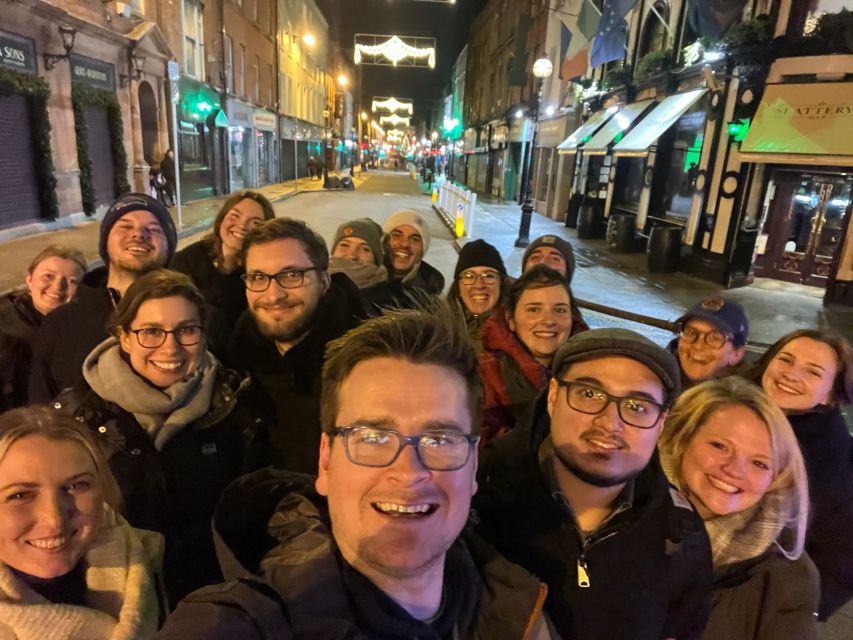
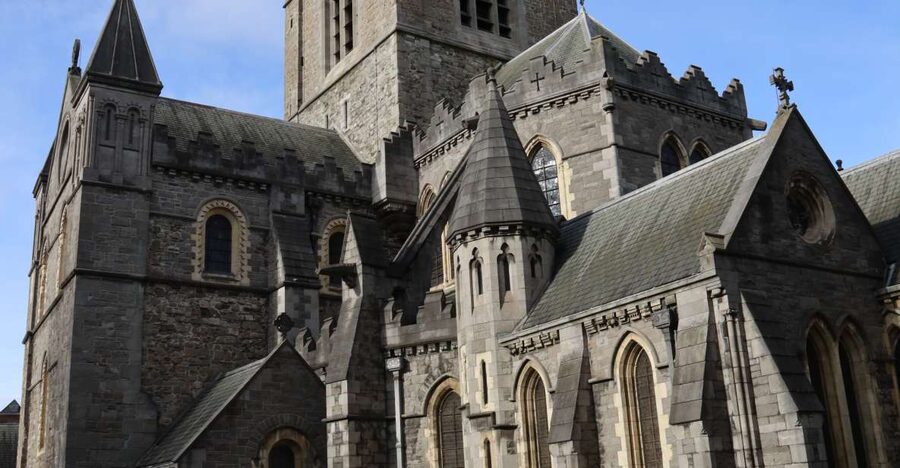
Near the cathedral, the tour reaches the story of Dublin’s most famous brothel keeper and her death by fire at the stake. This gives the walk a dramatic closing chapter, combining crime, public punishment, sexuality, and religious surroundings.
The subject is not treated as a detached list of dates. The guide uses the setting to explain how a notorious figure could become part of Dublin’s popular memory. You finish with a story tied to a recognizable landmark, but with a far less polished version of the city than you might hear on a standard cathedral visit.
Public executions also form part of the tour’s wider theme. These stories show how punishment once worked as public spectacle, not simply as a legal process carried out behind closed doors. That distinction helps explain why certain locations carried fear and notoriety long after the events themselves.
This is also where the tour may feel less macabre than the title suggests. One participant felt the walk was interesting and entertaining but not quite bloody or dark enough. That is a fair warning. The experience deals with disturbing subjects, yet the guide’s humor and broad historical approach keep it from becoming pure horror.
Peter, Rob, and the value of a good storyteller
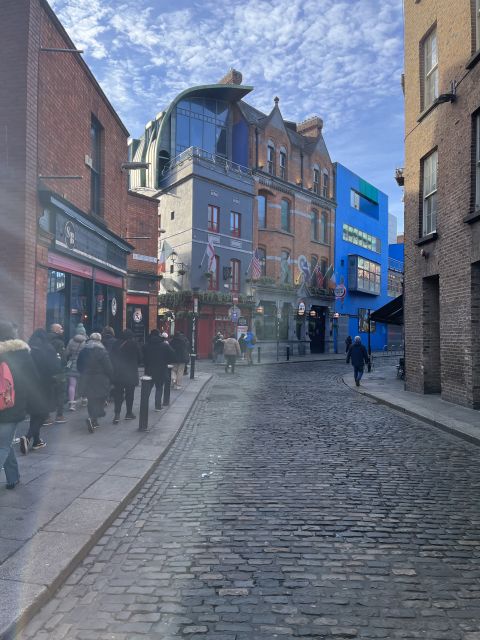
The guide is the most important part of this experience. Peter receives especially strong praise for passion, clear explanations, acting out stories, and answering questions. Rob is also described as an excellent guide with a personable manner and a good command of Dublin’s darker tales.
I would choose this tour for the guide-led experience, not for a checklist of sights. The route matters, but the same streets would be ordinary without someone who can connect a wall, river crossing, alley, or cathedral corner to a memorable story.
The best guides here appear to know when to slow down. One account specifically describes Peter checking that everyone understands and adjusting his pace. That is helpful in a small group, and it makes the tour more comfortable for people who are listening in a second language.
You should also expect a little performance. This is not a silent walk with occasional facts. The guides use drama, humor, and expressive storytelling. If that sounds enjoyable, you are likely to get good value. If you prefer restrained academic commentary, the presentation may feel too playful.
Is two hours and $19 a fair deal?
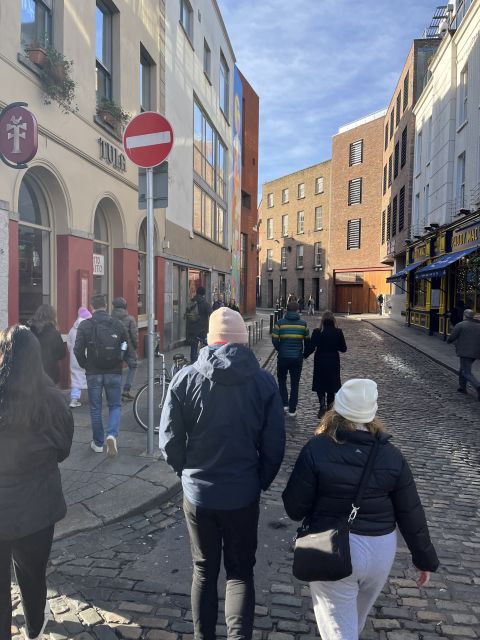
At $19 per person, this is an inexpensive way to spend two hours in central Dublin. The price covers a live guided walk, and the route returns to its starting point. You are paying for interpretation, local stories, and access to places you might not notice on your own, rather than for admission to a major site.
The value is strongest if you enjoy walking and have already seen the obvious city-center landmarks, or if you want an unusual introduction to Dublin early in your visit. You can use the route to get your bearings while learning stories that may change how you see the old streets afterward.
It is less useful if you want a tour built around interiors, museum collections, or carefully documented crime cases. No attraction admissions are included, and there is no hotel transfer. The experience is simple: meet the guide, walk for two hours, listen, ask questions, and return to O’Connell Street.
Flexible booking improves the value. You can reserve now and pay later, and cancellation is free up to 24 hours before the start for a full refund. Check the available starting times when booking, since the exact departure schedule is not fixed in the details provided.
Who should book this macabre Dublin walk?
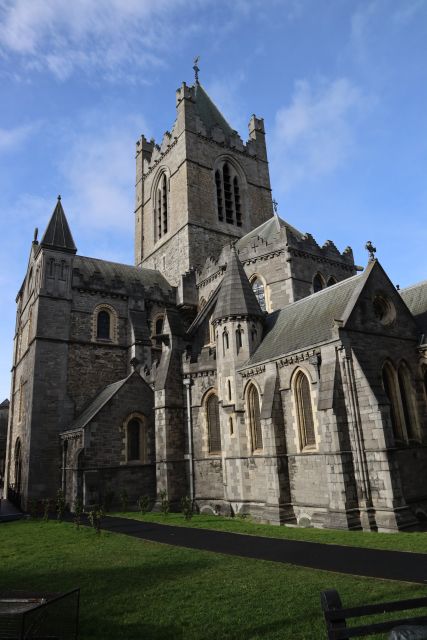
I would recommend it to adults who enjoy local legends, unusual city history, crime stories, old punishments, and a bit of theatrical humor. It also suits solo visitors, couples, and small groups. The walk can feel especially personal when attendance is low, though group size depends on the departure.
It is not suitable for children under 18. The material includes death, grave robbing, disease, executions, murder, and a death by fire, so consider your group’s comfort before booking.
The tour is also a good choice for visitors who have limited time. Two hours gives you a focused experience without taking an entire day, and the central meeting point makes it easy to combine with other Dublin plans.
Should you book it?
Book this tour if you want Dublin’s less polished and more unsettling side, presented by an energetic local guide. Peter and Rob bring humor, drama, and clear explanations to tales that range from Cuchulainn’s death to grave robbers, rats, killers, and public punishment.
Skip it if you want a strictly factual, blood-soaked horror tour or a visit inside historic buildings. The experience blends history with folklore and playful storytelling. At $19, that is a sensible trade for two hours of unusual Dublin context, especially if you like discovering the story behind places you might otherwise walk past.
FAQ
Where does the Dublin Macabre History Walking Tour begin?
It begins beside the Spire, the large needle in the middle of O’Connell Street. Look for the yellow umbrella.
Where does the tour end?
The walk ends back at the meeting point beside the Spire on O’Connell Street.
How long does the tour last?
The tour lasts two hours. Starting times vary, so check availability when booking.
What language is the tour offered in?
The live tour is offered in English.
Is the tour suitable for children?
No. It is not suitable for children under 18 because it covers macabre subjects such as death, murder, grave robbing, disease, and executions.
Is the tour wheelchair accessible?
Yes, the activity is described as wheelchair accessible.
Does the price include hotel pickup?
No. Hotel pickup and drop-off are not included. You must reach the meeting point on O’Connell Street yourself.
What does the $19 price include?
The price includes the walking tour and a live guide. It does not include hotel transportation or separate attraction admissions.
Can I cancel the booking?
Yes. You can cancel up to 24 hours in advance for a full refund. You can also reserve now and pay later.
Just added around Dublin
- Wicklow Historic Gaol: 1-Hour Tour★ 4.4 · 56 reviews
- Dublin: LGBT Pride Walking Tour with Queer History★ 5.0 · 24 reviews
- Dublin Historical Centre Private Food Tour with 8 Food Tastings★ 5.0 · 152 reviews
- The History of Dublin With Locals: 1916 Easter Rising PRIVATE Tour★ 5.0 · 73 reviews
- Dublin Private Highlights & History of 1916 Easter Rising Tour★ 5.0 · 154 reviews
- Dublin Private Medieval Walking Tour★ 5.0 · 69 reviews
- Walking Tour of Dublin’s Viking/Medieval Quarter with a Viking★ 5.0 · 171 reviews
- Dublin’s Haunted History Walking Tour★ 4.3 · 345 reviews
Dublin History Tours, compared.

Dublin Historical Centre Food Tour with 8 Food Tastings & Drinks
Read our review →
Historical 2-Hour Guided Walking Tour of Dublin
Read our review →
Celtic Boyne Valley & Ancient Sites Day Tour From Dublin
Read our review →
From Dublin: Celtic Boyne Valley and Ancient Sites Tour
Read our review →
Dublin to Cork, Blarney Castle & Cóbh Heritage Centre by train
Read our review →
Dublin: Jeanie Johnston Tall Ship Irish Famine History Tour
Read our review →
Browse the lists this tour appears in