
Review · GREECE
From Mykonos: Delos Archaeological Site Guided Evening Tour
Delos is not just a pile of ancient stones. It is a whole abandoned island city, with marble houses, temples, shops, theaters, and mosaics spread across open ground. This evening tour gives you a clear introduction without forcing you to face the worst midday heat. Guides such as Ilona, Eva, Artemis, and Athena-Christiana Loupou have been praised for bringing the ruins and old myths to life.
I especially like the late departure, which brings softer light, fewer people, and a chance to watch the sunset from the boat back to Mykonos. I also like that the 20 euro archaeological site and museum entrance is included in the $93 price. The main drawback is time: Delos is enormous, and the guided visit plus free time gives you a useful overview, not a full exploration.
Key points to know before booking
- The evening light changes the whole visit: You avoid the hottest part of the day and may see the ruins glowing near sunset.
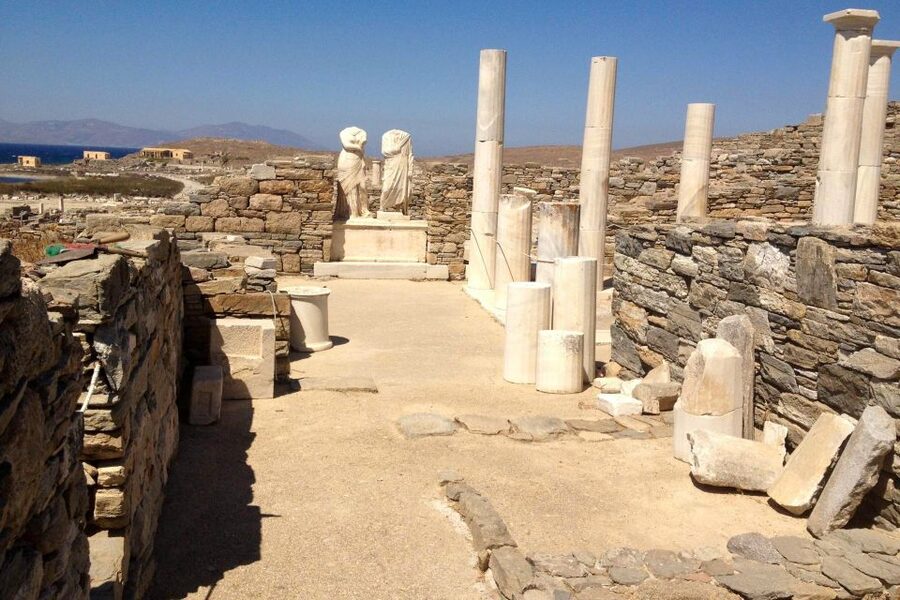
- The House of Dionysus is a highlight: Marble columns, wall paintings, and a striking mosaic show how luxurious Delos once was.
- A guide adds real value: The site has limited explanation on its own, so an informed guide helps you understand what you are seeing.
- The boat can be rough: Wind is common around Mykonos, and motion sickness medicine is worth considering.
- You walk on uneven ground: Wear solid, comfortable shoes and bring water, sun protection, and a hat.
- Free time is limited: You can visit the museum and see more of the island, but not every monument in depth.
Why Delos deserves an evening from Mykonos
Mykonos is famous for whitewashed lanes, beach clubs, and late nights. Delos offers a sharp change of mood. The island was once a major religious center and trading port, but today it has no ordinary town life. You walk through exposed ruins where streets, courtyards, shrines, homes, and public buildings still map out an ancient city.
The setting gives the visit much of its force. Delos is open and sunny, with almost no shade across the archaeological area. An afternoon departure around 5 p.m. makes the walk more pleasant than a late-morning visit. The lower sun also helps the marble, walls, and broken columns look more atmospheric in photographs.
The tour earns its price mainly through interpretation. At $93 per person, it is not a cheap ferry ride, but that fee covers the return boat, site and museum entry worth 20 euros per person, a live guide, and the wireless tour system when conditions allow. If you simply want transportation and a quick look, the cost may feel high. If you want to understand the island instead of photographing unexplained ruins, the guide is the part that makes the money worthwhile.
More Archaeological Site Tours in Greece:
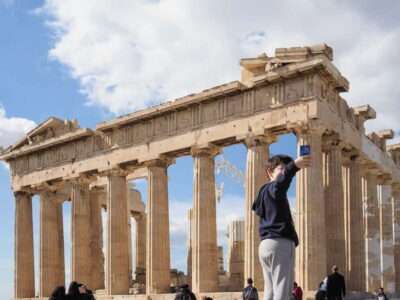
- Athens: Acropolis & up to 5 Archaeological Sites Combo Pass
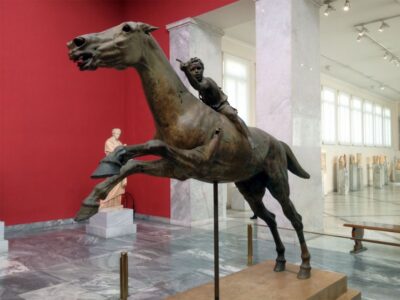
★ 4.2 · 13,904 reviews - Athens: National Archaeological Museum Ticket & Audio Guide
★ 4.3 · 1,330 reviews - Mykonos Town: Archaeological Site of Delos Guided Day Trip
★ 4.6 · 1,296 reviews
The 30-minute boat ride from Mykonos
The trip begins at a meeting point that depends on your booking choice. Some options include a one-way hotel transfer, with pickup usually arranged around 45 minutes to an hour before departure. Check your exact meeting instructions carefully, since the departure point and pickup details vary.
The scheduled crossing takes about 30 minutes each way, though some passengers describe the actual ride as closer to 20 minutes. The boat is practical rather than luxurious. There is indoor seating and limited outside space, and the ride can feel stuffy inside when the open-air area fills up.
Wind is the main variable. On calm days, the crossing is straightforward. On windy days, the sea can be rough enough to make people feel sick, especially on the return. If you are prone to motion sickness, take your usual medicine before boarding rather than waiting for the waves to start. Sitting outside may help, but space can be limited.
The boat ride is also part of the experience. Mykonos fades behind you, and Delos appears as a low, open island rather than a developed resort. On the way back, the evening timing can give you a beautiful sunset over the water. That return view is one of the strongest reasons to choose this departure instead of a morning trip.
Look for the correct boat and waiting area before departure. The meeting arrangements can be confusing, and clearer signs would help. Give yourself extra time at the port so you are not trying to identify the vessel at the last minute.
Walking into the sacred center of Delos
After landing, you receive an introduction to the archaeological area before following the guide through the old city. The walk takes about 90 minutes and focuses on the major monuments. You move along narrow ancient streets, through residential areas, and toward the religious center.
Do not expect a smooth paved promenade. The ground is uneven, though generally flat in the main areas. Good walking shoes matter more than stylish footwear here. The sun can remain strong even in the evening, so pack sunscreen, sunglasses, and a hat. There is little shade, and bottled water or other drinks can be bought on the Delos vessels, but bringing your own water is sensible.
A wireless guide system may be provided to help you hear the explanation. It is free when weather conditions are suitable, but you are responsible for the equipment. Loss or damage carries a 150 euro charge, so keep the device secure.
The guides are the tour’s most praised feature. Ilona has been described as funny, clear, and highly informed. Artemis brought an archaeologist’s enthusiasm to the ruins, while Athena-Christiana Loupou had worked at Delos for five years. Other guides, including Evie, Eva, Celia, and Antonio, have also been singled out for lively and careful presentations.
Guide quality can vary from person to person, as it does on any group tour, but the format gives you access to someone who can explain the island’s purpose, buildings, myths, and daily life. Without that context, many stones look similar. With it, a doorway becomes part of a house, a street becomes a commercial district, and a temple becomes part of a much larger sacred plan.
The House of Dionysus and its remarkable details
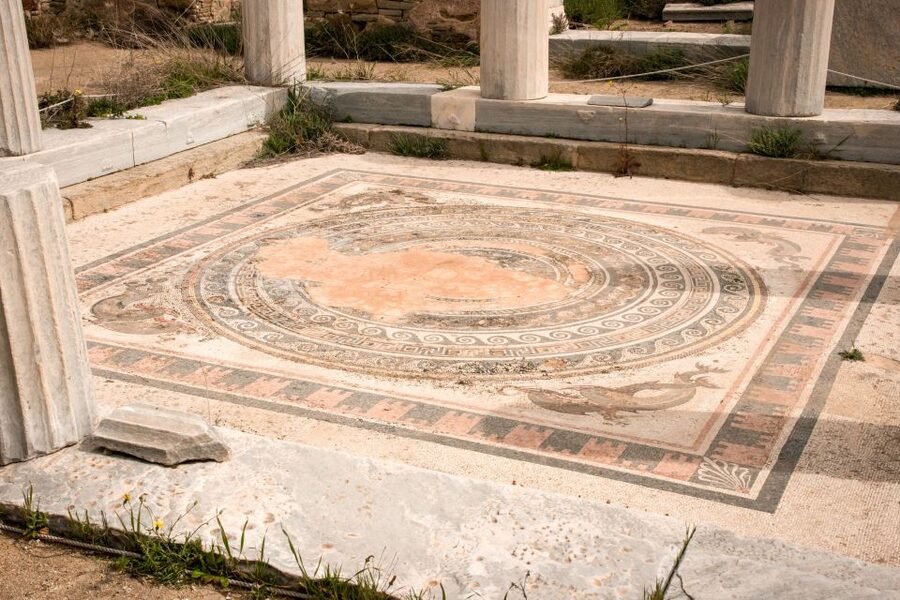
The House of Dionysus is one of the tour’s clearest highlights. This large private residence shows how wealthy people lived on Delos when the island was a thriving center of trade. Its marble columns give an idea of the home’s scale, while the surviving decoration reveals the care that went into its interior.
The mosaics are the real attention grabber. The floors and wall paintings offer more than a pretty photo. They show the level of craftsmanship available in an ancient city where merchants, ship owners, and residents from different parts of the Mediterranean crossed paths.
Your guide should help you notice details you might miss when walking alone. The House of Dionysus is not simply an impressive ruin. It helps connect the public monuments with ordinary domestic life, including how people arranged homes, courtyards, and decorated rooms.
The site’s preservation is uneven, of course. Some structures are little more than foundations, while others retain columns, walls, or floors. That contrast is part of the visit. You are not walking through a restored ancient city. You are reading its remains in place.
More Evening Trips in Greece:
- Charleston Harbor History Day-Time or Sunset Boat Cruise
★ 4.5 · 2,788 reviews - Dubai Evening Heritage Safari by Vintage G Class Al Marmoom Oasis
★ 5.0 · 1,500 reviews - Charleston: Daytime or Sunset Historic Harbor Cruise
★ 4.5 · 1,352 reviews - Buda Castle District Dark History, Legends and Vampire Night Tour
★ 4.5 · 1,240 reviews
The theater, market, and sanctuary zone
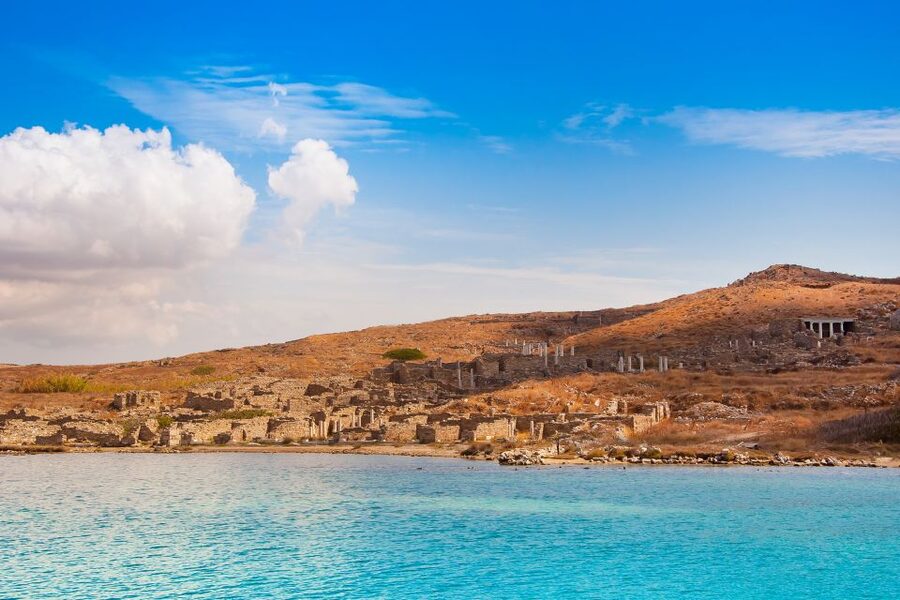
The guided route continues through the urban area to the Theater of Delos. Even in partial ruin, the theater helps you picture the island as a place where people lived, gathered, watched performances, and conducted business. It is a useful counterpoint to the temples because it shows the social side of Delos.
From there, the route follows the main street toward the market and sanctuary zone. The sequence matters. You first see the city as a network of homes and public spaces, then reach the religious center that gave Delos its sacred importance.
Important landmarks include the Stoa of Phillipe, the Propylaia, the Colossus of the Naxians, and the Temple of Apollo. The guide explains how these areas fit together, which is especially helpful when the remains are spread across a wide open site.
The Colossus is not intact, so do not expect a complete statue waiting in place. The Temple of Apollo is also experienced through surviving architectural remains rather than a fully rebuilt monument. The power of the area comes from its scale and setting, plus the knowledge that this was once a major sacred destination.
The tour does not cover every corner of Delos in detail. That is the tradeoff for a manageable evening visit. You see the main urban and sanctuary areas, then have about an hour to choose what matters most to you.
Museum time and free exploration
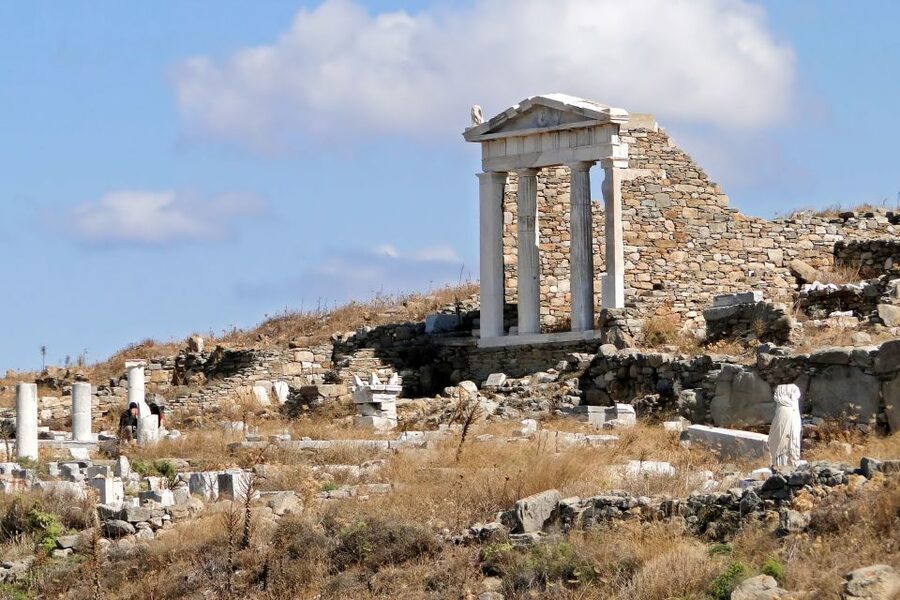
After the guided walk, you have free time to explore for about an hour. The museum is included in the admission and provides a useful second look at objects found on the island. It can help fill in details that are harder to understand from foundations alone.
Plan your free time before you arrive. If the museum is open, go there early enough to avoid rushing. Some past departures have left little time for a relaxed museum visit, and opening conditions can vary. The provided information does not guarantee that every museum area will be open on every date.
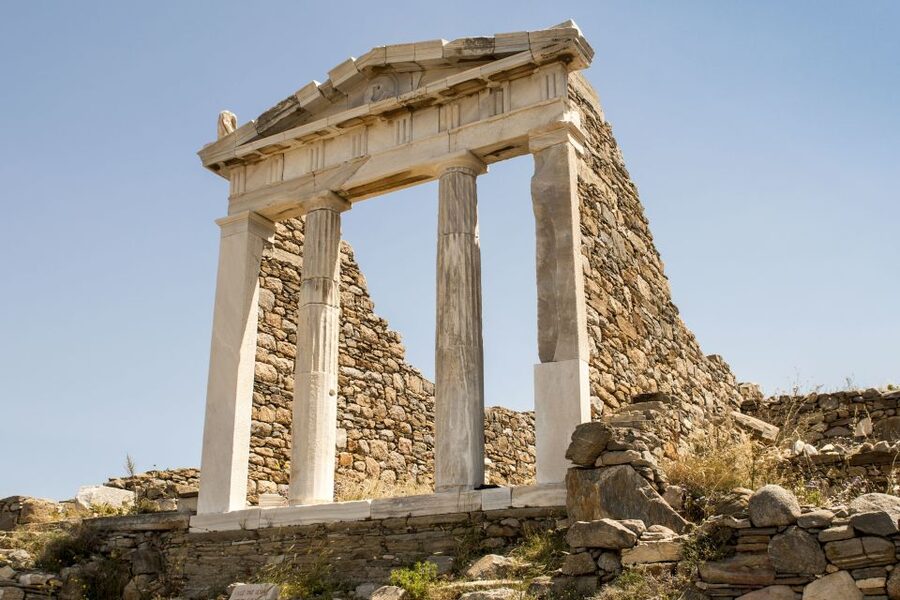
You can also revisit parts of the route or walk toward additional monuments. Depending on the time available, you might see places such as the Temple of Isis or the House of the Dolphins. Some people use the free period for photography, while others prefer to walk farther through the ruins.
Climbing the island’s mountain is not a realistic plan for this short tour unless the guide and schedule specifically allow it. A past itinerary included a climb for a wide view, but the standard structure gives you roughly one hour of personal time. Treat any farther walk as optional, not as something guaranteed.
This is where the tour can feel too short. Delos is large enough to occupy a full day, and you may leave wishing for another hour. Still, the shorter schedule works well if you want the island’s main story without surrendering an entire day on Mykonos.
Group size, languages, and the feel of the visit
The standard tour is a shared group experience, not a private one-on-one walk. A private group option is available if you want more control over pace and questions. The regular group can be large, and keeping everyone together may occasionally slow the walk.
Guiding is offered in English, Spanish, French, and Italian. The wireless device is intended to make the guide easier to hear, though wind can affect the microphone. Bring patience if the sea breeze picks up, and stay close enough to the guide to follow the explanation.
This tour suits adults, couples, solo visitors, and families with older children who can manage an exposed archaeological walk. It is less suitable for very young children who need constant shade or easy entertainment. The ground is uneven, the site is open to the sun, and there are no food facilities on the island itself.
Smoking on the boat can also bother some passengers. The operator may not control every passenger’s behavior, so consider your seating choice if smoke is a concern.
What to bring and what to leave behind
Pack light. Large bags, oversize luggage, pets, alcohol, and drugs are not allowed. A small day bag with the basics is the sensible choice.
Bring:
- Passport or ID card
- Comfortable walking shoes
- Sunglasses and a sun hat
- Sunscreen
- Water
- Motion sickness medicine if you need it
- A face mask or protective covering, if required for your plans
The site is explored on foot, and shade is scarce. Water is especially important during the warmer months, even with the later departure. Also keep your ticket and meeting information handy, since the boat departure and return instructions matter.
The tour has free cancellation up to 24 hours before departure and allows you to reserve now and pay later. The minimum group size is eight participants. If low participation causes cancellation, you should be informed so you can reschedule or receive a refund. If unrelated ferry or cruise disruptions affect other services but the Delos boat runs as planned, this tour does not provide a refund for those outside problems.
Is $93 a fair price for this Delos tour?
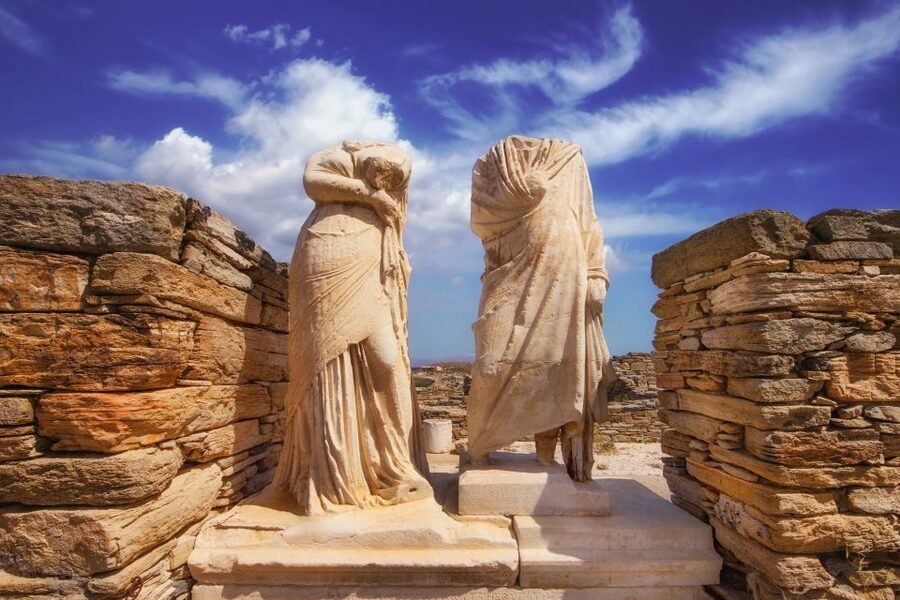
For $93, you are paying for more than the crossing. The boat, archaeological site entrance, museum entrance, guide, and tour equipment are included. The 20 euro admission alone gives the price some substance, while the guide removes the need to work out the site’s story by yourself.
The value is strongest for a first visit. Delos has enough monuments and scattered remains to overwhelm you, especially if you arrive with no background. A strong guide gives you a route, points out the important details, and helps you see the island as a city rather than a collection of fragments.
The value is weaker if you want long, quiet exploration or a full archaeological survey. The 90-minute guided portion and roughly one hour of free time pass quickly. The boat is functional, not luxurious, and rough seas can make the transport uncomfortable.
I would choose this tour for the evening timing, the guide, and the included admission. I would not choose it if your priority is a full day at Delos, extensive mountain walking, or a private pace unless you select the private option.
Should you book this evening visit to Delos?
Yes, if you have at least one free half-day in Mykonos and want to understand why Delos matters. Choose the evening departure for cooler conditions, softer light, fewer crowds, and the possibility of a sunset on the return crossing.
Book with realistic expectations. You will see the major monuments, the House of Dionysus, the theater, the market, the sanctuary zone, and the museum if timing permits. You will not explore every corner of the island.
Take water, sturdy shoes, and a plan for motion sickness. If those small practical points are covered, this is one of the strongest history-focused outings available from Mykonos. The island itself is extraordinary, and the right guide can turn a short visit into a clear, memorable picture of ancient life.
FAQ
How long does the Delos evening tour last?
The activity lasts about 3.5 hours. The schedule includes a roughly 30-minute boat ride to Delos, a 1.5-hour guided tour, about one hour of free time, and a roughly 30-minute return boat ride.
What is included in the $93 price?
The price includes the round-trip boat ticket, archaeological site and museum admission, a tour guide, safety equipment, and a wireless tour guide system when weather conditions allow. A one-way transfer is included only with selected options.
Is hotel pickup included?
Pickup is optional and depends on the booking option. When selected, pickup time depends on your hotel location and is usually arranged about 45 minutes to one hour before departure.
What languages are available?
Guiding is available in English, Spanish, French, and Italian.
Is the tour private?
The standard tour is a shared group experience. A private group option is available when selected during booking.
Is the archaeological museum included?
Yes. Admission to the archaeological site and museum is included in the listed entrance fee. Your free time can be used to visit the museum, depending on opening conditions and the day’s schedule.
Is the boat ride likely to be rough?
Sea conditions vary. Wind can make the ride bumpy, and some people may feel seasick. If you are prone to motion sickness, bring or take your usual medicine before the crossing.
What should I wear for Delos?
Wear comfortable shoes suitable for uneven ground. You should also bring sunglasses, a sun hat, and sunscreen because much of the archaeological site has little shade.
Can I bring a large suitcase?
No. Oversize luggage, large bags, pets, alcohol, and drugs are not allowed.
What happens if the tour is canceled because too few people book?
The minimum number of participants is eight. If low participation causes cancellation, you will be informed so you can reschedule or receive a refund.
Just added around Greece
- Olous – Guided Snorkelling Excursion to Discover Olous Sunken Ancient City★ 4.5 · 31 reviews
- WWII – The Battle of Crete Day Tour★ 5.0 · 103 reviews
- Heraklion Highlights: Knossos, Museum & Historic City Drive★ 5.0 · 64 reviews
- Knossos & Archaeological Museum Shared Guided Tour from Chania★ 5.0 · 41 reviews
- Chania’s Clash of Empires: A Self-Guided Audio Tour★ 4.5 · 28 reviews
- Ancient Corinth Private Tour from Corinth★ 5.0 · 56 reviews
- Epidavros sea kayak at the Ancient sunken city tour, small ancient theater★ 5.0 · 96 reviews
- Small-group Corfu Town Historical Walking Tour★ 5.0 · 39 reviews
Greece History Tours, compared.
Athens: Acropolis & up to 5 Archaeological Sites Combo Pass
Read our review →
Athens: National Archaeological Museum Ticket & Audio Guide
Read our review →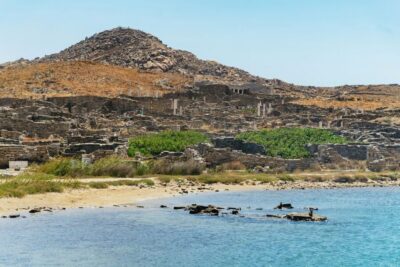
Mykonos Town: Archaeological Site of Delos Guided Day Trip
Read our review →
Historical Delphi One Day Tour with Arachova Stop & Expert Guide
Read our review →
From Athens: Ancient Corinth Day Trip with Canal & VR Guide
Read our review →
Historic Athens: Small Group Electric Bike Tour
Read our review →
Acropolis, Parthenon & Athens Old City Heritage Walking Tour
Read our review →Browse the lists this tour appears in