
Review · NAPLES
From Naples: Ruins of Pompeii
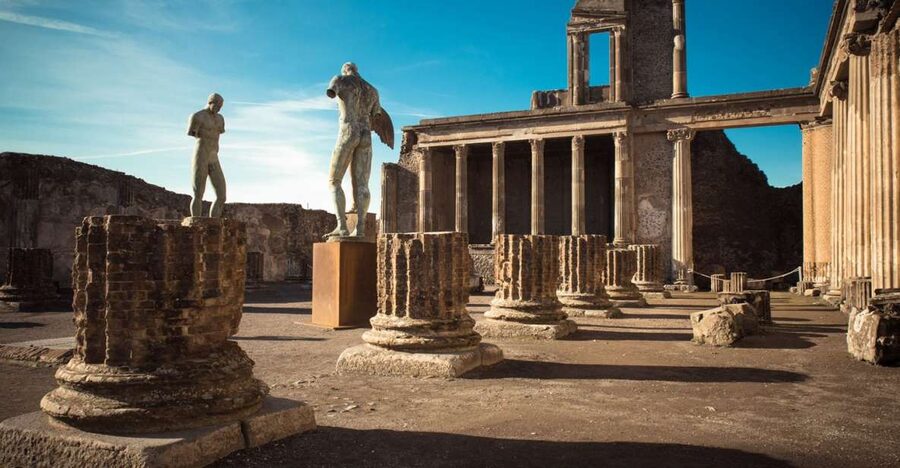
Pompeii is one of Italy’s most powerful sights because it feels less like a museum and more like a city interrupted. You’ll walk past ancient bakeries, shops, bathhouses, and a theater, with Mount Vesuvius looming over the story of the eruption that buried the town in 79 A.D. I like the way this tour turns a huge archaeological site into a manageable two-hour walk, and I like having transport from Naples instead of wrestling with Neapolitan traffic yourself.
The guides are another strong point. Salvatore, Fabio, Maria, Anita, and others are praised for clear explanations, good crowd control, and care in hot weather. The main drawback is time: two hours inside Pompeii is enough for the highlights, but not enough for a thorough look at every street and villa. The journey can also take longer than the advertised 20 minutes each way, especially in traffic.
Key points to know before booking
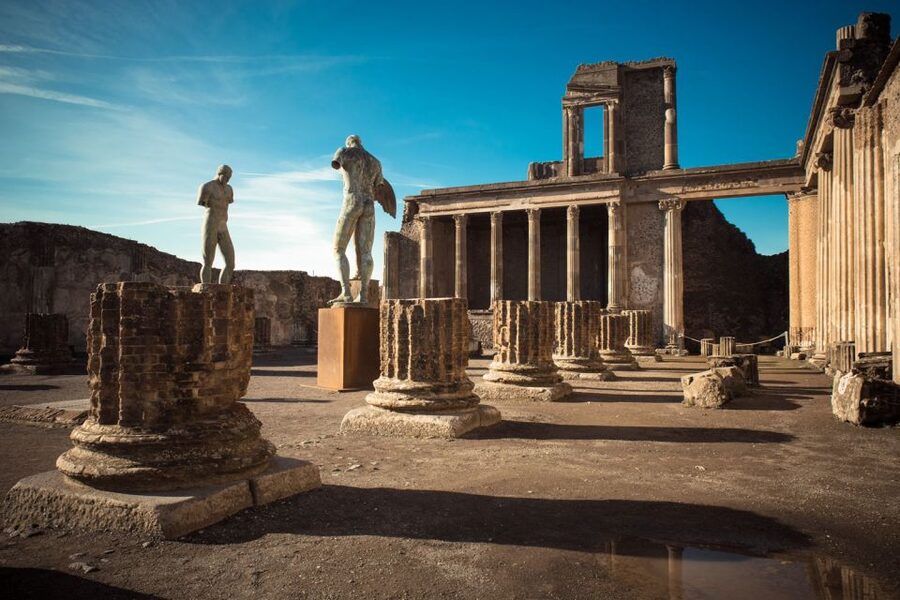
- Pompeii’s everyday life is the focus: See bakeries, shops, pizzerias, public baths, villas, and the forum rather than only grand monuments.
- A guide may not always lead the walk: A live guide is provided when at least six people join the same language group. Otherwise, you receive an audio guide.
- The tour starts at several Naples pickup points: Options include hotels along Lungomare Caracciolo, Molo Beverello, Via Medina, and Piazza Giuseppe Garibaldi.
- The walk can be hot and uneven: Bring comfortable shoes, a hat, and sunscreen. Large bags and luggage are not allowed.
- Transport is convenient but traffic is unpredictable: The advertised transfer is about 20 minutes each way, though the full drive can take considerably longer.
- A cameo and coral stop may be added: If time permits, you may visit a local workshop that explains how coral and shell jewelry is made.
Why Pompeii works so well as a half-day trip
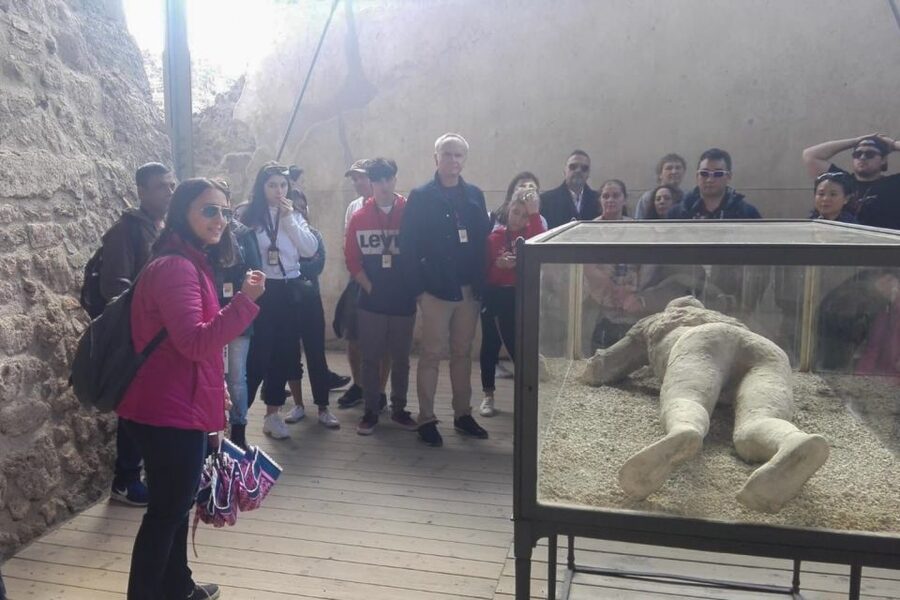
Pompeii gives you something most Roman ruins cannot: a broad picture of ordinary urban life. You are not looking only at columns and fragments. You can follow streets, enter houses, inspect shop counters, and see the remains of bakeries built for daily trade.
The eruption preserved parts of the city under ash and volcanic material for centuries. That does not mean every building is untouched, and some areas may be closed or altered for conservation, but enough remains to make the visit unusually immediate. You can see how public and private life fit together in a Roman town.
I find the guided format useful here because Pompeii is enormous and easy to approach without a plan. A map can show you where the forum is, but it cannot explain why a bakery had a particular layout or how the public baths fitted into Roman routines. A good guide gives the stones a purpose.
The tour price is $59 per person. That is reasonable if you value round-trip transportation, admission when the selected option includes the ticket, and a guided walk. It is less attractive if you want several hours to explore on your own. A separate train journey and entry ticket may give you more freedom, but you would need to arrange the route, find the entrance, and choose your own guide or audio guide.
More Ancient History Tours in Italy
- Herculaneum: Skip-the-Line Guided Tour with Archaeologist
★ 4.8 · 3,439 reviews - Herculaneum Small Group Tour and Ticket With an Archaeologist
★ 5.0 · 994 reviews - From Naples: Pompeii & Herculaneum with Archaeologist Guide
★ 4.8 · 665 reviews
Getting from Naples to the ruins
You can choose from a useful spread of pickup points. Early departures listed for the tour include:
- 8:00 a.m. from the Royal Continental Hotel, Grand Hotel Vesuvio, Grand Hotel Saint Lucia, and Eurostars Hotel Excelsior
- 8:10 a.m. from Molo Beverello
- 8:20 a.m. from NH Napoli Panorama on Via Medina
- 8:30 a.m. from Hotel Naples on Corso Umberto
- 8:40 a.m. from UNAHOTELS Napoli near Piazza Giuseppe Garibaldi
- 8:45 a.m. from Starhotels Terminus
You need to confirm your exact pickup point and time after booking. This matters because several meeting places are close together but not interchangeable, and the driver waits only up to five minutes for late arrivals.
The ride is described as roughly 20 minutes each way, but you should not build a tight schedule around that figure. Naples traffic can be slow, and one account describes about 45 minutes each way, with the total transfer time reaching roughly two and a half hours. The vehicles have been described as clean, safe, well air-conditioned, and in some cases nearly new. One small group had only eight people, which made the transfer and meeting points easier to manage.
The onboard commentary may be multilingual. Depending on the departure, you might hear English, Italian, or Spanish commentary, with French, Chinese, German, Japanese, Russian, and Portuguese available through an audio guide option. The exact arrangement depends on the season, language demand, and group size.
Entering Pompeii through its streets and shops
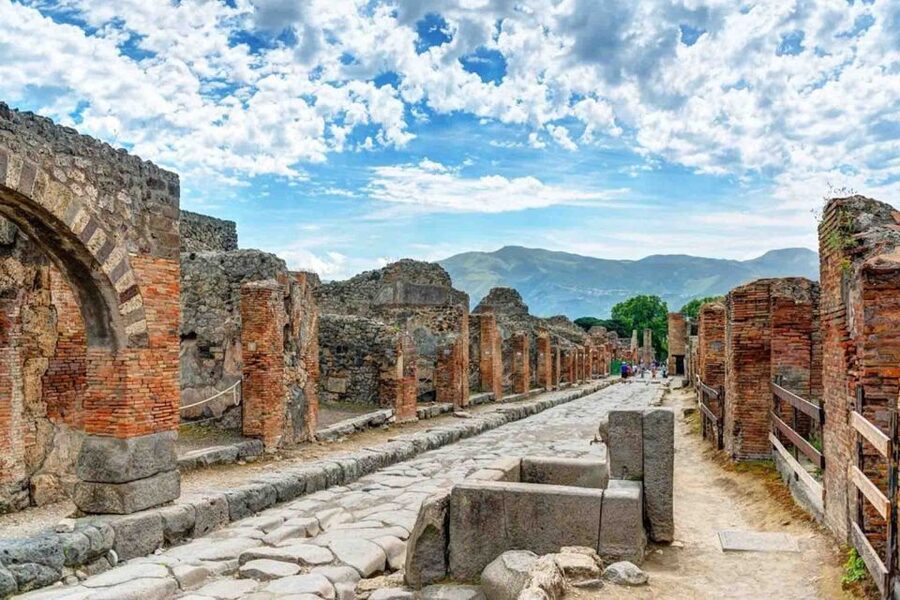
The two-hour walk is built around the parts of Pompeii that best explain daily life. Instead of rushing only from one famous monument to another, you’ll see the city as a functioning Roman settlement.
The old shopping street is one of the most engaging parts. Along it, you can look at preserved commercial spaces and ancient bakeries. The remains of ovens and milling equipment help show how bread was produced and sold. The tour also points out pizzerias, though you should not expect pizza in the modern Naples sense. The value here is seeing how prepared food and retail trade were part of Roman city life.
The shops also make Pompeii easier to picture. A forum can feel formal and distant, but a shopfront feels familiar. You can imagine people stopping for food, buying household goods, or meeting friends on their way through town. This is the sort of detail that makes the site more than a collection of ruins.
The pace is purposeful. You will stop for explanations, then move through the streets to the next major area. Guides are expected to keep the group together, which is important because Pompeii can be crowded and several tour groups may be moving through the same narrow lanes.
The forum, baths, theater, and necropolis
The forum was Pompeii’s main public center, and it gives you a sense of the city’s civic scale. Here, the guide can explain the relationship between public buildings, religion, government, and trade. You’ll see the open area and surrounding structures, though the exact route can vary with site conditions and crowd levels.
The bathhouses offer another useful window into Roman routine. Baths were not simply places to wash. They were social spaces, and their design reflects the engineering and habits of Roman towns. A guide can help you understand the different rooms and the role these facilities played in public life.
The ancient theater is one of the tour’s key stops. It is a good place to pause because the shape of the building remains easy to read. You can see how the seating and performance space were arranged, and your guide can explain the place of theater in Roman entertainment.
The necropolis, or cemetery area, adds a quieter note. Its tombs and roadside position show how burial places were placed outside the main city. Taken together, the forum, baths, theater, and necropolis give you a useful cross-section of Pompeii: public business, leisure, ritual, and the edge of town.
More Ancient History Tours in Naples
- Naples: Pompeii Archaeology Park Tour & Skip-the-Line Entry
★ 4.8 · 190 reviews - Pompeii: Private Tour with an Archaeologist
★ 4.9 · 168 reviews - Herculaneum Private Tour with an Archaeologist
★ 5.0 · 132 reviews - Pompeii and Herculaneum led by an Archaeologist with private transport
★ 5.0 · 78 reviews
Villas and the house of Pompeii’s richest man
Pompeii’s private homes are often as interesting as its public buildings. The route includes a house identified as belonging to the richest man in Pompeii. You’ll see how status was expressed through the size and arrangement of a Roman residence, even if parts of the building are closed or difficult to view.
A villa can be hard to understand without guidance because walls, courtyards, and rooms may appear disconnected. Your guide can point out how visitors would have moved through the house and where decoration, social gatherings, and household work fit into the plan.
This is also where the tour’s limited time becomes most noticeable. Pompeii has many villas, and two hours allows only selected examples. If you have a strong interest in Roman architecture, mosaics, or domestic life, you may want a longer independent visit on another day. For a first look, the selected route gives you enough structure without exhausting you.
What the guides add to the walk
The guide quality is a major reason to choose this outing. Salvatore is praised for being clear and attentive during hot weather, finding shade where possible and keeping the group moving. Fabio, described as an archaeologist, is remembered for a strong site explanation. Maria is noted for managing a group in difficult crowd conditions while keeping the information lively.
You may not receive one of these named guides, but the pattern is useful: the best part of the tour is not simply having someone point toward ruins. It is having someone explain what you are looking at, adjust the pace, and keep the group together.
A live guide requires a minimum of six participants in the same language. If that number is not reached, an audio guide is provided instead. One audio guide was praised for being witty as well as informative, so this option does not automatically mean a poor visit. Still, if personal questions and back-and-forth discussion matter to you, check the language and guide arrangement before paying.
The tour can be bilingual. That may be efficient, but it can also mean that explanations take longer or feel less focused in your language. Small-group availability is worth considering if you want more room to hear the guide and ask questions.
Weather, walking, and practical comfort
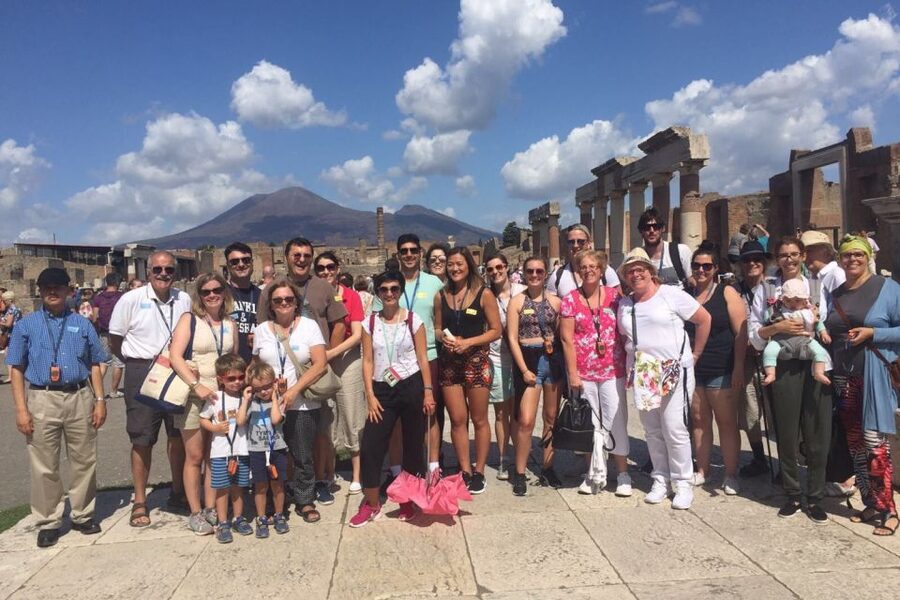
Pompeii is an outdoor archaeological site with exposed streets and limited shade. Summer heat can make the walk tiring, especially when the stones reflect the sun. Wear shoes with firm soles, bring sunscreen, and pack a sun hat. The guide may look for shade when possible, but you should plan to spend much of the visit outdoors.
The surface is not designed like a modern pavement. Ancient streets can be uneven, and some routes include raised stones and rough ground. The activity is not suitable for wheelchair users or people with mobility impairments. Large bags and luggage are not allowed, so do not arrive with a suitcase or oversized day bag.
You may have a short chance to buy something before the walking portion begins. There are also free, clean bathrooms available as part of the organized arrival process. Do not count on lunch being included. Food is excluded, and the tight schedule means you should arrange your own snack or meal around the tour.
The possible cameo and coral workshop
If time permits, the return journey may include a stop at a local workshop devoted to cameos and coral jewelry. You can learn how artisans work with coral and seashells to create decorative pieces.
This stop is optional in practice because the schedule depends on traffic, group timing, and the Pompeii visit. It may appeal to you if you want a local craft connection beyond ancient ruins. If your only goal is Pompeii, you should see it as an extra rather than a guaranteed part of the day.
The workshop also raises a practical point: keep your focus on the selected booking option and inclusions. Entry to Pompeii is included only if you choose the option that includes the ticket. Check that detail before confirming, since a lower displayed fare may not cover every item you expect.
Returning to Naples and planning the rest of your day
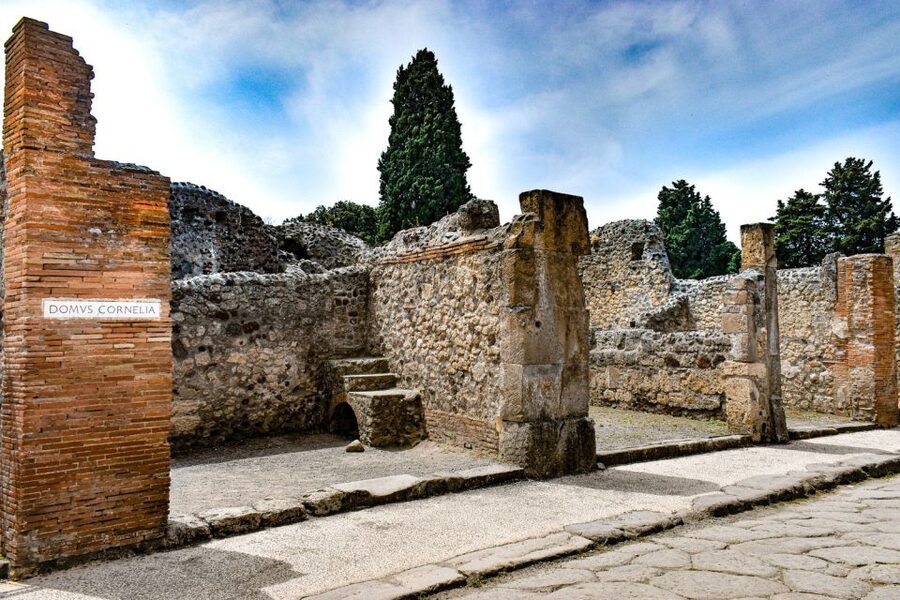
The return uses the same general Naples areas, including the seafront hotels, Molo Beverello, Via Medina, Corso Umberto, and Piazza Garibaldi. The drop-off order can vary, so do not assume you will reach the same stop at the same time as the outward journey.
The organized return is useful if you are uncomfortable driving in Naples. One driver was praised for handling heavy traffic, and another group was dropped near a pizzeria they remembered from an earlier visit. That sort of flexibility cannot be promised, but it shows how a small group can sometimes make the final transfer easier.
You should still leave a generous buffer if you have a flight, train, ferry, or timed reservation after the tour. One person made a same-day flight comfortably, but traffic is not predictable enough to treat that as a guarantee. The trip is best placed on a day when you can tolerate a late return.
Who will get the most from this tour
I would choose this tour if you are staying in Naples and want a simple, guided introduction to Pompeii without arranging transport yourself. It works particularly well for first-time visitors, families who want the site explained in plain language, and anyone who prefers a structured walk through the main sights.
It also suits you if you want a shorter visit. Several hours at Pompeii can be tiring, and a two-hour route gives you a clear sample of the forum, baths, theater, necropolis, shops, bakeries, and villas.
I would look elsewhere if you are an archaeology student, a serious Roman history enthusiast, or someone who wants to wander at your own pace. The site is too large for a full exploration in two hours. Independent entry or a longer specialist tour would give you more time, but not necessarily the same easy transportation from Naples.
Should you book the Pompeii trip from Naples?
Book it if you value convenient transport and a guided highlights route more than maximum time inside the ruins. At $59, the combination of transfers, entry when selected, and a two-hour walk offers fair value, especially when Naples traffic makes independent driving unpleasant.
Before booking, confirm the pickup time, language, guide or audio guide arrangement, and whether the Pompeii ticket is included in your chosen option. Bring water, sun protection, and comfortable shoes. If you accept the limited visit and allow extra time for traffic, this is a practical way to see Pompeii without turning the day into a transport project.
FAQ
How long does the tour last?
The full activity lasts about three to four hours. The Pompeii visit itself includes a two-hour guided walking tour, with travel between Naples and the archaeological site.
Is transportation from Naples included?
Yes. Round-trip transportation from selected Naples pickup points is included. Pickup locations include several hotels, Molo Beverello, Via Medina, Corso Umberto, and Piazza Giuseppe Garibaldi.
Is the Pompeii entrance ticket included?
The entry ticket is included if you select the option that includes it. Check the exact inclusions of your chosen option before booking.
Will I have a live guide?
A live guide is provided in English, Italian, or Spanish when at least six participants join the same language group. If the minimum is not reached, an audio guide is provided instead.
What languages are available through the audio guide?
The optional audio guide may be available in French, Chinese, German, Japanese, Russian, and Portuguese. Availability depends on the season and group arrangements.
Is the tour suitable for wheelchair users?
No. The activity is not suitable for wheelchair users or people with mobility impairments. The ancient streets can be uneven, and the tour involves walking through the archaeological site.
Can I cancel the booking?
You can cancel up to 24 hours before the activity for a full refund. The reserve now and pay later option may also be available, depending on the booking terms shown when you select your tour.
More Archaeological Site Tours in Naples
- Naples Walking Tour with Underground Roman Ruins Ticket
★ 4.5 · 510 reviews - Naples: City Walking Tour w/ Underground Roman Ruins Ticket
★ 4.6 · 284 reviews - Naples: National Archaeological Museum Tour & Digital Guide
★ 4.2 · 177 reviews - Naples: National Archaeological Museum audio guide
★ 4.0 · 155 reviews
Just added around Naples
- Naples: National Archaeological Museum Tour & Digital Guide★ 4.2 · 177 reviews
- Naples: City and Lapis Museum Tour with an Archaeologist★ 4.5 · 29 reviews
- Naples: Pompeii Archaeology Park Tour & Skip-the-Line Entry★ 4.8 · 190 reviews
- Naples: Historic City Center Guided Walking Tour★ 4.7 · 38 reviews
- Naples: Monuments and Historic District Self-Guided Tour★ 4.0 · 50 reviews
- Naples Archaeological Museum 2-Hour Guided Private Tour★ 5.0 · 51 reviews
- Naples: National Archaeological Museum audio guide★ 4.0 · 155 reviews
- Pompeii and Herculaneum Private Walking Tour with an Archaeologist★ 5.0 · 77 reviews
Naples History Tours, compared.
Herculaneum: Skip-the-Line Guided Tour with Archaeologist
Read our review →
Herculaneum Small Group Tour and Ticket With an Archaeologist
Read our review →
Naples Spanish Quarters Walking Tour Street Art, Folklore & Sweet
Read our review →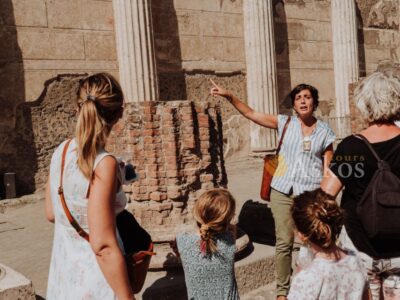
From Naples: Pompeii & Herculaneum with Archaeologist Guide
Read our review →
Naples: Street Art & History Tour in the Spanish Quarters
Read our review →
Naples Walking Tour with Underground Roman Ruins Ticket
Read our review →
Naples Panoramic Walking Tour: From the Hills to the Center
Read our review →
Naples: City Walking Tour w/ Underground Roman Ruins Ticket
Read our review →Browse the lists this tour appears in