Review · NAPLES
Pompeii: Private Tour with an Archaeologist
Pompeii is best understood on foot, one worn street and courtyard at a time. This three-hour private tour takes you from Porta Marina through the Forum, homes, baths, theaters, shops, and plaster casts, helping you see a real Roman town rather than a collection of broken walls.
I like the personal pace, which lets you stop for questions and adjust the route around crowds. I also like the focus on ordinary life: kitchens, fountains, businesses, bathhouses, bedrooms, and the small details that show how people lived before Vesuvius erupted. The main drawback is the price, listed at $508.15 per group up to one, so this makes better financial sense for a private party than for a solo visitor.
Key points to know before you book
- Three hours with your own guide: You get a private tour rather than a large group following a flag through the ruins.
- A strong first visit route: The walk covers the Forum, Basilica, Temple of Jupiter, House of Menander, Lupanare, House of the Faun, theaters, House of the Vettii, and amphitheater.
- Archaeology brought down to human scale: Guides explain domestic spaces, public buildings, commerce, religion, entertainment, and the eruption.
- Flexible guiding is a major advantage: Guides including Nicoletta, Patrizia, Jasmine, Silvia, Serenella, Annalisa, Laura, Diego, Paola, Michele, Mena, and Antonella are praised for warmth, detail, and adapting to interests.
- Skip-the-line admission is included: Transportation, food, drinks, and personal expenses are not.
- Wear serious walking shoes: Pompeii is a large archaeological site with uneven ancient paving and a lot to cover.
Why a private guide changes Pompeii
Pompeii can look simple at first glance: columns, walls, streets, and fragments of painted plaster. The trouble is that the site is so large and its remains so open-ended that you can easily walk past the most revealing details.
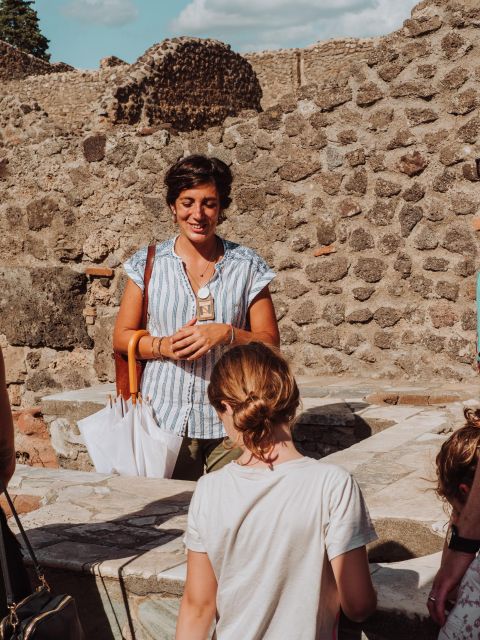
A private archaeologist-guide gives those details a place in the story. A fountain becomes part of the city’s water system. A worn threshold hints at the movement of people through a house. A business space, bath, or dining room explains how public and private life overlapped.
The guides are the strongest part of this experience. Nicoletta is praised for combining archaeological detail with human stories and humor. Laura is noted for handling changing crowds while adjusting to the group’s needs. Diego brings attention to art, history, and culture, while Paola explains the volcano, eruption, excavation, and preservation process.
That range matters. You may want a technical explanation of excavation, or you may prefer stories about families, servants, business owners, and daily routines. A private guide can shift the emphasis instead of giving every person the same fixed speech.
The format also suits families. One guide kept children engaged throughout the ruins, and another tour held the attention of 12-year-old twins. That does not make Pompeii an easy walk for young children, but it does show the value of a guide who can change pace and explain difficult subjects clearly.
More Ancient History Tours in Italy
- Herculaneum: Skip-the-Line Guided Tour with Archaeologist
★ 4.8 · 3,439 reviews - Herculaneum Small Group Tour and Ticket With an Archaeologist
★ 5.0 · 994 reviews - From Naples: Pompeii & Herculaneum with Archaeologist Guide
★ 4.8 · 665 reviews
Meeting at Porta Marina Superiore
You meet at Pompeii’s main gate, Porta Marina Superiore, in front of the bar-restaurant Hortus. Look for the building with lemons and oranges hanging outside. This detail is worth noting because Pompeii has more than one entrance, and arriving at the wrong gate could waste precious tour time.
Porta Marina is an appropriate place to begin. It gives you an immediate sense of Pompeii as a connected town, not an isolated set of monuments. From here, your guide leads you into the western part of the ancient city and begins the walk through its major public and private spaces.
The tour ends back at the meeting point. Transportation is not provided, so you need to arrange your own way to Pompeii and back. Food and drinks are also your responsibility, so carry what you need for three hours of walking.
Porta Marina and the Temple of Apollo
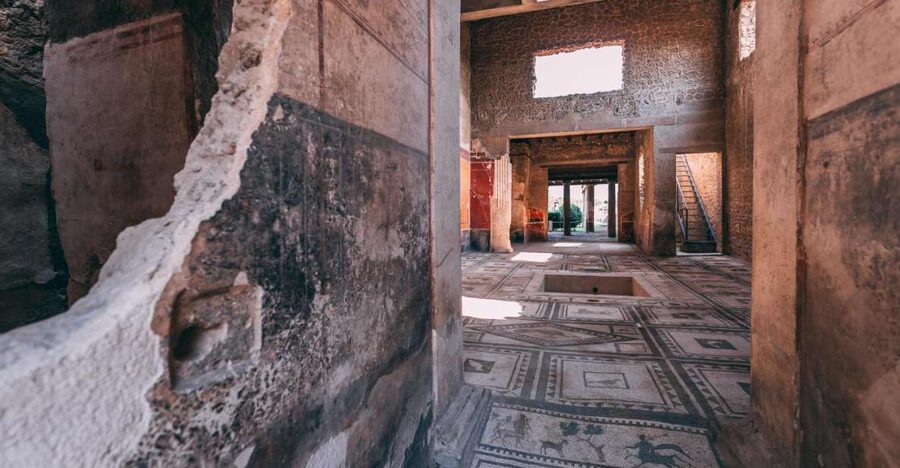
The first guided stop is Porta Marina, one of Pompeii’s main entrances. Your guide can help you read the gate as part of the city’s traffic and public life, rather than treating it as a simple photo stop.
The route then reaches the Temple of Apollo. This religious site helps explain the city’s connection to Roman worship and the older traditions that shaped Pompeii before the eruption. Look closely at the layout and surviving architectural elements while your guide explains how the temple related to the surrounding public center.
This early portion of the walk sets up the rest of the visit. You begin with the city’s entry point and religion, then move into government, business, homes, bathing, entertainment, and death.
The Forum, Basilica, and Temple of Jupiter
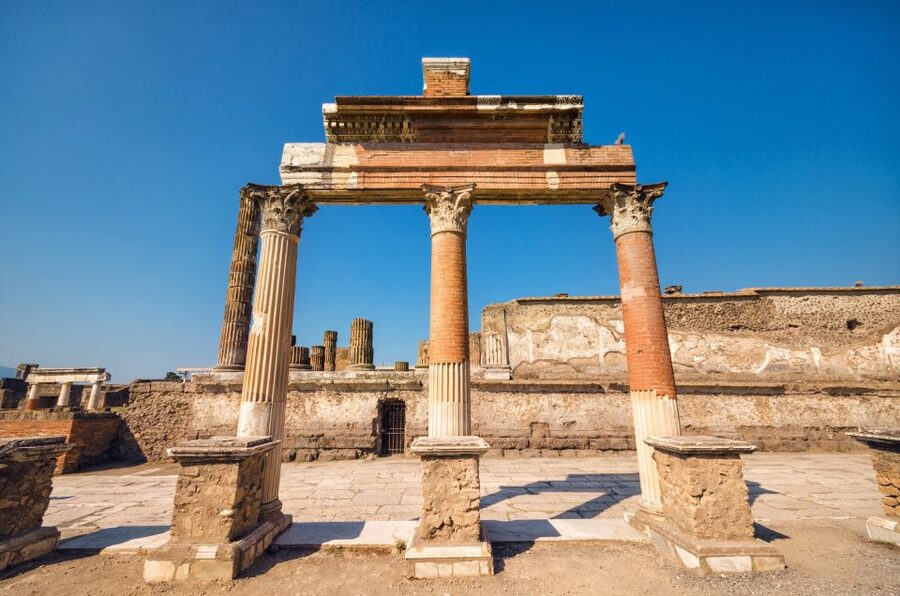
The Forum is the heart of the route. Pompeii’s main civic square gathered political, religious, and commercial life in one broad public space. It is also where the scale of the city becomes easier to grasp.
The Basilica, beside the Forum, was connected with legal and business activity. Even in its ruined state, it gives you a sense of how public decisions and commercial dealings took place. A guide can point out architectural features that are easy to miss when you are only looking for intact walls.
The Temple of Jupiter closes the main civic picture. With the Forum, Basilica, and temple together, you get a useful explanation of how power, worship, and public business worked in Roman Pompeii.
The Forum can be exposed to sun and weather, and its paving is uneven. Comfortable shoes are not a minor suggestion here. They can make the difference between paying attention to your guide and thinking about your feet.
More Ancient History Tours in Naples
- From Naples: Ruins of Pompeii
★ 4.3 · 204 reviews - Naples: Pompeii Archaeology Park Tour & Skip-the-Line Entry
★ 4.8 · 190 reviews - Herculaneum Private Tour with an Archaeologist
★ 5.0 · 132 reviews - Pompeii and Herculaneum led by an Archaeologist with private transport
★ 5.0 · 78 reviews
House of Menander and the Forum Baths
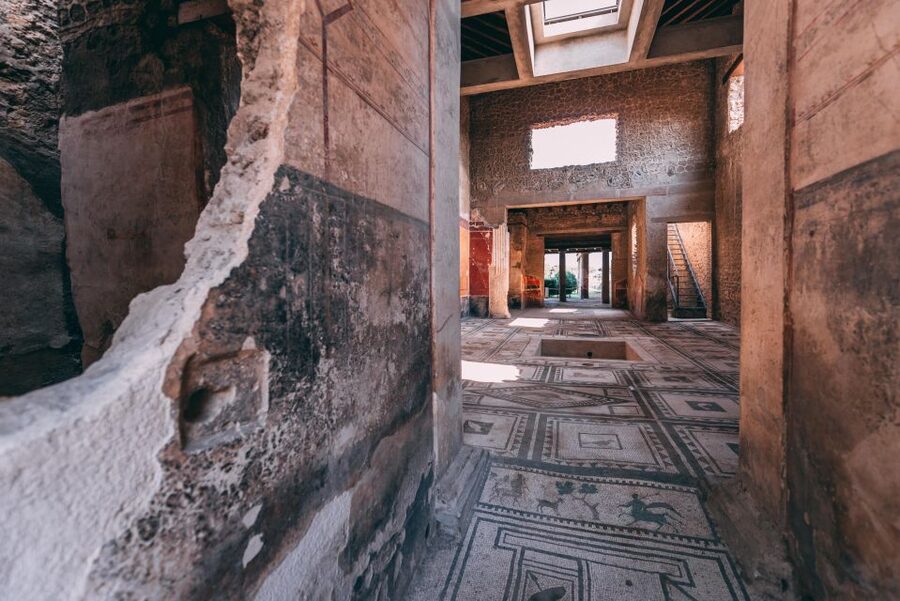
The House of Menander offers a change of scale. Instead of looking at the city from a public viewpoint, you enter a private home and examine how wealth, taste, household work, and social status appeared in domestic space.
Your guide can explain the arrangement of rooms and the surviving decoration, as well as the home’s place within Pompeii’s wider social order. The name refers to Menander, a Greek playwright whose image and influence reflect the cultural tastes found in elite Roman homes.
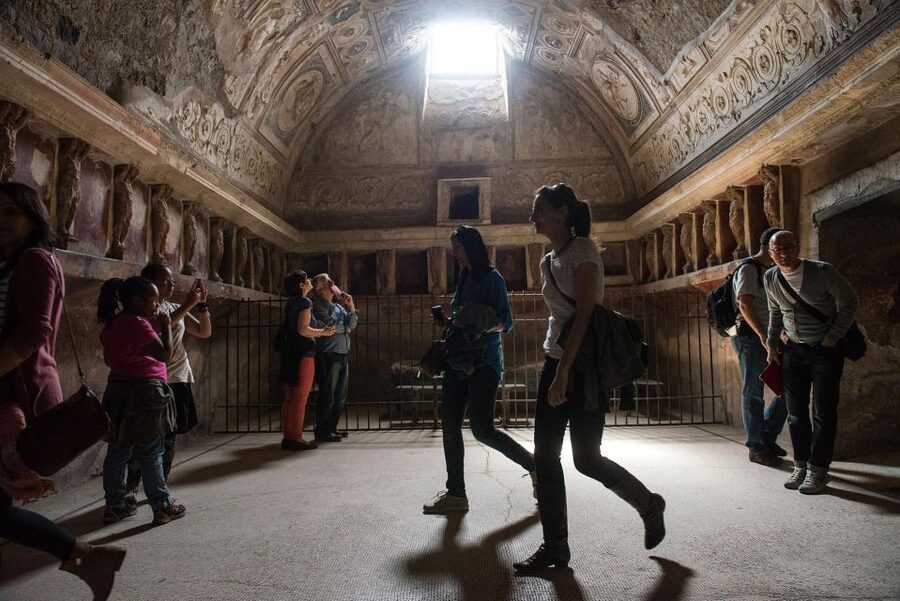
The Forum Baths show another essential part of city life. Bathing was not only about washing. It was also a regular social activity tied to routine, leisure, and public infrastructure. The baths help you see how Roman towns supported daily life through shared facilities.
Together, the house and baths balance each other well. One shows private life and household status. The other shows a public service used as part of the city’s everyday rhythm.
The Lupanare and Pompeii’s less polished side
The Lupanare, commonly described as Pompeii’s brothel, is one of the site’s most famous stops. Its surviving paintings and small rooms attract attention, but the value of seeing it with a guide is the context.
You can ask questions about how the building fits into Pompeii’s commercial life and how Roman society treated sex work, privacy, and public reputation. This stop may not suit every child or every family, so tell your guide your group’s comfort level before the visit.
It is also a useful reminder that Pompeii was not preserved as a perfect museum display. The city included ordinary work, pleasure, exploitation, commerce, religion, wealth, and poverty. A good guide presents those subjects plainly, without turning the site into a series of sensational stories.
House of the Faun and the House of the Vettii
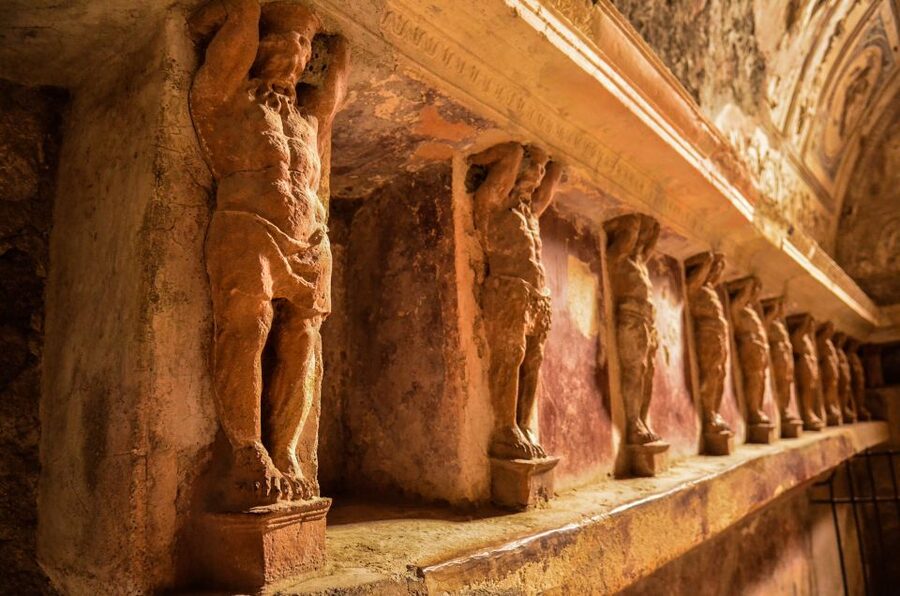
The House of the Faun is one of Pompeii’s grandest private residences. Its size and decoration reveal the ambitions of wealthy homeowners and the way elite houses were designed to receive visitors, display status, and organize domestic life.
The House of the Vettii adds another angle. Its decoration and rooms help your guide explain wealth, social mobility, and the people who owned and worked in such houses. Pompeii becomes more than a story about aristocrats. You begin to see a society with different levels of wealth and different kinds of power.
These villas are also where a guide earns the admission price. Without context, you may notice a large courtyard or painted wall but miss why its position mattered. With an archaeologist explaining the plan, materials, decoration, and use of rooms, the buildings become easier to read.
Do not expect every room to be open at every visit. Archaeological sites change access for conservation and practical reasons. The listed route includes these houses, but the precise order or availability of individual spaces can shift.
The Large Theatre and amphitheater
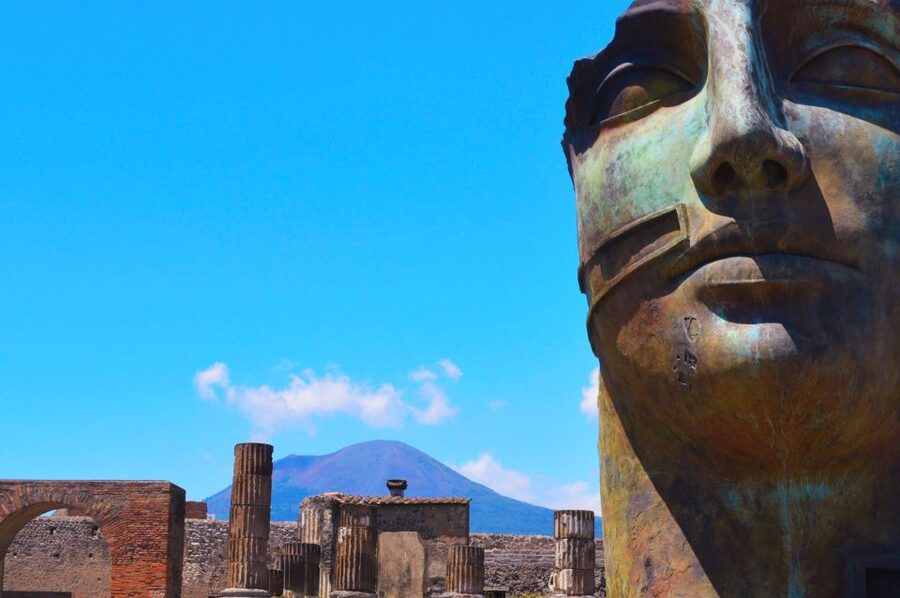
Pompeii’s Large Theatre shows the city’s appetite for public entertainment. The shape of the seating and stage area gives you a clear sense of how performances were organized and how large crowds gathered.
The amphitheater offers a different scale and mood. It was built for major public spectacles and helps you picture the shared experiences that drew people across social classes. Your guide can connect the building to Pompeii’s civic life and explain what its design tells you about Roman entertainment.
These stops are especially useful for families and anyone who learns best through physical spaces. It is easier to understand the size and organization of an ancient audience when you can walk through the structure rather than see it in a book.
By this point, the three-hour schedule may feel full. The tour covers a lot, and Pompeii’s roads take effort. If you want long photography stops at every monument, you may need to accept less explanation or ask your guide to prioritize your interests.
Plaster casts and the human cost of the eruption
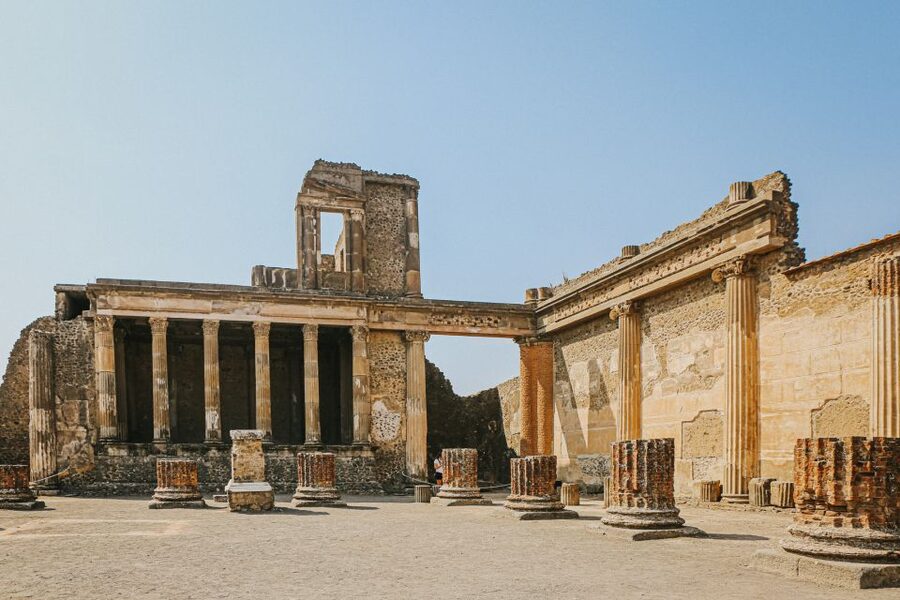
The plaster casts of victims are among Pompeii’s most difficult and important sights. They bring the eruption back to human scale, showing that this was not simply a dramatic geological event or a convenient time capsule.
A sensitive guide can explain how the casts were made and why they matter while keeping attention on the people who lived and died here. One of the most praised qualities of this guiding style is its respect for those human stories.
The eruption occurred in 79 A.D., when Mount Vesuvius buried the city in ash and volcanic material. The preserved streets, homes, tools, paintings, and bodies allow archaeologists to study a Roman town with unusual detail, but the experience should not become a spectacle. Give this stop the attention it deserves.
What the three-hour pace feels like
Three hours is long enough for a strong first visit, but not enough to see every corner of Pompeii. The route focuses on the western area and major highlights, moving between public monuments, homes, baths, businesses, theaters, and the amphitheater.
I like this length for a first visit because it gives you a clear framework without turning the entire day into a march. Private guiding helps because you can ask questions and, when possible, spend more time on subjects that matter to you.
The tradeoff is coverage. You will see many important places, but you will not have unlimited time at each one. If you have a particular interest in domestic architecture, religion, ancient engineering, or the eruption, tell your guide at the beginning.
Disposable earphones are provided for larger groups. A private group normally makes direct conversation easier, but the earphones can help when the site is noisy or when several people need to hear the same explanation.
Price, value, and who should book
At $508.15 per group up to one, the listed price is high for a three-hour visit if you are alone. It becomes easier to justify when shared by a private party, especially if you want personal attention and the ability to ask questions throughout the walk.
Skip-the-line admission is included, as is the certified archaeologist-guide. That saves you from arranging tickets separately and adds value if the entrance is busy. Still, the price does not include transportation, food, drinks, or personal expenses.
I would choose this tour if Pompeii is a major reason for your visit to Campania, if you care about archaeology and Roman daily life, or if you want a guide who can adjust the discussion to your group. It is also a good fit for families who need clear explanations and a flexible human pace.
You might choose a cheaper group visit if you are satisfied with a broad overview, have already visited Pompeii, or prefer to explore without a fixed route. The private format is most useful when you take advantage of it by asking questions and naming your interests.
The experience is offered in Japanese, English, Spanish, Italian, German, French, Portuguese, Chinese, and Russian. The tour runs in all weather, so bring a raincoat or a small umbrella if rain is possible. The instructions also say umbrellas are not allowed, which is a practical inconsistency to clarify before arrival. Comfortable shoes are essential.
The accessibility information is also mixed. One part says the tour is wheelchair accessible, while another says it is not suitable for wheelchair users. Pompeii’s ancient paving and uneven surfaces can be difficult, so confirm current access conditions directly before booking if mobility is a concern.
Should you book this Pompeii tour?
Book it if you want Pompeii explained rather than simply photographed. The best parts are the private pace, the strong selection of public and private buildings, and guides who can connect excavation details with the lives of the people who used these spaces.
Do not book it expecting a leisurely stroll with little walking or a complete survey of the entire site. Three hours goes quickly, and the price is substantial. For a first visit shared by a small private party, though, this is a focused way to make sense of Pompeii and leave with a much clearer picture of the Roman town beneath your feet.
FAQ
How long does the Pompeii private tour last?
The tour lasts three hours. Starting times vary, so you need to check availability for the date you want.
Where does the tour begin?
Meet your guide at Porta Marina Superiore, Pompeii’s main gate, in front of the bar-restaurant Hortus. The building has lemons and oranges hanging outside.
Where does the tour end?
The activity ends back at the meeting point. The listed drop-off locations include the Pompeii ticket office and Porta Marina Superiore.
Is admission included?
Yes. Skip-the-line admission fees are included in the tour price.
Is transportation included?
No. You must arrange your own transportation to Pompeii and away from the site.
What languages are available?
Guiding is available in Japanese, English, Spanish, Italian, German, French, Portuguese, Chinese, and Russian.
Is this a private group tour?
Yes. The activity is described as a private group experience.
What should I bring?
Bring comfortable shoes. If rain is possible, the information advises bringing a small umbrella and or a raincoat, though another instruction says umbrellas are not allowed, so confirm this detail before you go.
Is the tour suitable for wheelchair users?
The information is conflicting. One section says the activity is wheelchair accessible, while another says it is not suitable for wheelchair users. Confirm current conditions before booking.
Can I cancel for a refund?
You can cancel up to 24 hours in advance for a full refund. A reserve-now-and-pay-later option is also available.
More Archaeological Site Tours in Naples
- Naples Walking Tour with Underground Roman Ruins Ticket
★ 4.5 · 510 reviews - Naples: City Walking Tour w/ Underground Roman Ruins Ticket
★ 4.6 · 284 reviews - Naples: National Archaeological Museum Tour & Digital Guide
★ 4.2 · 177 reviews - Naples: National Archaeological Museum audio guide
★ 4.0 · 155 reviews
More Private History Tours in Italy
- Pompeii and Herculaneum Private Walking Tour with an Archaeologist
★ 5.0 · 77 reviews - Naples Archaeological Museum 2-Hour Guided Private Tour
★ 5.0 · 51 reviews - Pompeii: Exclusive Tour with Archaeologist and Entry Tickets
★ 4.9 · 634 reviews - Ancient Ostia Antica Semi-Private Day Trip from Rome by Train with Guide
★ 4.5 · 579 reviews
Just added around Naples
- Naples: National Archaeological Museum Tour & Digital Guide★ 4.2 · 177 reviews
- Naples: City and Lapis Museum Tour with an Archaeologist★ 4.5 · 29 reviews
- Naples: Pompeii Archaeology Park Tour & Skip-the-Line Entry★ 4.8 · 190 reviews
- Naples: Historic City Center Guided Walking Tour★ 4.7 · 38 reviews
- Naples: Monuments and Historic District Self-Guided Tour★ 4.0 · 50 reviews
- Naples Archaeological Museum 2-Hour Guided Private Tour★ 5.0 · 51 reviews
- Naples: National Archaeological Museum audio guide★ 4.0 · 155 reviews
- Pompeii and Herculaneum Private Walking Tour with an Archaeologist★ 5.0 · 77 reviews
Naples History Tours, compared.
Herculaneum: Skip-the-Line Guided Tour with Archaeologist
Read our review →
Herculaneum Small Group Tour and Ticket With an Archaeologist
Read our review →
Naples Spanish Quarters Walking Tour Street Art, Folklore & Sweet
Read our review →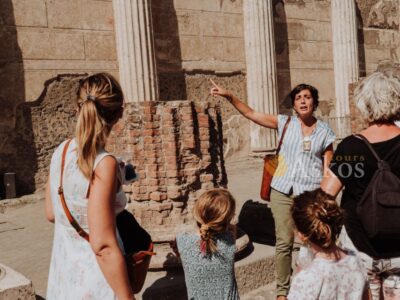
From Naples: Pompeii & Herculaneum with Archaeologist Guide
Read our review →
Naples: Street Art & History Tour in the Spanish Quarters
Read our review →
Naples Walking Tour with Underground Roman Ruins Ticket
Read our review →
Naples Panoramic Walking Tour: From the Hills to the Center
Read our review →