Review · NAPLES
Herculaneum: Skip-the-Line Guided Tour with Archaeologist
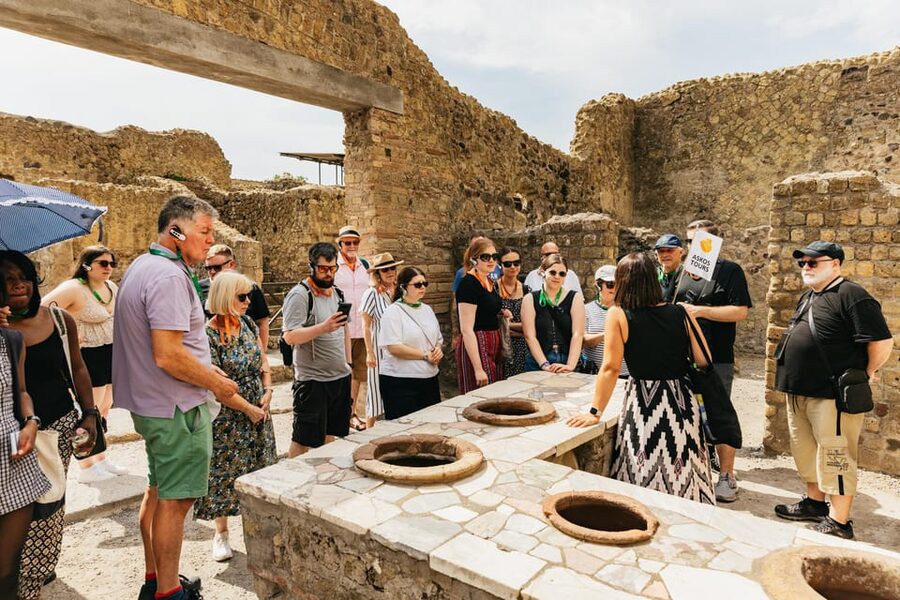
Herculaneum is the Roman site that can surprise you most. Pompeii covers more ground, but Herculaneum gives you a closer look at domestic life, with painted rooms, mosaics, carbonized wood, ceramics, and marble still in place. The waterfront, where more than 300 people died trying to escape, adds a sobering edge.
I like the archaeologist guide and the fact that your ticket covers the full day, not just the two-hour walk. I also like the skip-the-line entry, especially when the site is busy. The main drawback is the pace: two hours is enough for the major sights, but a larger group or a guide walking quickly can make it harder to hear every word through the headset.
Key points to know before you book

- See Roman homes close up: The House of Neptune and Amphitrite, House of the Deer, and House of the Black Room reveal how wealthy residents lived.
- Learn from a working archaeologist: Guides such as Luciano Leone and Angelo use strong storytelling, photographs, and site knowledge to explain what you are seeing.
- Compare Herculaneum with Pompeii: The guide makes clear how the two towns differed, both before and during the eruption.
- Keep exploring after the tour: Your admission lasts all day, so you can return to rooms or museums at your own pace.
- Expect exposed, uneven ground: Wear closed-toe shoes, bring sunscreen and a hat, and be ready for rain or strong sun.
- Meet at the ticket office: Look for the guide holding an Askos Tours sign at Via dei Papiri Ercolanesi.
Why Herculaneum feels different from Pompeii
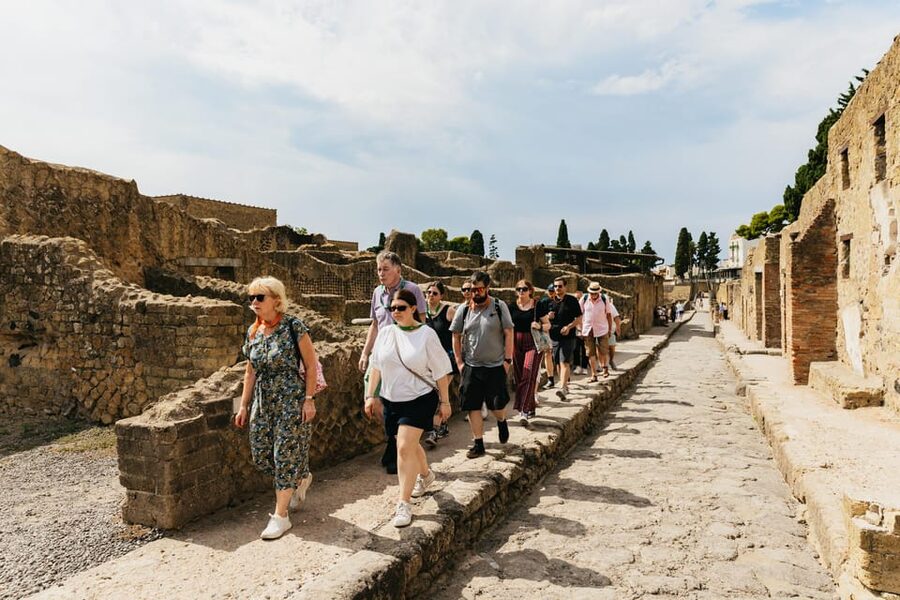
Herculaneum was a former port town with wealthy merchants and noble residents. The eruption of Mount Vesuvius ended life here quickly, burying the town under volcanic material and preserving details that can be harder to find at Pompeii.
I find the site more compact than Pompeii, but that does not mean it is less rewarding. The preserved houses make it easier for you to picture daily life. You see rooms with decorative walls, floors with mosaics, household objects, and wooden features that survived in carbonized form.
The waterfront is one of the most powerful parts of the visit. More than 300 bodies were found there, belonging to people who reached the shore while trying to escape toward the sea. It is not a quick photo stop. Your guide can help explain what happened and why Herculaneum and Pompeii suffered different fates.
The comparison with Pompeii is one of the tour’s strongest features. Several guides, including Luciano Leone, have been praised for explaining the differences between the two sites in a way that makes sense on the ground. If you have already visited Pompeii, you will see familiar Roman ideas here, but in a more intimate setting.
More Ancient History Tours in Italy
- Herculaneum Small Group Tour and Ticket With an Archaeologist
★ 5.0 · 994 reviews - From Naples: Pompeii & Herculaneum with Archaeologist Guide
★ 4.8 · 665 reviews - From Naples: Ruins of Pompeii
★ 4.3 · 204 reviews
Meeting at the Herculaneum ticket office
The meeting point is the ticket office at the Herculaneum ruins on Via dei Papiri Ercolanesi. Look for an Askos Tours sign. This detail matters because the booking map can place the meeting location around 300 meters away from the actual ticket booth, so I would trust the written meeting instructions and head directly to the site entrance.
Transportation is not included. You need to arrange your own way to Herculaneum, and the tour begins at the ruins rather than in central Naples. Allow enough time to find the ticket office, especially if you are unfamiliar with Ercolano.
Bring a valid passport or identity card. The site rules also require children to be accompanied by an adult, and unaccompanied minors are not accepted. Large bags and luggage are not allowed, so arrive with only what you need for the visit.
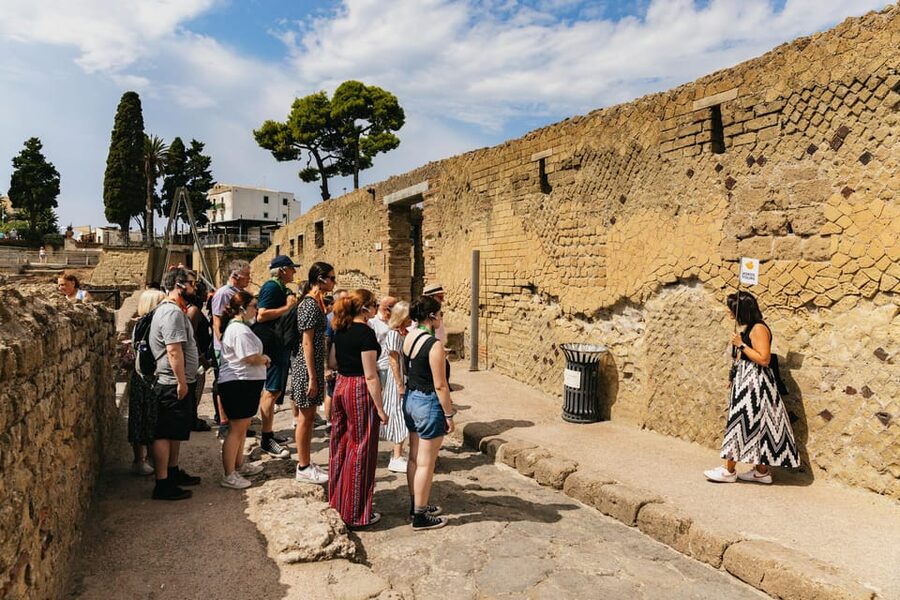
The tour is offered in English, Italian, German, Spanish, and French. You receive a headset, which is useful when the guide is explaining a room to a group spread across a street or building. The equipment helps, but it is still smart to stay fairly close. One participant found that a guide sometimes moved beyond headset range, and a few details were missed at the back.
The first two hours: a smart route through the ruins
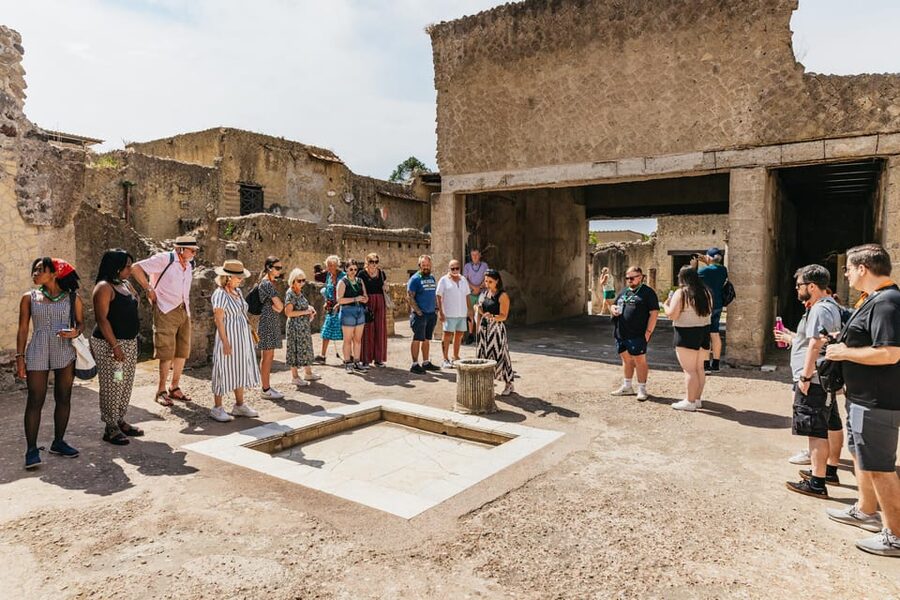
The guided visit lasts two hours and covers the main archaeological site. It is not a slow, solitary wander. Your guide keeps the group moving from one important building to another, explaining the city, the eruption, excavation work, and Roman life as you go.
That structure is valuable because Herculaneum can feel confusing at first. You are looking at walls, rooms, stairs, shops, and public buildings, but without context it is easy to miss what made each place important. A good guide gives you a framework before the details start to blur together.
Groups have been reported at around 15 to 20 people. That is still manageable, though it is not a private tour. With a bigger group, stand near the guide and check that your headset is working before the walk begins.
Several guides have received especially strong praise for their delivery. Luciano Leone is known for energetic explanations, humor, and photographs that show how the town looked before and after the eruption. Angelo has used binders and books with images and overlays to show the changes to the site. Teresa has been praised for keeping explanations clear and accessible, including for an eight-year-old child.
The style may vary by guide, but the essential advantage is the same: you are not left to guess what a broken wall or faded painting once meant.
Casa dei Cervi, the House of the Deer
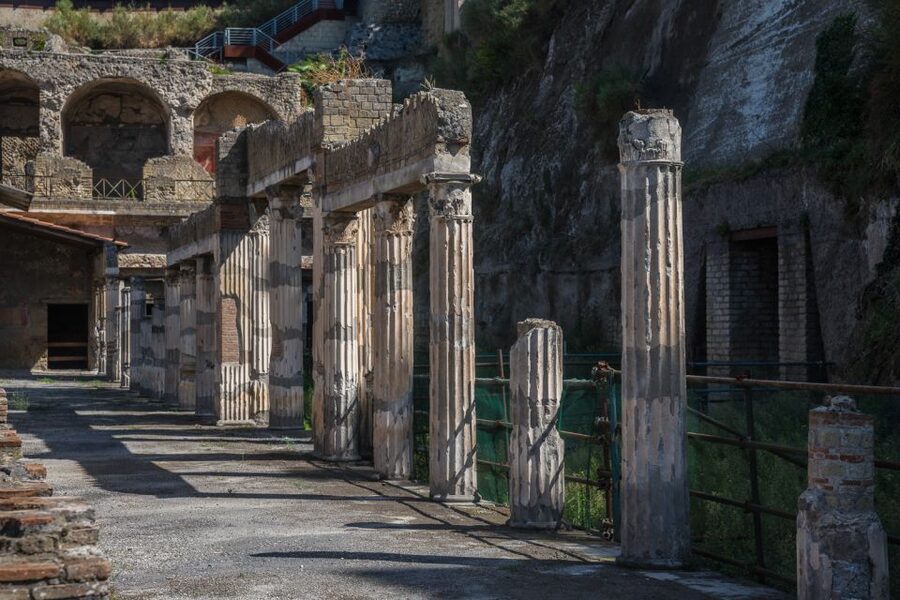
Casa dei Cervi, or the House of the Deer, is one of the stops on the route. The name comes from the deer sculptures found there, and the house represents the comfortable world of Herculaneum’s wealthy residents.
This is where the guide’s explanation matters more than the building’s name. You can look at a large Roman house and see only rooms around a courtyard. The guide helps you understand how the spaces related to one another and what they suggest about status, entertaining, and private life.
The stop is also a reminder that Herculaneum was not simply a town of ordinary workers. Wealthy merchants and noble families had homes decorated with costly materials and carefully arranged rooms. The preserved remains make those social differences easier to see.
More Ancient History Tours in Naples
- Naples: Pompeii Archaeology Park Tour & Skip-the-Line Entry
★ 4.8 · 190 reviews - Pompeii: Private Tour with an Archaeologist
★ 4.9 · 168 reviews - Herculaneum Private Tour with an Archaeologist
★ 5.0 · 132 reviews - Pompeii and Herculaneum led by an Archaeologist with private transport
★ 5.0 · 78 reviews
Casa di Nettuno ed Anfitrite and its famous decoration
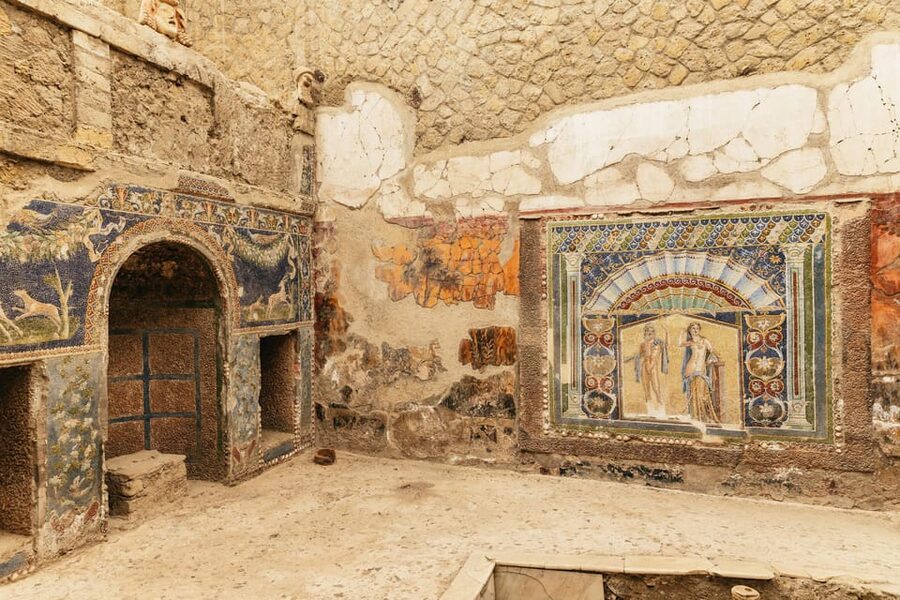
The House of Neptune and Amphitrite is one of the tour’s visual highlights. It is known for its mosaic decoration, including the area associated with Neptune and Amphitrite.
Here you will see the combination of colored stone, glass, plaster, and wall decoration that gave Roman houses their character. The guide can point out how decorative work was used to impress guests and shape the mood of a room.
I like this stop because it moves the site beyond bare ruins. You are not just looking at foundations. You can see fragments of a home that once had color, pattern, and a deliberate visual plan. The ceramics, paintings, and mosaics across the site help make Roman interiors feel less distant.
The preserved decoration is also a good reason to avoid rushing through Herculaneum. A quick photograph cannot show you how the materials fit together or why one room was more important than another. Use the guide’s explanation, then take a second look after the tour if the area remains open.
The House of Skeletons and Casa dell’Albergo
The House of Skeletons is another stop tied to the final moments of the town. Its name reflects the human remains discovered there, making it one of the more sobering parts of the route.
This is a place where the eruption feels less like a famous historical event and more like a human disaster. Your guide can connect the building to the wider story of people trying to escape, especially the remains found near the waterfront.
Casa dell’Albergo is also included. Its name suggests a building associated with lodging, though the important point for your visit is how it fits into the street plan and the wider mix of public and private spaces.
The tour does not treat every stop as an isolated monument. Instead, the guide links houses, streets, public buildings, and the waterfront. That helps you see Herculaneum as a functioning town rather than a collection of attractive ruins.
Casa del Salone Nero and the Temple of the Augustales
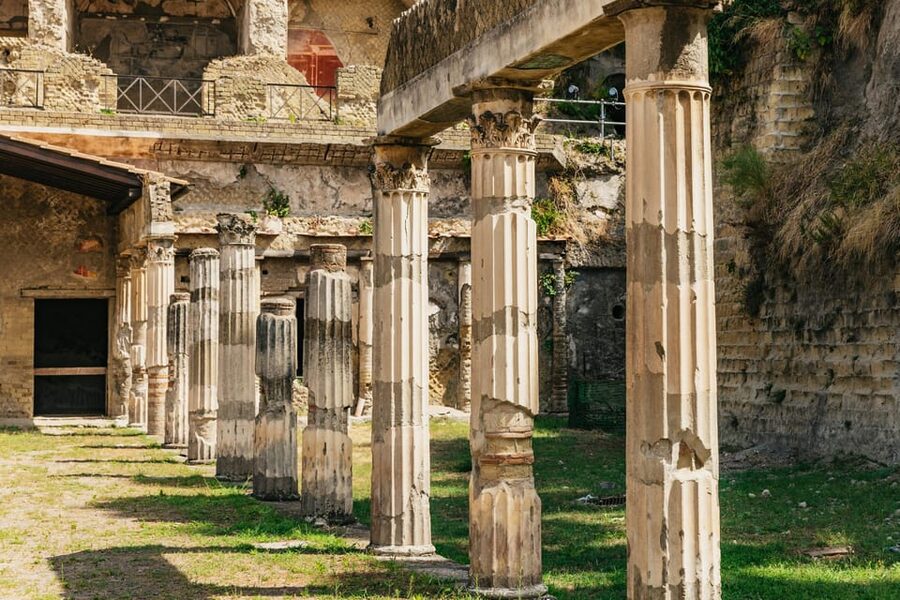
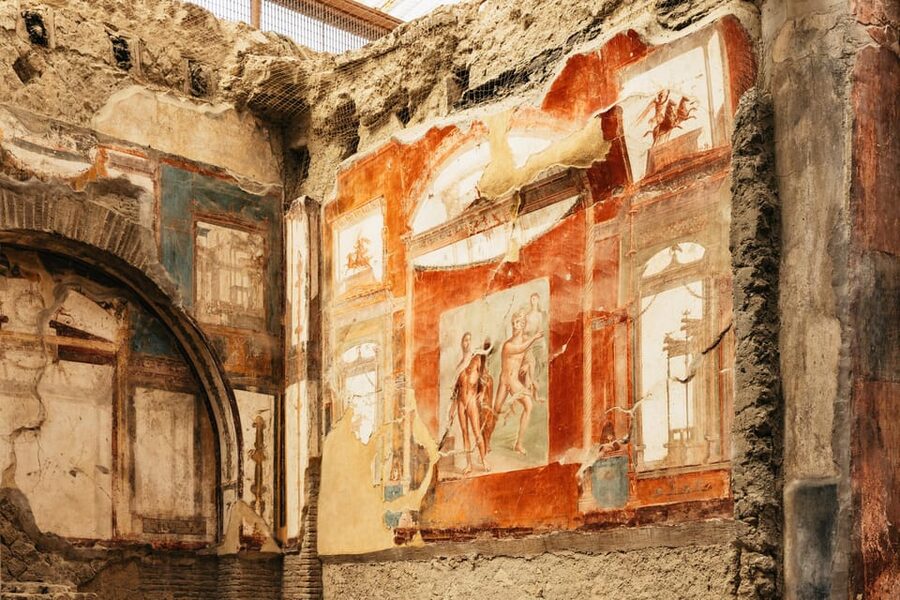
Casa del Salone Nero, the House of the Black Room, shows the decorative side of Roman domestic life. Painted walls are among the details that make Herculaneum so compelling, and a guide can explain what the colors, rooms, and layout tell you about the people who lived there.
The Temple of the Augustales, also called the Sacellum of the Augustales, offers a different view. This was a religious and civic space connected with the Augustales, a group linked to the imperial cult. The building helps you move from private homes to the public life of the town.
That change of scale is important. In one part of the tour you are looking at household decoration and domestic rooms. In another, you are considering how religion, status, and civic identity shaped Roman society.
The guide may use photographs or other visual material to show what parts of the town looked like before the eruption. This is especially helpful when a room has lost much of its original appearance. It gives you a clearer sense of proportion and purpose without pretending that the ruins are complete.
The Samnite house, thermal baths, Forum, and Gymnasium
The route also includes the Samnite house, the thermal baths, the Forum, and the Gymnasium. These stops widen the story beyond the grandest homes.
The Samnite house reflects an earlier phase of the town and provides a useful contrast with later Roman buildings. The thermal baths show how public bathing fit into Roman daily life. The Forum was a central civic area, while the Gymnasium points to education, exercise, and public activity.
One especially useful detail comes at the Gymnasium, where the route can include a tunnel leading toward the center and the former swimming pool. This gives you a less obvious view of the building and helps explain how the space was arranged below ground.
The public buildings may not have the immediate visual punch of a mosaic room, but they are essential to understanding the town. They answer practical questions: Where did people gather? Where did they bathe? Which activities belonged to home, and which belonged to public life?
What the archaeologist adds
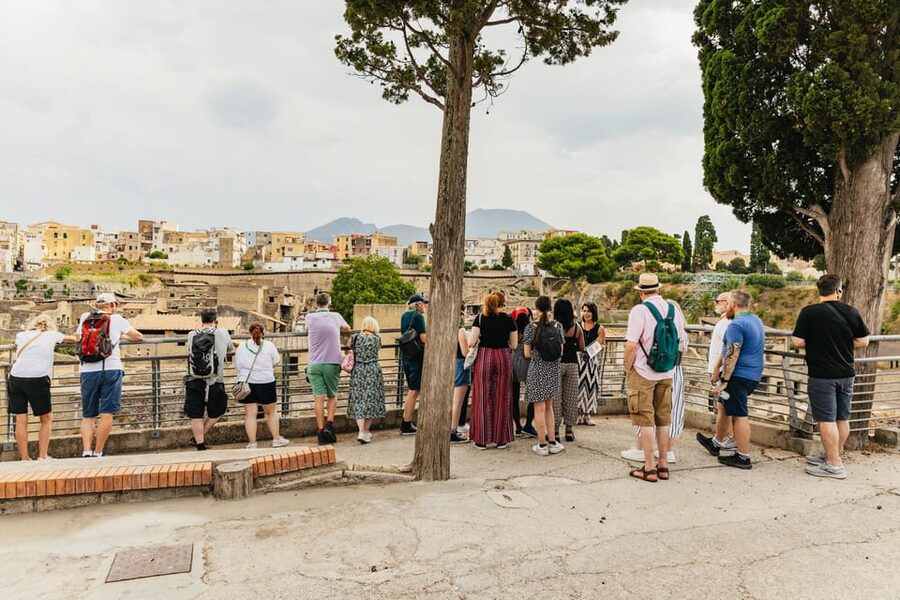
The word archaeologist matters here. You are not simply hiring someone to point at the most photogenic walls. The guide is expected to explain excavation, preservation, architecture, the eruption, and the evidence behind interpretations.
Luciano Leone is the name most often associated with lively, detailed tours. He has been described as using personal visual material and presenting the subject with humor and theatrical energy. Diego has also been praised for clear English, strong site knowledge, and a genuine concern for preserving Herculaneum. Other guides named during the tours include Yolanta, Giulia, Giovanni, Roberta, Teresa, Anna, Bruno, Alfredo, and Gerardo.
A guide’s personality will shape your experience. Some people want a formal academic talk. Others prefer a story-led walk with plenty of humor. This tour appears to lean toward the second style while still giving you serious archaeological content.
The balance works well for families and first-time visitors. It also helps if you have already spent a day at Pompeii and want an expert to explain what changes here. Children can follow the stories, but a young child who has already visited Pompeii may still lose interest during a two-hour explanation.
Is $53 a fair price?
The advertised price is $53 per person. Adult entry to Herculaneum costs 16 euros, with a 2 euro rate for EU citizens aged 18 to 25. The tour price therefore includes a meaningful admission cost, plus the archaeologist, headset, skip-the-line access, and the two-hour guided visit.
I consider the price reasonable if you want context rather than a quick walk through the ruins. You are paying for a guide who can connect the houses, public buildings, eruption, and excavation into one clear story. The value is strongest for first-time visitors, people who do not read much about Roman archaeology beforehand, and anyone who wants to compare Herculaneum with Pompeii.
The value is less clear if you prefer to wander alone and read at your own pace. You can still use the included admission to stay after the tour, which improves the deal. Several people have spent another two hours exploring independently after the guided portion.
That full-day access is important. The two-hour route gives you structure, but it cannot show every corner in detail. If you book an afternoon start, check the closing time carefully. One late tour left little time for independent exploration afterward, so a morning slot is the better choice if you want both the guided walk and quiet time alone.
Practical advice for a comfortable visit
Wear closed-toe shoes. Open sandals can be awkward on uneven ancient surfaces, and the site is large enough that comfort matters.
Bring sunscreen and a hat. Herculaneum is exposed, and shade may not be available when you need it. The tour runs in rain or shine, so carry a raincoat if wet weather is possible.
You should also bring your passport or ID. Large bags and luggage are not allowed, and food and drinks are not included. Plan to handle those needs before or after the visit.
The tour is not suitable for wheelchair users or people with mobility impairments. Uneven ground, archaeological remains, and the scale of the site can make the route difficult.
If you want the best chance of hearing every explanation, stay near the guide and check your headset. Groups of up to about 20 people can spread out, especially in rooms and narrow streets.
Who should book this Herculaneum tour?
I would book this tour if you want the site explained by someone with archaeological training, if you are visiting Herculaneum for the first time, or if Pompeii left you with more questions than answers.
It is a strong choice for families with older children, history fans, and anyone who likes stories tied to real buildings. It also suits people with limited time, since the guide takes you directly to key houses, public buildings, and the waterfront.
I would think twice if you need a fully accessible route, dislike group tours, or want to examine every room without stopping for explanations. The guide-led format has a set pace, and the group may be larger than you prefer.
For most visitors, though, the combination of admission, skip-the-line entry, headset, and an archaeologist-led route makes $53 a sensible spend. Book a morning time if possible, stay afterward to explore alone, and keep Pompeii on your plan if you have the time. The two sites work best together.
FAQ
Where does the Herculaneum tour meet?
Meet at the ticket office of the Herculaneum ruins on Via dei Papiri Ercolanesi. Your guide will hold an Askos Tours sign.
How long does the guided visit last?
The guided tour lasts two hours. Your admission remains valid for the full day, so you can continue exploring after the guided portion.
Is admission to Herculaneum included?
Yes. The tour includes admission fees to Herculaneum. Adult entry at the site is listed as 16 euros, while EU citizens aged 18 to 25 pay 2 euros.
Does the tour skip the ticket line?
Yes. Skip-the-line access is included. You still need to meet your guide at the specified ticket office.
Which languages are available?
The tour is offered in English, Italian, German, Spanish, and French.
Are headsets provided?
Yes. Headsets are included so you can hear the guide while moving through the site.
What should I bring?
Bring a valid passport or identity card, comfortable closed-toe shoes, sunscreen, and a hat. A raincoat is useful because the tour runs in all weather.
Can I bring luggage?
No. Large bags and luggage are not allowed. Food and drinks are also not included.
Is the tour suitable for wheelchair users?
No. The activity is not suitable for wheelchair users or people with mobility impairments. Children must be accompanied by an adult.
More Skip-the-Line Tickets in Naples
- Taormina: Ancient Theater Skip-the-Line Ticket & Audio Guide
★ 4.5 · 2,412 reviews - Historic Milan Tour with Skip-the-Line Last Supper Ticket
★ 4.5 · 1,976 reviews - Córdoba: Skip-the-Line Great Mosque-Cathedral History Tour
★ 4.7 · 1,690 reviews - Skip-the-Line Schonbrunn Palace Guided Tour and Vienna Historical City Tour
★ 3.5 · 940 reviews
More Archaeological Site Tours in Naples
- Naples Walking Tour with Underground Roman Ruins Ticket
★ 4.5 · 510 reviews - Naples: City Walking Tour w/ Underground Roman Ruins Ticket
★ 4.6 · 284 reviews - Naples: National Archaeological Museum Tour & Digital Guide
★ 4.2 · 177 reviews - Naples: National Archaeological Museum audio guide
★ 4.0 · 155 reviews
Just added around Naples
- Naples: National Archaeological Museum Tour & Digital Guide★ 4.2 · 177 reviews
- Naples: City and Lapis Museum Tour with an Archaeologist★ 4.5 · 29 reviews
- Naples: Pompeii Archaeology Park Tour & Skip-the-Line Entry★ 4.8 · 190 reviews
- Naples: Historic City Center Guided Walking Tour★ 4.7 · 38 reviews
- Naples: Monuments and Historic District Self-Guided Tour★ 4.0 · 50 reviews
- Naples Archaeological Museum 2-Hour Guided Private Tour★ 5.0 · 51 reviews
- Naples: National Archaeological Museum audio guide★ 4.0 · 155 reviews
- Pompeii and Herculaneum Private Walking Tour with an Archaeologist★ 5.0 · 77 reviews
Naples History Tours, compared.
Herculaneum Small Group Tour and Ticket With an Archaeologist
Read our review →
Naples Spanish Quarters Walking Tour Street Art, Folklore & Sweet
Read our review →
From Naples: Pompeii & Herculaneum with Archaeologist Guide
Read our review →
Naples: Street Art & History Tour in the Spanish Quarters
Read our review →
Naples Walking Tour with Underground Roman Ruins Ticket
Read our review →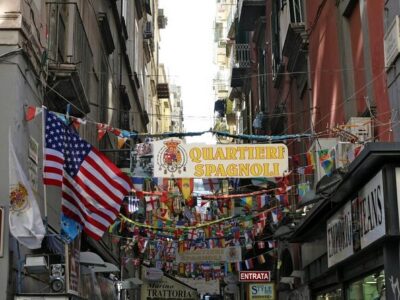
Naples Panoramic Walking Tour: From the Hills to the Center
Read our review →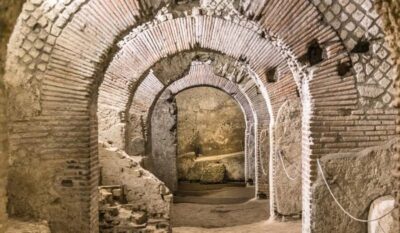
Naples: City Walking Tour w/ Underground Roman Ruins Ticket
Read our review →