
Review · STOCKHOLM
From Stockholm: Viking Culture and Heritage Small Group Tour
Sweden’s Viking past is easiest to understand outside the city, where runestones still mark roads and graves rather than sitting behind glass. This three-hour trip takes you to Broby bro, Jarlabanke Bridge, and Arkils tingstad, real sites connected with burial customs, clan power, and Viking government.
I like the small group of no more than 16 and the hotel pickup, which saves you from arranging a rural trip on your own. I also like that the tour deals in stones, graves, roads, and social history rather than TV-style Viking myths. The main drawback is the short running time: you get a strong introduction, not a full day of archaeology, and winter visits can be brutally cold.
Key points to know before booking
- Broby bro burial ground: See Viking graves and runestones linked to Estrid, a powerful woman from the area.
- Jarlabanke Bridge: Visit a reconstructed Viking bridge and causeway while learning how roads and bridges were built.
- Arkils tingstad: Examine the remains of a Viking Age parliament and learn how local society was organized.
- Central Stockholm pickup: Hotel pickup and drop-off are included when your accommodation is within 5 kilometers of Stockholm Central Station.
- English-speaking small group: The tour includes a driver and guide, with no more than 16 people.
- Winter preparation matters: Snow and temperatures around minus 10 degrees Celsius have been reported, so warm footwear and serious cold-weather clothing are essential.
Leaving Stockholm for Uppland’s Viking country
The tour begins with pickup at your hotel or accommodation within 5 kilometers of Stockholm Central Station. That is useful because the key sites are outside the city, and reaching them independently would require more planning than simply joining a guided outing.
You ride with a driver and English-speaking guide into Stockholm County and the historic Uppland area. The change is quick. Stockholm gives you museums, cafés, and grand urban streets. Uppland gives you woods, open countryside, old routes, and stones raised by people who lived here about 1,000 years ago.
I like this contrast. The tour does not treat Viking culture as a remote story belonging only to museums. You see the places where people marked family ties, buried their dead, crossed roads, and gathered to settle community matters.
The three-hour schedule is compact. That makes it easy to fit into a Stockholm itinerary, especially if you want an outing that does not consume a full day. It also means the guide must keep the pace moving. You should expect several focused stops rather than long walks or extended time at each site.
More Medieval History Tours in the world:
- Prague: Medieval Dinner with Unlimited Drinks
★ 4.4 · 19,847 reviews - Prague: Oldtown, Medieval Underground & Dungeon History Tour
★ 4.3 · 10,277 reviews - Ghent: 50-Minute Medieval Center Guided Boat Trip
★ 4.5 · 5,637 reviews
Broby bro and the story of Estrid
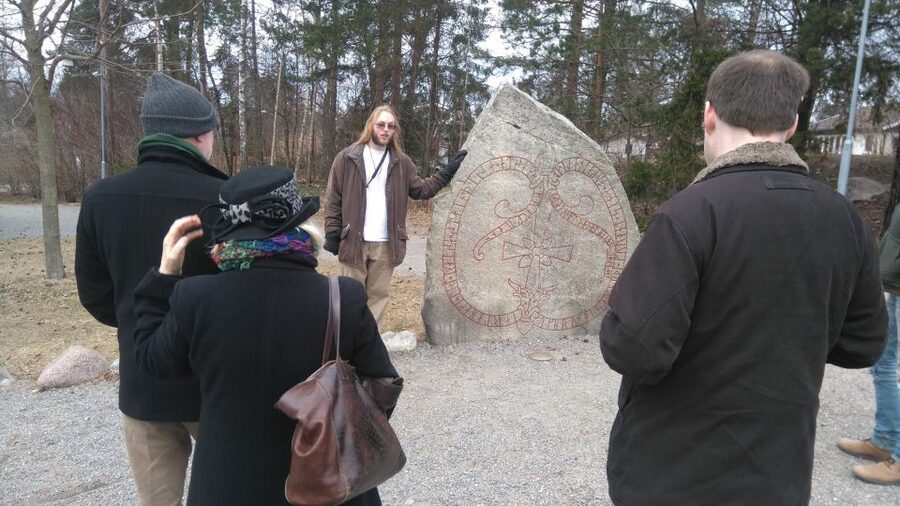
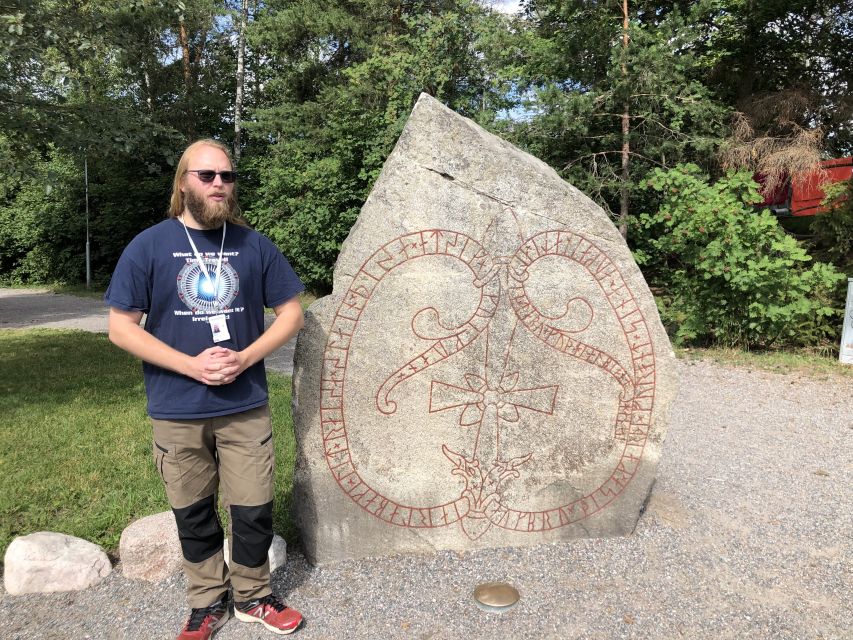
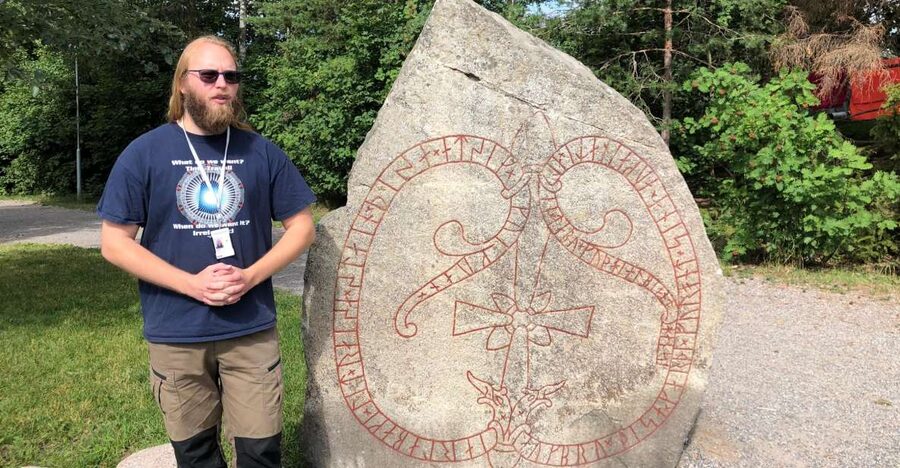
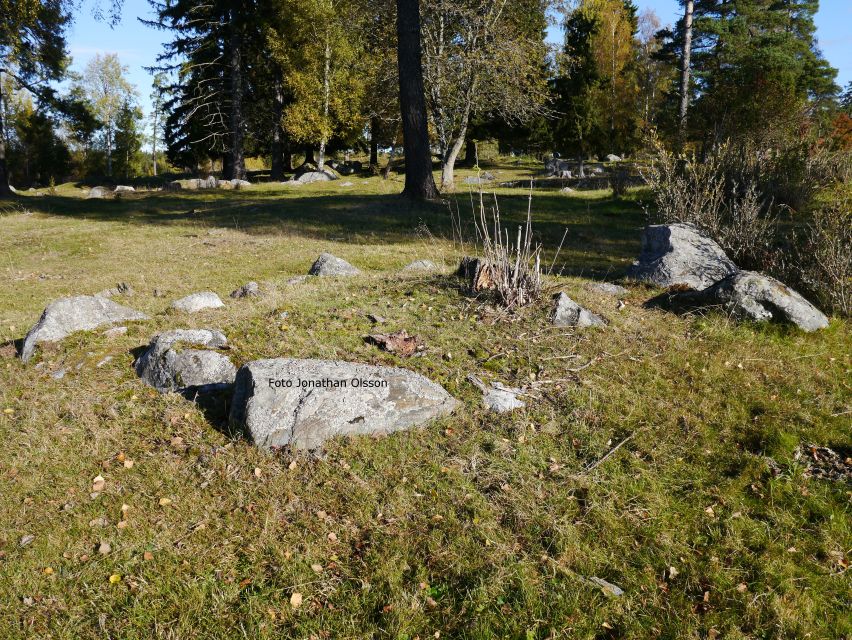
The first major stop is Broby bro, a burial ground associated with the Jarlabanke family and the woman known as Estrid. Here, the subject is not only who was buried, but how burial customs changed as pagan and Christian traditions met.
The runestones and graves provide a useful way to discuss that shift. Viking Age society was not frozen in one set of beliefs. The stones and burial remains help show how families remembered their dead and how religious practices developed over time.
Estrid gives the site a human focus. Viking stories often concentrate on male chiefs, raiders, and kings. This stop brings attention to a powerful Viking woman and the family networks that shaped local life.
You will see several old stones in their original setting, rather than viewing a small inscription as an isolated museum object. That matters because the placement of a runestone was part of its message. A stone beside a road, bridge, or burial place could announce family status, honor the dead, and make a claim about who had influence in the area.
The site is also a good reminder that Viking history is not just about overseas raids. Much of daily Viking life involved family, land, travel, belief, and reputation. Broby bro puts those ordinary but important concerns at the center.
Jarlabanke Bridge and the Viking road system
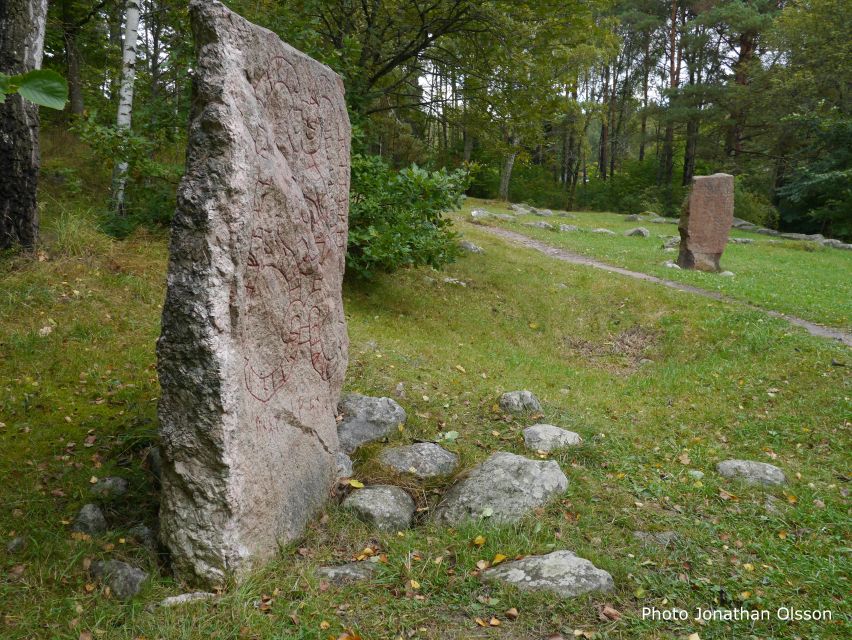
The next stop is Jarlabanke Bridge, at the entrance to a causeway. You will see more raised runestones and a reconstructed Viking bridge, then hear about Jarlabanke and his clan.
The bridge is valuable because it connects several subjects at once. It shows how people moved through the countryside, how local leaders could organize construction, and how a family might use public works to display power.
A reconstructed bridge cannot give you every detail of the original structure. Still, it makes the basic problem clear: roads and crossings needed labor, planning, and upkeep. A raised causeway also helped people pass through wet ground, linking settlements and important routes.
The runestones near the bridge add a personal and political layer. They were not simply decoration. Their inscriptions could record the work of a family, honor relatives, and make sure a name remained visible to people passing by.
Jarlabanke is presented as a Viking chief, and his clan helps explain how local authority worked. You are not only learning about one man. You are looking at the way family identity, public construction, and regional influence could reinforce one another.
This is likely the most visually satisfying part of the outing. You get a tangible structure, a route through the countryside, and stones that still connect the place to the people who used it. If you enjoy seeing history in context, this stop carries more weight than a quick look at a single artifact.
Arkils tingstad and Viking decision-making
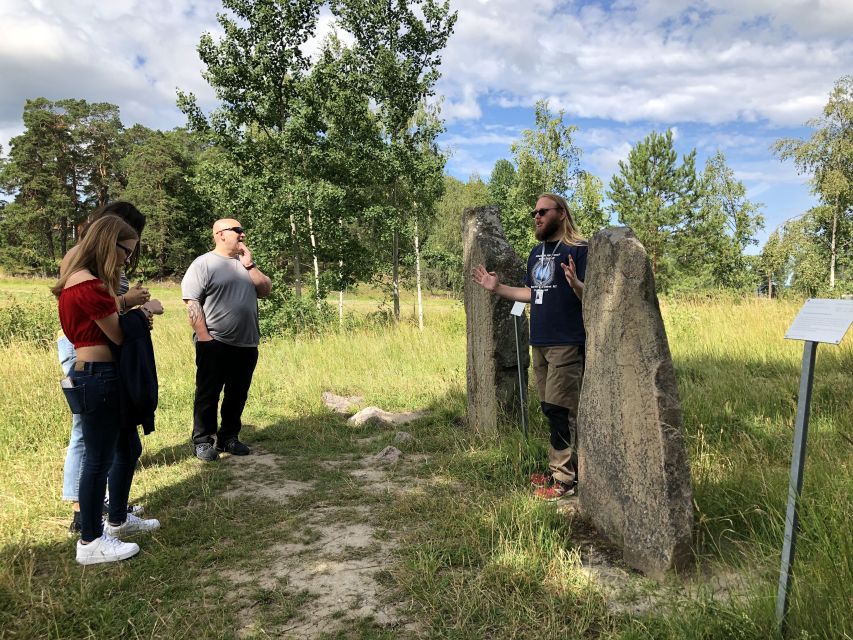
The final main stop is Arkils tingstad, the remains of a Viking parliament. The word parliament can sound more formal than the place itself, so keep expectations sensible. You will not find a grand hall or a preserved chamber. You will see the remains of a meeting place and learn how local society was organized.
The thing I like here is the change in subject. Broby bro deals with death, memory, and belief. Jarlabanke Bridge deals with transport, construction, and family power. Arkils tingstad turns to community decisions and law.
A ting, or assembly, was part of how people handled disputes and organized public matters. Standing at the remains helps you picture Viking society as a system of local relationships, not just a collection of heroic individuals.
This stop is especially useful if your image of Vikings comes mostly from popular entertainment. The real story includes negotiation, legal customs, obligations, and community gatherings. The tour’s factual tone is one of its strengths. The guide, including guides such as Erik, explains the evidence without turning every stone into a dramatic legend.
You should expect the guide to do much of the interpreting here. The remains may not speak for themselves, especially if you have no background in Viking archaeology. A good explanation is what turns a simple site into a meaningful stop.
More Local Culture and Traditions Tours in the world:
- Amsterdam Food and Cultural Tour with Tastings
★ 5.0 · 4,315 reviews - Sevilla Food Tour: Tapas, Wine, History & Traditions
★ 5.0 · 3,468 reviews - Tromsø: Reindeer Camp and Sami Cultural Tour with Lunch
★ 4.7 · 3,326 reviews - Half Day Dominican Republic Cultural Tour : Small Group
★ 4.5 · 1,862 reviews
Why the guide matters on this short tour
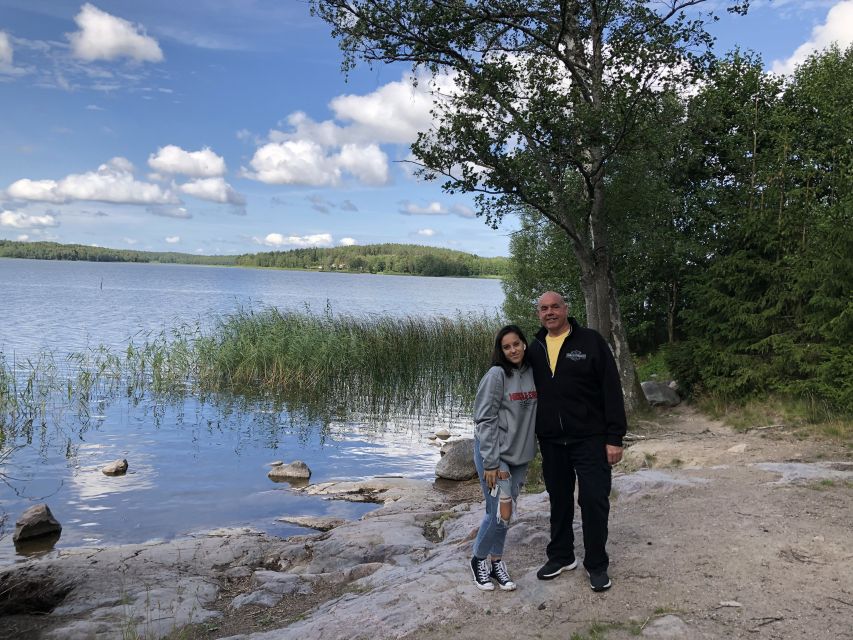
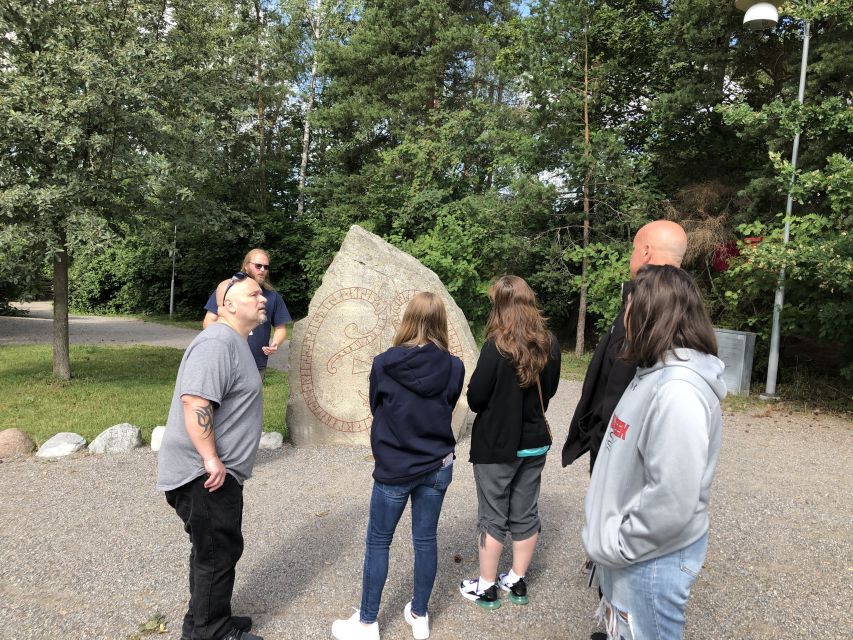
With only three hours, the guide shapes the experience. You need someone who can connect the sites without burying you in dates and names. The tour is conducted in English, and Erik has been specifically praised for his strong command of Norse and Viking Age subjects.
The guide also fills the travel time between stops with stories about the region and its people. That matters because the drive is part of the outing, not just a transfer from one attraction to another.
A useful guide should also separate evidence from guesswork. The tour focuses on real historical sites, and its best moments come from seeing what remains and understanding what scholars can reasonably infer from it.
You may get practical recommendations as well. Erik has also been known to suggest places for Swedish food in Stockholm, which is a pleasant extra after a morning or afternoon spent outside the city.
The small-group limit of 16 is another advantage. It is not a private tour, but it is small enough for questions and a more personal exchange than a large coach outing. The exact feel will depend on the group, but the format should be manageable at outdoor sites.
Three hours, $138, and what the price buys
At $138 per person, this is not the cheapest way to spend three hours in Stockholm. The value depends on what you want from the outing.
You are paying for a driver and guide, hotel pickup and drop-off within the stated central area, transport into the countryside, access to several historical sites, and interpretation in English. You also avoid building your own route to Broby bro, Jarlabanke Bridge, and Arkils tingstad.
That convenience matters. These are not three central Stockholm sights that you can easily link by walking between them. The tour gathers them into one efficient trip and gives each place a clear role in the story.
The price is easier to justify if Viking history is a main reason for your visit. It is also useful if you have limited time and want something beyond Stockholm’s city museums. If you are mainly looking for scenic countryside or a relaxed drive, the cost may feel high because the tour is focused on history rather than a wide range of activities.
Food is not included, and gratuities are not included. Plan to eat before or after the outing and keep that extra cost in mind. The tour itself is short enough that a meal stop is not part of the schedule.
The weather can change the whole experience
Sweden’s countryside is attractive in every season, but the outdoor nature of this tour makes clothing important. One winter visit took place with snow on the ground and temperatures around minus 10 degrees Celsius.
That kind of cold can make the stops memorable for the wrong reason if you arrive in light shoes or ordinary city clothing. Wear warm layers, a proper winter coat, gloves, and waterproof footwear. Warm boots are particularly important because you will be outside at burial grounds, roads, bridges, and other open sites.
In milder weather, the tour should be easier physically, but you still need to be ready for outdoor stops. The information provided does not promise indoor shelter at each location, so treat this as a countryside outing rather than a museum visit.
Winter does offer a striking setting. Snow can make the old stones and wooded routes feel especially atmospheric. The tradeoff is simple: you may get memorable scenery, but you must be able to stand outside comfortably while the guide explains the site.
Who will get the most from this outing
I would recommend this tour to you if you want to understand Viking Sweden through physical places rather than displays alone. It suits first-time visitors who have already seen central Stockholm and want a focused trip into the surrounding county.
It is also a good fit for anyone interested in runestones, burial traditions, local government, and the daily structure of Viking society. The tour gives you more than a list of famous names. It shows how roads, graves, public gatherings, and family identity fit together.
Families with older children may find the bridges, graves, and carved stones easier to connect with than a long museum lecture. The short duration helps, though outdoor conditions still matter.
I would be less enthusiastic if you want a long archaeological walk, a full-day excursion, or a broad survey of all Viking sites around Stockholm. You will see several important places, but the visit remains an introduction. You should also think twice about booking in severe winter weather if you dislike cold or have limited outdoor clothing.
Booking details worth checking before you go
Pickup and drop-off are included only for hotels and accommodation within 5 kilometers of Stockholm Central Station. If you are staying farther out, check the meeting arrangement before paying.
The group is limited to 16 people, and the live guide speaks English. The duration is three hours, but you should check the available starting times for your date.
You can cancel up to 24 hours before departure for a full refund, and the reserve-now, pay-later option lets you hold a place without paying immediately. Those terms are useful when your Stockholm plans are still shifting.
Remember the two simple extras: bring food if you need it, since none is provided, and budget for a gratuity if you feel the guide and driver earned one.
Should you book this Viking tour?
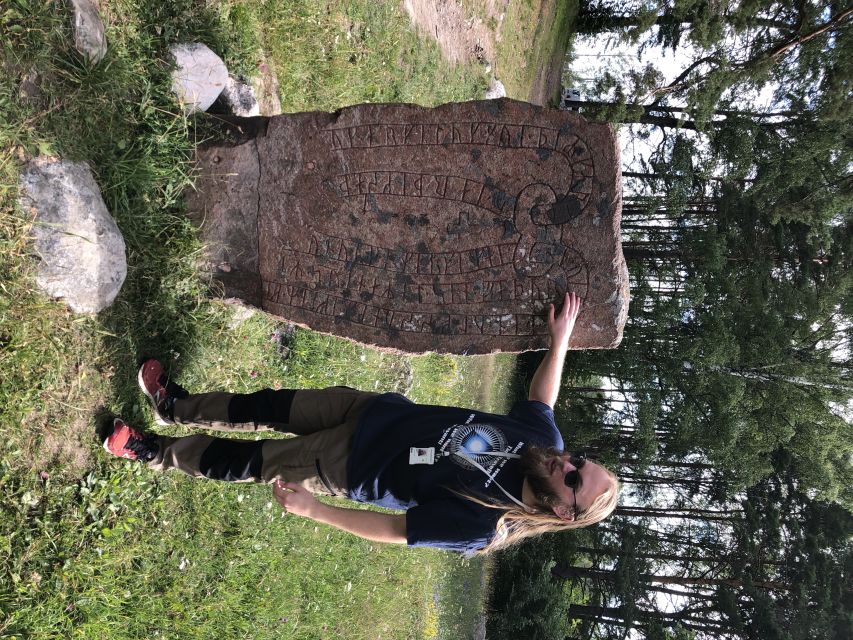
Book it if you want a compact, well-organized introduction to Sweden’s Viking Age and prefer real sites to themed attractions. The strongest parts are the runestones at Broby bro, the reconstructed bridge and causeway at Jarlabanke, and the explanation of Viking decision-making at Arkils tingstad.
The $138 price makes sense when you value hotel pickup, a driver, an English-speaking guide, and several rural sites packed into three hours. I would book with confidence for a history-focused visit, especially if Erik is leading your departure.
Skip it if you want a full-day archaeological experience, included food, or a warm indoor activity. In winter, prepare properly or choose another outing. For the right visitor, though, this is a direct and practical way to see who the Vikings were beyond the familiar legends.
FAQ
How long is the Viking Culture and Heritage tour?
The tour lasts three hours.
How much does the tour cost?
The listed price is $138 per person.
Where does the tour take place?
It travels from Stockholm into the countryside of Stockholm County and the historic Uppland area.
Is hotel pickup included?
Yes, pickup and drop-off are included for hotels and accommodation within 5 kilometers of Stockholm Central Station.
What language is the tour conducted in?
The live tour guide speaks English.
How large is the tour group?
The group is limited to no more than 16 people.
What sites are included?
The tour visits Broby bro and its Viking burial ground, Jarlabanke Bridge and its causeway, and the remains of the Viking parliament at Arkils tingstad.
Will I see Viking runestones?
Yes. The tour includes several approximately 1,000-year-old runestones, including stones at Broby bro and Jarlabanke Bridge.
Is food included?
No. Food is not included.
Can I cancel for a refund?
Yes. You can cancel up to 24 hours in advance for a full refund.
More Small-Group History Tours in the world
- Pompeii: Small Group Tour with an Archaeologist
★ 4.8 · 12,264 reviews - London Small Group Tour of Historical Pubs
★ 5.0 · 10,422 reviews - Pompeii Small Group Tour with an Archaeologist
★ 5.0 · 6,593 reviews - Boston: Freedom Trail History Small Group Walking Tour
★ 5.0 · 6,450 reviews
Just added around the world
- Scenic Train ride to historical cities of Morretes and Antonina★ 4.0 · 188 reviews
- 6-Day Cultural Tour to Machu Picchu★ 5.0 · 76 reviews
- Jewish Heritage of Curacao★ 4.5 · 68 reviews
- The Curacao’s Colorful History Walking Tour★ 5.0 · 55 reviews
- Discover Scuba Diving Amathounta’s Ancient Port★ 5.0 · 30 reviews
- Olous – Guided Snorkelling Excursion to Discover Olous Sunken Ancient City★ 4.5 · 31 reviews
- Night Walking Tour of Medieval Cuenca★ 5.0 · 64 reviews
- WWII – The Battle of Crete Day Tour★ 5.0 · 103 reviews
Stockholm History Tours, compared.
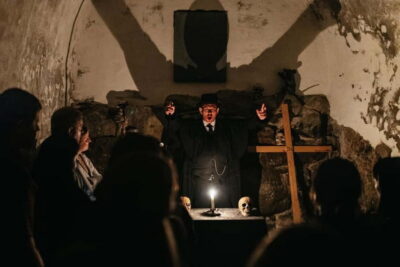
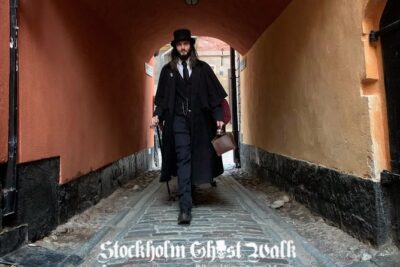
The Original Stockholm Ghost Walk and Historical Tour – Gamla Stan
Read our review →
Stockholm: Guided Historic Old Town Walking Tour with Local
Read our review →
Stockholm: Old Town Historical Walking Tour, small group
Read our review →
Stockholm Archipelago Guided Tour on Historic Ship with Fika
Read our review →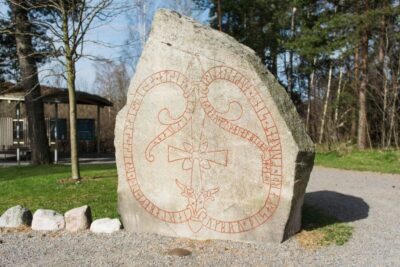
Stockholm: Sigtuna and Uppsala Viking History Day Tour
Read our review →Browse the lists this tour appears in